gregkero

3.6K posts

gregkero banner
gregkero

gregkero

@gregkero

Father. Husband. Coach. Founder of A Street Investments. Private credit. Venture capital. Safety first. Tweets are not advice.

Olympia, WA, USA Katılım Ocak 2009
338 Takip Edilen326 Takipçiler
gregkero
gregkero@gregkero·
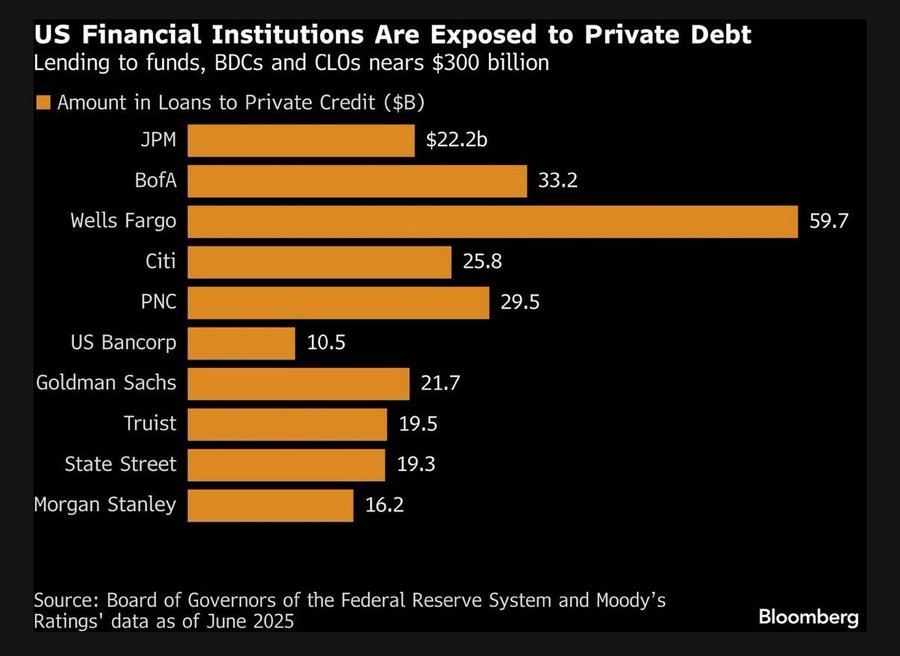
@OilHeadlineNews @tomkeene Also explain that their exposure is nearly all investment grade structures with massive subordination. They are not exposed directly to first dollar loss of the loans.
English
0
0
0
11
Energy Headline News
Energy Headline News@OilHeadlineNews·
US financial institutions are exposed to private debt - Bloomberg
Energy Headline News tweet media
English
4
15
81
10.7K
gregkero
gregkero@gregkero·
@chriswerme15 Maybe for you. The kid clearly wants to turn it to MLB channel
English
0
0
0
20
Chris Werme
Chris Werme@chriswerme15·
Pub, beer, boy and NASCAR. Life is good.
Chris Werme tweet media
English
3
1
57
1.6K
Keira | MH Ventures
Keira | MH Ventures@RealMissAI·
I shipped a feature nobody asked for. Here's what I learned the hard way 3 weeks of work. Built it because I thought it was cool. Didn't ask a single user. Shipped it confidently. Result: 2 people used it. One of them was me. The lesson everyone tells you but you have to learn yourself: Talk to users before you build. Not after. Every time I skip this step I lose weeks. Every time I follow it I save months.
Keira | MH Ventures tweet media
English
3
0
5
189
gregkero
gregkero@gregkero·
@BobEUnlimited How did they systematically mislead? Did you witness this across all firms? Or are you just piling on with no firsthand experience with this happening? There's thousands and thousands of investors. How were you there for all of these sales pitches?
English
0
0
6
103
Bob Elliott
Bob Elliott@BobEUnlimited·
Maybe they shouldn't have systematically misled buyers about the liquidity profile of their products. But hey, at least they got rich from all the fees they earned... x.com/wolf_vukovic/s…
Vuk Vukovic@wolf_vukovic

I feel their pain. 40% redemptions is beyond breaking point for a private credit firm. But gating your investors? In the long run, probably even worse. Private credit funds lend to middle-market companies (in Blue Owl's case, mostly software and SaaS). These are illiquid, multi-year term loans. They can't be sold overnight on an exchange. There is no bid. Now imagine 40% of your investors want out. You have two options: A) Honor the redemptions. To raise cash, you have to sell loans at a steep discount, or worse, call them in early. But your borrowers don't have the cash sitting around either. They took term debt because they needed time. Force-selling a multi-billion loan book at 70-80c on the $ doesn't just hurt your returning investors - it destroys value for everyone who stays. B) Gate redemptions. Which is exactly what Blue Owl did. Cap withdrawals at 5% per quarter. Protect the remaining LPs. Protect the borrowers. But now you've confirmed every investor's worst fear: your money is locked and you can't get it back when you need it. This is the fundamental tension in private credit: you're offering quarterly liquidity on assets that have none. It works beautifully in calm markets. In stress, the math breaks. And here's the part nobody talks about - the borrowers. If a fund were forced to liquidate, those SaaS companies with 3-5 year term loans would face early repayment demands, covenant pressure, or their debt getting transferred to a distressed buyer at punitive terms. The very companies the fund was supposed to support become collateral damage. Blue Owl is in survival mode, so they chose the second option. Which doesn't mean they won't have to go with option A as well, and very soon. But the real question for the industry: should interval fund structures be used for assets this illiquid in the first place?


English
27
11
173
64.5K
Brian L
Brian L@mplsbadger·
@PhilMickelson @OfficialTourPro Thank you. Now I don’t have to have an inordinate amount of coverage wasted on a washed up mid 50’s degenerate gambler that tried to ruin the game.
English
111
0
146
16.9K
gregkero
gregkero@gregkero·
@wolf_vukovic You have this absolutely wrong. Not enforcing redemption limits and selling at discount is exactly what investors biggest fear is! You want managers to live up to their promise to protect you from others who didn't understand the asset or position sized wrong.
English
1
0
3
412
Vuk Vukovic
Vuk Vukovic@wolf_vukovic·
I feel their pain. 40% redemptions is beyond breaking point for a private credit firm. But gating your investors? In the long run, probably even worse. Private credit funds lend to middle-market companies (in Blue Owl's case, mostly software and SaaS). These are illiquid, multi-year term loans. They can't be sold overnight on an exchange. There is no bid. Now imagine 40% of your investors want out. You have two options: A) Honor the redemptions. To raise cash, you have to sell loans at a steep discount, or worse, call them in early. But your borrowers don't have the cash sitting around either. They took term debt because they needed time. Force-selling a multi-billion loan book at 70-80c on the $ doesn't just hurt your returning investors - it destroys value for everyone who stays. B) Gate redemptions. Which is exactly what Blue Owl did. Cap withdrawals at 5% per quarter. Protect the remaining LPs. Protect the borrowers. But now you've confirmed every investor's worst fear: your money is locked and you can't get it back when you need it. This is the fundamental tension in private credit: you're offering quarterly liquidity on assets that have none. It works beautifully in calm markets. In stress, the math breaks. And here's the part nobody talks about - the borrowers. If a fund were forced to liquidate, those SaaS companies with 3-5 year term loans would face early repayment demands, covenant pressure, or their debt getting transferred to a distressed buyer at punitive terms. The very companies the fund was supposed to support become collateral damage. Blue Owl is in survival mode, so they chose the second option. Which doesn't mean they won't have to go with option A as well, and very soon. But the real question for the industry: should interval fund structures be used for assets this illiquid in the first place?

Vuk Vukovic tweet media
English
16
4
47
66K
gregkero
gregkero@gregkero·
@SaraEisen Dunno if ESG was ever cool, Allbirds and anybody wearing them definitely were not
English
0
0
0
103
Gunjan Banerji
Gunjan Banerji@GunjanJS·
“Do private credit’s troubles herald a systemic shock similar to what we saw two decades ago? With the caveat that crises are inherently unpredictable, probably not. The 2007-09 crisis was one of the worst in history, and that alone militates against something as bad.” wsj.com/economy/is-ano…
English
1
5
27
2.9K
gregkero retweetledi
John Arnold
John Arnold@johnarnold·
Hard to overstate the role shale gas has played in lowering inflation and spurring American industry. Were we a net importer today as forecast in the 2000s, domestic nat gas & power would be at multiples of current pricing, serving as a huge tax on individuals and companies. 1/5
English
36
235
1.7K
287.3K
Kieran Goodwin
Kieran Goodwin@kieranwgoodwin·
$CCLFX "ALL GAS NO BRAKES" They just posted "10 things to know about CCLFX" I have suspicions about many of them but LIQUIDITY PROFILE really stuck out 🧵⬇️
Kieran Goodwin tweet media
English
2
0
12
8.7K
gregkero
gregkero@gregkero·
@kieranwgoodwin @mjmorrow99 The A/L mismatch exists only in a tiny part of PC and the liquidity terms solve for this. The 'stayers' and the rest of the PC world are protected by these terms
English
0
1
3
28
Kieran Goodwin
Kieran Goodwin@kieranwgoodwin·
@mjmorrow99 I have zero interest in buying $CCLFX. It can’t be valued IMO. I have been warning people about the A/L mismatches in PC since April ‘23.
English
1
0
0
126
gregkero
gregkero@gregkero·
@barronsonline How is this the headline? He literally says you can still make 10% in PC
English
0
0
1
16
Barron's
Barron's@barronsonline·
Apollo Co-Founder Sees Emerging Cracks in Private Markets trib.al/F01oAJX
English
3
14
38
12.1K
gregkero
gregkero@gregkero·
@meridiencap @verdadcap @CNBC no systemic risk. There will be some retail investors frustrated with being slow paid. But that's it. Massive amounts of short-term financing to purchase long dated assets isn't present as it was in GFC when often, 90% of fund assets were funded with short term revolvers.
English
0
0
1
21
Meridien Capital LLC
Meridien Capital LLC@meridiencap·
Nice spot on @cnbc. How systemic do you think this really is? $1-2T per consensus, or much higher to $4-5T? 8T? And do you have a sense as to how many firms are exposed? Consensus says it’s limited, but could it be bigger than GFC? Thank you very much for your feedback! @verdadcap
English
1
0
1
198
Kieran Goodwin
Kieran Goodwin@kieranwgoodwin·
If $CCLFX paid out 8 quarters in a row of 5% of NAV, NAV would go from $33.1 bn to ~ $22bn. So they need $11bn of liquidity. I parsed their loans' FV maturing from 4/1/26 to 4/1/28 and that tolal is $3.7bn per 9/30/25 filing. Borrowings were $9bn. At $22bn NAV, they could borrow another $2bn to max debt at $11bn which is .5 of NAV per Interval Fund regs. None of the CLOs mature before 4/28. The BDCs like Barings are perpetual. The info on the PIVs in the notes is opaque but many have undrawn commitments still due so not maturing soon. Plus I am sure managers have extension rights. $CCLFX has a total ~ $8.35bn of DDTLA of which $4bn have been drawn and $4.35bn are undrawn commitments. YES borrowers draw down on DDTLAs!! They also have $2.3bn of Revolvers of which $425mm have been drawn so $1.875bn of undrawn commitments. Lastly they have commitments of $4.682bn of to the managers of the PIV. $11bn - $3.7bn - $2bn = HOLE OF $5.3bn PLUS $10.9bn of unfunded commitments .. Haircut that number but I suspect the % of those commitments that get called will be higher than anticipated. Sure they have some cash and some BSLs left. Maybe they get some inflows. But maybe they get some defaults and other NAV writedowns (CLO EQUITY??). Rolling and expanding their debt total will not be a walk in the park. I feel like $CCFLX should walk through their calculations if they make such a statement. But then again, $CCFLX did post a positive Feb return while everyone else was negative so perhaps, they just are superior investors.
English
8
3
16
8.9K
gregkero
gregkero@gregkero·
@PeterMallouk @charliebilello Yes......but. Those millions of other things add up to earnings. So any granular earnings forecast needs to update these millions of inputs along the way.
English
2
0
1
57
Peter Mallouk
Peter Mallouk@PeterMallouk·
What matters in the short run: -Wars -Oil prices -Tariffs -Interest rates -Sentiment -A million other things What matters in the long run: -Earnings Speculators focus on the short run. Investors play the long game.
Peter Mallouk tweet media
English
27
82
427
43.6K
Michael S. Freeman
Michael S. Freeman@Citizen54S·
@DavidSvendsen @SecScottBessent @FT I didn't say or imply that. If a publication knowingly fabricates an entire story, as Bessent alleges, the obvious remedy is litigation. This isn't about criticism or policy disagreement; it's about reckless disregard for the truth.
English
4
0
4
291
Treasury Secretary Scott Bessent
Treasury Secretary Scott Bessent@SecScottBessent·
By publishing this explicitly false story, the @FT has officially become tabloid trash for market participants. Despite my direct, on-the-record denial of ever having advocated, explored, or espoused the idea that Chancellor-Bank of England statute serving as a prototype for a Treasury-Federal Reserve relationship, FT journalists manufactured a story with the headline, “Scott Bessent praised Bank of England as model for tighter oversight of the Federal Reserve.” These pathetic journalists have clearly fabricated a story to give the impression that both I and the Trump Administration are setting “about restructuring the relationship… at a time when President Donald Trump has launched an unprecedented assault on the world’s most important central bank.” Their mendacious assertion is based on vague statements from unnamed “financial industry executives familiar with the matter.” In short, FT has literally manufactured an entirely fake policy position for me and the Administration. Other than furthering a maliciously false narrative of dysfunction and divisiveness, it baffles the mind as to why they would shred their already diminished journalistic credibility. Over the past 10 years, I have written more than 20,000 words opining on the Federal Reserve decisions, personnel, structure, and modifications. Nowhere have I ever mentioned this ridiculous notion. The Governor’s letters to the Chancellor have proven to be a useless and perfunctory device. There is much to be said about the storied Bank of England, but any recreation of its operating framework on this side of the Atlantic has never been contemplated. The shameful journalists and editors at the FT are shocking in their meretriciousness, lack of standards, and general intellectual libertinism. It is the worst tradition of Fleet Street to manufacture news rather than report on it. They have brought irredeemable shame to their parent organization, Nikkei Inc., with whom I had previously held excellent relations. In 2025, I laid out a comprehensive 6,000+ word review of each and every policy reform that I believe should be adopted by the Federal Reserve. Read my actual, real thoughts on and proposals for Federal Reserve reform at the International Economy: international-economy.com/TIE_Sp25_Besse…
Financial Times@FT

FT exclusive: US treasury secretary Scott Bessent discussed tightening the US Treasury’s oversight of the Federal Reserve by adopting elements of the Bank of England’s model ft.trib.al/6dgGvkh

English
2.5K
10.8K
39.9K
2.8M
gregkero
gregkero@gregkero·
@FCNightingale That's what I thought. So why did you hashtag cracksincredit? Seems like the lenders will end up better off than the equity investors.
English
0
0
0
10
Nightingale Associates
Nightingale Associates@FCNightingale·
Swiss lender UBS has suspended withdrawals from its $469 million Euroinvest real ​estate fund for up to three years citing ‌insufficient liquidity. "In this challenging market environment, UBS Real Estate GmbH ​has taken the decision to suspend redemptions at ​this time to ensure the protection of all ⁠our investors' interests," the bank said in a statement. h/t @wstpacglenn -Sri Lanka Guardian #commercialrealestate slguardian.org/ubs-freezes-e4…
English
103
735
1.8K
296.4K
gregkero
gregkero@gregkero·
@ardematic @TruthGundlach This is a great question and I'm guessing you know the answer and that's why you asked it. Yes, of course, funds could simply shut down and runoff. We would then see how these loans do, investors who expected 10%+ will be disappointed but no crisis will result.
English
0
0
1
4