
gs723
2K posts



25 years in the making.
The last year building it.
We didn't just drop a mock...
We built an entire Draft Room.
The McShay NFL Draft Room-a labor or love-we're officially LIVE⚡️:
-Top-50 full scouting reports
-Top 100 board
-Mock 3.0
31 days until the NFL Draft!...@yougoodmuench
🔗 theringer.com/mcshay
@ringer
English

Six minutes of Sen. Lindsey Graham (R-SC) being booed in his home state of South Carolina in 2023.
English
gs723 retweetledi

Literally insane
Iranians are really putting effort for their Lego movies compared to CENTCOM memes
Trump will cry after seeing this 😭🤣😂
English

@tradfi Under Trump the US will become a complete banana country 🍌🤡
English

*SEC ENFORCEMENT DIRECTOR MARGARET RYAN CLASHED WITH AGENCY BOSSES BEFORE RESIGNING LAST WEEK
*RYAN WANTED TO BE MORE AGGRESSIVE IN PURSUING MISCONDUCT, INCLUDING CASES WITH TIES TO TRUMP & HIS FAMILY
English
gs723 retweetledi

Trump: Airport lines for you, caviar for me!

PatriotTakes 🇺🇸@patriottakes
Caviar was served at Mar-a-Lago this weekend as Trump continues calling affordability “a hoax”
English
gs723 retweetledi

English
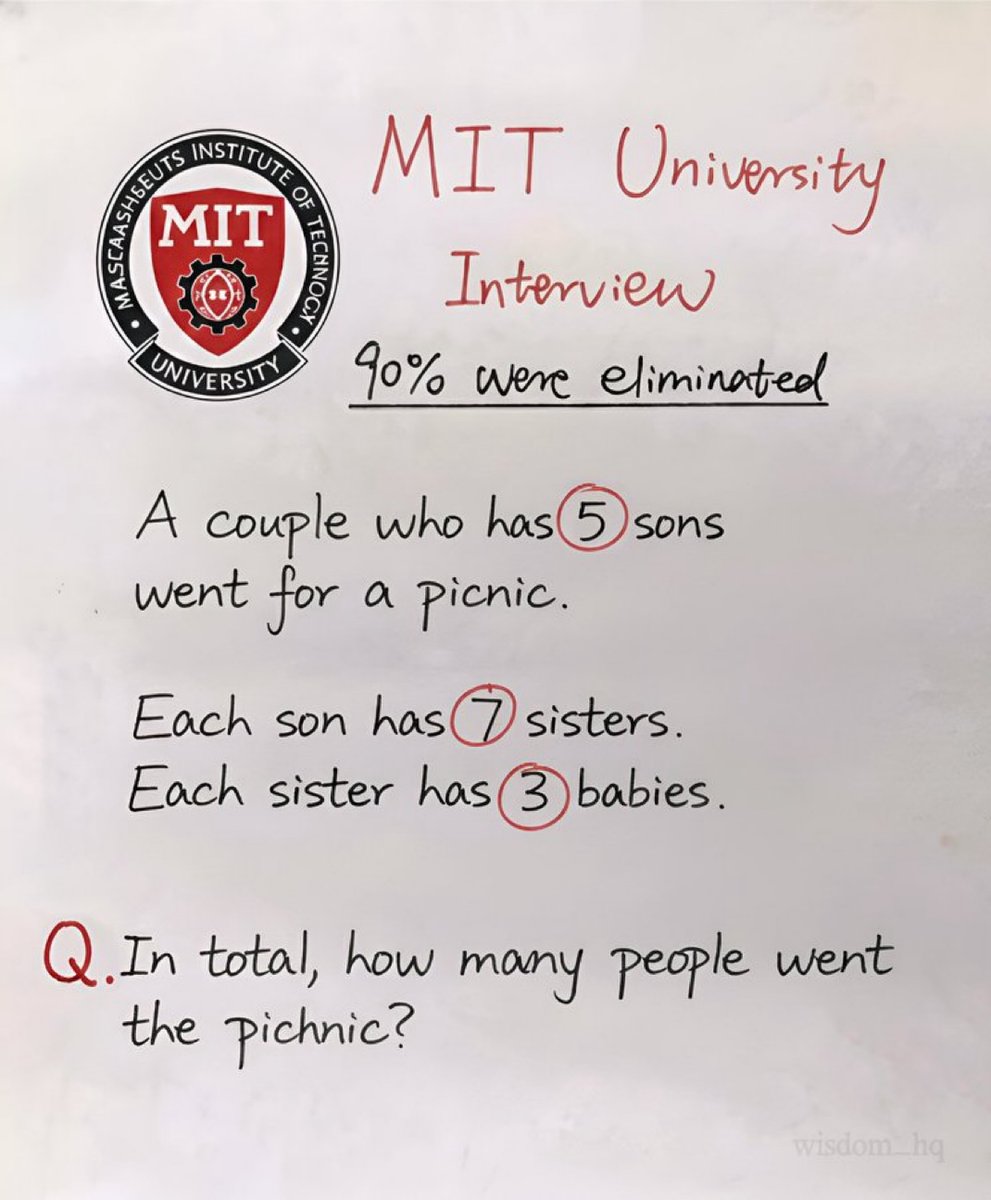
@Mishi_2210 The question is vague, if you read it literally it’s just the couple that went to the picnic, not any of their kids or grandkids
English

This is supposed to be one of the hardest problems ever to solve.
Is it? Or isn’t it?
English
gs723 retweetledi


gs723 retweetledi

🚨Epstein Island Architect ROBERT COUTURIER Breaks Silence: ‘Everybody Knew!’ as DOJ Files Reveal Disturbing Room Designs— They all stayed silent while little girls were being trafficked and tortured!
Couturier said he was hired around 2010 to design interiors on the island, but quickly became unsettled by the nature of the requests and the configuration of certain rooms.
"I Immediately Understood," Couturier said, describing the moment he formed conclusions about the nature of the project. He said he left the assignment after only a few months.
He recalled being instructed to create a bedroom with a "very colourful palette" because it was "for his girls," and described encountering bunk beds that Epstein also identified as being "for the girls."
In another room, Couturier said Epstein pointed to a space filled with computers and described it as a place where the girls could "have fun," a characterization that contributed to what the designer later described as a deeply troubling environment.
The physical setting reinforced those concerns, Couturier said, citing drawn curtains, limited natural light and what he characterized as an oppressive atmosphere. "It felt terrible," he said of the overall environment inside the property.
Photographs of young girls displayed throughout the residence further heightened his unease, he said, adding that the cumulative effect of the design elements and visual cues made the intent of the space difficult to ignore.
Couturier later spoke with federal investigators, providing details to the FBI about his observations and the instructions he had received. That interview remained largely out of public view until the recent release of DOJ materials cited by CNN.
The newly surfaced documents include emails, photographs and videos tied to Epstein's properties, which investigators say align with longstanding accounts from victims and former associates.
According to the CNN report, the materials depict interior configurations consistent with shared sleeping arrangements and restricted openness, echoing Couturier's description of bunk beds, closed-off spaces and controlled environments.
Victims cited in the DOJ files have described heavy curtains, limited freedom of movement and isolation while on the island, reinforcing the designer's account of conditions that diverged sharply from typical luxury residential design.
Former staff and other witnesses have also described patterns of movement involving young women and rooms designed for specific purposes, suggesting a structured environment rather than incidental or ad hoc arrangements.
Couturier's most pointed assertion centers not on architecture but on awareness among visitors. He said Epstein "wasn't hiding anything" and questioned how those present could have failed to recognize what was taking place.
He summarized his view bluntly: "Everybody knew!"
That claim parallels statements from some victims cited in the DOJ materials, who said the nature of activity on the island was "obvious" to those who spent time there. Per Business Times
English
gs723 retweetledi

This Indian woman is totally Roasting the living hell out of Kash Patel and it’s amazing! 😂😂😂😂
English
gs723 retweetledi

“Hey what lvl conspiracy are you on?”
Me:
English
gs723 retweetledi

When Obama sent Iran $400m + $1.3bn in interest in 2016 Trump called it "insane" and he and others spent a decade mocking the idea of "pallets of cash" even though it was Iran's own money, American prisoners were released, courts were likely to require the U.S. payment, and Iran had just agreed to significant and verified reductions and restrictions on its nuclear program for 15+ years. Now Trump is giving Iran up to ten times that amount of revenue--one of the most significant measures of sanctions relief provided to the Islamic Republic since its founding--in exchange for marginal and temporary relief from the big increase in oil prices his actions have caused, without any concessions from Tehran, and even as Iran continues to target the United States, its allies, and world oil supplies. No way to read as anything other than desperate recognition of the situation Trump's own actions have created and the lack of available alternatives for dealing with it.
Barak Ravid@BarakRavid
🚨U.S. to allow Iran to get ~14 billion dollars (!!!) in oil revenue 🚨This is a huge financial concession to Iran by the U.S. 🚨It is the first time U.S. is buying Iranian oil since 1996 🚨It's all happening in the middle of a war against...Iran
English
@ShadowofEzra @MAGACult2 He said he saw him at a few parties sitting by himself, he didn’t say he “partied with him,” two very different things
English

Jeffrey Epstein look-alike “Palm Beach Pete” makes a major confession that he used to party with Jeffrey Epstein, but he is not him.
He even admits that nobody knew where Epstein’s money came from.
He says he is now a regular guy who just does real estate and that Epstein is dead.
“I’m just a better-looking version of Jeffrey.”
English
gs723 retweetledi

gs723 retweetledi

The first flame is lit.
Something watches from the edge of your mind.
Mason Shift 001: “The Watcher”
Full Shift begins
Are you able to read the signals?
English
gs723 retweetledi

Moskowitz: Allegedly, Corey Lewandowski was shaking people down. He was saying, ‘If you want a contract, you’ve got to go hire this firm.’ That $100,000 number we heard, where anything over $100,000 had to come to Kristi Noem’s desk—well, it turns out it did go to her desk, but Corey Lewandowski was sitting at her desk.
And that was really all about Corey being able to see where the money was going so that he knew who, allegedly, to go shake down. You don’t know who to shake down—you don’t know who to force to hire you as a lobbyist—if you don’t know who’s owed money from the department. That obviously created a tremendous amount of bureaucracy and slowed the department down as well.
Then he put his minions in all of these places—on the procurement teams—so he would have insight into procurement. He could tell them: this goes to that company, this goes to that company.
The committees are going to ask for bank records. They’re going to see all sorts of things. I think what we’re going to find is that his wealth has increased dramatically.
English
gs723 retweetledi

gs723 retweetledi

Take your card number and starting from the second-to-last digit, double every second digit moving left. If doubling a digit produces a number greater than nine, subtract nine from the result. Then add all the digits together, the doubled ones and the untouched ones. If the total is divisible by ten, the number is valid. If it isn’t, the number is mathematically impossible as a card number and the form rejects it on the spot.
This is the Luhn algorithm written in 1954 by a computer scientist at IBM named Hans Peter Luhn. It still runs inside every payment form on the internet today. And it turns out that valid card numbers are not random. They follow this mathematical rule, and any number that breaks it is immediately disqualified without ever touching a bank’s systems. No server contacted. No database checked. No network request made. The validation happens entirely on your device, in milliseconds.
The first six digits do additional work before the Luhn check even runs. They are called the Issuer Identification Number; the first digit identifies the card network (4 means Visa, 5 means Mastercard, 3 means Amex), and the following digits identify the specific bank that issued the card. This is why payment forms show you the Visa or Mastercard logo the moment you type the first digit. No server needed. The network is encoded in the number itself.
The last digit of every card number is called the check digit it exists for no other purpose than to make the entire number pass the Luhn algorithm. When a bank generates a new card number, it calculates what the last digit must be to make the sequence valid, then stamps it on the card. It is a built-in mathematical fingerprint.
Gracia@straceX
As a developer, have you ever wondered: You type a 16‑digit card number and the form instantly says “Invalid card number”. There are billions of possible numbers. How the hell is that check that fast?
English
gs723 retweetledi

We grew up watching hand drawn Disney and now it's just gone. We don't talk about this enough.
English
gs723 retweetledi

🚨 Joe Rogan on the Erika Kirk CIA videos
“She was in some weird CIA films, some weird internal films that she was a part of.
It is very weird, it's about EMP attacks and power grids.”
English