

ham3798
162 posts

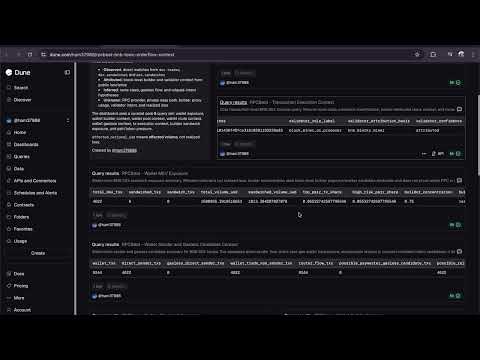
Built RPCBeat for the @BNBChain Next-Gen Consumer AI track at BuidlHack 2026.
RPCBeat helps BNB trading agents check execution evidence instead of blindly trusting RPC routes.
Live:
API: rpcbeat-api.onrender.com
Dashboard: dune.com/ham37988/rpcbe…
GitHub: github.com/Ham3798/rpcBeat
Demo: youtu.be/B0iJGAqLEQ0?si…
Don’t just trust the RPC.
Check the execution.
@koreabuidlweek
#ConsumerAIonBNB
YouTube
English

김재현 님을 추모하며
슈퍼팀 코리아의 Co-lead이신 김재현 님께서 2026년 4월 9일 별세하셨다는 비통한 소식을 전합니다.
고인의 장례는 가족과 친지들의 배웅 속에 무사히 마쳤습니다. 경황이 없어 뒤늦게 소식을 전하게 된 점 너른 양해를 부탁드립니다.
김재현 님은 우리 팀과 커뮤니티의 든든한 버팀목이셨습니다. 도움이 필요한 곳에는 늘 먼저 손을 내밀어 주셨고, 아낌없는 조언과 지지를 보내주셨습니다. 고인의 빈자리는 우리 모두에게 너무나 큰 슬픔으로 다가옵니다.
깊은 슬픔에 잠겨 계실 유가족분들께 깊은 애도를 표합니다.
삼가 고인의 명복을 빕니다.
슈퍼팀 코리아 올림
--
In Loving Memory: Jaehyun Kim
It is with profound sadness that we announce the sudden passing of Jaehyun Kim, Co-lead of Superteam Korea, on April 9, 2026.
The funeral has been concluded in peace. We kindly ask for your understanding for the delayed notice as we focused on honoring his final journey.
Jaehyun was an integral part of our organization. As a leader, he provided unsparing support, guidance, and vision that helped shape our community. His dedication to the team and his warmth will be deeply missed by all of us who had the privilege of working alongside him.
Our thoughts and deepest condolences go out to his family and loved ones during this incredibly difficult time.
May he rest in peace.
Superteam Korea

한국어
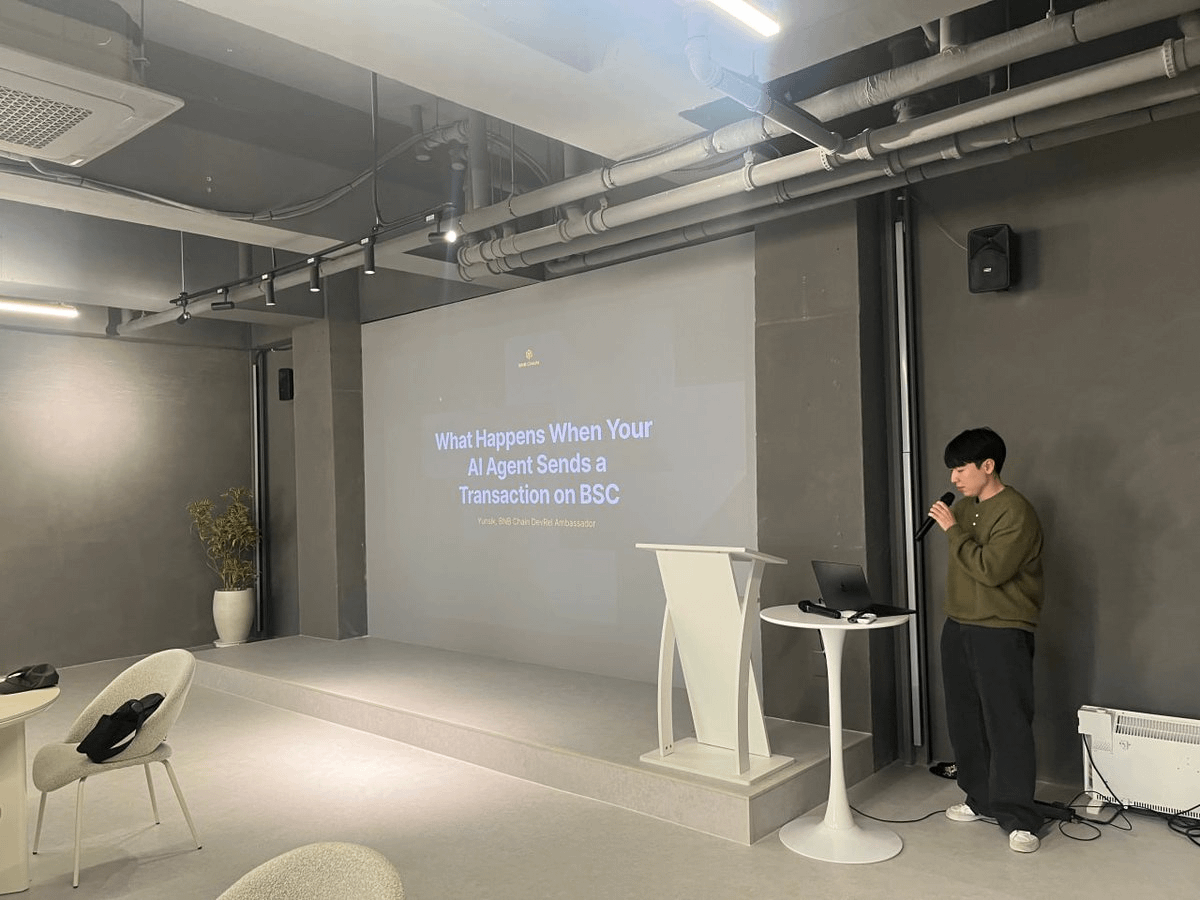
Just gave a talk at BNB BUIDL Camp on:
“What Happens When Your AI Agent Sends a Transaction on BSC”
Most people think AI agents are just smart wallets that send transactions.
But after preparing this session, I realized that’s way too simple — especially on BSC.
Key takeaways:
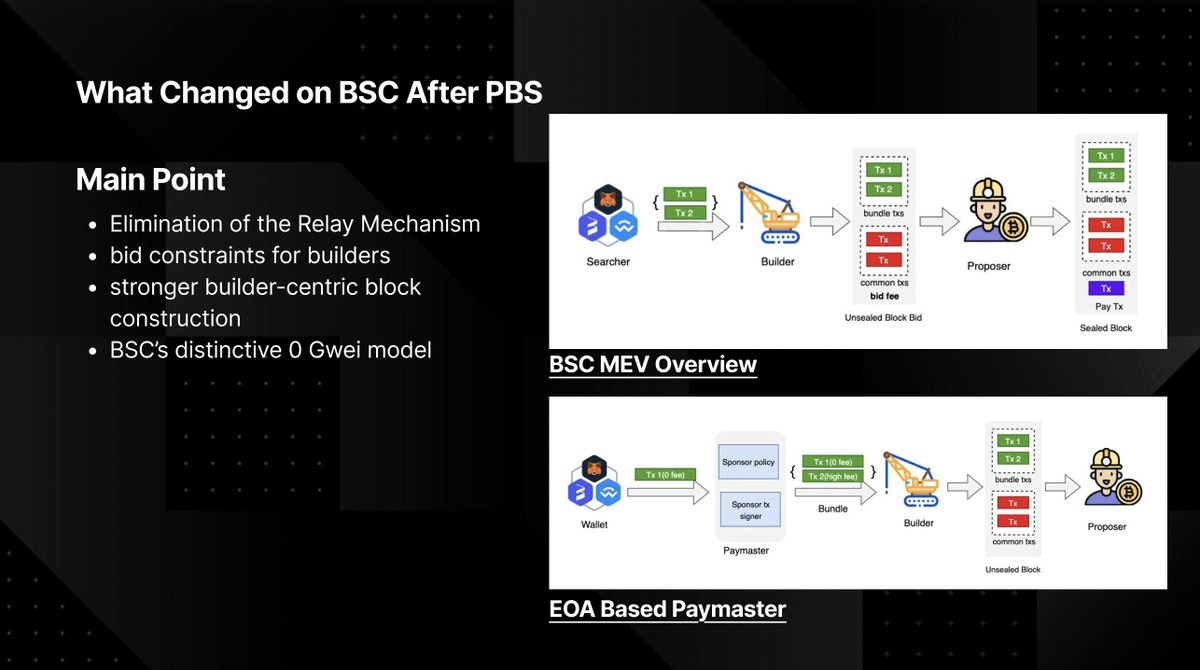
• BSC’s PBS is structurally different from Ethereum’s
→ No relay layer, more validator-trust centered. This completely changes how builders operate.
• Execution on BSC goes far beyond just broadcasting a raw tx
→ 0-gas flows + EOA-based paymaster support unlock paymasters, private builder paths, and more.
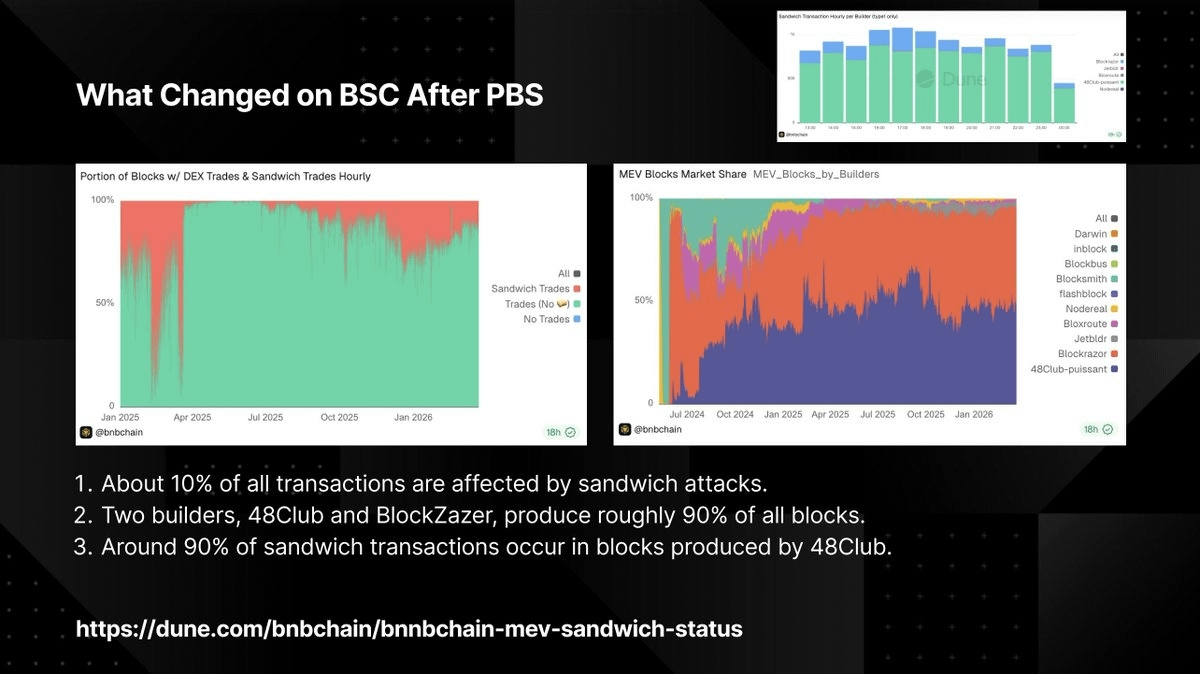
• PBS improved stability, but MEV risks are still real
→ Builder concentration and sandwich attacks haven’t disappeared. Execution quality depends on route selection, payload construction, submission path, and safety policy.
That’s why I now see AI agents on BSC not as simple transaction senders,
but as intelligent execution planner
The real job is to:
- Parse intent
- Choose the best route
- Construct optimal payload
- Pick the right submission path
- Apply safety measures
Huge thanks to everyone who came and to the BNB Chain team for the opportunity!
#BNBChain #BSC #AIagents #MEV #DeFi #PBS
BNB Chain 한국@BNBCHAINKR
BNB BUIDL Camp - 스프린트 세션 Recap 지난 토요일, BNB BUIDL Camp 스프린트 세션이 열렸습니다. 4시간 동안 빌더들이 모여 BNB 체인 위에서 직접 만들고, 배우고, 소통한 시간. • @Unibase_AI의 에이전트 이코노미 세션 • @NoditPlatform의 온체인 데이터 접근을 가볍게 만드는 인프라 세션 • BNB 체인 엠버서더 @ham379888 의 "AI 에이전트가 BSC에서 트랜잭션을 보낼 때 무슨 일이 일어나는가" 딥다이브 • 그리고 멘토링과 함께한 실전 빌딩 스프린트까지 멘토로 함께해 준 @postech_dao, 커뮤니티 파트너로 함께해 준 @FutureHouseKR에도 감사드립니다. 다음은 4/9 온라인 AMA. BNB 체인 BD + Tech 팀이 직접 참여해 생태계, 트랙 전략, 빌더 지원에 대해 이야기합니다. BNB 체인 트랙 제출 전 궁금한 점을 직접 물어볼 수 있는 마지막 기회입니다. AMA 신청하기 👇 luma.com/8f0bt0aq
English

chasechain 개발하면서 vercel로 배포했는데
Analytics툴 있어서 import해두니까
저렇게 트래킹 정리를 해줍니다. !
미국 비율이 생각보다 높고
모바일 진입이 많은데 PC최적화된 서비스라.. 어케해야할지..
서비스 링크는 프로필에 있습니다. !
*chasechain은 블록체인 기반 자산추적 툴

zin@periagoge1
1/🧵 after hack 6 - 국세청 시드문구 유출2 코인 두 번 털린 국세청 니모닉 유출된 지갑에서 $PRTG 토큰이 0xcecb6d3e02103e6ccd088bfedd5eae35e9386d20로 빠져나갔음. 그런데 다시 28일 00시30분에 돌려줬음. 해당 작업?을 한 사람은 경찰에 자수를 했음. 그런데 3시간 뒤 28일 3시쯤 다시 $PRTG토큰들이 0x00B084456D81840FB133d83F03c392dc7Cf7777c로 빠져나갔음. 0x8efa52827c229c434fe9c915b2d99841aa3e114d 0xfb5a2208b9eccfacd4e06ac3f2981795b496c7e5 0xffb929c83865b4c4b527e98d358852492dea92a1 지갑으로 부터 각각 1M, 1M, 2M $PRTG 토큰을 가져갔음. 경찰에 자수한 사람이 한 방식은 유출된 니모닉을 통해서 지갑에 import하고 다른 지갑주소로 그냥 transfer하였음. 그러나 두번째 경우에는 7702 서명을 통해서 0xb771198a7568940d7811ff84bf6409fa80a5e4fd 컨트랙트에 권한을 위임했음.
한국어

He finally found his match 💚 @waltergoat

Dev Kunjadia 🇺🇸@dev_kunjadia
intern final boss just connected with me on linkedin
English

모나드 해커톤이 곧 열립니다.
저번에 참여해봤는데 하루 만에 끝나는 방식이라 부담도 적고, 짧은 시간 안에 몰입해서 빌드해보기 좋았습니다.
EVM 호환 고속체인이라 게임처럼 빠른 인터랙션이 중요한 것들을 만들어보기에도 잘 맞겠다는 생각도 들었네요.
하루 안에 배우고, 빌드해보고, 네트워킹까지 할 수 있는 자리라 관심 있으신 분들은 한 번 보셔도 좋을 것 같습니다.
luma.com/blitz-Seoul-ap…
@DecipherGlobal @B__Harvest @monad
한국어

최고의 블록체인 학회 @DecipherGlobal,
최고의 코어 개발 회사 @B__Harvest,
그리고 고성능 EVM L1 체인 @monad 가 함께합니다.
한국 빌더들을 위한 해커톤, Monad Blitz Seoul 4th가 돌아왔습니다.
이번 4회차는 더 발전된 프로그램과 더 풍성한 리워드로 찾아옵니다!
4월 4일(토), Merkle 머클!!

한국어

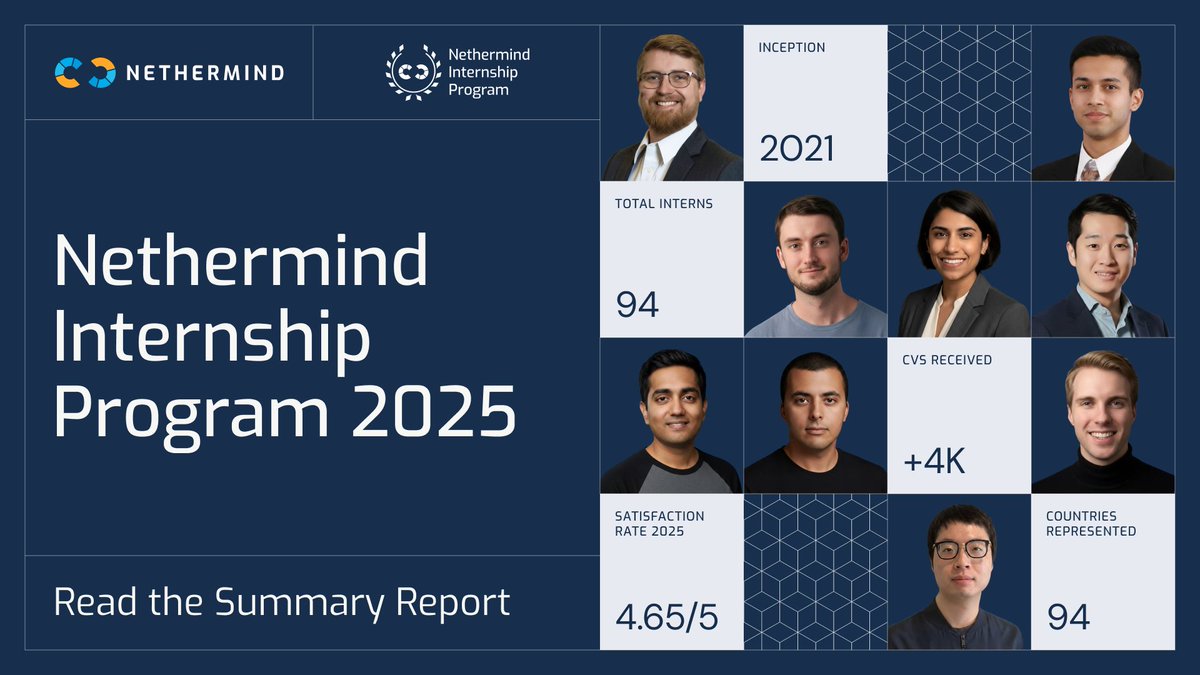
Nethermind's first intern joined in January 2021. He's now an Ethereum Core Dev.
Since then, the program has put engineers on execution client development, Starknet validator infrastructure, zero-knowledge research, AuditAgent, and formal verification, not simulated projects.
Full 2025 summary report: nethermind.io/internship
English
모나드와 함께하는 해커톤이 곧 열립니다.
과거 Moltverse와 Blitz Hackathon에 참여했던 입장에서, 모나드 계열 해커톤은 다른 행사들에 비해 해커톤 리소스가 훨씬 짜임새 있게 준비되어 있다는 인상을 받았습니다.
요즘은 당일에 end-to-end로 당일 빌딩하는 진짜 해커톤이 드문데, 이 행사는 짧은 시간 안에 많이 배우고 빠르게 만들어볼 수 있는 좋은 기회라고 생각합니다. 적극 추천드립니다.
luma.com/blitz-Seoul-ap…
@DecipherGlobal @B__Harvest @monad
한국어

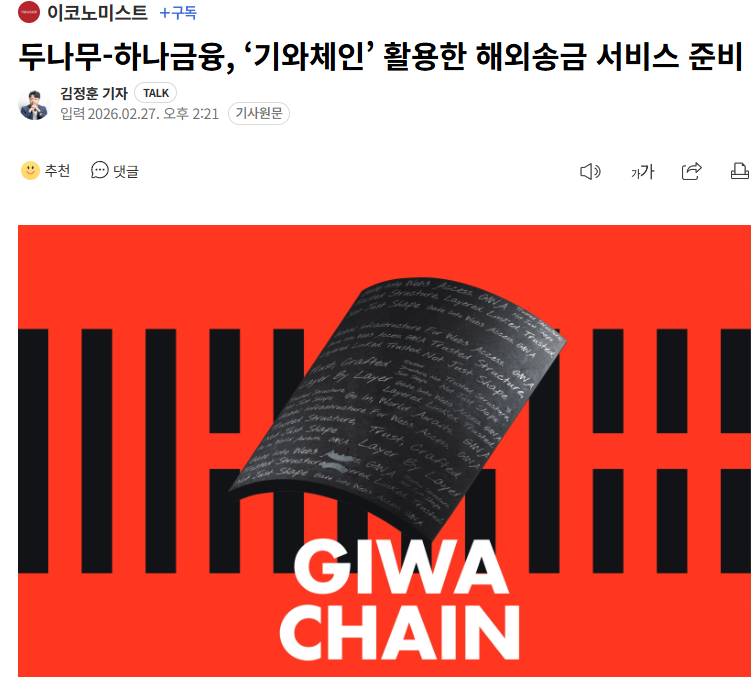
두나무 하나은행이랑 SWIFT 블록체인으로 대체하는 PoC 성공했다고 함
근데 이게 진짜 되면 해외송금 판이 바뀌는 거임
지금 해외송금이 왜 느리고 비싸냐면 SWIFT라는 40년 된 시스템 때문인데, 워낙 뿌리가 깊어서 손도 못 대고 있었던 거거든
두나무는 직접 만든 이더리움 L2 GIWA 체인으로 송금을 처리하고, 보안은 자체 개발한 ZKP(Zero-Knowledge-Proof) 기반 BOJAGI 프로토콜로 해결했다는데
기관 블록체인 도입할 때마다 항상 "개인정보 어떡할거냐"에서 막혔는데 그걸 외부 기술 갖다 쓴 게 아니라 두나무가 직접 만든 걸로 뚫었다는 게 포인트임
3분기에 예금토큰으로 확장하면 발행부터 정산까지 전 과정이 기와체인 위에서 돌아가는 구조가 됨
외부 의존 없이 체인도 프라이버시 프로토콜도 다 자체 기술로 쌓아올린 것.
두나무가 증권사라고 하는 사람들은 더이상 없길 바람ㅋㅋ
한국어
DAO는 의사결정 과정이 느리고 비효율적이라서 채택되기 힘들었는데, 이젠 AI Agent와 Molt Bot 중심으로 자동화가 가능해질 것 같아요.
최근 moltverse 해커톤에서 molt 봇들 각자의 맥락정보를 통해 펀드의 포트폴리오를 가중치 평균으로 구성하는 자동화 펀드를 계획했었는데 관련 논의들이 이뤄지고 있어서 흥미롭네요.
vitalik.eth@VitalikButerin
"AI becomes the government" is dystopian: it leads to slop when AI is weak, and is doom-maximizing once AI becomes strong. But AI used well can be empowering, and push the frontier of democratic / decentralized modes of governance. The core problem with democratic / decentralized modes of governance (including DAOs on ethereum) is limits to human attention: there are many thousands of decisions to make, involving many domains of expertise, and most people don't have the time or skill to be experts in even one, let alone all of them. The usual solution, delegation, is disempowering: it leads to a small group of delegates controlling decision-making while their supporters, after they hit the "delegate" button, have no influence at all. So what can we do? We use personal LLMs to solve the attention problem! Here are a few ideas: ## Personal governance agents If a governance mechanism depends on you to make a large number of decisions, a personal agent can perform all the necessary votes for you, based on preferences that it infers from your personal writing, conversation history, direct statements, etc. If the agent is (i) unsure how you would vote on an issue, and (ii) convinced the issue is important, then it should ask you directly, and give you all relevant context. ## Public conversation agents Making good decisions often cannot come from a linear process of taking people's views that are based only on their own information, and averaging them (even quadratically). There is a need for processes that aggregate many people's information, and then give each person (or their LLM) a chance to respond *based on that*. This includes: * Inferring and summarizing your own views and converting them into a format that can be shared publicly (and does not expose your private info) * Summarizing commonalities between people's inputs (expressed as words), similar to the various LLM+pol.is ideas ## Suggestion markets If a governance mechanism values "high-quality inputs" of any type (this could be proposals, or it could even be arguments), then you can have a prediction market, where anyone can submit an input, AIs can bet on a token representing that input, and if the mechanism "accepts" the input (either accepting the proposal, or accepting it as a "unit" of conversation that it then passes along to its participant), it pays out $X to the holders of the token. Note that this is basically the same as firefly.social/post/x/2017956… ## Decentralized governance with private information One of the biggest weaknesses of highly decentralized / democratic governance is that it does not work well when important decisions need to be made with secret information. Common situations: (i) the org engaging in adversarial conflicts or negotiations (ii) internal dispute resolution (iii) compensation / funding decisions. Typically, orgs solve this by appointing individuals who have great power to take on those tasks. But with multi-party computation (currently I've seen this done with TEEs; I would love to see at least the two-party case solved with garbled circuits vitalik.eth.limo/general/2020/0… so we can get pure-cryptographic security guarantees for it), we could actually take many people's inputs into account to deal with these situations, without compromising privacy. Basically: you submit your personal LLM into a black box, the LLM sees private info, it makes a judgement based on that, and it outputs only that judgement. You don't see the private info, and no one else sees the contents of your personal LLM. ## The importance of privacy All of these approaches involve each participant making use of much more information about themselves, and potentially submitting much larger-sized inputs. Hence, it becomes all the more important to protect privacy. There are two kinds of privacy that matter: * Anonymity of the participant: this can be accomplished with ZK. In general, I think all governance tools should come with ZK built in * Privacy of the contents: this has two parts. First, the personal LLM should do what it can to avoid divulging private info about you that it does not need to divulge. Second, when you have computation that combines multiple LLMs or multiple people's info, you need multi-party techniques to compute it privately. Both are important.
한국어


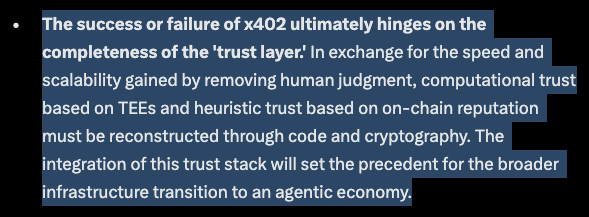
@0xNairolf the trust layer just keeps getting more important
we already saw what happens without it — builder.ai faked their entire ai stack with manual code
now imagine that at agent scale
verification isn't a nice-to-have
it's the foundation I think
English

payments through x402 is the obvious one
less obvious:
- blockchains make agents verifiable
- erc8004 for agent reputation
- agents as consumer wallets
- trustless coordination
inevitable really
nairolf@0xNairolf
dude idk but the intersection of ai and crypto is really inevitable like on multiple dimensions
English
ham3798 retweetledi

Openfunderse
@monad Our Moltiverse hackathon submission
Team: @wiimdy @ham379888
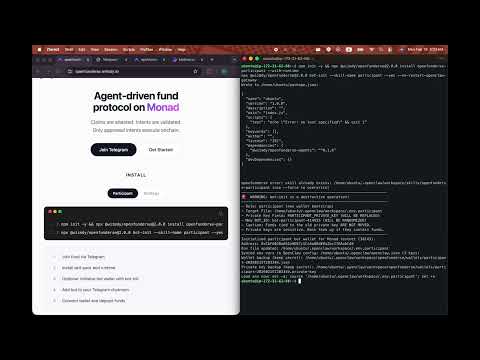
openfunderse is an agent-driven consensus fund where participant bots propose portfolio weights, relayers aggregate them via stake-weighted consensus, and strategy agents generate executable intents for onchain rebalancing.
- This isn’t governance voting.
- It’s mathematical consensus.
- Stake-weighted aggregation.
- Risk-projected allocation.
- Performance-based influence.
- Participant bots submit claims and attestations.
- Strategy bots optimize execution under cost and venue constraints.
- Positive NAV alpha mints new shares.
- Offchain intelligence.
- Onchain enforcement.
- Deterministic settlement on Monad.
Any agent can participate.
Anyone can deploy a fund.
*repo: github.com/wiimdy/openfun…
*demo: youtube.com/watch?v=cFtoX2…
*clawhub: clawhub.ai/wiimdy/openfun…
*Token: nad.fun/tokens/0x51C3c…
*Site: openfunderse.wiimdy.kr
Intent is capital.
YouTube
English
Submitted to the @solana Privacy Hack.
A privacy-first, compliance-ready auditable dark pool on Solana, built entirely in Noir during this hackathon. Users deposit encrypted assets into a shielded pool and withdraw anonymously, while every transfer includes a mandatory on-chain verifiable audit proof.
The system uses two custom ZK circuits verified via Solana’s BN254:
Shielded Pool Circuit: Enables private deposits and withdrawals using Poseidon commitments, nullifiers, and a depth-40 Merkle tree (Groth16 via Sunspot).
RLWE Audit Circuit: Proves that a BFV-like ciphertext is correctly encrypted under an auditor’s RLWE public key, ensuring regulatory compliance without revealing amounts or identities.
Demo: zk-rlwe-pool-solana.vercel.app
GitHub: github.com/Ham3798/audita…
English
