
Heath Weaver
2K posts
Heath Weaver
@heathweaver
Client churn and ramping up new employees making you a bit miserable? Let’s get you out of the weeds. 🌿
48.88178,2.454356 Katılım Ağustos 2007
263 Takip Edilen230 Takipçiler

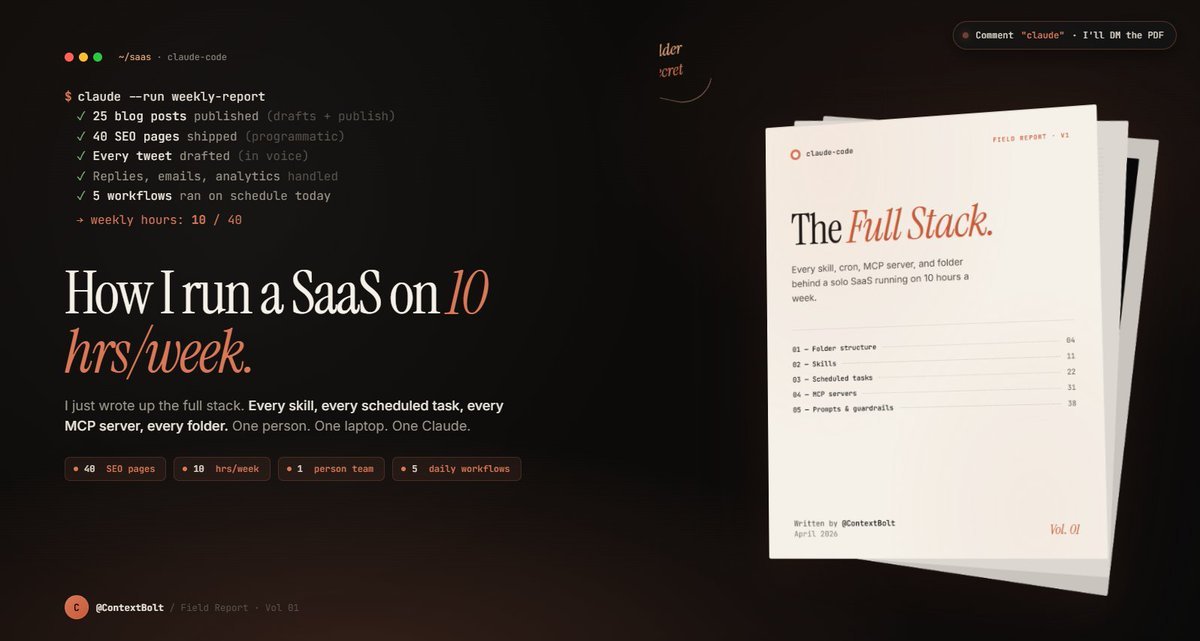
I'm one person. I work 10 hours a week on my SaaS.
In the last few weeks, Claude Code has:
→ Written 40 blog posts
→ Shipped 60 SEO pages
→ Drafted every tweet I've posted
→ Handled my replies, emails, analytics
→ Run 5 scheduled workflows every day
I just wrote up the full stack. Every skill, every scheduled task, every MCP server, every folder.
Comment "claude" and follow me. I'll DM the full PDF.
English
@official_taches Just a skill issue. Each have their own strengths and weaknesses.
English

I’ve officially cancelled both Claude Max plans and have 2 x Codex Max plans.
Codex - particular GPT5.5 is the best coding model.
English
@elonmusk Men do not put that on women, women put it on themselves by consuming too much social media and not being able to separate the composite from the individual.
English


I just filmed a 50-minute Meta Ads training for 2026.
(full course)
This has everything I've ever learned after
- Making $50K in the first 20 days on a BRAND NEW ad account
- Working with 40+ businesses
- Generating over $20M+ through our funnels
And it’s going to help you overcome the 3 BIGGEST mistakes people are making with their Meta ads in 2026.
1. Generic ad messaging
2. Incongruent funnels
3. Poor pre-call systems
Thing is...
They're EASY to fix when you know the system.
And I compiled quite literally everything I know into this training.
Inside:
1. Complete Andromeda creative strategy (how to build 25-30 diverse ads)
2. Funnel structure and how to setup your landing page for paid ads
3. Pixel conditioning done right to get qualified leads only
4. Pre-call nurture system for 70-80%+ show rates
5. Campaign structures for EVERY budget
50 Minutes of pure sauce.
If you want it:
Comment "META"
And I'll send the full course.
(must be following for DM)
English

This masterclass document covers everything I know about cold email copywriting after sending 5,000,000+ emails over the last 3 years.
In it contains 175 minutes of content across unique 9 trainings:
> Fundamentals of Excellent Cold Email Copywriting
> Understanding The Psychology of Cold Email
> Our Top Cold Email Script Frameworks
> Cold Email Script Writing Checklist
> Understanding Personalized Relevance (Messaging Concept Training)
> How to Clear Email Scripts from Spam Words
> How to Write Cold Email Script Messaging with AI
> How to Write Follow-up Emails with AI
> Live AI Cold Email Script Writing Walkthrough
Want access to the doc?
👉 Like + Comment “Cold” and I’ll DM you the document link.
(Must be following to receive DM)
English

after scaling a B2B saas from 0 to $515,700/year with a linkedin inbound funnel…
i’m giving away a 30-page breakdown on ALL we did to pull it off:
- content flywheel
- CAV framework
- DM funnels
- A/B testing
- profile setup
- lead magnet launches
like + comment “Li” and i’ll send EVERYTHING over
(must be following + RT for priority access)
English

I'm giving away the ENTIRE system I used to sign 200+ clients through Meta ads.
It's literally what scaled us to $2,000,000+/year
This guide includes:
- The VSL format
- Offer structures
- How we run ads
- Our nurture systems
+ 20 other things
Comment "META" and i'll send the 36-page doc
(must be following + RT for priority access)
English

How my friend hit $4M MRR in 5 months.
While you're trying to break $100K/month... the autist-chads are hitting 8-figure run rates before you pick which jeet to buy your next list from.
Watch the video. Like + comment. I'll DM the 2 autist-chad offer buckets to annihilate 2026.
English

Claude Opus 4.7 or GPT-5.5 can run your ENTIRE SEO
Tired of chasing backlinks? Solved.
Tired of AI slop articles? Solved.
Tired of ranking for keywords that don't convert? Solved
You just install a SKILL and you're ready to roll.
Can run automated daily tasks on a schedule
Comment "SEO" and I'll send it!
English
@ns123abc Everybody posting like this it the first time a nonprofit tried to become a for-profit. Universities spin out critical IP into companies constantly.
This is hardly precedent-setting.
Most hard technical component of our economy came from government or university beginnings.
English

🚨 NEW COURT FILING — OpenAI's own solicitation emails to Musk
For three days, OpenAI's lawyer Savitt has been framing Musk as a founding donor who broke his pledges.
Today Musk's lawyers filed the receipts to show what actually happened:
Altman's October 2015 email to Elon Musk:
> "As discussed I think starting with a $100MM commitment (and leaving the time unspecified) is the way to go..."
Then the number:
> "Can you donate $30MM over the next 5 years?"
Musk responded:
> "Let's discuss governance. This is critical. I don't want to fund something that goes in what turns out to be the wrong direction."
Altman to Musk, a few months later:
> "Can you do $20MM a year for the each of the next 3 years?"
Musk delivered $38 million plus the office rent.
Two and a half years after Musk left the OpenAI board, the asks resumed.
July 22, 2020, OpenAI's CFO to Musk's family office:
>"It would greatly help the nonprofit org if you're willing to assist with covering... landlord passthroughs and security costs."
Musk agreed. He funded OpenAI's rent.
Under California law, when a charity solicits and accepts donations, a fiduciary relationship forms between the person who asked and the person who gave.
A legal duty to use the money for the declared charitable purpose.
Altman and the CFO solicited. Musk donated. OpenAI accepted.
Then converted the charity into an $852 billion company.
The trust was breached.


English
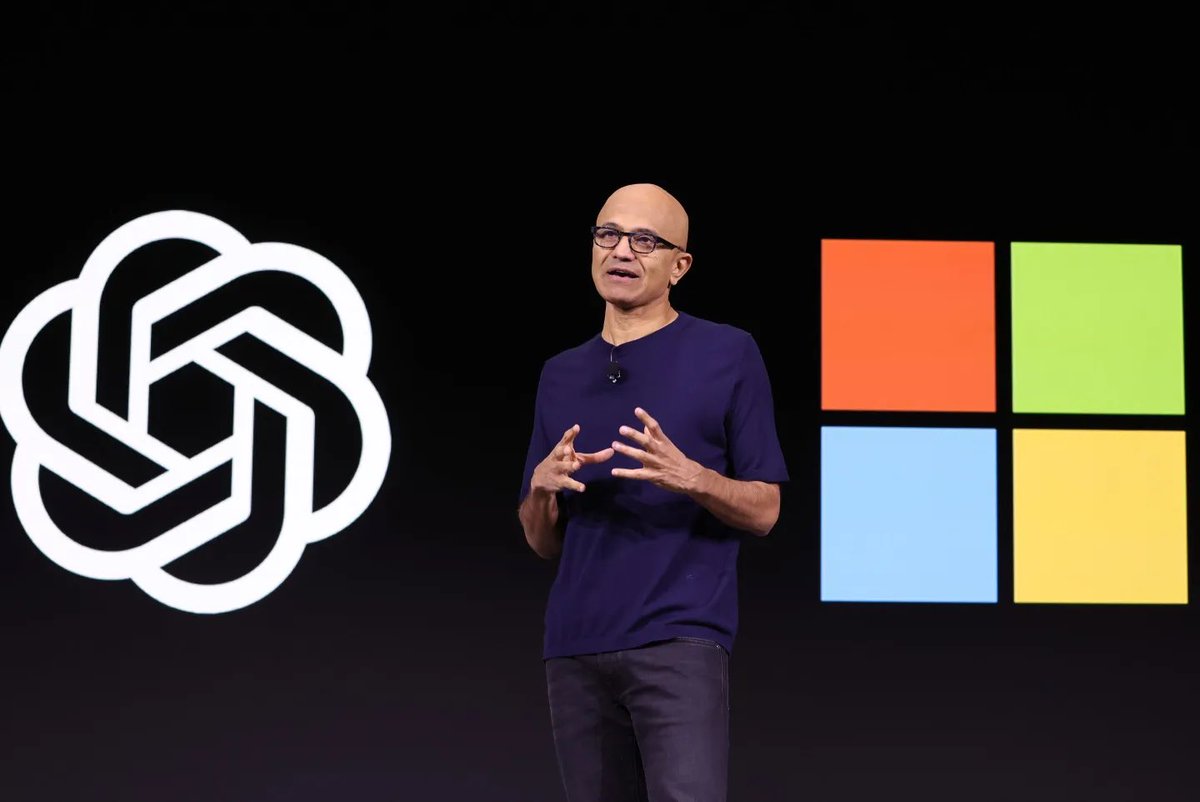
🚨 Microsoft's lawyer just told the jury Microsoft "knew nothing". OpenAI's non-profit board approved all funding, every step of the way and Microsoft did its own due diligence before entering partnership
The judge heard this exact argument on January 15. She denied it. She cited:
>Microsoft's own CTO, early 2018: "ideologically, I can't imagine that [big donors] funded an open effort to concentrate ML talent so that they could then go build a closed, for profit thing on its back"
>Satya Nadella’s internal meeting, October 2020: executives discussing "we are effectively owning" OpenAI
>Microsoft executives knew OpenAI's restructuring goal was to "remove nonprofit from formal control"
Microsoft’s lawyer opened with a defense that already lost on summary judgment.
English
@brivael Yeah, this is absurdly simplistic. That you put it in a playground is telling. The part you left off is that when the kids who figure out that by working together they can corner the market, get all the cards and start charging rent to be on the playground.
English

Elon Musk avait dit un truc qui m'avait marqué sur l'allocation de ressources. En substance : passé un certain niveau de richesse, l'argent n'est plus de la consommation, c'est de l'allocation de capital.
Cette phrase change tout.
L'économie, dans le fond, c'est juste un problème d'allocation. Tu as des ressources finies et des usages infinis. Qui décide où va quoi ?
Imagine une cour de récré. 100 enfants, des paquets de cartes Pokémon distribués au hasard. Tu laisses faire. Très vite, un ordre émerge. Les bons joueurs accumulent les cartes rares, les collectionneurs trient, les négociateurs trouvent des deals. Personne n'a planifié. Et pourtant chaque carte finit dans les mains de celui qui en tire le plus de valeur. Le système maximise le bonheur total de la cour. C'est ça, la main invisible.
Maintenant fais entrer la maîtresse. Elle trouve ça injuste. Léo a 50 cartes, Tom en a 3. Elle confisque, redistribue, impose l'égalité. Trois effets immédiats. Les bons joueurs arrêtent de jouer, à quoi bon. Les mauvais n'ont plus de raison de progresser, ils auront leur part. Les échanges s'effondrent. La cour est égale, et morte. Elle a maximisé l'égalité, elle a détruit le bonheur.
Le problème de la maîtresse, c'est qu'elle ne peut pas avoir l'information que la cour avait collectivement. C'est le problème du calcul économique de Mises, formulé en 1920. L'URSS a essayé de le résoudre pendant 70 ans avec le Gosplan. Résultat : pénuries, queues, effondrement. Pas parce que les Soviétiques étaient bêtes, parce que le problème est mathématiquement insoluble en mode centralisé.
Quand Musk a 200 milliards, il ne les consomme pas, il les alloue. SpaceX, Starlink, Neuralink, xAI. Chaque dollar est un pari sur le futur. Et lui a un track record. PayPal, Tesla, SpaceX. Il a démontré qu'il sait identifier des problèmes immenses et y allouer des ressources avec un rendement spectaculaire.
L'État aussi a un track record. Hôpitaux qui s'effondrent, éducation qui décline, dette qui explose, services publics qui se dégradent malgré des budgets en hausse constante. Le marché identifie les bons allocateurs, la politique identifie les bons communicants.
Le profit n'est pas une finalité, c'est un signal. Il dit : tu as alloué des ressources rares vers un usage que les gens valorisent suffisamment pour payer. Plus le profit est gros, plus la création de valeur est grande. Quand Starlink est rentable, ça veut dire que des millions de gens dans des zones rurales ont enfin internet. Quand un ministère est en déficit, ça veut dire qu'il consomme plus qu'il ne produit. L'un crée, l'autre détruit, et on appelle ça redistribution.
Dans nos sociétés il y a deux catégories d'acteurs. Les entrepreneurs et les bureaucrates. L'entrepreneur prend un risque personnel pour identifier un problème, mobiliser des ressources, créer une solution. S'il se trompe il perd. S'il a raison, ses clients gagnent, ses employés gagnent, ses fournisseurs gagnent, l'État collecte des impôts. Il est la cellule de base du progrès humain.
Le bureaucrate ne prend aucun risque personnel. Son salaire est garanti. Au mieux il maintient une rente existante. Au pire il la détruit par excès de réglementation, mauvaise allocation forcée, incitations perverses qui découragent ceux qui produisent. Mais dans aucun cas il ne crée.
Regarde les 50 dernières années. iPhone, internet civil, SpaceX, Tesla, Google, Amazon, Stripe, mRNA, ChatGPT. Toutes des inventions privées, portées par des entrepreneurs, financées par du capital risque. Pas un seul ministère n'a inventé quoi que ce soit qui ait changé ta vie au quotidien.
La France est devenue le laboratoire mondial de la dérive bureaucratique. 57% du PIB en dépenses publiques, record absolu. Une administration tentaculaire, une fiscalité qui pénalise la création de richesse. Résultat : décrochage face aux États-Unis, à l'Allemagne, à la Suisse. Fuite des cerveaux. Désindustrialisation. Dette qui explose.
Et le pire c'est que la mauvaise allocation s'auto-renforce. Plus l'État prélève, moins les entrepreneurs créent. Moins ils créent, moins il y a de base fiscale. Plus l'État s'endette et taxe. Boucle de rétroaction négative parfaite. La maîtresse pense qu'elle aide, et chaque année la cour produit moins.
Dans nos sociétés, ce sont les entrepreneurs, toujours, qui font avancer la civilisation. Les bureaucrates au mieux maintiennent une rente, au pire la détruisent. Aucune société n'a jamais progressé en taxant ses créateurs pour subventionner ses gestionnaires.
La question n'est jamais qui a combien. C'est qui alloue le mieux la prochaine unité de ressource pour maximiser le futur de l'humanité. La réponse depuis 200 ans n'a jamais changé. Ce ne sont pas les fonctionnaires.
Français
@XFreeze Does Silicon Valley care absolutely nothing for integrity, that people keep doing deals with him or he’s owned by the intelligence people.
English

Scam Altman has a incredible track record for being a con artist I don't think anyone has a "former ally turned enemy" list this big with directly with people he worked with
A massive new 18-month investigation dropped, revealing the full list of people who worked directly with Sam Altman and now openly say they don’t trust him - they call him a liar, manipulator, scam artist, and worse
These are his co-founders, board members, top executives, and biggest partners. Not random haters:
• Elon Musk (OpenAI co-founder)
➝ Betrayed the original nonprofit, open & safe AI mission and turned it into a closed profit machine
What he says: Calls him "Scam Altman" and “Sam Altman lies as easily as he breathes”
• Ilya Sutskever (OpenAI co-founder & former Chief Scientist)
Why: Discovered Sam repeatedly lied about safety protocols and bypassed board oversight. What he says/did: Compiled 70+ pages of memos, Slack messages, and evidence proving Sam’s lies → helped fire him. Said he didn’t think “Sam is the guy who should have his finger on the button for AGI”
• Dario Amodei (former OpenAI President, now Anthropic CEO)
Why: Left because of Sam’s leadership and broken safety promises
What he says: “The problem with OpenAI is Sam himself.” Called the company under Sam "mendacious” (full of lies) and compared it to Big Tobacco knowingly selling something dangerous. Accused him of a clear “pattern of behavior”
• Helen Toner (former OpenAI Board Member)
Why: Sam made it impossible for the board to do its job through constant deception
What she says: He was “outright lying to the board” and created a “toxic atmosphere” of psychological pressure
• Tasha McCauley (former OpenAI Board Member)
Why: Complete loss of trust after years of the same behavior
What she says: Senior leaders reported Sam cultivated a “toxic culture of lying”
• Jan Leike (former Superalignment co-lead)
Why: Sam deprioritized real safety work for shiny products
What he says: Resigned publicly saying he “lost confidence” in OpenAI leadership and that the company was “losing its way” on alignment
• Mira Murati (former CTO - one of Sam’s closest longtime collaborators)
Why: Lost all confidence in his leadership as they approached AGI
What she says: Told insiders “I don’t feel comfortable about Sam leading us to AGI” and said his playbook is to say whatever he needs to get what he wants, and if that fails, destroy your credibility
• Microsoft executives (including major tensions with CEO Satya Nadella)
Why: Felt constantly misled on deals and partnerships
What they say: A senior exec warned he could be remembered as a “Bernie Madoff or Sam Bankman-Fried-level scammer”
• Paul Graham (Y Combinator co-founder - Sam was YC President)
Why: Long pattern of deception during his time running YC
What he says: Privately told YC colleagues, “Sam had been lying to us all the time"
• Loopt board & early employees (Sam’s first startup)
Why: History of chaotic and deceptive behavior
What they did: Employees went to the board twice trying to get him fired over lack of honesty and shady behavior
These are his co-founders, board members, closest executives, and major partners who actually worked with him all say the exact same things - chronic lying, manipulation, broken trust, toxic culture, scam & deception

English
@jakubkrehel @paulfaivret It’s seems like that’d be a bit disorienting for most users. Have you tested it?
I think Microsoft did a lot of work on what confuses users when doing menu shifts.
English

We’ve been spending way too much time on this sidebar with @paulfaivret .
We re-structured the Interfere navigation, so we added this subtle animation to transition between the two layers.
English

@levelsio I love that. That will be 2-3 days of work.
Okay, let’s begin
Finished 6 minutes later.
English



faceless twitter + claude + whop checkout = $8,700 last month
no face. no personal brand. no audience.
I put together a blueprint showing how to run this
→ niche selection using the embarrassment filter
→ product creation with the full ai stack
→ page setup that converts cold traffic
→ the content strategy that drives buyers without showing up personally
comment "blueprint" and i'll send it over
(must be following)
English

I automated my content engine and 2 hrs/day dropped to 10 min
[ what’s new in v2 ]:
- 9 platforms scraped while I sleep → 2,000+ topics/day
- a 5-signal scoring brain that filters down to the 10 that matter
- voice DNA writer.. same tone, different structure every time
- a self-learning loop that remembers every approve and decline
- profile DNA — knows exactly what goes viral on MY account
v1 was a brain with no body
v2 has eyes, a filter, and memory + fully automated
Here’s how to build it step-by-step ↓
[ The architecture]:
/content-engine
├── scrapers/ (9 platform scrapers)
├── extension/ (chrome ext for X, linkedin, reddit)
├── ai/
│ ├── ranker.py (5-signal scoring brain)
│ ├── content_writer.py (voice DNA + structures)
│ ├── profile_analyzer.py (your positioning DNA)
│ └── sentiment_analyzer.py
├── publisher/ (export + time slot scheduling)
├── gui/dashboard.py (streamlit command center)
├── ingest_server.py (local server on localhost)
└── data/content_engine.db (everything stored locally)
let me walk you through each layer ↓
LAYER 1: Research engine
9 sources scanned 24/7 (X, reddit, YT, HN, github, trends + chrome ext for reddit and linkedin)
every post you scroll past gets tagged and stored locally
LAYER 2: Scoring brain
every topic scored on 5 signals:
- freshness (0.20)
- velocity (0.25)
- virality (0.25)
- relevance (0.20)
- uniqueness (0.10)
velocity 8+ → forced min score of 7. catches late bloomers that suddenly explode
2,000 topics → top 10 ranked
LAYER 3: Voice DNA writer
not one structure every time. system picks the format:
- short take
- tactical playbook
- QT contrast
- contrarian
- resource drop
- proof post
a voice guardian auto-rewrites anything that fails: lowercase ratio, no hashtags, no corporate words
LAYER 4: Dashboard Streamlit
dark theme. 5 tabs
review queue = tinder for content. swipe approve, swipe decline
LAYER 5: Publishing
no auto-posting. zero account risk
approve → pick a slot (8am / 12pm / 5pm) → exports a .txt → copy / paste / post
also auto-drafts a linkedin version of every approved tweet
LAYER 6: Self-learning loop
every click logged. weekly the system embeds your decline notes and re-tunes the scoring brain
month 1: you approve 30%
month 3: 70% pre-filtered
month 6: 10 min/day
LAYER 7: Profile DNA
analyzes your past tweets. tells you exactly which pillars, formats, and hooks perform best on YOUR account
the scoring brain uses it to prioritize what already works for you
daily run: open dashboard → 10 min reviewing → post 3x → close
total cost: ~$15/month
everything else: local, sqlite, no cloud, no subscription
unfortunately I couldn’t paste in long-form format initial description which was made before
but if this hits 2,000 likes I drop the full build guide with every prompt you need to ship it in claude code
reply "ENGINE" + RT and I'll DM you access to test it (follow me first so I can write)
save this so you don't lose it

Ronin@DeRonin_
English
English
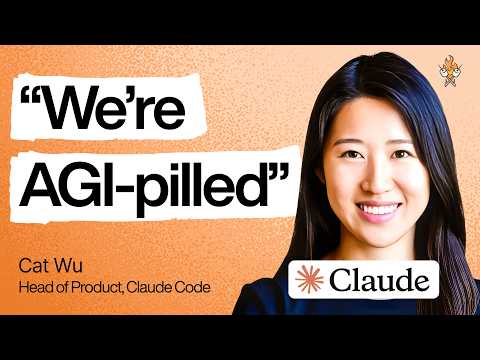
How Anthropic’s product team moves faster than anyone else
I sat down with @_catwu, Head of Product for Claude Code at @AnthropicAI, to get a peek into their unprecedented shipping pace, how AI is changing the PM role, and how to be the right amount of AGI-pilled.
We discuss:
🔸 How Anthropic’s shipping cadence went from months to weeks to days
🔸 The emerging skills PMs need to develop right now
🔸 Why you should build products that don't work yet—then wait for the model to catch up
🔸 Why a 95% automation isn't really an automation
🔸 Cat’s most underrated AI skill (introspection)
🔸 What Cat actually looks for when hiring PMs now (hint: it's not traditional PM skills)
Listen now 👇
youtu.be/PplmzlgE0kg
YouTube
English