Helen Hunt
232 posts

@helenhuntphysio
Mum of 3| NHS Clinical lead Pelvic Physio | MSc | POGP tutor for Pelvic Pain course | Yoga and Pilates teacher | Non medical prescriber


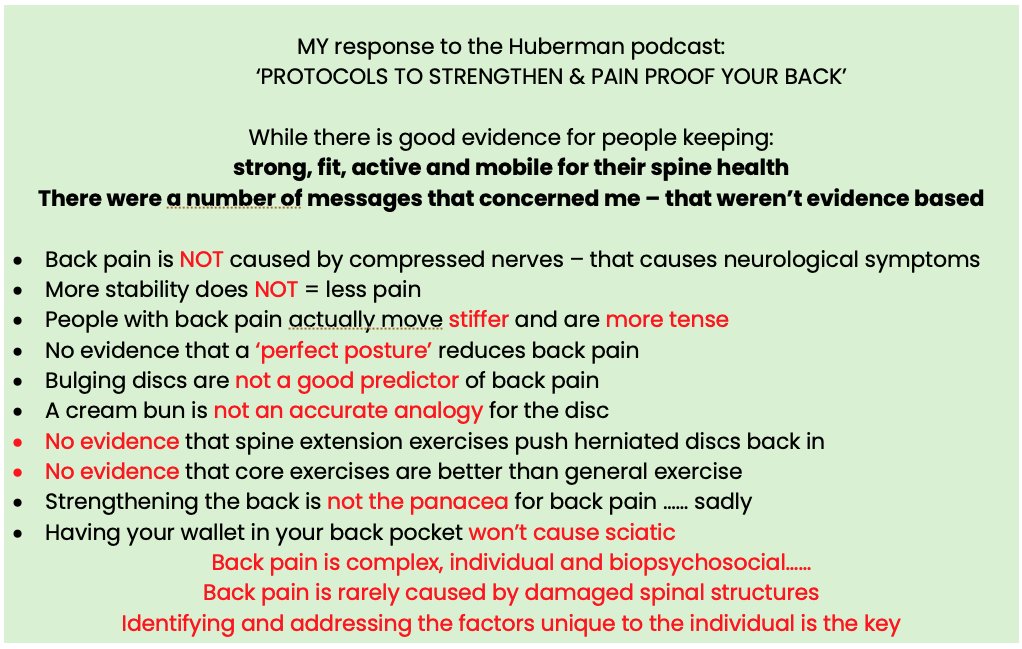
New Huberman Lab podcast out now: PROTOCOLS TO STRENGTHEN & PAIN PROOF YOUR BACK •Easy Exercises For a Strong Stable Back •3 Simple Methods That Relieve Pain •Reverse Sciatica •Posture, Breathing, Feet, Pelvic Position •Biology, Protocols & Tutorial hubermanlab.com/episode/protoc…


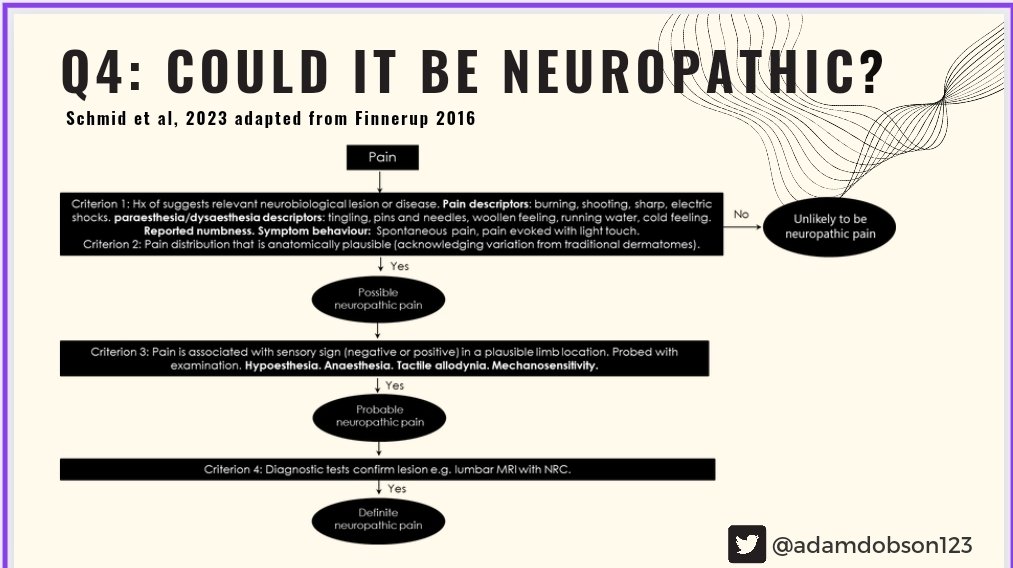
A common head scratcher in the radicular space is pain without neuropathic involvement, particularly when it does not coincide with IASPs neuropathic schema here. pubmed.ncbi.nlm.nih.gov/37235637/ Part of the answer is neuro inflammation & and its influence on the epineurium. The epineurium (not to be confused with the nerve root sleeve) is a connective tissue that forms the wrapping of nerve root fascicles. It's a soft tissue with an innervation (nervi nervorum). In an inflammatory state, it can result in noxious stimulation of the nervi nervorum, as observed in basic animal studies. pubmed.ncbi.nlm.nih.gov/24008054/ The main implication here lies in symptom interpretation. Radicular pain should not be dismissed solely based on a patient's report. Those typical 'nervey' descriptors as below. Equally, not all leg pain is radicular (or even low back related).