
Sabitlenmiş Tweet
Ben F.
11K posts
Ben F.
@hey_ben_f
Sharing my thoughts on life, and business | At the intersection of Media and AI • ex-Deloitte • @beondeck | ODF17
San Francisco Katılım Şubat 2012
1.1K Takip Edilen25.9K Takipçiler

This is potentially the biggest news of the year
Google just released TurboQuant. An algorithm that makes LLM’s smaller and faster, without losing quality
Meaning that 16gb Mac Mini now can run INCREDIBLE AI models. Completely locally, free, and secure
This also means:
• Much larger context windows possible with way less slowdown and degradation
• You’ll be able to run high quality AI on your phone
• Speed and quality up. Prices down.
The people who made fun of you for buying a Mac Mini now have major egg on their face.
This pushes all of AI forward in a such a MASSIVE way
It can’t be stated enough: props to Google for releasing this for all. They could have gatekept it for themselves like I imagine a lot of other big AI labs would have. They didn’t. They decided to advance humanity.
2026 is going to be the biggest year in human history.
Google Research@GoogleResearch
Introducing TurboQuant: Our new compression algorithm that reduces LLM key-value cache memory by at least 6x and delivers up to 8x speedup, all with zero accuracy loss, redefining AI efficiency. Read the blog to learn how it achieves these results: goo.gle/4bsq2qI
English
Ben F. retweetledi

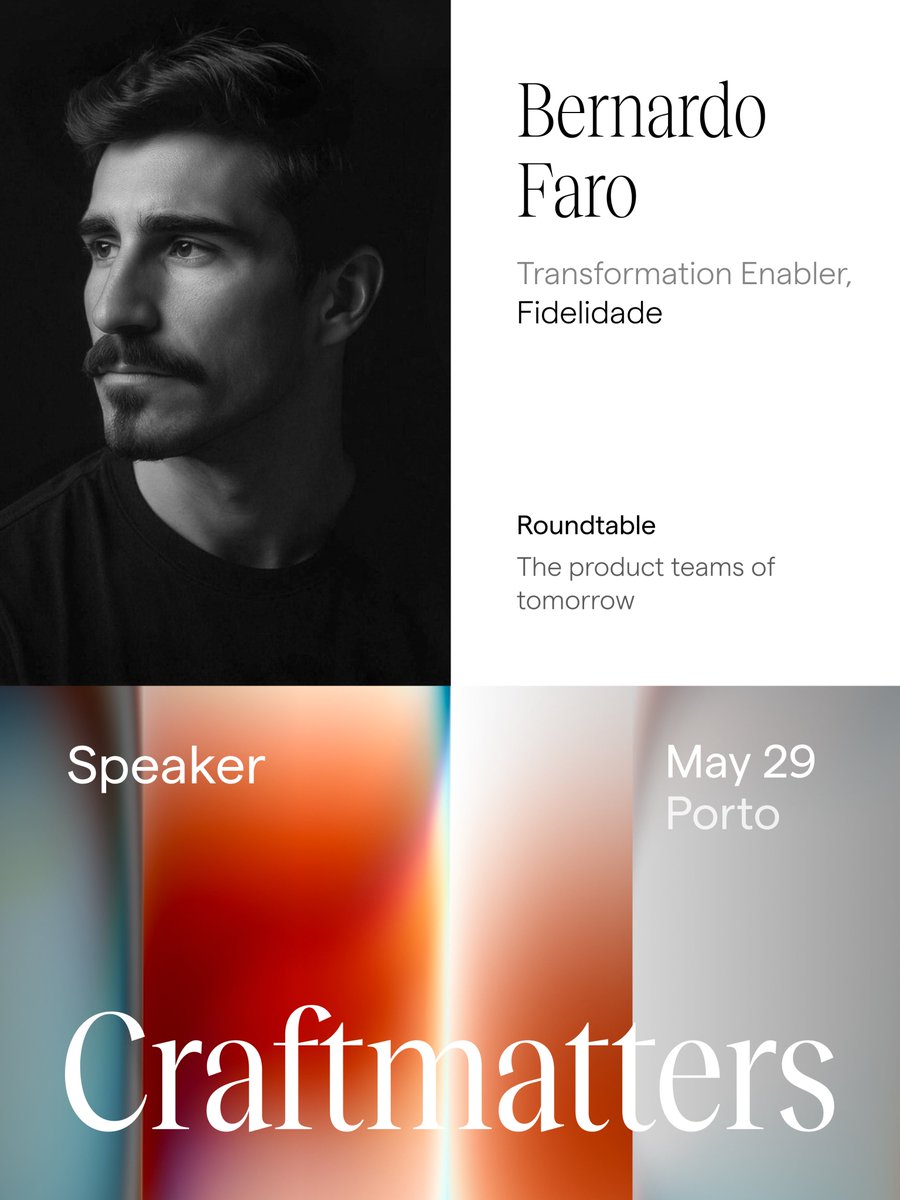
Excited to welcome @hey_ben_f, Transformation Enabler at Fidelidade as a speaker at Craftmatters 2026! 💪
Bernardo is driving transformation in complex environments while keeping impact and clarity at the center, and he'll be joining our Roundtable on “The product teams of tomorrow” to share practical insights on leading change and aligning teams.
Looking forward this!
English
Ben F. retweetledi

I recently exited my $150MM+ annual revenue startup that's raised $200MM in venture funding and discovered something shocking.
The way 99% of founders build companies is fundamentally broken.
There are 4 funding models, but ONE new model works best in today’s AI era.
The traditional models are failing founders:
• Venture Capital: Founders often end up with less than 10% ownership and often walk away with nothing personally, even if the company is worth "billions" on paper
• Bootstrapping: Founders have to make large personal financial sacrifices and 80% fail within 18 months
• Boot-scaling: Founders drain runway and bet everything on a scaling event that fails 72% of the time.
However, a small group of smart founders are using a new funding model to build AI-native companies.
These founders are reaching $4-6M ARR in a matter of months, and they own 90%-100% of the company.
Some are even building $3-5M ARR businesses with zero employees using this exact funding model.
So, after talking to 100+ founders, I created an in-depth 10-page guide sharing:
• Head-to-head comparison of all four funding models with EXACT metrics
• Founder ownership percentages, dilution, and liquidity timelines for each model
• How AI has changed what's possible ($3-5M ARR with zero employees)
• Expected revenue growth, profitability timelines, and liquidity events
• Your probability of success with each funding model (both as a founder and investor)
• The psychological reality nobody talks about (what it actually FEELS like)
• The shocking difference in founder stress levels and happiness
Want the complete breakdown and analysis?
• Like and share this post
• Comment "Funding"
• Follow me so I can DM you
English
@thesamparr Try @RowsHQ
The best of Excel + Live Editing/Update + ChatGPT
English


When I was a kid, my father was an unpredictable presence in my life.
He’d show up clean for a few months, visit my brother and I, and I’d think:
"Maybe this time it’s different…"
It never was.
The same story played out every time:
1. Get clean.
2. Make promises.
3. Relapse.
4. Disappear.
By the time I was old enough to understand I’d stopped expecting him to stick around.
That’s just what life is like when your father is a crack addict.
But here’s the thing:
My father didn’t spend 27+ years in and out of rehab because he liked crack.
(though I’m sure it helped).
He kept relapsing because he didn’t have a purpose.
Nothing that made him wake up in the morning excited to be alive.
And when you don’t have purpose, you start searching for meaning in… interesting places.
For years, I thought he’d be stuck in that cycle forever.
Until something unexpected happened:
My father started paying attention to how I’d gone from directionless and working jobs I hated...
To building a ghostwriting business that gave me freedom.
Financial, time, and life freedom.
At first, he didn’t say much.
But over time, he asked questions about:
• My work.
• My business.
• And how I figured all of this out.
Then one day, out of nowhere, he said: “I think I’m gonna try ghostwriting.”
• At 50 years old…
• After decades of addiction...
• With no writing or social media experience...
Nothing but the hope that maybe, just maybe, he could turn things around.
And you know what?
He may not be writing like Hemingway or going viral like Dan Koe yet…
But he’s putting in the work, writing, and learning skills most people half his age would shy away from.
And much of my disappointment has turned to respect.
Because this isn’t just about ghostwriting.
It’s about purpose.
My father finally found something to wake up for.
And he showed me excuses only hold power when you let them.
You can tell yourself you’re:
• "Too busy."
• "Too inexperienced."
• "Too stuck in your current life."
Or you can do what my father did:
Start.
One imperfect step after another.
Ghostwriting gave me freedom, but more importantly:
It gave my father hope.
Today, he's 7+ months sober and writing consistently.
Give him a follow here: @bluizewrites

English
@JMatthewMcGarry I am building that. Planning to launch v1 by the end of March. Wanna talk?
English

$10,000/mo business idea I can’t believe nobody’s done:
Apollo for Information Products.
If I want to scrape a list of Series A Healthtech SaaS products and their CEO’s verified emails, I can do it by the time I finish writing this post with Apollo.
But…
If I wanted to find information products and communities doing $1m-$5M in annual revenue…
The best I could do is spend hours researching to find info product owners, let alone their revenue ranges.
I know I’d pay money for a database with the following characteristics:
- Lists of 1,000+ information product owners
- Sortable by what niche they sell into (ecom, sales, writing, etc.)
- Estimated revenue range (based on site traffic, media spend ticket price)
- Verified emails for the founders and/or their operating team
- Links to each part of their funnel (social, opt-in, VSL, up-sell, etc.)
- Their top-performing / longest-running ads embedded via Ad Library
You could charge people like me, copywriters, appointment setters, sales people, or anyone else that wants to get in front of them a premium monthly subscription for access.
Is anyone building this? And if not, why not?
English

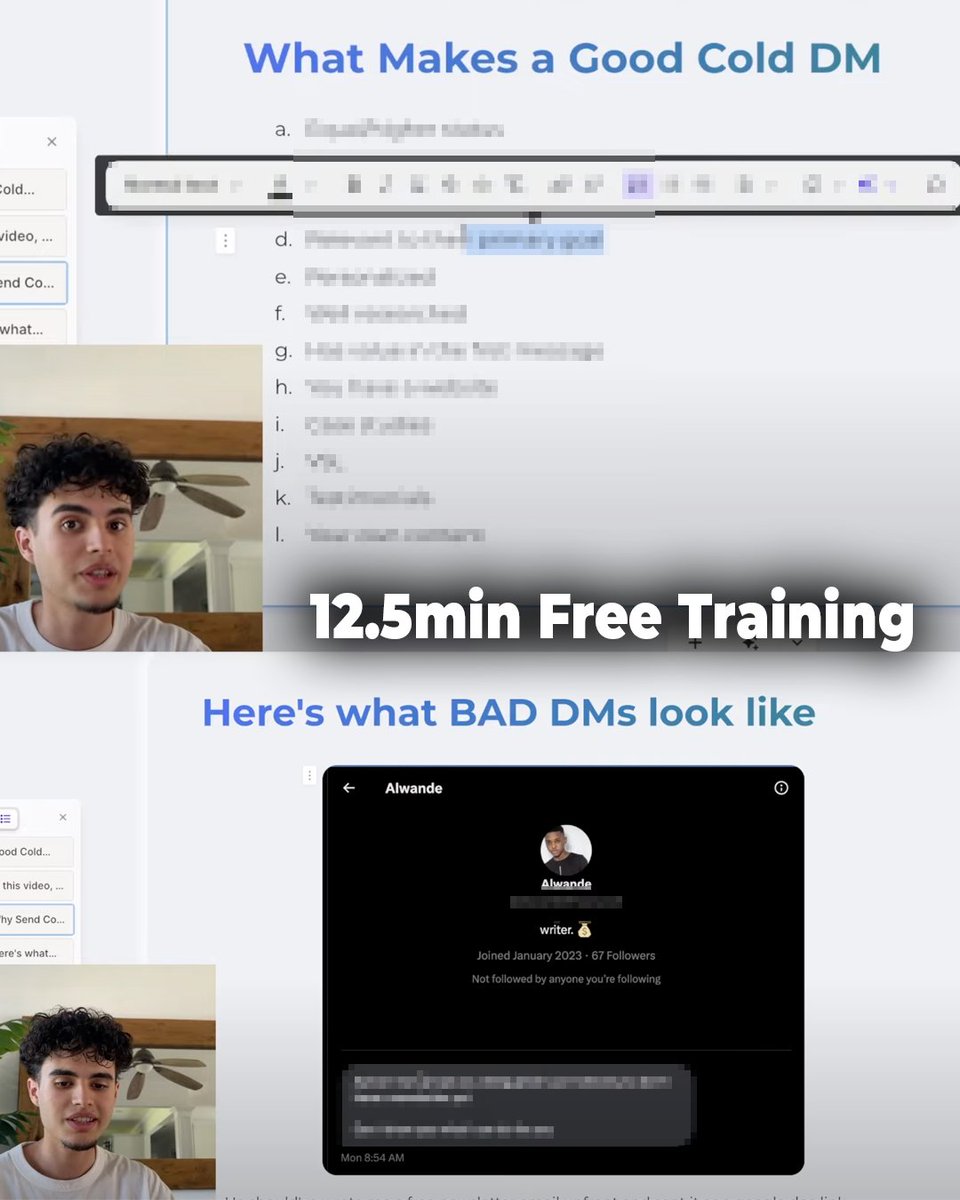
for every 100 DMs I send, I sign 1-2 agency clients minimum (even when i had 0 case studies)
these clients pay me anywhere from $1.5k to $8k/mo
I just made a free video going over what a good cold DM looks like vs. a bad one
like + comment “hi” and i’ll send it to u
English


I made >$800K in my first year selling info products.
Knowing what I know now, here are the products I'd start with (and the 1 I NEVER would):
First of all, don't start with recurring products.
- You don't know what your audience wants
- You need them to buy from you and consume
- You get locked into delivery for months
- 10x harder to sell than one-time payment
I've seen so many Founders start, realize how hard it is, and shut it down. Don't do it.
Instead, I'd do one of:
A. Digital product
B. Course
C. Live learning
A. Digital Product
Best for content that takes 1-4 hours to consume (no one wants to read a 150+ page e-book)
Or resources that are immediately useful (like templates, swipe files, lesson plans, copy scripts, SOPs, and more)
Pros
- Fast and easy to make
- 0 cost of reproduction
Cons
- Low price — Digital products typically sell for $29-$199. To make $100,000 from a $29 product, you need 3,450 customers.
- Lower perceived value — People perceive digital products like ebooks, templates, and resources as having lower value then courses, live learning, and other info products.
- Easy to steal and pirate
B. Course
Best for content that takes 2-10 hours to consume and requires visuals and video.
Pros:
- Fast and easy to make
- 0 cost of reproduction
- Higher perceived value than a digital product — courses can be sold for $97 to $997 or more.
Cons:
- More work than a digital product
- You need more sophisticated marketing to sell a higher-priced course.
C. Live Learning
Best for content that takes 5-10 hours to consume and benefits from live instruction, student community, live Q&A, and feedback.
Pros:
- Higher perceived value than a digital product and a traditional course.
- Live teaching can create better content and student participation.
- Scarcity and urgency when selling. Cohorts have an enrollment deadline and typically only accept a limited number of students.
Cons:
- More time to create and fulfill
- You don’t have 0 marginal cost of reproduction like with other info products.
- Most founders/creators only have time to do 2-4 live cohorts per year.
TLDR: There's no clear winner. You have to pick what's best for you and your customers.
English
As I start experimenting with video and YouTube again, Paddy is my go-to to learn more about how to make great YouTube videos.
Thanks for sharing @PaddyG96
Paddy Galloway@PaddyG96
We gave our YouTube ideation strategy to a smaller creator. They made a video that got 7.9 million views. In a week. Here’s how we consistently blow up YouTube channels:
English
Ben F. retweetledi
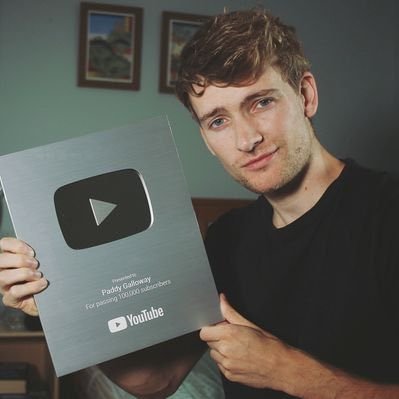
We gave our YouTube ideation strategy to a smaller creator.
They made a video that got 7.9 million views. In a week.
Here’s how we consistently blow up YouTube channels:

English
Ben F. retweetledi
There's a shocking fact about AI that nobody tells you: You can catch up to the public AI research frontier in just 2 weeks. Yes, really.
I've built a $150M annual revenue startup over the last 8 years and If I were to start a company today, I’d drop everything and go all-in on AI.
But like many busy software builders, I felt lost—overwhelmed by the noisy, crowded and fast-moving modern AI landscape. And I wasn’t alone.
So I spent my entire holiday diving deep into AI research—reading 30+ papers, watching hours of lectures, analyzing trends, and catching up to the research frontier.
✨ Here’s what I learned:
- You don’t need months (or years) to catch up.
- You don’t need a PhD or decades of ML experience.
- You need fewer than 20 papers and 2 weeks to understand the major breakthroughs shaping AI today.
It's because the technology is extremely nascent and most techniques that came before are no longer relevant:
- ChatGPT is barely 2 years old and Transformers are only 7 years old.
- Most game-changing discoveries happened within the last 4 years, driven by a few breakthrough ideas, scaling laws, and efficient matrix multiplication.
The biggest secret?
Many groundbreaking AI papers with thousands of citations are surprisingly simple and applied, like adding "let's think step by step" to the prompt, or simply asking the LLM over and over again to improve its answer (Self-Refine).
I realized there are tons of founders and builders in the same boat—wanting to dive deeper into AI but unsure where to start.
I've created an essential AI Guide that helped me catch up, in just 2 weeks, to the frontier of public AI research to figure out where the next opportunities and gaps were:
- Curated list of only the most important papers
- Simple explanations of key concepts
- Clear pathway to understanding the frontier of modern AI
It’s perfect for:
- Founders expanding into AI
- Builders wanting to innovate at the frontier of AI
- Investors looking to separate the signal from the noise
👇 Want the full guide?
- Like and Share this post
- Comment "AI Guide"
- I'll send you the complete guide
(ps, I’m also teaming up with @VishalVasishth, co-founder of @obviousvc with @ev (focused on large-scale societal impact companies like Twitter, Medium, Beyond Meat), to host a small meetup to discuss what's working and needs to be solved in the AI stack in SF. Message me if you're interested)

English

FFS it's almost the end of 2024. STOP wasting time on BS strategies already.
I recorded the only blueprint you need to build a 7-figure Faceless YouTube empire.
Every step. Every secret. Every hack.
Comment "millions" & I'll DM it to ya (must be following)

English

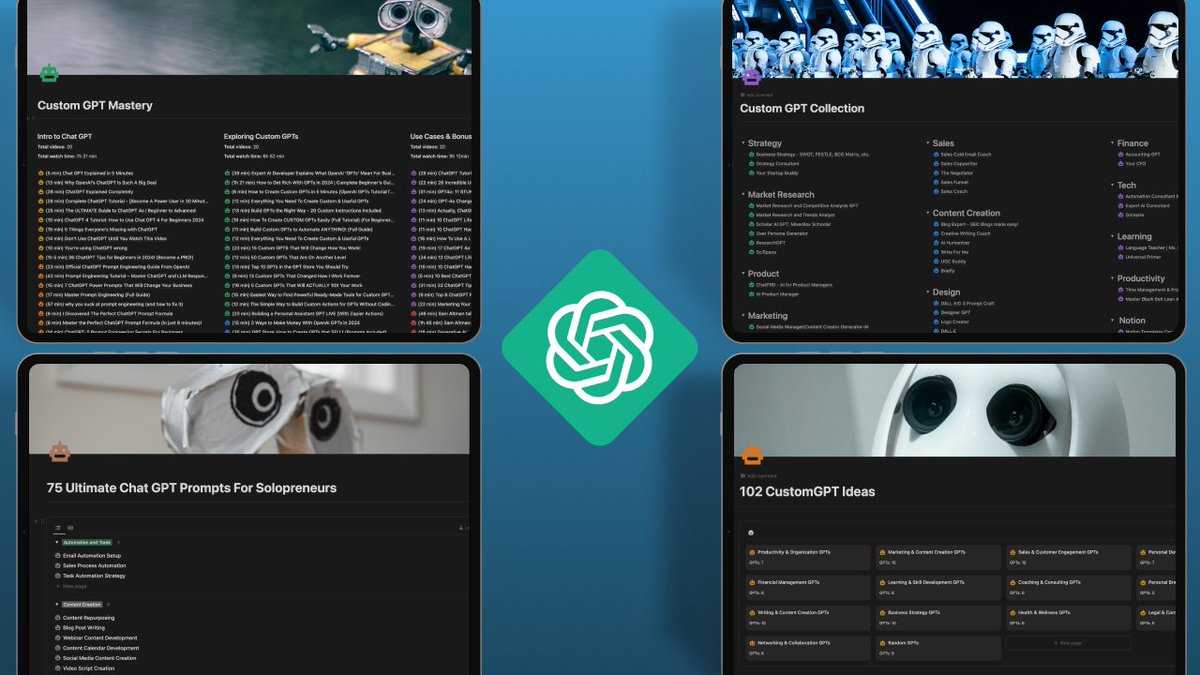
This is my BIGGEST AI FILE EVER.
And after Christmas it's gone forever.
CustomGPT Christmas Bundle:
- 52 GPTs
- 75 Prompts
- 102 GPTs ideas
- 60 videos (23h)
Normally: $100
Today: FREE
Comment “GPT” and I will DM you the whole bundle right now.
(must follow)
English

Prompt engineering is the most in-demand skill and you must learn it in 2025.
That's why we created "Prompt engineering guide" for you to master prompt writing for free.
If you are interested then like + comment "Guide" and I'll DM you the file.
(Must be following me to receive it)

English