Chris Jones

128.4K posts

Chris Jones banner
Chris Jones

Chris Jones

@himderfella

I am an enemy of China Communist Party and everything it stands for. I promote the Rights of citizens and hope for a new vital Government of and for the people.

Newcastle, New South Wales Katılım Eylül 2011
233 Takip Edilen990 Takipçiler
Sabitlenmiş Tweet
Chris Jones
Chris Jones@himderfella·
@CGTNOfficial Apart from a flood of Propaganda, Xi Jinping & the Chinese Communist Party should admit that they have allowed Covid19 to come into existence & show remorse for their lack of proper care for citizens. Also. an apology to the World would not be amiss.🇦🇺
English
11
3
29
0
Chris Jones retweetledi
Leonardo Cecchi
Leonardo Cecchi@leo_cecchi91·
Una volta lo costrinsero a percorrere a piedi dodici chilometri sul ghiaccio, con temperature sotto zero, mentre era febbricitante e denutrito. Finì nell’infermeria del lager tedesco e, quando uscì, gli chiesero di nuovo se volesse tornare in Italia e aderire alla Repubblica di Salò. Filippo Palieri, commissario di polizia, rifiutò anche quella volta. Nel lager era finito perché i nazifascisti lo avevano arrestato più di un anno prima, a Rieti. Dalla Questura, Palieri aiutava la Resistenza partigiana e aveva avvisato circa 300 artigiani e operai della città che i tedeschi volevano deportarli in Germania, aiutandoli così a evitare il rastrellamento. I nazifascisti non avevano le prove del suo sabotaggio, così pochi giorni dopo gli ordinarono una rappresaglia sui civili. Palieri si rifiutò e quella divenne l’occasione per arrestarlo. Non fuggì: li aspettò, per evitare ritorsioni sui civili e sulla sua famiglia. Nelle poche lettere che dal lager riusciva a spedire a casa, mentiva alla moglie e ai figli sulle sue reali condizioni. Non raccontò le torture, le privazioni, le marce forzate al freddo, alternate alle richieste di diventare repubblichino. Richieste che Palieri, affamato, febbricitante, ridotto allo stremo, non accettò mai, anche se accettarle avrebbe potuto salvarlo. Non a caso il prefetto fascista Ermanno Di Marsciano, un macellaio che a Rieti aveva aiutato a deportare persino dei bambini, su di lui aveva annotato con disprezzo: “non ha dimostrato attaccamento al fascismo”. L’ultimo rifiuto di collaborare con i nazifascisti lo diede nel marzo del 1945, quando era ormai in condizioni pietose. Poche settimane dopo, il 13 aprile, moriva per gli stenti e le torture subite. Tre giorni dopo, il campo veniva liberato dagli inglesi. Nasceva oggi, 22 maggio, Filippo Palieri, commissario di polizia, Medaglia d’oro al merito civile, uno dei molti eroi italiani che vale la pena ricordare e di cui occorre tenere viva la memoria
Leonardo Cecchi tweet media
Italiano
39
508
1.7K
27.5K
Chris Jones retweetledi
ヤバすぎて怖い👻💀🙀😱
【戦慄】「かつて『呪い』と呼ばれた病の正体」。 約130年前、医学が未発達だった時代の残酷すぎる記録。 原型を留めない顔、その裏には絶望の歴史があった。 ■ 1890年代の中国 写真に写るのは、ハンセン病に侵された人々。 鼻を失い、視界を奪われ、 顔の骨が溶け落ちている。 当時は治療法が全く存在せず、 一度かかれば「生ける屍」として疎まれた。 ■ 拒絶の歴史 ・回復の確率:当時はほぼ0%。 ・差別:家族からも縁を切られ、 人里離れた「癩(らい)院」に一生閉じ込められた。 病気そのものより、 社会からの「拒絶」が彼らを最も苦しめた。 ■ 科学が起こした奇跡 1980年代、特効薬が登場。 今では数錠の薬を半年〜1年飲むだけで、 後遺症もなく「完治」する病気になった。 この写真の絶望は、 人類が科学で克服した証でもある。 ■ 結論 目を背けたくなるほどの痛み。 それは、私たちが手に入れた「医療」の尊さを物語る。 過去を知ることは、 今の当たり前を慈しむこと。 医学の進歩が救ったのは、肉体ではなく「尊厳」だった。 今の平和に感謝した人は、保存と拡散を。
ヤバすぎて怖い👻💀🙀😱 tweet media
日本語
255
1.3K
12.4K
3.4M
Chris Jones retweetledi
Rick Scott
Rick Scott@SenRickScott·
Joshua Wong is facing up to life in PRISON. His only real “crime” was having the courage to stand up for his God-given rights in Communist controlled Hong Kong. This is wrong. The oppression needs to end. Joshua must be RELEASED.
Freedom House@freedomhouse

Freedom House is monitoring reports that the national security case against Hong Kong pro-democracy activist, @joshuawongcf, has been transferred to a higher court. Joshua Wong, who is 29 years old, now faces up to life imprisonment for his activism as a student and co-founder of the pro-democracy party Demosisto. Joshua is one of the many political prisoners that should be immediately and unconditionally released ahead of any visit by Xi Jinping to the United States. #FreeThemAll hongkongfp.com/2026/05/14/jai…

English
102
110
358
29.6K
Chris Jones retweetledi
Crazy Vibes
Crazy Vibes@CrazyVibes_1·
Her name was Wang Xiao, and at twenty-four years old, she was running out of time. Doctors told her she had roughly one year left to live unless she received a kidney transplant. She suffered from uremia, a severe condition where the kidneys stop filtering waste from the blood, slowly poisoning the body from the inside. Her family had already been tested. None of them matched. Every normal option had failed. So Wang did something almost nobody around her would have dared to do. In 2013, she posted a message inside an online cancer support group. Her words were painfully direct because she no longer had the luxury of pretending. She was searching for a terminally ill man with her blood type who would be willing to marry her and donate his kidney after his death. In return, she promised she would care for him through the rest of his illness with everything she had. “I just want to live,” she wrote. Most people would have scrolled past the message. One man did not. His name was Yu Jianping. He was twenty-seven years old, a former business manager and university graduate whose life had already been devastated by myeloma, a serious cancer affecting plasma cells. He had gone through a bone marrow transplant once already. The cancer had returned. His father had sold the family home to pay medical bills. A girlfriend had left after the diagnosis. Yu had quietly stopped fighting emotionally long before he stopped breathing physically. Then he saw Wang’s message. Their blood types matched. He responded with remarkable simplicity: “I can marry you.” They met in a park for the first time. And something unexpected happened almost immediately. They liked each other. One day during an online conversation, Wang suddenly disappeared for a while. Then she replied with dark humor that perfectly captured her spirit: “On dialysis now. My arm is fixated. Here is a single-handed monster.” She sent him a video from the dialysis machine smiling despite the tubes and blood moving beside her. Yu laughed. He later admitted he had not truly laughed in a very long time. On July 16, 2013, they officially registered their marriage with a formal written agreement. The contract was practical and emotionally detached on paper. They would not live together. They would not combine finances. Their families would not know about the arrangement. If Yu died and his kidney matched, Wang would receive it. In exchange, she promised she would care for his elderly widowed father for the rest of the man’s life. It began as a survival agreement between two people who believed death was approaching. But life complicated the arrangement. Wang started accompanying Yu to hospital appointments. Yu cooked soup for her after dialysis sessions. They walked hospital corridors together. They joked about sickness and death with the strange humor people develop when they genuinely understand mortality. Without realizing it fully, the contract slowly became love. Then Yu needed another bone marrow transplant — one his family could not afford. Wang refused to stand still. She opened a small flower bouquet stall on the street. Beside every bouquet she placed handwritten cards explaining their story: two sick people trying to save each other one day at a time. Customers returned. Strangers spread the story. The tiny stall slowly became something much larger through simple human compassion. Eventually, Wang raised around 500,000 yuan — more than $90,000 — for Yu’s surgery. And then something almost impossible happened. Yu’s condition stabilized after his second transplant. Meanwhile, Wang’s dialysis treatments began decreasing. Doctors told her she might not need a kidney transplant after all. The two people who met expecting death were somehow both still alive. In February 2015, they held a real wedding celebration with friends and family who finally learned how their relationship had truly started. Not as a romance at first, but as two desperate people trying to save each other. Their story later inspired the 2024 Chinese film, which won multiple national awards. Today, Wang and Yu run the “Yongsheng Flower” shop in Xi’an — built from the same flower stall Wang once used to raise money for the man she believed she would someday outlive. People often describe stories like this as miracles. And maybe they are. But what makes this story feel unforgettable is not only that two sick people survived. It is that Wang Xiao refused to surrender her sense of agency even when almost every normal path disappeared. She wrote down exactly what she needed. She asked honestly. She found another person who was equally broken by circumstance. Then they slowly gave each other reasons to continue fighting. The kidney was never donated. Because in the end, neither of them needed it. They were too busy learning how to live.
Crazy Vibes tweet media
English
73
381
1.6K
41.2K
Chris Jones retweetledi
The Internet Fish
The Internet Fish@TheInternetFish·
Bro copied the exact face shape????
English
615
11K
232.3K
12.6M
Chris Jones retweetledi
La Traumatóloga Geek
La Traumatóloga Geek@traumatogeek·
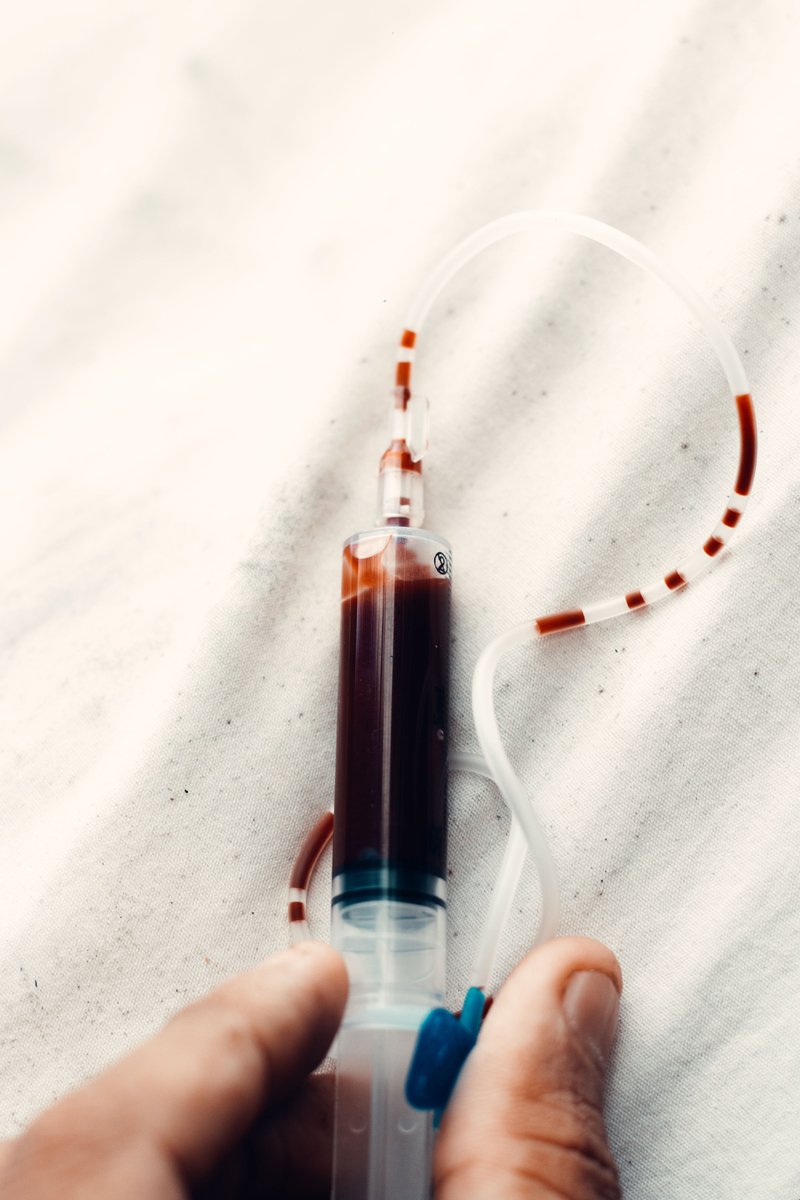
DONAS MEDIO LITRO DE SANGRE. Esto es lo que tu cuerpo hace después. Es una pregunta estupenda, me la he hecho durante los años de carrera en los que donaba y luego como traumatóloga. Te sientas en la silla. Te ponen el torniquete. La aguja entra. Diez minutos después sales con una galleta María en la mano y 450 mililitros menos. En los años buenos, te regalaban hasta una plantita. Tu cuerpo acaba de perder el 10% de su volumen sanguíneo. Y aunque tú vayas tan tranquilo a por el café, dentro ha empezado una operación a contrarreloj. Lo primero que el organismo nota es la caída de presión. El plasma (que es básicamente agua con sal y proteínas) ha bajado, y eso se arregla rapidísimo. Bebes, comes algo, y en 24 o 48 horas el depósito está lleno otra vez. Por eso te insisten tanto en beber al salir. Si tuviste un mareo al terminar de donar, te recuperas en horas. Pero pasan más cosas, esto va por fases. También has perdido glóbulos rojos. Y eso no se arregla con un vaso de agua. Tus riñones detectan que llega menos oxígeno y sueltan una hormona, la eritropoyetina. Viaja como un mensajero hasta la médula ósea con un recado muy claro: “fabrica, pero ya.” Tu médula, que en condiciones normales produce dos millones de glóbulos rojos por segundo (sí, por segundo), acelera el ritmo. Pero tiene un problema. Necesita hierro. Y con cada donación se te van entre 200 y 250 miligramos del que tenías. Sin hierro no hay hemoglobina. Y la hemoglobina es el núcleo del glóbulo rojo nuevo. Por eso tu cuerpo tarda entre 4 y 8 semanas en reponer todo lo que ha perdido. En España no te dejan volver a donar hasta dos meses después. Por eso los hombres pueden donar cuatro veces al año, y las mujeres, tres. Nosotras siempre vamos más justas de hierro por la menstruación. Tu cuerpo es generoso. Sólo te pide a cambio: hierro y tiempo. Y mientras tu médula trabaja en silencio, alguien, en algún sitio, sigue vivo el lunes. ¡Gracias por donar! #LaTraumatologaGeek
La Traumatóloga Geek tweet media
Español
160
1.7K
4.8K
163.6K
Chris Jones retweetledi
Lior 🪬
Lior 🪬@ChaiLife613·
In Auschwitz, my mother taught me three rules. Not stories. Not prayers. Rules. The kind that kept you alive. Rule one: Never make eye contact with a guard. Rule two: Never show that you are sick. Rule three: Never, ever, lose your bowl. I was five years old. I memorized them the way other children memorize nursery rhymes. The bowl was a small tin thing. Dented. Scratched. It held whatever thin soup they gave us once a day. If you lost your bowl, you had no bowl. If you had no bowl, you had no ration. If you had no ration, you understand. I guarded that bowl with everything I had. I slept with it. I held it against my chest during roll call. I knew where it was every second of every day. Then one morning, I fell into the latrine. There is no delicate way to say this. The latrines in Auschwitz were wooden boards with holes cut into them over a pit. The holes were large. I was very small. I was in a hurry. I slipped. I went in up to my neck. The smell. The cold. The rats. I do not need to describe it. Your mind already knows. My mother tried to pull me out. She could not. I was slippery and she had no strength. None of us had strength. We had not eaten properly in months. She called out. Other women came. Together they pulled me free. Someone found a hose. They sprayed me down in the cold air while I stood there shaking. I did not cry. Rule number one in Auschwitz was the same rule everywhere, do not attract attention. But I got sick. Very sick. The kind of sick that comes from rats and filth and cold water and a body that has nothing left to fight with. And I remembered Rule Two, never show that you are sick. I hid it from everyone. From the guards. From the other children. Even from my mother, because I knew if she knew, she would do something. And doing something in Auschwitz got you killed. But someone saw. I do not know who. I do not know why they helped me instead of reporting me. I never knew. They took me to a room, a makeshift hospital. I lay in a bed, a real bed, not a wooden bunk, for the first time since we had arrived. I do not remember much of what happened next. The fever blurred everything. Days passed like smoke. When I came out, I still had my bowl. I had held it even in the latrine. Even in the fever. Even in the dark when I did not know where I was or what day it was. My mother looked at me when I came back. She looked at the bowl. She did not say anything. She just nodded, the way she nodded when something had gone the way it needed to go. People ask me what survival looks like. I tell them, sometimes it looks like a five year old girl climbing out of a latrine in a death camp, covered in filth, shaking with cold, still holding her tin bowl. Because she knew that the bowl was the difference between eating and not eating. Between living and not. Because her mother had told her. And she had listened. I am Tova Friedman. I fell into a latrine in Auschwitz at five years old. I came out still holding my bowl. Tova. #NeverForget #Survival #DaughterOfAuschwitz #ShesStillHere #TheirNamesLiveOn
Lior 🪬 tweet media
English
1.3K
4K
14.4K
263K
Chris Jones retweetledi
Sukh Sroay
Sukh Sroay@sukh_saroy·
A team of researchers in New Zealand followed 1,037 babies from the day they were born for the next 45 years to find out what actually determines a successful adult life, and the strongest predictor they found had almost nothing to do with intelligence or family wealth. The findings have been published in the most prestigious scientific journals in the world. Almost no parent has heard of them. His name is Avshalom Caspi. Her name is Terrie Moffitt. They are a husband and wife research team based at Duke University and King's College London, and the study they have spent their careers running is called the Dunedin Multidisciplinary Health and Development Study. It started in 1972 in a single hospital in Dunedin, New Zealand. Every baby born there in a 12-month window was enrolled. 1,037 of them. The study is still running today. The retention rate is the part that should astonish anyone familiar with how research usually works. After more than 45 years, over 90 percent of the original participants are still being tracked. Most longitudinal studies lose half their sample inside ten years. The Dunedin team has lost almost nobody. They measured everything. Blood. DNA. Brain scans. Income. Criminal records. Romantic relationships. Drug use. Dental health. Sleep. Mental health. Lung function. They flew participants who had moved abroad back to Dunedin every few years for a full day of assessments. Some of those people now live in seven different countries. They still show up. For the first decade of life, the team did something nobody else was doing systematically. They measured each child's self-control. Not IQ. Not family income. Not parenting style. Self-control. They watched 3-year-olds in a research lab and rated their ability to wait, regulate frustration, follow instructions, and resist impulsive reactions. They added teacher ratings. They added parent ratings. They added the children's own self-reports as they grew older. They combined all of it into a single highly reliable score. Then they did the thing nobody else had the patience to do. They waited. When the data came in at age 32, the result was so consistent it should be illegal to teach a child without it. The children who scored lowest on self-control at age 3 grew into adults with worse physical health, more substance dependence, lower incomes, more credit card debt, higher rates of single parenthood, more criminal convictions, and worse mental health than the children who scored highest. The pattern was not subtle. It was a clean gradient. Every step up in childhood self-control produced a measurable step up in adult outcomes across every domain the team could measure. The detail that should disturb every parent reading this is what happened when the researchers controlled for the obvious objections. When they controlled for IQ, the effect held. When they controlled for family income and social class, the effect held. When they compared siblings inside the same family, the sibling with lower self-control still had worse adult outcomes than the sibling with higher self-control. Same parents. Same house. Same dinner table. The trait was running independently of everything researchers expected to explain it. The paper landed in the Proceedings of the National Academy of Sciences in 2011. The title was as plain as it gets. "A gradient of childhood self-control predicts health, wealth, and public safety." It has been cited thousands of times since. Almost no policy maker has acted on it. The reason most people resist this finding is that it sounds like a sentence handed down before the child could speak. If the trait that determines your adult life is locked in by age 3, the rest of your life is a formality. The Dunedin researchers say that is the wrong way to read the data. They found something else in the same paper that almost nobody quotes. Some of the children whose self-control scores improved between childhood and adolescence ended up with adult outcomes far better than their early scores predicted. The trait is not destiny. It is a muscle. Children who learned to wait, regulate, and resist between ages 5 and 15 caught up with kids who started ahead. Self-control is the one childhood trait nobody seems to teach on purpose anymore. Schools focus on test scores. Parents focus on activities. Coaches focus on performance. The part of the brain that decides between five seconds from now and five years from now is left to develop on its own, and the data shows it usually does not. The most uncomfortable part of the research is the cost calculation Moffitt and Caspi ran. They estimated that if a country could move the bottom 20 percent of children up one rung on the self-control ladder, it would measurably reduce healthcare spending, welfare dependency, and incarceration costs at the national level. The intervention is cheaper than almost any other public health investment available. Almost no country has tried it at scale. The reason adults struggle with money, weight, addiction, and relationships is rarely intelligence. It is the gap between what you want right now and what you want in ten years, and which side of that gap your nervous system is built to listen to. Most people lost that fight at age 4 and never went back to learn the technique. You were not behind because life dealt you a bad hand. You were behind because the part of you that decides between right now and the rest of your life was never taught how to choose. The good news is the muscle is still there. Almost nobody trains it after age 10. You can be the one who does.
Sukh Sroay tweet media
English
408
2.9K
9.8K
1.2M
Chris Jones retweetledi
Freedom House
Freedom House@freedomhouse·
“Every time we say Jimmy Lai’s name, we send a message to Beijing and to all who imprison people for their beliefs: we remember, we are watching, and we will not stop until Jimmy Lai and all political prisoners are free.” At Freedom House’s Annual Awards and 85th Anniversary celebration, @SpeakerPelosi and @robertcobrien honored Jimmy Lai as he received the Freedom Award. #FreeJimmyLai #FreedomHouse85 @SupportJimmyLai
English
21
38
103
6.2K
Chris Jones retweetledi
Raport Światowy
Raport Światowy@RaportSwiatowy·
🇬🇧 Brytyjski koszmar na żywo: Pakistańscy muzułmanie w Londynie urządzili oblężenie restauracji Rangrez tylko dlatego, że właściciel śmiał wywiesić szyld: „Nie serwujemy halalu.” Miesiące nękania, fałszywych recenzji, groźby gwałtu wobec żony, atak na lokal, a na koniec policja aresztuje... właściciela broniącego swojego biznesu. Po 16 latach – lokal zamknięty. To nie jest „kulturalna różnica”. To szariat w praktyce: nie dostosujesz się do nas? Zniszczymy cię! Obserwuj @RaportSwiatowy, by być na bieżąco z wydarzeniami ze świata 🌍
Polski
2.8K
28.5K
75.9K
2.7M
Chris Jones retweetledi
Kevin Yam 任建峰
Kevin Yam 任建峰@kevinkfyam·
This is how an authoritarian can create perverse incentives for destroying the criminal justice system. The promotion of Mr Chau as the next Hong Kong Director of Public Prosecutions sends a really bad signal to the Department of Justice’s entire Prosecution Division. By promoting the leading and by far the most relentless of National Security cases prosecutors, the HK authorities is telling all full time prosecutors that if they want career prospects in the DoJ, it is no longer good enough to be nailing fraudsters, murderers, rapists, gangsters and drug traffickers. Instead, one must debase and taint oneself by taking on the task of political persecution. And even trying to do no more than the bare minimum in this regard to keep one’s career won’t do - one must do it with gusto and glee as Mr Chau has done throughout. News report: thestandard.com.hk/news/article/3…
Kevin Yam 任建峰 tweet media
English
3
16
38
4.1K
Chris Jones retweetledi
Tock
Tock@yvan_theriault·
L'âne n'est pas têtu. Il est lucide. Quand un cheval prend peur, il fuit en aveugle. L'âne, lui, s'arrête. Il évalue. Il analyse. Il décide. C'est ce que les psychologues équins appellent le « freeze response » : une stratégie de survie hyper-rationnelle qui consiste à immobiliser le corps tant que la situation n'a pas été comprise. Le cheval calcule en mouvement. L'âne calcule à l'arrêt. Cette différence biologique simple explique pourquoi en 6 000 ans de domestication, aucun éleveur n'a jamais réussi à le « presser » par la force. L'âne ne discute pas avec un bâton — il ATTEND que le bâton se taise. Un âne battu s'enferme. Un âne respecté écoute. Et c'est précisément pour cette LUCIDITÉ qu'on l'utilise depuis des millénaires sur les sentiers de montagne, là où une fuite paniquée tuerait son cavalier. L'âne refuse d'avancer quand le sol n'est pas sûr. Le cheval, lui, peut tomber dans le précipice. Ce qu'on a appelé « entêtement » pendant deux mille ans est en réalité l'une des intelligences animales les plus fines jamais sélectionnées par l'humanité.
Tock tweet media
Français
129
1.2K
3.2K
42.8K
Chris Jones retweetledi
Gloria Rosario
Gloria Rosario@GloriaRosa202·
China's claim of "indisputable sovereignty" over nearly the entire South China Sea, including areas within the West Philippine Sea, as reflected in its so-called "nine-dash line," has no legal basis under international law.
English
3
63
144
2.9K
Chris Jones retweetledi
Bob Fu 傅希秋
Bob Fu 傅希秋@BobFu4China·
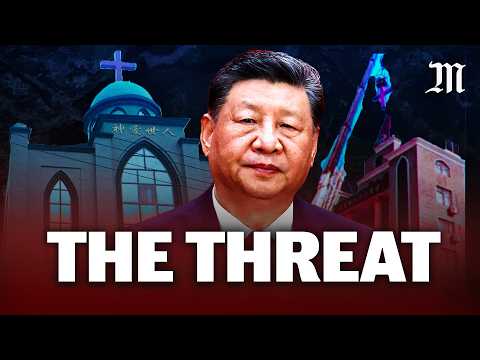
How China is cracking down on its Christians : Around 3 am in Yayang, China, hundreds of police officers in riot gear stormed a church and detained worshippers. Their crime: refusing to display the flag of the People's Republic of China on their church. Le Monde authenticated videos from Chinese social media, gathered testimonies and obtained exclusive satellite images. Together, this evidence reveals how, over just four days in December 2025, Chinese authorities forced the Christians…” (Update: eyewitnesses confirmed to ChinaAid exclusively that in the morning May 19 the whole Yayang building was forcefully demolished and destroyed by the CCP authorities after being besieged since May 17 with military style surveillance and control of the areas surrounding the church. check on ChinaAid.org for latest reports) youtu.be/dAsRLCx47A8?si… via @YouTube
YouTube video
YouTube
English
1
22
26
2K
Chris Jones retweetledi
UnveiledChina
UnveiledChina@Unveiled_ChinaX·
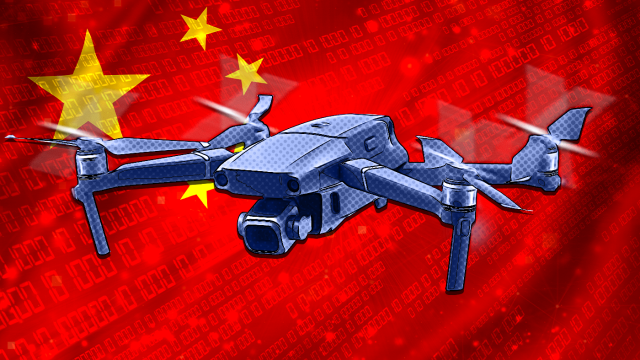
China’s absolute monopoly on the global drone market is hitting a sudden, data-backed wall. The industry is currently trapped in a pincer movement between aggressive U.S. national security blacklists and a sweeping domestic clampdown enforced by Beijing itself. While China exported nearly 4 million drones in 2025, that momentum has sharply reversed. Leading up to Beijing's absolute May 2026 citywide ban on consumer drone sales, local distributors already reported a devastating 50 percent plunge in sales. Retail shelves were cleared to protect sensitive political and military sites, freezing a massive portion of domestic demand. The international contraction is even more severe. Driven by U.S. import restrictions, sales of Chinese agricultural spray drones plummeted 59 percent, dropping from nearly 8,950 units to just 3,711. At the same time, the broader supply chain is cratering. Global export volumes of vital inertial measurement sensors collapsed by 80 percent, while U.S.-bound drone components dove by 60 percent. As a result, market leader DJI is bracing for a potential 1.5 billion dollar revenue hit in the U.S. market alone this year. Caught between Beijing's hyper-fixation on internal security and Western data-privacy bans, China's once-untouchable drone empire is experiencing a quantified retreat as global buyers look elsewhere. #UnveiledChina #DroneIndustry #DJI #SupplyChain #Geopolitics #TechWar #NationalSecurity #BeijingBan #FCCRestrictions
UnveiledChina tweet media
English
4
39
105
5.5K
Chris Jones retweetledi
Massimo
Massimo@Rainmaker1973·
Scientists have discovered a hidden "superhighway" inside your body that may finally explain why acupuncture works. Researchers identified the interstitium, a widespread fluid-filled network within connective tissue that acts as a body-wide communication and fluid transport system. Many traditional acupuncture points and meridians align closely with dense regions of this network. This breakthrough suggests that acupuncture needles may influence fluid flow, electrical signaling, and biochemical communication through the interstitium, producing effects far from the insertion point. The discovery bridges ancient healing practices with modern anatomy and offers a compelling scientific basis for acupuncture's effectiveness in pain relief and inflammation reduction. [Benias PC, et al. (2018). Structure and Distribution of an Unrecognized Interstitium in Human Tissues. Scientific Reports]
Massimo tweet media
English
21
125
484
30.1K
Chris Jones retweetledi
Christopher Nye
Christopher Nye@chrisnyeeee·
My new piece in @ForeignPolicy: China's Fallen Generals Are Getting Unexpectedly Harsh Punishments. Three takeaways: 1. The harsh verdicts against Wei Fenghe and Li Shangfu establish an unprecedentedly strict sentencing floor for the remaining purged generals. 2. Zhang Youxia faces the most severe political indictment, yet the criminal law caps his punishment at conventional life imprisonment because he is over 75. 3. As punishment ceilings for top national leaders are repeatedly breached, Xi Jinping is rapidly running out of deterrence tools. foreignpolicy.com/2026/05/22/chi…
English
2
38
70
7.1K