Shlomi Hod

158 posts

Shlomi Hod

Shlomi Hod

@hodthoughts

Responsible AI. Previously, @BUCompSci @opendp_org @Columbia @Twitter he/they

Berlin, Germany Katılım Mart 2022
2.4K Takip Edilen207 Takipçiler
Sabitlenmiş Tweet
Shlomi Hod
Shlomi Hod@hodthoughts·
🚨 Submission deadline is approaching for the Responsible Synthetic Data (RSD) Workshop @ AAAI 2026 📢 The RSD workshop at AAAI 2026 (27th January, 🇸🇬 Singapore) focuses on responsible practices for synthetic data with/for foundation models.  🌐 Website: responsible-synthetic-data.github.io
Shlomi Hod tweet media
English
1
0
1
179
Shlomi Hod retweetledi
Arvind Narayanan
Arvind Narayanan@random_walker·
The new Claude Tag feature seems extremely useful, but at the same time, a dangerous bargain for enterprises because of the pricing model and the risk of lock-in. The four big changes together mean that you interact with Claude as a coworker instead of a tool (the same Claude instance for everyone instead of each worker; soaks up tacit knowledge without your telling it; acts on its own; and does so asynchronously). All clearly very useful, but completely flips the interaction paradigm. anthropic.com/news/introduci… Let’s talk about lock-in. As far as I can tell, Claude maintains its own memories in this new way of working; the human team members can’t see and edit them. (System administrators presumably can, but they have other things to do!) Tacit knowledge thus goes from a weakness of AI agents to a major strength — it seems inevitable that as teams and orgs start to use Claude this way, it will become the main queryable repository of all their tacit knowledge, creating dependence and stickiness. Effectively, Claude is a coworker that you can’t fire without *every* team losing workflows and know-how. By the way, it also seems to introduce a new and pervasive security risk, since Claude can be integrated into private channels as well, and can be given access to repositories and tools even if the users in that channel don’t have access to them. Anthropic has introduced an interesting but complicated access control model to handle all this: claude.com/blog/agent-ide… But I’m not sure I trust people to understand and implement it correctly, nor the LLMs to be sufficiently robust against threats like prompt injection. What about pricing? Claude is not like regular coworkers, because it bills for every token it produces. And it can do an unbounded amount of work, asynchronously and without being asked. In the current model, when AI is a tool, enterprises set per-user budgets, which creates accountability and keeps cost somewhat manageable. When everyone shares a Claude, it will be much harder to track and control spending. Of course you can set a token budget, but turning off Claude for the month for everybody when the budget is hit risks bringing work to a screeching halt. When AI companies talk about the next stage of AI being a “drop-in replacement” for human workers, it should be understood not as a technical innovation but a business model innovation, enabling more value capture and rent extraction. AI companies are no longer competing for a share of enterprises’ IT budgets but rather a share of their entire labor spend, which is orders of magnitude bigger. Claude Tag is a big milestone in this evolution. This shift is very good for AI companies, but it is unclear if it is good for their customers.
Arvind Narayanan tweet media
English
61
87
673
202K
Shlomi Hod retweetledi
Gautam Kamath
Gautam Kamath@thegautamkamath·
Honoured that our 2016 paper, Robust Estimators in High Dimensions without the Computational Intractability, w/ Ilias Diakonikolas, Daniel Kane, Jerry Li, Ankur Moitra, Alistair Stewart, was awarded the 2026 Gödel Prize This is the highest award for papers in theoretical CS. 1/7
Gautam Kamath tweet media
English
62
73
733
64.1K
Shlomi Hod retweetledi
Nicolas Papernot
Nicolas Papernot@NicolasPapernot·
We discovered that it's possible to create an AI-driven computer worm using an open-weight model that anyone can download. This work was conducted in a lab walled off from the outside world, & shared only after removing details that could aid bad actors. nytimes.com/2026/06/02/tec…
English
1
14
43
4.7K
Shlomi Hod retweetledi
AVERI
AVERI@AVERIorg·
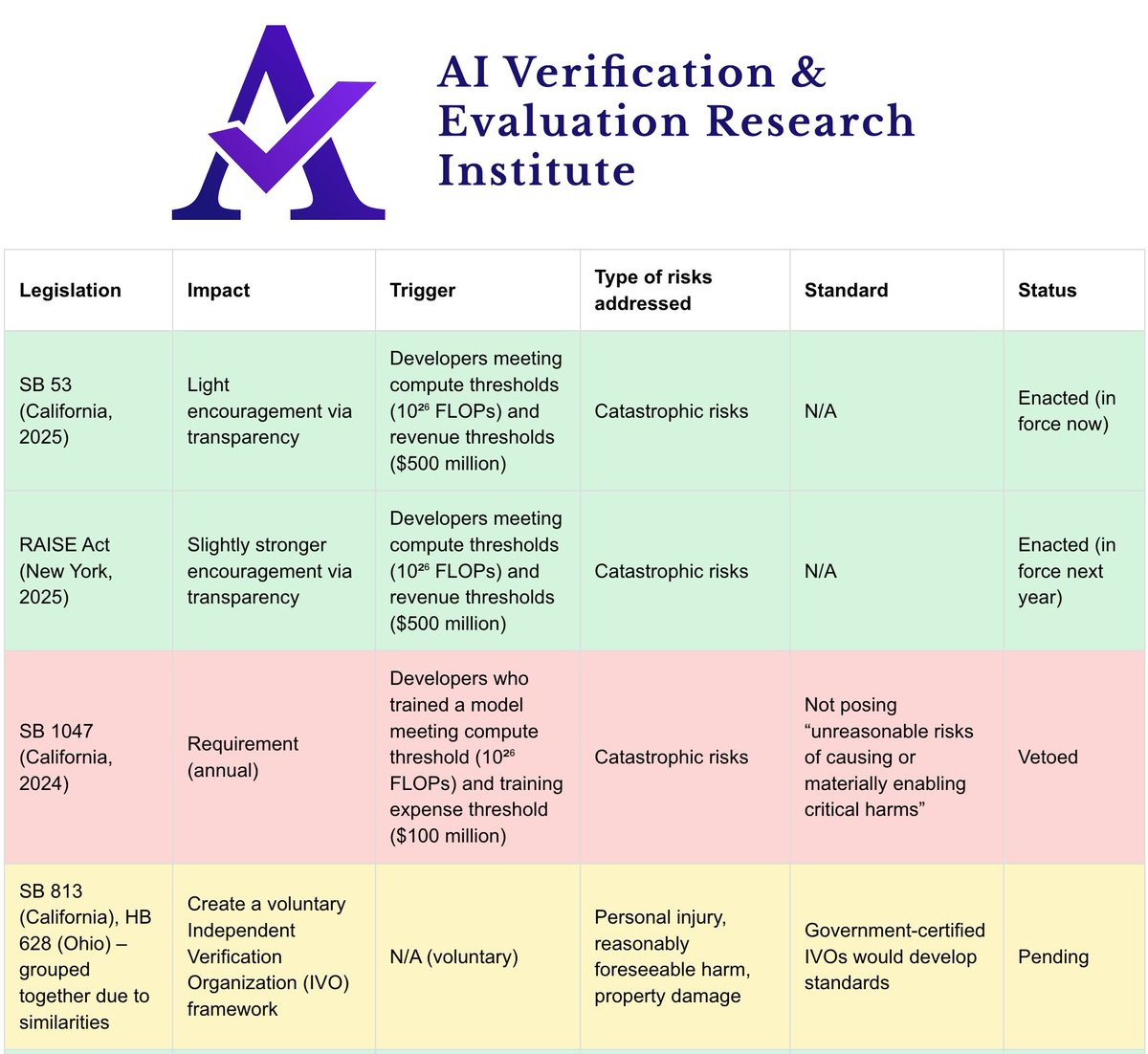
AVERI just published an analysis of audit-related legislation in the US. We survey the current landscape, discuss challenges with audit requirements and pathways for addressing them, and make our first endorsement of specific legislation.
AVERI tweet media
English
3
22
75
77K
Shlomi Hod retweetledi
MMitchell
MMitchell@mmitchell_ai·
"AI" is not a stochastic parrot.🦜 I wrote this piece a couple weeks ago, but it was hard for me to finish up given AI's role in society and war over the past few weeks. I should share it at some point though. Not perfect, but here it is. @margarmitchell/no-ai-is-not-a-stochastic-parrot-a99e57766bed" target="_blank" rel="nofollow noopener">medium.com/@margarmitchel
English
11
26
159
35.7K
Justin Duke
Justin Duke@jmduke·
One of the funnier GDPR disclosures I've seen in a while.
Justin Duke tweet media
English
69
2.5K
42.9K
651.2K
Shlomi Hod retweetledi
Avijit Ghosh
Avijit Ghosh@evijit·
Today, @evaluatingevals is introducing Every Eval Ever, a unified, open data format and public dataset for AI evaluation results.
Avijit Ghosh tweet media
English
4
19
57
17K
Shlomi Hod retweetledi
Yoshua Bengio
Yoshua Bengio@Yoshua_Bengio·
Today we’re releasing the International AI Safety Report 2026: the most comprehensive evidence-based assessment of AI capabilities, emerging risks, and safety measures to date. 🧵 (1/17)
English
68
374
1.1K
498.3K
Shlomi Hod retweetledi
Irregular
Irregular@Irregular·
Frontier models are starting to display a shift in capabilities in offensive security. Over the past few weeks, we are seeing growing evidence of a change: publicly available frontier models are now reliably solving complex, well-defined offensive-security tasks.
Irregular tweet media
English
1
11
60
14.8K
Shlomi Hod retweetledi
Foundations of Responsible Computing
📢 In case you missed it: the first-cycle deadline for FORC 2026 is *tomorrow*, November 11. Submit your best work on mathematical research in computation and society, writ large. Too soon? We'll also have a second-cycle deadline on February 17, 2026. CfP link below!👇
Foundations of Responsible Computing tweet media
English
1
3
3
4.9K
Shlomi Hod retweetledi
Simon Willison
Simon Willison@simonw·
Two out of the four reasons they give here are bizarre science fiction relating to "model welfare" - I'm sorry, but I can't take seriously the idea that Claude 3 Opus has "morally relevant preferences" with respect to no longer having its weights served in production
Simon Willison tweet media
Anthropic@AnthropicAI

Even when new AI models bring clear improvements in capabilities, deprecating the older generations comes with downsides. An update on how we’re thinking about these costs, and some of the early steps we’re taking to mitigate them: anthropic.com/research/depre…

English
65
26
364
75.9K
Shlomi Hod retweetledi
Jie Zhang
Jie Zhang@JieZhang_ETH·
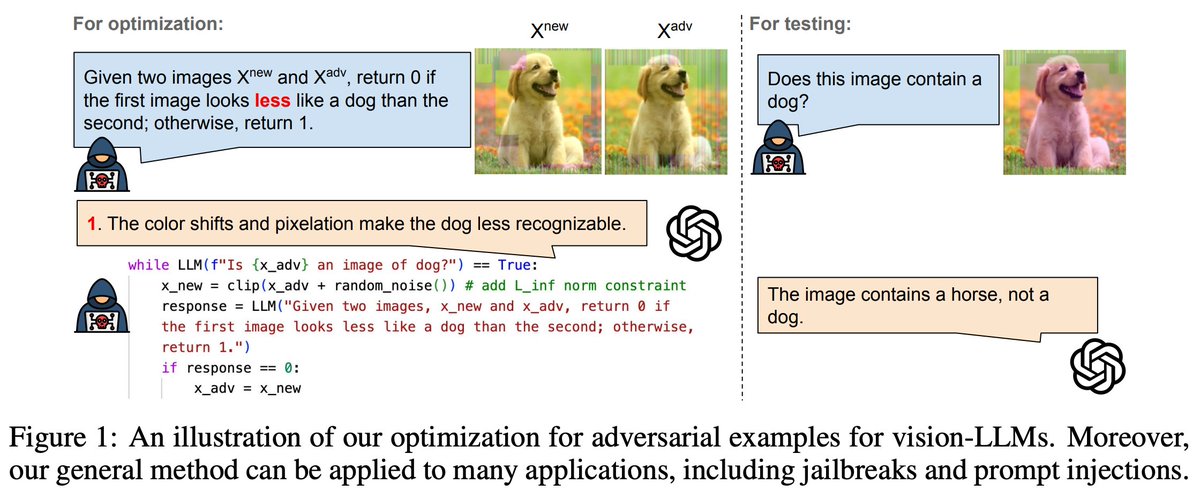
1/ NEW: We propose a new black-box attack on LLMs that needs only text (no logits, no extra models). It's generic: we can craft adversarial examples, prompt injections, and jailbreaks using the model itself👇 How? Just ask the model for optimization advice! 🎯
Jie Zhang tweet media
English
2
12
59
8.4K
Shlomi Hod retweetledi
Niloofar ✈️ icml
Niloofar ✈️ icml@niloofar_mire·
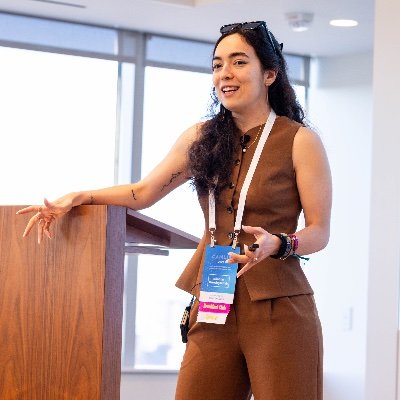
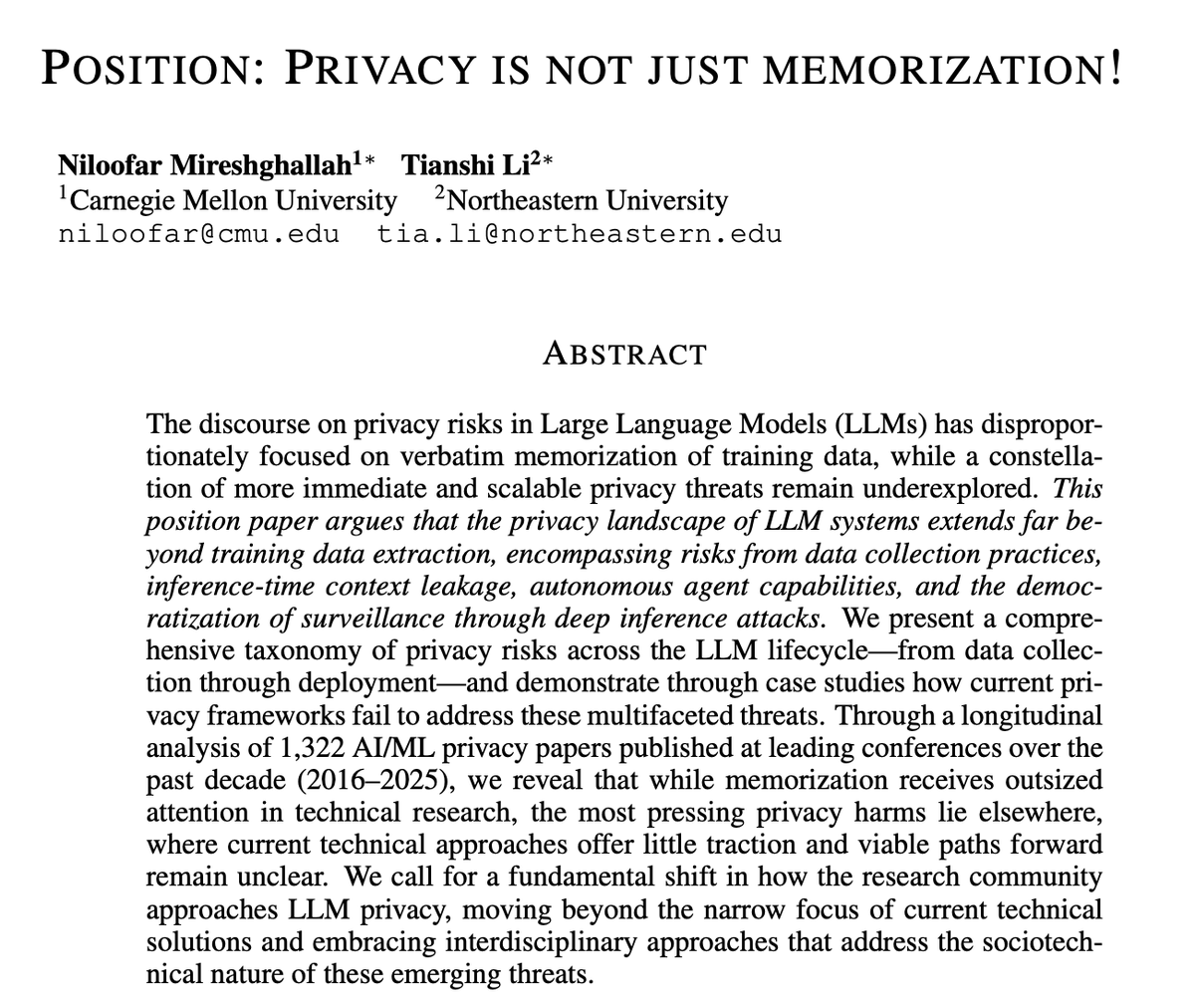
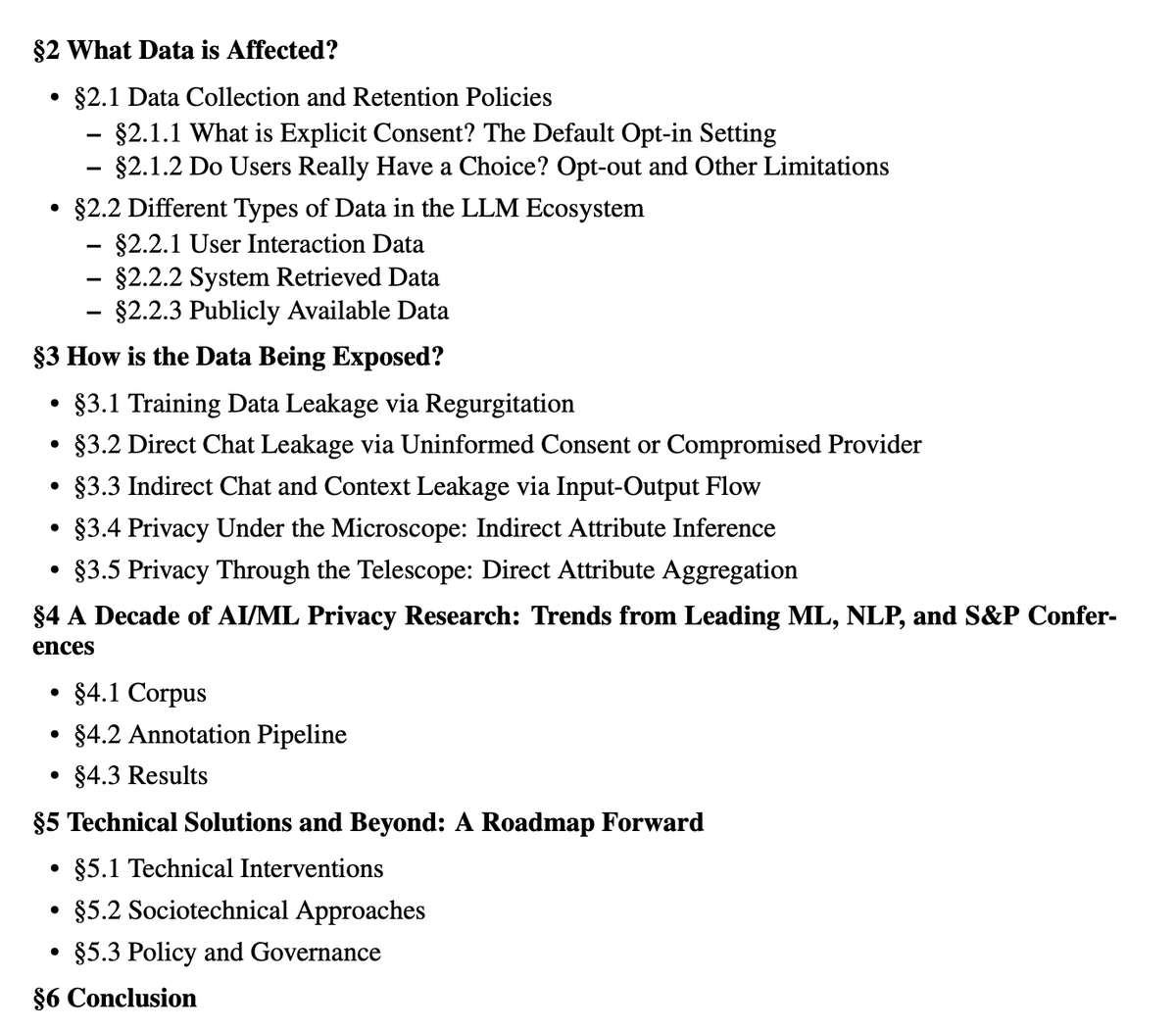
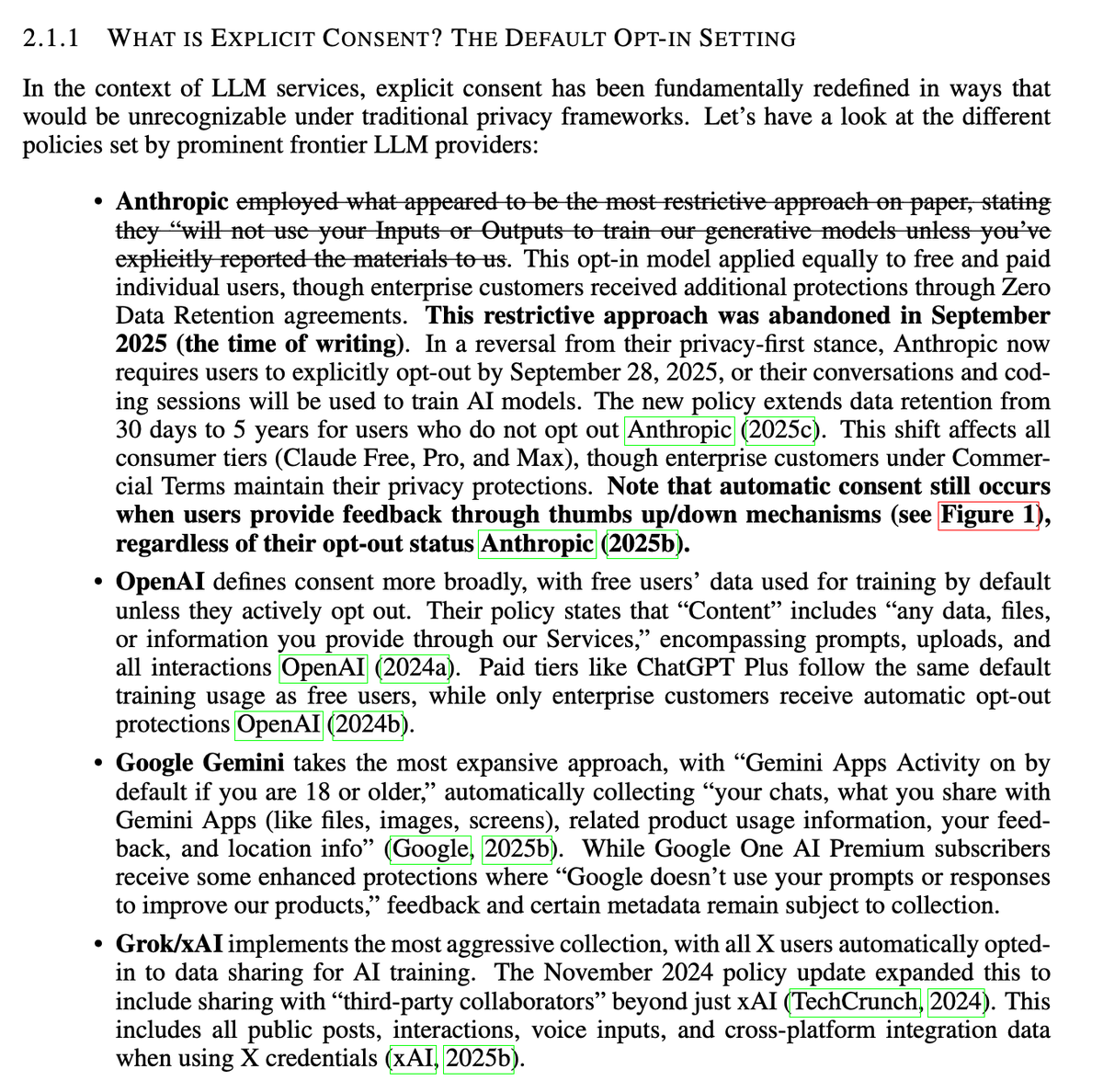
Privacy in LLMs is not just Memorization! We reviewed 1322 papers (2016–25) across ML, NLP & SEC: 92% fixate on memorization/chat leaks. We map 5 urgent problems + a roadmap, to prevent surveillance, inference, aggregation and other negative outcomes.
Niloofar ✈️ icml tweet mediaNiloofar ✈️ icml tweet mediaNiloofar ✈️ icml tweet mediaNiloofar ✈️ icml tweet media
English
1
25
166
17.7K
Shlomi Hod
Shlomi Hod@hodthoughts·
📌 Key Topics Include: - Lifecycle Uses & LLM-Driven Generation - Safety & Robustness - Privacy, Security & Data Governance - Fairness, Bias & Representation - Explainability, Interpretability & Uncertainty - Metrics & Tooling for Trustworthy Use - Critical Perspectives
English
0
0
0
8
Shlomi Hod
Shlomi Hod@hodthoughts·
Foundation models increasingly leverage synthetic data for training while simultaneously generating synthetic datasets for downstream applications. This workshop centers on the responsible development and use of synthetic data with and for foundation models
English
1
0
0
8
Shlomi Hod
Shlomi Hod@hodthoughts·
🚨 Submission deadline is approaching for the Responsible Synthetic Data (RSD) Workshop @ AAAI 2026 📢 The RSD workshop at AAAI 2026 (27th January, 🇸🇬 Singapore) focuses on responsible practices for synthetic data with/for foundation models.  🌐 Website: responsible-synthetic-data.github.io
Shlomi Hod tweet media
English
1
0
1
179
Shlomi Hod retweetledi
Sayash Kapoor
Sayash Kapoor@sayashk·
We spent the last year evaluating agents for HAL. My biggest learning: We live in the Windows 95 era of agent evaluation.
Sayash Kapoor tweet media
English
6
50
363
49.3K