Does anyone known of clustering algorithms that work on points when the points have some distribution? Visually in 2d space instead of a point we'd have eclipses in which each point is likely to be (2d CI)
@systematicls I've had /resume not work and then just gave Claude a couple of keywords to look for in my old sessions and then export the full conversation to a markdown file (if you had a 3h session, it _did_ store that conversation to disk somewhere). Then just new session, read the md file.
> 3 hours on max thinking, burning millions of tokens testing an MVP for a problem
> Finally found a solution, about to start implementation
> Computer crashes, worktree not committed
> /resume doesn't work
English is only my second language so I had no idea about many of the gendered animal names. Peahen is so obvious but I never had heard of it before. What’s news to you? HT @Iearnenglishtip
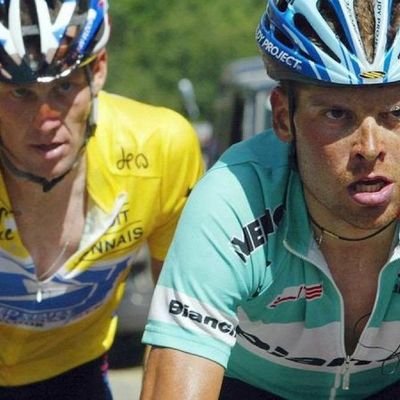
@Domestique___ It really doesn't help the sport to bring up all these times of these proven dopers. Just put that period to rest. (No idea if we'll have to do the same with the current period at one point, but why tf bring up times we know are not real?)
@johngetstrong@brady_h Can you add a field to enter any distance and get the decay model's prognosis? E.g., enter 100 km or 10 mile, get predicted result.
This weekend I ran a personal best half marathon in 1:24:04.
My mile (4:57), 5km (17:20), and HM (1:24:04) all now fall on a 6.5% fatigue curve -- for each doubling of distance my speed drops by ~6.5%.
This fatigue curve places me somewhere between a sprint/middle-distance runner and a well-trained endurance athlete.
Sprint/middle-distance runners tend to exhibit fatigue curves close to 10%, whereas well-trained endurance runners can show fatigue curves as low as 4%.
I now have two options for continuing progress:
(1) Lift the entire curve — get faster from everywhere from the mile to the marathon, while maintaining the same 6.5% fatigue curve.
(2) Bend the curve through specialized training — with more tailored longer-distance work, I could likely push down to a <6% fatigue curve.
For now, I'll choose to lift the entire curve. I know I've still got a much faster mile and 5km in me!
@biel_rafols Per mi, no és evident al vídeo. Si segueixen les banderes (px a la captura de pantalla), no passa res. Si les banderes són al camí i ells s'esquiven, no ho és. Si hi ha diverses opcions vàlides, el corredor hauria de poder triar.
Skyrace des Matheysins y su bajada no decepciono.
Fue todo un reto poder seguir a Luca del Pero, Tranchand, Delorenzi y Adkin que estaban luchando por el pódium
¿Que opináis? ¿a favor o en contra que se pueda escoger libremente el recorrido cuando veas cintas más abajo?
@nxthompson@fluidathletics That pace makes total sense when your easy day between two workout days still contains 40 km of running. Just shuffle, get the mileage in, and keep the legs for the next day.
John Korir's Training is sick
Common week, 140+ mi/225k in 6 days - 23mi/37km per day
M: 10k, 20k, 10k, (6:30-9:00/mi)
T: 10+ mi of intervals AM, 7+ mi of intervals PM
W: 10k, 20k, 10k, (6:30-9:00/mi)
Th: 10k Easy AM, 20k steady at ~Marathon Pace PM
F: 20k, 10k, Easy
S: 30-40k Progressive Long Run
Su: Rest