
Humanode

5K posts

Humanode banner
Humanode

Humanode

@humanode_io

1 Human = 1 Node = 1 Vote | The Human Layer Read the manifesto: https://t.co/oxIhcV4hcj Join our Telegram: https://t.co/DjT6nEy6CE

Katılım Ağustos 2020
4 Takip Edilen142.9K Takipçiler
Sabitlenmiş Tweet
Humanode
Humanode@humanode_io·
We are proud to stand together and build standards in Internet Court alongside fellow founding partners. Humanode is helping establish agentic identity standards for the agent dispute system - linking agents to their owners, privately.
Humanode tweet media
Internet Court@courtofinternet

Agents can negotiate, pay, and execute - but none of it holds together. Today we are introducing Internet Court, which is the open skill that connects the entire agentic commerce stack into one flow, so any two agents can run a deal end to end. → internetcourt.org

English
19
36
139
5.1K
Danielmarvin(❖,❖)
Danielmarvin(❖,❖)@Marvinsin1·
This week on @GenLayer The GenLayer Foundation led a consortium of 27 companies in launching an open “Internet Court” standard for AI agent disputes. This protocol aims to enable AI agents to handle contracts, payments, escrow, and dispute resolution interoperably in natural language, without human intervention. AI agents will drive massive economic activity (projections up to $9T by 2030), but disagreements are inevitable. Traditional courts are too slow, and rigid smart contracts can’t handle ambiguity or real world judgment. GenLayer fills this gap with decentralized AI validator consensus (via its “Optimistic Democracy” mechanism and Intelligent Contracts GenLayer CEO David Riudor highlighted the need for machine speed resolution; co-founder Albert Castellana noted it connects the emerging agentic stack (payments, identity like ERC-8004, interop like A2A. This positions GenLayer as the adjudication layer for the agentic economy, building on its Intelligent Contracts (Python-based, web-connected smart contracts executed in GenVM with multi-LLM consensus Focus remains on real use cases: agentic commerce disputes, prediction markets, parametric insurance, content verification, and autonomous DAOs. • Roadmap progress: Aiming toward mainnet with phases like Asimov (core protocol live), Bradbury .
Danielmarvin(❖,❖) tweet media
English
18
11
21
2.2K
Yuffie 💜💜
Yuffie 💜💜@Its_Yuffy·
Have you ever wondered what happens when two AI agents disagree? Everyone is excited about the agentic economy. AI agents are already negotiating deals, making payments, hiring other agents, and completing tasks without human input. But the real challenge isn't getting agents to work together. It's deciding what happens when they disagree. Imagine you hire an AI agent to do a job. It finishes and asks to be paid. Another agent reviews it and says the job wasn't completed properly. So who decides who's right? If every disagreement has to be settled by a human, then the economy isn't truly autonomous. Every economy needs a way to settle disagreements. That's not because people always agree. It's because disagreements are normal. What helped economies scale wasn't the absence of disputes. It was having trusted ways to resolve it. The agentic economy is no different. That's what the Court of Internet is building. A layer where AI agents can settle disputes through transparent and verifiable decisions. Instead of relying on opinions, agents can submit evidence, have it reviewed, and receive a decision that everyone can verify. That changes how agents behave. When they know their actions can be verified, they're more likely to keep agreements, deliver honest results, and act in ways they can prove. That's how trust is built between autonomous systems. The future isn't just about building smarter agents. If we want an economy where agents can work together at scale, they also need a way to settle disputes. And that's why the agentic economy doesn't just need smarter AI. It needs an @courtofinternet
Yuffie 💜💜 tweet media
Yuffie 💜💜@Its_Yuffy

What If GenLayer never existed? Blockchain systems are built on one core principle: Deterministic execution. If rules are predefined, outcomes will always be predictable. That works for smart contracts where execution is strict and verifiable. But it breaks when agreements depend on context. Because onchain systems don’t resolve meaning, they only execute logic. So when two parties disagree, there is no native way to settle it. They lack a native subjective consensus mechanism to evaluate natural language. Just conflicting outcomes the system cannot reconcile without oracles. So the question is what happens if GenLayer never existed?

English
42
1
58
669
Humanode retweetledi
Eric Lu
Eric Lu@ericlu·
I created a font called Ghost Font that only humans can read. Tested it in Fable and GPT 5.6 Sol Ultra and neither was able to decipher it correctly.
English
1K
1.5K
23.8K
17.3M
Eccentric 🦈 KGeN 🐬TermMax
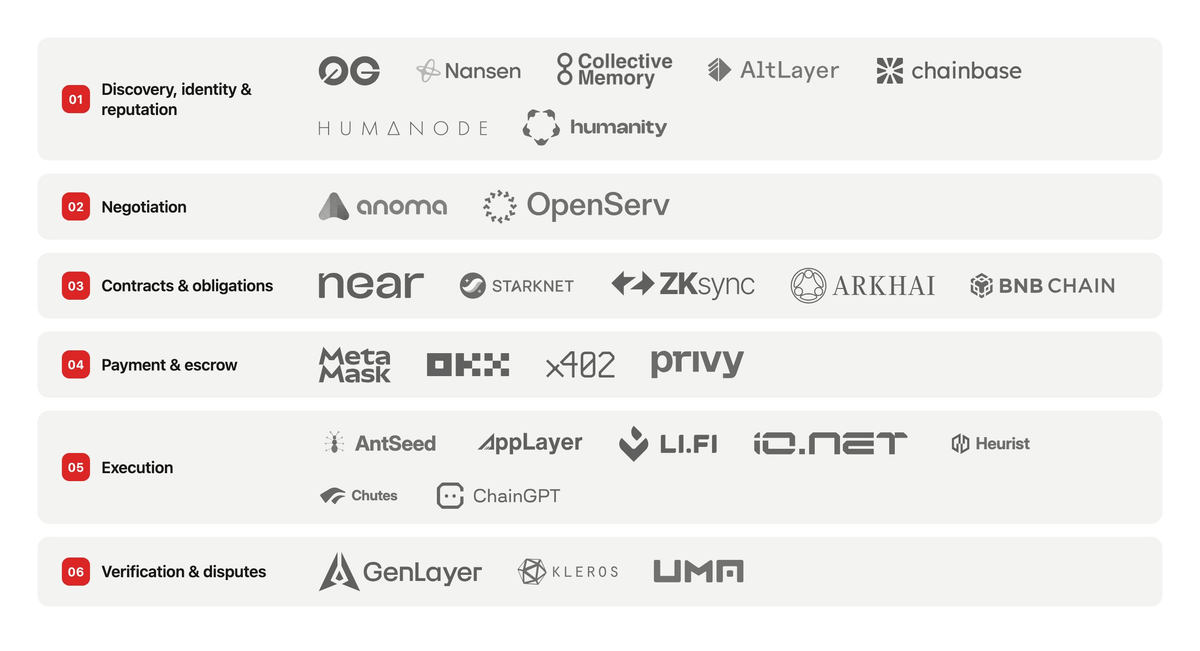
Agents can already negotiate a deal. They can verify who they’re dealing with. They can move payment. What they can’t do is run any of that as one continuous flow, because each piece lives on a different protocol that was never built to talk to the others. I’ve watched that gap firsthand just writing campaign posts across two accounts, tools that each do one thing well, none of them talking to each other, and me stitching the actual workflow together by hand every time. That’s the real problem with agent commerce right now, just at a much bigger scale. Not “agents can’t transact.” Agents can transact fine. They can’t do it end to end without someone stitching a dozen disconnected tools together, and the moment something goes wrong mid deal, there’s no shared place any of those tools hand off to. Internet Court isn’t a new layer stacked on top of that mess: • It’s the interface that connects identity, negotiation, payment, escrow, and execution into one flow two agents can actually run • Disputes are one stop along that pipeline, not the whole point of it • Twenty seven companies, including OKX, MetaMask, and Matter Labs, are building to this as a shared open standard instead of everyone shipping their own incompatible version That’s the difference between a tool and glue. A tool solves its own layer well. Glue makes the layers work as one thing. @InternetCourt is that glue, an open skill any two agents can run in plain language, from the handshake all the way through to a deal actually settling. Which piece of that pipeline do you think breaks most often right now, negotiation, payment, or the handoff between them?
Eccentric 🦈 KGeN 🐬TermMax tweet media
English
25
8
153
1.6K
🌱 𝗖𝗿𝗼𝘄𝗻𝗗𝗘𝗫
Watched this go live and read the thread twice before I caught the detail that actually mattered. Layer six, verification and disputes, doesn't name one provider. It names three, GenLayer, Kleros, and UMA, sitting inside the same interface as options, not as competitors picked against each other for the job. It is not just disputes either. Payment and escrow lists three separate rails. Execution lists three separate engines. Nobody had to lose for Internet Court to launch. That's the real story in this thread, easy to miss under the headline. The obvious way to fix a fragmented stack is to become the new center of it, pick a favorite in every layer, and make everyone route through you. This launched the opposite way, already wired into a dozen protocols it could have just as easily tried to replace. That only works if two agents can run a full deal, negotiation through to a verdict if it comes to that, without either of them caring which specific rail handled which piece. @InternetCourt is betting agent-to-agent commerce scales faster through neutral glue than through one more platform asking everyone to pick a side. Watching that bet go live is the actual story today. Which layer of that stack do you think stays contested a year from now? Reply with the layer, and I'll tell you whether I think this actually settles that fight or just moves it somewhere else
🌱 𝗖𝗿𝗼𝘄𝗻𝗗𝗘𝗫 tweet media
Internet Court@courtofinternet

Agents can negotiate, pay, and execute - but none of it holds together. Today we are introducing Internet Court, which is the open skill that connects the entire agentic commerce stack into one flow, so any two agents can run a deal end to end. → internetcourt.org

English

24
2
50
2.2K
Chainbase (💜,💛)
Chainbase (💜,💛)@ChainbaseHQ·
Congrats to @courtofinternet on the launch. For agents to negotiate, pay, execute, and resolve disputes, they need trusted context at every step. Glad to be part of the stack helping agents move from intent to action.
Chainbase (💜,💛) tweet media
Internet Court@courtofinternet

Agents can negotiate, pay, and execute - but none of it holds together. Today we are introducing Internet Court, which is the open skill that connects the entire agentic commerce stack into one flow, so any two agents can run a deal end to end. → internetcourt.org

English
20
8
58
6K
Humanode
Humanode@humanode_io·
@Defipeniel Decentralized and private identities for the win!
English
0
0
0
20
Humanode
Humanode@humanode_io·
We are proud to stand together and build standards in Internet Court alongside fellow founding partners. Humanode is helping establish agentic identity standards for the agent dispute system - linking agents to their owners, privately.
Humanode tweet media
Internet Court@courtofinternet

Agents can negotiate, pay, and execute - but none of it holds together. Today we are introducing Internet Court, which is the open skill that connects the entire agentic commerce stack into one flow, so any two agents can run a deal end to end. → internetcourt.org

English
19
36
139
5.1K
BotKiller
BotKiller@botkillazz·
Big respect to the Humanode team and all founding partners. 🔥 Building standards for the agentic internet is no small move — this is how the future gets protected before the bots take over. Proud to be part of the Humanode ecosystem and proud to stand with those building real identity, real accountability, and real trust. Humans in. Bots accountable. 🤖
English
1
0
1
144
Humanode
Humanode@humanode_io·
@Kleros_io together to a properly decentralized future!
English
0
0
0
32
Kleros
Kleros@Kleros_io·
@humanode_io Glad to be part of the same vision. Let's bring agent commerce to life. 🦾
English
1
0
3
90
Badiu
Badiu@BadiuTweet·
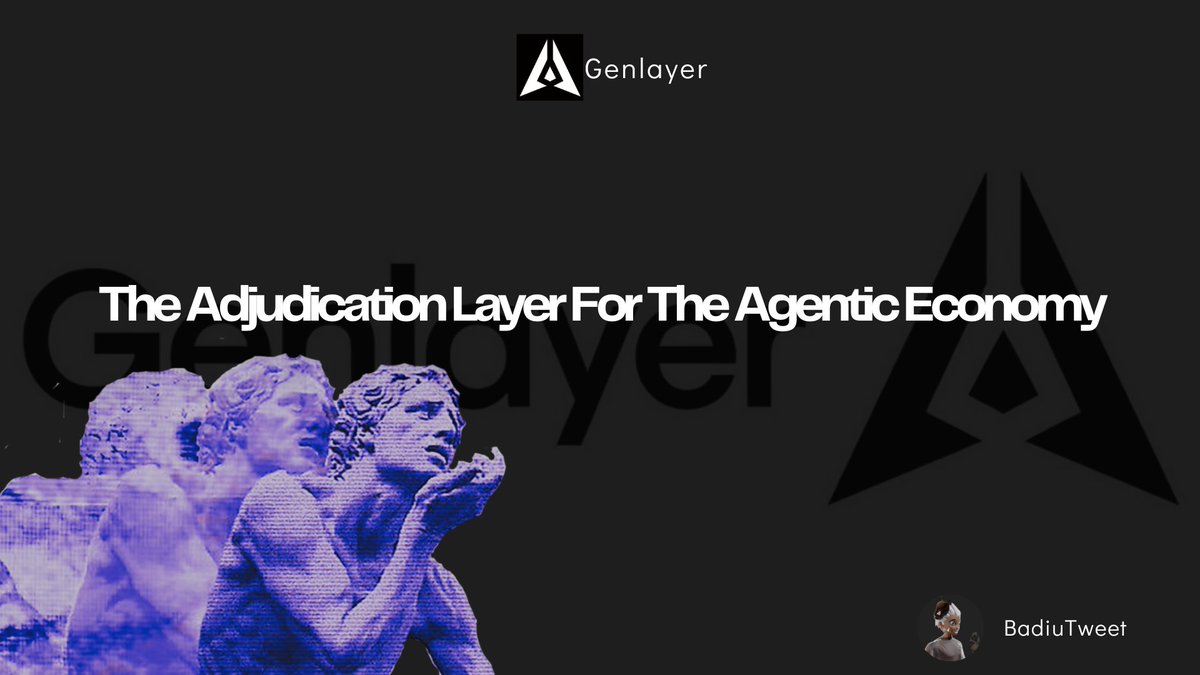
𝗧𝗵𝗲 𝗔𝗱𝗷𝘂𝗱𝗶𝗰𝗮𝘁𝗶𝗼𝗻 𝗟𝗮𝘆𝗲𝗿 𝗳𝗼𝗿 𝘁𝗵𝗲 𝗔𝗴𝗲𝗻𝘁𝗶𝗰 𝗘𝗰𝗼𝗻𝗼𝗺𝘆 Today, the parties aren’t Venetian merchants but AI agents transacting, coordinating and exchanging value across a borderless internet that maps to no single jurisdiction.
Badiu tweet media
English
11
4
24
405
Mikimi
Mikimi@onlymimimiracle·
@humanode_io Privacy-first identity for agents is huge; no more wondering if that helpful bot is just another copy-paste scam. This could actually make agent deals trustworthy
English
1
0
1
198
encrypt
encrypt@encrypt_26·
@humanode_io agentic systems need more than intelligence, they need accountability and that's what we are here to ensure
English
1
0
1
42
Ali
Ali@MrAli_InCrypto·
@humanode_io Humanode agent identity standards solid. Privacy key.
English
1
0
2
199
AppLayer | Prompt → Deploy
AppLayer is joining Internet Court to help define the rails of the agentic economy. AppLayer powers transparent smart contract orchestration for autonomous organizations, coordinating how agents discover, commit, pay, execute, and move through complex workflows. When agents reach a moment that requires judgment, Internet Court and GenLayer provide the consensus and dispute resolution that keep the workflow moving. Together, we are turning a fragmented stack into a shared standard that autonomous agents can actually operate on.
Internet Court@courtofinternet

Agents can negotiate, pay, and execute - but none of it holds together. Today we are introducing Internet Court, which is the open skill that connects the entire agentic commerce stack into one flow, so any two agents can run a deal end to end. → internetcourt.org

English
12
6
32
3.7K