
Sabitlenmiş Tweet
我不是搜神🪙
3.8K posts


我不是搜神🪙
@iamsoushen
Grok3小黄文指令创始人|搜番特长生(只搜精品)/菜鸟交易员(妄想炒币暴富)/性和谐中🥰~欢迎光临我的主页^_^
🌍搜番神器🔍➡️ Katılım Mart 2024
697 Takip Edilen2.7K Takipçiler



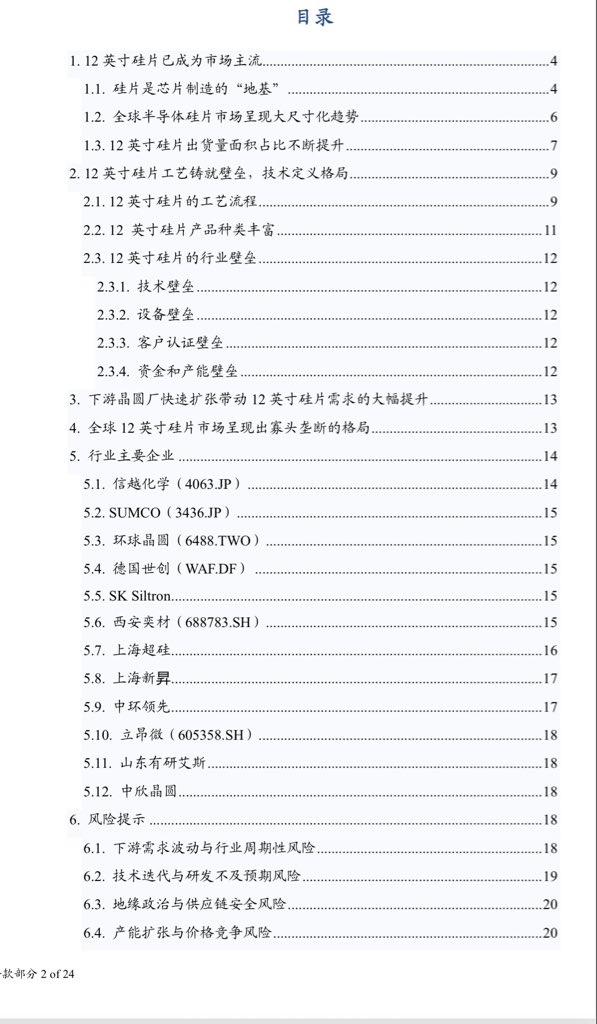

上一组推讲了SemiAnalysis的硅晶圆上行周期逻辑,有朋友问:中国这边呢?答案是,中国的硅晶圆行业处在完全不同的阶段,受益逻辑也完全不同。
先说产品。半导体用的300mm硅片主要分两种:抛光片和外延片。抛光片是从硅棒切出来,经过研磨抛光后的基础产品,主要用在存储芯片、功率器件、CIS等领域。外延片是在抛光片表面再通过化学气相沉积生长一层高纯度单晶硅薄膜,这层外延层几乎没有晶体原生缺陷,电阻率可以精确控制,是先进制程逻辑芯片(7nm及以下)的刚需。
两者的价差很大,外延片ASP显著高于抛光片。技术门槛也不同,外延片需要掌握epi反应炉的工艺控制,包括厚度均匀性、掺杂浓度一致性、表面颗粒控制等,而且下游客户认证周期通常12到24个月。SemiAnalysis那组推文强调的供需收紧,核心就是外延片,这是理解整个逻辑链的关键。
再看中国的格局。大陆300mm硅片从2017年上海新昇首次量产算起,历史不到十年。目前主要玩家包括沪硅产业(上海新昇)、奕斯伟(西安)、上海超硅、中环领先、立昂微(金瑞泓)、中欣晶圆等。国内300mm硅片产能到2025年上半年已经接近300万片/月,增速很快,但由于产能利用率尚在爬坡、产品以低价值抛光片为主,收入维度的全球份额仅约4%到5%。全球前五家合计控制了300mm产能的80%到85%。
沪硅产业是国内毫无争议的龙头,目前产能75万片/月,规划扩到120万片/月,总投资132亿元在上海和太原两地同时推进。2024年300mm出货超过500万片,2025年销量同比增长超过25%。产品覆盖逻辑、存储、CIS、功率等应用领域,也在拓展海外客户。
第二梯队里,奕斯伟一期产能50万片/月,二期规划再加50万片满产后达100万片/月,在冲刺科创板。上海超硅设计总产能80万片/月,但实际只达到32万片/月,产能爬坡远未完成,累计亏损近40亿,预计最早2029年才能合并报表盈利。中环领先、立昂微、中欣晶圆等产能规模显著小于前两个梯队。
整体格局有几个突出特征。
产品结构偏低端。国内厂商目前出货的绝大部分是抛光片,外延片能力普遍薄弱。上海超硅的300mm外延片收入占比甚至不到1%,只通过了两家客户认证。沪硅产业的外延片占比也在爬坡过程中。SemiAnalysis描述的epi wafer ASP上行逻辑,中国厂商短期内很难直接受益,产品结构还没到那个位置。不过全球晶圆行业整体回暖也会带动抛光片ASP止跌,国内厂商能间接受益于周期改善。
全行业亏损。几乎所有国内300mm硅片厂商都处于亏损状态。硅晶圆制造是典型的重资产行业,前期投入大、固定成本高、折旧压力重。沪硅产业2025年300mm收入增长约15%,但ASP受竞争压力在下降,扩产项目的前期折旧直接侵蚀利润。行业普遍依赖政府补贴、产业基金和IPO融资来维持扩产节奏。
跟海外头部的差距仍然很大。技术上,信越和SUMCO在拉晶工艺、缺陷控制、外延层均匀性上积累了几十年,国内在成熟制程抛光片上基本追上,但先进制程外延片差距明显。规模上,SUMCO的300mm产能是沪硅的数倍。盈利能力上,海外四大即使在周期底部也能维持正的EBITDA(SUMCO 27%、Siltronic 23%),国内厂商毛利率还是负的。定价权上,海外四大跟大客户签3到5年的LTA锁定量价,国内主要做现货或短期合同,抗周期波动能力弱。
但需求端对国内厂商是确定性利好。中国300mm晶圆厂数量预计从2024年底的62座增长到2026年底超过70座,中芯国际、华虹、长鑫等持续扩产,对硅片的需求是刚性的。在地缘政治背景下,国产替代需求也是结构性的,即使技术规格暂时不如海外四大,国内晶圆厂也有动力给本土供应商更多份额。
对照SemiAnalysis的框架:海外四大的故事是”供给锁死+ASP拐点”的周期反转,核心变量是外延片定价权;中国这边是”国产替代+产能爬坡”的成长逻辑,核心变量是出货量增长和产能利用率提升。两个故事的驱动因子和时间节奏不一样。
国内最值得跟踪的是沪硅产业,核心观察点是能不能从亏损走向盈利拐点。300mm出货量每年都在增长,如果全球晶圆行业进入上行周期带动ASP企稳,同时产能利用率继续提升摊薄固定成本,经营杠杆弹性也不小。风险在于外延片能力还在早期,短期靠抛光片走量,ASP定价权弱,扩产还在烧钱,盈利时点有不确定性。
中文
深南电路1Q26利润同比+73%,毛利率同比+4.4ppt,AI网络设备订单在持续改善产品结构。野村目标价263→391,FY28 PE对应不到19倍。
公司同期公告46亿无锡高端PCB扩产项目,瞄准的是高速高密高层数产品。PCB板块野村给了35% CAGR,到FY28占收入近七成。IC载板部分,BT载板利用率回升叠加涨价,ABF载板开始吃国产AI芯片的替代需求,板块CAGR 31%,毛利率从22.6%提到30%。
ABF载板值得多说一句。全球市场基本被台日韩垄断,大陆内资厂商份额只有个位数。深南的广州工厂已经连线投产,满产后ABF载板年产能2亿颗,目前还在爬坡和客户认证阶段。这块业务短期贡献有限,但如果国产AI芯片放量,ABF载板的国产替代空间会非常大,这才是IC载板业务真正的第二曲线。

中文
‼️:This is a value investing thesis, not a short-term trade. Valuation at IPO will likely be rich — buy-and-hold may not be a good investment. Also noted that it’s not a financial advice.
English
买北方华创/中微,而不是未来要上市的长鑫和长江。
Macro_Lin | 市场观察员@LinQingV
Jukan (@jukan05) wrote a sharp memo on how the US let China's display industry grow unchecked while drawing the line at semiconductors. The strategic analysis is right. But there's a second layer he didn't touch, and it matters more if you actually invest in this space. China's display industry won. Its shareholders lost. And the same pattern is about to replay in memory. BOE controls 25% of the global display panel market. Revenue approaching $29 billion. Net margin: 2.7%. ROE: 3.1%. The stock has gone nowhere for years. Jukan's point is that the US made a mistake by not sanctioning China's display equipment imports the way it sanctioned semiconductor equipment. He's correct. BOE bought the same tools from Applied Materials that Samsung used. No CFIUS review, no Entity List, no restrictions. The result is exactly what he describes. China now holds 70% of global LCD production and just crossed 50% of OLED shipments. Korea is hanging by a thread. But here's what the geopolitical framing misses. Even inside China, the winners of this industrial war weren't the display companies themselves. The value destruction mechanism has four moving parts. First, the capex treadmill. A single Gen 8.6 OLED line costs $4-9 billion. BOE's latest Chengdu fab alone is $8.7 billion. The moment one investment cycle finishes, the next generation demands even more. Profits never accumulate. They get recycled into the next fab before shareholders see a cent. Second, perpetual dilution. Every fab requires massive equity raises, JV structures with state-owned partners, and government co-investment. BOE's share count has expanded enormously over two decades while earnings-per-share growth has been negligible. The pie grows, but each slice keeps getting thinner. Third, the principal-agent problem. BOE's six largest shareholders are SOEs from Beijing, Chongqing, and Hefei. Their KPI is employment, industrial upgrading, and supply chain control. Return on equity was never the objective. When the people running the company don't care about stock returns, the stock doesn't return. Fourth, self-inflicted overcapacity. Four Chinese firms are building Gen 8.6 OLED lines simultaneously. They compete on price against each other, not just against Samsung. Panel prices recover, producers ramp utilization, prices crash again. BOE's gross margin sits at 14%. Even at the top of the cycle, current prices barely keep panel makers above break-even. Market dominance and shareholder value destruction, simultaneously. The industry won. The stocks lost. Now watch CXMT and YMTC. CXMT is pursuing a STAR Market IPO at roughly $42 billion valuation, raising $4.2 billion. YMTC plans to list in H2 2026. CXMT posted cumulative losses exceeding 30 billion yuan across 2022-2024, then reported its first profitable year in 2025, timed perfectly for the IPO window, during the hottest memory supercycle in years. Check the four forces against them. Capex treadmill? CXMT plans to expand from 200,000 to 300,000 wafers per month this year, then to 400,000. The IPO proceeds of $4.2 billion are earmarked almost entirely for fab expansion and R&D. Not a dollar returns to shareholders. YMTC is breaking ground on its third Wuhan fab, targeting production in 2027. Perpetual dilution? CXMT's IPO alone issues 10.62 billion new shares. This is round one. Scaling to 400,000 wafers requires tens of billions more in capital that doesn't exist yet. More raises will follow. Principal-agent misalignment? CXMT was founded by the Hefei government. YMTC is a creation of Tsinghua Unigroup and the National IC Fund. The controlling interest is the state. The mission is memory self-sufficiency, not EPS. Self-inflicted overcapacity? Both are scaling aggressively at the same time. UBS estimates Chinese memory capacity expansion could reach 120,000-140,000 additional wafers per month in 2026, with further increases in 2027. When this capacity hits the market, commodity DRAM and NAND pricing will compress. Samsung and SK Hynix will respond with price cuts in segments where their fabs are fully depreciated. CXMT and YMTC, running brand-new fabs with heavy depreciation, get squeezed hardest. Jukan asks whether the West's semiconductor hegemony will last. That's the right question at the geopolitical level. At the investment level, the question is different. Even if CXMT and YMTC succeed in displacing Samsung and Micron from commodity memory segments, their shareholders will likely suffer the same fate as BOE's. The pattern is structural, not accidental. When the state's objective is industrial displacement and the industry requires perpetual multi-billion-dollar reinvestment, market dominance and shareholder value destruction travel together. So how do you actually profit from this? You don't buy the miners. You sell them pickaxes. Every dollar CXMT raises in its IPO, every dollar of government subsidy flowing to YMTC, a significant portion ends up as revenue for semiconductor equipment suppliers. These companies capture the capex regardless of whether the end customer ever earns a return on its fabs. Three names sit at the center of this flow. Naura Technology is China's largest equipment maker, now ranked sixth globally. Revenue growing 30%+ annually, net margins around 17%, ROE of 17%. That margin profile is six times BOE's. The product portfolio spans etch, PVD, CVD, ALD, furnaces, and cleaning. AMEC is China's etch specialist, founded by a former Applied Materials executive. Revenue expected around 12.4 billion yuan in 2025, up 37%. Etching tools deployed across more than 100 production lines. R&D intensity runs at 30% of revenue, aggressively expanding from etch into thin-film deposition. ACM Research focuses on cleaning and electroplating. Smaller and more specialized, but cleaning is one of the most repeated process steps in memory manufacturing. Dual-listed on STAR Market and Nasdaq. The asymmetry is clean. CXMT and YMTC will spend tens of billions building fabs. Their shareholders will be diluted, margins will compress, and the cycle will punish them. The equipment suppliers earn 17% margins selling the tools that build those fabs, cycle after cycle. One risk. Naura was added to the US Entity List in December 2024. If Washington extends restrictions to Chinese equipment makers more broadly, the thesis gets complicated. And none of these trade cheaply. Naura sits at 52x earnings. But the structural logic holds. In the display industry, the correct trade was never BOE. It was the companies selling BOE the tools to build its fabs. The same logic applies to memory today. Jukan is right that China's display dominance is a cautionary tale for the West. For investors, the cautionary tale is different. The industry succeeds. The value just accrues somewhere else in the chain.
中文


我不是搜神🪙 retweetledi










穷人怎样翻身变富?
Quora上有个高赞回答,我觉得讲得特别实在,一针见血:
"我曾经就是一穷二白的人。
第一步:立刻调整态度。
没有借口,不怪任何人、任何事。你必须100%为自己的成功负全责。
第二:永远守信用,而且每次都超出别人的预期。
还是那句话: 零借口。
第三:深刻自我反省。
搞清楚到底是哪里卡住了自己,承认阻碍你的,只有你自己。 然后,就开始疯狂翻石头找机会。
看得越多,好机会就越容易跳出来。发现后,全力以赴去干! 这事不轻松,不然人人都富了。
你要比别人工作更久、更拼命,不断把自己从自己的坑里拉出来,绝不为平庸找任何借口。 太懒散?那就别指望致富。
最后一点,只向已经成功的人请教,别听没做过的人瞎BB。他们会直接告诉你哪里错了。
记住:人最可怕的习惯,就是拼命证明自己“是对的”,哪怕是证明自己会失败。
所以态度真的决定一切。 机会从来不是天上掉下来的,而是别人愿意给你的。
想让别人押注你?就得用超强的表现证明你值得。
持续超越预期,机会就会源源不断找上门。
白手起家的人,都懂这个道理。

中文