Venugopal Narayanan

5.5K posts

Venugopal Narayanan banner
Venugopal Narayanan

Venugopal Narayanan

@ideorogue

Upstream Petroleum Consultant. Writer for Swarajya: Energy. Geopolitics. Election math. History. Maps.

Ernakulam, Kerala Katılım Haziran 2021
1.3K Takip Edilen2.1K Takipçiler
Sabitlenmiş Tweet
Venugopal Narayanan
Venugopal Narayanan@ideorogue·
New thread: mapping electoral changes in India over the past 45 years (national & provincial) Some comparative, some standalone, few analytical, some topical, many forgotten, all HQ. Requests welcome. Pl use hashtag: #Indian_electoral_history_in_maps 1. UP 1985 Lok Sabha
Venugopal Narayanan tweet media
English
7
21
59
0
Venugopal Narayanan
Venugopal Narayanan@ideorogue·
Now ask yourself whom the UAE would sell that additional oil to?
James E. Thorne@DrJStrategy

Food for thought. The age of cartel scarcity is ending The United Arab Emirates’ decision to leave OPEC is not just another quarrel inside an oil cartel. It is a move in the New Great Game taking shape across energy, trade routes and strategic commodities. For years, Abu Dhabi accepted the logic of collective restraint. Saudi Arabia would lead, Russia would amplify, and other producers would sacrifice volume for price. That bargain worked while members shared the same goal: defend oil prices without destroying demand. The UAE no longer fits the model. It has invested heavily to expand capacity, while OPEC+ quotas have limited its ability to monetise those barrels. ADNOC has targeted crude production capacity of 5mn barrels a day by 2027, while UAE production has often been restrained by OPEC+ agreements (EIA). Abu Dhabi wants to convert oil in the ground into sovereign wealth while demand still has value. The cartel wants patience. The UAE wants velocity. That is the structural shift. The oil market is moving from price defence to market-share capture. The UAE is not leaving OPEC because it has lost faith in oil. It is leaving because it wants to sell more of it while the world still needs it. Investors should separate the shock from the regime. In the short term, the Iran conflict drives prices because it determines whether barrels can move through Hormuz. If tankers cannot sail, spare capacity is theoretical. War risk, insurance costs and inventories set the front-month price. But Iran does not define the long-term price structure. Wars create spikes; structures determine regimes. The structural story is bearish: OPEC is less cohesive, the UAE is more willing to chase volume, and the US is now the resource superpower OPEC once feared. The US became the world’s top crude producer in 2018 and produced a record 13.2mn barrels a day in 2024 (EIA). For Donald Trump, the rupture is useful. A weaker OPEC means Saudi Arabia and Russia have less ability to manage prices. Lower oil is a tax cut for US households and a weapon against inflation. But Hormuz limits the victory lap. Trump can pressure cartels; he cannot repeal geography. China sees the same map differently. It remains exposed to Gulf flows and needs reliable suppliers. Beijing has relied on discounted Iranian and Venezuelan barrels, but those supplies carry sanctions, shipping and insurance risk. A freer UAE can offer something more valuable than cheap crude: reliability. This is the New Great Game in energy form. The US wants lower cartel power. China wants secure supply. The UAE wants autonomy and relevance in both capitals. Saudi Arabia wants to preserve cartel authority. Russia wants disruption to keep energy geopolitics in play. The age of cartel scarcity is giving way to the age of market-share oil. The marginal barrel is no longer merely an economic unit. It is a geopolitical instrument.

English
1
1
9
401
Venugopal Narayanan
Venugopal Narayanan@ideorogue·
Well well well. UAE exits OPEC. A day after Indian NSA Shri Ajit Doval visited the country. Can expect major ramp up in oil and gas production capacity in next 3-5 years, with bulk of LNG exports going to India. This is how smart countries overcome the Occidental colonial yoke. By leveraging their strengths, in concert with a benign major regional power. Wait for the list to grow. 🙏
Javier Blas@JavierBlas

🚨🚨🚨🚨FULL STATEMENT: UAE says it's leaving the OPEC oil cartel from May 1. "... Following its exit, the UAE will continue to act responsibly, bringing additional production to market in a gradual and measured manner, aligned with demand and market conditions..."

English
9
93
621
70.8K
Amar Govindarajan
Amar Govindarajan@amargov·
Wow! Someday I’d love to go fossil hunting and return with something that fossilised a few thousand years ago.
Bhupender Yadav@byadavbjp

At the request of the Thoothukudi administration in Tamil Nadu, @ZoologicalI conducted a field survey of fossil sites exposed by torrential rains in 2023. The assessment confirms a newly discovered Fossil Bed dating back to the Holocene period (8,000–12,000 years), which significantly enriches the Quaternary fossil record of India. This discovery is important because it helps us better understand India’s ancient wildlife, environment, and climate. @moefcc commends ZSI's swift and exemplary scientific response in safeguarding India's natural heritage.

English
1
2
25
1.9K
Venugopal Narayanan
Venugopal Narayanan@ideorogue·
Bhai. It’s an epidemic. Be it TOI or TNIE led by @PrabhuChawla , they have few qualms about taking our original theses and fluffing them out. Look at this one from TOI and compare it with the original: Drill, sanction, control: Inside the oil economics driving Trump 2.0 timesofindia.indiatimes.com/business/inter… Shameless copycats! The Gas Wars Are Here: America's Quest To Own LNG Empire Rests On Conflict, Not Competition swarajyamag.com/world/the-gas-…
English
0
0
6
397
Anmol Jain
Anmol Jain@teanmol·
We agree, it is "a well-researched article". Just that it is @SwarajyaMag's research. @PrabhuChawla Ji's column in @NewIndianXpress (Korea earns. India pays. Who dictates?) appears to be remarkably inspired by Swarajya's piece (The Imbalance With Korea That Delhi Is Trying To Address) published on 22 April, four days before his column ran. The flow and story arc appear to be same. The opening peg, the three-company analytical frame, the figures used and the comparisons drawn from them, and the closing argument all follow our piece. Obviously, the underlying data is public. The MEA briefing was open to all, the IPO filings are available to anyone, the trade numbers come from DPIIT data, and all of us draw from the same well. What does not come out of public data is: - the choice Samsung, Hyundai and LG as the frame for reading the imbalance, - treating each as a distinct repatriation playbook, -deciding which figures from each tell the story, and -building the case that CEPA has produced outcomes its designers didn't intend. And there is more. The closing argument, as it happens, is more than 'inspired': @SwarajyaMag: "The $50 billion bilateral trade target Modi and Lee announced for 2030 is not new. Moon Jae-in and Modi set the same goal in 2019. What is new is Delhi's public acknowledgement that hitting that number without fixing the ratio would simply enlarge the gap." Chawla Ji: "The roughly $50-billion bilateral target Modi and Lee announced is not new. Moon Jae-in and Modi set the same goal in 2019. What is new is Delhi's public acknowledgement that hitting that number without fixing the ratio would simply enlarge the chasm." So while we're glad the "well-researched article" is finding readers, the research comes from Swarajya — "Swarajya researches. NIE rewrites. Who dictates?" Just to be clear, we're not asking for any royalties. A footnote, maybe. A line of credit would have been nice, Chawla Ji. :) For the readers, the original story and our X threads on it, are below. Original Story: swarajyamag.com/economy/the-im… Threads: 1. x.com/SwarajyaMag/st… 2. x.com/SwarajyaMag/st…
Dhiraj@IndustrlPolicy

A well-researched article on the notoriety of Korean chaebols and their termite like extractive behaviour in Indian domestic market. They quietly quietly repatriated under the guise of royalties etc offshore to fund heavy capital investments abroad. newindianexpress.com/opinion/column…

English
6
61
156
19.2K
Mohal Joshi
Mohal Joshi@MohalJoshi·
@wartrophy_414 While this AAP can safely cross the rivers in Punjab, another AAP (Aam Aadmi Party) has recently sunk in Punjab 🤓
English
2
0
4
66
Venugopal Narayanan
Venugopal Narayanan@ideorogue·
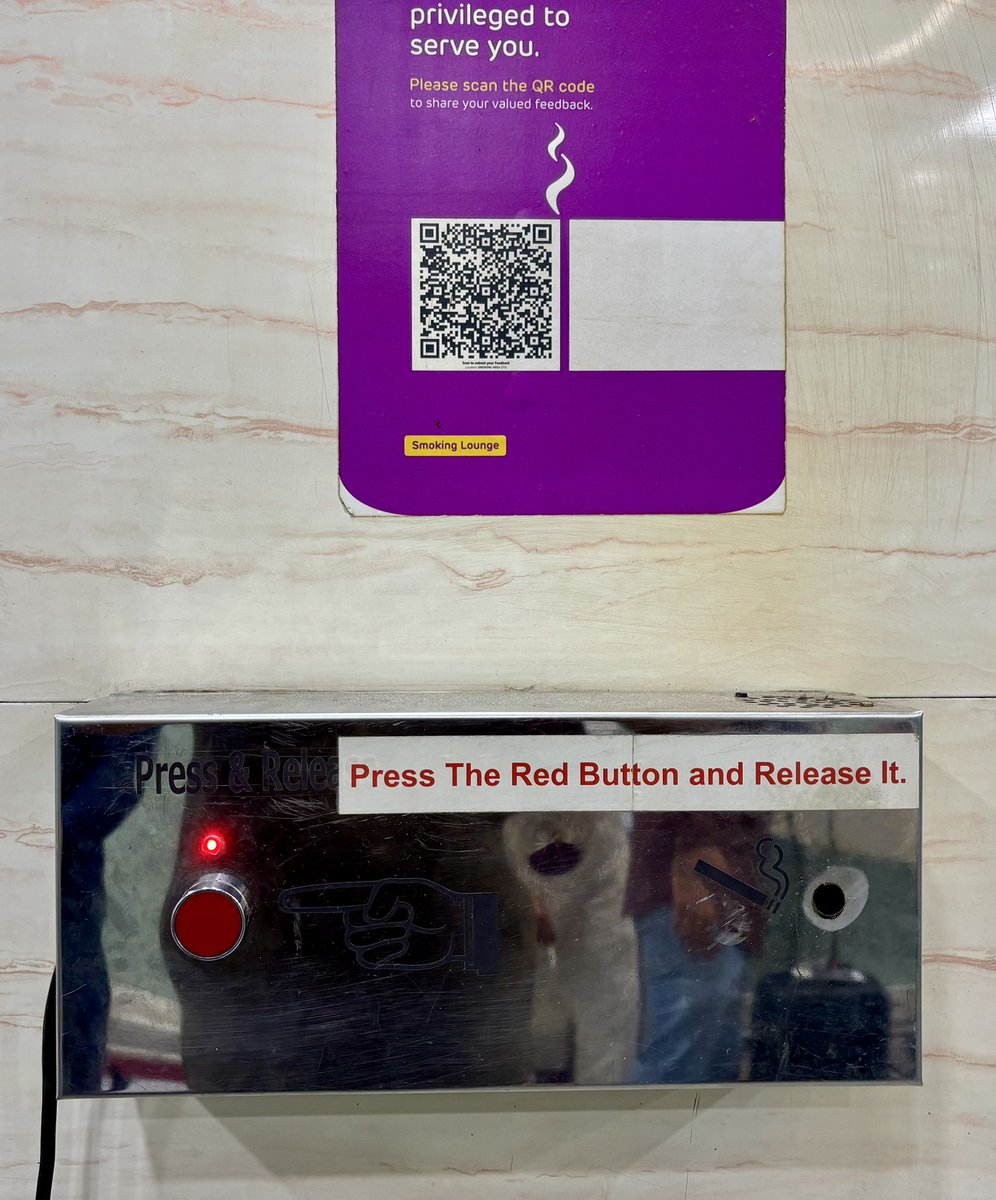
Instead of pressing the red button and releasing, as instructed, the number of people who keep the button depressed, and peer into the hole to see if they can spot a glow, is simply amazing! 🤦🏻‍♂️🤡
Venugopal Narayanan tweet media
English
0
0
1
66
Venugopal Narayanan
Venugopal Narayanan@ideorogue·
The Gas Wars Are Here: America's Quest To Own An LNG Empire Rests On Conflict, Not Competition America's rise to LNG dominance is not a market story. It is a geopolitical project that requires rival gas-reserve holders to stay out of the export market. The Gulf war is the latest, most expensive proof of that logic, and it will not be the last. swarajyamag.com/world/the-gas-… via @SwarajyaMag
English
2
8
17
1.6K
Venugopal Narayanan
Venugopal Narayanan@ideorogue·
Welcome confirmation of our thesis. 🙏🙏 x.com/Knesix/status/…
Jesús Enrique Rosas@Knesix

I honestly thought this map was made up Hundreds of supertankers, the kind that carry two million barrels each, are currently racing toward the US Gulf Coast from every direction. Atlantic, Indian Ocean, around Africa, the scenic route, the "we were heading to Saudi Arabia but NVM" route. Iran closed the Strait of Hormuz and everyone panicked. Oil hit $126 a barrel. Gas hit $4 a gallon. Cable news did the thing where they put a red banner on screen and say "CRISIS" in a font that suggests you should be hoarding toilet paper. And then something happened that nobody in media seems interested in reporting, for obvious reasons. The world just... switched suppliers? Like changing your internet provider except the internet provider is the entire effing global energy economy. American oil exports are approaching record levels. Gulf Coast refineries are running at 95% capacity. Supertankers that were mid-ocean on their way to the Persian Gulf literally turned around and headed to Texas. That's not a metaphor. Ship tracking data shows them doing U-turns in the Indian Ocean. Meanwhile China, which was getting 45% of its oil imports through Hormuz and paying basement prices for sanctioned Iranian crude, is now competing with Japan and Europe for the same expensive American barrels. Chinese manufacturers are already raising prices 20% on goods headed to the US. So to summarize: Iran played its biggest card and the main result is that the United States became the world's emergency gas station and China's cheap energy subsidy evaporated. This is either the most elaborate coincidence in the history of geopolitics... or someone planned the sequence Venezuela -> Iran -> profits! I'll let you figure out which one

English
0
0
0
76