

KARMA
1.6K posts
KARMA
@ig170tp
❤️ @SuccinctLabs https://t.co/0tq8PSLKsM
Katılım Nisan 2022
528 Takip Edilen60 Takipçiler
English


you: hate farmers
we: appreciate farmers as people all around the world trying to earn in the new global economy who deserve our respect and help growing the skills they need to meaningfully contribute
English
KARMA retweetledi

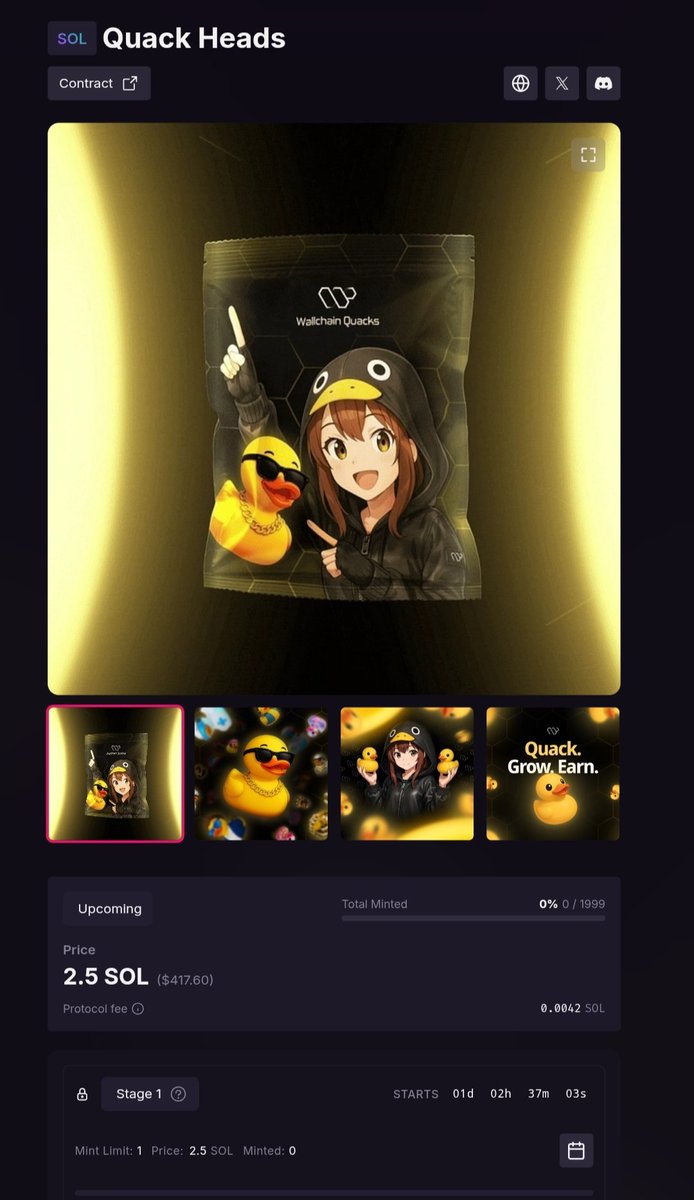
Quack quack
Finally the wait is over 🔥
Tomorrow the @wallchain Genesis Quack Heads NFT mint goes live.
Been watching this for weeks and can't wait to grab my Quack.
Who is minting with me tomorrow? 👀
English
KARMA retweetledi

gMPC ☂️ !
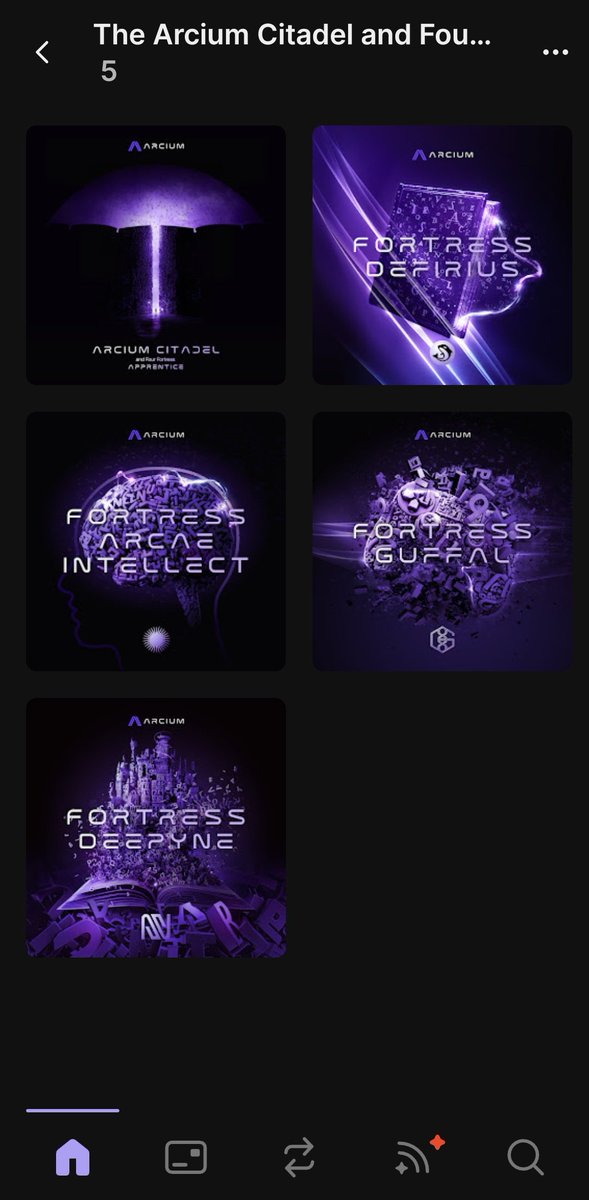
@Arcium < encrypted chad >
Am i early guysss ?
Can't miss this it's privacy szn 🙌🏻
All in < encrypted >
@Arcium @lilybillionaire
English
KARMA retweetledi


KARMA retweetledi
Everyone is talking about 1m nads SBT but how many users have this MGC P.O.G 💜👀 @monad @pipeline_xyz only 34k users owned this !!

English
KARMA retweetledi
Recognised 69 nads 🌚
One of them was @harpaljadeja whom I recognised without checking his profile 💜
Gmonad 💜 Say yes if you see me in recogniser !! @monad


English
KARMA retweetledi
KARMA retweetledi

What is reUSDe ?
reUSDe is the performance token of the @re Protocol, designed to absorb the first-loss risk in a reinsurance portfolio. In return, holders get a share of underwriting profits, which have historically yielded an annual net return between 16% and 25%. The token's price compounds daily based on a quarterly-updated Target Net Asset Value (tNAV), and redemptions are processed quarterly on a pro-rata basis depending on available surplus capital.
Key Features
->Role in Capital Stack: reUSDe provides stop-gap capital that covers claim shortfalls before senior layers (like reUSD) are affected. After claims, operational costs, and fees, remaining profits are shared with reUSDe holders, ensuring profit participation without diluting equity due to its deployment via a regulatory §114 Trust.
->Earnings and Pricing: The token's target NAV is determined quarterly through actuarial reports and audited profit & loss statements, but the token price updates daily for smoother user experience, based on this quarterly reference.
->Deployment and Loss Absorption: Users mint reUSDe by depositing assets, which are transferred via the Insurance Capital Layer to the §114 Trust as surplus capital. In loss events exceeding senior coverage, reUSDe’s capital absorbs deficits, reducing the tNAV accordingly. Profits flow back into increasing the token’s value.
->Redemption: Redemption requests are submitted during the first 72 hours of each fiscal quarter with instant confirmations. An actuarial review determines the available surplus, and payouts are made pro-rata if requests exceed surplus; otherwise, full fills are provided. Any unfilled amounts roll over to the next quarter with maintained priority.
->Idle Liquidity Yield: Idle reUSDe funds awaiting deployment earn yields through the @ethena sUSDe basis-trade until deployed, ensuring compensation when capital is idle.
->Transparency & Risk Controls: Data such as daily prices, surplus buffers, and queue utilization are published via @chainlink oracles. Independent actuaries validate reserves and surplus schedules, and custodial reports are posted on-chain. The system also undergoes smart contract audits and regular SOC-type reports for risk assurance.
Comparative Advantages
Compared to tokenized catastrophe bonds and DeFi senior-tranche vaults, reUSDe offers:
»Principal at risk but with a profit share ≥16%
»Daily compounding price versus semi-annual coupons or constant share prices
»Quarterly liquidity with a transparent redemption gate
»Regulatory safeguards via a §114 Trust not found in some DeFi equivalents.
Risks
The main risks include loss risk as reUSDe absorbs first losses, liquidity risk due to quarterly gated redemptions, and regulatory restrictions, such as non-availability to U.S. persons.
In summary, reUSDe plays a crucial role in the @re Protocol by providing junior risk capital with profit participation, functioning under a well-regulated trust structure, and offering transparent, quarterly liquidity with daily compounding returns. It balances yield and risk through structured loss absorption and careful capital deployment.

English
KARMA retweetledi
KARMA retweetledi
KARMA retweetledi
KARMA retweetledi
KARMA retweetledi
What will @zama_fhe 's impact on DeFi ?
Zama's fully homomorphic encryption (FHE) technology will profoundly impact DeFi by enabling confidential smart contracts that run on encrypted data without revealing sensitive information. This means DeFi applications like lending, token swaps, stablecoin transactions, and more can keep transaction details, user balances, and contract parameters fully encrypted yet still verifiable and composable on existing blockchains.
Key Impacts on DeFi
->Confidentiality and Privacy: Zama's FHE allows computations directly on encrypted data, ensuring that transaction inputs, smart contract logic, and state remain private from node operators and the public, which is critical for financial privacy in DeFi.
->Composability: Unlike other privacy approaches, Zama enables confidential contracts to interact composably with each other and non-confidential contracts across Layer 1 and Layer 2 chains without needing to bridge to new chains, preserving DeFi's interoperability.
->Programmable Access Control: Smart contracts can specify who can decrypt certain data, allowing fine-grained confidentiality rules within DeFi apps, enhancing security and regulatory compliance.
->Scalability and Efficiency: Zama uses symbolic execution to offload heavy FHE computations to a network of coprocessors, keeping gas costs low and throughput high, aiming for thousands of transactions per second with dedicated hardware in the near future.
->Real-World DeFi Use Cases: Confidential lending, private token transactions, encrypted asset tokenization, on-chain auctions without front-running, and governance with privacy are some concrete applications enabled by Zama’s FHE protocol.
Why This Matters for DeFi ?
DeFi today faces privacy challenges because all transaction data is usually public on-chain, exposing user data and trade secrets. Zama’s FHE approach solves this while keeping the trustless and verifiable nature of blockchains intact, which could unlock trillions in institutional and retail adoption by enabling secure, private financial services on public blockchains.
In summary, Zama’s FHE will transform DeFi by making private, confidential, yet fully composable smart contracts a reality, expanding privacy, compliance, and scalability horizons for decentralized finance.
#ZamaCreatorProgram

English
KARMA retweetledi
RWA from @RialoHQ
Rialo is a blockchain platform designed to make real-world assets (RWAs) like bonds, real estate, and credit actually useful and dynamic on-chain, instead of just being slow copies of traditional finance. The platform focuses on making these assets “live” able to react to real-time events, connect directly to real-world data, and operate automatically without needing human intervention.
Key Problems with Existing RWAs
->Most tokenized assets still depend on off-chain verification, needing manual checks and third-party approval before anything can happen on-chain.
->Updates are slow; any change in the real world (like credit rating changes or disasters) takes a long time to show up on-chain.
->These assets rarely have access to live, multi-source data, so they can’t adjust automatically to new information.
->Most processes, like settlements and rebalancing, need manual input they don’t happen automatically.
How Rialo Solves These
->Rialo can fetch and verify live data directly from government databases, payment networks, market feeds, and more.
->Assets on Rialo can react instantly, triggering automatic changes based on real-world events like price drops, credit downgrades, or even GPS-tracked deliveries.
->Ownership and transactions can remain private while still being verifiable, with built-in systems for real-world identity (like email or SMS login).
->The platform is extremely fast, with sub-second transaction times and the ability to scale up for huge trading volumes.
Real-World Examples on Rialo
->Tokenized bonds that instantly adjust yields when inflation data changes.
->Invoices that settle and update the moment payment is confirmed.
->Insurance payouts triggered by real-time weather or shipping data.
->Rental tokens that automatically update earnings based on rent payments or occupancy.
->Commodity tokens that rebalance automatically on live market prices.
->Carbon credits and renewable energy assets that mint or expire automatically based on IoT sensor data.
The Rialo Difference
Rialo doesn’t just put real-world assets on the blockchain as static tokens it transforms them into “living assets” that adapt in real time, stay connected to real-world events, and work without manual processes. This could make the blockchain RWA market much faster, more transparent, and more useful than current solutions.

English
KARMA retweetledi