haris

18.3K posts

haris banner
haris

haris

@iharis

Head of Product at @LottieFiles | Product/growth junkie

Kuala Lumpur Katılım Mayıs 2008
1.6K Takip Edilen3.3K Takipçiler
haris retweetledi
Nattu
Nattu@reallynattu·
9 years ago, we came up with an idea to introduce an Uber-like service to the Maldives using motorcycles. We identified the problem we wanted to solve: vehicle congestion, while also giving people a chance to earn a living since they already own motorcycles. We called it Ride Maldives. We met @em_saeed and the ministry to demo the app and seek endorsement, given that the service was ready for launch with over 200 male and female drivers on our waitlist. The next day, the economic ministry released a press statement saying they were starting a new motorcycle taxi service and that companies could apply after a new regulation. We were told to apply. Transport took almost a year to draft the regulation. They took our base idea but stripped out all the safety measures we had put in place. Despite multiple attempts, they didn’t even want to meet us or get our feedback before gazetting the regulation and opening it up for services. Since it was already released, despite all our efforts to update it so we could provide a safe service to the public, the transport ministry denied it. So we decided to halt the project completely. A few months later, a company started the motorcycle service and then stopped for whatever reason. We were later asked to come to the transport ministry for a discussion, and they assured us they would change everything to fit our needs. By then, it was too late, we had already moved on to our next project: LottieFiles. Bottom line: our idea was to introduce an Uber-like motorcycle service, while the transport/economic ministries were still learning about the concept of motorcycle taxis from Thailand. Here’s an interesting article written by Avas back then, before government meddling: avas.mv/17565
Nattu tweet media
English
4
87
187
27.1K
haris retweetledi
Mau
Mau@motion_mau·
Built a ride‑hailing app with @LottieFiles motion tokens! The animations update live when you switch ride types or flip from light to dark mode, and the vehicle’s position can be tokenized to match real‑time data. Check out here: codepen.io/motionmau/pen/…
English
4
23
102
44.7K
haris retweetledi
Gergely Orosz
Gergely Orosz@GergelyOrosz·
Why did Uber build thousands of microservices? No better person to answer than Uber's first CTO, Thuan Pham. Timestamps: 00:00 Intro 05:32 Getting into tech 16:09 The dot-com bust 20:42 VMware 26:29 Getting hired by Travis at Uber 33:22 Early days at Uber and scaling challenges 40:57 Uber’s China launch 47:12 The platform and program split 50:26 From monolith to microservices 53:38 Internal tools at Uber 57:05 Helix: Uber’s mobile app rewrite 59:55 Thuan’s email about naming 1:02:03 Org structure changes under 1:06:34 Thuan’s work philosophy 1:12:23 The “three tours of duty” at Uber 1:15:37 Why Thuan left Uber 1:17:34 Coupang and Nubank 1:21:59 Faire 1:25:31 How Faire uses AI 1:28:24 AI’s impact on software engineering 1:31:09 The role of the CTO 1:35:13 Career advice Brought to you by: • @statsig – ⁠ The unified platform for flags, analytics, experiments, and more. statsig.com/pragmatic@WorkOS – Everything you need to make your app enterprise ready. workos.com@SonarSource – The makers of SonarQube, the industry standard for automated code review. Check out SonarQube Advanced Security: sonarsource.com/products/sonar… Three interesting parts from this conversation: 1. The program/platform split came before microservices. The concept of cross-functional “program” teams and dedicated “platform” teams became necessary because an org split across backend, frontend and mobile engineers slowed down in execution speed when Uber grew to around 100 engineers. Every feature required negotiating bandwidth across the mobile, backend, and dispatch teams. Thuan, Travis Kalanick, and Jeff Holden literally used color-coded sticky notes with people’s names to reorganize into self-sufficient teams. We cover more about this split in this The Pragmatic Engineer deepdive, The Platform and Program split at Uber: newsletter.pragmaticengineer.com/p/program-plat… 2. Expect multiple rewrites during hypergrowth. The right architecture depends on how fast a product and company are growing. At Uber, repeated rewrites were common because each one “bought” another window of survival for the company. Thuan’s recommendation is to understand that a rewrite simply means a company is outrunning its existing architecture: this is not necessarily a bad thing! 3. Uber is the only major company that had a “Senior 1” and “Senior 2” level – and Thuan is unapologetic. Thuan introduced the Senior 1 (L5A) and Senior 2 (L5B) levels because the jump from senior (L5) to Staff (L6) became very big, and larger than between previous levels. One problem this split level created was that Uber’s L5B was akin to Google’s and Facebook’s L6/E6. Thuan resisted the title inflation of just renaming L5B to ‘Staff’.
English
8
90
775
67.6K
Meer Azzum
Meer Azzum@meerazzum04·
@LottieFiles What about if we want to add our own templates out there?
English
1
0
0
148
LottieFiles
LottieFiles@LottieFiles·
Your design system doesn’t have motion. Now it does. 50+ motion templates - onboarding, feedback, transitions, empty states. Open, customize, ship. Free. 🔗 lottie.link/motion-templat…
English
1
7
62
4.3K
haris
haris@iharis·
A few users signed up but didn’t want to share their API keys, totally fair. Now the browser stores only an encrypted blob, and the server does the decryption. OAuth2 would make this flow much smoother @meetgranola
haris@iharis

.@meetgranola finally shipped their API. I built a tiny hack to turn meeting notes into tasks instantly. Because after three meetings, “I’ll handle that” means nothing. Meet Daylight: daylight.am

English
0
0
2
617
haris
haris@iharis·
This perfectly captures what’s been bugging me. Software today is smoother than ever, but somehow feels emptier. Everything converges to the same patterns, the same voice. I wish more tools had personality again. @37signals is one of the few still holding that line.
Ryo Lu@ryolu_

when software had a soul there was a moment around 2005 when using a Mac felt like touching something alive. the dock bounced. the genie effect swooped. exposé scattered your windows like cards on a table. none of it was strictly necessary. all of it felt like someone cared – not about metrics, but about the feeling of using a machine. software back then had texture. it had a philosophy. you could feel the person behind it. someone made a decision to make that icon beautiful, to animate that transition just so, to write that error message with a little warmth. apps had personalities. some were weird. some were over-designed in ways that would make a modern PM flinch. but they were alive. the web was the same. personal sites were genuinely personal. blogs felt like letters. forums had regulars. you knew who made what. the internet had neighborhoods, and each one felt different. nothing was optimized for scale. things were made by people who loved what they were making. somewhere along the way, we traded all of that for growth. A/B tests flattened the edges. design systems standardized the personality out. everything got faster, smoother, more consistent – and somehow less interesting. the quirks were removed because they didn't test well. the warmth got cut because it wasn't measurable. we optimized our way into a world of things that work perfectly and feel like nothing. now every app looks the same. every interface follows the same patterns. every product speaks in the same calm, frictionless voice, siloed in their own little islands. the humanity got rounded off. and then came AI agents. and the speed got inhuman. now you can generate an entire product in an afternoon. ship a feature before lunch. spin up ten variations before anyone's had their coffee. the gap from idea to code is basically zero. which sounds incredible. and it is. but there's a catch. when making things are too easy, the slop comes for free too. mediocre things don't look obviously bad – they look fine. they work. they ship. they pass review. and now there are infinite of them. the internet is filling up with software that functions but means nothing. interfaces that are correct but feel dead. products made by agents, reviewed by no one, shipped into the void. this is the thing that keeps me up at night. not that AI will replace people who care. but that it will drown them out. here's what I still believe: the best things are made by people who couldn't help themselves. someone who lost sleep over an icon. who rewrote the same line of copy twelve times. who added an animation nobody asked for because it made the thing feel right. that obsession – that's not inefficiency. that's the whole point. AI doesn't make that irrelevant. it actually makes it rarer and more valuable. taste is not a markdown skill. caring is not a parameter. the weird, specific, "soul" thing you put into something – that can't be programmed into existence. the path forward isn't to make more slop faster. it's to finally give people with real vision the tools to make the thing they always imagined but couldn't build alone. the designer who had the idea but couldn't code. the kid who saw something nobody else saw. the person who cared too much about something most people wouldn't notice. if we get this right, we don't get a faster factory. we get a renaissance. more strange, personal, opinionated software made by teams of people who care and mean it. that's still possible. but only if the people who care get the space and tools to actually express themselves – and don't just hand the wheel to the agent and walk away.


English
0
0
3
620
haris
haris@iharis·
.@meetgranola finally shipped their API. I built a tiny hack to turn meeting notes into tasks instantly. Because after three meetings, “I’ll handle that” means nothing. Meet Daylight: daylight.am
English
0
9
15
1.7K
haris retweetledi
socrete.mv
socrete.mv@socrete_mv·
Precision in the final layers. 📐 The concluding architectural touches are being placed at Kawaii Stay and Zeezu Cafe & Lounge. Ensuring reality matches the vision. The countdown is on. ⏳🏝️ #Socrete #Maldives #ProjectManagement #Construction #phase1
socrete.mv tweet media
Maldives 🇲🇻 English
0
7
7
493
haris
haris@iharis·
@anehkenaa Sent you a small donation. All the best.
English
1
0
1
73
Ahmed Aiham #HingaaMale
Hi everyone. I’m doing a last bit of fundraising for the remaining week of campaigning Looking at raising some funds to print out the manifesto to pass around during door to door - so anything you can contribute will go a long way 7770000229242 You can track how your funds are being spent at Hingaamale.com
Ahmed Aiham #HingaaMale tweet media
English
5
7
19
4.8K
haris retweetledi
Eyisha Zyer
Eyisha Zyer@eyishazyer·
Found this amazing site where you can build electronic circuits right in your browser and test them on the spot...
English
48
525
4.1K
192.6K
haris
haris@iharis·
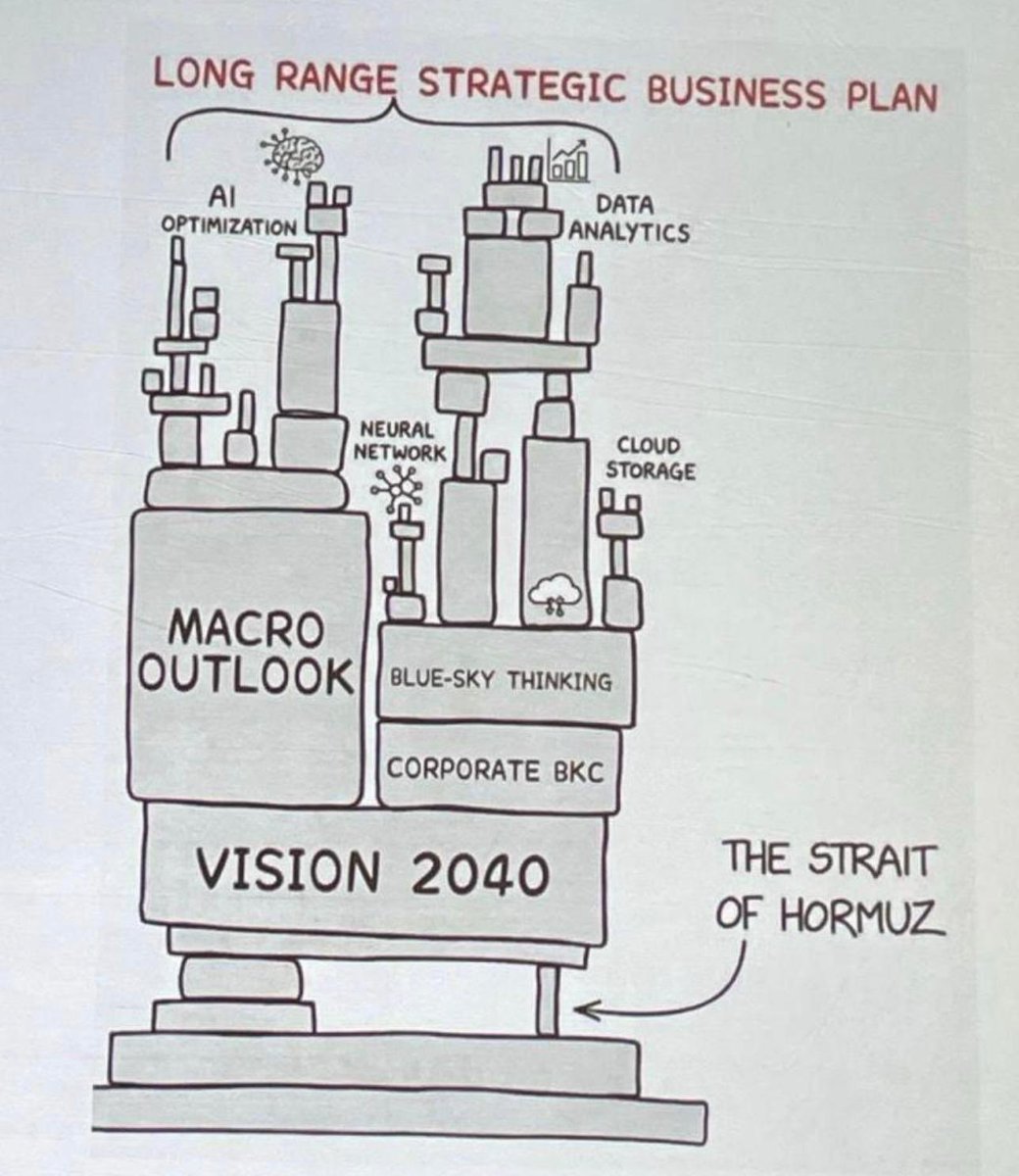
Satan's minions at work again
haris tweet media
English
0
0
6
276
haris retweetledi
Tyo
Tyo@SetyonoDwi·
been working on split bill improvements in @spenzyapp , added a compare feature so we can check & copy without jumping between apps.
English
49
48
1.1K
94.9K
haris retweetledi
Elon Musk
Elon Musk@elonmusk·
Elon Musk tweet media
ZXX
8K
31K
287.5K
28.3M
haris retweetledi
Alvin Sng
Alvin Sng@alvinsng·
24 hours ago, I posted this article about @FactoryAI's take on React's useEffect which has surpassed 1.7M views and is still growing. This caught the attention of numerous execs, startup founders, and even the React core team. It has sparked a conversation about a paradigm shift in how we design software for the agentic era. Traditionally, software frameworks were designed for humans who spent time mastering fundamentals before writing their first line of code. Today, that is no longer the case. At Factory, all of our "backend engineers" ship frontend code. Any engineer should be able to prompt agents to tweak features "out of the box" with built-in guardrails. We learned the hard way that when agents write nearly all the code, useEffect often becomes the culprit behind systemic frontend bugs. We only encountered these issues because we are constantly pushing the boundaries of agentic software development. Fixing the process is more important than fixing the (direct) problem. On a note regarding marketing strategy: traditional, polished product announcements from PR teams don't work anymore. Sharing raw, authentic, "on the ground" stories about the interesting problems teams are solving is far more engaging.
Alvin Sng@alvinsng

x.com/i/article/2028…

English
15
12
445
119K
haris retweetledi
Sofwath 🎈
Sofwath 🎈@sofwath·
work from home
Sofwath 🎈 tweet media
English
4
1
38
1.5K
haris retweetledi
Stitch by Google
Stitch by Google@stitchbygoogle·
Meet the new Stitch, your vibe design partner. Here are 5 major upgrades to help you create, iterate and collaborate: 🎨 AI-Native Canvas 🧠 Smarter Design Agent 🎙️ Voice ⚡️ Instant Prototypes 📐 Design Systems and DESIGN.md Rolling out now. Details and product walkthrough video in 🧵
English
943
4.7K
40.8K
18.3M