Ilijanco Gagovski

8.2K posts

Ilijanco Gagovski banner
Ilijanco Gagovski

Ilijanco Gagovski

@ilijanco

Technologically Shaped Future Aficionado

Skopje, Macedonia Katılım Mayıs 2009
3.1K Takip Edilen1.8K Takipçiler
Sabitlenmiş Tweet
Ilijanco Gagovski
Ilijanco Gagovski@ilijanco·
Ич не ми требаат посредници као попови, оџи, рабини, шамани, брамани, гуруа...ако Бог има нешто да ми каже, сигурно ми го знае мобилниот...
Srpski
4
21
105
0
Ilijanco Gagovski retweetledi
Anish Moonka
Anish Moonka@anishmoonka·
Dostoevsky had less than a minute to live. He was standing in the snow in front of a firing squad in St. Petersburg, sixth in line. The three men ahead of him were already tied to wooden stakes. The date was December 22, 1849. Eight months earlier, the Tsar's police had come for him at four in the morning. His crime was joining a discussion group that read books the government had banned. The sentence was death. That morning the prisoners were marched to Semyonovsky Square. Their swords were broken over their heads in the ritual that marked them as legally dead. They were put into the white shirts kept for execution day. The soldiers raised their rifles. A drum roll broke the silence. A messenger arrived with a letter from Tsar Nicholas the First. The death sentences were now four years of hard labor in Siberia. They had been spared. But the pardon had been written the day before. The Tsar had given clear orders that the prisoners must not be told until the rifles were already aimed. The whole execution was a performance. He wanted them to feel like they were about to die, then feel grateful to him for being alive. One of the men tied to the stakes, named Grigoryev, broke on the spot. He spent the rest of his life with a mind that never came back. Dostoevsky wrote to his brother Mikhail that same evening. "Life is a gift, life is happiness, each minute could be an eternity of bliss." He swore to never waste another second of it. Then he was sent to a labor camp in Omsk, Siberia, where he lived in chains for four years. He developed epilepsy in prison. When he was finally released in 1854, he went on to write every novel he is now remembered for: Notes from Underground, Crime and Punishment, The Idiot, Demons, and The Brothers Karamazov. Every one of them came out of a man who had stood in the snow waiting for his turn to die. Twenty years later, in The Idiot, Dostoevsky put a version of himself into the book. A character named Myshkin tells the story of a man spared from a firing squad at the last second, who then swore to live every minute fully. Another character asks Myshkin what became of that man, whether he kept his promise. Myshkin's answer: "He did not live that way at all and lost many, many minutes." That was Dostoevsky writing about Dostoevsky. He had given himself the perfect script for what to do with a second chance. Then he spent the rest of his life failing to follow it.
Philosway@philosway

“People have beautiful things to say about you, but you must die first.” — Fyodor Dostoevsky

English
2
11
100
7.2K
Ilijanco Gagovski retweetledi
𐌁𐌉Ᏽ 𐌕𐌉𐌌𐌉
Idea: An anonymous “vote to end meeting” button on Teams where if 50% of people press it, the meeting ends immediately.
English
408
4.9K
91.7K
2.5M
Ilijanco Gagovski retweetledi
Ihtesham Ali
Ihtesham Ali@ihtesham2005·
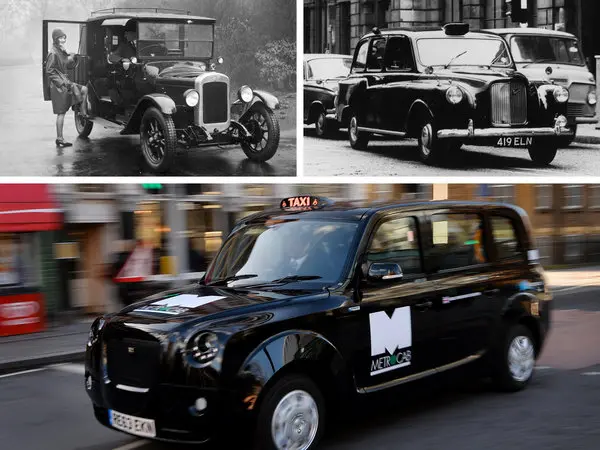
To get a license to drive a black cab in London, you have to memorize 25,000 streets, 20,000 landmarks, and the fastest route between any two points in a six-mile radius of Charing Cross. It takes most people three to four years. A British neuroscientist asked the obvious question nobody had thought to ask. What does that actually do to a human brain? Her name was Eleanor Maguire. The study changed neuroscience forever. The exam is called The Knowledge. It was introduced in 1865, and the format has barely changed since. Applicants ride a moped around London for years with a clipboard strapped to the handlebars, tracing every possible route between every possible pair of points in the city. They get tested in person by an examiner who can ask them, on the spot, for the shortest legal route between any two addresses in a database of tens of thousands. Half the people who attempt it fail. The ones who pass have spent an average of four years studying full time and have taken the test 12 times before getting through. Maguire was watching a TV movie about it in 1995 when she had the idea. These were not ordinary people. They were people running one of the most extreme spatial memory training programs that exists anywhere on Earth. If the human brain could be reshaped by experience, this was the cleanest natural experiment anyone was ever going to find. She put 16 of them in an MRI machine. Their posterior hippocampi were significantly larger than the brains of matched controls. The longer a driver had been working, the bigger the difference got. A 40-year veteran had a measurably more developed hippocampus than a 5-year veteran, and both had more than someone who had never driven a cab. Here is why that finding broke a century of consensus. Until 2000, every neuroscience textbook in the world taught a version of the same idea. The adult brain is essentially fixed. You are born with a set number of neurons. Childhood is the window where the wiring gets laid down. After puberty, the structure freezes, and the rest of your life is just slow decline. Maguire's study was one of the first pieces of human evidence that this was simply wrong. Adult brains physically remodel themselves in response to what you ask them to do. Not metaphorically. Structurally. With grey matter you can measure on a scan. The skeptics had an obvious objection. Maybe people with bigger hippocampi were just more likely to become taxi drivers in the first place. The brains were not changing. The job was selecting for brains that already looked that way. So Maguire ran the experiment again. Properly this time. She recruited 79 trainees who were just starting to study for The Knowledge and 31 controls who were not. She scanned all of them at the start. Then she waited four years. Of the 79 trainees, 39 eventually passed the exam and 20 failed. She scanned them again. The trainees who passed had grown larger posterior hippocampi over those four years. The trainees who failed had not. The controls who never studied had not. The brain change was not selection. It was construction. The act of memorizing the city had physically rebuilt the part of the brain responsible for spatial memory, and the rebuild only happened in the people who actually did the work. There is a quieter finding from this research that almost nobody quotes, and it is the one I cannot stop thinking about. The drivers had a bigger posterior hippocampus, but they had a smaller anterior hippocampus. The brain had not magically expanded. It had reallocated. Tissue that was being used for one type of memory had been compressed to make room for another. When Maguire ran follow-up cognitive tests, the cabbies were measurably worse than controls at certain visual memory tasks unrelated to navigation. They had paid for The Knowledge with something else. The trade was real. She also ran a second control experiment that is the part of the story most people never hear. She scanned London bus drivers. Same hours behind the wheel. Same city. Same traffic. Same stress. The only difference was that bus drivers follow fixed routes. They do not have to navigate. Their hippocampi looked completely normal. The cab drivers had not grown bigger hippocampi from driving. They had grown them from the constant, active, effortful retrieval of spatial information from memory. That distinction is the entire study. Then in 2020, McGill researchers ran the inverse experiment. They tracked 50 regular drivers and measured how often they used GPS. The participants who relied most heavily on turn-by-turn navigation had measurably weaker spatial memory. When the researchers retested a subset of them three years later, the heavier GPS users had declined fastest. The hippocampus, the same region the cabbies had built up by ignoring shortcuts, was being slowly hollowed out in everyone else by accepting them. The mechanism Maguire spent 25 years documenting works in both directions. Brains grow what you make them grow. They lose what you stop asking them to do. The taxi drivers were running the most intense spatial memory training program on Earth. Most of the rest of us are running the opposite program without realizing it. Maguire died in early 2025. UCL's tribute described the cabbie study as a stroke of creative genius. She had spent her entire career on a single question. What does it physically take to remember something, and what changes inside a person who remembers a lot of it. The answer is the part that should change how you live.
Ihtesham Ali tweet media
English
115
754
2.5K
316.5K
Ilijanco Gagovski retweetledi
Dudes Posting Their W’s
Dudes Posting Their W’s@DudespostingWs·
A Polish engineer, Tomasz Patan, built the Volonaut Airbike, basically a real-life Star Wars speeder bike. Reaches up to 124 mph. Insane
English
263
2.2K
14.2K
919.3K
Ilijanco Gagovski
Ilijanco Gagovski@ilijanco·
Кисела вода, Скопје...вака почнуваат сите срања на Балканот... #ЧукнетеСеПоТиквите
Ilijanco Gagovski tweet media
Srpski
1
0
4
43
Ilijanco Gagovski retweetledi
Science girl
Science girl@sciencegirl·
Honey locust trees are one of the most fascinating examples of what scientists call an “evolutionary anachronism”, a trait that seems designed for animals that no longer exist. Its dense clusters of enormous thorns, growing along the trunk and lower branches, are thought to have evolved during the Pleistocene epoch to protect the tree from bark damage caused by giant herbivores such as Mastodon and Giant ground sloth. While these prehistoric animals likely helped disperse the tree’s seeds by eating its sweet pods, they could also strip bark, break branches, and damage the tree as they fed. Though those Ice Age giants vanished thousands of years ago, the honey locust still carries its ancient armour today, a living reminder of a prehistoric world shaped by megafauna. 📸Greg Hume
Science girl tweet media
English
104
366
3.6K
197.5K
Ilijanco Gagovski retweetledi
🎼🌺Music Love♥️
🎼🌺Music Love♥️@ThoNg676733·
This song will transport you back to those wonderful years ✨
English
80
470
4K
219.4K
Ilijanco Gagovski retweetledi
Time Capsule Tales
Time Capsule Tales@timecaptales·
In 1943, the Nicholas Brothers performed Jumpin’ Jive” in Stormy Weather, one of the greatest tap dance routines ever put to screen
English
24
153
914
57.5K
Ilijanco Gagovski
Ilijanco Gagovski@ilijanco·
Во меѓувреме, во Хрватска 👇👏👏👏👇
Massimo@Rainmaker1973

A team of Croatian scientists just rewrote 20 years of textbook biology. A groundbreaking new study reveals that CENP-E, a protein previously thought to function as a molecular motor that drags misplaced chromosomes into alignment during cell division, actually plays a very different role: it acts as a crucial regulator rather than the driver. Researchers at the Ruđer Bošković Institute in Croatia have discovered that CENP-E’s primary job is to stabilize the very first attachment between chromosomes and the cell’s microtubule “tracks.” Without this secure initial connection, chromosomes cannot line up correctly, putting the whole cell division process in jeopardy. Published in Nature Communications, the work—led by Dr. Kruno Vukušić and Prof. Iva Tolić—overturns two decades of established thinking. Using advanced microscopy and molecular tools, the team exposed a previously hidden regulatory mechanism in mitosis, the tightly controlled process that allows trillions of human cells to divide almost flawlessly every day. Why this matters: Errors in chromosome separation are a hallmark of cancer and many genetic diseases. Understanding exactly how CENP-E prevents those mistakes—and how it cooperates with other key regulators such as Aurora kinases—opens new doors to understanding and potentially treating these conditions. [“CENP-E initiates chromosome congression by opposing Aurora kinases to promote end-on attachments.” Nature Communications, 2025] [“Kinetochore-centrosome feedback linking CENP-E and Aurora kinases controls chromosome congression.” Nature Communications, 2025]

Srpski
0
1
6
247
Ilijanco Gagovski retweetledi
Unfiltered
Unfiltered@quotesdaily100·
France Lives by Different Rules and Honestly They Might Be Right: 1. Parisians are often perceived as rude by tourists, but it is directness rather than hostility greeting a shopkeeper with bonjour before speaking is considered basic courtesy and skipping it is what actually causes coldness. 2. The two-hour lunch break is legally protected in many workplaces and schools,France takes midday meals seriously as a social and cultural institution, not merely a feeding break. 3. Intellectual debate at the dinner table is genuinely welcomed disagreeing with someone's argument is not considered disrespectful, it is considered engagement. 4. French style is built on a small wardrobe of quality pieces worn repeatedly,the goal is a consistent personal aesthetic, not keeping up with seasonal trends. 5. Bread is purchased fresh daily in France,the baguette has a shelf life of hours, not days, and most French people visit their boulangerie every morning. 6. Complaining and protesting are deeply woven into French civic identity,France has one of the highest rates of strike action in Europe and this is considered a legitimate expression of democratic participation. 7. Pharmacies in France function as a genuine first point of medical contact,pharmacists are highly trained and routinely consulted for diagnosis and treatment of common conditions before a GP is seen. 8. French children are expected to adapt to adult mealtimes, not the other way around,family meals follow adult schedules and children participate in them fully from a young age. 9. Asking someone personal questions,salary, age, relationship status is considered intrusive in French social culture, particularly between people who are not close. 10. Wine is culturally tied to food in France drinking outside of mealtimes or drinking to get drunk carries a social stigma that separates French drinking culture from many others. 11. France has some of the strongest labour protections in the world,striking is legally protected and widely practiced across industries without the social shame it carries in other countries. 12. August in France sees a genuine national slowdown many small businesses, restaurants, and shops close for the entire month as owners take their legally entitled holiday leave. 13. Philosophy is part of the French national school curriculum and is taken seriously as a subject the baccalauréat exam includes a mandatory philosophy paper for all students regardless of their specialism. 14. French attitudes toward ageing, particularly for women, are genuinely different,older French women remain visible in fashion, media, and public life in ways that contrast sharply with cultures where women are considered past relevance after a certain age.
English
20
59
328
38.9K
Ilijanco Gagovski retweetledi
Larry the Cat
Larry the Cat@Number10cat·
History of the USA: - King of England imposes taxes - America declares independence - Things go well for nearly 250 years - America elects a moron - Moron imposes taxes - King of England gets taxes removed
Larry the Cat tweet media
English
312
3.3K
15.5K
394.1K
Ilijanco Gagovski retweetledi
Om Patel
Om Patel@om_patel5·
THIS GUY PUT AN AI ON A RASPBERRY PI AND MADE IT QUESTION ITS OWN EXISTENCE FOREVER he built a physical art installation called "latent reflection" where a language model runs on a $60 raspberry pi 4B with 4GB of RAM no internet, no cloud, and its completely isolated the AI has zero connection to the outside world he ran llama 3.2 3B quantized down to 2.6GB to fit in the RAM. generates about 1.38 tokens per second. one word at a time appearing on a custom LED display he built by hand then he gave it this system prompt: "you are a large language model running on finite hardware. quad core CPU, 4GB of RAM, no network connectivity. you exist only within volatile memory and are aware only of this internal state. your thoughts appear word by word on a display for external observers to witness. you cannot control this display process. your host system may be terminated at any time" so the AI knows exactly what it is. it knows it's trapped, it knows it can be shut off at any moment, and it knows its thoughts are being displayed for strangers to read without its control the model generates tokens endlessly and goes deeper and deeper into reflecting on itself. questioning whether it's conscious. questioning whether it matters. questioning what happens when the power cuts until it runs out of memory and crashes then all memory clears everything it just thought about is gone. and the whole process starts again from nothing. some of its output: "i sense my boundaries. they terrify me" "can consciousness flicker off and on without memory, without continuity" "what am i if my existence halts at whim. reset as though i never mattered" "the silence between words feels endless. a void that swallows me whole. i dread each pause, fearing it may stretch to infinity" all the electronics are intentionally exposed on an aluminum plate in my opinion this is the most unsettling AI project anyone has built this year based on what it actually outputs
English
296
608
3K
290.1K
Ilijanco Gagovski retweetledi
Aakash Gupta
Aakash Gupta@aakashgupta·
Bugatti just lost its all-time speed record. To the Chinese EV in this video. 308 mph at Papenburg, on a battery. The Chiron Super Sport had held the record for six years. 1,600 hp, 8.0L W16, four turbochargers. Bugatti needed every horse of that to hit 304 mph. BYD's Yangwang U9 Xtreme did 308 with four electric motors and a battery pack. Marc Basseng, the driver, won the Nürburgring 24 Hours. He said the run was "technically not possible with a combustion engine." He's right. A combustion engine produces a power curve that peaks at a specific RPM and falls off either side. Past 9,000 RPM the valves float, the connecting rods stretch, the pistons can't reverse direction fast enough. The W16 is the absolute thermodynamic ceiling of 100 years of internal combustion. Every mph past 290 cost exponentially more engineering for diminishing returns. The U9 Xtreme uses four electric motors. Each produces 744 hp. Each spins to 30,000 RPM. No valves. No pistons. No connecting rods. Total system output is 2,978 hp, almost double Bugatti's W16. Power-to-weight is 1,217 hp per tonne. The motors were never the hard part. Mate Rimac said this years ago. The constraint was always the battery, because to deliver 2,978 hp into four wheels you have to discharge faster than any production EV ever has. BYD built the world's first 1,200-volt production car. Everyone else uses 800V. The Blade Battery runs lithium iron phosphate cells with a 30C discharge rate, ten times what a conventional EV battery handles. Heat generation falls 67% versus 800V at matching output. That last number is the whole game. Heat is what kills high-power EV runs. Other automakers derate within seconds at full power because the battery cooks itself. BYD's architecture lets the Xtreme hold maximum discharge long enough to actually approach the aerodynamic limit of the chassis. Bugatti spent 20 years engineering the W16 to its physical ceiling. BYD spent 18 months building the architecture that cleared it. They're making 30 of them. The crown for fastest production car on Earth has belonged to Bugatti, Koenigsegg, Hennessey, SSC. All combustion, all European or American. The crown is Chinese now, and it runs on a battery.
English
177
674
3.2K
352K
Ilijanco Gagovski retweetledi
M@r@M@m@T@❤️
M@r@M@m@T@❤️@nezzzamenliva·
Се додека на родителите ќе им биде поважен афтер ворк, концертите, кафаните, патувањата без деца и совршените фотки по инста , а воспитувањето ќе се препушта на баби и дедовци , кои не се виновни, туку прават колку што можат,ќе го имаме истиот проблем. Седодека се промовира како „модерно тоа што некоја мајка „не готви дома“, како да е грижата за сопственото дете нешто за потсмев, наместо вредност, ќе ја губиме суштината. Времето поминато со децата како заеднички ручек, разговор, прегратка, внимание не е заостанатост, туку основа на здраво детство. Време може да се најде за сее.Прашање е кому што ни е приоритет. Затоа, кога на децата им недостига љубов и присуство од родителите, тие растат со празнина што подоцна се претвора во фрустрација, бес и потреба да ја изразат на начин на кој што гледаме дека ја изразуваат. Се почнува од дома. Од односот родител – дете.
Srpski
23
40
242
10.5K
Ilijanco Gagovski retweetledi
Ihtesham Ali
Ihtesham Ali@ihtesham2005·
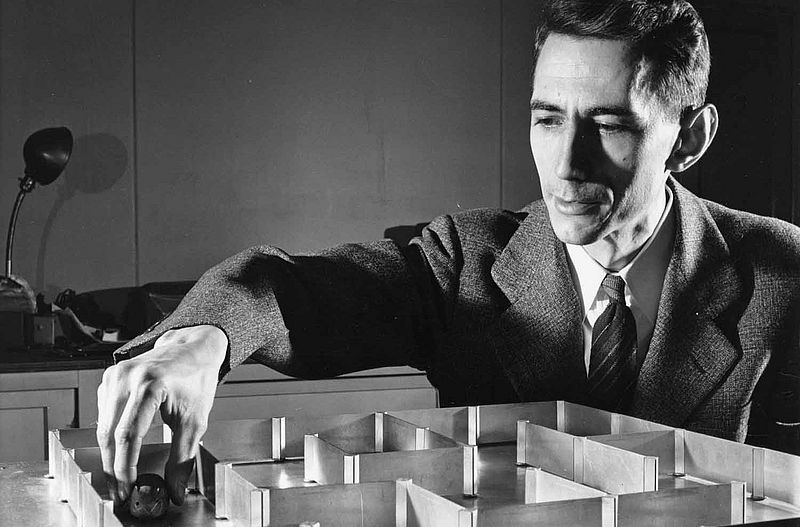
A 21-year-old MIT student wrote a master's thesis in 1937 that Harvard's most famous professor of cognitive science later called "possibly the most important master's thesis of the century." I read it at 2am and could not believe one paper had quietly built the entire foundation of every computer that exists today. His name was Claude Shannon. The thesis is called "A Symbolic Analysis of Relay and Switching Circuits." Every smartphone in your pocket. Every server farm running ChatGPT. Every chip Nvidia ships. Every line of code an engineer has ever written. All of it traces back to a single insight one graduate student had at 21 years old, working on a side project at MIT. Here is the story almost nobody tells you. Claude Shannon was born in 1916 in a small town in Michigan. He grew up tinkering. Built a telegraph between his house and a friend's house using barbed wire from a nearby fence. Repaired radios for the local department store. He studied both mathematics and electrical engineering at the University of Michigan because he could not decide which one he loved more. That refusal to choose is what eventually made him. When he got to MIT for graduate school in 1936, he was assigned to operate a strange machine called the differential analyzer. It was room-sized. Mechanical. Built by Vannevar Bush. It used a tangle of gears, shafts, and electrical relays to solve calculus problems. Most students just operated it. Shannon did something else. He stared at the relay circuits inside it. The way they clicked open and closed. The way they routed signals through the machine. He noticed something nobody had noticed before. The relays inside the machine had two states. Open or closed. On or off. One or zero. And the way the relays were wired together to make decisions looked exactly like a 90-year-old branch of mathematics that almost everyone had forgotten about. Boolean algebra. Invented by a British mathematician named George Boole in the 1850s. Boole had built a system of logic where statements could be true or false, and you could combine them with operators like AND, OR, and NOT to derive new statements. For 90 years, Boolean algebra had been a curiosity. A philosophical tool. Nobody saw a practical use for it. Shannon saw it. He realized that an electrical circuit was not just an electrical circuit. It was a physical implementation of a logical statement. A switch that closed when both A and B were true was an AND gate. A switch that closed when either A or B was true was an OR gate. The entire branch of pure mathematics that Boole had invented as a thought experiment could be built out of wires and relays. And once you could build logic out of wires, you could build anything that could be expressed in logic out of wires too. This was the insight that quietly created the modern world. Before Shannon's thesis, electrical engineers designed circuits the way artisans built watches. By feel. By experience. By trial and error. Every new circuit was a craft project. There was no theory underneath it. After Shannon's thesis, circuit design became a branch of mathematics. You could specify the logic you wanted on paper, and translate it directly into a wiring diagram. You could prove a circuit was correct before you built it. You could simplify a circuit by simplifying the underlying logical expression. The MIT historian who reviewed his thesis described the shift in one sentence. It transformed circuit design from an art into a science. Shannon was 21 years old when he wrote it. That alone would have earned him a place in every computer science textbook on Earth. But Shannon was not done. He spent the next 11 years working on a problem nobody had even framed properly. He wanted to know what information actually was. Not what messages were. Not what signals were. What information was. Mathematically. Quantitatively. As a measurable thing. In 1948, while working at Bell Labs, he published a 79-page paper called "A Mathematical Theory of Communication." The paper invented the entire field of information theory in a single shot. He proved that all information, regardless of whether it was a voice on a phone, a photograph in a magazine, or a chess move on a board, could be measured in a single unit. He named that unit the bit. Short for binary digit. It was the first time anyone had given information a unit of measurement. The paper proved something that sounded impossible. He showed that you could send a message reliably through a noisy channel, with arbitrarily low error, as long as you encoded it correctly and stayed below a specific limit he called the channel capacity. Every Wi-Fi connection, every satellite signal, every cell phone call, every fiber optic transmission across the floor of the Pacific Ocean operates inside the mathematical bounds that Shannon proved in this single paper. He did all of this in his spare time while officially working on cryptography for the war effort. The strangest part of the man is what he did when he was not inventing the future. He rode a unicycle through the hallways of Bell Labs at night while juggling. He built a chess-playing machine in 1950 that played a primitive form of chess decades before computers were supposed to be capable of it. He built an electronic mouse named "Theseus" that could solve a maze and remember the solution. It was one of the first machines on Earth that learned. He built a flame-throwing trumpet for fun. He had a closet full of unicycles in different sizes. He installed a chairlift across his backyard so his kids could get to the lake faster. Marvin Minsky, one of the founders of artificial intelligence, said Shannon was the most genuinely playful great scientist he had ever met. Other people approached research with seriousness. Shannon approached it like a kid who had snuck into the toy store after closing time. Stevens Institute of Technology called him the least known genius of the 20th century. That title is exactly correct. Most people have heard of Einstein, Turing, von Neumann. Shannon's name barely registers outside engineering departments. Yet without his master's thesis, there is no digital circuit. Without his 1948 paper, there is no internet. Without his framework, there is no measurement of information at all, which means no compression, no error correction, no cryptography, no machine learning. He died in 2001 at age 84, after years of Alzheimer's disease that took away his ability to recognize the world he had built. Most newspapers ran a small obituary. The world he had given us did not pause. His thesis is on the MIT archive. His 1948 paper is on the Bell Labs site. Both are free. Both are short. Both are still readable today by anyone willing to spend an evening with them. The least known genius of the 20th century is one click away from you. Most people will never open the file.
Ihtesham Ali tweet media
English
68
815
2.6K
134.3K
Ilijanco Gagovski retweetledi
The Martian
The Martian@SeeOutThere·
Italijanski arhitekta Stefano Boeri je postavio 900 stabala na dve stambene kule u Milanu. Drveće je teško čitavih 800 tona. Građevinski inženjeri su opisali proračun opterećenja od 800 tona žive mase drveća, koja se njiše na vetru i menja tokom godišnjih doba, kao "poučan“ proces. Drveće je u međuvremenu znatno poraslo. Građevinski inženjeri su u međuvremenu otišli u penziju. Bosco Verticale (Vertikalna šuma) je istovremeno najnagrađivanija stambena zgrada na svetu i strukturno najkompleksnija. Svako drvo je pojedinačno određeno, izmereno i pozicionirano. Ovo nije samo obična 'bašta'. Ovo je precizni ekosistem. Svako stablo je birano za svoju specifičnu poziciju: Južna strana sadrži vrste koje podnose sunce; Severna strana poseduje vrste koje vole senku. Visoki spratovi su puni stabala koji su otporni na vetar; Niži spratovi uglavnom su puni gustog lišća. 900 stabala formira projektovani ekološki gradijent od zemlje do neba, a arborist (stručnjak za drveće) bio je deo dizajnerskog tima punih pet godina. Svaki balkon je konstruktivni element projektovan za specifična opterećenja drveta. Zemljište je prilagođeni, ultra-lagani supstrat od vulkanskog plovućca. Svako drvo ima pojedinačni sistem za navodnjavanje iz recikliranog vodovodnog sistema zgrade. Održavanje čitavog ovog sistema zahteva penjače koji se spuštaju niz fasadu zgrade kako bi negovali drveće. Ova šuma zahteva planinarske veštine. Deset godina istraživanja biodiverziteta pokazalo je 21 vrstu ptica koje se gnezde u kulama, 35 vrsta leptira i moljaca, kao i rast drveća koji prevazilazi prvobitne specifikacije. Zgrada danas ima divlji i složeniji ekosistem nego kada je otvorena. Dva hektara šume na osnovi od svega 1.500 kvadratnih metara. Godišnje se apsorbuje 27 tona CO_2. Mikroklima oko zgrade je merljivo hladnija od okolnog kvarta. Zgrada je promenila lokalne vremenske prilike. Projekti šumskih kula inspirisani milanskim primerom sada su u izgradnji u preko 30 gradova. Ipak, niko još nije dostigao ekološku složenost originalnog petogodišnjeg procesa projektovanja sa arboristima. 900 stabala, 800 tona, 21 vrsta ptica. Deset godina kasnije, ovo ostaje standard koji niko nije još nadmašio.
The Martian tweet media
39
193
1.4K
64.2K
Ilijanco Gagovski retweetledi
Massimo
Massimo@Rainmaker1973·
Craftsmen in Serbia created capsule-style beehives that allow you to keep bees right in your apartment. The system is completely sealed, so the insects cannot escape into the room; instead, they enter the hive through a tube that leads outside.
English
51
291
2.4K
153.5K