Ilya K.K.

383 posts

Ilya K.K.

Ilya K.K.

@ilyakk37

Williamsburg, Brooklyn Katılım Aralık 2011
891 Takip Edilen79 Takipçiler
Ilya K.K. retweetledi

Jalen Brunson
Jalen Brunson@jalenbrunson1·
Never let someone tell you that your not good enough
Jalen Brunson tweet media
English
78
1.7K
9.1K
0
hunter
hunter@hxxntrr·
Elon Musk hasn't sold a Tesla share in years and lives off $1 billion in personal loans His Tesla stock keeps appreciating The loans charge him 2-3% interest The IRS never sees a single dollar of capital gains tax This is exactly how the wealthiest people in America accumulate wealth without paying taxes and it's available to anyone with $100K+ in assets The strategy is called "borrow against appreciated assets" or sometimes "buy borrow die." It's the single most powerful tax-minimization strategy used by ultra-wealthy individuals in America Mechanics: When you SELL an asset that has appreciated, you owe capital gains tax. Federal long-term capital gains rates: 0%, 15%, or 20% depending on income. Plus state capital gains in most states (CA: 13.3%; NY: 8.82%). Plus net investment income tax of 3.8% for higher earners (IRC Section 1411) For someone like Elon Musk selling $1B in Tesla stock, the total tax bill would be approximately: Federal capital gains at 20%: $200M Net investment income tax at 3.8%: $38M Texas state tax: $0 (Texas has no state income tax, this is why Elon moved there) Total tax bill on selling $1B: $238M When you BORROW against appreciated assets, you owe ZERO tax. Loan proceeds are not income under IRC Section 61. They never appear on your tax return. They never trigger a tax event For Elon to access $1B in cash for spending purposes, the math is: Sell $1B in Tesla stock: $762M in net proceeds after tax OR Borrow $1B against $1B in Tesla collateral at 2-3% interest: $1B in net proceeds tax-free Selling costs him $238M in taxes Borrowing costs him $20-30M/year in interest (or roughly $200-300M over a decade if held that long) But the borrowing strategy has additional benefits: Tesla stock continues to appreciate. Over 10 years, $1B in Tesla stock has historically appreciated to multiples of that. Selling locks in the gain at today's value. Borrowing keeps the upside The interest paid on the loan is potentially tax-deductible if structured as an investment loan (IRC Section 163(d)). Effective after-tax cost can be reduced to 1-2% The loan never has to be repaid during his lifetime. He can refinance it indefinitely. When he dies, his heirs inherit the stock at a "stepped-up basis" (IRC Section 1014). The accumulated capital gains die with him. The heirs sell the stock at the stepped-up basis, pay off the loan, and keep the entire upside tax-free The wealth transfers from Elon to his heirs entirely tax-free if structured correctly. Estate tax is a separate question but is largely avoidable through proper trust structures The ultra-wealthy version of this strategy: Borrow against appreciated stock Use the loan proceeds for consumption (homes, cars, art, business operations) Never sell the underlying stock Refinance the loan at maturity to extract more cash if the underlying has appreciated Pass everything to heirs at death with stepped-up basis Heirs sell with $0 in accumulated capital gains tax owed This strategy is sometimes called "buy, borrow, die" by tax planners. It's the foundation of how billionaire wealth perpetuates across generations without significant taxation Available products for this strategy: Pledged Asset Line (Schwab): borrow up to 50-70% of portfolio value at SOFR + 1-2% Securities Backed Line of Credit (Morgan Stanley, Goldman): similar terms, $1M+ minimum Custom Lending Solutions (private banking): for $10M+ portfolios, rates can drop to 1-2% The accessibility tier: If you have $100K+ in investment assets at Schwab/Fidelity/Vanguard, you can open a Pledged Asset Line. Typical terms: borrow up to 50% of your portfolio value at SOFR + 1.5-3% (current rates roughly 6-8% all-in). No fixed monthly principal payments. Interest only or pay nothing as long as the loan stays below the maintenance threshold For someone with $200K in stocks/ETFs: Borrow $100K at 6.5% Use the $100K for any purpose (real estate down payment, business operations, etc.) Annual interest cost: $6,500 Tax savings vs selling stocks: roughly $20,000-$30,000 in deferred capital gains Net benefit: $13,500-$23,500/year in tax savings during the borrowing period For someone with $1M in stocks/ETFs: Borrow $500K at 6.5% Use the $500K for real estate purchases, business equity, etc Annual interest cost: $32,500 Tax savings vs selling stocks: roughly $100,000-$150,000 in deferred capital gains Net benefit: $67,500-$117,500/year Comparison to the alternative: If you sell $500K in long-term appreciated stock to access cash: Federal capital gains at 15%: $75,000 owed State capital gains (varies): $20,000-$40,000 owed Net cash to you: $385,000-$405,000 If you borrow $500K against the same stock: Net cash to you: $500,000 Tax owed: $0 Annual interest cost: $32,500 Even paying $32,500/year in interest, you're $90K-$110K ahead in year 1 and the gap grows because your stock keeps appreciating while you hold it The compounding effect over 20 years: Person A sells $100K of Tesla stock at 15% capital gains, takes $85K. Spends it Person B borrows $100K against $100K of Tesla stock, takes $100K, spends it. Stock keeps growing at historical rate (let's say 20%/yr conservatively) 20 years later: Person A: stock is gone. Whatever they bought with $85K is whatever it is Person B: still owns the original $100K in Tesla, now worth $3.8M. Refinanced the loan multiple times. Currently owes maybe $200K against $3.8M in collateral. Net wealth on this position: $3.6M Same starting position. Different decision. $3.5M+ difference in 20 years Important caveats: The strategy works only when underlying asset is appreciating Margin call risk if asset value drops below maintenance threshold Interest costs accumulate over time and eventually reduce the net benefit if rates rise enough Some borrowing limits apply (typically max 50-70% of portfolio value) The strategy is most powerful for: Concentrated stock holdings in publicly traded companies (especially employee stock from tech companies, founder stock, ESOP grants) Large diversified portfolios held in taxable brokerage accounts Real estate equity (similar strategy via cash-out refinances) Business equity (some forms of borrowing available against ownership stakes) The strategy is least useful for: Small portfolios under $50K (interest costs eat any benefit) Retirement accounts (can't borrow against IRAs/401(k)s; some 401(k)s allow loans but limited to $50K) Assets without an established lending market (collectibles, private real estate that's hard to finance) The reason this isn't standard financial advice: Most financial advisors are compensated based on assets under management. They make more money when you keep assets invested. They don't necessarily make money when you optimize for cash extraction. The strategy is genuinely good for sophisticated clients but doesn't fit the standard advisor compensation model Banks DO know about this strategy. They actively market it to wealthy clients. The Pledged Asset Line and securities-backed line of credit products are billion-dollar businesses at every major brokerage. They're just not marketed to ordinary retail clients because the minimums and complexity make them inappropriate for mass market The threshold for accessing this strategy: $100K+ in liquid investment assets = entry-level access via Schwab/Fidelity $1M+ = full access to most products and competitive rates $10M+ = access to private banking rates of 1-2% $100M+ = Elon-level rates of essentially 0% real cost after tax deduction and stock appreciation At each tier, the math becomes more favorable. The richest Americans access this strategy at rates that mean borrowing $1B is essentially free relative to their portfolio appreciation Most middle-class Americans never use this strategy because: They don't know it exists They don't have $100K+ in taxable investment accounts They follow standard advice that says "live within your means and don't borrow" The wealthiest Americans use it constantly because: They have the assets They understand the math They follow advice from advisors who are sophisticated about tax optimization The gap between the two groups isn't talent. It's understanding that the tax code is written to reward holding assets indefinitely and penalize selling them. Selling = taxable event. Holding + borrowing = no taxable event. The system rewards never realizing gains Elon never sells Tesla. He never pays capital gains tax. The IRS doesn't collect a dollar from his accumulated wealth. The strategy is legal. It's mathematically optimal. And it's been written into the tax code since before any of us were born You don't need to be Elon to use this strategy. You need $100K and a Schwab account (we get business owners up to 250k in 0% interest business funding, link in bio)
English
155
407
2.5K
386.2K
StripMallGuy
StripMallGuy@realEstateTrent·
Been living in New York City for around five years now. Yes, it’s expensive, taxes are high, and there are some interesting characters walking around. Those are some of the costs. Here’s what we get: Access to the best restaurants in America, no matter what type of food you’re in the mood for. Everything our family needs is just a short walk away. You constantly get to see friends in person, as they’re always passing through. Some of the best public and private schools in America. The network you build here, just by going about your day-to-day life, is incredible. You run into some of the most interesting people doing the most amazing things at the highest level. Access to the best doctors in the world. The career opportunities here are immense, no matter what you do. Central Park – my go-to spot – never gets old. If you’re a shopper, there’s nowhere better in America. If you’re an entrepreneur, this city forces you to think bigger on a daily basis. Broadway, sports, concerts, comedy – the highest level of entertainment, right in your backyard. The subway. Yes, the subway – and yes, millions of normal people take it every day – gets you around this place like a time machine. It’s a wonderful place to raise kids. Every kids' activity you can think of is just blocks away. Our son loves the Natural History Museum, and endless playdates are available either in our building or within a three-minute walk. Maybe all those folks who can afford to live anywhere in the world but choose to raise their families here aren’t so crazy after all.
English
436
169
3.3K
778.6K
Jeff Sunday
Jeff Sunday@TheDegenWeekly·
Thanks for the recs. Went with Mandolin Aegean Bistro. Wow this place was excellent. Food, service, vibe. All of it. If Miami knew how good these Turkish coffees were the cocaine industry would take a big hit. Off to the club I go!
Jeff Sunday tweet mediaJeff Sunday tweet mediaJeff Sunday tweet media
Jeff Sunday@TheDegenWeekly

Any Miami ball knowers out there? I'm going this weekend and could use some help with a spot for dinner(s). I'm looking for Sushi or Greek/Mediterranean. Love Miami. Not sure I could live there, but great to visit. My favorite place for a cafecito. Appreciate any recs!
English
3
0
42
12K
Jay Yang
Jay Yang@Jayyanginspires·
Today was such a beautiful day in NY. Felt like the whole city was out n about. The weather was great. There was a light breeze. Felt like the city was pulsing with energy and vibrance. Leaning heavily on moving here soon.
English
13
5
201
6.2K
Bright.web3
Bright.web3@brightafia·
Weight loss in your 30s hits different
English
10
21
350
22.3K
Micheal D
Micheal D@micheal_ws18·
To all my Gym goers… What’s one thing you changed that transformed your body the most?
English
98
3
100
227.5K
Gym
Gym@gym_onchain·
What was your greatest challenge while trying to lose weight?
English
14
2
15
2.5K
Ilya K.K.
Ilya K.K.@ilyakk37·
@micheal_ws18 5 years and counting. Seems like it’s a for life thing
English
0
0
5
721
Micheal D
Micheal D@micheal_ws18·
Gym people that are close to their dream physique… or already reached it. How long did it honestly take you?
English
62
8
209
28K
Up Workout
Up Workout@Upworkout·
A lot of guys want a bigger chest, but very few are training it in a way that actually delivers results.
English
11
172
2.8K
323.3K
Baseball’s Greatest Moments
Baseball’s Greatest Moments@BBGreatMoments·
Age yourself by dropping the name of a baseball player you were watching when you were 10
English
1.1K
13
224
59.8K
Ilya K.K. retweetledi
highFashion
highFashion@rahman_jago_·
Don’t forget to overthink the best case scenario too.
English
547
25.2K
112.8K
1.6M
Jonas
Jonas@jonaasw1·
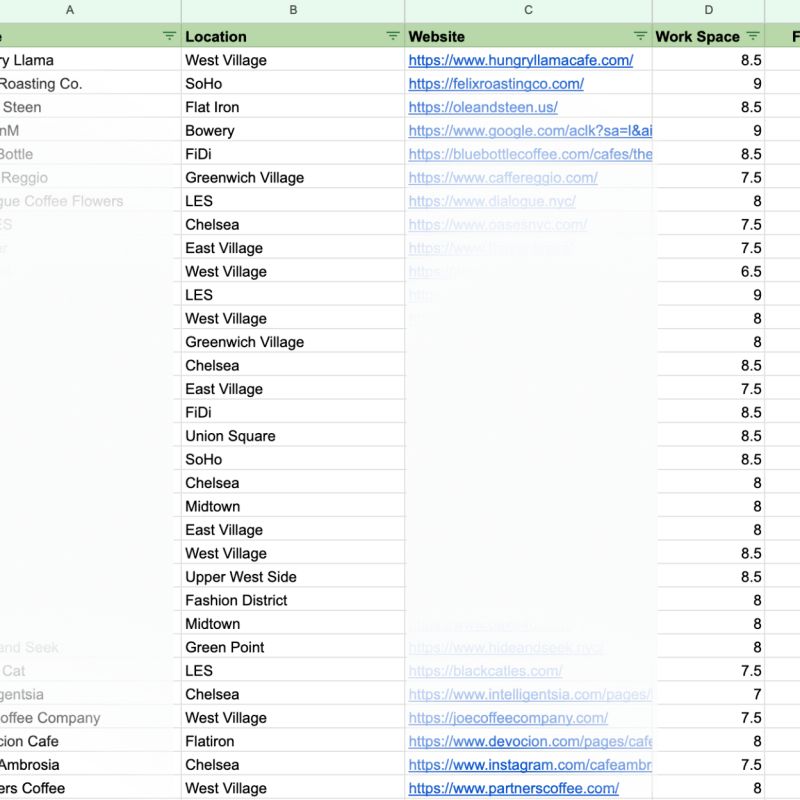
I created a list of my favorite cafes to work at in NYC. Coffee shops > offices. I started my company inside a coffee shop. Beautiful spaces. Good energy. Surrounded by people locking in. And you randomly meet the most interesting people. My list includes the cafe name, neighborhood, and a proprietary, confidential scoring system based on: - Work space (tables, outlets, WiFi, design) - Food (quality, options, price) - Music (playlist, can you take calls) - People (do interesting people go here) - Coffee (does it hit) - Vibes (overall energy) I'd love to share this list with you + add new spots. Comment "CAFE" and I'll DM you the list.
Jonas tweet mediaJonas tweet media
English
381
17
752
210.6K
Ilya K.K. retweetledi
James Clear
James Clear@JamesClear·
Life rarely changes in a positive way without an increase in responsibility. That can mean taking ownership of your health or committing to a relationship or starting a business. Whatever it is, if you want the trajectory to change, the amount of responsibility usually has to change.
English
0
532
3.8K
111.9K
Tife
Tife@whoistife_x·
If algorithm brings this to you, leave a fitness advice for someone.
English
456
44
587
228.3K
Ilya K.K. retweetledi
Alex Hormozi
Alex Hormozi@AlexHormozi·
More dreams are destroyed from distraction than incompetence.
English
433
1.4K
9.7K
180.9K