Deepak Bhuyan retweetledi
Deepak Bhuyan
3.4K posts

Deepak Bhuyan
@imDipuDeepak
ଓଡ଼ିଆ I Student I Unemployed I Amateur photographer I Travel scholar--love to explore the unexplored । Views are personal!!
Bhubaneswar, odisha, India Katılım Ağustos 2016
527 Takip Edilen60 Takipçiler
Deepak Bhuyan retweetledi

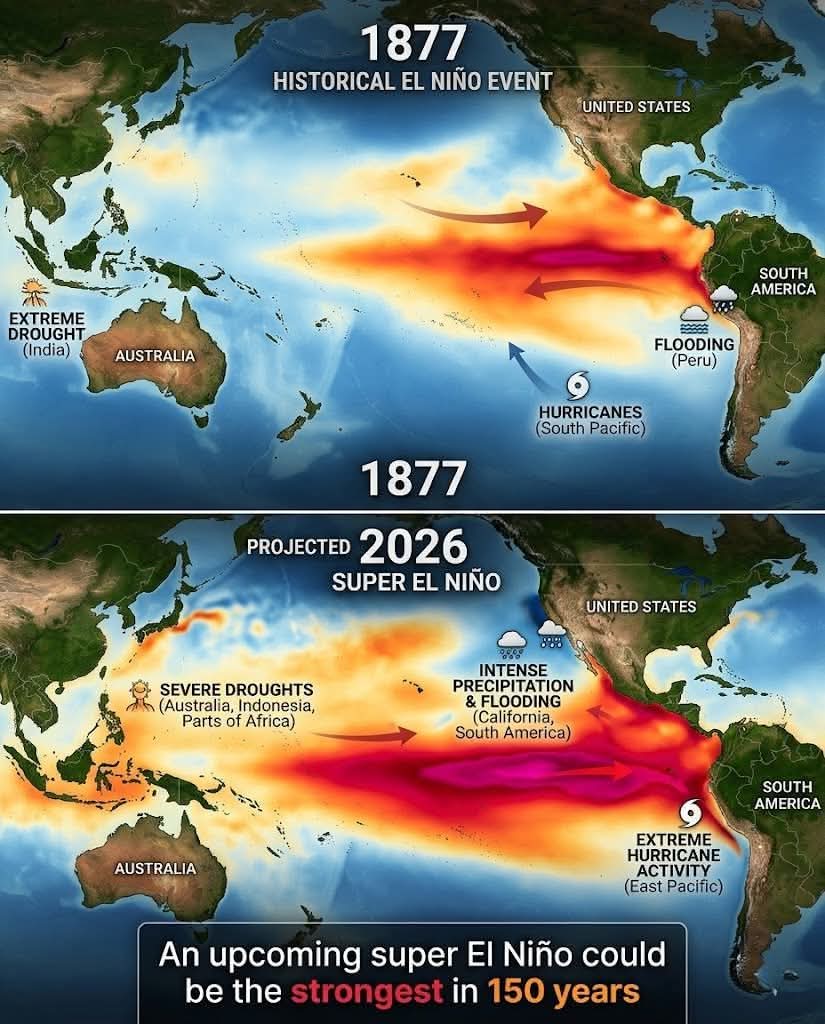
NOAA’s latest projections indicate that a powerful, potentially record-breaking El Niño is rapidly developing in the Pacific and could push global weather patterns into dangerous territory.
Sea surface temperatures in key regions of the equatorial Pacific are forecast to climb as much as 4.5°F (2.5°C) above average by late 2026, rivaling the strongest El Niño events on record.
El Niño occurs when unusually warm water spreads across the central and eastern Pacific, weakening trade winds and dramatically altering global atmospheric circulation. The consequences are far-reaching: some areas face extreme rainfall, devastating floods, and intensified tropical storms, while others endure severe drought, heat waves, wildfires, and agricultural losses. Fisheries can collapse, disease patterns often shift, and food security is frequently threatened worldwide.
What makes this event particularly concerning is that it is emerging against the backdrop of a planet already at or near its warmest levels in recorded history due to human-caused climate change. Superimposing a strong El Niño on this elevated baseline is expected to significantly amplify extreme weather events.
Scientists have drawn comparisons to the catastrophic 1877–1878 El Niño, one of the most destructive in modern history, which triggered widespread droughts, famines, and disease outbreaks that claimed millions of lives globally.
While forecasts still carry uncertainty and the final intensity will depend on how ocean conditions evolve, current models are increasingly alarming. If the projections hold, the developing El Niño could serve as a severe stress test for societies and ecosystems already strained by climate extremes.

English
Deepak Bhuyan retweetledi

Los pronósticos son complejos. El NOAA declara que ya estamos en fase El Niño. Ahora el asunto es qué tan fuerte puede pegarnos, ya que el evento apunta a una variación de la temperatura del mar superior a los 2 grados.
Un evento de esa magnitud en el siglo XIX causó la muerte directa o indirecta de al menos 50 millones de personas. Extrapolando a la actualidad, podrían ser hasta 250 millones de personas afectadas, en peligro o riesgo de muerte.
Un Niño de la magnitud proyectada generó hace siglo y medio sequías crueles en India, China, Brasil y media África, sumado a lluvias intensas en el Pacífico sudamericano.
Aunque en ese entonces teníamos limitantes tecnológicos de producción, la posibilidad de una sequía prolongada es real y puede caotizar el mercado agrícola mundial. A esto se suman bloqueos en la distribución de petróleo por el conflicto en Irán y restricciones en fertilizantes por el bloqueo de Rusia y la economía de guerra de Ucrania (dos países clave en su producción).
En 1877 el super Niño generó una sequía y hambruna de 3 años (ojo con las hidroeléctricas ecuatorianas 27-28-29 y 30). Aunque en lo alimenticio la situación podría no ser tan crítica, se manejan escenarios complejos.
El NOAA ya habla de un Niño instalado y da un 66 % de probabilidades de que alcance carácter “super”. Modelos europeos son más agresivos y hablan de 2 grados de calentamiento para oficializar esa categoría.
Los primeros golpes en el rendimiento de cosechas mundiales se verán entre 6 y 12 meses. Para Ecuador, la mayor afectación estará en trigo y maíz, productos que no se cubren con producción local. La posible ventaja competitiva la tendremos en cacao, ya que grandes productores africanos y de la costa asiática del Pacífico pueden verse afectados, aunque el cacao igualmente subirá de precio.
Si no frena la tendencia de calentamiento del mar en los próximos meses, tendremos 3 años muy complejos, no solo en materia energética sino también alimenticia.

Español
Deepak Bhuyan retweetledi

Heat waves in India are becoming longer, stronger, and more frequent.
Our research paper explores how the El Niño–Southern Oscillation (ENSO) influences extreme temperature events across India and intensifies heat wave conditions during El Niño years.
Key insights:
• Higher heat wave frequency during El Niño
• Increased temperature anomalies across Northwest & Central India
• Longer heat wave duration and wider spatial spread
• Growing climate risks in a warming world
Understanding ENSO is crucial for improving heat wave prediction, preparedness, and climate resilience.
#heatwave #enso #elnino #climatechange #extremeweather #indiaweather #meteorology #climatescience #research #MAUSAMJournal
@moesgoi @airnewsalerts @DDNational @ndmaindia @ICRER_MHA

English
Deepak Bhuyan retweetledi

@AdvAshutoshBJP @HelleLyngSvends This is not something to proud about!! 💩 💩 💩 💩 💩
English

@HelleLyngSvends Never mess with Bharat!💀
English

@Secular_Jihadi3 @Grrrrrr_14 @ntg_8 @GhostAssassin02 Among them were your ancestors....dont think yourself as a descendents of some hero... Your ancestors were killed, raped, converted..by the foreigners...You are product of weak, fear and cowardnes
English

@Secular_Jihadi3 @ntg_8 @GhostAssassin02 same logic applies to Palestine where is allah when small Israel is killing muslims everyday ??
English

@ntg_8 @GhostAssassin02 Dude where was Ram when Muslims destroyed and looted Hindu temples for 1000 years. We formed 2 Muslim countries out of India. 40% of south asia is Muslim. Ram is fading away Allah is staying
English
Deepak Bhuyan retweetledi

Scientists are warning that a potential Super El Niño could strike later this year and some fear it may become the most dangerous one seen since the 1800s
NOAA now says there’s a 65% chance El Niño conditions turn strong or very strong between October 2026 and February 2027
Some researchers believe it could rival the catastrophic 1877 El Niño an event linked to drought, crop collapse, famine, and more than 50 MILLION deaths worldwide
And this time, the planet is already hotter than ever before
El Niño begins when abnormally warm waters spread across the tropical Pacific Ocean. But the consequences ripple across the globe:
• Extreme heatwaves
• Historic flooding
• Severe droughts
• Crop failures
• Wildfires
• Fisheries collapse
• Stronger climate disasters worldwide
The last major El Niño (2023–2024) pushed global temperatures to record highs. Scientists warn the next one could hit an already overheated climate system making the impacts even more extreme
What’s different now is that our atmosphere and oceans are much warmer than in the 1870s, climate scientist Deepti Singh told The Washington Post
Past Super El Niño events caused tens of billions in economic damage and triggered worldwide humanitarian crises
Now experts fear rising food prices, water shortages, instability, and simultaneous extreme weather across multiple continents

English
Deepak Bhuyan retweetledi

DID YOU KNOW??
El Niño was named by Peruvian fishermen who noticed the ocean mysteriously warming up around Christmas, naming the climate monster after the newborn Christ child (El Niño, meaning "The Boy").
What started as a local seasonal observation is actually the largest, most disruptive climate anomaly on Earth. It completely flips the planet's atmospheric circulation upside down, triggering a domino effect capable of sparking droughts, fueling massive hurricanes, and rearranging global economic markets. Let me explain 👇🏾👇🏾
1. What It Is (The Great Oceanic Slosh):
Under normal planetary conditions, strong trade winds blow fiercely from east to west across the Pacific Ocean, pushing sun-warmed surface water toward Asia and Australia.
This creates a massive pool of warm water around Indonesia, while cold, nutrient-rich water wells up from the deep ocean along the coast of South America to replace it.
During an El Niño event, these easterly trade winds suddenly weaken or completely collapse. Without the wind pushing it forward, that massive, thousands-of-miles-wide pool of hot water sloshes backward across the Pacific, pinning the cold water down and blanketing the South American coast in hot water.
2. The Atmospheric Flip( Altering the Jet Stream):
When that massive pool of oceanic heat shifts positions, it acts like a giant boulder dropped into the middle of the global atmosphere, permanently warping the path of high-altitude jet streams.
The Pacific jet stream moves further south and straightens out. This atmospheric shift changes global weather patterns instantly. Areas that are normally dry and arid, like the southern United States and the coast of Peru, are suddenly slammed by torrential rain and catastrophic flooding.
Conversely, regions that rely on heavy rains, like northern Australia, Indonesia, and parts of India, are plunged into severe, blistering droughts that dry up major agricultural crops.
3. The Invisible Global Economic Shockwave:
Because El Niño dictates global weather, it functions as a massive, hidden economic driver that directly impacts the global cost of living.
When El Niño triggers severe droughts across Asia and South America, it cripples the global supply of delicate commodities like coffee, cocoa, sugar, and rice, causing grocery prices to spike worldwide. Along the coast of Peru, the warm El Niño water blocks the upwelling of cold, nutrient-rich currents.
Without these nutrients, microscopic plankton die off, causing the collapse of massive anchovy and fish populations. This instantly bankrupts local fishing fleets and disrupts the global marine food supply chain.
4. Super El Niño Residuals:
Recent climate scientists and meteorologists are closely monitoring the ocean's transition phase following a series of highly volatile, intense thermal cycles.
In 2026, global weather models are grappling with the long-term aftermath of elevated baseline ocean temperatures.
When an El Niño forms in an already warming global ocean, it supercharges the atmosphere with unprecedented amounts of thermal energy.
This increases the severity of late-season tropical cyclones in the Pacific while suppressing Atlantic hurricane development through high vertical wind shear, forcing emergency management agencies to completely rewrite their seasonal disaster readiness playbooks.
FINALLY!
El Niño is a stark reminder of how interconnected our planet truly is. A simple weakening of winds over the Pacific Ocean can trigger a physical chain reaction that causes floods in California, wildfires in Australia, and economic inflation at your local grocery store.
Hopefully you've learnt something new today?
Cheers 🥂 🙂
The Medic Who Writes™🌚


Mariana Oliveira@marioliveirain
Galera, na boa, eu estou cansada de viver eventos excepcionais. Alguém poderia me explicar, como se eu tivesse 10 anos de idade, se estamos muito ferrados? Isso vai afetar muito nossa vida?
English

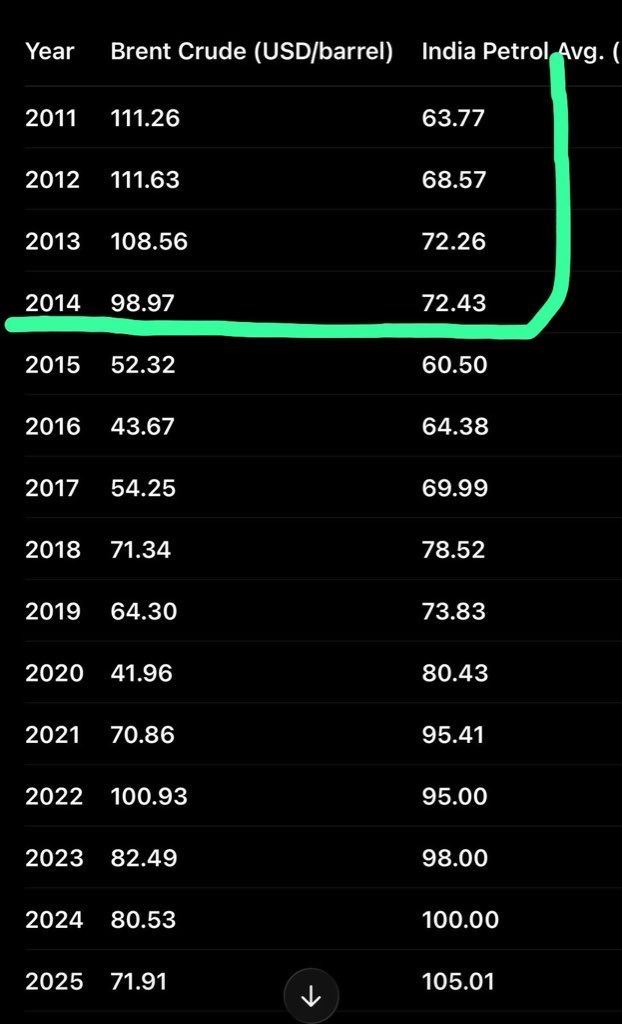
@noname1080551 @stats_feed Now compare the infrastructure development, income of individuals, exports more than imports, near perfect literacy rate and worldclass health-care.. Btw where were you when same people were questioning UPA before 2014
English

@stats_feed 🙄And still in India the opposition will build a narrative that only the Indian rupee is losing it's value
English
Deepak Bhuyan retweetledi

@PaganMinNP Nepalis think , if this imaginary scenario somehow happens, Bangladeshis will actually have a good time with them. But they missing the point Whatever's going down in India's boarding states right now will go down right in the middle of Kathmandu! 😋😋😋
English

Akhanda bangladesh When?
GIF
light_squaredBishop🦃@AsifHaMenatzech
i found this one funny. long live nepal-bagladesh friendship 🇧🇩❤️🇳🇵
हिन्दी