

Eric McCabe
7.8K posts


Man, I have had a magnificent weekend!!first I talked to Don Shelby, the legend. I love that man! Just now I talked to Mike Gelfand, another legend, I think God is telling me to get the band back together. I am a very lucky man!
English
Eric McCabe retweetledi


Eric McCabe retweetledi

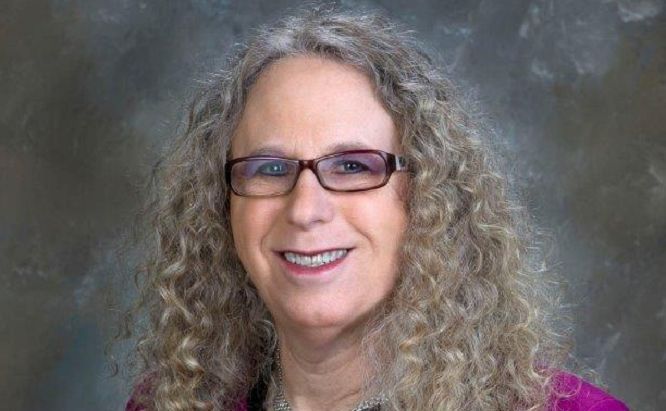
They don't believe Jesus rose from the dead but think this guy miraculously became a woman.
English
Eric McCabe retweetledi

@ChadHartmanShow Noted leader of the free world . . .
You believed this person too Chad! 🤷
x.com/planetofmemes/…
Planet Of Memes@PlanetOfMemes
Remember when Joe Biden was so far gone that the Easter Bunny had to keep him on task?
English

Eric McCabe retweetledi

Remember when Joe Biden was so far gone that the Easter Bunny had to keep him on task?
English
Eric McCabe retweetledi
Every voter in America should be aware of this
- In 2023, 9% of all births in the United States were to illegal mothers
- 75% of illegal immigrant households with children are using at least 1 major federal welfare program, with the citizen child serving as the eligibility hook
- There are 1.5 million Chinese anchor babies that are living in China that can vote in our elections and are eligible for our welfare systems despite never having lived in the United States of America
“Does that seem fair to you? Someone can just break our laws, enter into our country illegally, give birth, and then receive welfare — $150 billion annually is what it's costing the taxpayer. That seems like an abuse of our 14th amendment”
“That's a huge problem. That's an abuse of our system. The United States of America is not for the entire world, it's for the United States of America. We are not a country if you can just come in, give birth on our soil, and then become a citizen through some type of loophole.”
English
@AlexMicheletti 15 - 20yr old players
vs
18 - 26yr old players
Apparently Gabe beleives visors make it a “man’s game” because biologically the math ain’t mathin’!! 🤣
English

Macklin Celebrini just went over 100 points as a teenager, yeah playing NCAA hockey really hurt his development 🤦🏻♂️🤦🏻♂️🤦🏻♂️ what a take
Gabriel Morency@sportsrage
This the MAJOR DIFFERENCE between #NCAA & #CHL Hockey . CHL is a MANS game . Much more #NHL like
English
@jh336405 @LaxBionicLax @WeeWheaton @USronaldcarter We get it - you ❤️ Iran and think they should be left alone to their own devices! LMAO! Maybe you should bring your wife and raise your daughters over there and have your gay brother and cousins over to visit and see how much you love Iran then?🤷
English

@LaxBionicLax @WeeWheaton @USronaldcarter Like the US hasn’t broken every deal or been harassing Iran since 1953 moron.
x.com/jh336405/statu…
💯1%_Better_Every_Day💯@jh336405
Fine with me but let's not pretend this conflict started last week. We are not innocent players in his drama. It all stared in 1953 when the CIA initated a coup....then we shot down a civilian aircraft of 290 people...then there have been repeated bombing campaigns involving civilian deaths. The Backdrop In 1953, the United States and the United Kingdom backed a coup that removed Iran’s elected Prime Minister, Mohammad Mosaddegh, and strengthened the Shah’s rule. That intervention remains one of the most significant turning points in modern Iranian political memory. U.S. support for the Shah’s government, including its security apparatus, is widely cited as a major factor that fueled anti-American sentiment leading up to the 1979 revolution. 1980s – Direct Confrontation and Civilian Losses During the Iran–Iraq War (1980–1988), the U.S. provided support to Iraq, including intelligence assistance. In 1988, the USS Vincennes shot down Iran Air Flight 655 over the Persian Gulf, killing 290 civilians. That same year, the U.S. launched Operation Praying Mantis, attacking Iranian oil platforms and naval assets in the Gulf. 1990s–2000s – Sanctions and Regional War Over the decades, U.S. sanctions on Iran have targeted the regime but have also been associated with economic strain that affected ordinary civilians, particularly through financial and trade restrictions. During the 2003–2011 Iraq War, violence led to large numbers of civilian deaths. Estimates vary, but independent tracking groups such as Iraq Body Count have documented well over 180,000 civilian deaths from violence during that period. The war reshaped regional dynamics and contributed to the rise of militias and instability that still influence U.S.–Iran tensions today. 2014–Present – Air Campaigns and Proxy Conflict In the campaign against ISIS in Iraq and Syria, U.S.-led coalition airstrikes resulted in acknowledged civilian casualties, with independent monitors estimating higher figures. Civilian harm in these operations has remained a point of controversy and debate. 2020 – Direct Escalation In January 2020, the United States conducted a drone strike in Baghdad that killed Iranian Quds Force commander Qasem Soleimani and others. Iran responded days later with missile strikes on U.S. bases in Iraq, injuring over 100 American service members. So you can't cause coups, shoot down civilian aircraft killing 290 people, and then kill a ton of civilians......and not expect blowback. Looking at the full timeline shows that the conflict between the United States and Iran has involved direct military actions, proxy warfare, sanctions, civilian casualties, and retaliatory cycles on both sides. Understanding the ENTIRE sequence of actions helps explain why tensions have repeatedly escalated back- and-forth rather than just tryig to blame Iran.
English

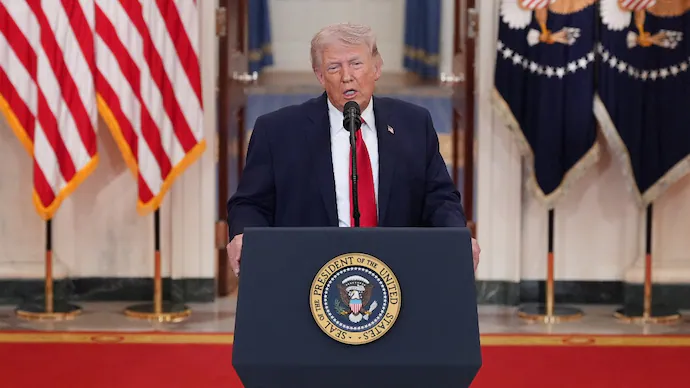
I just got off the phone with someone who works in defense policy in Washington. What they told me should end every "Trump is reckless" argument permanently.
"Every single president since Clinton received the same intelligence briefing on Iran's nuclear timeline. Every single one was told the window was closing. Every single one chose to kick it down the road because the political cost of acting was higher than the political cost of waiting."
Trump got the same briefing. 60kg of 90% enriched uranium. 4 weeks to breakout. Material for 2 bombs.
He chose to act knowing it would tank his approval to 35%.
He chose to act knowing his own base would split.
He chose to act knowing NATO allies would refuse to help.
He chose to act knowing gas prices would spike.
A senior analyst I know at a major think tank put it this way: "The difference between Trump and every president before him isn't intelligence. They all had the same data. The difference is courage."
Read that again.
Every president had the same file on their desk. Only one opened it and did something.
I'll keep you updated. Turn on notifications. 🚨
English
Eric McCabe retweetledi

🚨 do you understand what New York City just accidentally admitted..
NYC spent $81,705 per homeless person last year.. the median American household earned $81,228.. the government spent MORE to keep someone homeless than most families earned to keep themselves housed..
that $81,705 isn't going to the homeless person.. it's going to the system around them.. shelters, administrators, case managers, contracts, overhead.. the industry that manages homelessness.. not the end of it..
if NYC gave every homeless person that money directly.. they could afford nearly 2 years of rent.. most of them wouldn't be homeless anymore..
instead the money goes to the system.. the system keeps running.. the homelessness stays.. and every year they ask for more funding to manage the problem that the funding was supposed to solve..
the homeless are worth $81,705 a year to the system..
they're worth nothing to it solved..
unusual_whales@unusual_whales
New York City spent $81,705 spent per homeless person last year. Meanwhile, the household median income was at $81,228, per Newsweek.
English
Eric McCabe retweetledi

Maybe the people saying Black people are too stupid to get an ID to vote… are the racists.
Maybe the people saying married women can’t figure out how to get a birth certificate… are the sexists.
Maybe the people calling everyone else a threat to democracy… are the ones trying to rig it.
Maybe the people obsessed with “equity” while ignoring merit… are the ones holding people back.
Maybe the people who can’t name a single limit on immigration… are the extremists.
Maybe the people who say they’re fighting for the working class… while flying private, actually aren’t.
Maybe the people who say they care about the poor… have run every major American city for 50 years and made them ALL worse.
Maybe the people calling for more gun control… travel with armed security paid for by taxpayers.
Maybe the people who claim to love science… but can’t define what a woman is aren’t following it.
Maybe the people demanding unity while calling half the country fascists… don’t actually want unity.
Maybe it was never about justice, equity, tolerance, or democracy.
Maybe it was always about power.
And maybe the way you know that, is that they never stop accusing YOU of exactly what THEY are doing.
English
Eric McCabe retweetledi

Eric McCabe retweetledi

It’s insane that people actually believed this man was running the county.
It’s even more insane that people believed this man got over 81 million legitimate votes.
English
Eric McCabe retweetledi

Six years ago Bernie said we had about six years left to stop the existential threat of climate change.
“We need the Green New Deal!”
Now they barely talk about climate change. Nobody should ever take the these people seriously.
MAZE@mazemoore
Six years ago Bernie Sanders claimed that humanity only had about six years left to stop the existential threat of climate change. Bernie said the way to stop it was by passing the Green New Deal. The GND was projected to cost between $10 and $90 trillion. Bernie doesn't talk as much about climate change as he used to. Now he fundraises off of "Fight the Oligarchy."
English

@B_Marsh92 I honestly think he did it knowing he would get engagement. Like a heel wrestler trying to get heat.
English

Pohlad puff piece in the year 2026 is a disgusting slap in the face to Twins fans
The Minnesota Star Tribune@StarTribune
Souhan: Let’s fix the relationship between Twins fans and the Pohlad family startribune.com/minnesota-twin…
English
Eric McCabe retweetledi

France banned mail-in voting in 1975 - DUE TO FRAUD.
Mexico banned mail-in voting in 1992 - DUE TO FRAUD.
Belgium banned mail-in voting in 2018 - DUE TO FRAUD.
Sweden, Italy, Japan, Russia, Latin American countries and the Middle East DO NOT ALLOW MAIL-IN VOTING.
Democrats would have you believe that the 2020 election that had a staggering amount of mail-in voting was the "most secure election in American history."
Get. Fucked. You cheating bastards.
English
@B_Marsh92 Completely agree and at the same time the over-passing and the blatant refusal to shoot when high-quality chances are there to pass to a worse shooting angle is equally frustrating! Armchair QB type of stuff for us fans that are being spoiled by their talent though . . . 😬
English
Kaprizov and Zuccarello are sometimes just quite literally unstoppable. What a play
English
Eric McCabe retweetledi

Hillary Clinton: "We certainly don't want [illegals] having the same benefits that American citizens are entitled to have."
What a fascist thing to say.
English
Eric McCabe retweetledi

I want to apologize for not responding to any of the 22 thousand comments my last post inspired. I’ve been filming all week and just noticed my observations about Jimmy Kimmel and a former plumber named Markwayne Mullin have gone viral. I've also noticed that many of the comments are from people who genuinely seem to believe that Jimmy wasn’t belittling plumbers at all, but was instead, simply trying to point out that Mullin is not qualified to lead the DHS. Here's a small smattering...
Roger Bicknell...
Mikey stop. Kimmel wasn't making fun of plumbers he was making fun of Mullin.
Rebecca Piatt Gonzalez...
Dearest Mike, it's not anything to do with his being a plumber. It's him NOT being skilled in Homeland Security.
Patrick Wise...
Being a plumber qualifies you to be a plumber. Period. The issue Jimmy and the rest of us at the adult table recognize is that jobs require certain training and experience and being a plumber does not qualify you to be Sec of DHS.
Had Roger, Rebecca, Patrick and all the others who rushed to Jimmy’s Kimmel’s defense actually read what I had written, they would see that I did not suggest - even remotely - that a plumber was inherently qualified to hold a cabinet position. What I said was that being a plumber should not disqualify a person from holding such a position. Big difference. Doctors, lawyers, veterinarians, fireman, and university professors are no more or less qualified to run the DHS than plumbers, electricians, or carpenters – but should they all be dismissed as “unqualified” simply because they made a living in some other vocation?
As I wrote in my original post, credentials and diplomas are great ways to bolster a person’s credibility, especially if we’re talking about mastering a specific skill. I think we can all agree that plumbers, accountants, mechanics, and surgeons should all have to prove themselves competent before hanging out a shingle. But what do their credentials and diplomas have to do with their actual competency? Are we not already surrounded by a legion of perfectly qualified experts who don't know what the hell they're doing? Moreover, what do credentials and experience have to do with wisdom, honesty, common sense, integrity, courage, the ability to lead, or any other virtue we’d like to have in our elected officials?
There are plenty of legitimate reasons to question Mullin’s suitability for this role. But there’s no legitimate reason to disqualify him simply because he used to be a plumber. Just as there was no legitimate reason to dismiss AOC because she used to tend bar. As for the joke itself, here’s an honest question. If Senator Mullin was a retired doctor instead of a retired plumber, do you believe he would have would made the same joke?
Roger, Rebecca, Patrick...be honest. Do you really think Jimmy would have said to his audience, "So, now we have a DOCTOR in charge of protecting us from terrorism? Hey – it worked for Dr. Suess – maybe it’ll work for Markwayne!"
Personally, I don't. Not in a million years. Why? Because no one would have found it funny, that’s why. Even though doctors are no more “qualified” to protect us from terrorists than plumbers are, Jimmy knows that doctors are widely respected in society, and that plumbers are not. He knows that medical degrees and doctorates are aspirational credentials, whereas plumbing certificates are not. The entire premise of his joke was based on a personal bias that he knew his audience shared – a bias that presupposes plumbers are uneducated, one-dimensional workers who never made it to college, and are therefore "unqualified" to do anything but plumb.
Jimmy is entitled to his opinion, along with anyone else who believes that Mullin is unqualified to lead the DHS. The Constitution, however, says otherwise, and so does the Senate. Likewise, reasonable people can disagree as to what is funny and what isn’t. Frankly, I couldn’t care less. What I do care about, is the extraordinary shortage of plumbers and electricians our country is facing, and the longstanding stigmas and stereotypes that continue to discourage people from considering a lucrative career in the skilled trades. Jimmy’s joke – and his audience’s reaction to it – is proof positive that those stigmas and stereotypes are alive and well.
PS. We have a lot of money set aside to help train the next generation of plumbers. Apply for a scholarship at mikeroweworks.org Who knows? Could be the first step on your road to President..

English
Eric McCabe retweetledi

Chicago Bulls Offer To Reinstate Jaden Ivey If He Will Do Some Cocaine And Beat A Few Women
English