

Rohit Bhat
2.5K posts

Rohit Bhat
@imteng
Investor @ Airavat Capital. Interested in investing, science, tech, SFF, board games and RPG.
Katılım Ocak 2010
232 Takip Edilen914 Takipçiler

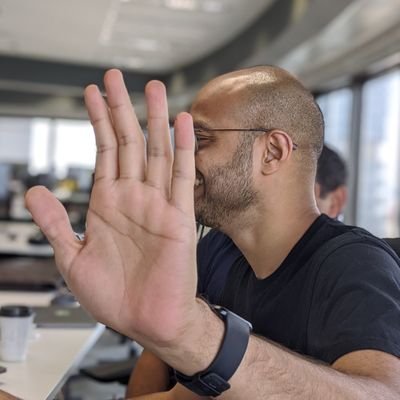
A nice moment from the Mumbai Quiz Festival, this time last month.
Points to anyone who recognises my t-shirt.

English
Grifter ko girefthaar karna hain? 🙈
jss@jsensarma
Bengal is again in the news for all the wrong reasons. Thugs being protected by state police now - even judiciary is not safe. I keep returning back to this post. Most examples of degeneracy in societies the world over can be explained (and also fixed) by this nameless model.
हिन्दी
parenting is one such
never discuss parenting online
parents are easily offended and unforgiving enemies
English
it kind of blows my mind that i no longer run a single anon account on any platform
the privacy is too easily pierced these days
English


I am happy but also terrified they’re gonna fuck it up.
DiscussingFilm@DiscussingFilm
Apple has landed the rights to turn ‘MISTBORN’ into a film franchise & ‘THE STORMLIGHT ARCHIVE’ into a TV series. Brandon Sanderson will write, produce and consult on all projects. (Source: hollywoodreporter.com/movies/movie-n…)
English

@udupendra No 13 for me - wasn’t in the US then. But I have rented from Videowala in Indiranagar back in the day.
English
What nonsense, have done all 20.
𝐌𝐚𝐭𝐭 𝐏𝐢𝐧𝐧𝐞𝐫@Matt_Pinner
7 for me!!….I feel confident nobody Has all 20!! How many for you?🤔
English
@ponnappa @helloanand Mostly Budokan, of course.
The pièce de résistance was getting galaxies to spin and flames to burn. I think we had better computers by then, though.
English
Haha I got a 386sx discarded from a family friend's workplace in '95. Monochrome monitor. 1mb ram, 40mb hdd. Said I wanted to code (which I did) but I actually wanted to play games (obviously). Implemented two different graphics textbooks along the way without understanding a damn thing, but... so pretty. Iirc ray tracing a few pixels took hours. Mandelbrot set took 6-8s per pixel on a 640x480. Good times.
English

Convinced my mom in 1994 to buy a 386 computer with a 387 math coprocessor so that I could do floating point instructions. That would effectively make it a 486.
That helped me do some animations in 3DStudio. The rendering would take 6-7 hours for a 10 second clip.
Sidu Ponnappa@ponnappa
This actually worked for me in 2003. I did a banger of a college project on top of it. As was (and is) normal for VTU CS, I was one of maybe 5 people out of 110 in my batch who did not plagiarize to do the project. When I went to my principal for permission to bring my desktop to college to demo the project (yeah, that was a thing smh), my Principal accused me of plagiarizing my project. lololol.
English

After no progress at all for 2 years after the below tweet, I have found a way to listen to podcasts, in a surprisingly frequent way, and without a loss to other useful/fun activities.
Sanjeev Vaidyanathan@sanhelmet
Question: I have a difficult time going through podcasts/audio (much prefer transcripts). Yet, I constantly come across interesting ones that I would like to listen to. If this sounds like you and but you have found a way to regularly listen to podcasts, please tell me how!
English
@sanhelmet See below. There could be an issue from pre-selecting a sample and studying it.
Natesh Pillai@Bayesprof
Apparently it’s collider bias. Haven’t looked at it carefully, but just because it is published in science doesn’t mean I believe it. In fact the opposite. linkedin.com/feed/update/ac…
English
Important rejoinder to the original thread, especially for parents/coaches:
x.com/aakashg0/statu…
Aakash Gupta@aakashgupta
Everyone is missing what this study actually says to parents. The graph shows two paths to the same destination. The yellow line (early specialization) gets there faster in the early years. The blue line (multi-disciplinary) gets there slower but breaks through to world-class. The key insight: individuals who perform best at a young age are usually not the same people who later reach the world-class level. This came from 34,839 top performers across four domains: Nobel laureates, Olympic medalists, elite chess players, and renowned classical composers. The researchers found three consistent patterns. First, the best kids and the best adults are mostly different people. Second, future world-class performers showed gradual development and weren’t among the best in their age group. Third, they didn’t specialize early but engaged in multiple disciplines. The research team proposes three mechanisms that explain why breadth beats depth. The search-and-match hypothesis suggests that exposure to multiple disciplines increases the likelihood of eventually finding the best personal fit. The enhanced-learning-capital hypothesis proposes that learning in diverse areas strengthens overall learning capacity, making it easier to continue improving later at the highest level within a chosen field. The limited-risks hypothesis argues that engaging in multiple disciplines reduces the chance of setbacks such as burnout, unhealthy work-rest imbalances, loss of motivation, or physical injury. That third one matters enormously. Specialized athletes are 2.25 times more likely to get overuse injuries than multi-sport athletes. The American Academy of Pediatrics, AOSSM, and American Medical Society for Sports Medicine all recommend against early specialization before age 15 for most sports. The lead researcher, Arne Güllich from RPTU University Kaiserslautern-Landau, puts it bluntly: “Don’t specialize in just one discipline too early. Encourage young people by providing opportunities to pursue different areas of interest, and support development in two or three disciplines.” The two or three disciplines don’t need to be related. Language and mathematics. Philosophy and geography. The researchers cite Einstein pursuing physics and violin. The connection between domains seems to build cognitive infrastructure that pure depth cannot replicate. Here’s what makes this uncomfortable for parents. The early specialization path produces visible results faster. Your kid looks better at age 10. They make the travel team. They win the tournament. The graphs cross and diverge later, around peak performance age, when the multi-disciplinary kids start pulling ahead. The entire youth talent ecosystem runs on selecting early performers and accelerating them. Travel leagues, elite academies, showcase tournaments. Every incentive pushes toward specialization. But the research shows this system is optimizing for the wrong metric. It produces great 14-year-olds, not great 24-year-olds. The practical takeaway: let your kid play three sports until at least middle school. Let them quit the piano and try drums. Let them be mediocre at several things instead of great at one thing. The data says this approach produces both more elite performers and fewer burnout casualties. The hardest part is watching other kids pass yours on the yellow line while trusting the blue line catches up.
English
A great thread - and feels intuitively right.
Also known as Consistency > Intensity?
Brad Stulberg@BStulberg
A massive new study on peak performance included 34,000 international top performers: Nobel laureates, renowned classical music composers, Olympic champs, and the world’s best chess players. It shows early specialization is a trap, and the road to greatness is long and varied.
English
@gamedabado Unfortunately, I don't invest in RPG. Only occasionally play them.
English

@imteng @amrishrau @sjs_day1 @peakxvpartners I don't see any contacts, so will ask here: Are you still interested to invest in RPG games?
English
This one is certainly close to the heart.
Congrats to Lokvir, @amrishrau and the Pine Labs team.
And, of course, to @sjs_day1. Unwavering belief and foresight.
A great week at @peakxvpartners
English
@ku1deep Unbelievable gameplay and music. Both 1 and 3 are on my work music playlist.
English

I used to run back home in 8th grade to beat Golden Axe on my 486. Spent months trying.
Nostalgic Gamer@16bitnostalgia
Good Morning all!
English

It’s a new television show. Called the Taylor series.
Himanshu Tyagi@hstyagi
Dear American politics. Please maintain work life balance and leave Taylor Swift out of it. She is bigger than you (and she is bigger than her own political beliefs). Ask any parents with daughter in any country
English
Rohit Bhat retweetledi

"We are all going to be empowered by AI, because each of us has a chance to build our personal robot in a sense," say Rohit Bhat and Suraj Subramaniam, Co-Founders, Airavat Capital.
@imteng
@lassifaire
@Acer_India
@AirIndiaX
@IBSIndia1
#FortuneIndia40Under40
English