

Troy Phung
190 posts
Troy Phung
@imtroyphung
grow through what you go through.
Katılım Ağustos 2021
2.8K Takip Edilen252 Takipçiler

ICYMI: GOLDMAN SACHS GROUP INC. SOLD ALL solana:So11111111111111111111111111111111111111112 AND ripple:native ETF HOLDINGS, ADDED NEW hyperliquid:native DAT COMPANY $PURR POSITION DURING THE FIRST QUARTER OF THIS YEAR
SOURCE: 13f.info/13f/0000886982…

English



.@hyperbuilder_hl Merch Giveaway
If you love Hyperliquid merch, this is for you.
To join:
1/ Follow @ellie_nfts @hyperbuilder_hl @ronaparajit & like this tweet
2/ Submit the form: forms.gle/NahMCMw9HYZRaR…
What to choose:
- HL Green Hoodie
- Hyperliquidated Red Hoodie
- HL BayN Tee
- Hypurrliquid White Hoodie
- Purr Exit Liquidity Black Sweater
Heads up:
- Please make sure your phone is reachable. If the carrier can’t contact you and delivery fails, we won’t be able to resend.
- There may be more than one winner (it will depend on the number of people who submit the form).
- I might send some extra gifts too :D if I can get them ready in time 😆
Appreciate all the support as always🤍

English


Now that Dubai lost it’s safety charm, the best country in the world award goes to Thailand:
- amazing climate
- perfect restaurants and service
- stable THB currency
- cheap real estate with low maintenance costs
- long term visas and low taxes for crypto bros
- great medicine
- safety unironically, you feel secure here
Cons:
- none
I want to buy a place in Thailand one day
English
"The day your life changes is the day you stop optimizing the wrong variables and start making bets on becoming unrecognizable."
Daryl Lau@Daryllautk
If you applied the same trading philosophy to your life, you could exponentially change it. I like to ask people about their pivotal moments - their plot lines, their character arcs - when I meet them. Most people can't name one in the last 5 years. VCs will spend 100 hours intellectually masturbating but never ask "how far am I from my own J curve?" A few years ago I asked myself: what are my core competencies, and if nothing changed, would I actually be happy? That question changed everything. For some people it's living in a whole new country - stepping out of the comfort of home and figuring out who they are outside their family. Going sober for a year was eye-opening for me. It taught me a lot about who I am. For others it's as simple as saying yes to new experiences for 6 months. Most people treat their life like a portfolio they inherited - too afraid to rebalance. The day your life changes is the day you stop optimizing the wrong variables and start making bets on becoming unrecognizable.
English
@Daryllautk "The day your life changes is the day you stop optimizing the wrong variables and start making bets on becoming unrecognizable."
Thanks chad, it made my day.
English

If you applied the same trading philosophy to your life, you could exponentially change it.
I like to ask people about their pivotal moments - their plot lines, their character arcs - when I meet them.
Most people can't name one in the last 5 years.
VCs will spend 100 hours intellectually masturbating but never ask "how far am I from my own J curve?"
A few years ago I asked myself: what are my core competencies, and if nothing changed, would I actually be happy?
That question changed everything.
For some people it's living in a whole new country - stepping out of the comfort of home and figuring out who they are outside their family.
Going sober for a year was eye-opening for me. It taught me a lot about who I am.
For others it's as simple as saying yes to new experiences for 6 months.
Most people treat their life like a portfolio they inherited - too afraid to rebalance.
The day your life changes is the day you stop optimizing the wrong variables and start making bets on becoming unrecognizable.
Andrew Kang@Rewkang
English

0/ A personal update
I have decided to step back from @multicoin. It's a bittersweet moment for me because my time at Multicoin has been some of the most meaningful and rewarding of my life. That said, I am excited to take some time off and explore new areas of technology.
After nearly a decade in crypto, I’m more confident than ever that crypto is going to fundamentally rewire the circuitry of finance. I believe the Clarity Act will unlock a tidal wave of new entrants and spur adoption unlike anything we’ve seen. I remain bullish on crypto, specifically Solana, and intend to continue making personal investments in the space and supporting Multicoin portfolio companies. Moreover, I will continue to serve on the board of @zama, and I will continue in my role as Chairman at Forward Industries (@FWDind). More on Forward in next tweet.
It goes without saying that I also remain bullish on Multicoin. My partners @tushar_jain, Brian Smith, @johnrobertreed, @mattshap1, @xethalis, @SpencerApplebau, and @shayonsengupta are some of the best investors and operators in the world. I am excited for them to continue to drive the crypto ecosystem and Multicoin forward for many years to come.
To all of our portfolio founders, LPs, and industry partners—thank you for the opportunity to work with you.
For reference, here is the letter we shared with LPs today
drive.google.com/file/d/1bsoabi…
English

English
Node Studio Program #3 is LIVE 🚀
#MetaPool is onboarding 60 new organizations to run NEAR validators
no technical background required.
Yes, really.
Here’s how simple it gets 👇
✅ Launch a validator in 3 clicks
✅ No DevOps. No infra stress
✅ Get 40,000 NEAR delegated to your validator
This isn’t just onboarding.
NSP #3 is a competitive growth program designed to help new operators collaborate, learn, and actively grow the NEAR ecosystem together with @meta_pool.
Now let’s talk numbers 👀
You: Pay ~$25/month for a server
Meta Pool: Delegates 40,000 NEAR to your validator
You: Keep 100% of the validator rewards
Yeah… the math doesn’t math.
But it’s very real 🔥
🐎 Only 60 slots available
If you’ve ever wanted to run a validator, earn sustainably, and be part of NEAR’s core infrastructure this is your moment.
👉 Apply now:
peppermint-daffodil-e37.notion.site/1f23f29d38d381…
#NodeStudio3 #NodeItEasy

English
Troy Phung retweetledi

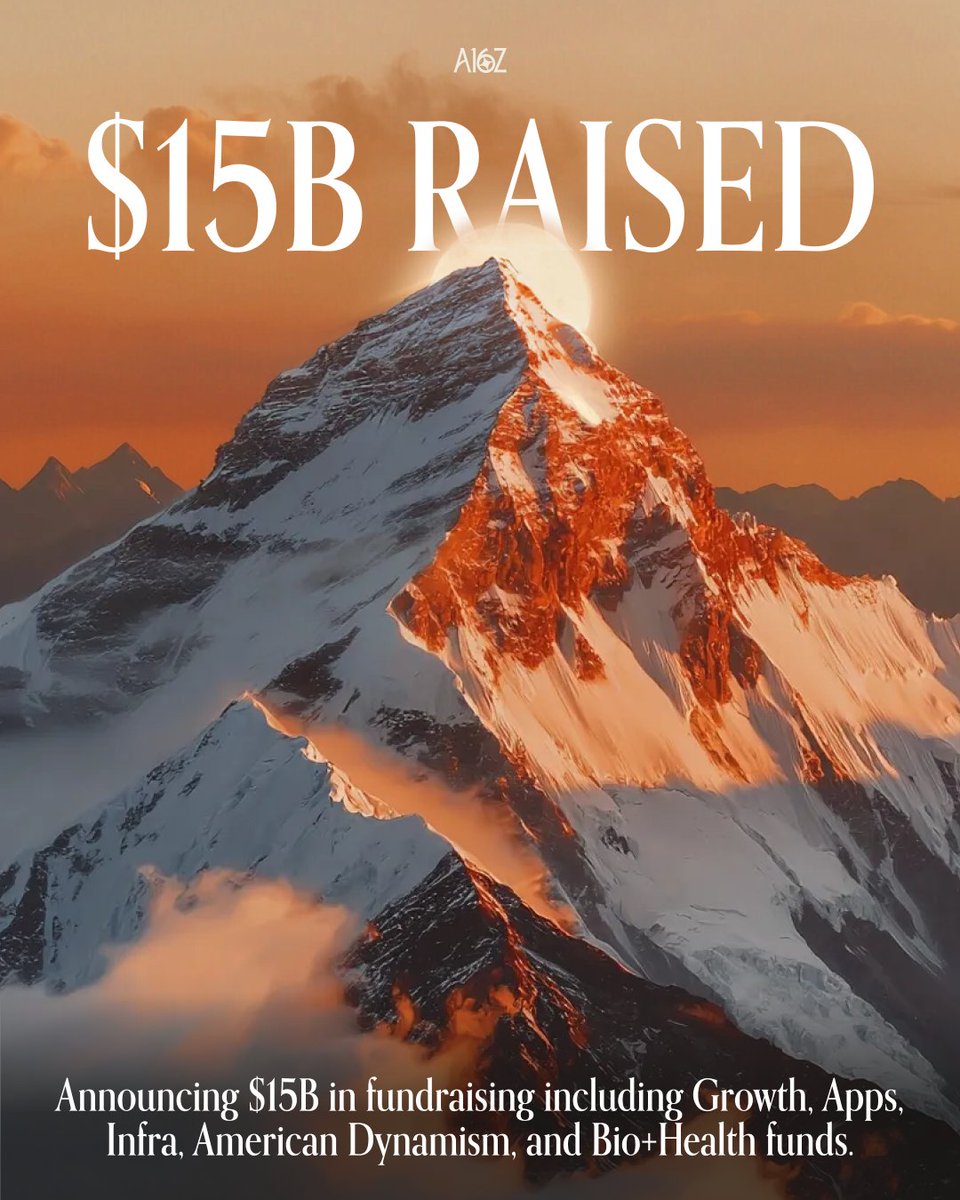
At Andreessen Horowitz, we just raised over $15B.
With these new funds including American Dynamism ($1.176B), Apps ($1.7B), Bio + Health ($700M), Infrastructure ($1.7B), Growth ($6.75B), and other venture strategies ($3B), we raised over 18% of all venture capital dollars allocated in the United States in 2025.
Why did we raise the money and how do we plan to invest it?
Read more from Ben Horowitz: a16z.news/p/we-raised-15…
English
@danhtran68 Decibel có gì đặc biệt nếu so với tier 1 Perps bây giờ vậy bác?
Tiếng Việt
Troy Phung retweetledi

@0xCRASHOUT @mert Your avatar is so damn bright I thought my screen was having a stroke =)))
English

@munchPRMR You didn't bother looking at the expiration date, huh?
English

So many people saying Lighter is going to flip Hyperliquid but Polymarket doesn't even have >4B priced in for Lighter, only 37% chance of it being above 4B FDV one day after TGE.

English



closing section of buffett's final letter:
"One perhaps self-serving observation. I’m happy to say I feel better about the second half of my life than the first. My advice: Don’t beat yourself up over past mistakes – learn at least a little from them and move on. It is never too late to improve. Get the right heroes and copy them. You can start with Tom Murphy; he was the best.
Remember Alfred Nobel, later of Nobel Prize fame, who – reportedly – read his own obituary that was mistakenly printed when his brother died and a newspaper got mixed up. He was horrified at what he read and realized he should change his behavior.
Don’t count on a newsroom mix-up: Decide what you would like your obituary to say and live the life to deserve it.
Greatness does not come about through accumulating great amounts of money, great amounts of publicity or great power in government. When you help someone in any of thousands of ways, you help the world. Kindness is costless but also priceless. Whether you are religious or not, it’s hard to beat The Golden Rule as a guide to behavior.
I write this as one who has been thoughtless countless times and made many mistakes but also became very lucky in learning from some wonderful friends how to behave better (still a long way from perfect, however). Keep in mind that the cleaning lady is as much a human being as the Chairman."
English