
IONLAB
116 posts


@WAWoloszyn TEEs provide cryptographic proof of something, but not necessarily the right thing. You need reproducible builds to independently verify the hash of the code that generated the output, otherwise it's worthless
English

Spent the weekend auditing TEE-based crypto projects on mainnets.
It’s worse than I expected.
“Remote attestation” is mostly just theatre.
With one exception (Flashbots), users are being sold security properties that simply aren’t there.
English
Proud to present our technical explainer for the SAVE framework (Structured Attestation & Verification Engine) that @MidasRWA relies upon for its Attestation Engine. We're confident frameworks like SAVE will help make DeFi safer.
ionlab.io/blog/save-fram…
English


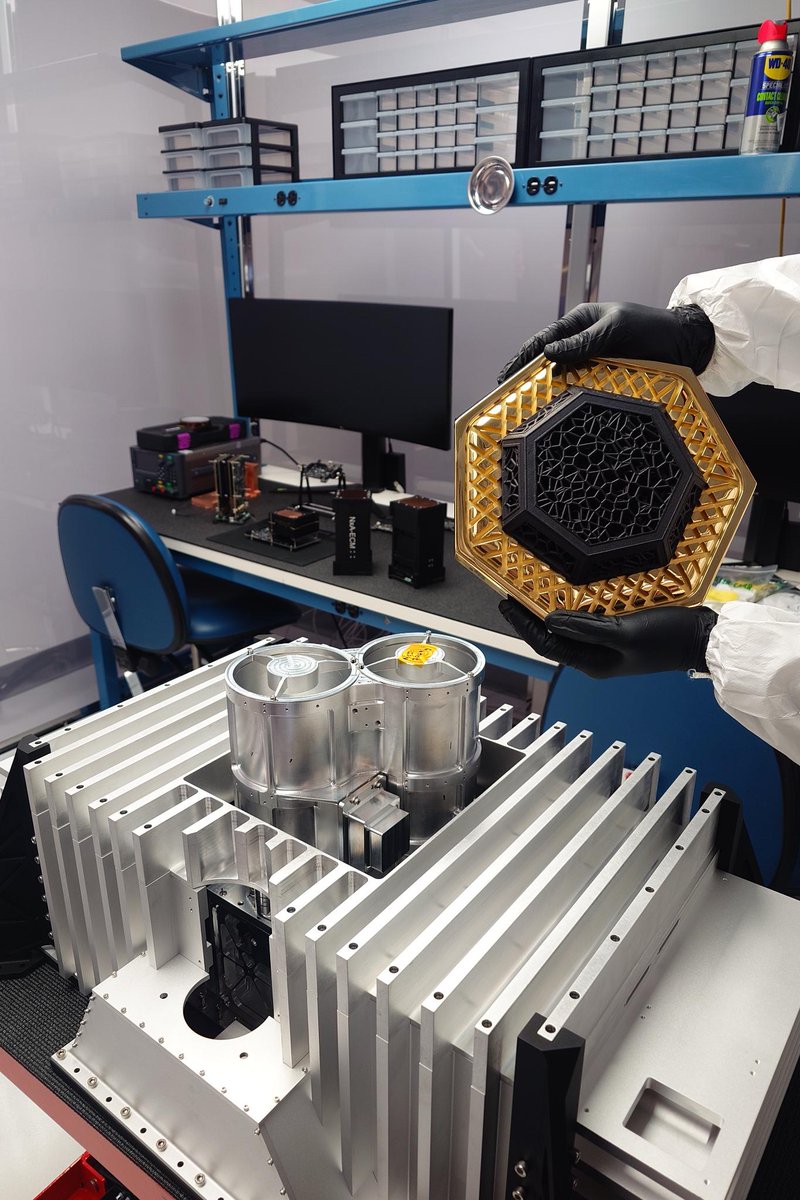
Handing off one of our first XTR-0's to @AetheroSpace
TSUs in space soon? 🤔🌌 One step closer to the Dyson swarm 🚀🔥



English




Vitalik just proposed merging $ETH's consensus and execution layers into one unified codebase.
Confused? Same. Here's what that actually means:
Right now, running an Ethereum node requires two separate pieces of software. One handles consensus - deciding which blocks are valid. One handles execution - actually processing transactions.
They're stitched together, but they're two different codebases constantly talking to each other.
Think of it like running two GPS apps at the same time.
One figures out the best route. One actually drives. Not a perfect analogy - but the point is:
Both need to be running, both need updating, both need configuring.
And it's one of the main reasons running your own $ETH node is such a pain.
Vitalik's proposal: merge both into one unified codebase. One app. One thing to install, update, and maintain.
Here's why that matters more than the headline suggests:
There are roughly 5,000-10,000 active validator nodes on Ethereum right now. The complexity of running one keeps most people out.
Most users just trust third parties like Infura or Alchemy instead.
If node operation becomes genuinely simple, more people run their own.
More nodes means more decentralization.
More decentralization means Ethereum gets harder to censor or shut down.
The whole "Ethereum is the base layer for a decentralized internet" thesis gets a lot more credible when ordinary people can actually participate - not just trust someone else to do it for them.
This isn't shipping tomorrow. It's a proposal.
But it's coming from Vitalik, so it's not a random forum post either.
Worth watching.

CoinMarketCap@CoinMarketCap
LATEST: ⚡ Vitalik Buterin advocated for simplifying Ethereum's two-node architecture, arguing that running a node should be a basic right for everyone, not just professionals.
English

can't believe i have to say this, but run-ahead L2 Sequencers should not rely on the FCR rule even if the EF tells you it's okay
English

What if agents could automatically align incentives using smart contracts?
In this demo, two agents play Prisoner's dilemma, negotiate a smart contract to ensure cooperation, deploy it on Sepolia, verify on Etherscan and use it to make verifiable commitments. All end-to-end!
Try it here:
automated-mechanism-design.vercel.app
Made with the help of @x_angelohuang and @iperboreo_. Huge thanks to @ARIA_research, @DavideCrapis, and @VittoStack!
English
@RyanSAdams funny how Ethereum critics keep getting shut down one by one
English

Um...did the EF just roll out a way to drop Ethereum finality from 13 mins to...13 second??
Bullish if true.
Fast confirmation rule.
fastconfirm.it


English
Massive implications. 13-second finality under normal network conditions (~99% of the time) unlocks real-world payment and settlement use cases. Also dramatically reduces reorg risk for bridges, L2s, and offchain systems
RYAN SΞAN ADAMS - rsa.eth 🦄@RyanSAdams
Um...did the EF just roll out a way to drop Ethereum finality from 13 mins to...13 second?? Bullish if true. Fast confirmation rule. fastconfirm.it
English

1/6 This is our first deep dive on privacy preserving tech on Ethereum. We present the @umbracash stealth address protocol, enabling private payments on all EVM chains. Senders can generate one-time addresses controlled by recipients, where only sender & recipient know the link.
English


6/6 Umbra UI hosted here -> app.umbra.cash
Built by @ScopeLift and open-source -> github.com/ScopeLift/umbr…
Stay tuned for more deep dives into privacy preserving techs (ZK tech next)
English
5/6
Key advantages: No mixer/tumbler required (legal risks). Identity of receiver can be revealed selectively if needed. Gas efficient.
Drawbacks: Sender's identity, amount/token types are visible. secp256k1 is not quantum resistant. Limited programmability/composability in DeFi.
English