

Am I an NPC?
246 posts

Am I an NPC?
@its_all_a_sim
We all live in a simulation right?
Inside the matrix. Katılım Ağustos 2021
543 Takip Edilen62 Takipçiler

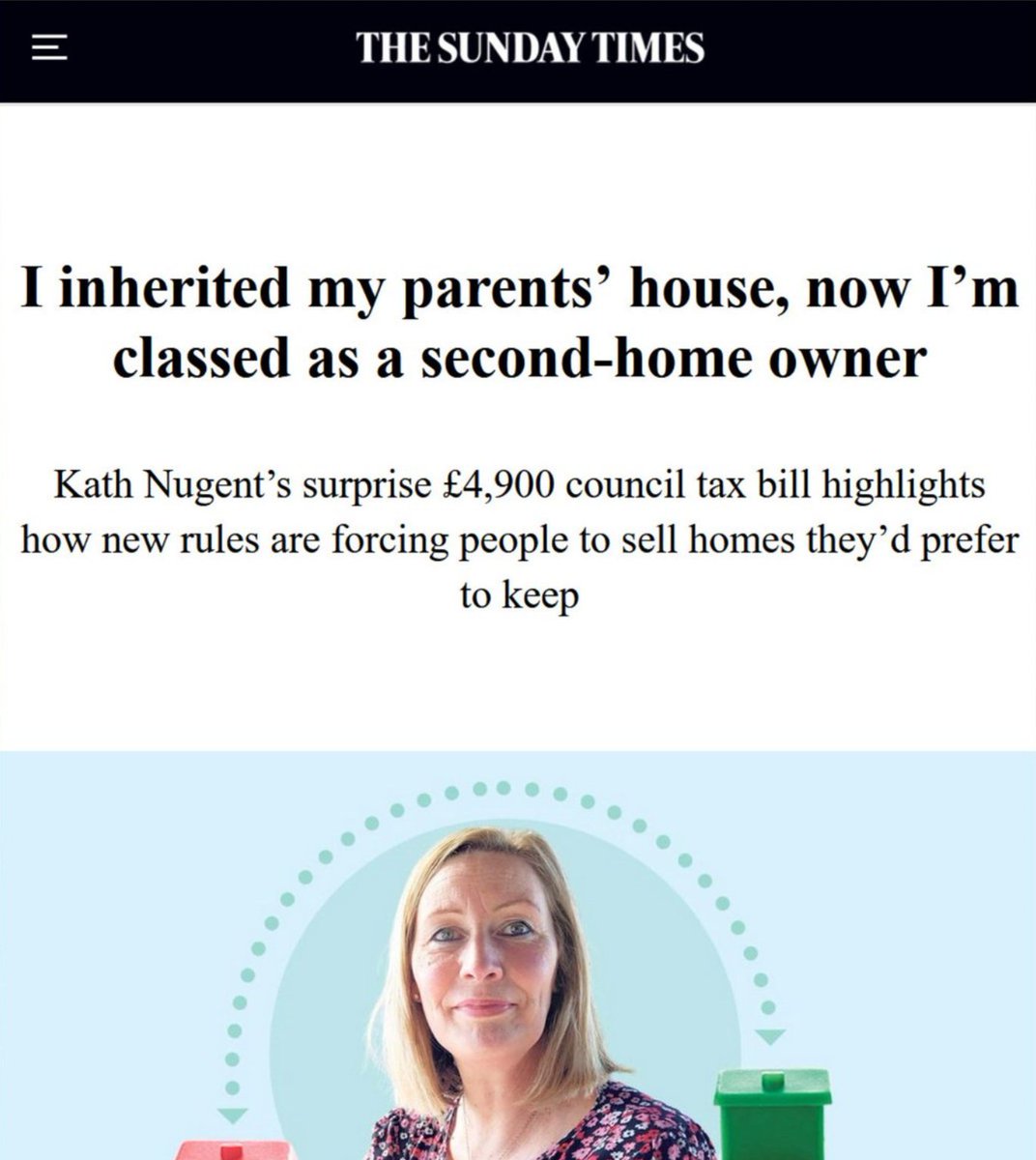
How aggressive is this letter – sent to an elderly relative.
Are the BBC getting desperate?

English
@RokoMijic They would do all of this and still keep taxes the same!
English

In order for Britain to survive, the size of the state has to shrink by 75%
❌ no government benefits, private unemployment insurance only
❌ NHS moved to pay per visit for small treatments, private insurance for large, competition between different providers to lower costs, AI use in healthcare massively expanded
❌ no state pension, all pensions privatized
❌ no foreign aid
❌ Remigrate non-Europeans to reduce crime & benefits usage and other costs associated with migrants
❌ zero corporation tax
❌ zero income tax
Roko 🐉@RokoMijic
> cheaper energy via nuclear and North Sea gas to compress the input stack, planning liberalisation so commercial rent stops functioning as a rentier tax on every transaction, employer NIC reduced and its threshold restored, a personal allowance raised to £20k that would put roughly £1,500 a year into every minimum wage worker’s pocket without costing a single yes, but this doesn't go far enough. We need all that plus mass remigration plus a 75% cut of the size of the state
English
@MHTruthUltra The other monkeys would also do something about it.
English

If a monkey hoarded more bananas than it could eat, while most of the other monkeys starved, scientists would study that monkey to figure out what was wrong with it.
When humans do it, we put them on the cover of Forbes.
English
@DrNickA People also clearly do not understand the additional costs on top of this too. Employers NI, Pension, Holidays any other benefits. The true cost is huge?
English

This tweet is a fascinating insight into the dire state of the U.K.
Mostly it’s people who find it morally abhorrent for people to be on minimum wage serving coffee.
If you can’t use the minimum wage for entry level unskilled work. What can you use it for?
Many seem to think Peter should divert his savings to subsidise higher wages effectively operating at a loss. An economically irrational thing to do. Why would you pay (and work) to lose money?
Many seem to think he should shut the coffee shop down completely, removing those jobs from the market all together. Presumably no jobs is a better outcome than minimum wage jobs.
The minimum wage is now roughly £26k a year. About what I started on as a mathematics lecturer in 2010 after I completed by PhD. I worked 60-80 hours a week.
Your take home pay on the national average wage is only £170 a week more than someone on a minimum wage job. Which in order to get you’d need to have a profession and about a decades worth of experience in that profession.
That’s like one family meal and maybe a trip to the cinema. Hardly worth a decades hard work is it? And if you’re trying to save for a property, you won’t be able to have that.
It also means that the median UK worker is a family meal and some mild entertainment away from morally objectionable abject poverty.
What a mess
Peter McCormack 🏴☠️🇬🇧🇮🇪@PeterMcCormack
A minimum wage of £15 would end my coffee shop, it would have to close, as would many other businesses. I’ll explain for the economically illiterate. Staff costs are currently half our costs, a £15 minimum wage is actually more than £15 an hour for the company, because you have to add: - 12.07% holiday - Sick pay - Maternity pay if and when required - National insurance - Pension contributions These costs would mean the shop loses money because remember, energy costs are up, rates are up, regulations are up. Now you can pass these costs onto the consumer - that would mean charging a lot more for coffee, people won’t pay it. The likes of Starbucks and Costa can, because they have economies of scale. The independent doesn’t. Now the little socialist will say well this is your fault, if you can’t run a business that can afford to pay its staff properly, but the little socialist has never run a business and does not understand the dynamics. Now I could pay some staff off and fill those hours myself or reduce us to one staff member during certain periods - but this proves the point that a minimum wage costs jobs. There was a time when these jobs were done by kids, perhaps on the weekend, paid a lower wage, no holiday and no silly employment rights. Perhaps they were even paid cash. The dynamic worked and small businesses like this could operate. It was also a great first job. Sadly now it isn’t worth employing entitlement youngsters at this level of pay. So alas, I don’t need the stress, the business would close, a number of jobs would be lost. Economics is about understanding these dynamics, no vibes. The cost of living is not solved through passing on inflation to the business, it is solved by ending high inflation and creating prosperity. This is what socialists don’t understand, they can’t create prosperity, they can only destroy it.
English

A house cost £22,000 in '87, now it costs £350,000. Just for a bit of context, you know?
🇬🇧 Rob @No-Bull-Politics 🇬🇧@bull_robin56713
@judeinlondon My first salary back in '87 works out to £18,700 per annum in today's money. £15 per hour works out to about £30k per annum. Just for a bit of context, you know?
English

£500,000 is enough to retire on if you're not a materialistic retard.
English
Maybe this is because younger people are being told there is no future for them and few to no facilities or provision is made for them or their potential children. That and older generations often inexplicably hate them in this country.
Politics UK@PolitlcsUK
🚨 NEW: The ONS says deaths are now expected to outnumber births in the UK every year from 2026
English

Musk is the greediest asshole on the planet. Full stop.
Pubity@pubity
Elon Musk has a massive SpaceX pay package attached to getting a colony on Mars. If SpaceX builds a permanent colony with a million residents and reaches a company value of $7.5 trillion, he gets 200 million shares of SpaceX. This would easily make him the first trillionaire.
English

Bumped into a neighbour who is starting a new job in a sports pub. The company has to pay £77K a year for access to Sky/ TNT. So next time you hear people wanging on about labour killing pubs, give your head a wobble and talk about business scamming us.
English

@AlanRMacLeod Pretty sure @ukboomers would have valuable insight here?
English

@anon_opin Also nobody is getting work done if they’re replaced by AI. No win scenario.
English

Lots of tradies out there saying they aren't getting replaced by AI. Maybe not. But you'll soon be fighting for jobs with the people who got replaced by AI.
English
@DJEMEDIA_ Also he is wearing a patch that’s a pirate flag.
English

@RealHum68746153 @geoallison I don’t know, looks like you could only fit about 10 mince inside.
English

@its_all_a_sim @geoallison I think your scale has been thrown off by how big the dreadnought class is. The AUKUS sub in that picture looks slightly longer than a Virginia block IV which is already massive and way bigger than an astute.
English

For those with an interest in such things, SSN-AUKUS and Dreadnought on display at #UDT2026.

English


BBC to cut up to 2,000 jobs in biggest downsize for 15 years
Read more 🔗 trib.al/MLYzwwS
English
@ToryWipeout Are you saying what’s in the article is a good thing?
English

Slowly but surely unfucking Tory damage.
BBC News (UK)@BBCNews
Number of asylum hotels falls to 185 after 11 close bbc.in/4vss1Dc
English

Let me walk you through the arithmetic of Britain's demographic crisis. Because once you see the numbers, you can't unsee them.
The UK has around 43 million people of working age. These are the people the entire system depends on. They pay the taxes. They fund the pensions. They staff the hospitals.
9 million of them are economically inactive. Not working and not looking for work. 1 in 5.
That number deserves unpacking because it isn't one problem. It's several, layered on top of each other.
The largest group, around 2.8 million, are out due to long-term sickness or disability. That number has been rising steadily since 2019 and recently hit a record high. Among younger people, the driver is mental health. Among older workers, it's musculoskeletal conditions, back problems, and other chronic illness. People in their early twenties are now more likely to be economically inactive due to ill health than people in their forties. That statistic alone should stop you in your tracks.
The second largest group, roughly 2.4 million, are students in full-time education. They're investing in their future productivity. But while they study, they aren't contributing to the tax base.
Around 1.6 million are looking after family or home, disproportionately women. Around 1.1 million took early retirement before state pension age. Many left during or after the pandemic and haven't returned. The rest are classed as discouraged or otherwise outside the labour market.
On top of the 9 million inactive, another 1.87 million are unemployed. Youth unemployment has risen to around 16%.
So of around 43 million people of working age, roughly 32 million are actually in work. About a quarter of the working-age population is not in paid employment.
Now look at who they're supporting.
There are roughly 12 million people above state pension age. The official dependency ratio is 278 pensioners per 1,000 people of working age. That sounds manageable. About 3.6 to one.
But when you use the number of people actually working, it drops to roughly 2.7 workers per pensioner. Less than three.
By 2047, the latest official projections show the ratio worsening to 302 per 1,000, even after planned pension age rises. ONS modelling submitted to the House of Lords suggests that to hold the current ratio constant, pension age would eventually need to reach 70 or beyond. Under current law, it rises to 67 by 2028, with further increases likely to stay on the table.
And the support base is under growing pressure.
The fertility rate just hit 1.41. The lowest on record. You need 2.1 to keep the population stable. We're at two thirds of that and falling. The average age of mothers is now 31. The government has expanded funded childcare significantly, and that's a genuine step forward. But the birth rate kept falling right through it. Because the problem isn't just childcare. It's housing. It's wages. It's the cost of being alive in this country while trying to raise a family.
The overall population is still projected to grow, mainly through migration. But the pension-age population is growing faster than the working-age population. The number of people aged 85 and over is projected to nearly double, from 1.7 million in 2022 to 3.3 million by 2047. More pensions. More NHS demand. More social care. All landing on a workforce where the ratio of workers to dependants is weakening every year.
And here's the part nobody talks about.
According to the ONS, at least 1.4 million people in the UK are raising children while simultaneously caring for ageing parents. The sandwich generation. Wider estimates suggest the true figure may be considerably higher. Typically aged 35 to 64, spanning millennials and Gen X. These are people in mid-career. Many in management roles. Peak earning years. Maximum professional responsibility. And they're juggling all of that with school runs on one side and elderly care on the other.
Two thirds say their finances are under strain. Carers UK estimates that over 600 people a day quit their jobs to care for a loved one. Research by the Centre for Economics and Business Research puts the average lifetime financial cost of being a sandwich carer at over £345,000 in lost earnings, reduced pension contributions, and direct care costs. Women are more than twice as likely to be the ones who leave work.
Every one of those people who leaves is one fewer taxpayer. One fewer pension contributor. One fewer worker holding up the dependency ratio. And they don't just lose their salary. They lose years of compound growth on pension savings. They arrive at retirement with a depleted pot, needing the same support they were once helping to fund.
This is about to intensify. As the over-85 population nearly doubles and social care continues to collapse, more people in that 35 to 64 age bracket will face the impossible choice between their career and their parents. The sandwich generation will get bigger. The workforce will come under even more strain.
Now layer the health crisis on top.
The Health Foundation projects that 3.7 million working-age people will be living with major illness by 2040, a 17% rise on 2019 levels. Already, 3.7 million people who are in work have a health condition that limits the type or amount of work they can do. That number has grown by 1.4 million in a decade.
The House of Lords Economic Affairs Committee said it plainly. Those who are already economically inactive are becoming sicker, meaning they're less likely to return to work. The ageing effect that was previously being masked by other factors is now being reinforced by them.
So here's the picture.
The state pension costs around £146 billion a year. Funded entirely by current workers paying current retirees. There is no pot. The triple lock ratchets it higher every year. The working-age support base is under pressure and weakening. The number of dependants is growing. The people in the middle are getting sicker, burning out, and leaving work to care for parents the state can't look after. The generation behind them is smaller because the birth rate has collapsed. And the generation behind them will be smaller still.
Nobody chose this. No generation is to blame. People didn't decide to be priced out of having children. Workers didn't choose to develop chronic conditions. The sandwich generation didn't volunteer to care for ageing parents with no safety net.
This is a systems failure. We can argue over whether it's underinvestment in housing, health, social care, and prevention, or poor personal choices of the population at large that have produced a workforce that is too small, too sick, and too stretched to carry what's being placed on it. But this is where we're at. And the weight is growing every year.
The arithmetic doesn't negotiate. And right now, it says we're running out of people to pay for the country we've built.
English