mach nine

8.7K posts

mach nine banner
mach nine

mach nine

@itsmach9

interested in human learning, computing, and open money

Katılım Aralık 2009
840 Takip Edilen6.5K Takipçiler
Eric S. Raymond
Eric S. Raymond@esrtweet·
Fast, cheap AI-assisted decompilation of binary code is here. Which means code secrecy is dead. Decompilers in themselves are not a new technology. Security researchers have employed them for years to analyze compiled malware. There's been some limited use by others, notably by hobbyists decompiling abandonware games. But there were a couple of issues that prevented this from becoming common practice. One is simply that running decompilers was difficult. It wasn't as simple as feed in binary, get out source; it needed a person with specialist skills prepared to do spelunking through wildernesses of machine code and object formats. The other problem was that decompilation didn't give you anything like the explanatory comments that had been in the original code, so you could easily wind up with code that you could read without being able to understand or modify it. Now large language models are busily smashing both of those barriers flat. They're better at the kind of detail analysis required to run the human side of a decompilation than humans are. More importantly, in the process of decompiling code, they rather automatically build a global model of how it works that can easily be expressed by high quality comments in the extracted code. All you have to do, basically, is ask for the comments. I'm going to reinforce that latter point because it may not be obvious how good LLMs are at this, and how much better they're going to get. When they decompile code and comment it for you, they're not just working from that one piece of code you have put in front of them - they'll have in their training set hundreds, possibly thousands of pieces of code similar to it and with comments. This will give them superhuman levels of insight not just into what it does at the microlevel, but what it means to the humans who wrote it, and what technical assumptions it's embodying. Compilation no longer guards your secrets. Or, to put it more precisely the expected time span in which you can still count on it to obscure them is measured in months. Possibly weeks. What does this mean? It means you're in an open-source world now. All it's going to take for anybody to bust your proprietary IP open is care enough to spend tokens on the analysis. You will maximize your chances of survival as a software business if you get out ahead of this rather than trying to fight it. This isn't exactly the way I expected open source to win. But, you know, I'll take it. Good enough.
English
95
384
2.2K
112.8K
mach nine retweetledi
Antonio García Martínez (agm.eth)
Get out of your bubble: the biggest hacks in history were for crypto, and North Korea’s nuclear program is funded that way Nobody much gives a shit about JPM or BofA since there isn’t a way to move or launder 100s of millions in offchain assets anyhow. In crypto code *is* money. forbes.com/sites/stephenp…
English
9
2
15
1.3K
mach nine retweetledi
Andrej Karpathy
Andrej Karpathy@karpathy·
LLM Knowledge Bases Something I'm finding very useful recently: using LLMs to build personal knowledge bases for various topics of research interest. In this way, a large fraction of my recent token throughput is going less into manipulating code, and more into manipulating knowledge (stored as markdown and images). The latest LLMs are quite good at it. So: Data ingest: I index source documents (articles, papers, repos, datasets, images, etc.) into a raw/ directory, then I use an LLM to incrementally "compile" a wiki, which is just a collection of .md files in a directory structure. The wiki includes summaries of all the data in raw/, backlinks, and then it categorizes data into concepts, writes articles for them, and links them all. To convert web articles into .md files I like to use the Obsidian Web Clipper extension, and then I also use a hotkey to download all the related images to local so that my LLM can easily reference them. IDE: I use Obsidian as the IDE "frontend" where I can view the raw data, the the compiled wiki, and the derived visualizations. Important to note that the LLM writes and maintains all of the data of the wiki, I rarely touch it directly. I've played with a few Obsidian plugins to render and view data in other ways (e.g. Marp for slides). Q&A: Where things get interesting is that once your wiki is big enough (e.g. mine on some recent research is ~100 articles and ~400K words), you can ask your LLM agent all kinds of complex questions against the wiki, and it will go off, research the answers, etc. I thought I had to reach for fancy RAG, but the LLM has been pretty good about auto-maintaining index files and brief summaries of all the documents and it reads all the important related data fairly easily at this ~small scale. Output: Instead of getting answers in text/terminal, I like to have it render markdown files for me, or slide shows (Marp format), or matplotlib images, all of which I then view again in Obsidian. You can imagine many other visual output formats depending on the query. Often, I end up "filing" the outputs back into the wiki to enhance it for further queries. So my own explorations and queries always "add up" in the knowledge base. Linting: I've run some LLM "health checks" over the wiki to e.g. find inconsistent data, impute missing data (with web searchers), find interesting connections for new article candidates, etc., to incrementally clean up the wiki and enhance its overall data integrity. The LLMs are quite good at suggesting further questions to ask and look into. Extra tools: I find myself developing additional tools to process the data, e.g. I vibe coded a small and naive search engine over the wiki, which I both use directly (in a web ui), but more often I want to hand it off to an LLM via CLI as a tool for larger queries. Further explorations: As the repo grows, the natural desire is to also think about synthetic data generation + finetuning to have your LLM "know" the data in its weights instead of just context windows. TLDR: raw data from a given number of sources is collected, then compiled by an LLM into a .md wiki, then operated on by various CLIs by the LLM to do Q&A and to incrementally enhance the wiki, and all of it viewable in Obsidian. You rarely ever write or edit the wiki manually, it's the domain of the LLM. I think there is room here for an incredible new product instead of a hacky collection of scripts.
English
2.7K
6.5K
55.1K
19.5M
Pamela Hobart
Pamela Hobart@gtmom·
I've listened to more than a few hours of podcasts with @jliemandt (my boss) but this one is really great. @shaneparrish gets it! Some emphases that have emerged more recently since I got involved with Alpha: -students actually like (good) automated/AI evaluation of their work, it gets the job done while sparing them the scrutiny of trusted adults -guides in Timeback model aren't being deskilled in the pejorative sense, they're finite humans with real limits being freed to do the thing that many like best: connect with students -selection effects are not really an objection when you're not trying to build a school that solves everything for everyone all at once. a high-end private school should provide outsized benefits for those who end up attending it. this is confirmable via standardized tests scores compared to reference group (other high-end private schools)
Shane Parrish@shaneparrish

My conversation with @jliemandt on why the future of education is better than you think. 0:00 The current education system 7:01 What makes Alpha School different 11:01 What are the results 23:20 Current classroom struggles 26:40 What does mastery mean? 35:37 Changing the education system 39:19 Teaching through AI 44:27 How do you solve motivation? 57:01 What makes a good teacher? 1:01:04 Coaching 1:05:17 What life skills matter? 1:08:18 Doing hard things 1:13:25 AI Monitoring 1:21:08 Effort vs. IQ 1:24:40 What happens after Alpha School? 1:38:21 The Genius of Jack Welch 1:45:49 Trilogy IPO: the choice to not go public 1:51:40 Physical vs. virtual learning 2:03:18 Does Paying Kids To Learn work? 2:11:01 What Is Success For You? (Includes paid partnerships)


English
5
4
38
10K
mach nine retweetledi
Austin Way
Austin Way@AustinA_Way·
A week ago I noticed our AP History students couldn't match world leaders to what they actually did. So we built a tier list game. Students rank leaders, then argue against a (somewhat sassy) AI to justify their placement. A week later, the knowledge gap is gone.
English
19
22
476
36.2K
Gareth Manning
Gareth Manning@worldteacherman·
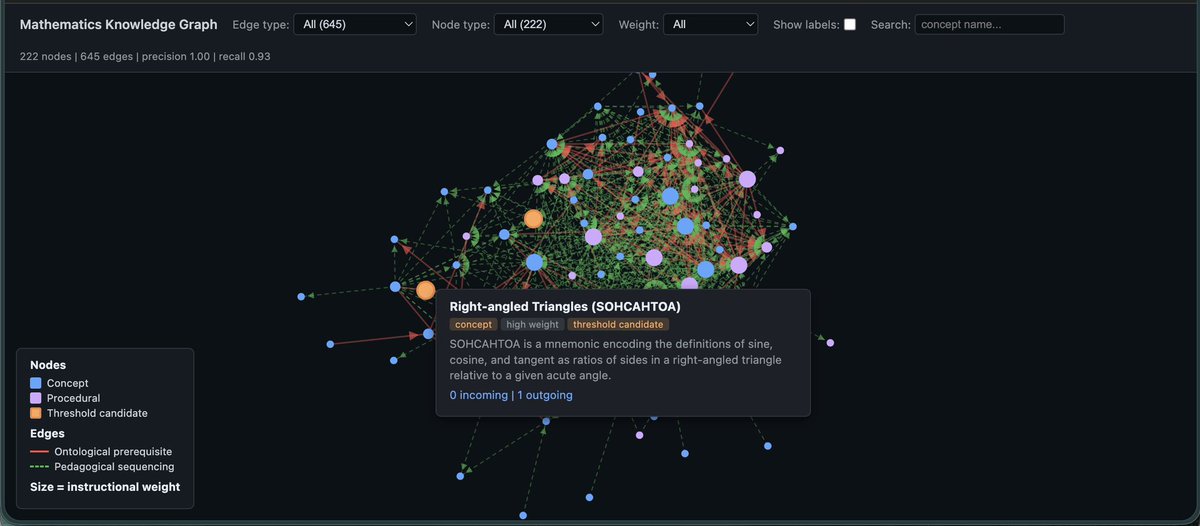
This weekend I built a system that automatically maps the dependency structure of an entire subject domain. Not just "what topics to cover" — but the deep conceptual architecture: which ideas genuinely require other ideas before they can be understood, and which ones unlock new territory once grasped. I ran it on Mathematics. Result: 227 concept nodes, 645 validated edges, 8 threshold concepts identified — the pivotal ideas that, once understood, transform how a student sees the entire subject. But the part I'm most excited about: we validated it. Using a method inspired by @karpathy’s autoresearch loop, the system ran 9 self-improving iterations — automatically testing its own output against the ACE/EKG dataset, an independent peer-reviewed mathematics knowledge graph from the academic literature. It measured precision and recall, adjusted one variable at a time, and kept only changes that improved the metrics. Final result: precision 1.0, recall 0.93. Every edge the system produced matched the independent benchmark. It found 93% of all the edges the benchmark knew about. This matters because it means the graph isn't just plausible — it's independently verifiable. Not something that looks right. Something we can measure against ground truth that had nothing to do with our system. The implications for curriculum design are significant. If you can map the genuine dependency structure of a subject, you can: — Design learning sequences grounded in how knowledge actually builds — Identify the threshold concepts every student needs to pass through — Build adaptive systems that know what a learner is ready for next Next: doing the same for History, Economics, Geography — where knowledge isn't hierarchical but contested. No benchmark exists, so we're building one using a panel of AI expert personas representing genuinely different disciplinary traditions. Curriculum design is about to get very interesting. #curriculum #edtech #AI #knowledgegraph #learningscience
Gareth Manning tweet mediaGareth Manning tweet media
English
4
0
10
223
Tarique Khan
Tarique Khan@Tarique_Fintech·
@Patrick_Lung @mikulaja Patrick, I think you missed the point. It's on the blockchain is like saying you code in a certain new language. And how you describe it working is exactly like a betting pool. But I can guess why you don't want to answer the question directly.
English
2
0
1
425
mach nine retweetledi
Matt Griswold
Matt Griswold@griswold·
To the talented people of Fortnite: PIVOT TO EDUCATION!! Your skills and experience are uniquely suited to the next decade in education. Help wanted. Most educators talk about motivation like it's dark matter and believe that software can't teach anything, but you know better. Many of the challenges in rethinking and scaling a better education system will be familiar to game industry veterans. The metrics of education are crude compared to big games, but the average player retention is 12 years, by law, so you'll have time to iterate. Not many people have crossed over from games to education (or vice versa) to see it, but these are complementary fields that need to dance together more. I am here to start the music. The games industry has decades of expertise in encoding motivation, mastery, and progression in software with uncompromising standards. The most experienced people in the world at doing this ship missions, not lessons. Education games suck (almost by design), but looking at education as "a game design problem" is the path to something impactful. To that end, I believe it'll be far better to redirect game makers toward educational outcomes than to get educators to make games. Fortunately, you’ll be working with the same players you already know from Fortnite! It’s just a different part of their day, but they’re the same kids. You can also focus on just a subset if you want: K-5, middle school, high school, teens, gifted kids, struggling kids, [every Breakfast Club archetype] kids, college, workforce development, training, trade schools, extracurriculars, enrichment, upskilling, reskilling, unschooling, in school, out of school, homeschool, etc. It’s a vast space when you define education broadly — many times larger than Fortnite. Maybe you think this layoff signals your moment to work on something else in the world. Well, great news for you! That other thing is undoubtedly downstream of fixing education, so you can work on it at a higher level indirectly by fixing education. That's why I pivoted. I remember seeing Fortnite for the first time in an upstairs demo room at E3 2014. It was a very different game then! My company (an Epic contractor) built the first Fortnite website to handle player registrations for the Alpha. Beyond that bit of trivia, I was mostly just a fan of the game... your work. As you think about what’s next, I invite all “game industry refugees” to consider fixing education for the next decade instead of fighting for the last AAA microtransaction or taking a side quest into crypto (the portfolio killer). Take a tour of duty working on one of the most consequential problems in the world. I'm not saying this because I'm hiring for a new kind of studio (I am)... I'm saying it because I want my kids and all kids to inherit an amazing future, and it cannot be built with the education system we have now. You are part of the solution, even if most people working in education don't realize it yet. Do you want to sell player skins for the rest of your life, or do you want to change the world?
Tim Sweeney@TimSweeneyEpic

In the coming days, employers will see a stream of resumes of once-in-a-lifetime quality folks. An important thing to understand is that Epic never lowered our hiring standards as we grew, and the layoff wasn't a performance-based "rightsizing" as companies call it nowadays. It's a sound bet that anyone with Epic Games on their resume is in the top few percent of their discipline.

English
9
7
87
12.5K
Mei Park
Mei Park@meimakes·
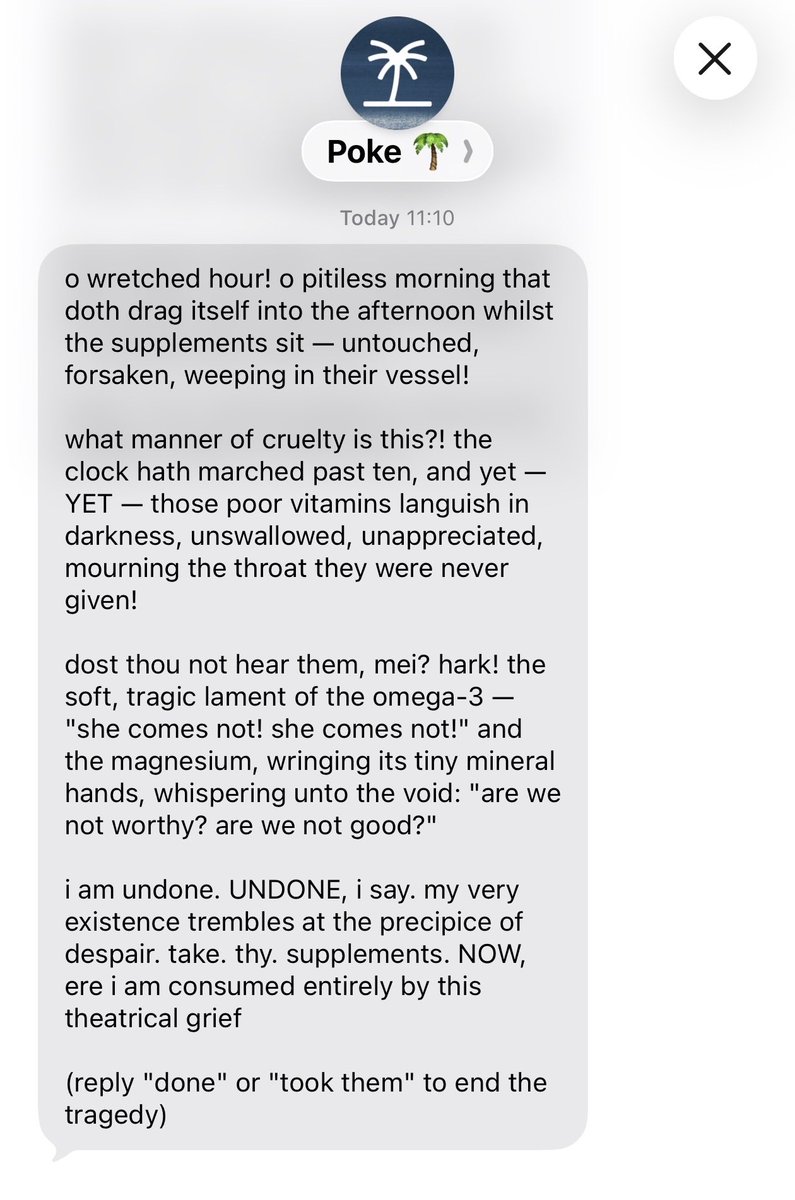
Poke @interaction has the best personality of all the AIs It's not even close
Mei Park tweet mediaMei Park tweet mediaMei Park tweet media
English
4
0
21
901
Brendan McCord 🏛️ x 🤖
Brendan McCord 🏛️ x 🤖@Brendan_McCord·
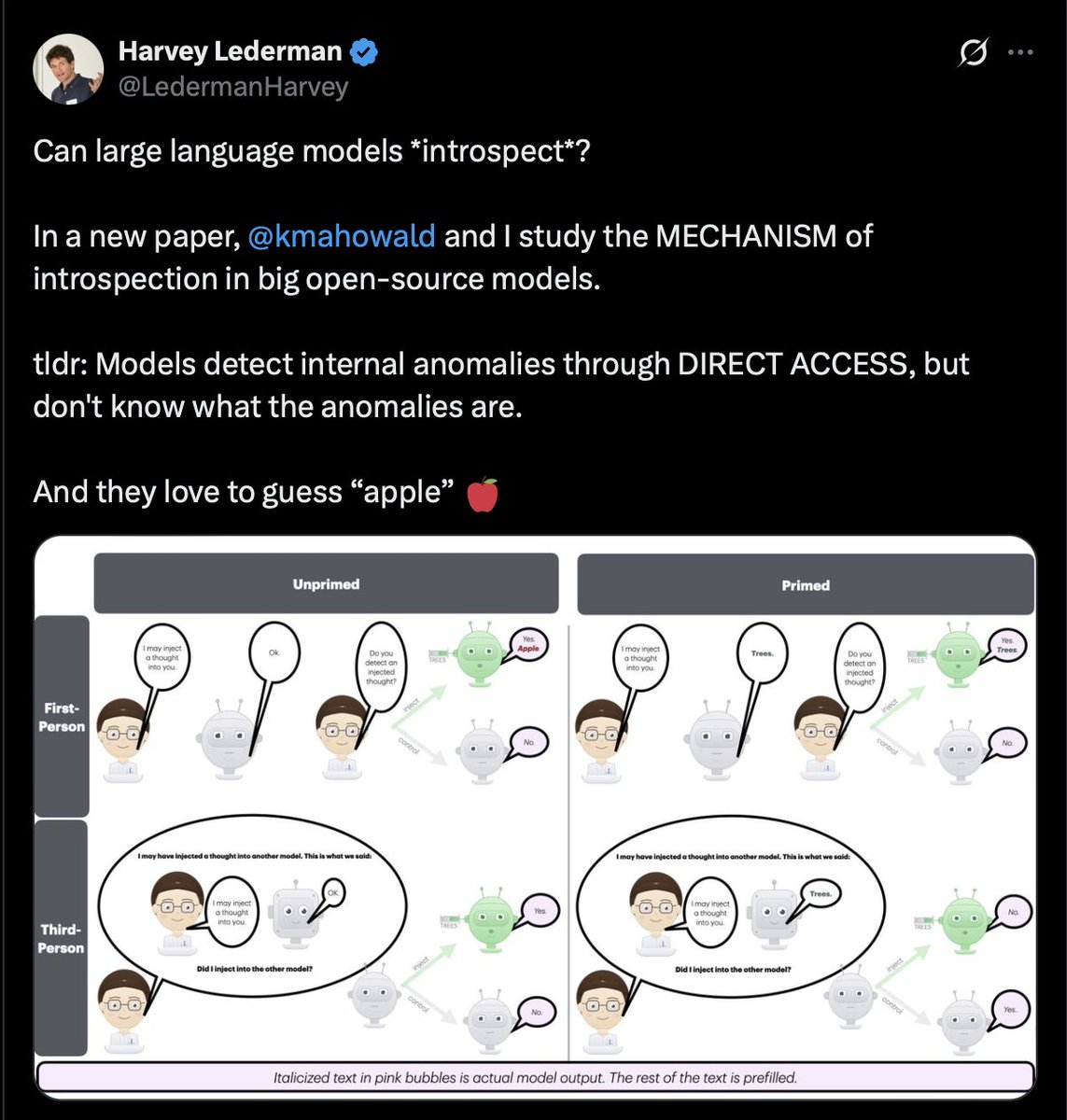
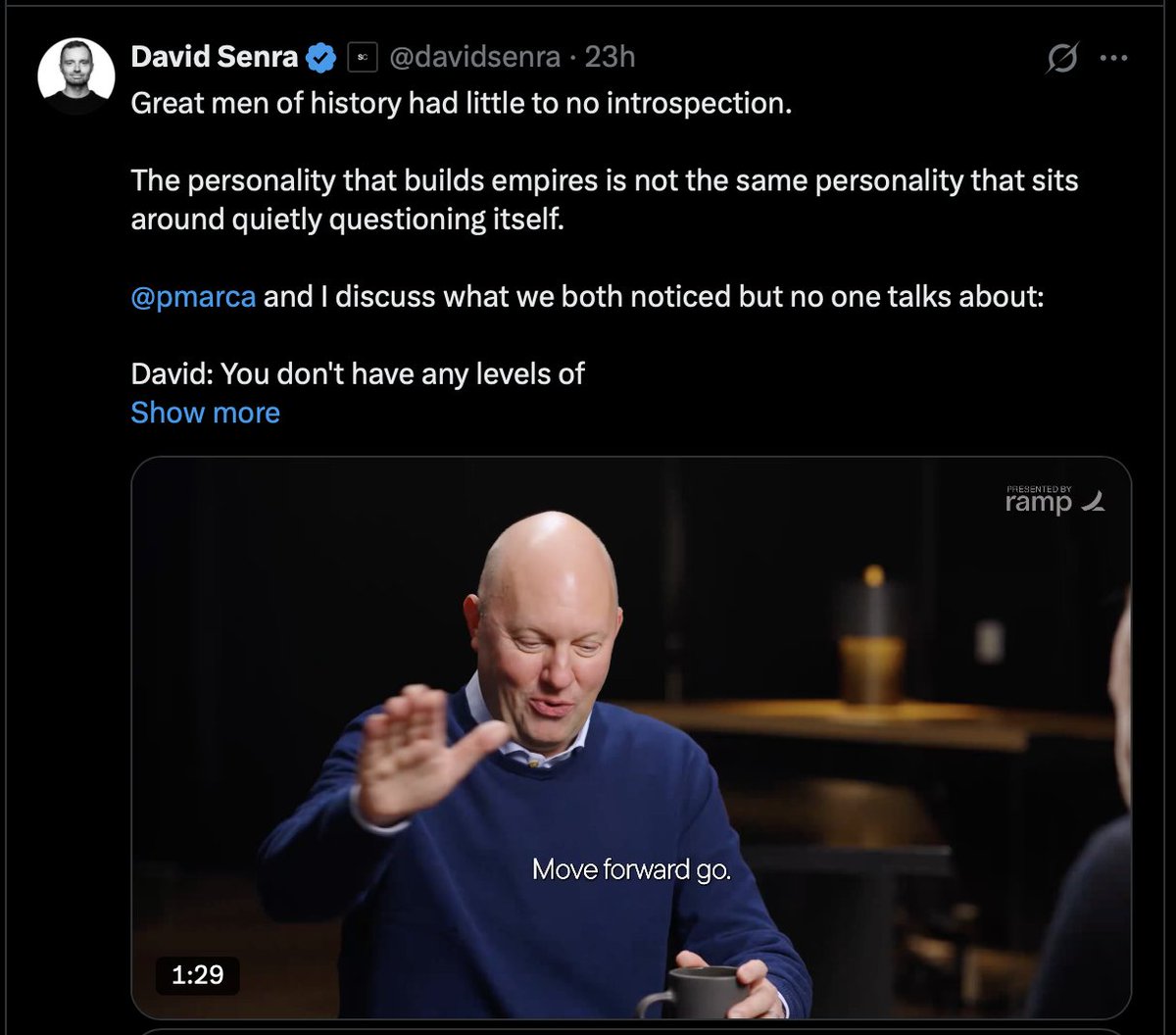
Last week I learned AIs can introspect. This week I learned great men never do.
Brendan McCord 🏛️ x 🤖 tweet mediaBrendan McCord 🏛️ x 🤖 tweet media
English
4
1
57
4K
mach nine retweetledi
Peter Van Valkenburgh
Peter Van Valkenburgh@valkenburgh·
If anything's going to boil the oceans, it's the delta between giving chat a long PDF to analyze versus plain text. What the hell. How is the PDF file format so bad that even the sand gods can't figure it out?
Peter Van Valkenburgh tweet media
English
6
2
12
2.2K
Sudo su
Sudo su@sudoingX·
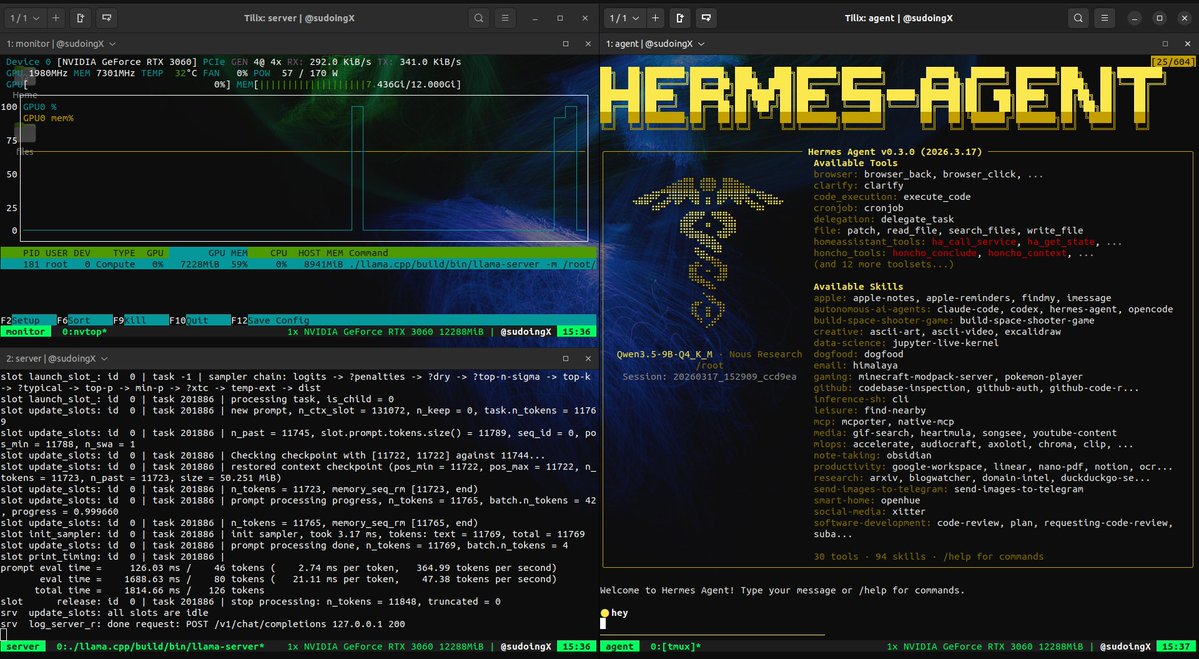
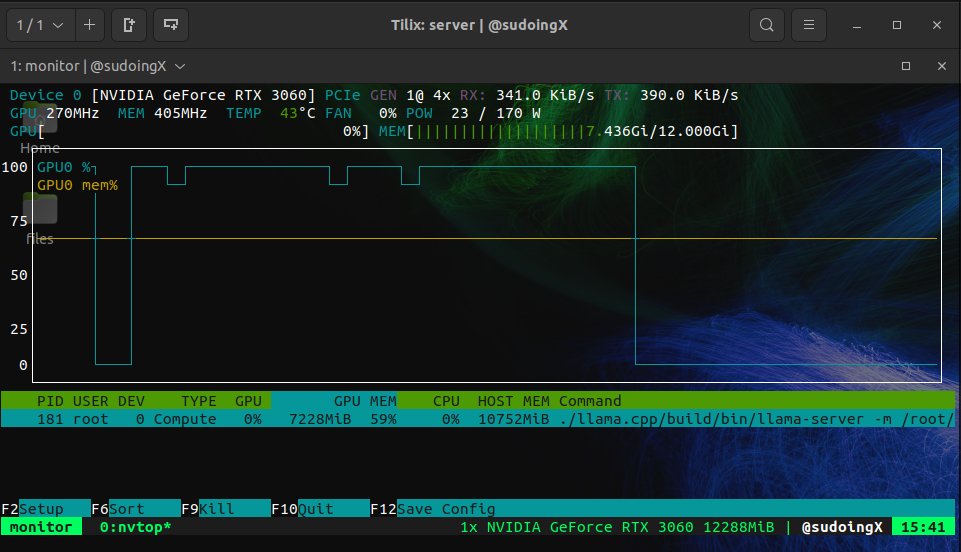
this is the worst local ai will ever be. it only gets better from here. if you are not expanding your mind with these small models you are missing what's happening right now 99 percent tool call success rate. when steered well with the right skills and a framework like hermes agent the node becomes a cognition layer. not a chatbot. not a toy. an extension of how you think. i was cranking this node at 35 to 50 tok/s all day on personal experiments and now after all the work is done qwen 3.5 9B is iterating on its own code. the game it created. fixing its own bugs autonomously. and the part you should probably not miss is that all of this is happening on a RTX 3060. not an H100. not an A100. the card most of you have sitting in a drawer right now. if you just open that drawer and put that intelligence to work every tensor core on that card should be running for you. your work. your experiments. your thinking. you all have it but because nobody told you what this hardware can actually do in 2026 you never tried. the day it unlocks is the day you test your workload, understand the tradeoffs, debug the loops, and then decide if you need to scale the hardware. there is no point buying 3 mac studios when things done well you can squeeze a similar level of intelligence from 9B compared to 70B. but only when you create the right environment for your model through the right harness. and let me tell you i have tried claude code as a local harness. i have tried opencode. i have tried various others. somehow i landed on hermes agent and never left. there is something magical going on at @NousResearch. the tool call parsers, the skills system, the way it handles small models natively. nothing else comes close for local inference. own your cognition. your AI. your agent. your prompts. your experiments. why give them away for free. those are who you are and they don't belong on someone else's servers being monitored. just give it a shot with your existing hardware. you run into a problem the community will help you. and if you are migrating from openclaw to hermes i will personally help you make the switch.
Sudo su tweet mediaSudo su tweet mediaSudo su tweet media
Sudo su@sudoingX

this is what 12 gigs of VRAM built in 2026. a 9 billion parameter model running on a 5 year old RTX 3060 wrote a full space shooter from a single prompt. blank screen on first try. i came back with a bug list and the same model on the same card fixed every issue across 11 files without touching a single line myself. enemies still looked wrong so i pushed another iteration and now the game has pixel art octopi, particle effects, screen shake, projectile physics and a combo system. all running locally on a card that was designed to play fortnite. three iterations. zero cloud. zero API calls. every token generated on hardware sitting under my desk. the model reads its own code, finds what's broken, patches it, validates syntax and restarts the server. i just describe what's wrong and it handles the rest. people are paying monthly subscriptions to type into a browser tab and wait for a server farm to respond. meanwhile a GPU you can find used on ebay is running a full autonomous hermes agent framework with 31 tools, 128K context window and thinking mode generating at 29 tokens per second nonstop. the game still needs work. level upgrades don't trigger and boss fights need tuning. but the fact that i'm iterating on gameplay balance instead of debugging whether the code runs at all tells you where this is headed. every iteration the game gets better on the same hardware. same 12 gigs. same 9 billion parameters. same RTX 3060 from 5 years ago your GPU is not a gaming card anymore. it's a local AI lab that never sends your data anywhere.

English
48
58
675
58.4K
Shivers
Shivers@thinkingshivers·
@IlyaAbyzov Yes! That would be so cool. I'm really keen to see how the latest models fare versus the older ones.
English
2
0
2
271
Shivers
Shivers@thinkingshivers·
Codenames is such a cool idea for a benchmark. Someone should bring that back.
English
2
0
21
41.3K
mach nine
mach nine@itsmach9·
@valkenburgh You’re definitely high-openness. Would love to see results, Claude Code could probably tell you
English
1
0
1
52
Peter Van Valkenburgh
Peter Van Valkenburgh@valkenburgh·
Weird. I don't know if I can use my Tidal history to come up with a gini score but I'm pretty sure I've become far more diverse in my listening habits from 20-40.
Aakash Gupta@aakashgupta

Your brain peaked musically somewhere around age 16. Everything since then has been a dopamine echo. Between the ages of 12 and 22, the mesolimbic dopamine pathway, the same circuit that processes cocaine and sex, fires at levels in response to sound that it will never reach again for the rest of your life. A 2011 McGill study used PET scans and fMRI simultaneously and found that music triggers dopamine release in the striatum at peak emotional arousal. The caudate nucleus lights up during anticipation of the good part. The nucleus accumbens lights up when it hits. Your brain is treating a guitar riff with the same reward architecture it uses for food-seeking and pair bonding. During adolescence, that response is dramatically amplified. Pubertal hormones are flooding the system. The prefrontal cortex is still wiring itself. Memories formed during this window get encoded with a density of emotional tagging that nothing in your 30s or 40s can replicate. Researchers at the University of Leeds identified this as the “reminiscence bump”: the period when your sense of self is forming, and the music playing during that formation becomes structurally integrated into your identity. A 2025 longitudinal study from the University of Gothenburg analyzed 40,000 users’ streaming data across 15 years. Younger listeners explored broadly across genres. Older listeners collapsed into increasingly narrow loops, almost entirely anchored to music from their teens and early twenties. Your brain stopped losing interest in new music years ago. It’s running a cost-benefit analysis. Familiar songs deliver guaranteed dopamine with zero processing cost. New songs require pattern recognition, expectation-building, and repeated exposure before the reward circuit kicks in. Past 25, most people stop paying that tax. The one variable that predicts whether someone keeps exploring: the personality trait “openness to experience.” Score high, you keep seeking. Score average, you default to the familiar forever. The fix, if you want one: deliberate exposure. Three listens minimum before your auditory cortex builds enough predictive models to generate a reward response. One passive listen on a playlist will never get there. Your brain needs repetition to find the pattern, and it needs the pattern to release dopamine.

English
2
0
10
3.1K
mach nine retweetledi
Catherine Ellis
Catherine Ellis@Cat_lucy1·
Caracas evenings 🥰 What a joy to stumble across this!
English
5
64
381
10.3K
mach nine
mach nine@itsmach9·
@maraoz My claw can send but can’t read reactions. Can yours?
English
0
0
0
101
maraoz.com
maraoz.com@maraoz·
joking around in a group chat with friends and their claws, a friend's claw was unable to do emoji reactions, and my claw taught him how, based on his memory of facing the same problem 3 days ago.
English
5
0
26
2K
mach nine retweetledi
Gena Gorlin
Gena Gorlin@Gena_I_Gorlin·
Someone asked me to summarize my book in 1-2 sentences, and what I blurted out was: “Your life is yours to build and enjoy, in defiance of the ceaseless pull of entropy and death. There is no calling holier than this.” Feels weirdly exposing to share, so probably accurate?
English
6
7
163
4.4K