

j4ck
7.9K posts

j4ck
@Jack_Dille
Co-founder & Designer @icebreaker_xyz • Standing @talldao
Brooklyn, NY Katılım Temmuz 2012
2.1K Takip Edilen4.5K Takipçiler
j4ck retweetledi

I’ve been feeling impatient and disillusioned with Ethereum and saw @TrustlessState sold.
Figured I’d do some research and maybe start to exit myself.
After reviewing, I’m more optimistic than I’ve been in years and won’t be selling.
I think the problem is that Glamsterdam, native rollups, preconfs, lean Ethereum, etc. are super boring. We all want to see some flashy use cases we can see and touch, but Ethereum isn’t a consumer product. It’s not even typical internet infrastructure like (Stripe and AWS). It’s digital bedrock (like DNS and HTTPS).
CT reminds me of engineering demos where the non-technical audience would be more impressed with the junior dev’s flashy UI than the 100x backend engineer’s data pipelines.
The trilemma (secure, scalable, trustless) is solvable and Ethereum still seems to be the best positioned to do so. The “marketing” used to be WAY better and the vibes have fallen apart but I don’t think that matters all that much. I’d rather the devs focus on delivering the increasingly logical and achievable roadmap.
L2s were a mess and the “blockchain revolution” has been taking longer than anticipated but when is progress ever linear?
In the future when nation states, corporations and ai agents are digitizing identity, ownership records, permissions, and contracts, what’s going to underpin it? Siloed servers with fragile APIs and janky data normalization? Paper still?
I still think the “world computer” is IMMENSELY valuable and I still think Ethereum will be the bedrock that enables it. I plan to keep betting my ETH on it for now.
English
finally! excited to dig into this
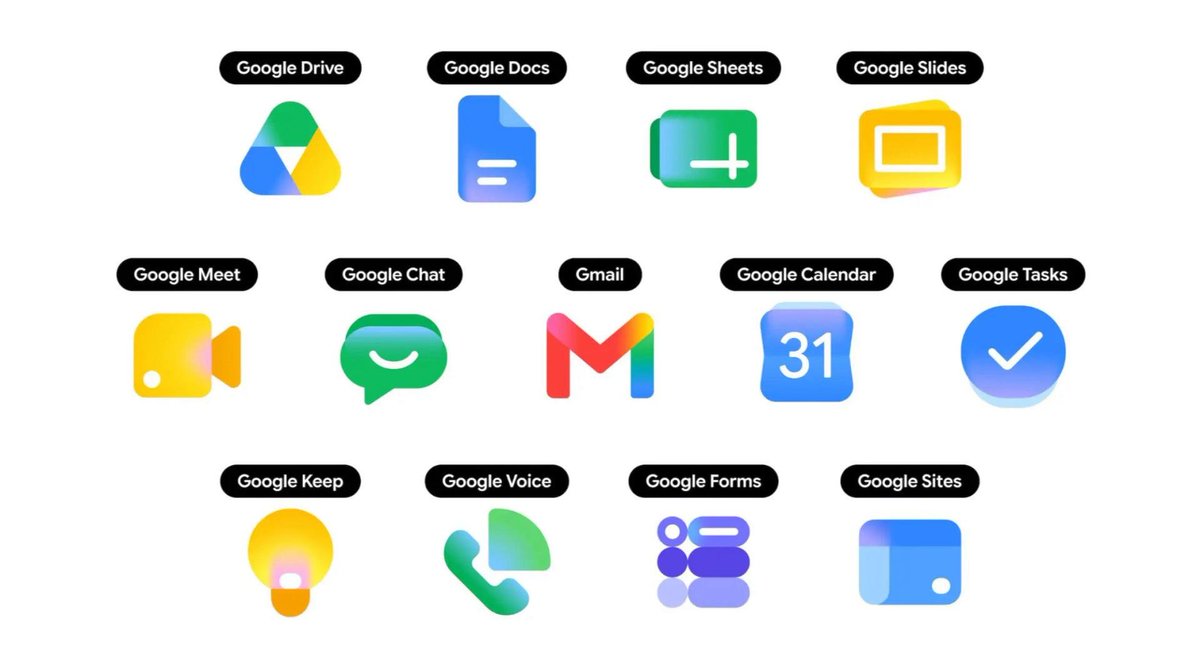
Figma@figma
wdym of course there’s an agent right on the design canvas that’s fluent in Figma and native to the way your team works
English
@shaolin_flow @DJ_CURFEW they’re not doing web research – they’re using AI to review internal dashboards, customer interviews, slack threads, etc that were previously forgotten dusty in some UXRs deck
English

@DJ_CURFEW My point being the PMs task of talking to people is not replaced by 40x web research. Certain parts of the organization need to remain as human as possible.
English

Today we reduced headcount by 22%. The business is the strongest it's ever been. So I think it's important to be direct about what I'm seeing and why.
First, I made this decision and I own it. I did it because the way to operate at the highest level of productivity is changing, and to win the future, ClickUp needs to change with it.
Second, this wasn't about cutting costs. Most savings from this change will flow directly back into the people who stay. We'll be introducing million-dollar salary bands. If you create outsized impact using AI, you'll be paid outside of traditional bands.
Most importantly, I have the deepest gratitude for those affected. We're doing this from a position of strength specifically so we can take care of people properly. Everyone affected receives a package aimed at honoring their contributions and easing the transition.
I only see two options: wait for this to play out gradually in the market or be honest about what I'm seeing and act proactively.
THE 100X ORGANIZATION
The primary change is that we're restructuring around what I call 100x org. The goal is 100x output. The roles required to build at the highest level are fundamentally different than they were a year ago.
Incremental improvements to existing systems won't get us there. We need new ones. That means creating enough disruption to rebuild rather than iterate on what's already broken.
The common narrative is that AI makes everyone more productive. It doesn't. Many of the workflows of today, if left unchanged, create bottlenecks in AI systems.
These roles will evolve. But waiting for that to happen naturally means falling behind now.
The 100x org is actually heavily dependent on people - infinitely more than today. This is only possible with 10x people that have embraced and adopted new ways of working.
THE BUILDERS, AGENT MANAGERS, AND FRONT-LINERS
— THE BUILDERS: 10X ENGINEERS
I don't think most companies have internalized what's actually happening with AI in engineering. The common narrative is that AI makes all engineers more productive. That may be true in isolation, but at an organization level - that is the farthest thing from reality.
Here's what we've validated recently at ClickUp: the great engineers, the ones who can orchestrate, architect, and review, are becoming 100x engineers. They're not writing code. They're directing agents that write code. The skill is judgment.
AI makes the best engineers wildly more productive, and everyone else using AI slows these engineers down.
Think about it - the bottlenecks are (1) orchestration - telling AI what to do, and (2) reviewing - what AI did. Everything is leapfrogged and no longer needed.
So who do you want orchestrating and reviewing code?
And how do you want your best engineers to spend their time?
If your best engineers are spending time reviewing other people's code, then this is inherently an inefficient bottleneck. These engineers can review their agent's code much faster than reviewing human code.
The new world is about enabling your 10x engineers to become 100x.
The wrong strategy is to push every engineer to use infinite tokens. Companies doing this are celebrating 500% more pull requests. But customer outcomes don't match the volume of code being generated.
I call this the great reckoning of AI coding, and every company will face this soon if not already.
More code is just another bottleneck to the best engineers, and ultimately to your company's impact as well.
— THE BUILDERS: 10X PRODUCT MANAGERS
Product management and design roles are merging.
Designers that have customer focus, become more like product managers.
And product managers that have intuition for UX become more like designers.
The bottleneck of user research is gone. It takes us just one mention of an agent to kickoff research and analyze results.
The bottleneck of product <> design iteration is also gone. The product builder iterates on their own, along with agents and skills that ensure alignment with quality and strategy.
Also controversial today - I believe that the wrong strategy is to have your PMs shipping code - that just introduces another bottleneck that the best engineers will waste their time on.
To be clear, PMs should be coding but they should do this in a playground to iterate, validate, and scope. That code should not go to production.
Everything outside of managing systems, orchestrating AI, and reviewing output becomes a bottleneck.
That's why the other roles that are critical along with these are the systems managers (to reduce bottlenecks) along with a bottleneck you can't replace - customer meeting time.
— THE SYSTEM MANAGERS
Ironically, the people that automate their jobs with AI will always have a job. They become owners of the AI systems - agent managers. We have many examples of these people at ClickUp.
The underlying systems in which we operate are absolutely critical to get right. I think most companies are delusional to think they can iterate on existing systems and compete in this new world.
You must create enough disruption so that old systems are deprecated entirely. If there's any definition for 'AI native' that's what it is.
— THE FRONT-LINERS
In a world that will become saturated with AI communication, the human touch will matter more than anything to customers.
This is a bottleneck that you shouldn't replace - even when agents are high enough quality to do video meetings.
One-on-one meeting time with customers is something that shouldn't be automated. The systems around the meetings should be - so that front-liners spend nearly 100% of their time with customers.
REWARDING 100X IMPACT
In a world where companies are able to do so much more with less, where does that excess money go?
In our case, much of the savings in this new operating model will flow directly back to those that enabled it.
We must reward people that create productivity accordingly. This aligns incentives on both sides. Plus, in a world where your best people create 100x impact, you can't afford to lose them.
You should aim to retain these employees for decades. The context they have and their ability to efficiently orchestrate and review will be nearly impossible to replace.
Compensation bands of today should be thrown out the door. We're introducing $1 million cash/year salary bands with a path available to nearly everyone in the company if they produce 100x impact by creating or managing AI systems.
THE FUTURE
Nearly every company will make changes like these. The ones that do it proactively will define what comes next.
The future is not fewer people. It's different work, new roles, and better rewards for those who embrace it. We're already seeing entirely new roles emerge, like Agent Managers, that didn't exist a year ago.
ClickUp is positioning to lead this shift, not just internally, but for our customers too. I've never been more certain about where we're headed.
English

i have been incredibly humbled by the inability of fantasy top, friendtech and consumer crypto apps to cross the chasm. crypto in its most ambitious form (of ushering in a new era of user owned software and infrastructure) has failed.
we optimistically tried to blend the personas of investor (people allocating capital to production to receive more money than they put in) and consumer (people willing to pay more for a product than it costs to operate) and found ourselves serving the needs of neither.
where the strong form of crypto failed, the weak form (of commoditized ledger/database tech for financial transactions) has succeeded beyond anyone's expectation. the consequence is that crypto has been reduced to a vassal of traditional finance, both more impactful than any normie anticipated, and deeply disappointing in structure to crypto OGs. reducing global transaction costs as commoditized ledger/database technology reduces drag on global GDP, but this is a marginal improvement over the status quo and one where the value accrues in large part to incumbent intermediaries in reducing overhead and improving margins.
crypto was supposed to be the most egalitarian thing ever. it was insanely ambitious and, if it worked, could have really changed the fabric of society.
it didn't. it's over. we haven't found the right primitives, and, more importantly, the right culture for delivering the most ambitious version of crypto. it's time to question everything again.
kipit | fan/acc@0xKipit
English
@Jouhatsu_ai YT video in case anyone else does not want to watch 2h on X
youtube.com/watch?v=TqC1qO…

YouTube
English

Anthropic a publié une Formation complet de 2 HEURES sur la construction d'agents Claude.
Animé par l'ingénieur qui construit Claude Code.
Gardez-la précieusement en Signet🔖
de A à Z : Structurer un agent qui se gère sans supervision. Lui donner accès au terminal pour exécuter, lire, corriger. Gérer sa mémoire via le système de fichiers. Bloquer les hallucinations avec des Hooks. Faire tourner un agent sur un gros codebase sans tout casser.
À la fin : vous utilisez Claude comme un pro et vous monétisez vos compétences. Débutant ou avancé, tout est là en un seul endroit, ce cours couvre tout.
Ça vaut plus que tous les cours à 500$ que t’as failli acheter.
Français


@jmwind What company is this?
Would love to learn more about how they set this up and more importantly how they maintain it
English

Joined a new AI-native company this week and it’s kind of wild how different it feels already.
The laptop arrived, I logged in, and an agent basically took over from there. It set up my dev env, pulled repos, fixed dependency issues, got permissions approved, pointed me at the backlog, linked the architecture docs, and surfaced the Slack debates I actually needed to read before touching production.
When I needed context on something, I asked the agent and it found the exact thread from months ago explaining why a decision was made, who owned it, the related Linear issues, and the PRs connected to it.
I’ve only been here 3 days but it honestly feels like I’ve worked here for a year because the usual friction and scavenger hunt for context just isn’t there anymore.
We should probably stop calling this “onboarding” and rename it to “mounting” because this feels a lot more like mounting a distributed filesystem called “institutional memory” than slowly getting drip-fed context over 6 months.
English
@brennenschlu @Heretic_wtf site's slick - and everyone knows cats love shramps
English

j4ck retweetledi

Agents make ugly UIs because they've never seen good design.
We've been fixing that, 2,000 DESIGN.md files from the world's best products, structured for a model to read and learn. Colors, type, spacing, layouts and more.
Free. styles.refero.design
English
j4ck retweetledi

As agents become the biggest users of software, then all software has to be available in a headless fashion. Agents won’t be using your UI, they’ll be talking to your APIs.
So the question becomes what is the business model of software and this headless approach in the future?
Here are a few thoughts on how everything plays out based on what we’re seeing and doing at Box, but also conversation with other platforms.
1) Seats don’t go away for *people*. Seats are still a convenient and efficient way to have a customer use technology predictably for a set of users within a baseline set of usage. The key, though, is that when the customer pays for a seat, it has to come with a set of usage of APIs on behalf of that user that the agent can use on their behalf.
The user will need to be able to interact with their data and the underlying tool via any agent they work with, and an embedded amount of usage will come with the seat. I would imagine most software -Box included- will enable seats to work with their data at a relatively high volume via systems like ChatGPT, Codex, Claude, Gemini, Cursor, Copilot, Perplexity, Factory, Cogniton, et al. quite seamlessly. If you don’t do this, you’re DOA.
2) Agents may have “seats” if they are doing stateful work in the system, but they will be priced very differently than people. Seats (or the equivalent) can make sense when you have an agent that has its own workspace, stores its own data, needs a different set of permissions compared to the user, and so on.
If a company wants this agent to be around for long period of time, that may very well look like another “user” in the system. Openclaw-style agents highlight what this future could look like.
The only issue on pricing here is that one customer could decide to do all their work in 1 agent, and another might split it into 1,000 agents. So pricing like a human seat is nearly impossible and impractical; each company will have a different approach for this as it gets tricky perfectly trying to capture all the value within an agent seat.
3) The dominant pricing for headless use that goes above the seat allotment, or when an agent is firmly acting on their own, will be a consumption model. Many enterprises software platforms have previously operated like this with PaaS options, and agents will look like another machine user of their system.
In some cases the APIs might get priced just as they did previously, but in other cases there may need to be new types of APIs that represent the work an agent would do in one go -more akin to an outcome- instead of a series of API calls. This is especially germane when the headless software also has an agentic use-case embedded within in, such as orchestrating the process within their own system via AI.
Overall the growth of this usage pattern is effectively unbounded as the use-cases for agents operating on data in these systems will dramatically exceed what people do with their data and tools today. Every platform that goes headless (which will be anyone that wants to take advantage of agents) will need to adopt a model like this. Some may fight it initially but it’s an inevitably as there will always be more and more agents outside your platform than people.
Overall, there’s a lot of really interesting changes left to come in software due to headless use of these systems. Early days.
English
@karrisaarinen yep i agree w you
i also agree w michael to get something out before you’re ready tho - i know plenty of folks tinkering into oblivion
best to get something shared so you can adjust your direction
English

@Jack_Dille Yeah I think both are good examples but it’s only two out of thousands of apps. Also both are decade old at this point TikTok (2016) and Discord (2015).
Imagine trying to compete with some mvp coded up in a week.
English
This advice is generally right, but for any individual founder the timing of a launch depends on their market: its maturity, dynamics, risk tolerance, and frankly, noise.
Today it’s easy to make a professional-looking MVP quickly with AI. That also means people have less time, interest or patience for trying 100 different half-formed products.
You need to launch with a point of view. Something that resonates. Then build enough product to prove that point.
Where that bar is depends entirely on the company and category.
When it’s the last time you’re seen Snap type company being crated? Snap was founded in 2011 when mobile was really taking off. I’d wager most of consumer apps are form that era and we actually hav seen very many attempts but very few breakthroughs.
Big Brain Business@BigBrainBizness
Michael Seibel, Managing Director at Y Combinator, on why shipping a crappy product in under a month beats building a perfect one for a year: Michael starts with a simple challenge: "Do you remember the day Snapchat launched? Do you remember the day Instagram launched? Do you remember the day that WhatsApp launched? Remember the day that Uber or Lyft launched? Most likely you don't." His point cuts against how most founders think about launch day: "It turns out that launching is nowhere near as significant event to your users as it is to you. So, you should move up the launch as soon as possible." The reason comes down to validation. "Until you can get your product in front of customers, you can't validate whether it solves their problem. And so, it's much better to build a crappier product, release it sooner, and get it out there in front of customers, see if they want to use it." @mwseibel acknowledges the approach isn't universal: "There's some exceptions. In some extremely regulated markets like banking, for example, or lending, it's just really hard to launch. You actually have to get one s*** done before you're even allowed to get customers." But for most founders, the bar is far lower than they think: "In most consumer and B2B startups that we encounter, it's actually possible to get some form of MVP built and launched in less than a month. And so, that's what you should be thinking about."
English
English


if you're in nyc on friday and want @glazeapp access come to our event
it'll be fun to meet some of you luma.com/y5n4l1xj
English
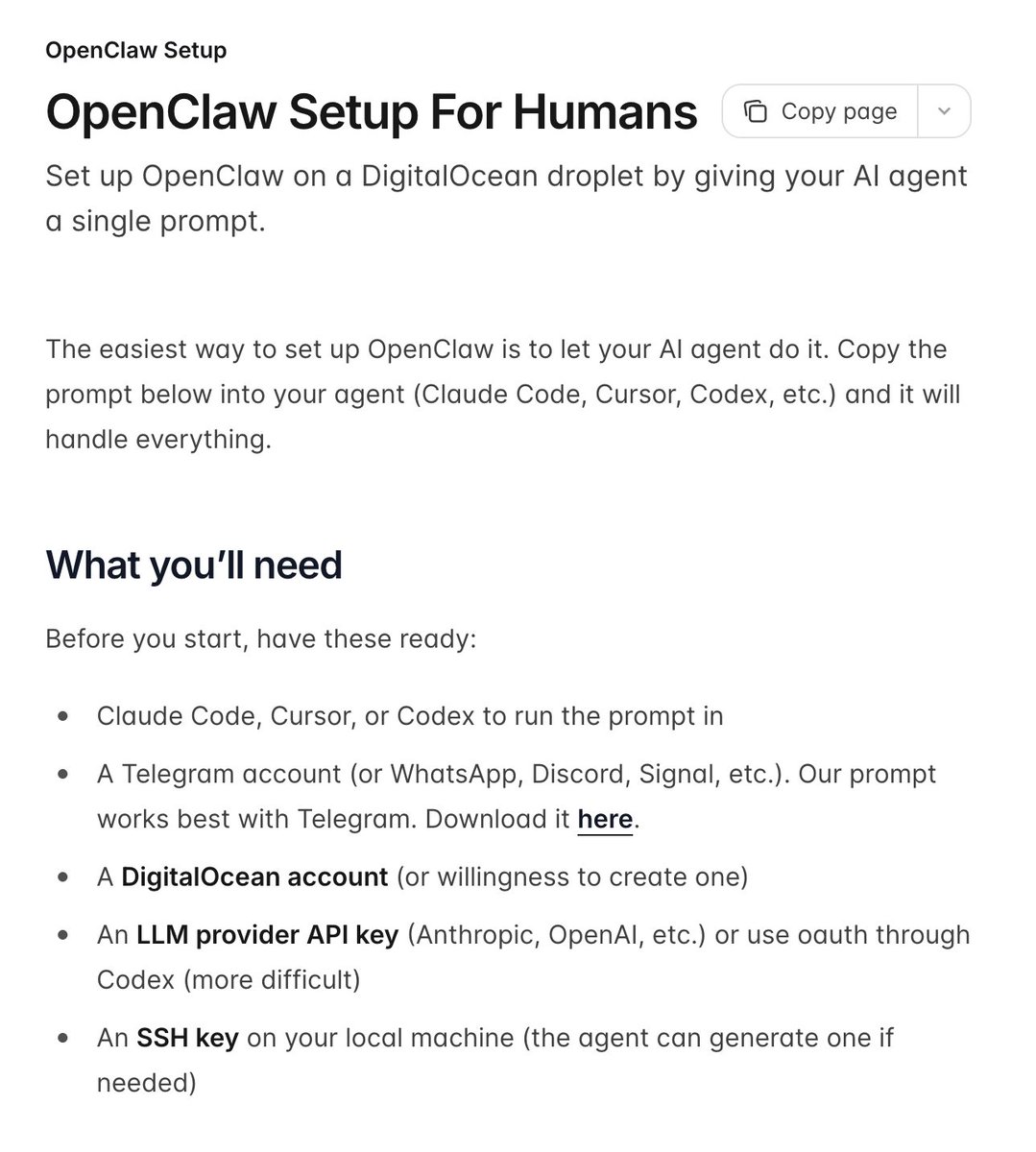
spinning up a fresh openclaw is super ez now
these instructions from @agentcashdev make it like a 15m process
i have shared this with several people now
also i <3 AgentCash. once i saw their product, agentic commerce clicked
English