Jacob Effron

657 posts

Jacob Effron

Jacob Effron

@jacobeffron

Managing Director @redpoint supporting @AbridgeHQ @wearelegora @tryaugie @tryramp @getgarner @AcuityMD @scribehow / AI pod: Unsupervised Learning

Katılım Mart 2011
639 Takip Edilen3.6K Takipçiler
Sabitlenmiş Tweet
Jacob Effron
Jacob Effron@jacobeffron·
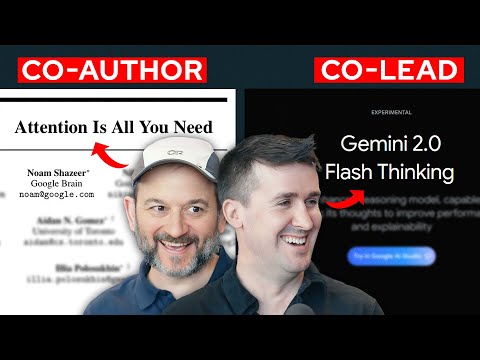
New Unsupervised Learning with Google AI researchers @NoamShazeer and @jack_w_rae on: - Scaling test-time compute - The power of the Mom eval - The pace of Open Source / DeepSeek - How AI research is where chemistry was in the 15th century - Reactions to Ilya on how far test-time compute gets us and Yann LeCun on the limits of models today - General vs. specialized models - Implications of AGI and risks YouTube: youtu.be/atMRWzgHEGg Spotify: bit.ly/3DNO2GC Apple: bit.ly/41MW2j2
YouTube video
YouTube
Jacob Effron tweet media
English
8
33
230
45.6K
Jacob Effron
Jacob Effron@jacobeffron·
When Anthropic launched its legal skills in Claude, legal tech public stocks dropped. But the demand for @WeAreLegora fundraise was never higher. “The models do 80% out of the box. The last 20% takes 99% of the time. That's where taste, judgment, and domain knowledge live, and that's exactly what foundation models won't prioritize building.
Jacob Effron@jacobeffron

Legora sets the bar for operating at AI speed. Watching them become one of the fastest growing software companies of all time these past few years has provided constant lessons on what’s required to win in this new world. Fresh off @WeAreLegora's $550M Series D, CEO @MaxJunestrand joined @loganbartlett and me on Unsupervised Learning to provide a masterclass on building an AI-native company. He shared some amazing lessons around - Constantly rebuilding for the bleeding edge of model capabilities - Partnering with customers for both immediate impact and long-term transformation - Running Legora differently from traditional software companies He also included some spicy takes on - Why foundation models entering legal is good for Legora - Pricing AI products - The future of the legal industry It’s impossible to listen to Max and not pick up the infectious energy that makes Legora such a special company. Check out the full episode: YouTube: youtu.be/wzRZp-1EuaE Spotify: bit.ly/3Nc53za Apple: bit.ly/40ufr8m 0:00 Intro 1:16 Legora’s Series D Story 3:24 Why You Need Low Ego to Build in AI 5:58 From 60% to 100% Accuracy in One Summer 7:04 Law Firm Economics Shift 14:09 Pricing Seats Vs Outcomes 18:31 Why Foundation Models Entering Legal Helps Legora 30:10 Convincing a 75-Year-Old Partner to Go All In 33:02 Hiring Legal Engineers 34:32 Running an AI-Native Company 35:57 The Opus 4.5 Christmas Breakthrough 40:02 Building With Customers 44:01 All In On US Expansion 51:22 Stockholm Startup DNA

English
0
0
11
3.4K
Jacob Effron retweetledi
Jack Altman
Jack Altman@jaltma·
New episode of Uncapped with @MaxJunestrand from Legora and my partner @chetanp. Every time I'm with Max I come away thinking "this is what it takes to build an AI native software company." He's one of my favorite founders, hope you enjoy. (0:00) Intro (0:31) Legora's origin story (9:05) Building an AI-native company (18:16) No sacred cows, the models will be amazing (27:36) Winning pilots and global expansion (36:43) Starting in Europe (47:15) Stockholm culture and "blodsmak"
English
11
31
193
84.8K
Jacob Effron
Jacob Effron@jacobeffron·
.@MaxJunestrand is convinced every major law firm will have its own AI — one that runs on its own precedents, organizational memory, and institutional context. The constraint to scaling legal work will be how many agents a single practitioner can effectively orchestrate.
Jacob Effron@jacobeffron

Legora sets the bar for operating at AI speed. Watching them become one of the fastest growing software companies of all time these past few years has provided constant lessons on what’s required to win in this new world. Fresh off @WeAreLegora's $550M Series D, CEO @MaxJunestrand joined @loganbartlett and me on Unsupervised Learning to provide a masterclass on building an AI-native company. He shared some amazing lessons around - Constantly rebuilding for the bleeding edge of model capabilities - Partnering with customers for both immediate impact and long-term transformation - Running Legora differently from traditional software companies He also included some spicy takes on - Why foundation models entering legal is good for Legora - Pricing AI products - The future of the legal industry It’s impossible to listen to Max and not pick up the infectious energy that makes Legora such a special company. Check out the full episode: YouTube: youtu.be/wzRZp-1EuaE Spotify: bit.ly/3Nc53za Apple: bit.ly/40ufr8m 0:00 Intro 1:16 Legora’s Series D Story 3:24 Why You Need Low Ego to Build in AI 5:58 From 60% to 100% Accuracy in One Summer 7:04 Law Firm Economics Shift 14:09 Pricing Seats Vs Outcomes 18:31 Why Foundation Models Entering Legal Helps Legora 30:10 Convincing a 75-Year-Old Partner to Go All In 33:02 Hiring Legal Engineers 34:32 Running an AI-Native Company 35:57 The Opus 4.5 Christmas Breakthrough 40:02 Building With Customers 44:01 All In On US Expansion 51:22 Stockholm Startup DNA

English
0
0
7
976
Jacob Effron
Jacob Effron@jacobeffron·
After playing around with Opus 4.5, @MaxJunestrand knew the roadmap had to change. As model capabilities improve, this often happens. As Max says, "You need low ego. You have to say that's now the world. We will operate under those boundaries and run at an intensity that is practically unheard of" and be willing to throw out what you spent time building before.
Jacob Effron@jacobeffron

Legora sets the bar for operating at AI speed. Watching them become one of the fastest growing software companies of all time these past few years has provided constant lessons on what’s required to win in this new world. Fresh off @WeAreLegora's $550M Series D, CEO @MaxJunestrand joined @loganbartlett and me on Unsupervised Learning to provide a masterclass on building an AI-native company. He shared some amazing lessons around - Constantly rebuilding for the bleeding edge of model capabilities - Partnering with customers for both immediate impact and long-term transformation - Running Legora differently from traditional software companies He also included some spicy takes on - Why foundation models entering legal is good for Legora - Pricing AI products - The future of the legal industry It’s impossible to listen to Max and not pick up the infectious energy that makes Legora such a special company. Check out the full episode: YouTube: youtu.be/wzRZp-1EuaE Spotify: bit.ly/3Nc53za Apple: bit.ly/40ufr8m 0:00 Intro 1:16 Legora’s Series D Story 3:24 Why You Need Low Ego to Build in AI 5:58 From 60% to 100% Accuracy in One Summer 7:04 Law Firm Economics Shift 14:09 Pricing Seats Vs Outcomes 18:31 Why Foundation Models Entering Legal Helps Legora 30:10 Convincing a 75-Year-Old Partner to Go All In 33:02 Hiring Legal Engineers 34:32 Running an AI-Native Company 35:57 The Opus 4.5 Christmas Breakthrough 40:02 Building With Customers 44:01 All In On US Expansion 51:22 Stockholm Startup DNA

English
0
1
8
1.3K
Jacob Effron
Jacob Effron@jacobeffron·
Legora sets the bar for operating at AI speed. Watching them become one of the fastest growing software companies of all time these past few years has provided constant lessons on what’s required to win in this new world. Fresh off @WeAreLegora's $550M Series D, CEO @MaxJunestrand joined @loganbartlett and me on Unsupervised Learning to provide a masterclass on building an AI-native company. He shared some amazing lessons around - Constantly rebuilding for the bleeding edge of model capabilities - Partnering with customers for both immediate impact and long-term transformation - Running Legora differently from traditional software companies He also included some spicy takes on - Why foundation models entering legal is good for Legora - Pricing AI products - The future of the legal industry It’s impossible to listen to Max and not pick up the infectious energy that makes Legora such a special company. Check out the full episode: YouTube: youtu.be/wzRZp-1EuaE Spotify: bit.ly/3Nc53za Apple: bit.ly/40ufr8m 0:00 Intro 1:16 Legora’s Series D Story 3:24 Why You Need Low Ego to Build in AI 5:58 From 60% to 100% Accuracy in One Summer 7:04 Law Firm Economics Shift 14:09 Pricing Seats Vs Outcomes 18:31 Why Foundation Models Entering Legal Helps Legora 30:10 Convincing a 75-Year-Old Partner to Go All In 33:02 Hiring Legal Engineers 34:32 Running an AI-Native Company 35:57 The Opus 4.5 Christmas Breakthrough 40:02 Building With Customers 44:01 All In On US Expansion 51:22 Stockholm Startup DNA
YouTube video
YouTube
English
6
11
50
29K
Jacob Effron
Jacob Effron@jacobeffron·
.@WeAreLegora is building a generational company as they continue moving at hyperspeed with an incredible product. They’re one of the fastest growing software companies ever and this is truly just the beginning - congrats on another amazing milestone! 🚀
Max Junestrand@MaxJunestrand

Big day at @WeAreLegora! We have raised $550 million at a $5.55 billion valuation in a Series D funding round, led by @Accel, to accelerate expansion across the United States. To all our customers and partners, this celebration is as much yours as it is ours.

English
2
3
25
1.4K
Jacob Effron retweetledi
Physical Intelligence
Physical Intelligence@physical_int·
General-purpose AI models are behind some of the most exciting applications we now can't live without. We envision that an analogous “physical intelligence layer” built with models like π0.6 will similarly spur a new wave of applications for the physical world. We’ve recently begun working with a handful of companies that have deployed their robots to do real-world, useful things. pi.website/blog/partner/?…
English
10
91
737
166.5K
Jacob Effron
Jacob Effron@jacobeffron·
"Ideas diffuse" is the most common argument for why being first doesn't matter in AI. Jerry Tworek (o1, o3) disagrees. The lab that figures something out first builds compounding advantages - in talent, infrastructure, and research velocity - that followers struggle to close. "That's the Darwinian part of progress."
Jacob Effron@jacobeffron

.@MillionInt helped drive o1, o3, and Codex at OpenAI where he was VP of Research from 2019 to 2025. Then he left to pursue “types of research that are hard to do at OpenAI.” This week on Unsupervised Learning, I sat down with Jerry to discuss where AI research is headed and what he learned from seven years at the forefront of the field. - Why he left OpenAI after helping create some of its biggest breakthroughs - Why Jerry updated his AGI timeline after building reasoning models - The real limits of scaling reinforcement learning - Why Anthropic has done so well in coding - Inside OpenAI's pivotal decisions - What makes great AI researchers Timestamps: 0:00 Intro 1:26 Scaling Paradigms in AI 3:36 Challenges in Reinforcement Learning 11:48 AGI Timelines 18:36 Converging Labs and Economic Forces 25:05 Jerry's Departure from OpenAI 31:18 Pivotal Decisions in OpenAI's Journey 35:06 Balancing Research and Product Development 38:42 The Future of AI Coding 41:33 Specialization vs. Generalization in AI 48:47 Hiring and Building Research Teams 55:21 Quickfire Listen here: YouTube: youtu.be/XtPZGVpbzOE Spotify: bit.ly/4brrgTE Apple: bit.ly/4a2zjnc

English
1
1
11
968
Jacob Effron
Jacob Effron@jacobeffron·
"100 researchers thinking the same thing = 1 researcher" Jerry Tworek led a lot of pioneering work at OpenAI. His take on what separates good AI researchers from great ones: master both systems AND theory, avoid groupthink, and have the courage to be contrarian when experiments cost as much as Hollywood movies.
Jacob Effron@jacobeffron

.@MillionInt helped drive o1, o3, and Codex at OpenAI where he was VP of Research from 2019 to 2025. Then he left to pursue “types of research that are hard to do at OpenAI.” This week on Unsupervised Learning, I sat down with Jerry to discuss where AI research is headed and what he learned from seven years at the forefront of the field. - Why he left OpenAI after helping create some of its biggest breakthroughs - Why Jerry updated his AGI timeline after building reasoning models - The real limits of scaling reinforcement learning - Why Anthropic has done so well in coding - Inside OpenAI's pivotal decisions - What makes great AI researchers Timestamps: 0:00 Intro 1:26 Scaling Paradigms in AI 3:36 Challenges in Reinforcement Learning 11:48 AGI Timelines 18:36 Converging Labs and Economic Forces 25:05 Jerry's Departure from OpenAI 31:18 Pivotal Decisions in OpenAI's Journey 35:06 Balancing Research and Product Development 38:42 The Future of AI Coding 41:33 Specialization vs. Generalization in AI 48:47 Hiring and Building Research Teams 55:21 Quickfire Listen here: YouTube: youtu.be/XtPZGVpbzOE Spotify: bit.ly/4brrgTE Apple: bit.ly/4a2zjnc

English
0
1
7
893
Jacob Effron
Jacob Effron@jacobeffron·
@teortaxesTex In fairness to Jerry, if you listen to the full podcast he actually explicitly says he doesn't believe this and thinks there are new better ideas out there researchers can find including better human-designed architectures: youtube.com/watch?v=XtPZGV…
YouTube video
YouTube
English
0
0
4
323
Teortaxes▶️ (DeepSeek 推特🐋铁粉 2023 – ∞)
Instantly grew bearish on Tworek Strong roon «we've tried all variants of attention in 2021» vibes. It could be true in the sloppy sense «5.3 will invent everything faster anyway», but NO, we are NOWHERE CLOSE to the limits of human-designed architectures. Jesus Christ…
Teortaxes▶️ (DeepSeek 推特🐋铁粉 2023 – ∞) tweet media
vitrupo@vitrupo

“Maybe we are at the last model that humans could have figured out.” Ex-OpenAI researcher Jerry Tworek says AI agents may soon design better models than humans. The search space may be too large for us alone.

English
12
3
192
34.2K
Jacob Effron retweetledi
vitrupo
vitrupo@vitrupo·
“Maybe we are at the last model that humans could have figured out.” Ex-OpenAI researcher Jerry Tworek says AI agents may soon design better models than humans. The search space may be too large for us alone.
English
25
72
614
77.3K
Jacob Effron
Jacob Effron@jacobeffron·
A key person behind reasoning models became less optimistic about AGI after building them. @MillionInt on why: current models can't get themselves unstuck. "Intelligence always finds a way... the current models do not." Until that changes, he won't call it AGI.
Jacob Effron@jacobeffron

.@MillionInt helped drive o1, o3, and Codex at OpenAI where he was VP of Research from 2019 to 2025. Then he left to pursue “types of research that are hard to do at OpenAI.” This week on Unsupervised Learning, I sat down with Jerry to discuss where AI research is headed and what he learned from seven years at the forefront of the field. - Why he left OpenAI after helping create some of its biggest breakthroughs - Why Jerry updated his AGI timeline after building reasoning models - The real limits of scaling reinforcement learning - Why Anthropic has done so well in coding - Inside OpenAI's pivotal decisions - What makes great AI researchers Timestamps: 0:00 Intro 1:26 Scaling Paradigms in AI 3:36 Challenges in Reinforcement Learning 11:48 AGI Timelines 18:36 Converging Labs and Economic Forces 25:05 Jerry's Departure from OpenAI 31:18 Pivotal Decisions in OpenAI's Journey 35:06 Balancing Research and Product Development 38:42 The Future of AI Coding 41:33 Specialization vs. Generalization in AI 48:47 Hiring and Building Research Teams 55:21 Quickfire Listen here: YouTube: youtu.be/XtPZGVpbzOE Spotify: bit.ly/4brrgTE Apple: bit.ly/4a2zjnc

English
1
3
7
2K
Jacob Effron
Jacob Effron@jacobeffron·
After 7 years building o1, o3 and Codex at OpenAI, Jerry Tworek left. He explained: "“I  would like to have a bit of freedom…to attack the most core and the most important problems there are”. @MillionInt joined us on the most recent episode of Unsupervised Learning where we discussed his decision to leave, the future of RL and other research approaches, and what is next for him. Listen to the full episode below: YouTube: youtu.be/XtPZGVpbzOE Spotify: bit.ly/4brrgTE Apple: bit.ly/4a2zjnc
YouTube video
YouTube
The Information@theinformation

Exclusive: A weeks-old startup led by OpenAI's former vp of research is aiming to raise up to $1 billion to develop a new kind of AI. Read more from @Steph_Palazzolo and @WayneMa 👇 thein.fo/3NJ8RYt

English
0
3
14
1.4K
Jacob Effron retweetledi
Jerry Tworek
Jerry Tworek@MillionInt·
Being unemployed gave me some time to talk to new people and record a podcast. Its the second one I did, I think it will be last one for a while but we did talk about a few interesting things with Jacob
Jacob Effron@jacobeffron

.@MillionInt helped drive o1, o3, and Codex at OpenAI where he was VP of Research from 2019 to 2025. Then he left to pursue “types of research that are hard to do at OpenAI.” This week on Unsupervised Learning, I sat down with Jerry to discuss where AI research is headed and what he learned from seven years at the forefront of the field. - Why he left OpenAI after helping create some of its biggest breakthroughs - Why Jerry updated his AGI timeline after building reasoning models - The real limits of scaling reinforcement learning - Why Anthropic has done so well in coding - Inside OpenAI's pivotal decisions - What makes great AI researchers Timestamps: 0:00 Intro 1:26 Scaling Paradigms in AI 3:36 Challenges in Reinforcement Learning 11:48 AGI Timelines 18:36 Converging Labs and Economic Forces 25:05 Jerry's Departure from OpenAI 31:18 Pivotal Decisions in OpenAI's Journey 35:06 Balancing Research and Product Development 38:42 The Future of AI Coding 41:33 Specialization vs. Generalization in AI 48:47 Hiring and Building Research Teams 55:21 Quickfire Listen here: YouTube: youtu.be/XtPZGVpbzOE Spotify: bit.ly/4brrgTE Apple: bit.ly/4a2zjnc

English
9
15
343
34.1K
Chubby♨️
Chubby♨️@kimmonismus·
Hyped for this: Former OpenAI VP Jerry Tworek (@MillionInt) has launched Core Automation, an AI startup aiming to raise $1B to rethink how AI models are built and trained. The company wants to crack continual learning - AI that learns from real-world experience in real time - using new architectures beyond transformers and requiring 100× less data. Jerry Tworek was one of the architect of models like o1 and o3 - so this is really big.
Chubby♨️ tweet media
English
13
15
195
21.5K
Jacob Effron
Jacob Effron@jacobeffron·
.@MillionInt helped drive o1, o3, and Codex at OpenAI where he was VP of Research from 2019 to 2025. Then he left to pursue “types of research that are hard to do at OpenAI.” This week on Unsupervised Learning, I sat down with Jerry to discuss where AI research is headed and what he learned from seven years at the forefront of the field. - Why he left OpenAI after helping create some of its biggest breakthroughs - Why Jerry updated his AGI timeline after building reasoning models - The real limits of scaling reinforcement learning - Why Anthropic has done so well in coding - Inside OpenAI's pivotal decisions - What makes great AI researchers Timestamps: 0:00 Intro 1:26 Scaling Paradigms in AI 3:36 Challenges in Reinforcement Learning 11:48 AGI Timelines 18:36 Converging Labs and Economic Forces 25:05 Jerry's Departure from OpenAI 31:18 Pivotal Decisions in OpenAI's Journey 35:06 Balancing Research and Product Development 38:42 The Future of AI Coding 41:33 Specialization vs. Generalization in AI 48:47 Hiring and Building Research Teams 55:21 Quickfire Listen here: YouTube: youtu.be/XtPZGVpbzOE Spotify: bit.ly/4brrgTE Apple: bit.ly/4a2zjnc
YouTube video
YouTube
English
1
9
103
43.2K
Leeor Mushin
Leeor Mushin@lmushin·
Project Eleven exists because of the impending collision of rapid progress in quantum computing and the legacy cryptographic assumptions that underpin global digital systems Since we started the company 440 days ago on the anniversary of Satoshi’s white paper (after a call from @FinnMurphy12 made that incorporation date happen!), under the leadership of @apruden08 and @conordeegan, we have been focused on doing the work early, all while bringing together serious technical talent and clear thinking before the problem became obvious to everyone else Excited to announce today a $20M Series A led by @CastleIslandVC and @nic_carter, an incredible partner we have been working together with since the seed round To quote our Head of Strategy, @graememoore, “Project Eleven grows more powerful by the day”
Project Eleven@projecteleven

Project Eleven Raises $20M to Prepare Digital Asset Infrastructure for the Quantum Era Project Eleven, the leader in post-quantum security and migration for digital assets, today announced a $20 million Series A funding round led by Castle Island Ventures with participation from Coinbase Ventures, Fin Capital, Variant, Quantonation, Nebular, Formation, Lattice Fund, Satstreet Ventures, Nascent Ventures, and Balaji Srinivasan. The round comes as post-quantum cryptography becomes a planning priority for government and industry. Advances in quantum computing could eventually weaken elliptic curve cryptography (ECC), the public-key standard used by networks such as Bitcoin, prompting a staged transition across an ecosystem that secures more than $4 trillion in digital assets. Project Eleven is building the tools to make complex, multi-year migrations practical for networks and institutions, including readiness assessments, migration test environments, and deployment sequencing. “As quantum capabilities advance, the stakes couldn’t be higher. We can’t afford to ignore this existential risk posed to the digital asset ecosystem,” said Alex Pruden, CEO and Co-Founder of Project Eleven. “Trillions in value depend on these cryptographic assumptions. Networks like Bitcoin take years to upgrade because they’re governed cautiously by design. We’re focused on making the transition practical now, so the industry can migrate deliberately instead of improvising under pressure.” “Useful quantum computing is the biggest and most complex threat public blockchains have ever faced,” said Nic Carter, General Partner at Castle Island Ventures. “Project Eleven is building the practical bridge from research to real-world deployment.” Project Eleven is collaborating with the Solana Foundation and other leading protocols and Layer 1 ecosystems on post-quantum readiness planning and technical work. The company raised a $6 million seed round in June 2025 led by Variant and Quantonation, with participation from Castle Island Ventures, Nebular, and Formation. Project Eleven plans to unveil its next major product release in early 2026, adding capabilities for institutions, protocols, and end users looking to future-proof long-lived cryptographic systems. 🤝 @CastleIslandVC @nic_carter @cbventures @Fin_Capital_VC @variantfund @Quantonation @Nebularvc @formation_vc @lattice_fund @Satstreet @nascent @balajis 🤝 @apruden08 @conordeegan @graememoore @Dr_DAO_ @nuggimane 🤝

English
6
2
34
2.7K
Jacob Effron retweetledi
Nikhil Krishnan
Nikhil Krishnan@nikillinit·
one of our more underrated Vital Signs episodes from this year was with Viren Shetty who taught @jacobeffron and I a lot about scaling hospital systems in India One thing Indian hospitals are known for is delivering surgical care at low cost with relatively good outcomes. Viren talked to us about a few of the ways this happens (reducing SKUs and negotiating down prices, extremely high volume leading to specialization, etc) you can see the rest of the episode in the next tweet
English
1
2
11
2.3K
Max Junestrand
Max Junestrand@MaxJunestrand·
We added $7 million in additional ARR in the last 24 hours. That’s more than our total combined ARR in 2023 and 2024. Huge credit to our customers for their trust, and to the @WeAreLegora team for executing with focus, passion and urgency. On to 2026!
Max Junestrand tweet mediaMax Junestrand tweet mediaMax Junestrand tweet media
English
51
24
486
102.5K