Jaime Fideo Beca

75.6K posts

Jaime Fideo Beca banner
Jaime Fideo Beca

Jaime Fideo Beca

@JaimeFideoBeca

Padre, bético apasionado, curioso infatigable y amante del buen humor. No mato por nadie pero muero por quien sea. Feo, Fuerte y Formal

Sevilla - España Katılım Kasım 2011
2.6K Takip Edilen774 Takipçiler
Jaime Fideo Beca retweetledi
Open Source Intel
Open Source Intel@Osint613·
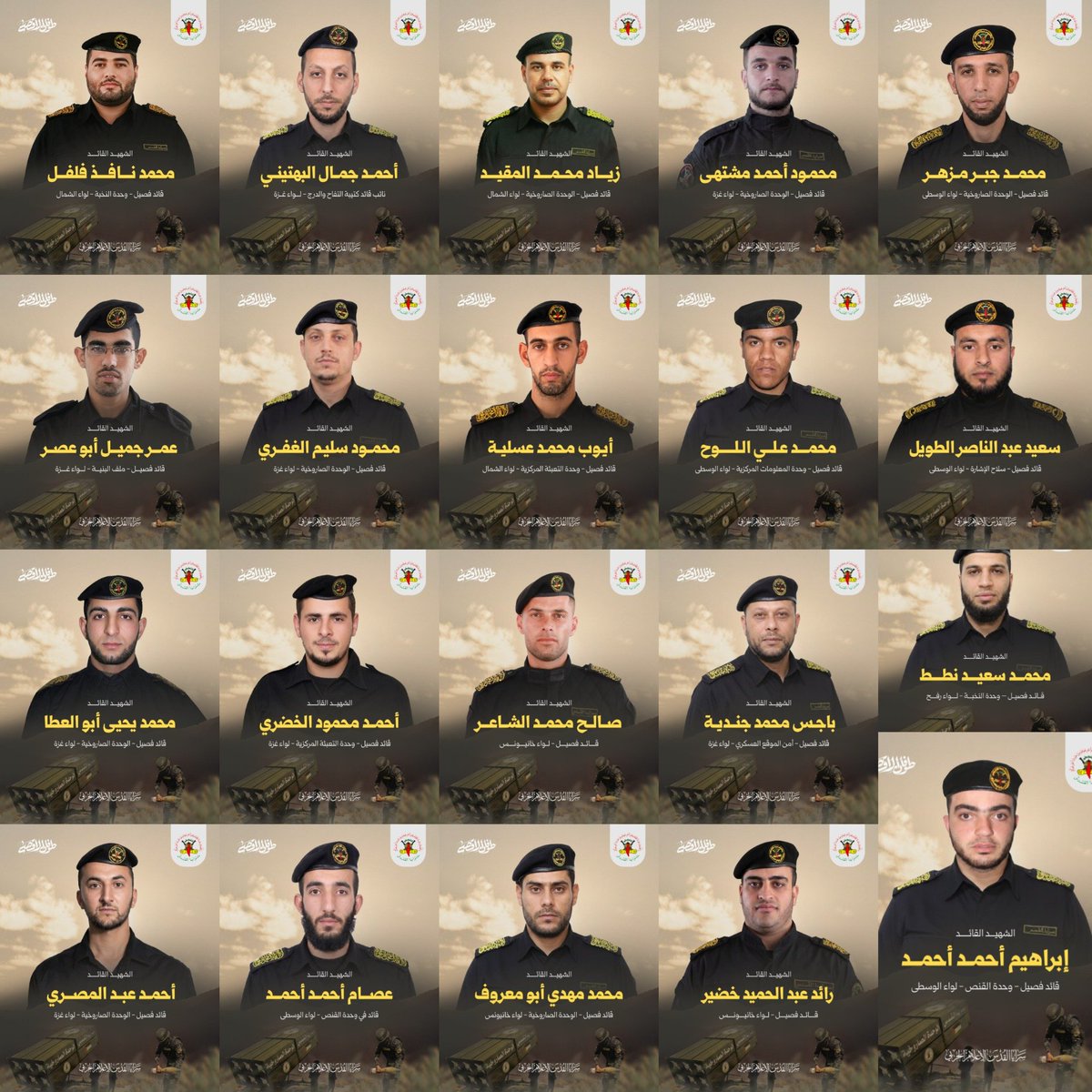
Palestinian Islamic Jihad has published death notices for another 20 commanders killed in fighting against the Israeli military.
Open Source Intel tweet media
English
36
51
360
30.4K
Jaime Fideo Beca
Jaime Fideo Beca@JaimeFideoBeca·
Jaime Fideo Beca tweet media
Gabriel Yerushalmi 🇮🇱@Defensa_Israel

Ultimo post de Trump: "¿Alguien ha visto lo mal que lo está haciendo #España? Sus cifras financieras a pesar de contribuir casi nada a la OTAN y a su defensa militar son absolutamente horrendas. ¡Triste de ver!!!" 🇺🇸🔥🇪🇸 - Yo creo que la Administración Trump va a aprovechar las denuncias contra Pedro Sánchez en la Corte Penal Internacional de La Haya para fundamentar jurídicamente el aplicarle no solo sanciones personales sino también a su familia, tal cual se hizo con Gustavo Petro. - Trump se la ha jurado, lo va a perseguir, y va a intentar influir también en las próximas elecciones españolas.

ZXX
0
0
0
2
Jaime Fideo Beca retweetledi
Mario Nawfal
Mario Nawfal@MarioNawfal·
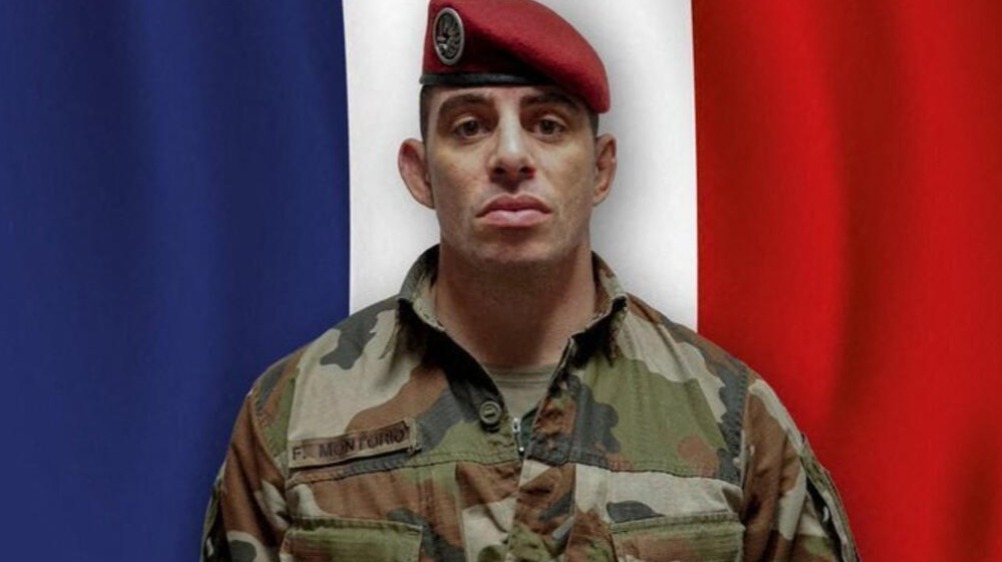
🇱🇧🇮🇱🇫🇷 Hezbollah is denying everything after a deadly attack on UN peacekeepers. A UNIFIL patrol was hit by small arms fire today in southern Lebanon while clearing explosives near Ghandouriyeh, close to Bint Jbeil. One French soldier was killed. Three others were injured. UNIFIL calls it a deliberate attack and says the shots came from non state actors, with early suspicion pointing toward Hezbollah. Hezbollah rejects that completely. It says it has no connection to the incident and warns against rushing to conclusions before investigations are finished. Macron is directly blaming Hezbollah for the attack. Lebanon’s army has opened an investigation. UNIFIL is doing the same. This is happening in one of Hezbollah’s strongest areas, after weeks of fighting and a fragile ceasefire that keeps breaking.
Mario Nawfal tweet mediaMario Nawfal tweet mediaMario Nawfal tweet mediaMario Nawfal tweet media
Mario Nawfal@MarioNawfal

🇮🇱🇱🇧 BREAKING: Israeli strikes in southern Lebanon are still being carried out today despite the ceasefire

English
28
16
60
76K
Jaime Fideo Beca retweetledi
Jordan Bardella
Jordan Bardella@J_Bardella·
Je considère que la libre circulation dans l'espace Schengen devrait être réservée aux seuls ressortissants des pays européens. Obtenir un titre de séjour en Espagne, par exemple, ne doit pas permettre de circuler librement dans tous les pays de l'Union européenne.
Français
929
3.4K
22.8K
775.7K
Jaime Fideo Beca retweetledi
Lyman Stone 石來民 🦬🦬🦬
The best solution to uncontrolled migration is BORDERS-- in this case, maritime borders, i.e. simply turning the boats back. As long as people have a chance at asylum, they'll keep coming. You have to just turn migration through improper channels away en masse.
Sam Bowman@s8mb

Europe keeps trying offshore processing for asylum seekers. Britain attempted its Rwanda scheme; Italy is dispatching asylum seekers to Albania; Denmark has passed legislation to process claims abroad. They are trying because of Australia, where small boat crossing are widely thought to have been stopped by offshore processing. But they weren't. worksinprogress.co/issue/how-aust… Australia has used two policies to stop boat migration: offshore processing and naval turnbacks, where asylum seekers are transferred onto purpose-built lifeboats and towed back into Indonesian waters. It was turnbacks *alone* that stopped the boats: • In 2001, during the first wave of boat arrivals, the Australian government introduced both offshore processing and turnbacks. Arrivals fell from 5,516 in 2001 to just one person in 2002. • In 2008, both policies were abolished. Arrivals rose seventeen-fold the following year. • In 2012, the Gillard government reintroduced offshore processing, but without turnbacks. Arrivals did not fall. • In 2013, turnbacks were reintroduced alongside offshore processing and boat migration collapsed. • In 2014, offshore transfers were abandoned entirely, leaving turnbacks to do the work alone. Arrivals have remained at essentially zero ever since. Offshore processing is expensive and politically toxic. It is also unnecessary. Governments that want to reduce boat migration should learn from Australia and focus on turnbacks instead. New in Works in Progress by @AmeliaERWood. worksinprogress.co/issue/how-aust…

English
3
6
113
7.2K
Jaime Fideo Beca retweetledi
Wild😶‍🌫️
Wild😶‍🌫️@Whiledvid·
Ukrainian soldier records what he thinks will be his final video as his unit is surrounded by Russian forces
English
1K
4.6K
51.6K
5.3M
Jaime Fideo Beca retweetledi
Dries Van Langenhove
Dries Van Langenhove@DVanLangenhove·
Egalitarianism, the root cause of the evils pestering the West today, has made it so that 99,99% of people in the West will see this video and think “why is he destroying that wall?”, when this question is wholly irrelevant. This migrant does not think like us. He doesn’t know why he does it, just as the migrants in Brussels don’t know why they destroyed and burnt down their new football field and playground less than a day after the inauguration. They are not like us. If we keep projecting our thought processes onto them, we will go extinct and our civilisation with us. It makes me think about the video where three African rapists are asked how they feel about their victims suffering. They are asked again and again, in a calm fashion, but as hard as they try, they can’t understand the question. It’s us, who’s at fault, for projecting our empathy-capability onto people that are _not_like_us.
English
343
2.1K
11.9K
255.9K
Jaime Fideo Beca retweetledi
Handre
Handre@Handre·
Cash for Clunkers destroyed 690,000 functional vehicles in 2009, creating an artificial scarcity that rippled through used car markets for over a decade. The Obama administration sold this $3 billion program as environmental salvation and economic stimulus, but any free market economist could predict the real outcome: massive wealth destruction disguised as progress. The program forced dealers to pour sodium silicate into engines, permanently destroying cars that poor families could have afforded. Politicians eliminated the bottom tier of the used car market overnight. Suddenly, a reliable $3,000 Honda Civic became a $7,000 Honda Civic (if you could find one). The supposed beneficiaries — working-class Americans who needed affordable transportation — got priced out entirely. Government intervention always creates unseen victims, and Cash for Clunkers delivered them by the millions. Single mothers, college students, and minimum-wage workers watched their mobility options vanish as used car prices soared 30% between 2009 and 2014. The environmental gains proved negligible too: most clunkers averaged 15-17 MPG while replacements hit 24-25 MPG. Destroying half a million cars to improve average fuel economy by 8 MPG represents the kind of central planning that would give Soviet bureaucrats a hard-on. The wealth destruction extended beyond sticker prices. Higher transportation costs forced people into longer payment terms, creating a debt cycle that persists today. Cash for Clunkers normalized 84-month auto loans, turning cars from depreciating assets into multi-year financial anchors. Bureaucrats congratulated themselves for moving inventory off dealer lots while condemning an entire generation to transportation poverty.
Handre tweet media
English
831
5.5K
22.4K
987.9K
ConsueloSanzdeBremond
JABÓN DE CASTILLA: Elaborado desde el siglo XII, era un jabón fino, compacto, que se fabrica con aceite de oliva y ceniza de alta calidad. Nutría e hidrataba la piel.
ConsueloSanzdeBremond tweet media
Español
7
143
491
11.5K
ConsueloSanzdeBremond
Las cenizas se obtenían de la quema de plantas halófilas, las llamadas barrillas (crecen en zonas costeras y semiáridas). En el siglo XV había almonas dedicadas a la elaboración de este jabón, con sellos y ordenanzas que regulaban ...la calidad y su comercialización.
ConsueloSanzdeBremond tweet media
Español
2
8
49
859
Jaime Fideo Beca retweetledi
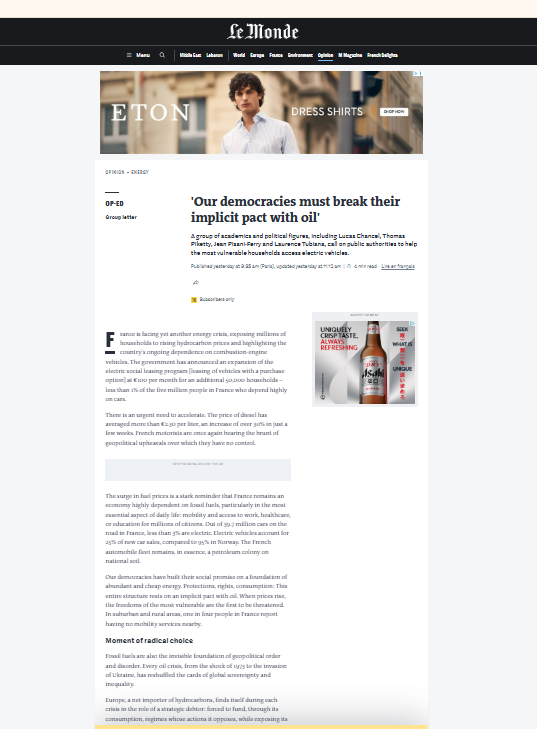
Anas Alhajji
Anas Alhajji@anasalhajji·
I support intelligent activism and reject performative stupidity. 🩸First: What “democracies” are these people talking about? 🩸Second: The alternatives are brutal. 🪔DRC: hell on earth, yet the “free press” stays silent. 🪔Renewables + EVs: you hand your future to China. 🩸Third: Haven't they seen energy prices constantly going up in Europe because of solar and wind?
Anas Alhajji tweet media
English
2
18
81
12.9K
Jaime Fideo Beca retweetledi
Don Raggio
Don Raggio@Raggiomoral·
Bukele piensa y actúa como un rey filósofo. Es el único líder de los últimos 40 años en intentar desmarronizar un país. Primero cazó a los monstruos. Después ordenó el espacio para ordenar la conducta. Ahora te educa para que no exacerbes tu aspecto tercermundista. Es Platón.
Leading Report@LeadingReport

El Salvador banned the “Edgar” haircut, a bowl-cut style with straight bangs, in public schools as part of restoring discipline.

Español
230
3K
35.6K
1.2M
Jaime Fideo Beca retweetledi
Open Source Intel
Open Source Intel@Osint613·
A Lebanese man returned to his village in southern Lebanon. Hezbollah flags everywhere. Iranian flags everywhere. Not a single Lebanese flag.
English
305
2K
7.3K
325.4K
Jaime Fideo Beca retweetledi
Hamidreza Azizi
Hamidreza Azizi@HamidRezaAz·
Iran reopens Hormuz: Are Tehran and Washington getting closer to a deal? 🔹 Since yesterday, multiple developments suggest Tehran and Washington may be inching toward a deal. But rather than a breakthrough moment, what we may be seeing is a carefully staged, incremental process. 🔹 Starting with Lebanon, Israel’s agreement to a ceasefire there aligns with a key Iranian demand that any U.S.-Iran arrangement extend across the region, including the Hezbollah front. 🔹 This linkage was initially rejected by Israel, which escalated operations in Lebanon to preserve freedom of action. The shift toward a ceasefire likely reflects external pressure from the U.S., involving mediation by Pakistan and others. 🔸 One interpretation is that Donald Trump ultimately pushed Benjamin Netanyahu to accept the ceasefire to remove a major Iranian red line and enabling diplomatic movement. 🔸Iranian sources suggest Tehran made it explicit that no second round of talks with the U.S. while Lebanon remained active. Some accounts go further, saying that Iran had warned it would resume strikes, including against Israel, if no ceasefire emerged. 🔸Publicly, Trump denies any linkage between Lebanon and Iran talks. But it is difficult to see the ceasefire as entirely disconnected from progress on the diplomatic track. 🔹 A second signal is that Iran has reopened the Strait of Hormuz to shipping. 🔹 Trump frames this as proof that his pressure campaign is working, insisting the naval blockade will remain until a comprehensive deal is reached. 🔹 But a different reading is more plausible: both sides may be constructing a sequence that allows for de-escalation without visible concession. Step 1: ceasefire in Lebanon. Step 2: Iran reopens Hormuz. Step 3: gradual rollback of U.S. naval pressure. 🔹 Crucially, the “blockade” itself may never have been fully enforced. Shipping data suggests Iranian vessels continued transiting the Strait, pointing to a signaling tool rather than a total economic cutoff. 🔹 In that sense, the blockade functions less as a coercive end-state and more as diplomatic leverage, allowing Washington to claim success while moving toward compromise. 🔸At the same time, Iran’s move appears to be highly conditional. Iranian FM says shipping is allowed, but only along routes designated by Tehran, close to its shores. 🔸This is significant, as it preserves Iran’s operational control and its ability to quickly reimpose restrictions if conditions change. 🔸Iranian state media outline three conditions: • Only commercial shipping permitted • No U.S./Israeli-linked vessels or cargo • Full coordination with Iranian forces 🔸In other words, what they say is that the Strait is open, but on Iran’s terms. 🔸Tehran is also signaling that the arrangement is reversible. If the U.S. maintains or intensifies its naval pressure, Iran could shut the Strait again. 🔹 Another key point is that Iranian sources reject Trump’s claim that Tehran agreed to hand over highly enriched uranium, saying that the issue remains unresolved. 🔹 This suggests that what we are seeing is not a finalized agreement, but partial implementation of a previously negotiated framework, i.e., the initial ceasefire mediated by Pakistan. 🔹 According to Iranian accounts, the delay was due to Lebanon. Once that front was included, the framework could move forward. 🔸But not everyone in Iran is on board. The reopening of Hormuz appears to have surprised parts of the political elites, triggering criticism from hardliners. 🔸Their concern is that restoring shipping too quickly reduces economic pressure on adversaries, undermining Iran’s leverage. 🔸Others focus on messaging, arguing that even if the move is conditional, inconsistencies in public communication have allowed Washington to dominate the narrative. 🔸This is a key point in their view, as the U.S. can now portray developments as evidence that its pressure campaign worked, even if the outcome reflects mutual compromise. ➡️Overall, it seems that what’s unfolding is not so much of a decisive breakthrough but a managed de-escalation, structured to let both sides claim success while keeping options open.
English
2
186
522
80.9K