Juan Andres Lagrange

7.7K posts

Juan Andres Lagrange

Juan Andres Lagrange

@jalagrange

Founder of Akdemia & Sunlight.is #GiveFirst

London, England Katılım Temmuz 2009
1.3K Takip Edilen977 Takipçiler
Juan Andres Lagrange retweetledi
vitalik.eth
vitalik.eth@VitalikButerin·
Some of my perspective on where the @ethereumfndn is going. First of all, this is only my own view. The board is not just me, and I have no extra special powers on the board that the other board members do not. @aerugoettinea is the one executing much of this transition. My input has been largely on technical questions. The board is in the process of expanding, and my own power within the org will continue to decrease, which is honestly what I want. The 2025 era brought many important improvements to EF and its ability to execute. Many issues were resolved, and EF continues to benefit from its improved efficiency and greater focus on concrete goals to this day. And so with those problems resolved, early this year, the largest remaining hole that I perceived was something different nagging at me: I would regularly spot people saying things like "vitalik says these beautiful things about ethereum needing to be decentralized, and have privacy, and be a sanctuary technology, but why do the EF's actions not reflect that?" Now, you may have been hearing something different. You may not have been sensing a feeling of crisis at all, and maybe were hearing people saying that finally we were taking execution and BD seriously and the main task for us is to keep going that way and be even better and faster. Then probably there is genuine difference between you and me, in what kinds of criticism I take most seriously, and what kinds of critics through their criticism are most able to make me feel pain. As an analogy, let's briefly switch over to a different domain. One belief you can have about Google is that it is a success story, and has brought a lot of good to humanity in organizing the world's information. Another belief you can have about Google is that they had a beautiful idealistic beginning, but at some point the corruption of mainstream corporate attitudes seeped in, and they slowly bit by bit completely abandoned the "don't be evil" slogan. My belief on Google specifically is probably somewhere between the two. BUT, if you had taken me back in time to ~2008, and offered me a button to press to make Google one or two standard deviations more "dogmatic", eg. give Richard Stallman permanent veto power over some key policies, I would immediately press it. Why? Because a choice for one company is not a choice for the world, or even one country. Google existed and exists in the context of a technology industry generally drifting away from early idealistic don't-be-evil roots and toward greed for financial gain, totalizing visions of accelerated superintelligence, infiltration by sociopaths, and craven capitulation to (or worse, active participation in) government pressure for ideological control, surveillance and war. And so *one company* doing something different, positioning itself to be what George Bernard Shaw calls the Unreasonable Man, resisting the trend of the times, would have been better for freedom, balance of power and stability of society as a whole, than *all* large companies bending to dominant trends. This is a part of my version of pluralism. This line of thinking is not just mine, but I also is not too far off from what Aya and others had in mind with the Mandate. Now how does this all get to the role of the EF? EF is not a "center of Ethereum", rather EF is "one node, with a defined purpose, alongside other nodes". We've always said that the EF should be the latter, but many in the Ethereum ecosystem (and even within the EF) wanted us to be the former. Now, we are taking action to ensure that we will be the latter. This is particularly important because EF is a limited organization, with limited resources and limited organizational capacity. The EF has only ~0.16% of all ETH (less than many other individual ETH holders), whereas among other blockchains it's common for "the central foundation" to have 10-50%. Fiscally, the EF was originally designed to fulfill a limited work scope defined in the token sale docs and other pre-launch materials (building the chain software; getting through Frontier, Homestead, Metropolis, Serenity), which was fully completed in 2022; it was not designed to be an eternal steward. And so today, the EF is choosing to use its remaining resources to pursue longevity over breadth (yes, this means we sell less ETH). The EF focuses *specifically* on those activities critical to the success of ethereum as a censorship/capture-resistant, open, private and secure system, that would not happen otherwise. This means making hard choices, and in some cases even activities that we highly approve of and people that we highly respect becoming outside of the EF. People of great technical talent, public respect and even alignment with the mission and CROPS being outside of the EF is in fact necessary if we want important tasks to be able to attract outside capital. This also means the EF taking opinionated stands culturally. This is all intended in cooperation with all other parts of ethereum. We recognize that many other parts of the ethereum world highly respect CROPS and related values. But highly respecting is not the same as choosing to specialize and totally dedicate to a domain (Compare in a different domain: I think reducing animal cruelty is important, and I like vegan food, but am not full unconditional vegan myself) EF is still in a transition period, and we expect its new long-term form to stabilize over the next few months. What are the guiding principles of this new form? Again, I am only one person, but I can give my answer from a technical perspective (there are also critical non-technical aspects). At the core, *Ethereum must be impressive*. We are living in an age of highly intelligent AI and all kinds of other technological acceleration. "Status quo EVM, with a hard fork or two a year to optimize for short-term needs of users" is not interesting. To some, "impressive" means: 250ms latency and 1M TPS. I think Ethereum trying to go that route is a mistake. Being as fast and as scalable as possible, and only a small epsilon more decentralized than the others, is a route to mediocrity, and if we try it we will lose. I think Ethereum should scale. But I think Ethereum should strive the hardest to be deeply impressive in a different dimension: the CROPS dimension. This means things like: * Provably bug-free Ethereum. This is a goal that all cybersecurity researchers would have thought is absurd and impossible, up until roughly 6 months ago. Now, it's on the cusp of being possible, thanks to AI-assisted formal verification. So we should be frontrunners in doing this. * Available chain consensus. Ethereum is, and with lean consensus will cotninue to be, the ONLY chain that has both (i) traditional-BFT style properties that it's safe under asynchrony up to a high level of fault tolerance, and (ii) the bitcoin PoW-style property that under synchrony it's safe up to 49% attackers. As far as I can tell, literally no other chain has this or is planning for it; bitcoin goes for (ii) only and most other chains go for (i) only. Some will remember I fought hard for this, Unreasonably insisting that it is not OK for ethereum to rely on social consensus and hard forks to rescue ethereum from 34% of nodes going offline. It's OK for chains like hyperledger, bnb, solana, tempo, etc. It's not OK for bitcoin or ethereum or eg. zcash. * Intermediary minimization. The fact that smart contract wallets, protocols like railgun, etc have to send transactions through intermediaries to get included onchain is honestly embarrassing, and it's a constant point of fragility. Hence the work on FOCIL and EIP-8141 (and 7701 and years of work before) to make transaction sending intermediary-minimized with public mempool and strong inclusion properties, in a truly general-purpose way, that covers not just eg. secp256r1, but also privacy protocols and much more. Kohaku is pushing intermediary minimization at the user layer, pulling Ethereum away from the dystopian status quo world where our wallets don't even verify the chain, send our private data out to a dozen third-party servers, and toward a brighter CROPS future. Some of these goals are Unreasonable - maybe Ethereum would be "fine" getting only 50% of the way - what if we depend on intermediaries, but make it easy to switch? But going 50% of the way would not make Ethereum Deeply Impressive in the CROPS way. So we push for 100%. Fortunately all these goals are compatible with high TPS, this is a major focus of research (esp. on scaling the state). Well-designed L2s can also help, especially L2s optimized for specific applications (eg. high-volume trading, privacy...). These goals are even compatible with significantly lower slot times, thanks to Raul's work on erasure-coded P2P, and many other optimizations. The most high-value "product" of the ethereum blockchain, financially speaking, is ETH the asset. Ethereum secures $250 billion of ETH. The types of properties of Ethereum that I mentioned above are very good for ETH the asset. Nearly 90% of my net worth is in ETH, and most of the remainder is ~$40m of onchain fiat of which every dollar has already been allocated for some open-source biotech or software or hardware initiative. That said, there are aspects of supporting ETH the asset - *necessary* aspects even - that are outside the scope of the EF. This is where we need other heroes (some of whom hold more ETH than the EF does) to step in and help. EF has been recently thinking more about how it will relate to other such organizations, and give them needed initial support. EF will be a smaller ship than in previous years, a more opinionated one - in some cases more opinionated in ways that might be difficult to comprehend - but a longer-lasting one, and one suited to making sure that ethereum brings something meaningful to the world. We are grateful to all those inside and outside the EF who are helping to make this happen.
English
1.6K
1.4K
7.7K
3.8M
Juan Andres Lagrange
Juan Andres Lagrange@jalagrange·
Hi @ClaudeDevs @bcherny @claudeai, our engineering team at Akdemia (akdemia.com) got suspended from using Claude. As a team working to improve education across Latam, it has a big impact on our team. Any chance you could help us review this? Likely a false positive.
English
0
2
8
475
Juan Andres Lagrange retweetledi
Ricardo Hausmann
Ricardo Hausmann@ricardo_hausman·
Sanctions hurt people, not dictators. Right? Wrong! This book by @miguelsantos12 @JoseMoralesA and @zp2903 carefully looks at Venezuela and tells a much more interesting story: the sanctions forced the dictator to reduce their damaging command and control destructive measures. Read this 🧵!
José Morales-Arilla@JoseMoralesA

1/ We are very pleased to share our new @CambridgeUP Element: "From Collective Punishment to Constraints on Authority: Rethinking the Impact of US Sanctions on Venezuela". Co-authored with @miguelsantos12 and @zp2903. Thread Below! Download: cambridge.org/core/services/…

English
9
63
131
18.2K
Juan Andres Lagrange retweetledi
Garry Tan
Garry Tan@garrytan·
Saturday morning and it’s a good time to think a bit about how our functional systems are being torn down by a mind virus by two philosophers: Foucault and Derrida Foucault: His framework tells you that every institution claiming to know something is really just exercising power. Medicine, engineering, law, science. Apply that at civilizational scale and you get exactly what Dan Wang warns about: a society that lost the will to build. Process knowledge — the tacit know-how that only exists in the hands of people who actually make things — dies when a culture decides that all knowledge claims are suspect. America went from building the Interstate Highway System and the Apollo rockets to being unable to build a train from LA to SF. That didn't happen because we forgot the engineering. It happened because we built an entire intellectual class whose job is to interrogate every system rather than improve one. Derrida: His move is that every commitment contains its own contradiction, so you can never land on firm meaning. Run that as societal firmware and you get the bureaucratic paralysis we now live in. Infrastructure projects stuck in 15 years of environmental review because every statement of purpose deconstructs under the next round of stakeholder input. Institutions that can't say what they're for because every draft mission statement gets wordsmithed into mush by people trained to find the hidden hierarchy in any clear sentence. Derrida is the OS behind a civilization that can write a 4,000 page environmental impact report but can't pour concrete. The real damage is these ideas escaped the lab. Every institution that adopted this operating system stopped trying to discover truth and started managing narrative. DEI bureaucracies, academic hiring committees, media editorial standards. All running on Foucault and Derrida whether they know it or not. The antidote is building. The physical bridge across a river holds or it doesn’t. The code compiles or it doesn't. Reality keeps score and it doesn't grade on a curve. Foucault and Derrida gave a generation a sophisticated excuse to never build anything. Their followers inherited the sophistication and the impotence. It’s time to build again.
Armond Boudreaux@armondboudreaux

Good morning to everyone whose brain hasn’t been infected by Foucault, Derrida, et al.

English
81
118
876
70.1K
Juan Andres Lagrange retweetledi
Roberto Smith Perera
Roberto Smith Perera@RobertoSmithP·
You are right! The real bottleneck behind AI isn’t chips. It’s power. And that’s exactly where Venezuela becomes one of the biggest opportunities on Earth. AI today is constrained by a simple fact: data centers don’t scale without electricity—and the grid can’t keep up. Power is now the binding constraint on AI growth Interconnection delays can take 5+ years Global data center power demand is set to rise up to 165% this decade By 2027–2030, energy—not capital—will cap expansion In the U.S. and Europe, the problem is structural: regulation, saturated grids, land constraints, permitting delays. Now flip the map. Venezuela has: - Massive underutilized generation capacity (hydro + gas potential) - The largest proven oil & gas reserves on the planet - Vast land for gigawatt-scale campuses - A collapsed system → meaning you can redesign from zero for AI-native infrastructure This is not a weakness. It’s the opportunity. While the world is fighting for megawatts, Venezuela can build AI-first energy corridors: Dedicated power (hydro + gas + solar hybrids) Behind-the-meter generation (no grid bottlenecks) Co-located data centers + energy Export compute, not just commodities The shift is fundamental: Countries with excess capital used to win. Now countries with excess power + speed-to-deploy will dominate AI. Welcome to Venezuela!
Jack Prandelli@jackprandelli

The Power Bottleneck Behind AI A layered map of the data center ecosystem showing how electricity, not chips or capital, has become the critical constraint shaping AI growth. I wrote about it, in my latest article, link in replies 👇

English
2
7
9
610
Juan Andres Lagrange retweetledi
@jason
@jason@Jason·
I'm starting to believe that the industry is involved in an explicit effort to kill Open Claw. Everything they do needs to be examined, documebted and detailed because we are tipping into anti-trust territory. Agent technology is so powerful that we shouldn't allow it to be owned by three or four frontier model companies.
English
16
53
931
144.4K
Juan Andres Lagrange retweetledi
Pranit
Pranit@Pranit·
So the truth is finally coming out Yesterday, Anthropic said users were hitting limits because of their own usage patterns. Today, Boris is telling us they're cutting OpenClaw and third-party tools from subscriptions and prioritizing capacity for their own products That's a very different story. And a much closer one to what users suspected all along It also explains what people are actually seeing - Harsher limits - Worse quality - Workflows breaking overnight That is why @lydiahallie's explanation ('we investigated, you have a skill issue') landed so poorly and didn't reflect users' actual experience The one-time credit and refund option are a real first step. But that only fixes the bill The deeper damage came from changing the rules AFTER people had already built around them People can accept tighter limits People can accept "subs don't cover this workload" People can even accept higher prices What they cannot accept is being gaslit first and informed later If Anthropic wants to rebuild trust, the fix is not complicated: - Publish actual token budgets per tier, the same way they already do for the API - Show what each message costs against the budget - Let users verify for themselves whether the deal changed - Tell people ahead of time when the deal is going to change People can plan around hard limits They cannot plan around a company that changes the deal first, gaslights users, and explains it only after the backlash
Boris Cherny@bcherny

Starting tomorrow at 12pm PT, Claude subscriptions will no longer cover usage on third-party tools like OpenClaw. You can still use these tools with your Claude login via extra usage bundles (now available at a discount), or with a Claude API key.

English
70
35
689
63.2K
Juan Andres Lagrange retweetledi
Alex Volkov
Alex Volkov@altryne·
PSA: If you've been running out of Claude session quotas on Max tier, you're not alone. Read this. Some insane Redditor reverse engineered the Claude binaries with MITM to find 2 bugs that could have caused cache-invalidation. Tokens that aren't cached are 10x-20x more expensive and are killing your quota. If you're using your API keys with Claude this is even worse. This is also likely why this isn't uniform, while over 500 folks replied to me and said "me too", many (including me) didn't see this issue. There are 2 issues that are compounded here (per Redditor, I haven't independently confirmed this) : 1s bug he found is a string replacement bug in bun that invalidates cache. Apparently this has to do with the custom @bunjavascript binary that ships with standalone Claude CLI. The workaround there is to use Claude with `npx @anthropic-ai/claude-code` 2nd bug is worse, he claims that --resume always breaks cache. And there doesn't seem to be a workaround there, except pinning to a very old version (that will miss on tons of features) This bug is also documented on Github and confirmed by other folks. I won't entertain the conspiracy theories there that Anthropic "chooses" to ignore these bugs because it gets them more $$$, they are actively benefiting from everyone hitting as much cached tokens as possible, so this is absolutely a great find and it does align with my thoughts earlier. The very sudden spike in reporting for this, the non-uniform nature (some folks are completely fine, some folks are hitting quotas after saying "hey") definitely points to a bug. cc @trq212 @bcherny @_catwu for visibility in case this helps all of us.
Alex Volkov tweet media
Alex Volkov@altryne

My feed is showing me a bunch of folks who tapped out their whole usage limits on Mon/Tue. Is this your experience? Please comment, I want to understand how widespread this is

English
227
424
5K
1.6M
Juan Andres Lagrange
Juan Andres Lagrange@jalagrange·
Gran paso para @vesvank , una empresa que sin duda va a modernizar el espacio de pagos y finanzas en Vzla. Felicidades a @g4bet0 y el resto del talentoso equipo 🚀
Juan Andres Lagrange tweet media
Español
0
0
3
48
Delba
Delba@delba_oliveira·
Thank me later: - Warcraft Peon: wowhead.com/sounds/name:pe… - Warcraft Peasant: wowhead.com/sounds/name:pe… - Mario: myinstants.com/en/search/?nam… - Spongebob: myinstants.com/en/search/?nam… - - E.g: //.claude/settings.json { "hooks": { "SessionStart": [ { "hooks": [ { "type": "command", "command": "afplay /Users/d/.claude/hooks/PeonReady1.wav" } ] } ], "UserPromptSubmit": [ { "hooks": [ { "type": "command", "command": "afplay /Users/d/.claude/hooks/PeonYes3.wav" } ] } ], "Notification": [ { "hooks": [ { "type": "command", "command": "afplay /Users/d/.claude/hooks/PeonWhat3.wav" } ] } ], "Stop": [ { "hooks": [ { "type": "command", "command": "afplay /Users/d/.claude/hooks/PeonBuildingComplete1.wav" } ] } ] } }
English
24
9
265
31.9K
Delba
Delba@delba_oliveira·
10x productivity tip: use Claude hooks with sounds so Claude alerts you when it finishes a task or needs permission. But that's not the tip, the tip is to add your favourite childhood game sounds like the Starcraft, Warcraft, or even Mario.
English
285
423
5.7K
482.7K
Juan Andres Lagrange retweetledi
Emmanuel Rincón
Emmanuel Rincón@EmmaRincon·
🚨 BREAKING Jorge Rodriguez, Delcy's brother, lies once again in an attempt to deceive President Trump. He claims that 400 political prisoners have been released, but fewer than 60 have been freed.
English
143
1.5K
3.6K
103K
Juan Andres Lagrange retweetledi
drMAWZ
drMAWZ@TheDrMAWZ·
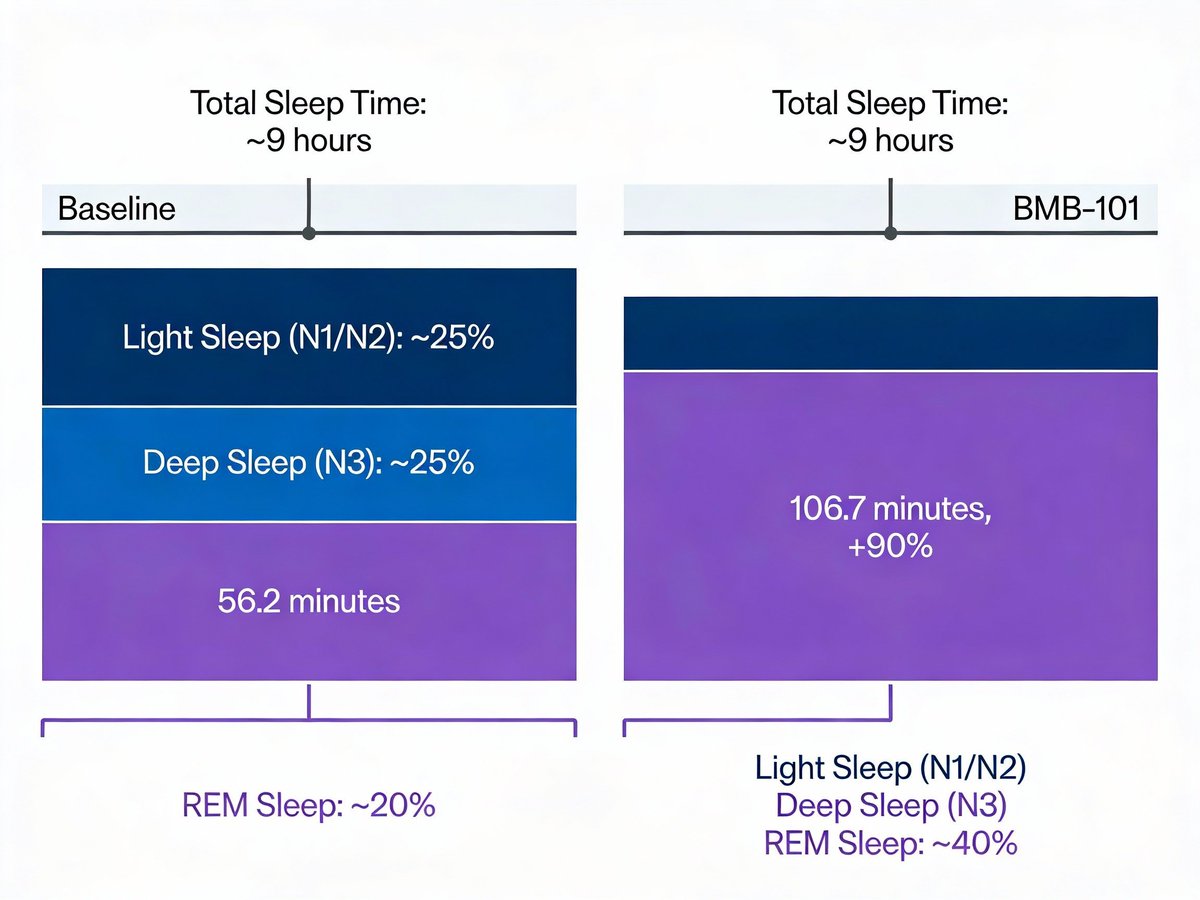
A new drug in the middle of clinical trials just increased REM sleep by 90% without making people sleep longer! This is the first medication ever to specifically enhance REM only and the implications go far beyond seizure control. Here's what just happened. 🧵
drMAWZ tweet media
English
222
581
7.7K
2M
Juan Andres Lagrange retweetledi
Alfredo Romero
Alfredo Romero@alfredoromero·
Dentro de los 87 presos políticos de nacionalidad extranjera en Venezuela se mantienen 2 ciudadanos estadounidenses. También hay un ciudadano cubano con residencia americana. En total quedan 811 presos políticos en Venezuela que esperan su liberación.
Español
34
1.8K
2.4K
78.3K
Juan Andres Lagrange retweetledi
Orlando Avendaño
Orlando Avendaño@OrlvndoA·
Delcy Rodríguez’s interim regime is playing games with Donald Trump. Despite Venezuela’s commitment to release hundreds of political prisoners this Thursday —and despite the fact that many families were contacted and told to prepare to receive their loved ones— the regime has halted the process. While more than 400 releases were initially discussed, as of Friday only eight have taken place. Out of the total number of political prisoners, that’s not even 1 percent. The chavista regime should understand that it is playing with fire.
English
110
1.6K
4K
144.3K
Juan Andres Lagrange retweetledi
Alfredo Romero
Alfredo Romero@alfredoromero·
8:30am Hasta ahora sólo hemos verificado 8 excarcelaciones de presoa políticos desde ayer. @ForoPenal
Español
86
2.1K
3.1K
118.6K
Juan Andres Lagrange retweetledi
Ricardo Del Bufalo
Ricardo Del Bufalo@RDelBufalo·
@StateDept Only 7 out of 800 political prisoners have been released.
English
16
247
1.3K
27.8K