James Juras

159 posts

James Juras banner
James Juras

James Juras

@james_juras

Cognitive Performance & Cellular Energy Production, @UofT PhD candidate. Interested in short-term systemic energy regulation & relation to performance/fatigue

Katılım Şubat 2021
336 Takip Edilen56 Takipçiler
James Juras
James Juras@james_juras·
@doctorinigo Very much agreed. That being said, I can't help but think that the fact that VO₂max is "tracked" on such accessible wearables as the Apple Watch has a lot to do with the recent fixation.
English
0
0
1
1.6K
Iñigo San Millán
Iñigo San Millán@doctorinigo·
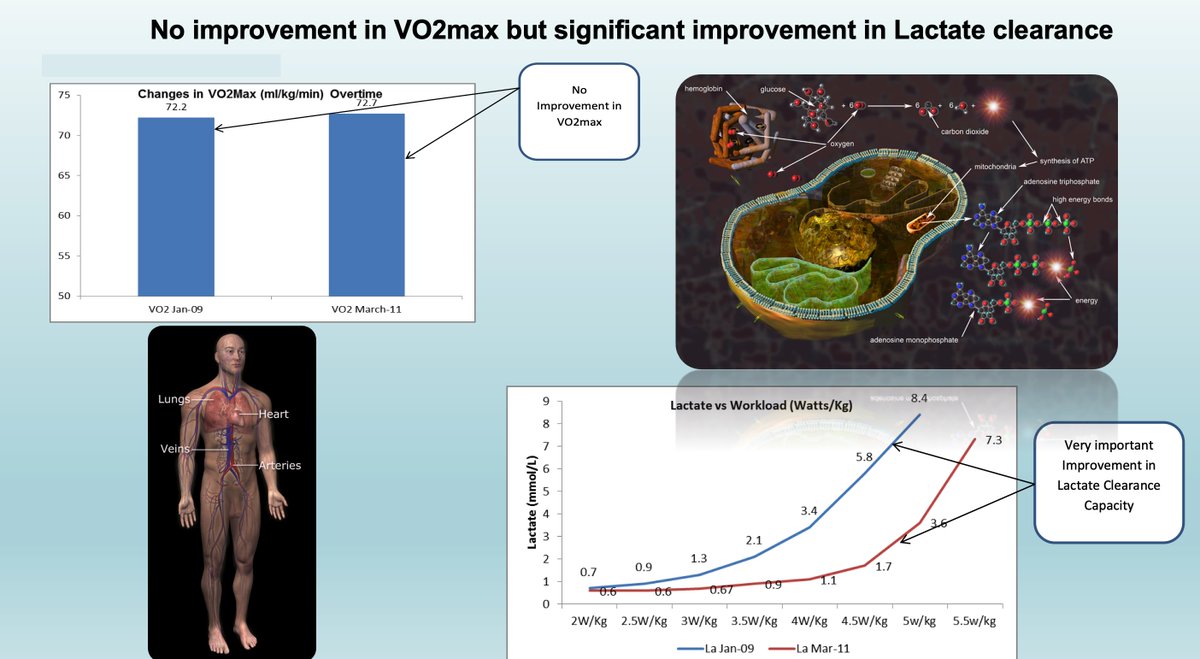
VO₂max is not the whole story. I’ve been showing this slide for the last 15 years. Same athlete, 2 years apart. VO₂max? Essentially unchanged. Performance? From average to one of the best. What changed was lactate!. VO₂max reflects cardiorespiratory adaptations to exercise, the size of the engine: heart, lungs, and oxygen delivery. Lactate reflects how efficiently that engine runs: mitochondrial function, cellular metabolism, substrate utilization, and metabolic flexibility. At the same workload, markedly lower lactate indicates greater mitochondrial efficiency and improved lactate clearance capacity. In other words, better metabolism. In elite sport, we’ve known for decades that VO₂max does not discriminate among top performers. Many athletes share similar VO₂max values, yet those with superior mitochondrial function are the ones who win. That difference is metabolic efficiency, and we assess it through lactate testing, not VO₂max testing. Suddenly VO₂max is being crowned as the gold standard for longevity. But metabolic health is one of the main focuses of longevity. If that is the case, the most meaningful marker should also be metabolic and Lactate provides a more precise window into mitochondrial function. Furthermore, unlike VO₂max, Lactate allows us to individualize and prescribe exercise with accuracy, something we’ve been doing with athletes for decades #lactate #metabolichealth #longevity
Iñigo San Millán tweet media
English
14
142
862
78.8K
James Juras
James Juras@james_juras·
@nickfrosst Could not agree more. This pragmatic approach is what is going to carry Cohere much farther than most Nick.
English
0
0
2
105
Nick Frosst
Nick Frosst@nickfrosst·
2025 is the year AI becomes background technology. People will quietly use LLMs every day to write, research and discuss what they care about. ASI debate is so 2024.
English
8
8
86
5.1K
James Juras
James Juras@james_juras·
While much effort has been expended to account for the counter intuitive claims that cognitive effort does not appear to significantly increase cerebral metabolic demands - eg Raichle 2010 - the evidence that this is the case may be somewhat flawed. Theriault et al 2023 elegantly makes the case that prev evidence (eg Sokoloff), due to its reliance on BOLD (and hence oxygen) as an index of activity, misses non-oxygen dependent metabolism of glucose and hence misses much of the resultant activity. In other words, the brain DOES likely use more energy when engaged in cognitively demanding tasks, we just haven’t been measuring it properly. pubmed.ncbi.nlm.nih.gov/37634556/
English
0
0
1
1.7K
Tom Froese, Embodied Cognitive Science Unit (ECSU)
The metabolic cost of brain activity goes up only slightly during tasks involving conscious cognitive effort. Why? It seems that such mental involvement is only the “tip of the iceberg” of the huge amount of unconscious processes that run in the background?
Trends in Cognitive Sciences@TrendsCognSci

The metabolic costs of cognition Review by Sharna D. Jamadar (@SharnaJamadar), Anna Behler (@Anna_NeuroSci), Hamish Deery (@DeeryHamish), & Michael Breakspear (@DrBreaky) Free access before March 4: tinyurl.com/47c9n65w

English
17
40
216
20.8K
James Juras
James Juras@james_juras·
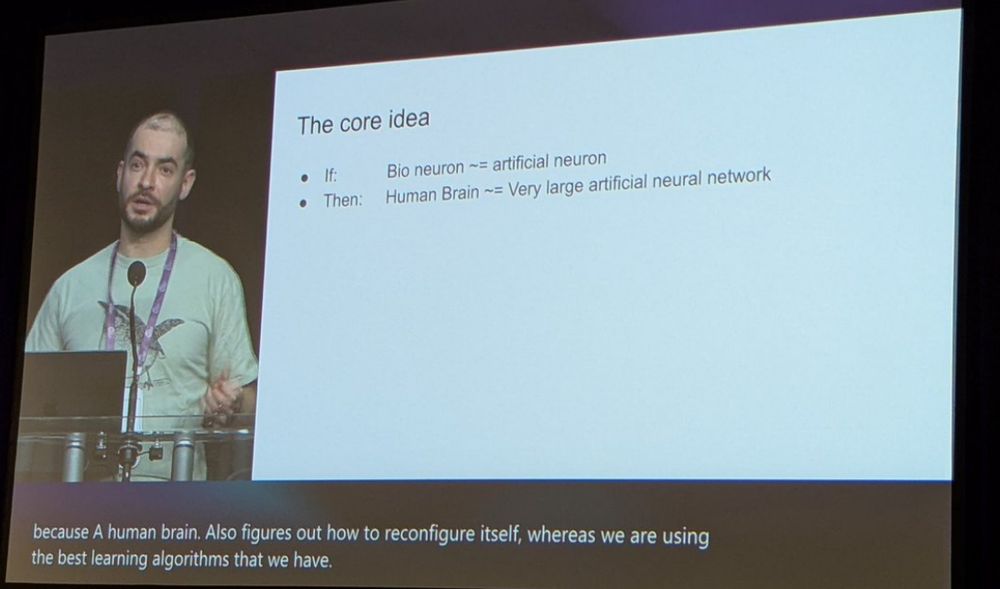
@BlueBir75555922 @PessoaBrain Perhaps hard to swallow for neuroscientists whose research is focused on ANNs. But many neuro ppl whose focus is physiology have been saying this for years.
English
0
0
2
116
Blue 🐋
Blue 🐋@BlueWhaleFlys·
@PessoaBrain It isn't all that ludicrous. Maybe for neuroscientists is a little harder to swallow, but if you understand what ANN are doing you can think that the FUNCTIONALITY of AN are similar to bio-N.
English
4
0
6
1.5K
Luiz Pessoa
Luiz Pessoa@PessoaBrain·
This would be funny if it weren't sad... Coming from the "giants" of AI. Or maybe this was posted out of context? Please clarify. I can't process this...
Luiz Pessoa tweet media
English
31
24
254
50.4K
Jose Antonio PhD
Jose Antonio PhD@JoseAntonioPhD·
"The addition of GAA to creatine has been shown to mitigate the initial increase in intracellular water induced by creatine alone in healthy men and exhibit a trend toward outperforming creatine in increasing body weight in women." The Impact of Short‐Term Supplementation With Guanidinoacetic Acid and Creatine Versus Creatine Alone on Body Composition Indices in Healthy Men and Women: Creatine‐Guanidinoacetic Acid Affects Body Composition - Baltic - 2024 - Journal of Nutrition and Metabolism - Wiley Online Library onlinelibrary.wiley.com/doi/full/10.11…
English
3
2
17
1.7K
James Juras retweetledi
Jonathan Birch
Jonathan Birch@birchlse·
How did people describe the brain before computer metaphors? Charles S. Sherrington in 1942 called it "that enchanted loom where millions of flashing shuttles weave a dissolving pattern."
English
84
484
4.5K
305.3K
James Juras retweetledi
Michael Levin
Michael Levin@drmichaellevin·
I'm not taking a position on this specific example (and I don't like a binary "is alive" anyway), but more generally: to make statements like this, we need a theory of how much/what kind/connected-how the bits need to be, right? Is there a specific one you like? We now have uncontroversially-alive animals with brain implants and prosthetics, hybrots, and eventually we'll see every combination in between (e.g., 50/50 mixes, subcellular chimeras, protein-level bots, etc). We need principled theories backing up the utility of terms such as "robot" and "alive", given all the possible combinations, which make explicit what kind of function or structure they require (i.e., what counts and why).
English
17
13
113
5.5K
James Juras
James Juras@james_juras·
@Jeukendrup Does this apply equally to supplements in the US and EU?
English
0
0
0
53
Asker Jeukendrup
Asker Jeukendrup@Jeukendrup·
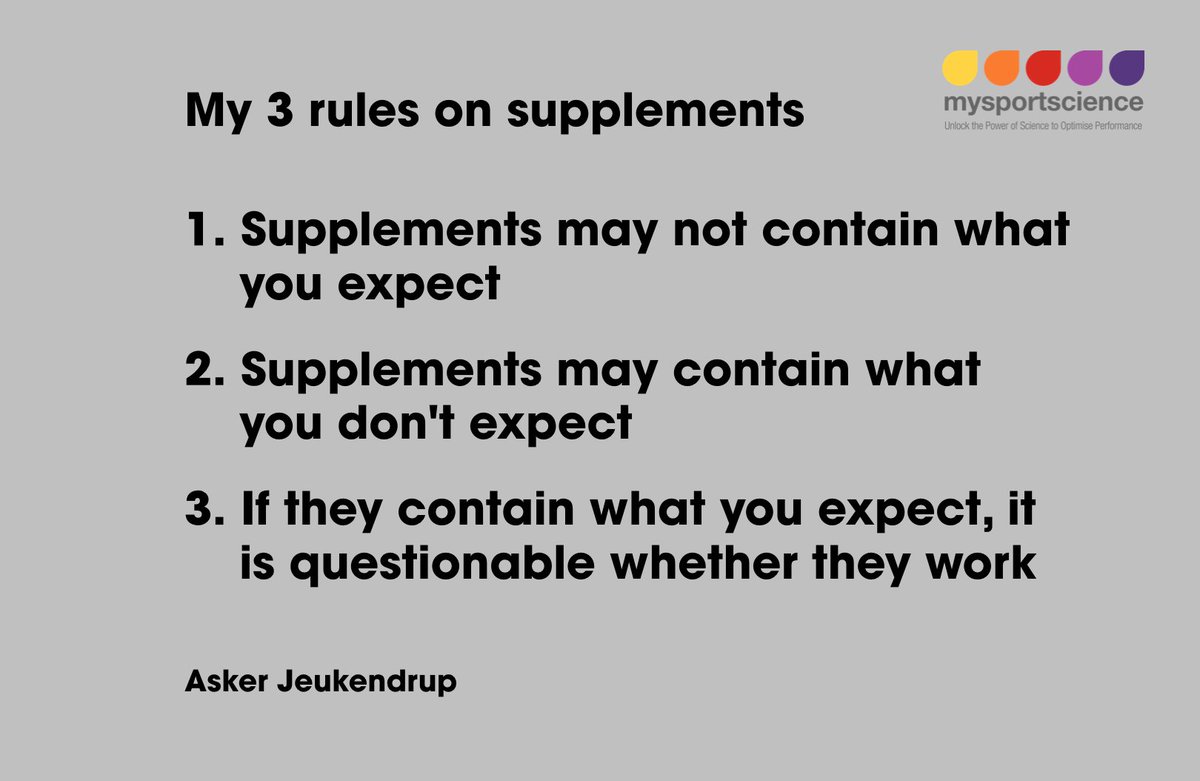
My 3 rules on supplements...
Asker Jeukendrup tweet media
English
4
16
73
6.6K
Stephen Seiler
Stephen Seiler@StephenSeiler·
@huund @ratcliri The first 40 seconds are definitely not free! They FEEL ok, but already by 90-100seconds in, they are at VO2 max. A fast start is critical though to be able to see the other boats and not get caught in their oar wash
English
4
0
10
604
Stephen Seiler
Stephen Seiler@StephenSeiler·
4 boats smashing 40 strokes a minute for 3 spots in the A final……6 minutes of hell….and the commentator talks about being “in threshold” at the halfway mark. 😩😩
English
12
1
144
22.3K
James Juras
James Juras@james_juras·
@Scienceofsport What is the advantage of CO over simply using a hypoxic chamber? Seems significantly more dangerous …
English
0
0
0
123
James Juras
James Juras@james_juras·
@MitoPsychoBio … and the ultimate role of the nervous system is the efficient allocation of resources both endogenously and exogenously.
English
1
0
1
39
Martin Picard
Martin Picard@MitoPsychoBio·
The proper allocation of energy is key to sustaining life and health
English
2
3
26
2.5K
Kording Lab 🦖
Kording Lab 🦖@KordingLab·
Feynman famously quipped "What I cannot create, I do not understand". Do you feel like this if you are a neuroscientist? The goal of our field is to (or let me know better options):
English
18
3
25
14.2K
Eli Sennesh
Eli Sennesh@EliSennesh·
@james_juras @PessoaBrain @KordingLab Hey, can I have some time to analyze my data and publish my existing results with Andre before you guys pursue this? My post-1st-postdoc track was intended to be writing up and publishing my mathematical model and then asking whether we could test it in c. elegans.
English
1
0
2
81
Kording Lab 🦖
Kording Lab 🦖@KordingLab·
There is an obvious deep link between evolution and rewards as experienced by animals. Basically fecundity from evolution gets approximated by rewards (e.g. food is yummy). An animal optimizing rewards thus does evolution's bidding. Which papers expose this idea?
English
13
7
62
15.2K
James Juras
James Juras@james_juras·
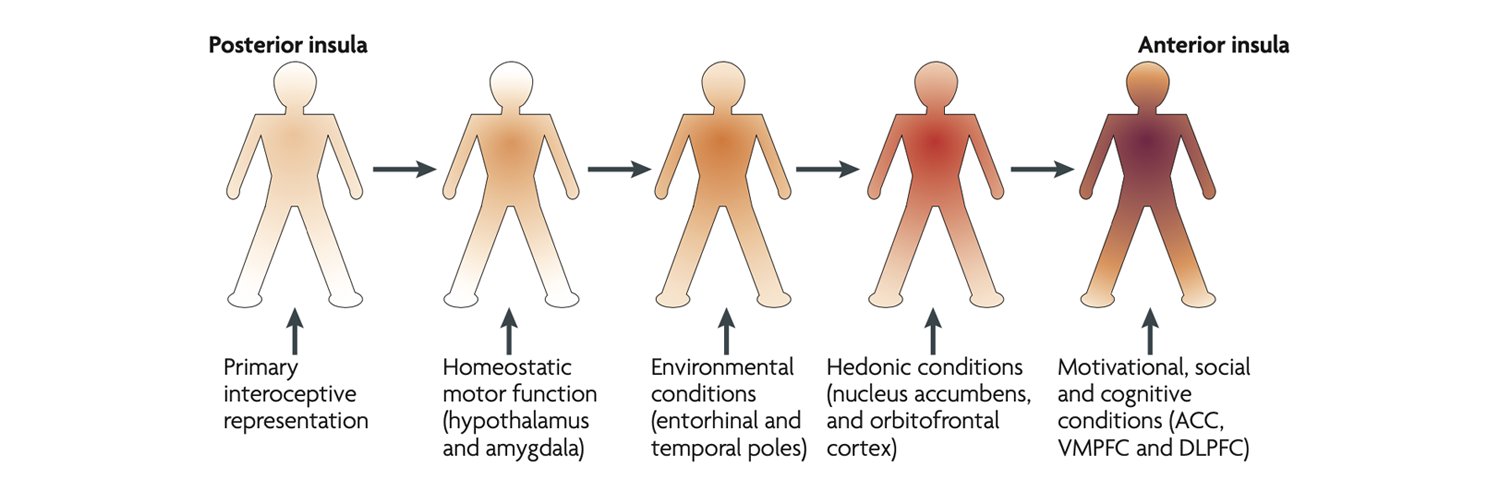
Couldn’t agree more. Have been thinking about it a lot lately and realized that valence being rooted in interoceptive-allostatic considerations (as they’re now starting to be referred to, e.g., by @EliSennesh), has been a central assumption I’ve made since at least the time I read Descartes’ Error. Interesting though that the field then took the concept more upwards to emotion (and to more confusion I think we can both agree) than the physiological mechanics underlying valence based processing. As such, I think there’s some very interesting work to be done in e.g., seeking to understand valence in much simpler model organisms.
English
1
0
3
56
Luiz Pessoa
Luiz Pessoa@PessoaBrain·
@james_juras @KordingLab This looks super interesting, will read when possible. To me *valence* needs to be a central component, a fulcrum as they say in the paper you shared. But as usual it gets confusing fast when "emotion" is invoked and discussed in a million difference senses.
English
1
0
2
68
James Juras
James Juras@james_juras·
@KordingLab Similarly, what is the link between evolution and deeper (e.g., thermodynamic) constraints and drives and do these then interact as constraints on cognition? Eric Smith has done some excellent work on the first question: iopscience.iop.org/article/10.108…
English
0
0
2
150
Luiz Pessoa
Luiz Pessoa@PessoaBrain·
@KordingLab But Konrad, it's a valance issue more generally no? Animals need to learn the spectrum of appetitive to aversive. So defensive systems are hugely important. But maybe you view that as -reward
English
2
0
2
1.3K
James Juras
James Juras@james_juras·
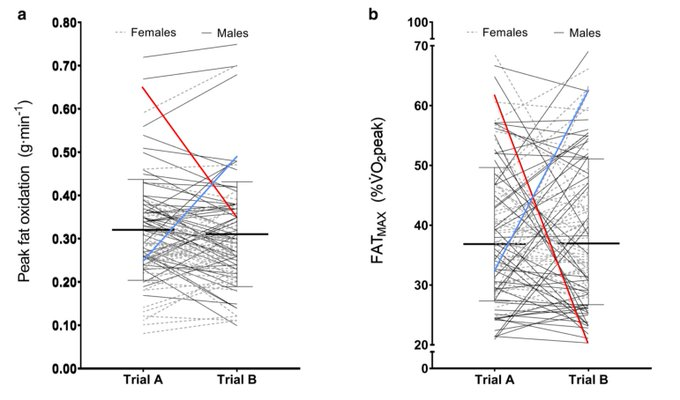
This is fascinating to me. I understand that day to day variability may potentially limit the usefulness of MFO in a performance context, but could it also be an indication of significant variation in the underlying physiological conditions that impact fat oxidation at the cellular level? As such, could studying this variation then help us to more deeply understand the minute physiological variations that in turn can have significant impacts on performance?
English
0
0
0
35