
James Phillips
832 posts

James Phillips
@jamesp206
Futures Trader
Sao Paulo, Brazil Katılım Ekim 2014
719 Takip Edilen136 Takipçiler


@timgill924 Artists imprint themselves on their work. Literature is no different.
AI, by its own admission, has no sense of self, doesn't experience real risk or loss, and has no personal history. It will never be human. How could it possibly say anything meaningful or profound?
English

Let’s be honest. All these people upset about college students using AI are just jealous they didn’t have it when they were in college. They just want them to suffer like they did. It’s an old story: “Well if I suffered, they should too.” It’s also a morally repugnant position.
English
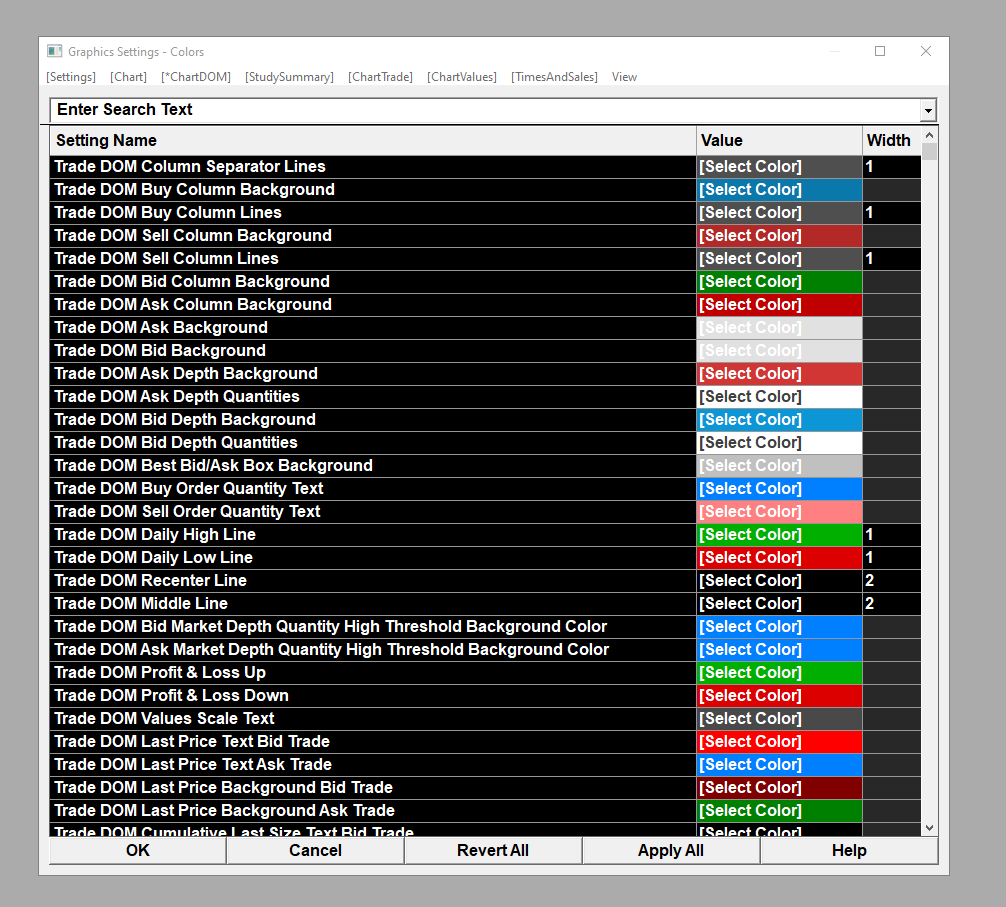
@ZigsOnTheBid Yeah that'll take some getting used to. First the new scale settings and now this 🤣
English

@jxshtalks @elitetakes_ As a hawks fan I hate to admit this, but yeah.
JSN not far behind though.
English

@elitetakes_ call me crazy, it’s still tae adams.
not the best seperator but in terms of route technique/footwork he’s still beautiful
English


86-year-old Lao Huan and his cormorant fishing partner on the Li River. Yangshuo, China by Peter Yan

English
@_sierratrading I’m watching if (and probably when) we break yesterday’s lows. Do they take it right back up like they did on Friday?
English
We have not had a great auction for bulls in the last 24hrs.
Many trapped buyers.
They need to start making some progress to the upside as things are looking bleak for them rn.
$nq_f $es_f
English
@yohawkgawk I’ll never understand how he didn’t make the pro bowl but whatever
English

I genuinely don’t think Jason Myers gets enough credit for how historic his season was. Over 200 total points including playoffs, broke a record held by LaDainian Tomlinson, and somehow it still barely gets talked about. One of the greatest seasons ever by a kicker.

English
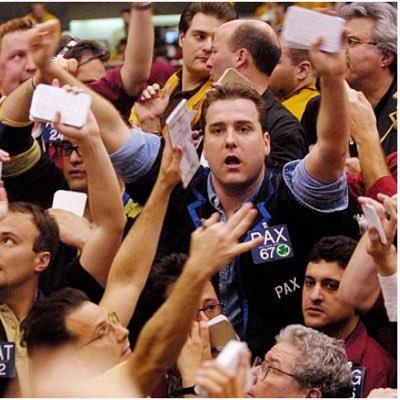
In the early part of my life I was at my peak from 28-33. I had no fear. I wasn’t afraid of failure. I wasn’t afraid of success I wasn’t afraid of people. The NQ grew quickly, I grew with it, I became a really big trader. With that came recognition from people that I did not need. I was extorted by a gangster, so I became friends with bigger gangsters. My 1rst marriage fell apart at the same time. Fear exploded in my life followed by existential crisis.
During this time of my life, I did all the things I warn you all against. I made every mistake you could imagine. I was trading so big I was paying 100-150k a month is e-mini execution fees while I was roughly 10% of NQ daily volume for my own accounts. Ughhh.
I took a lot of time off. Married rhe love if my life and began to get myself together. Then came 08(read my pinned tweet). Jens love for me was immeasurable and unconditional.
After MFG, i blew up. Started all over again at 44.
I can honestly say the peak of my career and my life has been from the age of 47 till now at 57. I live in faith, hope and love. My wife and I have never been more in love and happier. My 5 kids are all smart, faithful and loving people…. And they love to be with us. I not afraid of anything or anyone. I am at the point of my career that i am FREE!! I am at the point if my life where i am FREE. I am grateful to be at this point. I am grateful to share my experience, strenght and hope with you all.
I look forward to continue to be part of your journey to freedom.
God Bless you all
Uncle Pax.
JOHN DOE@LA61986230
@paxtrader777 How old were you at your peak?
English
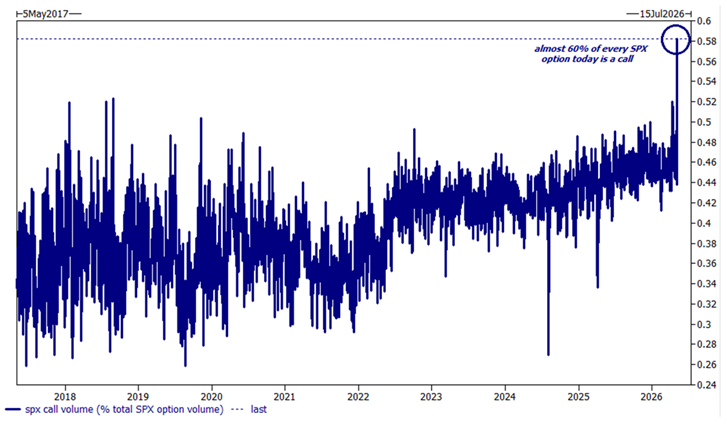
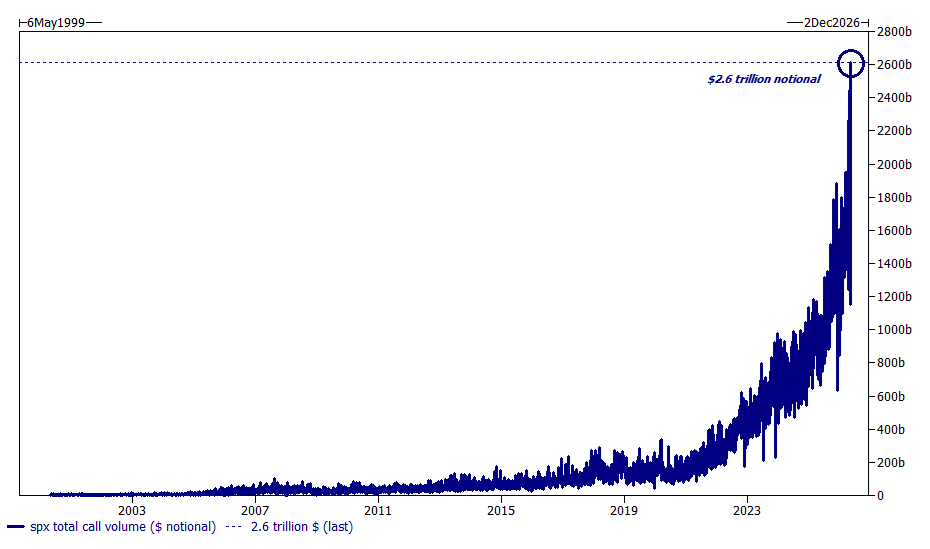
@BenKizemchuk That chart has been making the rounds on here and this is the only nuanced take I’ve seen. Thanks
English

Using 0DTE calls to manufacture exit liquidity:
The current tape increasingly reflects a liquidity-constrained, derivatives-driven regime in which large institutional players may be able to influence the marginal liquidity environment itself.
While the typical framework of 0DTE call buying forces dealers into short gamma hedging, the present setup characterized by suppressed volumes, structurally long aggregate dealer gamma, and weak breadth, suggests a more opportunistic strategy is at play.
In particular, the role of 0DTE options may be less about outright directional exposure and more about engineering transient liquidity that facilitates discreet inventory reduction. In a tape where trading volume has remained persistently depressed for weeks (eg SPY volume running ~40-50% below its 60-day average), relatively modest notional flows can have an outsized effect on index pricing via ES futures. Under these conditions, even within a broadly long-gamma regime, localized pushes can occur into key strikes, especially when large flows concentrate near-the-money. When these pockets emerge, dealer hedging can become temporarily procyclical, generating short bursts of mechanical upside.
This creates an exploitable structure for large funds. Rather than signaling a defensive intent through overt put buying or index selling, a fund can deploy concentrated 0DTE call flow to induce or amplify these short-lived hedging flows, effectively lifting the index at the margin. Crucially, because the impact is expressed primarily through index futures rather than broad cash equity demand, it creates a divergence between index performance and underlying participation. This allows the fund to systematically exit or reduce individual equity exposures into strength, using the derivatives-induced bid effectively as camouflage.
The key insight is that the options market, in a thin regime, has become a tool for shaping execution, instead of portfolio insurance. By initiating temporary demand via dealer hedging, funds can manufacture exit liquidity that does not originate from natural buyers of the underlying equities. This helps explain the current market bifurcation: rapid index appreciation toward all-time highs alongside deteriorating breadth, with a significant share of stocks failing to confirm the move. The index is likely being supported by flow-induced futures demand, while underneath, distribution persists largely unchecked.
The broader implication is that the market has been increasingly defined by a reflexive loop between derivatives flows and liquidity conditions, where price action has diverged significantly from underlying fundamentals or breadth. While this allows for controlled index levitation in the near term, it also introduces fragility. This is not a stable or continuously scalable strategy. If positioning shifts and dealer gamma flips more persistently negative in a still-thin tape, the same mechanics that currently support the market could rapidly reverse.
Notably, there are early signs that the regime may already be evolving, as evidenced by the recent emergence of a spot-up / vol-up dynamic, alongside a tentative rise in implied correlation from depressed levels. At sufficient scale, particularly in 0DTE tenors, continuous call demand can begin to lift implied volatility mechanically, as dealers are forced to reprice optionality higher to accommodate one-sided flow. The shift to a spot-up / vol-up regime suggests that incremental upside is no longer benign, but rather must contend with an increasing demand for convexity. Rising convexity demand itself can become self-fulfilling. Concurrently, the rise in implied correlation indicates that dispersion is compressing. This has typically been a precursor to more directional and less stable index behavior.
English
@Bernard79553832 @MLFootball @thewaynebreezie @vountee @captainseahawk @vinceayg_ @RamsHowse @RamsDEJ @Kyle_Odegard @BoBrack @updatecardinals @Tdrake4sports Agreed. Warner prob deserves to be up there too, to be fair
English

@MLFootball @thewaynebreezie @vountee @captainseahawk @vinceayg_ @RamsHowse @RamsDEJ @Kyle_Odegard @BoBrack @updatecardinals @Tdrake4sports I would swap Ernest Jones with Kittle and agree 100% with the names on the list.
English
@_sierratrading @ThiccTeddy I swear most of fintwit has never seen a DOM let alone know how it works
English
@ThiccTeddy Bro… 🤦 no….
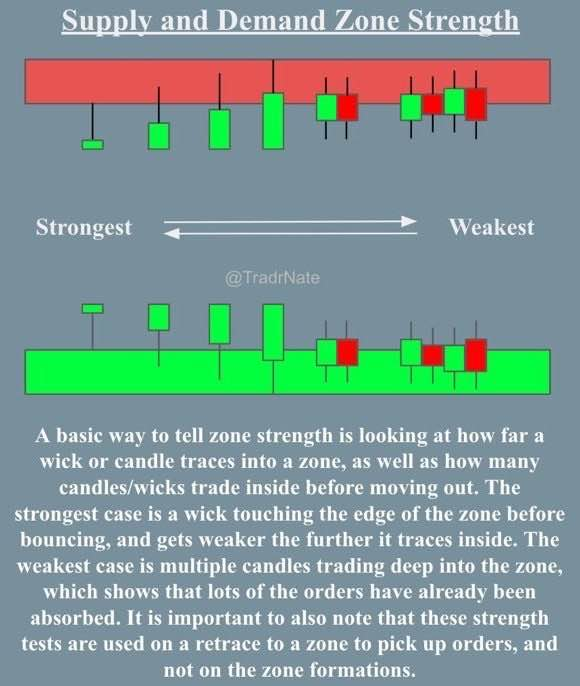
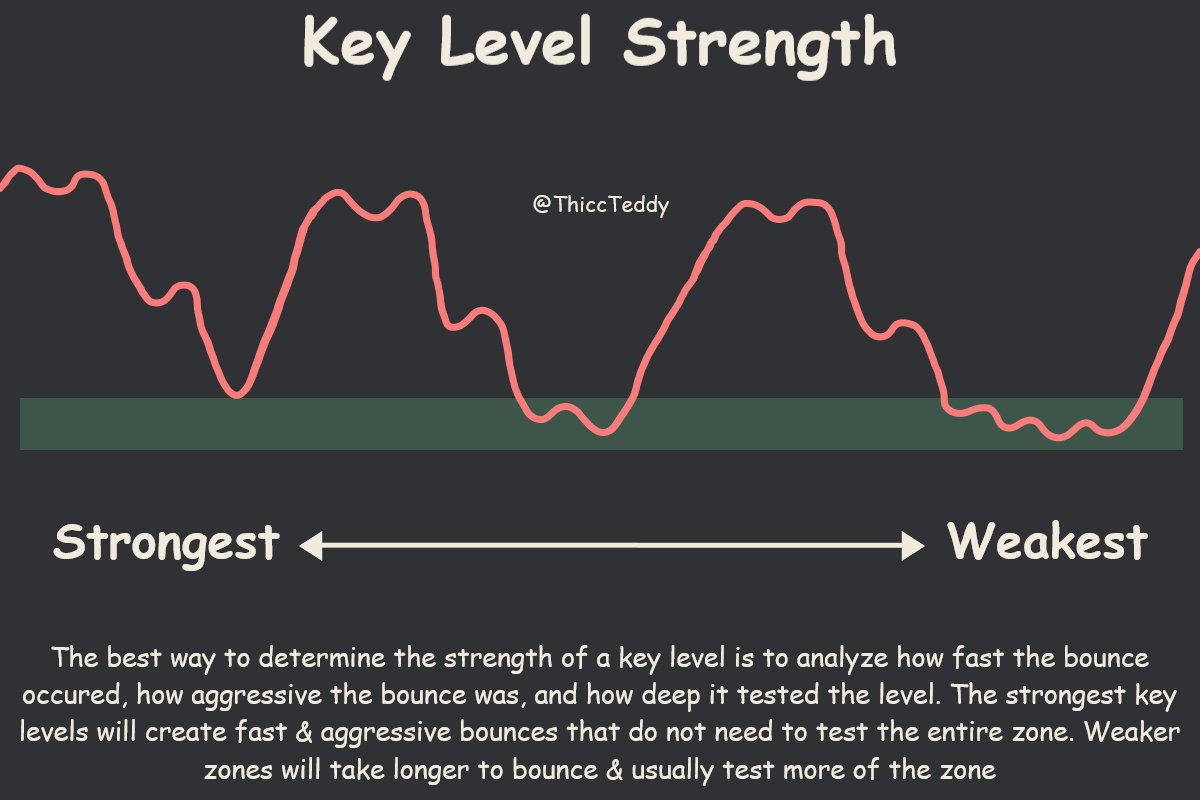
There’s so much more behind those “wicks” to be making blanket statements like this one.
English



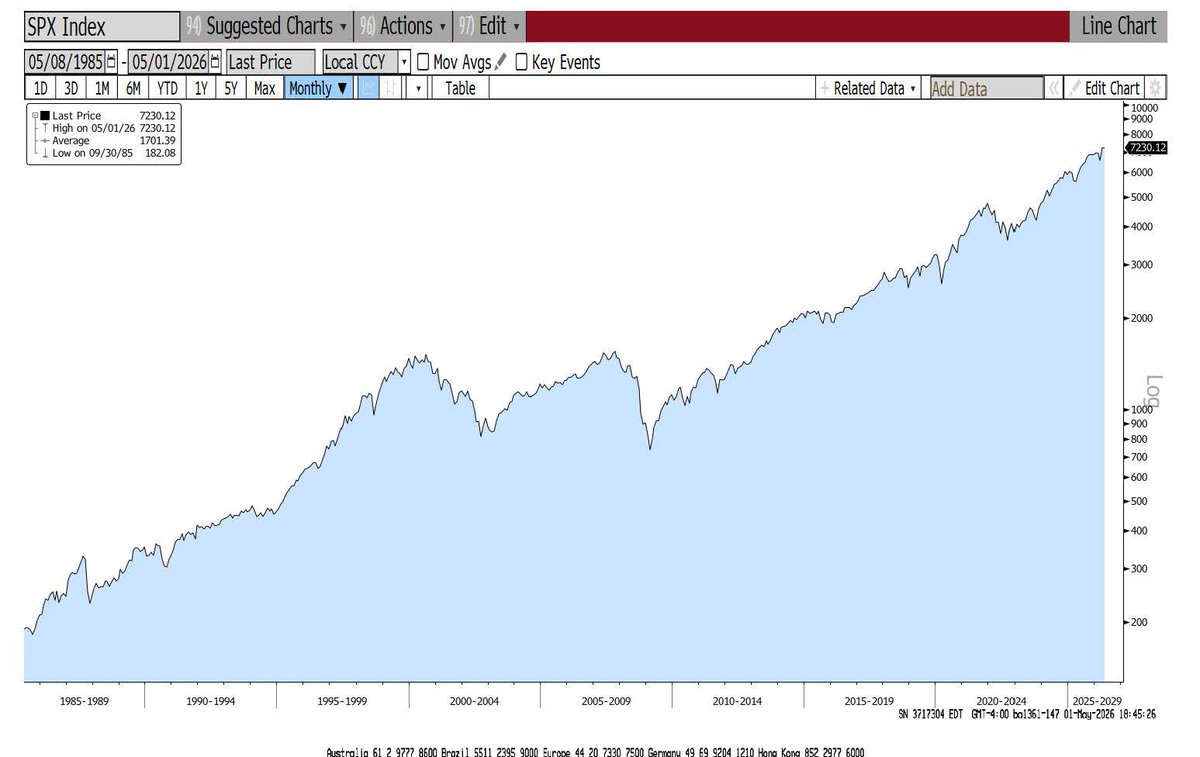
@FloydWilliams46 60m open is KEY
And if that candle reconfirms the bias (if any) on the daily candle, they are going to keep doing what they have been doing. Green week, green day, green 60 — all participants are taking the offer. There’s no other explanation.
(Exactly what happened today)
English

Most traders don’t realize this:
The hourly open resets positioning.
Every hour, inventory gets rebalanced.
Breakout traders enter late
Scalpers chase candles
Options traders hold hope
Then the new hour opens…
…and control shifts.
That’s why I don’t enter trades right before the next hourly candle.
I wait for the new open to show me:
Who’s trapped
Who’s defending
Who’s exiting
The hourly open is a control line.
Above it = buyers in control
Below it = sellers in control
Reclaim it = someone just got trapped
And trapped traders create expansion.
I also close trades before the hourly open because I’m not gambling on inventory resets.
I’m trading positioning mistakes — not predictions.
The next hour decides:
continuation
reversal
or trap
So I let the market reveal control first.
Paytience Pays. 🦈

English

@jamesp206 @MarketMike Consider using HYG:IEI as the durations are closer, it’s a cleaner credit risk view. HYG:TLT is high yield short duration and TLT is risk free long duration. HYG:TLT can give mixed/messy signals with both credit and yield curve moves.
English

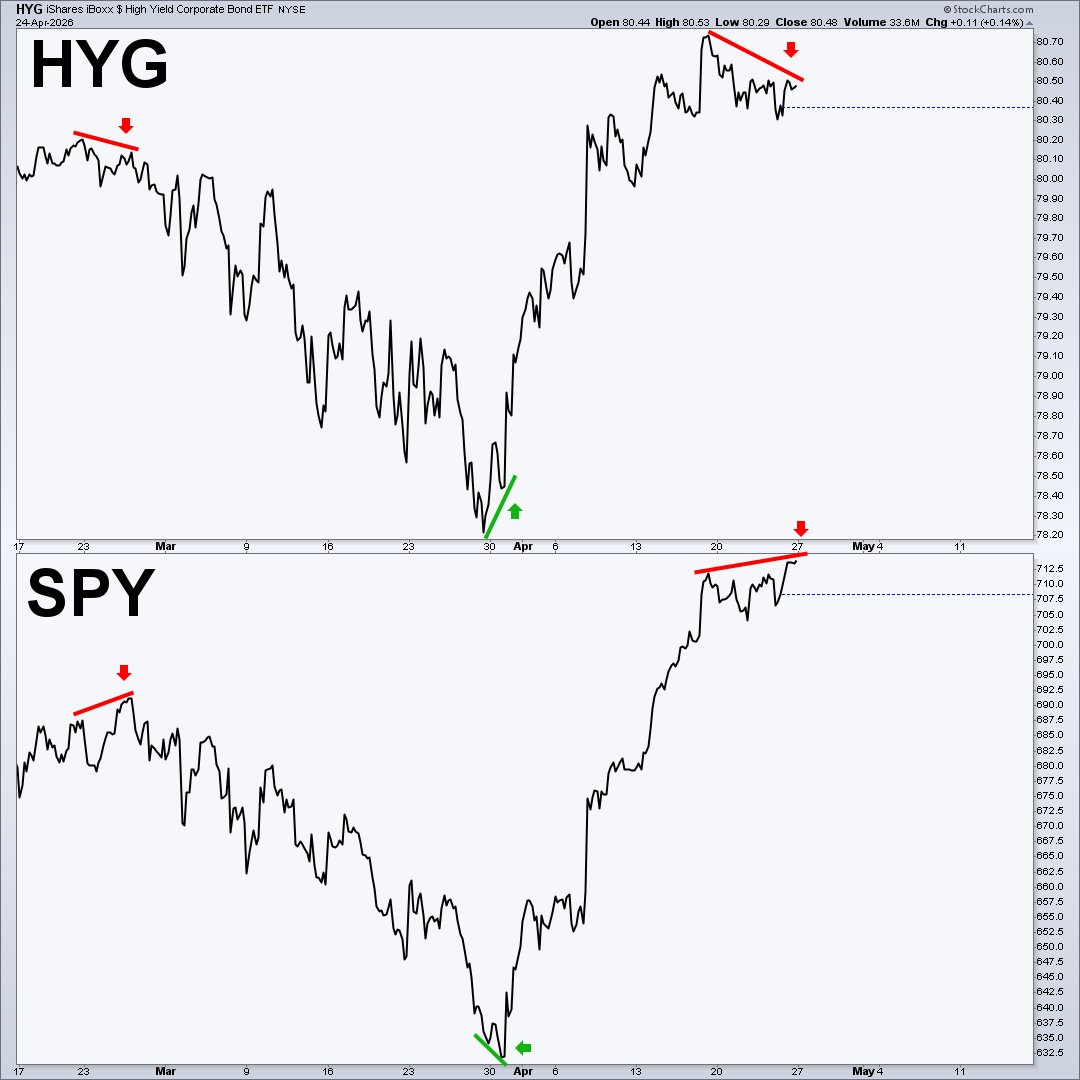
Almost nobody looks at this chart… but it’s one of my favorite ways to spot when a move may be running on fumes.
This is a simple 60‑minute line chart of high yield vs SPY. I use it to track divergences between “smart money” (bonds) and “dumb money” (equities).
The last major signal was at the bottom, high yield quietly started putting in a higher low while stocks were still puking. That helped flag the turn.
Fast‑forward to now: $JNK and $HYG are not confirming this latest push in SPY. Stocks are pressing higher, high yield is stalling out.
That doesn’t guarantee a top, but when "Smart Money" refuses to play along, I take note.
English

“I never thought I would be the victim of a gruesome anal goring,” says legendary veteran of a pastime with the highest likelihood of a gruesome anal goring
New York Post@nypost
Legendary Spanish matador can't eat, sleep and suffered 'immense pain' from gruesome rectal goring injury trib.al/MuCvcvk
English

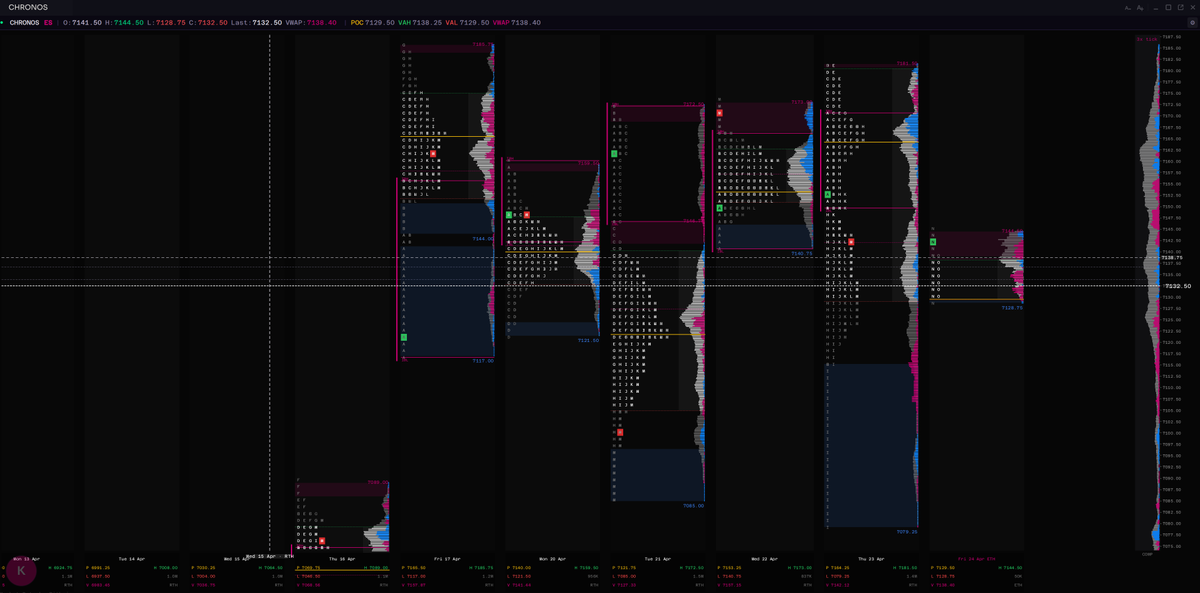
These are the cleanest market profile charts I've ever worked with. And I've traded with the best CQG and TT. In the next few weeks I will be giving away my @SierraChart sheets that I have honed over 10 years. Some followers will be given exclusive tools that render my levels for free. Soon I will be hanging up the gloves. But more to come from the @Trading_Balance very soon. #marketprofile #footprint
English

@jamesp206 @OflowTrading No idgaf you’ll and I will never know who is on the book, but we will be able to see every order place that’s all that matters
English
What is Absorption?
(video down below with example)
"absorption is when large passive participants take the other side of aggressive market orders without letting price continue in that direction. This tells you someone with size is sitting there passively buying everything being thrown at them. Instead of price accepting lower, it gets “absorbed.”
How can we understand this?
If price is rotating lower and you see repeated large sell orders (like 500+ contracts) hitting the bid but price fails to break down, that’s a key signal. It shows an effort vs result mismatch—a lot of selling effort, but no continuation. That’s often a warning that sellers are getting trapped.
Once those aggressive sellers realize price isn’t moving lower, they begin to slow down or flip positions. Meanwhile, the passive buyer who absorbed all that supply now has control. As selling dries up and buyers step in, price can move sharply higher—often accelerated by short covering, which is why these reversals can be fast and explosive. These areas also tend to become liquidity zones, since trapped traders will need to exit.
Quick sequence:
Controlled selling into lows
Large aggressive sell orders hit the bid repeatedly
Price stalls → passive buyer absorbing
Effort ≠ result (no breakdown)
Sellers lose control / get trapped
Sellers flip (short covering begins)
Price reverses sharply higher
Key tells on order flow:
High volume at lows/highs with no continuation
Bid getting hit hard but holding
Price not accepting below the level
Aggression failing → absorption, not initiation
Core idea:
If aggressive selling can’t push price lower, it’s likely being absorbed(by passive players)—and that often leads to a move the other way
English