Yash Jangid

3K posts

Yash Jangid banner
Yash Jangid

Yash Jangid

@jangidyash

Advocate | Qualified for the Call to Bar (E&W) | Alumni @QMSchoolOfLaw | Reposts are not endorsements.

Katılım Ekim 2014
132 Takip Edilen99 Takipçiler
Yash Jangid
Yash Jangid@jangidyash·
Stop pushing this conspiracy theory. If hypocrisy had a face, it would include right wing extremists and radicalised people. Post World War II, the world has become increasingly a globalised economy driven by market forces. A globalised system requires free movement of people and talent. Markets reward skills and qualifications, and if someone through sheer hard work gets a job that a business needs at a fair market price, what exactly is the issue? If anyone has a problem, they should advocate changing the economic structure from globalised to nationalistic. The obvious caveat is that such a shift would damage the economy. It is remarkable how such baseless claims are made without basic logic or reasoning, and then reduced to the argument that Indians are taking all the jobs.
English
0
1
6
510
Wall Street Mav
Wall Street Mav@WallStreetMav·
90% of the H-1B applications from India are fraudulent. Fake degrees, fake certifications. The “best and brightest” are not coming from India. However they are scamming the system to obtain 70% of the visas. Indians get into CEO positions in the USA, then start abusing their authority to further the scam to import more fraud from India.
Jake@JakeCan72

A U.S. consular officer in India adjudicated 51,000 H-1B visa applications. She denied 70 to 90 percent of those applications. Storefront after storefront selling fake degrees, fake transcripts, fake bank statements. Not edge cases. An industry. The pressure from politicians, she says — if the person isn’t a terrorist, issue the visa. She spent twenty years in the U.S. Foreign Service. Her name is Mahvash Siddiqui. She’s Indian-American. The best and brightest narrative didn’t survive contact with what she saw on the ground.

English
170
1.6K
4.9K
157.2K
Yash Jangid
Yash Jangid@jangidyash·
No one is invading anyone. That is a conspiracy being pushed by extremist politicians who rely on identity politics. At the same time, making racist remarks against Indians, one of the most prominent and influential communities globally, will only invite resentment and lead to a breakdown of cooperation, which is not healthy in an interdependent world. I am not trying to change your views which I believe is impossible as you're radicalised. But understand this clearly: people will not tolerate baseless and racist remarks indefinitely. Such behaviour eventually has consequences. History shows that power is never permanent. Even the strongest empires decline. Power is always temporary and shifts over time. The sooner this is understood, the better. Focus on being productive and respectful.
English
3
0
1
31
E
E@ElijahSchaffer·
The America you were raised in NO LONGER EXISTS 🇮🇳 • Sai Krishna • Skreekanth Reddy • Vijay Karthik • Muni • Colberg • Babu Venkat • Sree Majii Our 🇺🇸 politicians sold us out to H1B 3rd worlders who are replacing us in politics Texas is CONQUERED
English
504
2.2K
9.4K
483.1K
Yash Jangid
Yash Jangid@jangidyash·
@heart_canadian @ElijahSchaffer Go learn how to speak and write proper English, and learn some basic math. It will do you good. You might even find something productive to do instead of posting nonsense and disrespecting others.
English
1
0
0
34
Yash Jangid
Yash Jangid@jangidyash·
@BShaw28086 @ElijahSchaffer No one is asking for your opinion or your validation. We don't need to prove anything to you, so shut up and sit where you are. You're an uneducated and seemingly skillless person.
English
0
0
0
6
Yash Jangid
Yash Jangid@jangidyash·
Apart from name-calling and spewing venom with your words, what other contribution can you make? Nothing. You're even commenting anonymously, feeling the need to hide your identity — coward. Who needs your permission? Any Indian living in the West or elsewhere is living legally, paying their fair share of taxes, earning their bread through hard work, and is far more educated and civilised in the true sense than you, who are filled with racism. The world has changed; power dynamics have shifted. The only thing left is acceptance, which, if done early, will benefit you. Anyway, it doesn't bother us.
English
0
0
0
24
Alistair Athanasios
Alistair Athanasios@AthanasiosAli·
@jangidyash @ElijahSchaffer Lmao, "inciting hatred and racism", says the Indian from India. Scamming Clown. Stay the hell out of the West and our businesses. We don't want you here. That trick doesn't work on us, especially not when your nation is a giant toilet.
Alistair Athanasios tweet media
English
1
0
5
90
Yash Jangid
Yash Jangid@jangidyash·
Yes, I am Indian. I come from one of the world’s oldest civilisations, the world’s largest democracy, and an ancient religious tradition. Your country was “discovered” by Columbus, who was actually trying to reach India for trade but landed in America instead. A civilisation that gave the world zero. A civilisation that existed thousands of years ago. It is also believed by some that Jesus may have lived in India during his late teenage years or early twenties. A country that gave yoga and meditation.
English
9
0
130
2.1K
Yash Jangid
Yash Jangid@jangidyash·
Spewing hatred and racism against Indians will not help you. The world economy relies on market forces, so it is better to focus on gaining the required skills and qualifications. Using religious, cultural, and religious arguments to attract attention and polarise is an act of shamelessness.
English
0
0
3
379
Max Genest
Max Genest@realmaxgenest·
Indian Migrants Replacing Canadians at the 2028 Olympics
English
89
203
1.3K
29.1K
Yash Jangid retweetledi
Rajasthan Tourism
Rajasthan Tourism@my_rajasthan·
Jodhpur shines with timeless charm, crowned by the grandeur of Mehrangarh Fort and the serene beauty of Jaswant Thada. The Blue City, draped in calming hues, creates a mesmerizing contrast against the desert landscape, while the bustling Ghanta Ghar adds to its sonorous soul. #MehrangarhFort #Jodhpur #BlueCity #Rajasthan #RajasthanTourism
English
14
80
409
47.4K
NASA
NASA@NASA·
We see our home planet as a whole, lit up in spectacular blues and browns. A green aurora even lights up the atmosphere. That's us, together, watching as our astronauts make their journey to the Moon.
NASA tweet media
English
4.8K
66K
312.2K
75.7M
NASA
NASA@NASA·
Good morning, world! 🌎 We have spectacular new high-resolution images of our home planet, all of us looking back through the Orion capsule window at our Artemis II astronauts as they continue their journey to the Moon.
NASA tweet media
English
3.4K
29.2K
186.7K
9.1M
Yash Jangid
Yash Jangid@jangidyash·
Clarification Note: The above post is a mere translation of @SauravDassss’s post from English to Hindi. I'm not the author. स्पष्टीकरण: उपरोक्त पोस्ट @SauravDassss की अंग्रेज़ी पोस्ट का केवल हिंदी अनुवाद है। इसका लेखक मैं नहीं हूँ।
4
1
5
499
Yash Jangid
Yash Jangid@jangidyash·
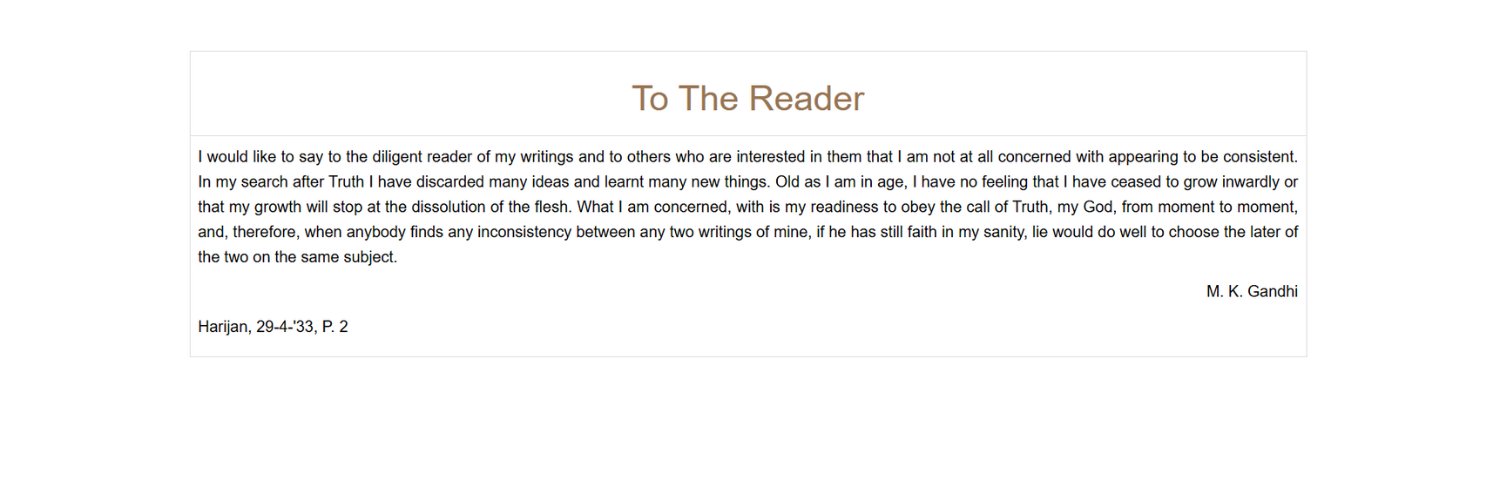
मुख्य न्यायाधीश सूर्यकांत की पीठ जिस तरह से #BengalSIR मामले को संभाल रही है, वह संस्था के लिए बिल्कुल भी शुभ संकेत नहीं देता। सर्वोच्च न्यायालय को अब पश्चिम बंगाल की राजनीति में एक सक्रिय खिलाड़ी के रूप में देखा जाने लगा है, खासकर आज के उस आदेश के बाद जिसमें NIA जांच का निर्देश दिया गया। SIR प्रक्रिया की संवैधानिकता तय करने और एक स्पष्ट रूप से पक्षपाती चुनाव आयोग की शक्तियों की सीमाएं निर्धारित करने के बजाय, मुख्य न्यायाधीश कांत की पीठ स्वयं इस प्रक्रिया के प्रशासन में रुचि लेती हुई दिख रही है, जिससे यह सुनिश्चित हो रहा है कि SIR बिना किसी बाधा के आगे बढ़े। पीठ के अन्य न्यायाधीश, न्यायमूर्ति जॉयमाला बागची और न्यायमूर्ति विपुल पंचोली ने भी इस दृष्टिकोण पर कोई आपत्ति नहीं जताई, जो और अधिक चिंताजनक है। पीठ की कुछ टिप्पणियां, जैसे कि “अगर कोई इस चुनाव में वोट नहीं दे पाता, तो अगले में दे सकता है,” गंभीर स्तर के मताधिकार से वंचित होने के आरोपों के प्रति एक अत्यंत लापरवाह दृष्टिकोण को दर्शाती हैं। इससे चिंताएं और गहरी हुई हैं और न्यायालय की आलोचना बढ़ी है। ऐसे समय में, जब चुनाव आयोग जैसे संवैधानिक संस्थान पर पूर्ण नियंत्रण की बात कही जा रही है, इस राजनीतिक रूप से संवेदनशील मामले में सर्वोच्च न्यायालय का यह रुख खतरनाक सवाल खड़े करता है कि वह अपनी भूमिका को किस दिशा में ले जा रहा है। AAP-दिल्ली संवैधानिक संकट में न्यायालय की निष्क्रियता और देरी ने ऐसे हालात पैदा किए, जिन्होंने एक राजनीतिक परिणाम को संभव बनाया जो भाजपा के पक्ष में गया। लेकिन बंगाल मामले में न्यायालय निष्क्रिय नहीं है, बल्कि सक्रिय रूप से ऐसे तरीके से जुड़ा हुआ है, जिसके गंभीर राजनीतिक परिणाम एक और विपक्ष-शासित सरकार के लिए हो सकते हैं। सर्वोच्च न्यायालय की भूमिका एक न्यायसंगत, निष्पक्ष और समान अवसर वाला वातावरण सुनिश्चित करना है, लेकिन बंगाल SIR मामले में यह उसके ठीक विपरीत होता हुआ प्रतीत हो रहा है। मुख्य न्यायाधीश कांत की पीठ को स्वयं को SIR प्रक्रिया की वैधता तक सीमित रखना चाहिए था, खासकर जब इसे चुनाव से कुछ ही महीने पहले अत्यधिक जल्दबाजी में शुरू किया गया, जिसके कारण बड़े पैमाने पर नागरिकों को मताधिकार से वंचित होने की स्थिति बनी। इसके बजाय, न्यायपालिका, जिसमें राज्य की न्यायपालिका भी शामिल है, एक राजनीतिक रूप से संवेदनशील प्रशासनिक प्रक्रिया में उलझती हुई दिख रही है। SIR प्रक्रिया में न्यायिक अधिकारियों का उपयोग, उच्च न्यायालय के न्यायाधीशों को अपीलीय प्राधिकरण के रूप में नियुक्त करना आदि इस बात का सबसे बड़ा संकेत है कि सर्वोच्च न्यायालय किस तरह से “खाप पंचायत” की तरह संचालित हो रहा है। यह सब न्यायपालिका की उस संस्था को गंभीर नुकसान पहुंचाने का जोखिम पैदा करता है, जिसकी विश्वसनीयता अंततः जनविश्वास और निष्पक्षता की धारणा पर टिकी होती है। जब यह छवि क्षीण होती है, तो केवल अराजकता शेष रह जाती है। मुख्य न्यायाधीश कांत की पीठ ने इन गंभीर चिंताओं की पूर्णतः अनदेखी की है। यह भी उतना ही चिंताजनक है कि बार, जिसका दायित्व पीठ पर संतुलन बनाए रखना है, इस पूरे मामले में मौन बना हुआ है। बंगाल चुनावों का परिणाम चाहे जो भी हो, इस पूरे प्रकरण में सर्वोच्च न्यायालय के न्यायाधीशों की भूमिका भुलाई नहीं जाएगी। Hindi translation @SauravDassss
Saurav Das@SauravDassss

The manner in which Chief Justice Surya Kant’s bench is handling the #BengalSIR matter does not augur well for the institution at all. The apex court is increasingly being perceived as an active player in West Bengal’s politics, especially after today’s order directing an NIA investigation. Instead of deciding the constitutionality of the SIR process and laying down clear limits on the powers of a clearly partisan Election Commission, Chief Justice Kant’s bench appears to have taken a keen interest in ADMINISTERING the process itself, effectively ensuring that the SIR proceeds without any hindrance. The companion judges on the bench, Justices Joymala Bagchi and Vipul Pancholi, have taken no objection to this approach, which is all the more disquieting. Certain observations from the bench, for instance, one not able to vote in this election can vote in the next, reflects a totally cavalier approach to serious allegations of mass disenfranchisement. These have only deepened concerns and invited further criticism of the court. At a time when the capture of a constitutional institution like the Election Commission is complete, the manner in which the Supreme Court has proceeded in this politically fraught matter raises dangerous questions about the role it is choosing to play. The Court’s INACTION and delay in the AAP-Delhi constitutional crisis created conditions that enabled a political outcome favourable to the BJP. In the Bengal matter, however, the Court is not inactive, but ACTIVELY engaged in a manner that may have significant political consequences for yet another opposition-led government. The Supreme Court’s role is to create a just, fair, and equal level playing field to the greatest extent possible. In the Bengal SIR case, the Court is being seen as creating something totally opposite. Chief Justice Kant’s bench ought to have confined itself to deciding the legality of the SIR process, particularly given that it was initiated just months before an election with great hurry, leading to mass disenfranchisement of citizens, rather than allowing the judiciary, including the state judiciary, to become entangled in the administration of a politically sensitive process. The use of judicial officers for the SIR process, the appointment of High Court judges as appellate authorities, etc. is the greatest sign of how the Supreme Court is being run like a Khap Panchayat. These do nothing but risk doing grave disservice to the institution of the judiciary, whose credibility ultimately rests on public trust and a perception of unimpeachable integrity. Once that image erodes, only chaos reigns supreme. Chief Justice Kant’s bench have totally ignored and disregarded these dangerous concerns. Might I add that equally troubling is the silence of the Bar, which is meant to act as a check on the Bench. Whichever way the Bengal elections unfold, the role of the Supreme Court judges in this episode will not be forgotten.

हिन्दी
13
106
301
12.8K
Dr Nishikant Dubey
Dr Nishikant Dubey@nishikant_dubey·
पिछले हफ़्ते मीडिया से बात करते हुए मैने नेहरु गॉंधी परिवार के कारनामों के क्रम में पूर्व मुख्यमंत्री भारत के अग्रणी नेताओं में स्थान रखने वाले आदरणीय श्री बीजू पटनायक जी के संदर्भ में मेरी बातों से ग़लत अर्थ निकाला गया । पहले तो यह वक्तव्य मेरा व्यक्तिगत है। नेहरु जी के उपर मेरे विचार को बीजू बाबू के उपर समझा गया । बीजू बाबू हमारे लिए हमेशा ऊँचे क़द के Statesman रहे है और रहेंगे । मेरे वक्तव्य से यदि भावनाएं आहत हुई हैं तो मैं बेशर्त क्षमा चाहता हूँ
हिन्दी
643
334
1.9K
366.3K
Yash Jangid retweetledi
Internet Freedom Foundation (IFF)
Internet Freedom Foundation (IFF)@internetfreedom·
New IT Rules could expand censorship, target ordinary users, and retain your data longer. This affects all of us. Speak up.
English
57
1.5K
2.9K
145.5K
Yash Jangid
Yash Jangid@jangidyash·
@internetfreedom भारत में अभिव्यक्ति की आज़ादी को बनाये रखने के लिए यह एक ज़रूरी पोस्ट हैं। मेरा एक विनम्र सुझाव रहेगा की आप इन ज़रूरी पोस्टों को हिंदी और स्थानीय भाषाओं में भी प्रकाशित करे जिससे ऐसी ज़रूरी सूचनाएँ भारत के कोने-कोने में फेल सके और राष्ट्रीयस्तर पर चर्चा का विषय बन सके।
हिन्दी
0
0
1
324
Internet Freedom Foundation (IFF)
Internet Freedom Foundation (IFF)@internetfreedom·
Sound the Alarm : IFF’s First Read on MeitY's Draft IT Rules Second Amendment, 2026 New Delhi, 30 March 2026 On 30 March 2026, the Ministry of Electronics and Information Technology published proposed amendments to the IT Rules, 2021, inviting public comments by 14 April, a comment period of barely fifteen days for changes with far reaching consequences for free speech and intermediary governance in India. We have conducted a quick review of the draft amendments. Despite being presented as "clarificatory and procedural," they represent a dangerous expansion of executive power over online speech. We wish to state at the outset that these proposed amendments need to be immediately withdrawn and every member in our citizenry should demand their roll back and stand with the Constitution of India. These proposed amendments come at a time of fear and increased government directed censorship, especially of online political speech that includes parody and satire of the government, including the Prime Minister. In brief the five changes are listed below: 1. Rule 3(1)(g) and 3(1)(h): Insertion of phrases within existing clauses making data retention obligations under the IT Rules additional to retention requirements under any other law. 2. Rule 3(4): Insertion of a new clause that mandates intermediary compliance with MeitY-issued clarifications, advisories, directions, SOPs, codes of practice, and guidelines, making such compliance a condition for retaining safe harbour under Section 79 of the IT Act. These are not anchored to the rule making powers of the IT Act, 2000 and provide uncanalised power to MEITY despite it stating otherwise. 3. Rule 8(1) proviso: A substitution in the proviso that expands applicability of MIB’s oversight mechanism in Part III of the rules to: (1) intermediaries and (2) users who are not “publishers” and post/share news and current affairs content online. This oversight mechanism contains the blocking powers of MIB by way of Rule 14 (Inter-Departmental Committee), Rule 15 (Procedure for issuing directions to block), and Rule 16 (Emergency blocking provisions). 4. Rule 14(2) : A substitution that expands the scope of the IDC from hearing "complaints or grievances" to hearing "matters", including those referred by the Ministry of Information and Broadcasting. 5. Rule 14(5) : Replaces "complaints or grievances" with "the matter" in relation to IDC examination and recommendations. A massive expansion of an unconstitutional censorship and regulatory power First and most concerningly, Rule 3(4) creates a sweeping power for MeitY to issue binding instruments which are not anchored in law such as clarifications, advisories, directions, SOPs, codes of practice, and guidelines that intermediaries must comply with as a condition of safe harbour under Section 79 of the IT Act. The Supreme Court's 2015 judgment in Shreya Singhal v. Union of India (2015) 5 SCC 1, remains the foundational precedent governing intermediary liability. It constrains the proposed amendments in several ways. First, the court read down Section 79(3)(b) to require that "actual knowledge" of unlawful content must come through a court order or government notification. Any Rule 3(4) making MeitY, "clarifications, advisories, directions, SOPs", lower the constitutional threshold for intermediary due diligence obligations. Further, the settled principle in Indian administrative law, reaffirmed in Indian Express Newspapers v. Union of India (1985) 1 SCC 641 and Confederation of Ex-Servicemen Associations v. Union of India (2006) 8 SCC 399, is that delegated legislation must remain within the four corners of the parent statute. It is important to note that the rule-making power under Section 87(1) of the IT Act is confined to, "carry[ing] out the provisions" of the Act. Section 87(2)(zg) authorizes rules for intermediary guidelines under Section 79(2), and Section 87(2)(z) for blocking procedures under Section 69A(2). Justice Chandurkar's judgement in the Kunal Kamra case clearly found the FCU amendment was not properly referable to either provision. Hence, any Rule 3(4) mandating compliance with MeitY advisories would face identical challenges since they create substantive new obligations not contemplated by Sections 79 or 87. Even though Rule 3(4)(b)(ii) states that such, “advisories” etc. need to, “clearly specify the statutory provision or legal basis under which it is issued”, since these are not required to be published or made public there is every likelihood these will be issued with secrecy and hence may just in a tautological manner refer back to Section 79(3)(b) of the IT Act. This is similar to a logical fallacy in which it is clearly observable that a student is cheating on an exam who then claims that they may be permitted to continue cheating since they are stating at the same time they are not cheating. The practical effect of Rule 3(4) is that intermediaries face a perpetual compliance threat. Any failure to comply with any MeitY-issued instrument, however vague, however rapidly issued may cost them their safe harbour. The response for an intermediary is over-compliance and over-censorship. Circumventing existing stay orders The original proviso to Rule 8(1) stated that Part III applied to intermediaries only "for the purposes of rules 15 and 16" i.e., content blocking directions and emergency blocking. The amended proviso now extends this to Rule 14, bringing intermediaries and user-generated news/current affairs content under the jurisdiction of the Inter-Departmental Committee. Under Rules 9(1) and 9(3) of the 2021 IT Rules, there is a Code of Ethics compliance requirement and the three-tier grievance redressal mechanism, both of which were stayed by the Bombay High Court on 14 August 2021 as prima facie violative of Article 19(1)(a) and ultra vires the IT Act. On the oversight mechanism in Rules 14, 15, and 16, the Bombay High Court granted the petitioners to seek relief on this rule when an Inter Departmental Committee is established. The Madras High Court affirmed this stay as having pan-India effect in its order of 16 September 2021 in T.M. Krishna v. Union of India, observing that "an oversight mechanism to control the media by the government may rob the media of its independence." Both these cases, along with other cases challenging various provisions of the 2021 IT Rules, are now pending adjudication before the Delhi High Court. The expansion of Rule 8(1) to cover Rules 14, 15, and 16 is an attempt to expand the blocking powers of MIB to both intermediaries and users who are not “publishers” but post news and current affairs content online. The IDC can now examine "matters" relating to user-generated news content on intermediary platforms without the Code of Ethics framework having been adjudicated as constitutional; the government effectively obtains the content oversight machinery that three High Courts found illegal, through a different procedural door. Transforming the IDC from Grievance Body to Censorship Apparatus The original Rule 14(2) required the IDC to hear "complaints regarding violation or contravention of the Code of Ethics." The amended version removes this requirement entirely. The IDC now hears: (a) grievances arising from decisions at Level I or II; or (b) "matters" referred to by the Ministry. Clause (b) is unconstrained since, (a) there is no requirement that the "matter" arise from a complaint, (b) no requirement that the "matter" relate to a Code of Ethics violation; and (c) no requirement that the affected party be heard before the referral. The Ministry of Information and Broadcasting can, on its own motion, refer any content-related "matter" to the IDC. The cumulative effect of the amendments to Rules 8 and 14 is to reconstruct the oversight machinery that the Bombay and Madras High Courts found constitutionally suspect, in a form designed to evade the existing interim orders. The IDC, previously limited to the three-tier complaints process under the stayed Rules 9(3), 12, and 13 framework, now operates as a free-standing censorship committee that can take up "matters" referred by the executive. Increased user surveillance through mandatory data retention directions Insertion of phrases within existing clauses making data retention obligations under the IT Rules additional to retention requirements under any other law. For instance, the mandatory data retention of user data beyond 180 days within Rule 3(1)(g) and 3(1)(h) may be prescribed for longer periods and other purposes raising risks of surveillance and even potentially data leaks of sensitive data that is stored for longer periods of time. Government mandates for data retention as to their legal authority and hence period of retention will be beyond those contained under the IT Act. SOS for Digital Rights IFF urges an urgent rollback! We are alarmed by the continuing expansion of unchecked executive power that is opposed to the Constitution of India. The present actions of MEITY smack of digital authoritarianism and we call on them to withdraw these proposed amendments. The proper course is to await judicial determination of the pending challenges, respect interim protections granted by constitutional courts, and pursue regulatory objectives through parliamentary legislation rather than subordinate instruments that exceed the parent statute. If not withdrawn, IFF will file a detailed response before the comment deadline. We call upon all stakeholders to submit their objections before 14 April 2026 at itrules.consultation@meity.gov.in
Internet Freedom Foundation (IFF) tweet media
English
43
1K
1.6K
146K
Press Trust of India
Press Trust of India@PTI_News·
Rupee breaches 95-level against US dollar for first time.
English
89
231
1.2K
96.3K