Jason Dole
2.8K posts

Jason Dole
@jasondole
Cryptocurrency Advocate, Entrepreneur, Science, Sports fanatic. The views I express on here are my own. Retweets are not endorsements. $Bitcoin
Chicago Katılım Mayıs 2008
7.5K Takip Edilen1.1K Takipçiler
Jason Dole retweetledi

LLM Knowledge Bases
Something I'm finding very useful recently: using LLMs to build personal knowledge bases for various topics of research interest. In this way, a large fraction of my recent token throughput is going less into manipulating code, and more into manipulating knowledge (stored as markdown and images). The latest LLMs are quite good at it. So:
Data ingest:
I index source documents (articles, papers, repos, datasets, images, etc.) into a raw/ directory, then I use an LLM to incrementally "compile" a wiki, which is just a collection of .md files in a directory structure. The wiki includes summaries of all the data in raw/, backlinks, and then it categorizes data into concepts, writes articles for them, and links them all. To convert web articles into .md files I like to use the Obsidian Web Clipper extension, and then I also use a hotkey to download all the related images to local so that my LLM can easily reference them.
IDE:
I use Obsidian as the IDE "frontend" where I can view the raw data, the the compiled wiki, and the derived visualizations. Important to note that the LLM writes and maintains all of the data of the wiki, I rarely touch it directly. I've played with a few Obsidian plugins to render and view data in other ways (e.g. Marp for slides).
Q&A:
Where things get interesting is that once your wiki is big enough (e.g. mine on some recent research is ~100 articles and ~400K words), you can ask your LLM agent all kinds of complex questions against the wiki, and it will go off, research the answers, etc. I thought I had to reach for fancy RAG, but the LLM has been pretty good about auto-maintaining index files and brief summaries of all the documents and it reads all the important related data fairly easily at this ~small scale.
Output:
Instead of getting answers in text/terminal, I like to have it render markdown files for me, or slide shows (Marp format), or matplotlib images, all of which I then view again in Obsidian. You can imagine many other visual output formats depending on the query. Often, I end up "filing" the outputs back into the wiki to enhance it for further queries. So my own explorations and queries always "add up" in the knowledge base.
Linting:
I've run some LLM "health checks" over the wiki to e.g. find inconsistent data, impute missing data (with web searchers), find interesting connections for new article candidates, etc., to incrementally clean up the wiki and enhance its overall data integrity. The LLMs are quite good at suggesting further questions to ask and look into.
Extra tools:
I find myself developing additional tools to process the data, e.g. I vibe coded a small and naive search engine over the wiki, which I both use directly (in a web ui), but more often I want to hand it off to an LLM via CLI as a tool for larger queries.
Further explorations:
As the repo grows, the natural desire is to also think about synthetic data generation + finetuning to have your LLM "know" the data in its weights instead of just context windows.
TLDR: raw data from a given number of sources is collected, then compiled by an LLM into a .md wiki, then operated on by various CLIs by the LLM to do Q&A and to incrementally enhance the wiki, and all of it viewable in Obsidian. You rarely ever write or edit the wiki manually, it's the domain of the LLM. I think there is room here for an incredible new product instead of a hacky collection of scripts.
English
Jason Dole retweetledi


Great article to read for those not living in the AI trenches everyday…
Gavin Purcell@gavinpurcell
English

Jason Dole retweetledi

Folks. Can I explain something about world models? Seems like today might be a good day for that.
Advances in large-scale “world models” — whether developed by partners like Google or others — materially expand the frontier of interactive content creation. These models can generate high-quality, interactive, video-like experiences from natural language or minimal input.
Today, they are primarily editable through prompting, which limits the level of determinism and precision required for production-grade game mechanics. As a result, their outputs remain probabilistic and non-deterministic, making them unsuitable on their own for games that require consistent, repeatable player experiences.
Rather than viewing this as a risk, we see it as a powerful accelerator. Video-based generation is exactly the type of input our Agentic AI workflows are designed to leverage—translating rich visual output into initial game scenes that can then be refined with the deterministic systems Unity developers use today. Our agents already generate high-quality scenes from static video. Interactive, camera-controllable video from world models would further enhance this pipeline and materially improve the fidelity and speed of early-stage content creation. We believe this represents a meaningful step forward for AI-driven development across the industry.
Unity’s role is to operationalize these advances. Outputs from world models are ingested into Unity’s real-time engine, where they are converted into structured, deterministic, and fully controllable simulations. Within Unity, creators define physics, gameplay logic, networking, monetization, and live-operations systems to ensure consistent behavior across devices and sessions.
This combination enables developers to move faster from concept to scalable product: AI accelerates environment and asset generation, while Unity provides the execution layer that transforms generated content into reliable, monetizable experiences.
As a result, world models expand content supply and reduce development friction, while Unity remains the system of record for runtime, distribution, and long-term operations. This dynamic broadens Unity’s addressable market and reinforces its central role in the interactive ecosystem.
English
Jason Dole retweetledi

Jason Dole retweetledi

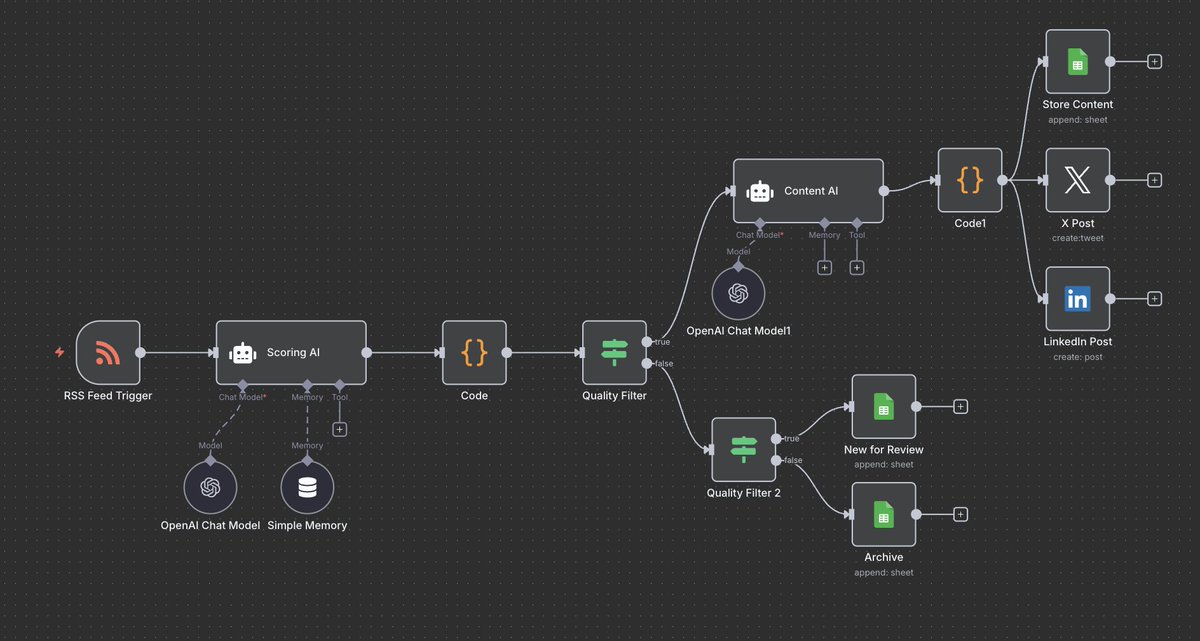
AI runs my content strategy now.
Built a system that watches industry news every hour, filters junk articles, and auto-generates Twitter threads plus LinkedIn posts.
AI scores each piece for quality before writing anything.
High scores get published automatically. Medium scores hit my review queue. Garbage gets archived.
Never scrambling for post ideas at 11pm anymore.
Comment "NEWS" and I'll DM it to you (must be following)

English

Jason Dole retweetledi

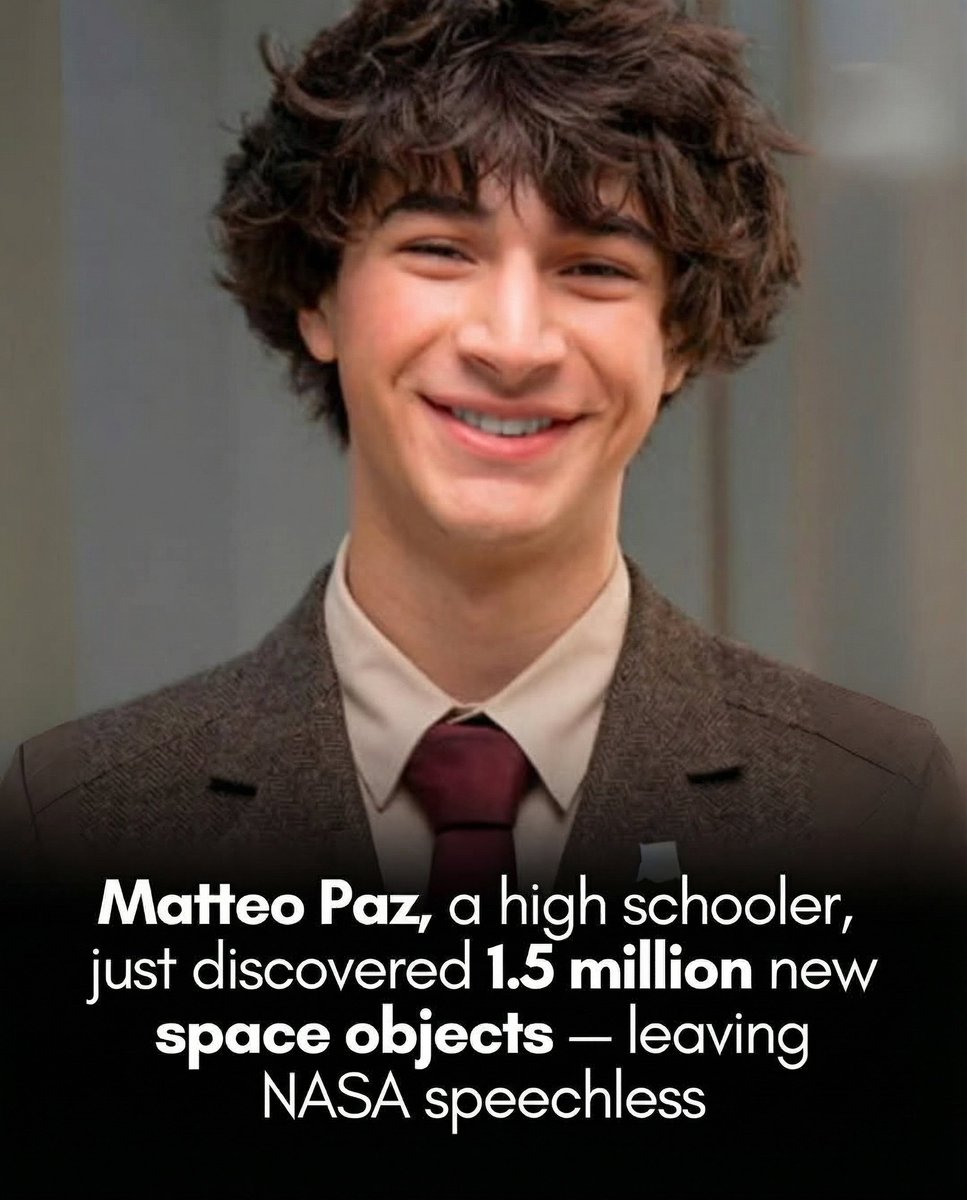
🚨 A student in the US just discovered MILLIONS of new space objects.
The astronomy world was recently shaken by a discovery from an unexpected source: a teenager still in high school. Matteo Paz, a student from Pasadena, utilized archival data from NASA’s retired NEOWISE mission to bring 1.5 million invisible cosmic objects into the light.
During a stint at Caltech’s Planet Finder Academy, and mentored by astrophysicist Davy Kirkpatrick, Paz took a novel approach to data analysis. He built a unique machine learning model capable of sifting through a staggering 200 billion infrared records. In a span of only six weeks, his AI detected subtle patterns that human analysts had missed, identifying everything from distant quasars to exploding supernovas.
Paz’s findings were so robust that they earned him a spot in the prestigious The Astronomical Journal and a position as a research assistant at Caltech. His work does more than just populate star maps; it provides specific coordinates for the James Webb Space Telescope to investigate further. This breakthrough highlights a growing trend where fresh perspectives and AI tools allow young researchers to make historic scientific impacts from the classroom.

English
Jason Dole retweetledi

This past summer, SpaceX donated @Starlink kits to schools in The Bahamas, and now Starlink is being installed in ~200 schools across nine islands including, Exuma, Grand Bahama, New Providence, and Mayaguana, connecting more than 40,000 students to reliable internet.
Starlink@Starlink
Starlink will connect students in The Bahamas to reliable high-speed internet, empowering online learning and unlocking a universe of potential 🛰️❤️ → starlink.com/stories-bahamas
English
Jason Dole retweetledi

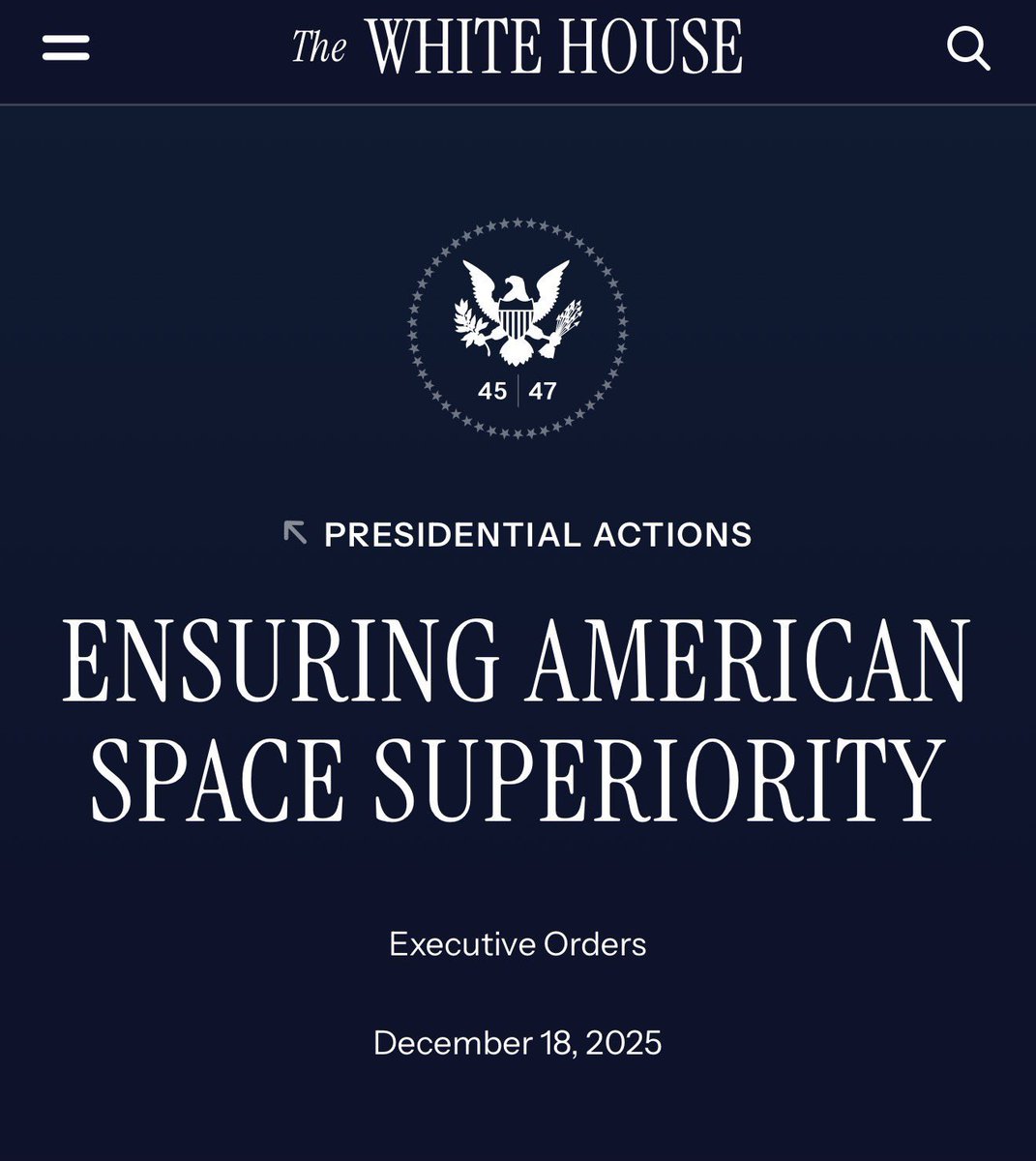
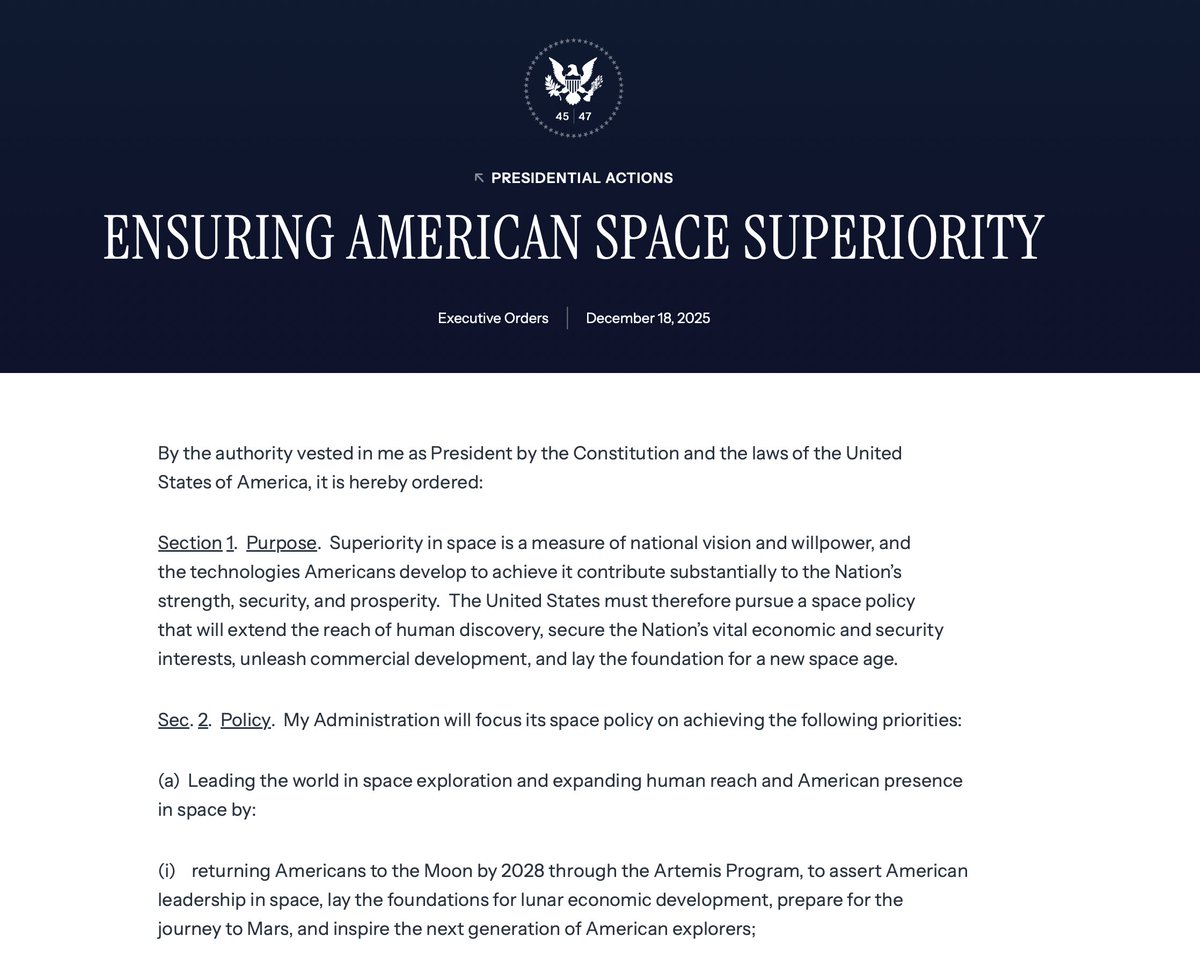
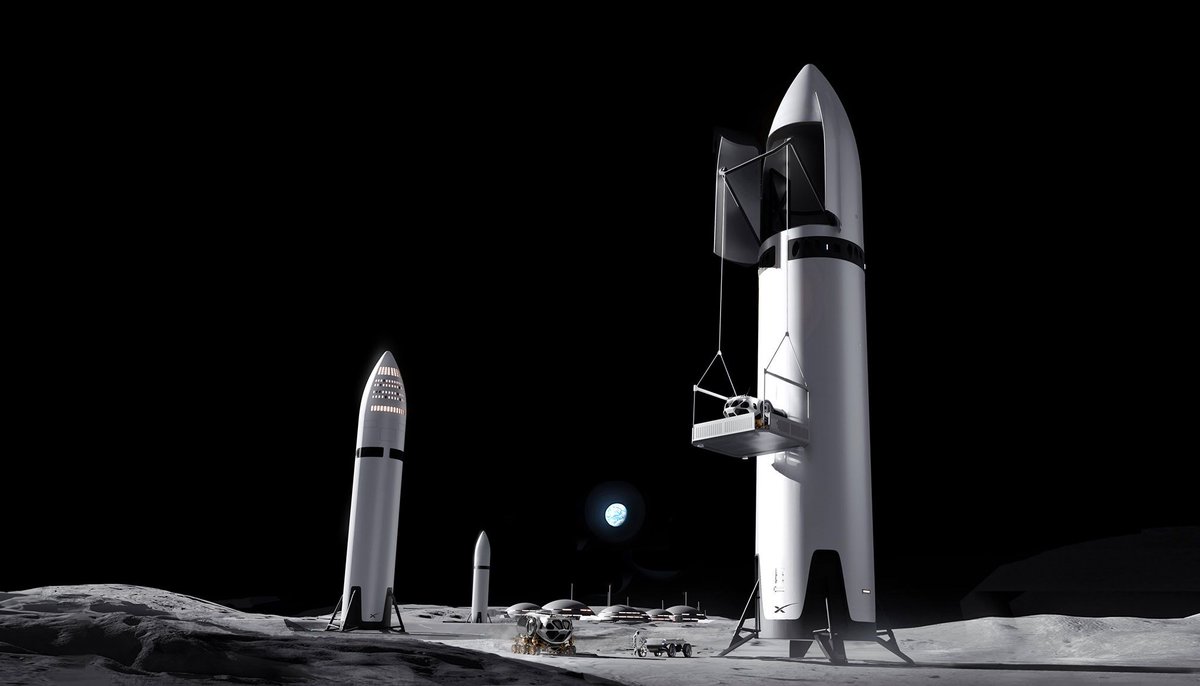
Today, President Trump established the most significant national space policy since the Kennedy era.
@POTUS made a commitment to return to the Moon, establish an enduring presence, invest in the technology of the future and pursue the secrets of the universe.
@NASA, with a relentless focus on the mission, will lead in the peaceful exploration of space and we will NEVER come in second place.
Under this administration, we will continue to lead with the world in space exploration with purpose and ambition.

English
Jason Dole retweetledi

NEWS: Today, Trump signed an executive order committing the United States to return to the Moon by 2028, build a lunar outpost by 2030 and prepare for the journey to Mars.
Everything in the Executive Order:
• Return Americans to the Moon by 2028
• Begin building a permanent lunar outpost by 2030
• Make U.S. space superiority a core national priority
• Expand commercial launch, lower costs, increase cadence
• Develop next-gen space-based missile defense by 2028
• Detect and counter threats in LEO and cislunar space
• Rapidly modernize national security space architecture
• Deepen allied cooperation in space security
• Grow the U.S. commercial space economy
• Target $50B+ in new space investment by 2028
• Support a commercial successor to the ISS by 2030
• Enable space nuclear power for lunar and orbital missions
• Improve space weather forecasting
• Lead on space traffic management & debris mitigation


English
Jason Dole retweetledi

A new product, a new customer, a new financing!
Introducing Superpower: a 42MW natural gas turbine optimized for AI datacenters, built on our supersonic technology. Superpower launches with a 1.21GW order from @CrusoeAI Backstory 🧵👇

English
Jason Dole retweetledi

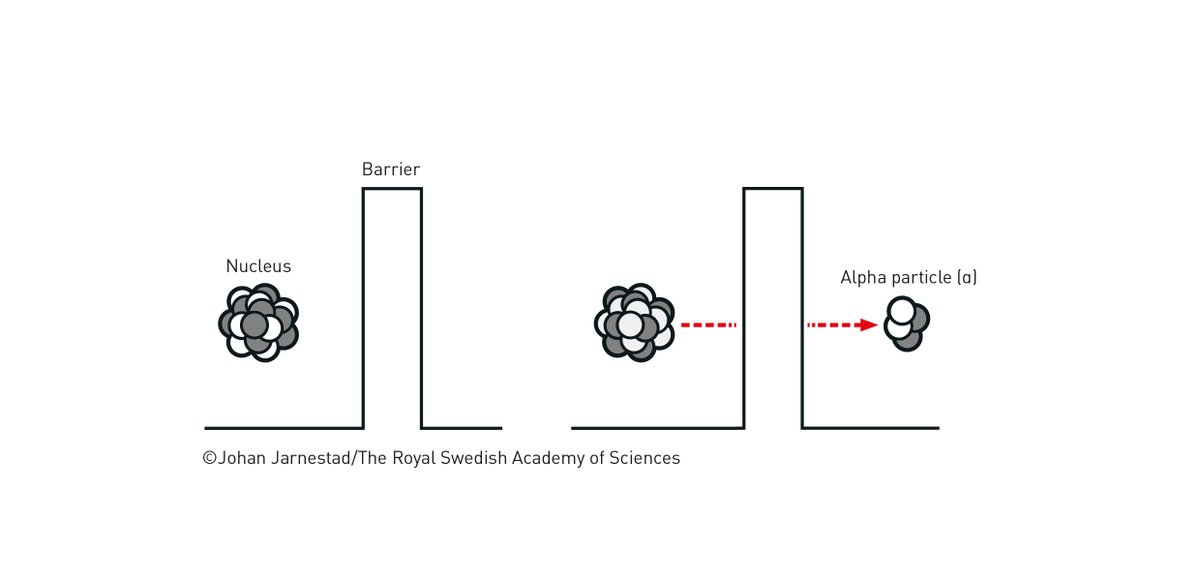
Quantum particles can penetrate through barriers in a behaviour called tunnelling. But curiously, large objects can also display tunnelling behaviour – a discovery that earned three scientists the Nobel Prize in Physics 2025.
Don't miss the physics lectures 8 December at 9:00 CST on YouTube and at nobelprize.org.

English