Matthew Bromberg

447 posts

Matthew Bromberg banner
Matthew Bromberg

Matthew Bromberg

@MBromberg

CEO of Unity.

East Coast Katılım Ocak 2009
200 Takip Edilen3.2K Takipçiler
Matthew Bromberg
Matthew Bromberg@MBromberg·
@PimDeWitte I think that's right. The combination of graphics and physics engines with a World Model's learned behavioral dynamics is where true, complex, and unpredictable simulation can be unlocked.
English
1
0
4
75
Pim de Witte
Pim de Witte@PimDeWitte·
Adding a few things that didn't make the final cut as well: Game and physics engines remain hugely important - they offer determinism, are designed for entertainment, and are optimized for delivering on mass consumer hardware. World Models are probabilistic and currently designed for generating unique training environments. They serve different use cases and customers. Determinism is especially important in competitive games where you must guarantee the rules and operations for all players are equal and repeatable, or when training models, and you want to check for exact values, such as distances for driving safety, or whether a protein structure satisfies geometric and physical constraints under differentiable metrics. It's a much better question to ask "What new entertainment might be downstream from World Models?", instead of assuming they will replace engines. I think it's unlikely, especially with the advances on coding and general agents benefiting engines directly. The sweet spot is the combination of a traditional, deterministic physics engine (like a game engine) with an agent, to unlock the full stochastic state space that are possible within the defined physics space. Intelligence is unlocked on the exchange of information between the action and the environment. When you can't guarantee environment consistency, like today in World Models, you need derterminism at scale, at the lowest possible compute cost - i.e. optimized game or physics engines.
English
4
0
12
2K
Pim de Witte
Pim de Witte@PimDeWitte·
Packy and I spent the past month unpacking world models from first principles. This piece is the result of that exploration. We go into why, what, how, and look out into the future on the implications of our work.
Packy McCormick@packyM

There is a tremendous amount of progress happening in World Models. Multiple labs have raised more than $1B. WMs were the star of GTC. They are a real path to embodied AI. So @PimDeWitte & I wrote a comprehensive 19k word overview of World Models. notboring.co/p/world-models

English
3
17
130
73K
Matthew Bromberg
Matthew Bromberg@MBromberg·
I am so thrilled to announce that @gamerbk is joining our Board! Bernard brings more than 20 years of leadership experience across public companies and global consumer platforms. He has served as CEO and a member of the board of directors of Match Group and President of Publishing at leading mobile game publisher Zynga. Earlier in his career, he spent nearly a decade at Electronic Arts, including as Senior Vice President of Mobile Publishing. His experience in gaming and technology and a deep knowledge of our customers will bring tremendous value. At the same time, I want to thank David Helgason and Tomer Bar-Zeev, who have stepped down from the Board. David and Tomer have been vital partners as we’ve grown and transformed Unity. They welcomed me into the Company, shared their unique vision as founders, and have provided unfailing support. I’m looking forward to many more years of conversation with both of them. Full release here: investors.unity.com/news/news-deta…
English
17
4
36
8.7K
Kaustubh Sridhar
Kaustubh Sridhar@_k_sridhar·
The purpose of all existing software simulators is to generate data for neural network simulators. Very important role but not what the CEO of Unity seems to be saying here.
Matthew Bromberg@MBromberg

Folks. Can I explain something about world models? Seems like today might be a good day for that. Advances in large-scale “world models” — whether developed by partners like Google or others — materially expand the frontier of interactive content creation. These models can generate high-quality, interactive, video-like experiences from natural language or minimal input. Today, they are primarily editable through prompting, which limits the level of determinism and precision required for production-grade game mechanics. As a result, their outputs remain probabilistic and non-deterministic, making them unsuitable on their own for games that require consistent, repeatable player experiences. Rather than viewing this as a risk, we see it as a powerful accelerator. Video-based generation is exactly the type of input our Agentic AI workflows are designed to leverage—translating rich visual output into initial game scenes that can then be refined with the deterministic systems Unity developers use today. Our agents already generate high-quality scenes from static video. Interactive, camera-controllable video from world models would further enhance this pipeline and materially improve the fidelity and speed of early-stage content creation. We believe this represents a meaningful step forward for AI-driven development across the industry. Unity’s role is to operationalize these advances. Outputs from world models are ingested into Unity’s real-time engine, where they are converted into structured, deterministic, and fully controllable simulations. Within Unity, creators define physics, gameplay logic, networking, monetization, and live-operations systems to ensure consistent behavior across devices and sessions. This combination enables developers to move faster from concept to scalable product: AI accelerates environment and asset generation, while Unity provides the execution layer that transforms generated content into reliable, monetizable experiences. As a result, world models expand content supply and reduce development friction, while Unity remains the system of record for runtime, distribution, and long-term operations. This dynamic broadens Unity’s addressable market and reinforces its central role in the interactive ecosystem.

English
1
0
3
1.9K
Matthew Bromberg
Matthew Bromberg@MBromberg·
@maxbatt @ManuVision I would think about it like a prototyping - get a vibe for the world and the kind of interactivity and see how it feels.
English
1
0
25
4.1K
Max Batt
Max Batt@maxbatt·
@MBromberg @ManuVision I think you misunderstood me. I’m not asking if it’s possible. I’m asking why a user would want that. IMO It really falls apart when you start to think about the integration details.
English
3
1
7
4.2K
Matthew Bromberg
Matthew Bromberg@MBromberg·
Folks. Can I explain something about world models? Seems like today might be a good day for that. Advances in large-scale “world models” — whether developed by partners like Google or others — materially expand the frontier of interactive content creation. These models can generate high-quality, interactive, video-like experiences from natural language or minimal input. Today, they are primarily editable through prompting, which limits the level of determinism and precision required for production-grade game mechanics. As a result, their outputs remain probabilistic and non-deterministic, making them unsuitable on their own for games that require consistent, repeatable player experiences. Rather than viewing this as a risk, we see it as a powerful accelerator. Video-based generation is exactly the type of input our Agentic AI workflows are designed to leverage—translating rich visual output into initial game scenes that can then be refined with the deterministic systems Unity developers use today. Our agents already generate high-quality scenes from static video. Interactive, camera-controllable video from world models would further enhance this pipeline and materially improve the fidelity and speed of early-stage content creation. We believe this represents a meaningful step forward for AI-driven development across the industry. Unity’s role is to operationalize these advances. Outputs from world models are ingested into Unity’s real-time engine, where they are converted into structured, deterministic, and fully controllable simulations. Within Unity, creators define physics, gameplay logic, networking, monetization, and live-operations systems to ensure consistent behavior across devices and sessions. This combination enables developers to move faster from concept to scalable product: AI accelerates environment and asset generation, while Unity provides the execution layer that transforms generated content into reliable, monetizable experiences. As a result, world models expand content supply and reduce development friction, while Unity remains the system of record for runtime, distribution, and long-term operations. This dynamic broadens Unity’s addressable market and reinforces its central role in the interactive ecosystem.
English
102
161
852
716.7K
Matthew Bromberg
Matthew Bromberg@MBromberg·
@maxbatt @ManuVision Max, we are building agentic AI as the compiler layer that would then allow game makers to convert the "simulation" generated by Genie into the real game world which you could then build on.
English
5
0
28
7.8K
Max Batt
Max Batt@maxbatt·
@MBromberg @ManuVision What? This sounds so confusing. I’m saying this both as a gamer and game developer ….
English
1
0
15
4.3K
Max Batt
Max Batt@maxbatt·
@MBromberg @ManuVision How do World Models create “assets” for Unity? World Models don’t create assets ….
English
7
0
6
36.7K
Matthew Bromberg
Matthew Bromberg@MBromberg·
Unity 6.3 LTS is out! Long-term stability, smoother upgrades, production-tested performance optimizations, two years of support, and a verified ecosystem that just works. Full details in our blog: on.unity.com/Unity-6-3-LTS
English
5
6
47
4.3K
Matthew Bromberg retweetledi
Howtwoboss
Howtwoboss@HowtwobossFNC·
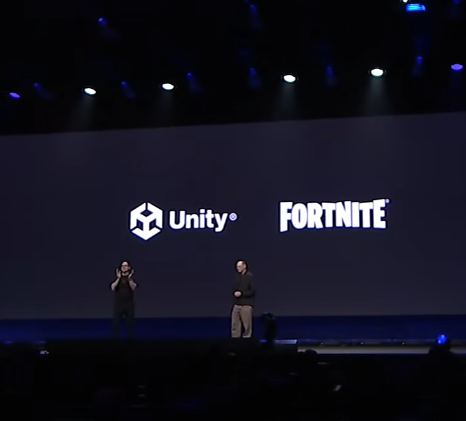
FORTNITE + UNITY ANNOUNCED 😱😭 You will be able to publish UNITY games inside Fortnite next year! UNFN anybody? 🤯 youtube.com/live/CF1PwcIdL…
YouTube video
YouTube
Howtwoboss tweet media
English
9
23
203
26.1K
Rynex
Rynex@RynexGD·
Games built in Unity can be published into Fortnite starting next year?? Huh..?????
English
7
3
120
8.6K