Jérôme Rony

33 posts

Jérôme Rony

Jérôme Rony

@jerome_rony

Katılım Kasım 2018
60 Takip Edilen31 Takipçiler
Sabitlenmiş Tweet
Jérôme Rony
Jérôme Rony@jerome_rony·
Check out our new paper on adversarial attacks for semantic segmentation! arxiv.org/abs/2206.07179 Using a proximal splitting, we generate small perturbations (e.g. ‖δ‖_∞ < 1/255) for deep segmentation models, with high pixel success rates.
English

1
2
4
0
Jérôme Rony
Jérôme Rony@jerome_rony·
@YouTubeInsider @DeanoSauruz @earthklaans You are trying to be precise but you are mistaken in what GenAI means. Tranformers are not GenAI per se, they are a type of neural network building block that can be used in so called GenAI, but does not have to be.
English
0
0
1
103
YouTube Liaison
YouTube Liaison@YouTubeInsider·
Hi! I'm a tech nerd and I try to be precise about the terminology I use GenAI typically refers to technologies like transformers and large language models, which are relatively new Upscaling typically refers to taking one resolution (like SD/480p) and making it look good at a higher resolution (like HD/1080p) This isn't using GenAI or doing any upscaling It's using the kind of machine learning you experience with computational photography on smartphones, for example, and it's not changing the resolution And sincerely appreciate the feedback! 🙏
English
41
2
79
77.3K
pretend 𓅂 mirrors ♫𓅟𓅠𓅷𓅸𓅹
youtube is applying post-processing to all shorts so they look more like Al. this is intentional & malicious. when their generative Al shorts feature launches users will be less likely to discern what's Al-slop and what's not, and the audience will think Al video is just as good
English
88
3.2K
21.3K
1.1M
Jérôme Rony
Jérôme Rony@jerome_rony·
@raymondh Second one: it implies that h(x) is the default case, and g(x) is a specific one conditioned on test. I think it is also dependent on what test is: are we expecting test(x) to be mostly true ?
English
0
0
4
278
Raymond Hettinger
Raymond Hettinger@raymondh·
#Python practices question: Do you prefer else-clauses in conditional where there is a return on both sides? def wordy(x): if test(x): return g(x) else: return h(x) or def terse(x): if test(x): return g(x) return h(x)
English
131
4
127
43.9K
Jérôme Rony
Jérôme Rony@jerome_rony·
@DrewLinsley That's the issue, even C&W is not strong enough to assess adversarial robustness
English
2
0
1
64
Drew Linsley
Drew Linsley@DrewLinsley·
@jerome_rony Thanks for the feedback. We found the same of results on a very small scale study of C&W. We can try replicating with the others as well. Appreciate it!
English
1
0
0
37
Drew Linsley
Drew Linsley@DrewLinsley·
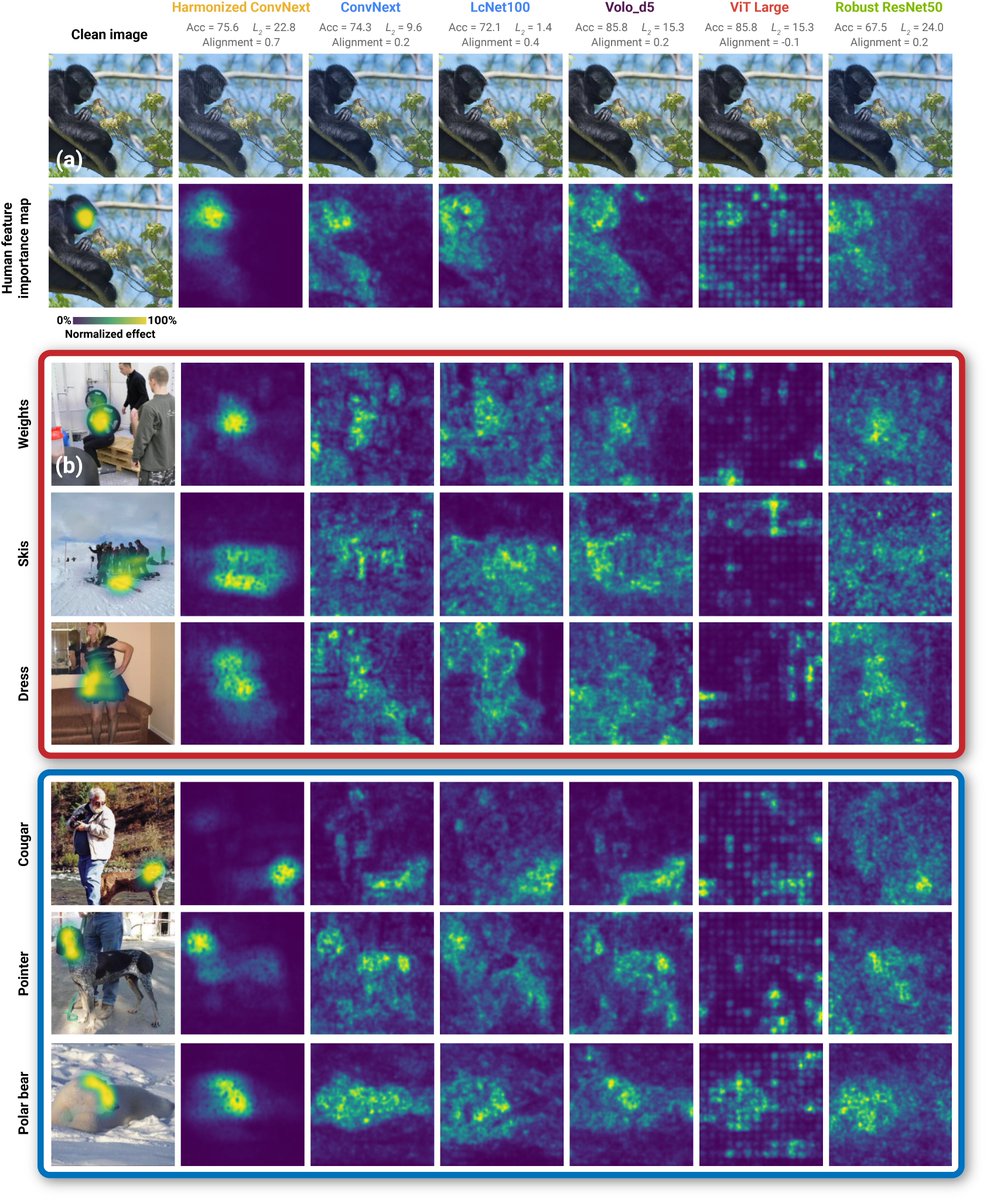
The sensitivity of DNNs to adversarial attacks has long been thought to be an "Achilles heel" that will ultimately make them unsafe in real-world applications. Has this sensitivity changed as DNNs have scaled-up and rivaled or beat human-level accuracy? serre-lab.github.io/Adversarial-Al…
Drew Linsley tweet media
English
2
26
109
24.2K
Jérôme Rony
Jérôme Rony@jerome_rony·
@DrewLinsley I can see a major issue here: \ell_2 PGD (and even C&W) is known to be weak to evaluate a model's robustness. There are much more reliable options (and less expensive than C&W) now: APGD, DDN, FMN, ALMA to name a few.
English
3
0
1
75
Drew Linsley
Drew Linsley@DrewLinsley·
What we found was surprising. Across 283 DNNs, we saw that the size of successful attacks has been growing as DNNs have improved on ImageNet. In other words, the scaling trends designed for improving ImageNet acc have also led to state-of-the-art adversarial tolerance!
Drew Linsley tweet media
English
2
0
6
626
Vicnent – ∫∞
Vicnent – ∫∞@Vicnent·
@jerome_rony @MathisHammel @JacquesDelamar2 oui clairement, ça dépend, du temps d'éxécution de la boucle, du nombre de maisons, de la répartition aléatoire des maisons etc. mais je me demandais si on était sur du temps d'exécution supplémentaire de 0,0001% ou 0,01 % ou 1%. Tu testes ? (je peux pas copié collé ton code)
Français
1
0
0
190
Mathis Hammel
Mathis Hammel@MathisHammel·
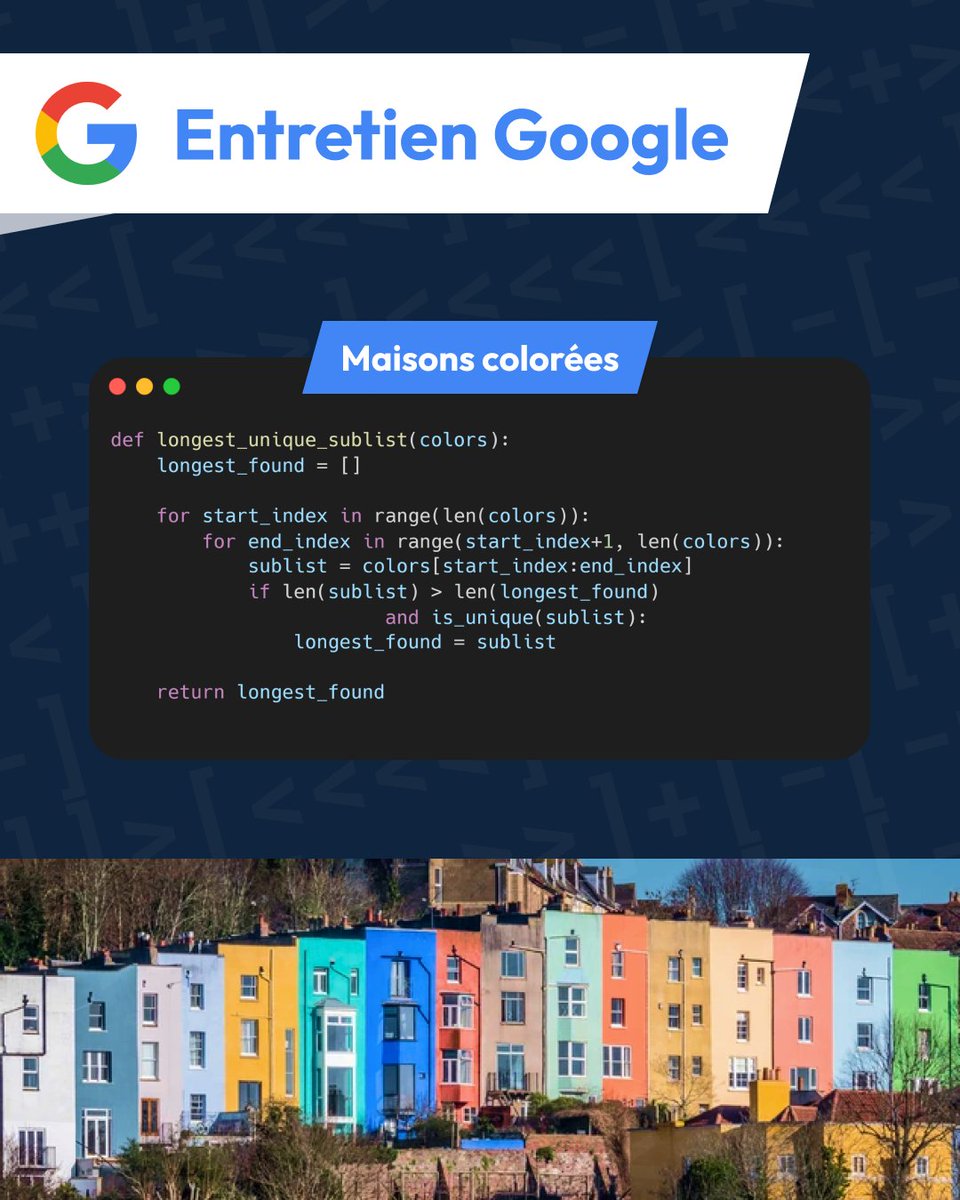
Exercice inspiré d'un vrai entretien Google ! Pouvez-vous optimiser ce code qui calcule la plus longue suite de maisons ne contenant pas de couleur en double ? Obtenez votre score ici : app.coderpad.io/sandbox?questi…
Mathis Hammel tweet media
Français
13
9
74
49.7K
Jérôme Rony
Jérôme Rony@jerome_rony·
@Vicnent @MathisHammel @JacquesDelamar2 Ça va beaucoup dépendre de la longueur de la meilleure solution: si elle est significativement plus courte que la liste initiale, ça n'affecte pas la complexité
Français
1
0
0
295
Vicnent – ∫∞
Vicnent – ∫∞@Vicnent·
@MathisHammel @jerome_rony @JacquesDelamar2 est ce qu'une boucle qui optimiserait une condition finale serait intéressante ? Ex : tu as 200 maisons, tu as len_max = 40, et ton next start est sur 162 (et donc tu trouveras une longueur max de 39 quoi qu'il arrive). Donc avoir un break si new start > len(color)-len_max ?
Français
1
0
0
333
Jérôme Rony
Jérôme Rony@jerome_rony·
@CSProfKGD Oh I did that in the first comment to start the discussion.
English
0
0
2
162
Kosta Derpanis
Kosta Derpanis@CSProfKGD·
#CVPR2023 reviewer thoughts: Not helpful when reviewers skip the discussion and simply finalize their review. Please engage with your fellow reviewers. Even if no consensus is reached, the discussion will provide the AC a better understanding of the various views.
English
7
4
59
21.6K
Jérôme Rony
Jérôme Rony@jerome_rony·
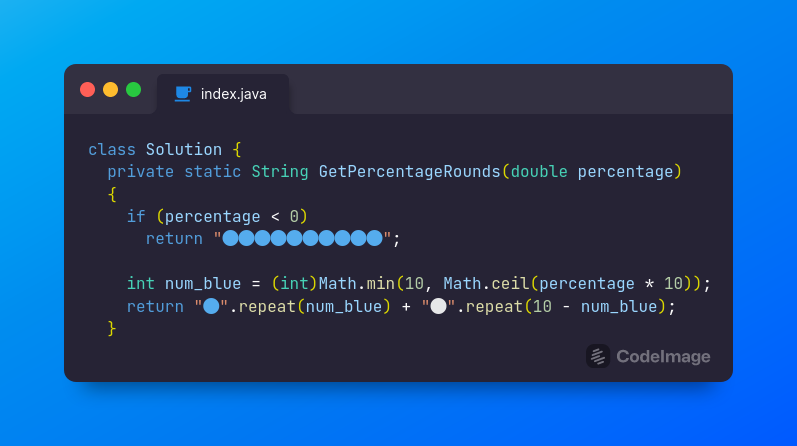
@MathisHammel IMO la façon la plus simple de s'assurer que le cas négatif soit clair.
Jérôme Rony tweet media
Français
0
0
1
681
Mathis Hammel
Mathis Hammel@MathisHammel·
Vous avez vu passer ce code source extrait d'un projet du gouvernement néerlandais ? Je vous propose un petit challenge : proposez une version refactorisée à votre sauce ! Sandbox : app.coderpad.io/sandbox?questi… La solution avec le plus de likes gagne un pack de goodies CodinGame😉
Mathis Hammel tweet media
Français
57
14
115
76.3K
Jérôme Rony
Jérôme Rony@jerome_rony·
@colorado_reed We did! We worked on a problem that is not novel, but also somewhat understudied IMO.
English
0
0
0
89
Jérôme Rony
Jérôme Rony@jerome_rony·
@CSProfKGD No worries, just sharing my experience 🙂 Even though I sometimes end up disappointed for my own papers, I'm extremely grateful of the work ACs do!
English
0
0
1
45
Kosta Derpanis
Kosta Derpanis@CSProfKGD·
@jerome_rony It’s tough, I get it. Especially, this time of year with conference paper submission & review deadlines. I also had new papers sent to me as an AE on Xmas to distribute. I held off till January to send reviewer requests. We all deserve a break. I was just venting a bit 😉
Vaughan, Ontario 🇨🇦 English
1
0
0
103
Kosta Derpanis
Kosta Derpanis@CSProfKGD·
Note to self: Don't take it personally when people reject your review request.
English
5
0
40
12.3K
ScreenTime
ScreenTime@screentime·
Hans Zimmer says his favorite score that he's ever written is #Interstellar 🪐
ScreenTime tweet mediaScreenTime tweet mediaScreenTime tweet mediaScreenTime tweet media
English
1K
9.5K
131.2K
12.9M
#CVPR2026
#CVPR2026@CVPR·
@mahmoudnafifi Assignments are a bit delayed — they are expected to be released around next Wednesday.
English
2
1
9
0
Mahmoud Afifi
Mahmoud Afifi@mahmoudnafifi·
@CVPR when do we expect to get assigned papers for review?
English
1
0
7
0
Benjamin Warner
Benjamin Warner@benjamin_warner·
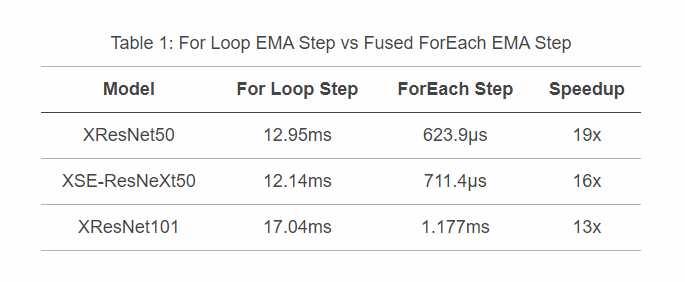
PyTorch's fused foreach methods, used in their multi-tensor optimizers, are surprisingly undocumented given how useful and fast they are. Rewrote my EMACallback and the EMA step is now significantly faster on tested models vs a standard for loop over both sets of weights.
Benjamin Warner tweet media
English
3
29
163
0
Lê Nguyên Hoang bsky.app/profile/science4all.org
Je félicite au passage @NeurIPSConf, qui exige des auteurs qu'ils écrivent un paragraphe sur les limites et les conséquences sociales des articles soumis, et des revieweurs qu'ils intègrent cela dans leurs reviews. La science est devenue trop dangereuse pour être une fin en soi.
Français
1
0
12
0
Baele
Baele@AMurderOfDucks·
@gabrielpeyre What are some of the uses of this algorithm?
English
3
0
0
0
Gabriel Peyré
Gabriel Peyré@gabrielpeyre·
Oldies but goldies: R. Tyrrell Rockafellar, Monotone Operators and the Proximal Point Algorithm, 1976. The proximal point algorithm is a fundamental non-smooth optimization method. en.wikipedia.org/wiki/Proximal_…
Gabriel Peyré tweet media
English
2
50
279
0