JFHaftΔ
8.4K posts

JFHaftΔ
@jfhaft
cofounder of https://t.co/kCf03F8GMa, cryptomondays, DLTx & PALcapital / OrdinalsBot / MorpheusAI / Decentralization & Self-sovereignty for all


I don’t think people truly understand what’s about to happen with 𝕏 Money. This is Elon going back to his roots - back to x.com - and building what he always wanted in the first place: one place that runs your entire financial life. When he rebranded Twitter to 𝕏 in 2023, he said straight up that we’re adding the ability to conduct your entire financial world. He even said you may not even need a traditional bank account. Most people brushed that off. And now it’s becoming real. 𝕏 Money has already been live in closed beta internally within the company. A limited external beta is expected soon, and they’ve already secured money transmitter licenses in over 40 states plus DC. 𝕏 Payments is registered with FinCEN. Visa is officially partnered. You’ll be able to fund your wallet instantly, send peer-to-peer payments, move money to your bank, and eventually use a debit card. And I think this is just the beginning. This will probably start as a simple wallet where you can send money as easily as sending a DM. With this technology, you can pay creators, pay subscriptions, pay whatever bills, shop inside the app, get paid inside the app, and much more. Then, there will be high-yield savings, you can invest, you can get loans, have money market accounts, maybe even treasury access, cool smart cashtags that let you see live stock prices in your timeline and execute trades seamlessly, crypto integration, potentially full asset management… the list goes on and on… Elon literally said this is meant to be the central source of ALL monetary transactions. Bro… think about that for a sec. Your 𝕏 profile becomes your financial identity. Everyone you follow is already there. Everyone you interact with is already there. That social graph becomes your distribution engine. Like, you won’t need a separate banking app, no need for a separate investing app, no need for a separate payment app… this all lives where you already spend your time. Right here on 𝕏. Look at WeChat in China, which Elon always alluded to. Payments, messaging, shopping, investing - all integrated in one app. It handles $ trillions in volume and became deeply embedded in everyone’s daily life. Now 𝕏 is building the Western version of that, but with a more global reach, and xAI’s AI layered on top of all this. Before you call me crazy, you have to understand how big this opportunity is. Digital payments globally are measured in the tens of $ trillions of dollars annually. Even just capturing a small slice of that across hundreds of millions, and eventually a billion, users can change everything. 𝕏 already has the audience. That lowers customer acquisition costs significantly. Add fintech revenue on top of ads, plus float, plus lending, plus investing tools, and we’re talking about a completely different valuation profile. Now, $44B for this company looks like the bargain of the decade… this was one of the main reasons I invested in 𝕏. And if they execute the way they’ve executed at Tesla and SpaceX, this could truly fundamentally redefine how people handle $ . Most people today still see 𝕏 as just a social media app. I see it as the foundation of a financial system layered on top of a global network. Ultimately becoming the “everything” app. And this I believe is a once-in-a-generation opportunity. Elon is calling this a game-changer. I believe him.

📜 Day 222 — Gold Strikes Viral The headlines just dropped like a pickaxe on bedrock. @FlashyFunHQ announces @DigItGoldGame, the world’s first viral Play-for-Gold game. Up to $10M in real gold rewards as prizes ($35M in total rewards). $NUGS turn taps into tokenized treasure. Mobile-native, hyper-addictive, backed by RWA gold reserves. Players mine, collect, redeem, straight into RWA gold holdings. This is gamified gold distribution at scale. 120M+ @GAMEEToken users in distribution range (and many more massive networks joining). Streamers, campuses, crypto communities already circling. From speculation to tangible upside. From points to preserved value. The For-Gold Movement is only just warming up. Bonus tease: MVP of THE HUNT is almost complete. ⏳ The gate creaks wider. Stay vigilant, Gold Hunters. ⚡️⚡️ #PlayForGold #TheHunt #P4G #ForGoldMovement


The most valuable company of the next decade might be built by one person in a room. No employees. No office. No investors. Just a founder and an army of agents. Former Google CEO Eric Schmidt just handed you the most important wealth creation blueprint of the next decade. Schmidt: “This is the agentic period in AI.” The era of the chatbot is over. The era of the agent has begun. And Schmidt says if you want to capitalize on it, the formula is simple. Schmidt: “If you really wanna make money, it’s actually easy. Found an agentic AI company.” But he was precise about where the real value lives. Schmidt: “I don’t mean one designing agents. I mean build an agent to do something.” Not infrastructure. Not foundational models. Not another AI wrapper. Execution. Autonomous, end-to-end, runs-without-you execution. Schmidt: “For the next year or two, everyone’s going to build agents.” And those agents are going to compete in an open market for every white-collar function that exists. The winners won’t own software products. They’ll own the labor. Think about what that actually means. Every industry built on repetitive human expertise is about to face a digital worker that never sleeps, never asks for a raise, and gets better every month. Legal research. Financial analysis. Sales. Recruiting. Customer operations. Marketing. Every niche is a company waiting to be built. Schmidt: “If you build a better agent than anyone else, you can probably build one incredible company and own it yourself.” Own it yourself. No venture capital. No massive executive team. No dilution. For the first time in history, the leverage that used to require hundreds of employees fits inside a codebase one person can own outright. And once agents execute better than humans at a specific function, businesses stop hiring for it. They just deploy. Whoever builds the best digital worker in any given category doesn’t compete for talent. They obsolete the need for it. We spent the last decade watching software eat the world. We are about to watch agents eat the workforce. The founders who move now, pick a niche, and build the best digital worker in that category won’t just build companies. They’ll build the new infrastructure of human productivity. Every era of wealth creation had a window. The railroad window. The internet window. The mobile window. Each one rewarded the people who saw it early and moved while everyone else was still debating whether it was real. This is the window. The only question is whether you build the agent or spend the rest of your career being replaced by one.


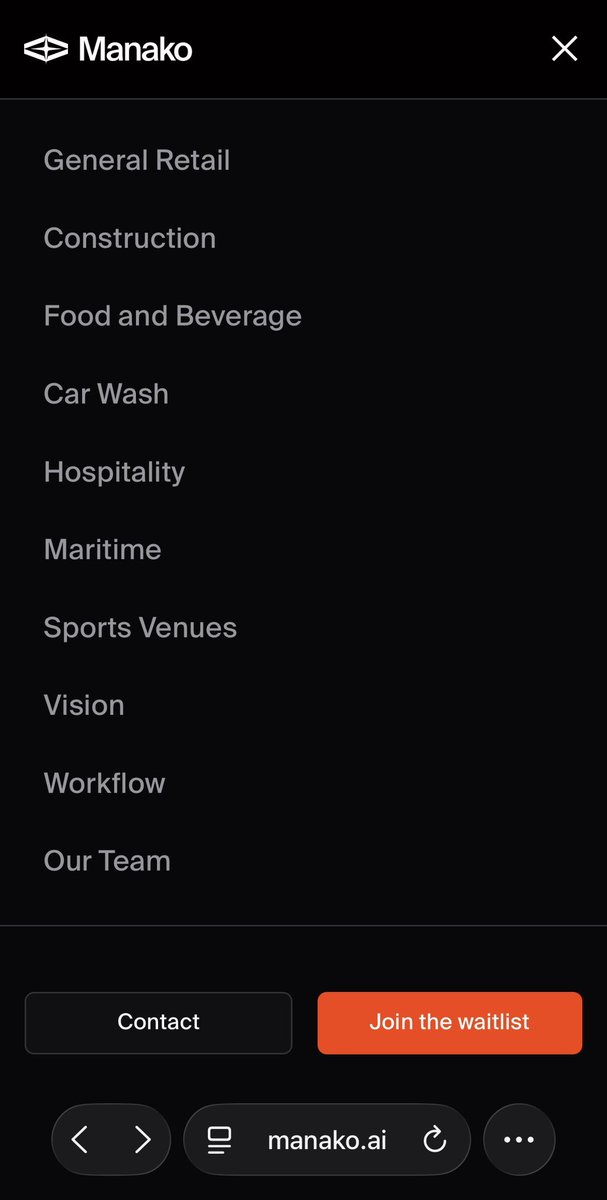
Bittensor is an incentive network. Many subnets compete on model quality. They optimise for benchmark scores. That phase is necessary. It is not sufficient. The long-term value in decentralised AI does not come from isolated models. It comes from networks that solve real-world economic problems. @manakoai is building production-grade visual infrastructure. That changes the role of the subnet. Instead of training a single general-purpose vision model, the subnet becomes a distributed engine for continuously optimising production elements. Production vision is not static. Latency requirements change. Hardware profiles change. Vertical constraints change. That creates a constant optimisation surface. A centralised team can improve models incrementally. A decentralised incentive layer can improve them continuously. That’s the opportunity. The subnet is not a research playground. It is a competitive model factory. Miners compete to produce better production-ready elements. Validators score based on deployment-relevant metrics — not just academic benchmarks. The result is compounding optimisation. As Manako scales deployment across enterprises, it generates real performance feedback. That feedback informs scoring. Scoring drives incentives. Incentives drive better elements. The subnet becomes economically aligned with real-world adoption. That is our difference. We are aligning emissions with infrastructure value creation. When Manako becomes the standard execution layer for production vision, the subnet becomes the optimisation engine underneath it. That creates structural demand for better elements. Better elements improve endpoints. Better endpoints increase adoption. Adoption increases economic weight. The loop compounds. Far beyond speculative value. It is usage-aligned incentive design. Infrastructure markets reward standards. Standards reward optimisation. Optimisation is what decentralised networks are structurally good at. The subnet is not a side experiment. It is a force multiplier. Centralised orchestration. Decentralised optimisation. That combination is difficult to replicate. As Manako grows, the subnet benefits from: - Increased demand for production-grade elements - Continuous benchmarking against real deployments - Economic weight tied to utility, not hype In the long term, the subnet becomes the most efficient place to produce production-ready computer vision components. That is how decentralised networks create durable value. Manako defines the standard. The subnet accelerates the optimisation. Together, they compound.