Jim

6.3K posts

Jim banner
Jim

Jim

@jim_again

Persistent heretic. Interested in the often-related domains of economics, housing, and especially, how people learn.


California Katılım Aralık 2010
280 Takip Edilen297 Takipçiler
Jim
Jim@jim_again·
@FlowTap1 @RonZimmer8 It’s good that gains are often concentrated among students who’ve previously been victimized by instructional malpractice.
English
0
0
0
1
Patrick Wolf
Patrick Wolf@FlowTap1·
STUDY ALERT: Post-pandemic in Indiana "charter school students experienced greater achievement growth in both [math & reading], with moderate effect sizes. These gains were concentrated among Black, Hispanic, economically disadvantaged, and lower-performing students." @RonZimmer8 martin.uky.edu/sites/default/…
English
2
2
7
306
Jim
Jim@jim_again·
@MichaelPetrilli @FlowTap1 @CEDR_US @AdamPeshek @Dyrnwyn @timderoche @Paul__Bruno @GullyoftheSun @neetu_arnold @KKBathgate @BBrownIndy @lizcohen12 @Jorge_Elorza @MichaelTHartney @MrDanielBuck @IraStoll @KelseyTuoc @RiannaSaslow @CharlesBarone @smarick @jennvranek These writers seem to assume the model of small upscale school districts, where families know and engage w local school leadership. That may resemble the schools the authors attended, but it differs considerably from the large, unaccountable districts that most students attend.
English
0
1
1
173
Michael Petrilli
Michael Petrilli@MichaelPetrilli·
Hey peeps, anyone wanna defend neighborhood public schools and school boundaries?
Michael Petrilli tweet media
English
16
2
12
7.2K
Jim
Jim@jim_again·
@rpondiscio @BarryNSmith79 Culture matters immensely in every organization, even private companies. And productive culture requires leadership. People want leadership that listens and is respectful, but doesn’t leave every decision up to the whims of those who are most outspoken.
English
0
0
0
5
Robert Pondiscio
Robert Pondiscio@rpondiscio·
@BarryNSmith79 Nail school culture and nearly anything works. Fail to do so and nothing does. No one learns in chaos.
English
2
2
15
547
Barry Smith
Barry Smith@BarryNSmith79·
Within weeks of becoming head at Charter school unrecognisable. 5 months in, ofsted described it as ‘miraculous turnaround’. We modelled norms of genuine mutual respect with every interaction. At HNS, post Covid, behaviour & culture better than ever. Over communicated norms.
Robert Pondiscio@rpondiscio

Schools don’t just transmit knowledge. They model norms. If students learn that rules are optional and consequences negotiable, we shouldn’t be surprised when disorder follows—first in classrooms, then everywhere else. thedispatch.com/article/public…


English
3
1
15
4.3K
Marc Porter Magee 🎓
Marc Porter Magee 🎓@marcportermagee·
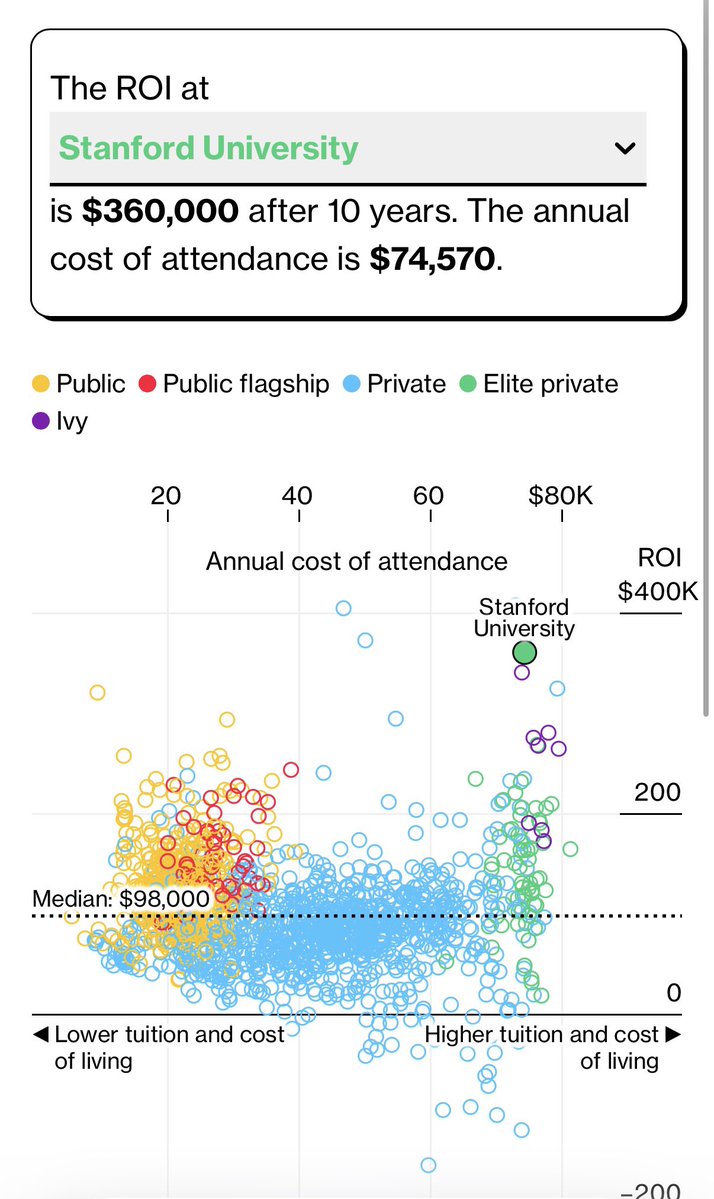
Good luck to all the kids waiting to hear back on Ivy Day!
Marc Porter Magee 🎓 tweet media
English
1
0
1
398
Jim
Jim@jim_again·
@FlowTap1 @MichaelPetrilli @CEDR_US @AdamPeshek @Dyrnwyn @timderoche @Paul__Bruno @GullyoftheSun @neetu_arnold @KKBathgate @BBrownIndy @lizcohen12 @Jorge_Elorza @MichaelTHartney @MrDanielBuck @IraStoll @KelseyTuoc @RiannaSaslow @CharlesBarone @smarick @jennvranek The Netherlands offers one of the best examples of school choice, but really, many European countries offer better publicly financed options than the U.S. It’s unfortunate that so many Americans are unfamiliar w alternatives to our district-based system that performs so poorly.
English
1
0
1
121
Jim
Jim@jim_again·
@michaelxpettis Very persuasive argument as to the cause, but what are the practical tangible steps that Beijing could take?
English
0
0
0
38
Michael Pettis
Michael Pettis@michaelxpettis·
The East is Red provides a translation of a very interesting essay by Wang Xiaolu, Deputy Director of the National Economic Research Institute. The problem with the Chinese economy, Wang says (and as I have argued for over a decade), is that China's excessively low consumption (21 percentage points below the global average, he notes) is intrinsic to its growth model. "The problem is not simply a shortfall in aggregate demand, but a deeper imbalance in its composition: investment has been excessive, while consumer demand has remained severely weak." The two are not separate conditions but are rather different sides of the same coin: "That imbalance is closely tied to years of expansionary monetary policy and a government-investment-led expansionary fiscal strategy." So far, he notes, Beijing has addressed the problem of excessively weak consumption by pairing it with excessively high investment, in order to maintain high domestic demand (although clearly not by nearly enough to prevent a soaring trade surplus). While this strategy generated sustainable growth in the 1990s and early 2000s, when China was highly underinvested, not only does it no longer generate healthy growth, but it tends to lock in the imbalances. This is because, he argues, the two are not functionally equivalent when it comes to sustainable economic growth: "One obvious defect in Keynesian theory is its assumption that consumer demand and investment demand are in a fully substitutable relationship. According to this theory, if saving is too high and household consumption too weak, policymakers can offset the gap by loosening monetary policy to spur investment, or by having the state invest directly. This logic implies that even wasteful public works—endlessly digging holes only to fill them in again—can generate growth, so long as money is spent." That's not quite what Keynes said, I would argue, because he was mostly talking about the need to create jobs, however useless, in times of high unemployment mainly as a way of reigniting the demand needed to justify productive investment, but I agree with Wang that this isn't the problem China currently faces. At any rate in China today this approach has serious limitations, Wang argues: "In reality, however, any such effect is at best short-lived. Policies that boost investment may raise demand in the near term, but over the medium to long run, they further expand production capacity and increase supply, thereby worsening the structural imbalance between excess supply and weak demand." Those who have in the past agreed with my views on Chinese overinvestment will find themselves in especially strong agreement with Wang when he writes that increasing government investment in order to balance the imbaility to increase consumption quickly enough just deepens the structural imbalances. "Government investment, of course, can be directed mainly toward infrastructure rather than productive capacity" he writes. "When such spending creates genuinely useful infrastructure and relieves bottlenecks in transport, communications, and related areas, it can generate positive spillovers, support growth, and raise returns across the wider economy." "But when infrastructure investment becomes excessive or duplicative, it too turns into low-yield or ineffective spending, consuming resources without generating commensurate returns and becoming little different from overcapacity. If continued, it will inevitably depress economy-wide returns, steadily erode the efficiency of resource allocation, and leave growth weaker. At the same time, high investment spends national income that might otherwise have gone to households, further suppressing consumer demand and deepening its inability to drive growth." For ten years or more Beijing has been trying to cut excess capacity, but it hasn't been able to do do. The reason, accoroding to Wang, "is that earlier efforts relied mainly on administrative measures to cut capacity in a few sectors, while leaving the underlying drivers of overcapacity largely intact—excessive investment, excessive monetary expansion, and excessive government borrowing. To address the structural imbalance at its root, those deeper institutional and systemic causes must be changed first." I of course agree that Wang is absolutely right to argue that resolving excess capacity in the worst-hit industries is useless if excess investment is simply shifted to other sectors with less excess capacity – in property, manufacturing and infrastructure. But while we agree, I think nonetheless that Wang may underestimate how difficult it will be to shift "national income that might otherwise have gone to households" without undermining China's manufacturing competitiveness. He is very clear, however, about the need to implement such a shift. I could go on to quote a lot more, but I think it is much better to read the essay. I know that over the years a number of prominent Chinese economists have made comments that are similar to those Wang makes in this essay, although mostly only in private conversations, but it seems that over the past 2-3 years this has started to become a consensus view – at least among economists, if not yet policymakers. Zichen Wang and his team should be thanked once again for their great work in bringing internal Chinese economic discussions to a wider public. @ZichenWanghere eastisread.com/p/wang-xiaolu-…
English
21
70
275
36K
Jim
Jim@jim_again·
@Doug_Lemov My son had a teacher from Ireland who gave everyone a slate & chalk (!). He’d write a problem on the board and students would hold up their answers. Those w correct answers helped those who were close, and the teacher would help those who weren’t. Impressive to watch!
English
0
0
2
407
Doug Lemov
Doug Lemov@Doug_Lemov·
Mini-white boards are great. I genuinely love them. But as with any means of participation, they have benefits and limitations and teachers should be aware of both and use accordingly. On the upside, they offer maximum observational efficiency. When everyone writes i can see the full data set—everyone’s answer—and when they hold them up I can scan and review with maximum speed. That’s a big win. Plus they feel low stakes to students and therefore low-risk… if it’s wrong I just erase it. Ideal for settings like retrieval practice. And when the routine is installed well they are fast and engaging. Some limitations to consider though. There’s a downslide to disposable writing that disappears. It’s harder to go back to it: to study and revise it later or to improve it. The answers are not in your notes! By the way we have a video of a chemistry teacher, Abi Mincer of Totteridge Academy in London who writes the answer on her smart board after students erase so there’s a list of the answers permanently visible. Love that. MWBs can also socialize hasty or even sloppy writing- with the sloppy referring to the production or to the thinking. The goal can easily become speed of response. The marker slips easily across the board and this just maybe makes it so that students don’t write as slowly and thoughtfully as they might on paper. Slow, deliberate thinking leads to careful word choice, the inclusion of new ideas and assists with encoding. MWBs can be a crutch. It’s an easy way to engage students. A bit easier than other also important ways to engage them such as cold call and stop and jot. That means there’s a risk of over relying on it. It’s a great tool for some situations. But a craftsperson needs lots of tools. I’m sure you can think of other benefits and limitations. Just wanted to share a few so that teachers are more likely to use a great tool for maximum gain.
English
18
41
233
30.2K
Jim
Jim@jim_again·
@marcportermagee Not part of the normal calculation, but I met my wife there. So I think that gave the ROI a boost.
English
0
0
1
22
Jim
Jim@jim_again·
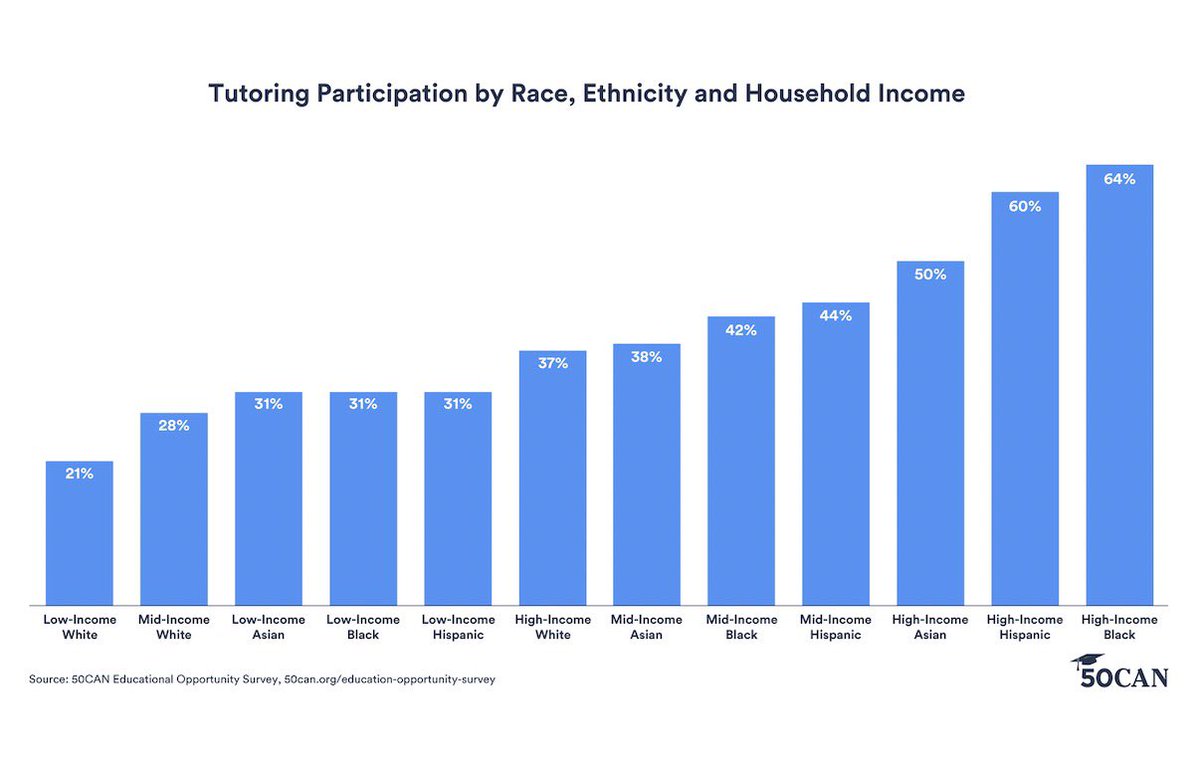
@marcportermagee People think of tutoring as remediation, but now, even in many “good” school districts, it’s a wise investment to ensure that your kids receive proper instruction, which is often not happening in the classroom.
English
1
0
1
15
Marc Porter Magee 🎓
Marc Porter Magee 🎓@marcportermagee·
More tutoring across all racial categories is very likely
Marc Porter Magee 🎓 tweet media
English
1
0
1
215
Adam Peshek
Adam Peshek@AdamPeshek·
I live on the edge of two school zones. The elementary school I am zoned for is roughly 5 miles away, but there is a closer one that is only 2 miles away. The school I am NOT zoned for would better match all of the things I’ve seen on this thread: easier to bike to/walk to, more of a "neighborhood school" for me. This is not an edge case – I would argue in just about any decently populated area, this scenario happens to lots of people. In fact, there is ANOTHER elementary school that is 4 miles away that is closer than the one I'm zoned for. It's an odd world where people in situations like this are told these three schools should not all be options because of administrative challenges.
English
3
3
7
651
Jim
Jim@jim_again·
@rpondiscio Many people don’t seem to understand how pointless it usually is to compare yourself with another person. Better to compare yourself with who you can be…or used to be.
English
0
0
0
19
Robert Pondiscio
Robert Pondiscio@rpondiscio·
My kid is not "a way better person than kids who didn’t do sports." My kid is a way better person because she did sports.
oneguy@oneguy75537604

@rpondiscio Well, those that spent countless weekends and tens of thousands of $ will naturally defend the Ponzi scheme they fell for. Imagine saying your kid is way better person than kids who didn’t do sports! Newsflash, most of us in the past didn’t do this travel sports crap.

English
7
0
23
2.3K
Jim
Jim@jim_again·
@FlowTap1 @MichaelPetrilli @Dyrnwyn @AdamPeshek @timderoche @Paul__Bruno @GullyoftheSun @neetu_arnold @KKBathgate @BBrownIndy @lizcohen12 @Jorge_Elorza @MichaelTHartney @MrDanielBuck @IraStoll @KelseyTuoc @RiannaSaslow @CharlesBarone @CEDR_US @smarick @jennvranek We could also join other advanced countries and end “school districts” altogether, including their monopolies on operating all tuition-free schools in a geographic area and their powers to assign students to schools based on a kid’s address.
English
0
0
1
72
Doug Lemov
Doug Lemov@Doug_Lemov·
@marcportermagee NYC might have banned smoking in public parks in 2011 but in 2026 there’s no limit on weed smoking pretty much anywhere including the subway if my ride on the Q today is any indication.
English
4
4
35
3K
Marc Porter Magee 🎓
Marc Porter Magee 🎓@marcportermagee·
Key milestones in smoking bans: 1575 - The Catholic Church bans smoking in churches in Mexico 1975 - The State of Minnesota bans smoking in public buildings 1985 - Aspen, Colorado bans smoking in restaurants 2011 - NYC bans smoking in parks
English
3
0
1
1.9K
Jim
Jim@jim_again·
@rpondiscio Around here, travel sports means private club sports. Were the school teams inadequate in some way? Team sports seems to be the one area where my local district exhibits competence.
English
0
0
1
47
Jim
Jim@jim_again·
@kimmaicutler @TaupeAvenger BART is largely a suburban commuter rail service, where 30-minute frequencies aren’t great, but not that uncommon. When the hole has been dug this deep by current leadership, there will be lots of pain ahead, no matter what happens w the vote.
English
1
0
1
28
Kim-Mai Cutler
Kim-Mai Cutler@kimmaicutler·
@TaupeAvenger did you not read the part about the people you're blaming (bart board) still being in control over the whole thing except trains only run once every 30 minutes and the system becomes unusable for commutes?
English
6
1
9
1K
Jim
Jim@jim_again·
@moseskagan @TaupeAvenger Well, tbf, there can be air shafts w windows. Had them in apartments in SF and NYC. Although they are depressing if you’re not on the top floor.
English
1
0
0
24
Jim
Jim@jim_again·
@rpondiscio It was one of the few places one could go to hear wide-ranging discussions on interesting topics, at reasonable prices, in a decent setting. So many people running valuable institutions don’t seem to realize what they have, and often, what is being lost.
English
0
0
1
18
Robert Pondiscio
Robert Pondiscio@rpondiscio·
Back in the day, I produced a lecture series for BusinessWeek at the 92nd Street Y. And I was a guest for this very series last year. This is a disappointment and a self-inflected blow to a great institution.
Ilya Shapiro@ishapiro

The 92nd St Y is canceling this long-planned event because of the 4yo tweet where I criticized Biden for picking a justice based on race/sex. So (1) they don’t understand the issue, (2) they didn’t do due diligence, and (3) they still kowtow to woke. For shame.

English
1
0
15
1.3K
Jim
Jim@jim_again·
@rpondiscio I suppose they are allowed to skip security because American voters have crowd-sourced the judgement that they are not a security risk…at least in the conventional sense.
English
0
0
0
19
Jim
Jim@jim_again·
@mikemaletic @bobbyfijan The problem of (often phantom after inflation) cap gains is exactly the situation on my street. Interestingly, the value proposition for living in CA has deteriorated so much that many kids don’t want to return, even if they inherit a free house.
English
0
0
1
17
Mike Maletic
Mike Maletic@mikemaletic·
I’m skeptical of what these statistics show. I suspect it’s about tax planning as much as anything else. I believe you get the cost basis reset upon death. And many people in coastal California have made fabulous amounts of money on home appreciation. So it’s better to sit in it, and pass your entire estate on to your kids, rather than selling it, paying the cap gains tax, and then passing it on. I don’t know if that’s true, but just seems like it could be more complicated than it seems.
English
1
0
4
195
Jim
Jim@jim_again·
@ASmithAZ I’m surprised how often people reach the “under-funded” conclusion by looking only at local funding. They also tend not to understand how much state and federal funding is directed preferentially to “low-performing” schools that people assume must be “under-funded”.
English
0
0
1
7
Aaron Smith
Aaron Smith@ASmithAZ·
The data say otherwise. Public schools, on average, are not “underfunded.”
Aaron Smith tweet media
Lobo@Lobo67383079

@ASmithAZ Let's get real. There might be Mission creep… and there might be inefficient uses... But the genuine fact is education has been underfunded in the United States for decades. Our society benefits from good public education… And suffers every time good public education weakens.

English
1
1
3
391