
Sabitlenmiş Tweet
If school choice to you means telling parents how they can and can’t educate their own kids, it’s not school choice.
English
Katherine Bathgate
921 posts

@KKBathgate
Mama to 4, fighting for great edu for all. CEO @schoolforward. Senior advisor @edchoice. Past: @charteralliance @edworkforcecmte @CMCnews @statepolicy 🏔 in UT.
@CraigHarrisNews is not showing all of the data, which I hope Isn’t intentional. What the data show is: 1) The program's transparency is incredible. How many government programs show transaction level data like the AZ ESA! 2) the total misspent is $10 million out of a 1 billion program, so like 1-2% of total. Way less than many other government programs. So, the ESA program is actually the most transparent and accountable in the state. @JasonBedrick @ClarkRimsza @ALEC_states @matthewladner @GoldwaterInst










People are skeptical that teachers don't know their students can't read. Yes, teachers know students can't decode words. But teachers have been taught that words aren't necessary for "reading". Here's a teacher teaching kids to "read" by looking at pictures. In fact the word they're "reading" is covered up so the students can't even see it! And listen to how she describes it at the end of the video: "reading and analyzing text"
.@KelseyTuoc is right that the teacher’s who gave HS students As when then couldn’t do middle school math should be treated as fraudsters. “More than a quarter of the students needing remedial math had a 4.0 grade point average in math.” theargumentmag.com/p/when-grades-…
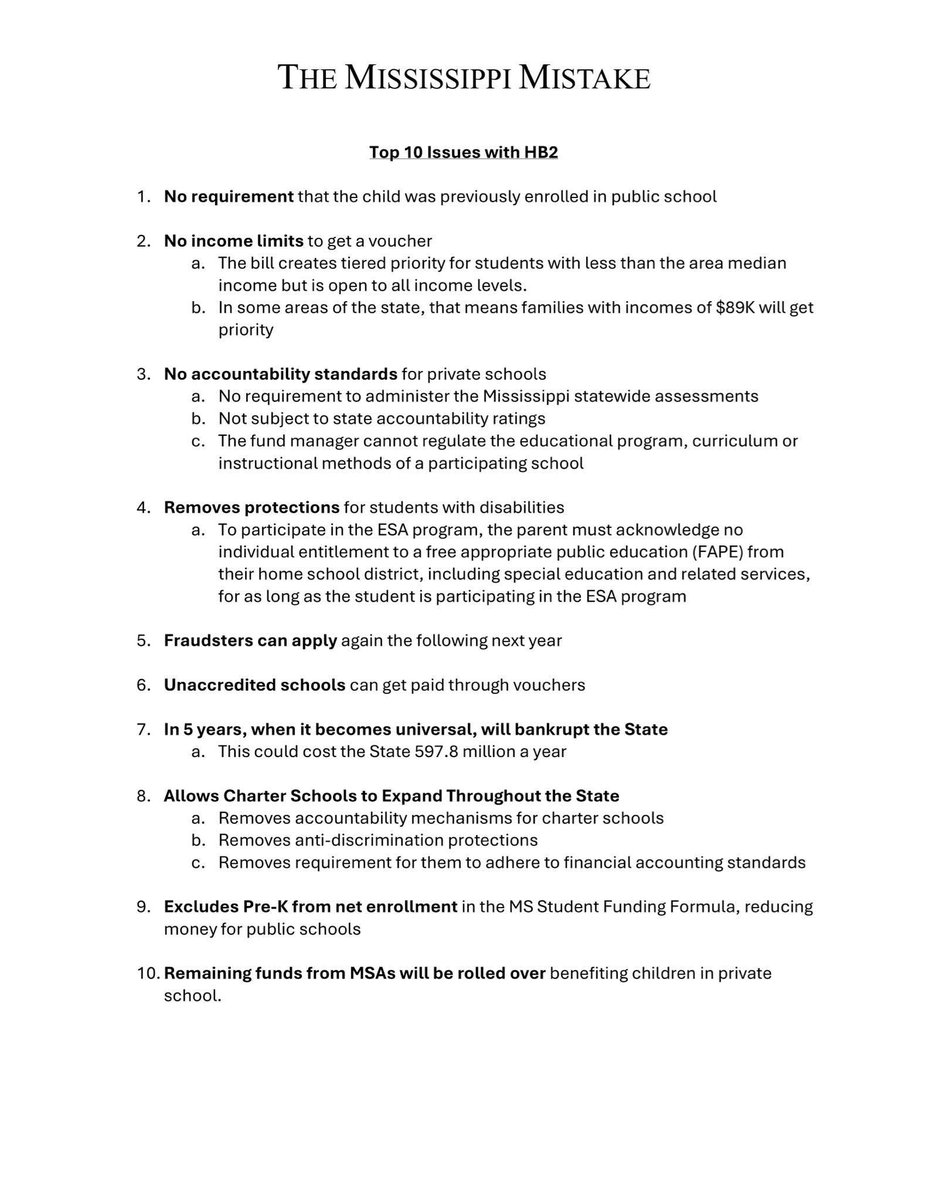
Implementation of universal school choice can be rapid or measured. Many states have used lengthy phase-in processes, as well as self-imposed enrollment or spending caps, to provide budget predictability and ensure sustainability. Public school students who use an ESA (Education Savings Account) to attend private school would be budget neutral to the state. Even in states with universal school choice, only about 21% of private school or home school students participate in the program in the first year. Therefore, in Mississippi, using the most recent average state spending per student number ($6,800), we can calculate that the additional cost to the state would be about $90 million. Certainly not an insignificant number, but that is only about 3% of state spending on K-12 education. Mississippi continues to maintain a strong fiscal and financial position. The latest revenue estimate report shows collections up $45.7 million for the month and $69.9 million over estimate for the fiscal year to date.
