Juan Karmy

8K posts

Juan Karmy banner
Juan Karmy

Juan Karmy

@jkarmy

Product Manager @Microsoft (@Office) | Investor / LP @platan_ventures | Creator of @GalerieApp, @SwiftSummary & @SoliditySummary | Music Producer @karmymusic

🇨🇱 → 🇺🇸 Katılım Temmuz 2009
775 Takip Edilen603 Takipçiler
Sabitlenmiş Tweet
Juan Karmy
Juan Karmy@jkarmy·
The use of AI in music is raising a ton of legal questions, especially around copyright, fair compensation and attribution. Let's dive into the main issues: ⚪️ Training Data: Can AI companies use copyrighted music to train their models without permission? Record labels and publishers are saying "no" and suing companies like Suno and Udo. ▶️ Licensing Agreements: AI companies could proactively seek licensing agreements with rights holders to use copyrighted music in training data. ▶️ Transparent Datasets: Greater transparency about the data used to train AI models can build trust with artists and rights holders. Companies like Fairly Trained are offering certification to AI companies using "clean" data. ⚪️ Whose Music Is It?: If AI generates a song, who owns the copyright? The artist? The AI company? What about if AI uses an artist's voice or style? ▶️ Contracts with "AI Clauses": New artist contracts should include specific clauses addressing the use of AI, including ownership of AI-generated works, rights to artist likeness and voice, and revenue sharing. ▶️ Robust Rights Management Tools: The industry needs better technologies to monitor training data, scan user uploads, and detect potential copyright infringement in AI-generated outputs. Companies like BMAT and Audible Magic are developing tools that move the ball in the right direction. ⚪️ Fairness for Artists: How can we make sure artists get paid when their music is used by AI? Some are talking about "data attribution" - figuring out how much each artist's music contributed to AI-generated music. ▶️ Tracking Usage: Attribution models could track how often an artist's music is referenced or used as inspiration for AI-generated tracks. ▶️ Measuring Influence: These models could go beyond simple usage tracking and analyze the extent to which an artist's style, melodies, or even lyrical themes contribute to the final output. ▶️ Revenue Sharing: Accurate attribution data could enable streaming platforms to distribute royalties to artists whose work played a significant role in the creation of popular AI-generated tracks ⚠️ Attribution using AI models is also a technically hard challenge - many AI models are basically a black box, due to the difficulty in understanding how they process data and generate outputs, making it hard to pinpoint the precise influence of individual training data points. ⚠️ Models are often trained on billions of data points, making it challenging to isolate the contributions of specific artists or songs. ⚠️ AI models learn and synthesize patterns in music, which can manifest in subtle and nuanced ways in their outputs. Disentangling these influences to accurately attribute credit requires can be a major challenge. ---------------------------- While significant technical and legal hurdles remain, the industry's focus on this issue and the emergence of innovative solutions offer hope for a future where AI enhances human creativity while respecting copyrights and providing a way for rights holders to monetize their content as AI generated content becomes more widespread.
English
0
0
0
127
Juan Karmy
Juan Karmy@jkarmy·
After more than a year of hard work with the team, I'm super excited to see our feature in the hands of users. 🎉 Users can now open shared Word, Excel, and PowerPoint cloud files on iPhone, iPad and Android devices without needing a Microsoft account. We're making sharing files with others a frictionless experience so there's no time wasted next time you want to use Office to organize a birthday party or keep track of expenses with other people on mobile. Read the news articles below for full release notes. iOS techcommunity.microsoft.com/blog/microsoft… Android techcommunity.microsoft.com/blog/microsoft…
English
0
0
1
113
Juan Karmy retweetledi
Microsoft 365 Insider
Microsoft 365 Insider@Msft365Insider·
📂✨ Mobile sharing just got easier! Anyone can now open and view the contents of Word, Excel, or PowerPoint files you share with them on their iPhone or iPad even if they don’t have a Microsoft account. 🙌 Learn how: msft.it/6016qZkbG #Microsoft365 #iOS #FileSharing
English
0
7
18
10.1K
Robert Scoble
Robert Scoble@Scobleizer·
I have muted everyone in tech. I am unmuting now that I know that it hurts your reach. But only if you are following me and you leave a comment here. That way I know you haven't muted me. I will leave the rest muted because Elon said that if I bug those who have muted me, I'll be marked as a spammer and penalized. Everyone is on my lists: x.com/scobleizer/lis…
English
1.5K
26
1.2K
125.4K
Camila Figueroa Zepeda
Camila Figueroa Zepeda@CamiFigueroa·
Se las mandó el @jiboncom con el desayuno de cumpleaños que me hizo. Preparó hasta el pan ❤️❤️❤️❤️
Camila Figueroa Zepeda tweet media
Español
2
0
6
277
Juan Karmy retweetledi
Cristóbal Valenzuela
Cristóbal Valenzuela@c_valenzuelab·
Runway is not an AI company. Runway is a media and entertainment company. And I actually think the era of AI companies is over. It's not because AI failed - quite the opposite. It's because AI is becoming infrastructure, as fundamental as electricity or the internet. Calling yourself an AI company today is like calling yourself an internet company. It's meaningless because it's universal. Every company uses the internet; every company will use AI. For Runway, our focus is art, media, and entertainment at large. We began Runway almost seven years ago with a vision that remains largely unchanged today: AI is a necessary tool for storytelling. To achieve that vision, we had to work backwards to build the best research team that could deliver the best models on which we could build the best products. I often talk about our work as a new kind of camera. Not in the literal sense of capturing images, but in terms of its historical impact. The camera didn't just create photography - it birthed entire industries, economies, and art forms. Cinema, television, TikTok - all children of that first revolutionary tool that could capture light and time. I think the work we are doing at Runway is part of a new foundation for an entirely new media landscape. Just as the camera transformed how we capture reality, AI is transforming how we create it. The models and technical capabilities we've built are just the beginning - they're the equivalent of those first daguerreotypes, primitive yet pregnant with possibility. The mistake many make is seeing AI as the end goal. It's not. AI is the mechanism, the underlying infrastructure that enables something greater. The real revolution isn't in the technology itself but in what it enables: new forms of expression, new ways of telling stories, new methods of connecting human experiences. Media has traditionally operated like a one-way street. Creation flows down established channels to reach consumers. Even when distribution was disrupted - first by social media, then by streaming - the fundamental pattern remained: someone creates, others consume. The roles were clear, the boundaries defined. But we're witnessing something different now. Imagine watching something that generates itself as you watch it - truly dynamic content that responds to you, understands you, creates for you. Universal Simulation and world building. The distinction between creation and distribution dissolves when content can shape itself in real-time. That is the foundation for an entirely new media landscape. It's about fundamentally reimagining what media can be: interactive, generative, personal - yet simultaneously shared and universal. This is also why pure AI companies are becoming obsolete. The interesting questions aren't about the technology anymore - they're about what we build with it. The next wave of innovation won't come from companies focused on building better models. Models are commodities. The technical foundations are now well-established and known by everyone. There are no secrets. The wave of change will come from those who understand how to use these tools to create new forms of media, new types of experiences, new ways of telling stories. The infrastructure is laid. The foundation is built. Now comes the exciting part: creating something meaningful with it. The end of AI companies marks the beginning of something far more interesting: the birth of truly new media. Not just new platforms or formats, but entirely new ways of creating and experiencing content. We're not building an AI company. And that's a far more exciting mission. Like it has always been; back to our roots.
English
119
252
2.2K
334.7K
Juan Karmy
Juan Karmy@jkarmy·
The music industry is increasingly exploring the use of synthetic data to train AI models. This is largely driven by the high cost and time required to license real-world music data. Let’s take a look at pros and cons: Benefits 🟢 Synthetic data helps reduce the cost and time of training AI models: ▶️ Time and Cost efficient: Creating and using synthetic data can be significantly cheaper than licensing real music and can save a lot of time that would be necessary to negotiate licensing agreements. ▶️ Customization and Control: Synthetic data allows for granular control over the data, enabling the creation of specific types of data for particular AI applications. 🟢 There’s great flexibility in how Synthetic Data is generated: ▶️ Audio Stems: Existing audio stems can be manipulated and combined to create new training examples, as many as needed. ▶️ VST plugins: Plugins can be used to generate specific audio effects, providing controlled data for training models. Drawbacks 🟢 Concerns over the quality of synthetic data used for training AI models: ▶️ The quality of synthetic data can be lower than real-world data, impacting the performance of trained AI models and new music generated using them. 🟢 The implications of synthetic data for the music industry are significant: ▶️ Shifting leverage: As synthetic data becomes more and more prevalent, rights holders' leverage in licensing deals might diminish. This is increasingly concerning as synthetic data improves in quality, closing the gap in quality between synthetic and original content. ▶️ New contractual considerations: Rights holders need to carefully consider provisions related to synthetic data in their agreements with AI companies, ensuring clear terms on data usage and ownership. There is a need to define how copyrights are attributed to rights holders as synthetic data keeps being generated using original content. ▶️ Evolving job landscape: As AI models become more sophisticated, certain creative jobs, such as those involving audio production and sound design, might be impacted. At least in the short term, this will be true for music used in projects with a lower production and lower budgets. ----------------- While synthetic data presents both opportunities and challenges, it's a rapidly evolving area in the music industry. The continued development of synthetic data techniques will shape the future of AI applications in music creation, consumption, and the broader ecosystem.
English
0
0
3
101
Juan Karmy
Juan Karmy@jkarmy·
@cdixon will Read.Write.Own be available in Spanish at some point? I want to give it as a gift to friends and family in South America
English
0
0
1
7
Juan Karmy retweetledi
Min Choi
Min Choi@minchoi·
It's only been just about a week since Cursor got massive attention. And people can't stop building with it. 10 wild examples:
English
94
420
3.8K
981.2K
Nintendo of America
Nintendo of America@NintendoAmerica·
Joy-Con Charging Stand (two-way), a device dedicated to charging Joy-Con controllers, as well as Nintendo Entertainment System controllers for #NintendoSwitch, is releasing 10/17!
Nintendo of America tweet mediaNintendo of America tweet mediaNintendo of America tweet media
English
324
780
8.3K
1M
Juan Karmy retweetledi
Hiten Shah
Hiten Shah@hnshah·
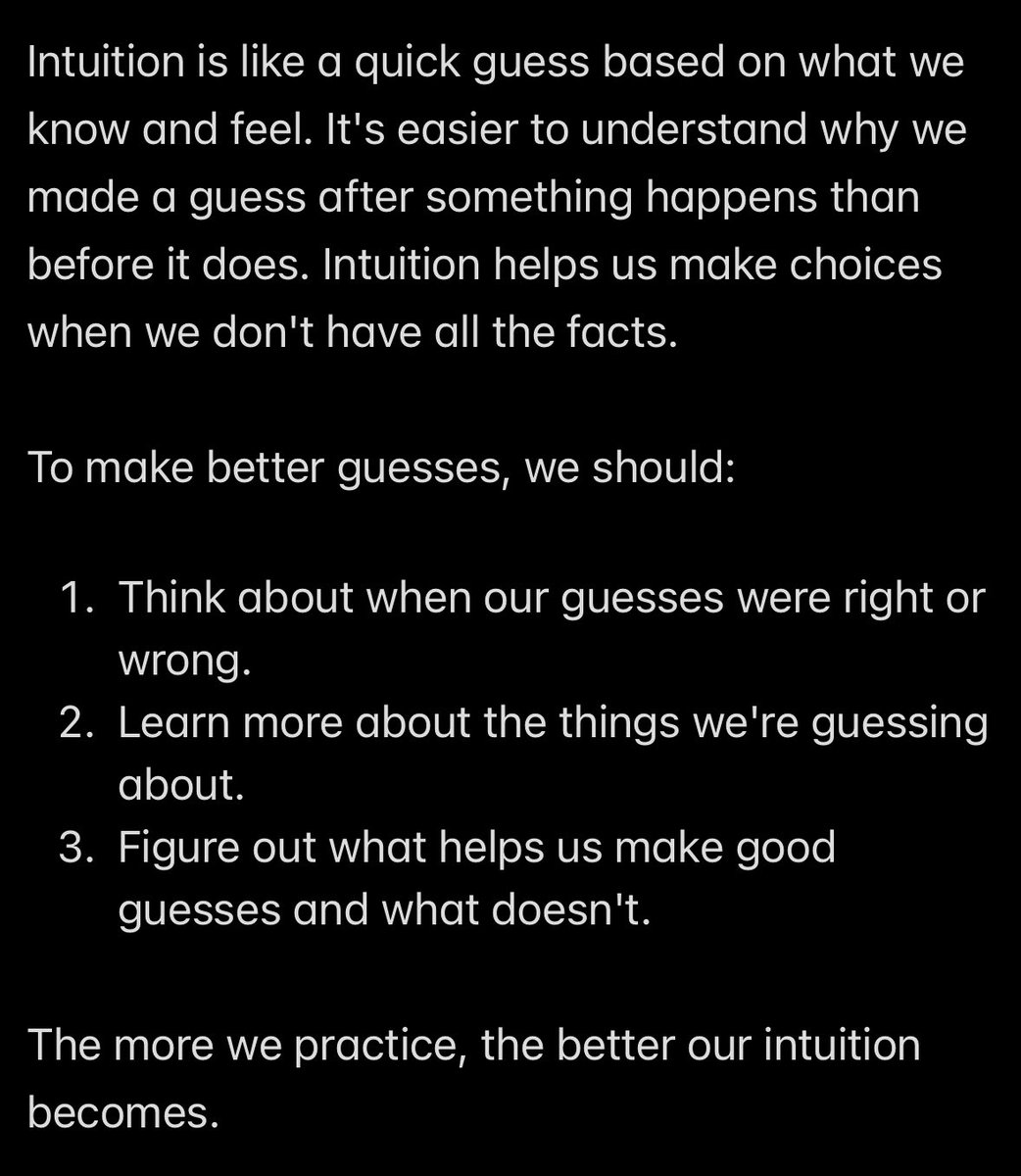
On intuition…
Hiten Shah tweet media
English
7
5
48
27.9K
Javier Boncompte G.
Javier Boncompte G.@jiboncom·
El coso para apretar el café debe ser el producto más sobrevalorado de la historia
Javier Boncompte G. tweet media
Español
1
0
1
188
Juan Karmy
Juan Karmy@jkarmy·
@marclou At most you could compare the acquisition of that startup with a sign-on bonus of jumping to a new job (other company acquiring you).
English
0
0
1
105
Marc Lou
Marc Lou@marclou·
Many people get this wrong. If you own a $3K/month SaaS, you're richer than a software engineer who makes $10K/month. Because you also own an asset that's worth $126.000 (3.5 multiple) Assuming you ship, grow, and sell 1 startup a year, you're making $13,500/month.
Yuvraj Sarda@YuvrajSarda

@marclou @la_moquette Surprising. Pretty much everyone but the top 10-15 indie makers would be making way more in the corporate world.

English
93
40
754
110.4K
Juan Karmy
Juan Karmy@jkarmy·
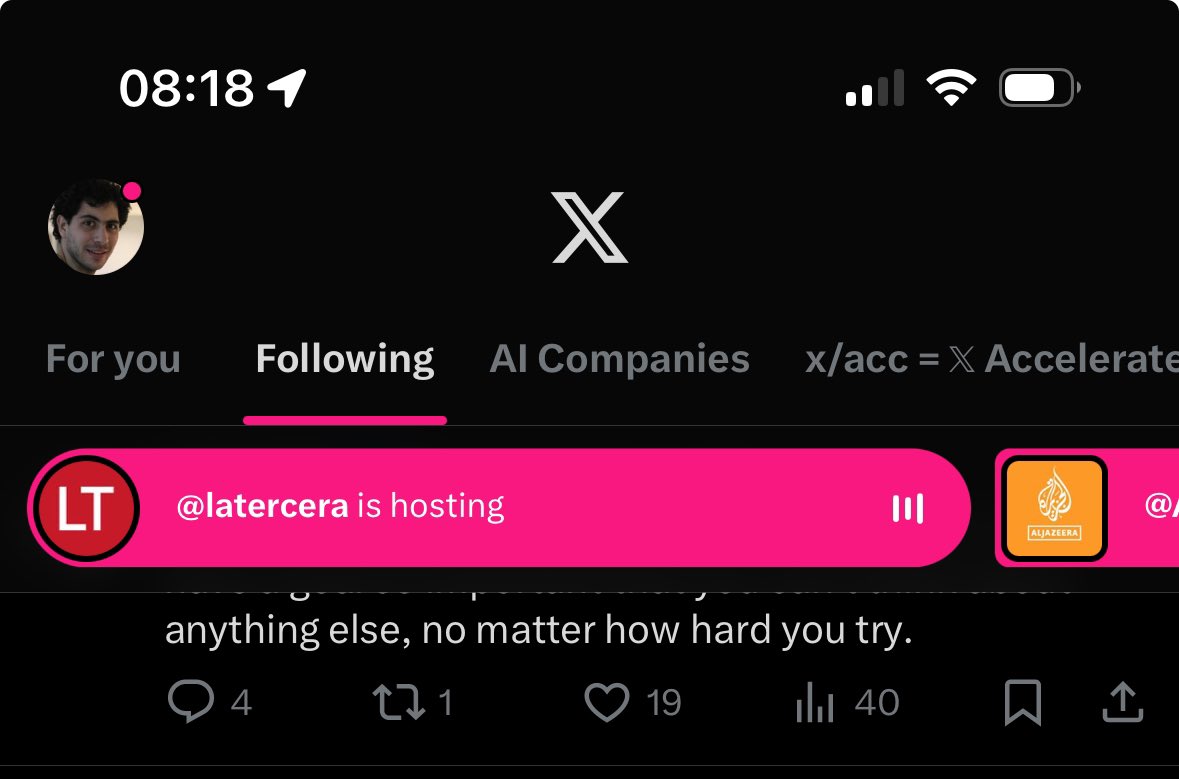
@X can you please fix the live broadcast header issue? It blocks the first post in my timeline
Juan Karmy tweet media
English
0
0
0
10
Marc Lou
Marc Lou@marclou·
Many small bets are necessary to build a startup that'll change your life.
Marc Lou tweet media
English
33
16
458
34.8K
Juan Karmy
Juan Karmy@jkarmy·
Great post by @andrewchen on 10x work vs 1x work For me: 1x work - Doing repetitive tasks, checklist, emails and being reactive to the requests of others. 3x to 5x work - preparing decks for important reviews, communication, newsletters of the work that I do that will bring visibility over my work and promote my work with others (scaling myself). 10x work - meetings with decision makers, reaching out to people who are experts in their areas and meeting with them, going to conferences relevant to my work and get in the room with people that could change the trajectory of my career. It feels like a lot of the 10x actions are related to serendipity.
andrew chen@andrewchen

10x work vs 1x work Imagine the thousands of tasks you did in the past year and sort them by impact. How many of them actually moved the needle? I’m certain this list of tasks would sort themselves into a power law where a tiny number of high upside tasks drove the most impact. These are what I’ll call “10x work” — these are key tasks where your doing them well/poorly really matters, and the result might define your professional output for an entire year (or more). 10x work is weird and often the opposite of routine. 10x work seems to come up randomly, often hang on a few quick and important decisions, unfold in a few days or weeks, and the results can be huge (or catastrophic). Often there’s no undo button. A deal might fall apart and never recover. A product launch might cause usage to explode, when the right punchline in the launch video is crafted. 100 lines of brilliantly written code might be the difference between state of the art versus rapid obsolescence. More here - The case against morning yoga, daily routines, and endless meetings open.substack.com/pub/andrewchen…

English
0
0
5
406
Javi
Javi@rameerez·
@jkarmy @ACSCustomUK never tried them, thanks! I've tried similar earplugs that also filter sound by band though, and what I found is the attenuation is not as good foam earplugs are the simplest and work best for me so far
English
1
0
0
66
Javi
Javi@rameerez·
I have tinnitus and I can’t stand loud noises, so I’ve been avoiding clubs, festivals, going to the movies, etc for years Just bought these 3M construction earmuffs to try going to some loud environments again
Javi tweet mediaJavi tweet media
English
2
0
11
1.5K