Jitendra Pandey

538 posts

Jitendra Pandey

Jitendra Pandey

@jnathp

Katılım Haziran 2011
141 Takip Edilen111 Takipçiler
Jitendra Pandey retweetledi

OpenAI
OpenAI@OpenAI·
Announcing The Stargate Project The Stargate Project is a new company which intends to invest $500 billion over the next four years building new AI infrastructure for OpenAI in the United States. We will begin deploying $100 billion immediately. This infrastructure will secure American leadership in AI, create hundreds of thousands of American jobs, and generate massive economic benefit for the entire world. This project will not only support the re-industrialization of the United States but also provide a strategic capability to protect the national security of America and its allies. The initial equity funders in Stargate are SoftBank, OpenAI, Oracle, and MGX. SoftBank and OpenAI are the lead partners for Stargate, with SoftBank having financial responsibility and OpenAI having operational responsibility. Masayoshi Son will be the chairman. Arm, Microsoft, NVIDIA, Oracle, and OpenAI are the key initial technology partners. The buildout is currently underway, starting in Texas, and we are evaluating potential sites across the country for more campuses as we finalize definitive agreements. As part of Stargate, Oracle, NVIDIA, and OpenAI will closely collaborate to build and operate this computing system. This builds on a deep collaboration between OpenAI and NVIDIA going back to 2016 and a newer partnership between OpenAI and Oracle. This also builds on the existing OpenAI partnership with Microsoft. OpenAI will continue to increase its consumption of Azure as OpenAI continues its work with Microsoft with this additional compute to train leading models and deliver great products and services. All of us look forward to continuing to build and develop AI—and in particular AGI—for the benefit of all of humanity. We believe that this new step is critical on the path, and will enable creative people to figure out how to use AI to elevate humanity.
English

5.4K
10.4K
59.4K
33.9M
Jitendra Pandey retweetledi
Vidit Gujrathi
Vidit Gujrathi@viditchess·
Congratulations @DGukesh !! Youngest World champion ever! Amazing achievement 👏👏👏
Vidit Gujrathi tweet media
English
76
1.3K
39.7K
543.9K
Jitendra Pandey retweetledi
Garry Kasparov
Garry Kasparov@Kasparov63·
My congratulations to @DGukesh on his victory today. He has summitted the highest peak of all: making his mother happy!
English
256
4.9K
59K
1.7M
Jitendra Pandey retweetledi
Stanford Engineering
Stanford Engineering@StanfordEng·
The all-new Stanford Robotics Center features research bays arranged side-by-side, including a medical bay, a domestic bay, a dance studio, and more. Robotics researchers now have a unified, state-of-the-art facility for cross-disciplinary collaboration. engineering.stanford.edu/news/new-cente…
English
0
3
17
5.5K
Jitendra Pandey retweetledi
Bob Metcalfe
Bob Metcalfe@RobertMMetcalfe·
Title of my 1968 MIT bachelor thesis in EE was “A Neuron Model and Some of Its Information Processing Capabilities.” 1968. My advisor, Marvin Minsky, accepted the thesis, but I could tell he didn’t like it much. So I went farther down the 9th floor and got a job with JCR Licklider helping to build the Arpanet/Ethernet/Internet. Worked out.
English
53
203
1.7K
182.6K
Jitendra Pandey retweetledi
Jay Cummings
Jay Cummings@LongFormMath·
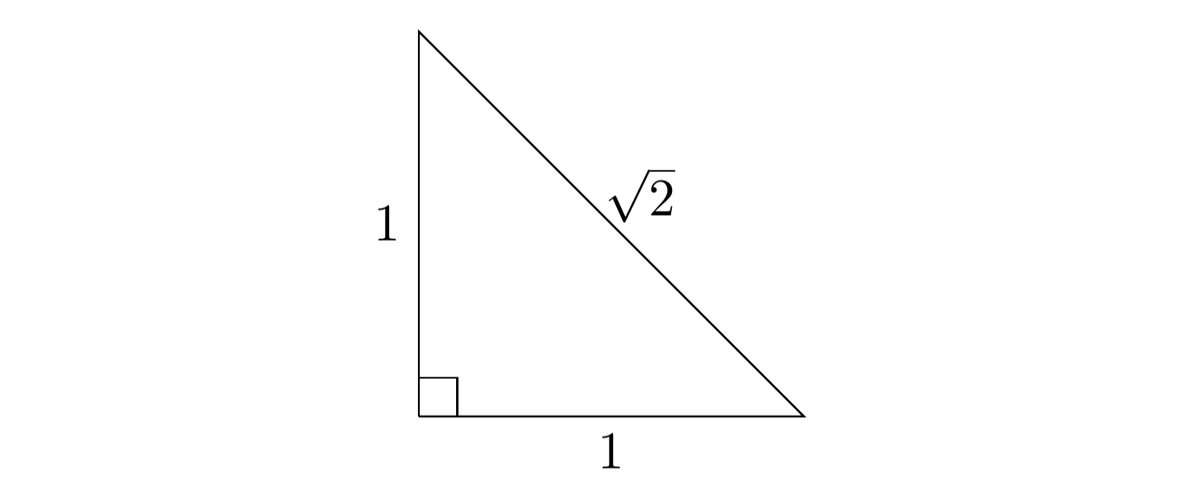
Here is a lovely geometric proof that sqrt(2) is irrational. The proof begins by looking at an isosceles right triangle whose legs have length 1. By the Pythagorean theorem, this triangle's hypotenuse will have length sqrt(2).
Jay Cummings tweet media
Jay Cummings@LongFormMath

Today I learned a new and beautifully-simple proof that sqrt(2) is irrational and I feel the same giddy excitement as when I was a student. I can’t believe this is my job.

English
76
615
4.4K
1.2M
Jitendra Pandey retweetledi
Andrew Ng
Andrew Ng@AndrewYNg·
Multi-agent collaboration has emerged as a key AI agentic design pattern. Given a complex task like writing software, a multi-agent approach would break down the task into subtasks to be executed by different roles -- such as a software engineer, product manager, designer, QA (quality assurance) engineer, and so on -- and have different agents accomplish different subtasks. Different agents might be built by prompting one LLM (or, if you prefer, different LLMs) to carry out different tasks. For example, to build a software engineer agent, we might prompt the LLM: "You are an expert in writing clear, efficient code. Write code to perform the task …". It might seem counterintuitive that, although we are making multiple calls to the same LLM, we apply the programming abstraction of using multiple agents. I'd like to offer a few reasons: - It works! Many teams are getting good results with this method, and there's nothing like results! Further, ablation studies (for example, in the AutoGen paper cited below) show that multiple agents give superior performance to a single agent. - Even though some LLMs today can accept very long input contexts (for instance, Gemini 1.5 Pro accepts 1 million tokens), their ability to truly understand long, complex inputs is mixed. An agentic workflow in which the LLM is prompted to focus on one thing at a time can give better performance. By telling it when it should play software engineer, we can also specify what is important in that subtask: For example, the prompt above emphasized clear, efficient code as opposed to, say, scalable and highly secure code. By decomposing the overall task into subtasks, we can optimize the subtasks better. - Perhaps most important, the multi-agent design pattern gives us, as developers, a framework for breaking down complex tasks into subtasks. When writing code to run on a single CPU, we often break our program up into different processes or threads. This is a useful abstraction that lets us decompose a task -- like implementing a web browser -- into subtasks that are easier to code. I find thinking through multi-agents roles to be a useful abstraction. In many companies, managers routinely decide what roles to hire, and then how to split complex projects -- like writing a large piece of software or preparing a research report -- into smaller tasks to assign to employees with different specialties. Using multiple agents is analogous. Each agent implements its own workflow, has its own memory (itself a rapidly evolving area in agentic technologies -- how can an agent remember enough of its past interactions to perform better on upcoming ones?), and may ask other agents for help. Agents themselves can also engage in Planning and Tool Use. This results in a cacophony of LLM calls and message passing between agents that can result in very complex workflows. While managing people is hard, it's a sufficiently familiar idea that it gives us a mental framework for how to "hire" and assign tasks to our AI agents. Fortunately, the damage from mismanaging an AI agent is much lower than that from mismanaging humans! Emerging frameworks like AutoGen, Crew AI, and LangGraph, provide rich ways to build multi-agent solutions to problems. If you're interested in playing with a fun multi-agent system, also check out ChatDev, an open source implementation of a set of agents that run a virtual software company. I encourage you to check out their github repo and perhaps even clone the repo and run the system yourself. While it may not always produce what you want, you might be amazed at how well it does! Like the design pattern of Planning, I find the output quality of multi-agent collaboration hard to predict. The more mature patterns of Reflection and Tool use are more reliable. I hope you enjoy playing with these agentic design patterns and that they produce amazing results for you! If you're interested in learning more, I recommend: - Communicative Agents for Software Development, Qian et al. (2023) (the ChatDev paper) - AutoGen: Enabling Next-Gen LLM Applications via Multi-Agent Conversation, Wu et al. (2023) - MetaGPT: Meta Programming for A Multi-Agent Collaborative Framework, Hong et al. (2023) [Original text: deeplearning.ai/the-batch/issu… ]
English
91
509
2.4K
414.6K
Jitendra Pandey retweetledi
Andrew Ng
Andrew Ng@AndrewYNg·
Meta released Llama 3 on my birthday! 🎂 Best present ever, thanks Meta! 😀
English
287
162
4.1K
293.4K
Jitendra Pandey retweetledi
Yann LeCun
Yann LeCun@ylecun·
Current LLMs are trained on text data that would take 20,000 years for a human to read. And still, they haven't learned that if A is the same as B, then B is the same as A. Humans get a lot smarter than that with comparatively little training data. Even corvids, parrots, dogs, and octopuses get smarter than that very, very quickly, with only 2 billion neurons and a few trillion "parameters."
Yann LeCun@ylecun

Animals and humans get very smart very quickly with vastly smaller amounts of training data. My money is on new architectures that would learn as efficiently as animals and humans. Using more data (synthetic or not) is a temporary stopgap made necessary by the limitations of our current approaches.

English
488
938
7.4K
2.5M
Jitendra Pandey retweetledi
Yann LeCun
Yann LeCun@ylecun·
Animals and humans get very smart very quickly with vastly smaller amounts of training data. My money is on new architectures that would learn as efficiently as animals and humans. Using more data (synthetic or not) is a temporary stopgap made necessary by the limitations of our current approaches.
English
311
566
5.4K
3M
Jitendra Pandey retweetledi
MLflow
MLflow@MLflow·
Evaluating LLMs’ performance is slightly different from traditional #ML models, as very often there is no single ground truth to compare against. #MLflow provides an API 𝗺𝗹𝗳𝗹𝗼𝘄.𝗲𝘃𝗮𝗹𝘂𝗮𝘁𝗲() to help evaluate your #LLMs. LLM Evaluation Examples: mlflow.org/docs/latest/ll…
MLflow tweet media
English
1
8
26
2.3K
Jitendra Pandey retweetledi
Andrew Ng
Andrew Ng@AndrewYNg·
Releasing good open-source code is giving a wonderful gift to the world. I'm thrilled the UK deputy PM @OliverDowden gets it, and just made a strong statement in support of open-source: “It's not just economies like the U.K. and other European countries that benefit from open source. I see it in so many applications that are being created right now. I see tiny startups that are already billion dollar plus companies within a matter of literally months off the back of open source. It’s also the case if we want to make sure it spreads globally, in terms of the developing world. So I think there was a very high bar to restrict open source in any way." politico.eu/article/britis…
English
21
124
938
217K
Jitendra Pandey retweetledi
Jagane Sundar
Jagane Sundar@jagane·
I'm presenting a webinar titled 'HIPAA Compliance for AI Data Using InfinStor MLflow' on Jul 27 @ 11 AM Pacific. If this interests you, please signup at: us06web.zoom.us/j/5632556801?p…
English
0
2
1
0
Jitendra Pandey retweetledi
Andrej Karpathy
Andrej Karpathy@karpathy·
real-world data distribution is ~N(0,1) good dataset is ~U(-2,2)
English
44
59
847
0