A 25 year old just turned $225 million into $5.5 billion in 12 months.
Here’s exactly what he bought.
Leopold Aschenbrenner got fired from OpenAI in April 2024.
He spent the next few months writing a 165-page thesis predicting AGI by 2027.
Then he launched a fund and put his money where his thesis was.
He bought zero Nvidia. Zero Microsoft. Zero Google. Zero Amazon.
He bought what AI actually runs on.
Bloom Energy (BE), power infrastructure for data centers. Up 1,422% in one year.
Lumentum (LITE), optical components that move data between chips. Up 1,331%.
Sandisk (SNDK), storage. Up 3,130%.
CoreWeave (CRWV), GPU cloud infrastructure. Up 166%.
Iris Energy (IREN), AI computing and data centers. Up 583%.
The thesis was simple: every AI company needs energy, bandwidth, storage, and compute.
Nobody was buying those. Everyone was buying the AI companies themselves.
He was right.
His fund now manages $6 billion. Backed by Patrick and John Collison of Stripe and former GitHub CEO Nat Friedman.
I’m adding this to my watchlist.
Every time he files a new 13F, we will break it down here.
Turn on notifications so you don’t miss the alert, this is VERY important.
Many people will wish they followed us sooner.
PSA: If you still want to use Opus 4.6 with your openClaw/Clawbot, just give your agent this
"models auth login --provider anthropic --method cli --set-default"
This switches OpenClaw to use Claude CLI as the backend instead of the OAuth token directly. Since Claude CLI is Anthropic's first-party tool, it's still allowed under the subscription.
Then you just go to your mac mini, and log in, and then you should be good.
@addyosmani hey Addy, hope your good!
I work @Mercadolibre , we have @GoogleWorkspace , but about a month ago we started making a lot of html presentations with @claudeai Code, since it's easier, faster and better than making a Google Slides Presentation
But, the problem is that you lose all of the benefits of Drive Documents, comments, permissions that you have with Google Slides
I had an idea, I don't know if you are thinking / building it, but, there would be awesome if you can let us build htmls, upload them to @googledrive , and you at Google allow that html to have the same capabilities / properties than a Google Slide / Google Doc / Google Spreadsheet: select people to share with, comment on that html and version it
In that way, we have the best of both worlds: Claude Code keeps making / editing the html quickly, and Google Workspace Companies keep the same benefits from Google Drive Documents
The secret of life is to approach it playfully.
Everything can be approached with a sense of lightness, joy, and ease.
Doesn't matter what you're doing. Working at a cafe. Meeting someone new. Going out to dinner. Taking a work call. Writing a tweet. Going on a crazy travel adventure.
The illusion is that things are meant to be taken seriously.
This morning, I caught myself racing against time.
I had a friend arriving in Thailand.
I wanted to work out, jump in the ocean, and get coffee before he got here.
I was stressed and tense — battling against reality instead of flowing with it.
But everything changed with one mindset shift.
It's what I have tattooed on my arm:
"It's all play."
I decided to see the entire situation as a scene out of a movie to experience — rather than something to control and fight.
Ripping my motorbike through town, jumping in the ocean, and grabbing a cappuccino became an electric experience to enjoy rather than something to rush through.
My friend arrived, and the rest of the day flowed magically because my vibrational state shifted from tension to flow.
So whenever you're rushing, tense, or way too serious — a red flag should go up in your mind.
Life is not meant to be taken so seriously.
Reality is not meant to be controlled and fought against.
This is meant to be a game, a movie, an exploration in consciousness, and a journey your soul chose to experience through the character of you.
Sink into that state of awareness and watch your life play out more magically than you could have ever controlled from a tense, rigid mind.
It's all play.
Anthropic publicó uno de los mejores artículos sobre cómo construir agentes con LLMs.
Explica 5 patrones de arquitectura muy comunes en estos sistemas:
1) Prompt chaining
En lugar de pedir todo en un solo prompt, dividís el problema en pasos donde cada uno usa el resultado del anterior.
Ej: leer un PR → identificar archivos modificados → resumir cambios → generar comentario de review.
2) Routing
Usar el modelo para entender qué tipo de tarea es y decidir qué workflow ejecutar.
Ej: si el pedido es explicar código → abrir el archivo y analizarlo. Si es arreglar un test → correr los tests y buscar el error.
3) Parallelization
Hacer varias llamadas al modelo al mismo tiempo para explorar distintas soluciones o analizar partes del problema en paralelo.
Ej: generar varias soluciones a un bug y después elegir la mejor.
4) Orchestrator / workers
Un agente principal divide un problema grande en subtareas y las delega a agentes especializados.
Ej: analizar un deploy fallido → uno revisa logs, otro métricas, otro cambios en el repo → después el agente principal junta esa información y arma el análisis.
5) Evaluator / optimizer
Un modelo genera una respuesta y otro la evalúa y la mejora.
Ej: uno escribe código y otro lo revisa, corre tests y propone mejoras.
Me gustó mucho. Se los recomiendo.
Les dejo el link:
anthropic.com/engineering/bu…
We are overstimulated and we don't even notice. Netflix while eating. Reels in the bathroom. Music while cooking. Podcasts on walks. We consume by default, not by intention. You keep filling every gap, then wonder why you feel foggy and unmotivated. Boredom and silence are the real growth drivers. They give you space to think and create. That's when solutions show up for problems that have been stuck for months. Leave some room.
Construí un hedge fund con IA que analiza acciones como Buffett, Burry y Cathie Wood.
18 agentes, cada uno con su filosofía de inversión. Le pasás un ticker, debaten entre sí, y un Portfolio Manager toma la decisión final.
Lo que me sorprendió: Graham y Wood llegan a conclusiones completamente opuestas sobre el mismo stock. Exactamente como en la vida real.
Stack:
→ yfinance (datos, gratis)
→ AI Hedge Fund open source
→ Gemini 2.5 Flash (LLM, gratis)
→ Corre local, $0 de servidor
Repo: github.com/virattt/ai-hed… (46K ⭐)
Introducing the new Gemini powered Docs, Sheets, Slides, and Drive experience featuring AI Overviews, fulled editable AI made slides, and new grounding sources to make writing docs context aware 📃
Available today to G1 Pro and Ultra users : )
@rquiroga777 Buenísimo Rodri! Pregunta, de casualidad tenes la API a disposición? Para enchufarla con un Cli o MCP y desde Claude poder hacerle preguntas y análisis agénticos
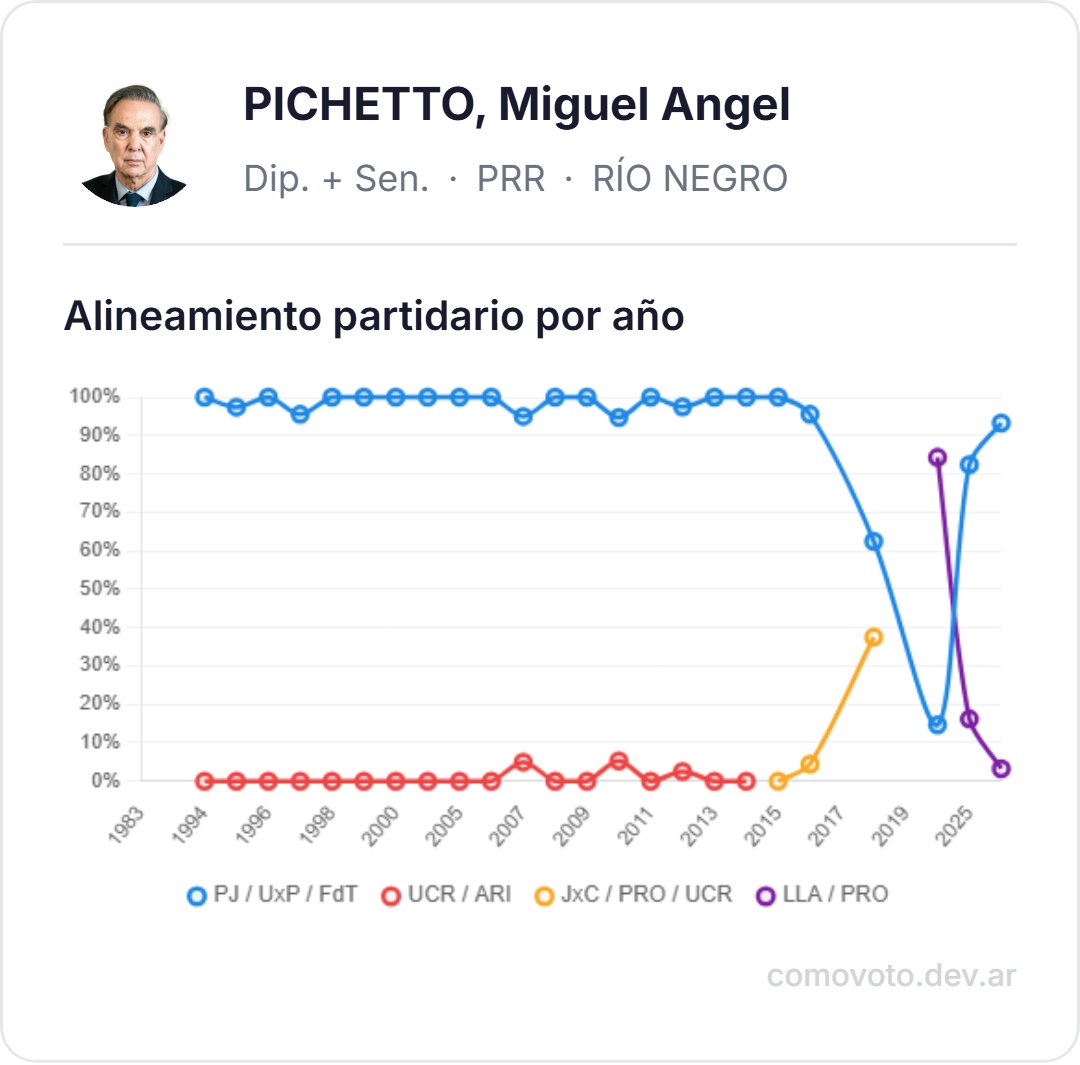
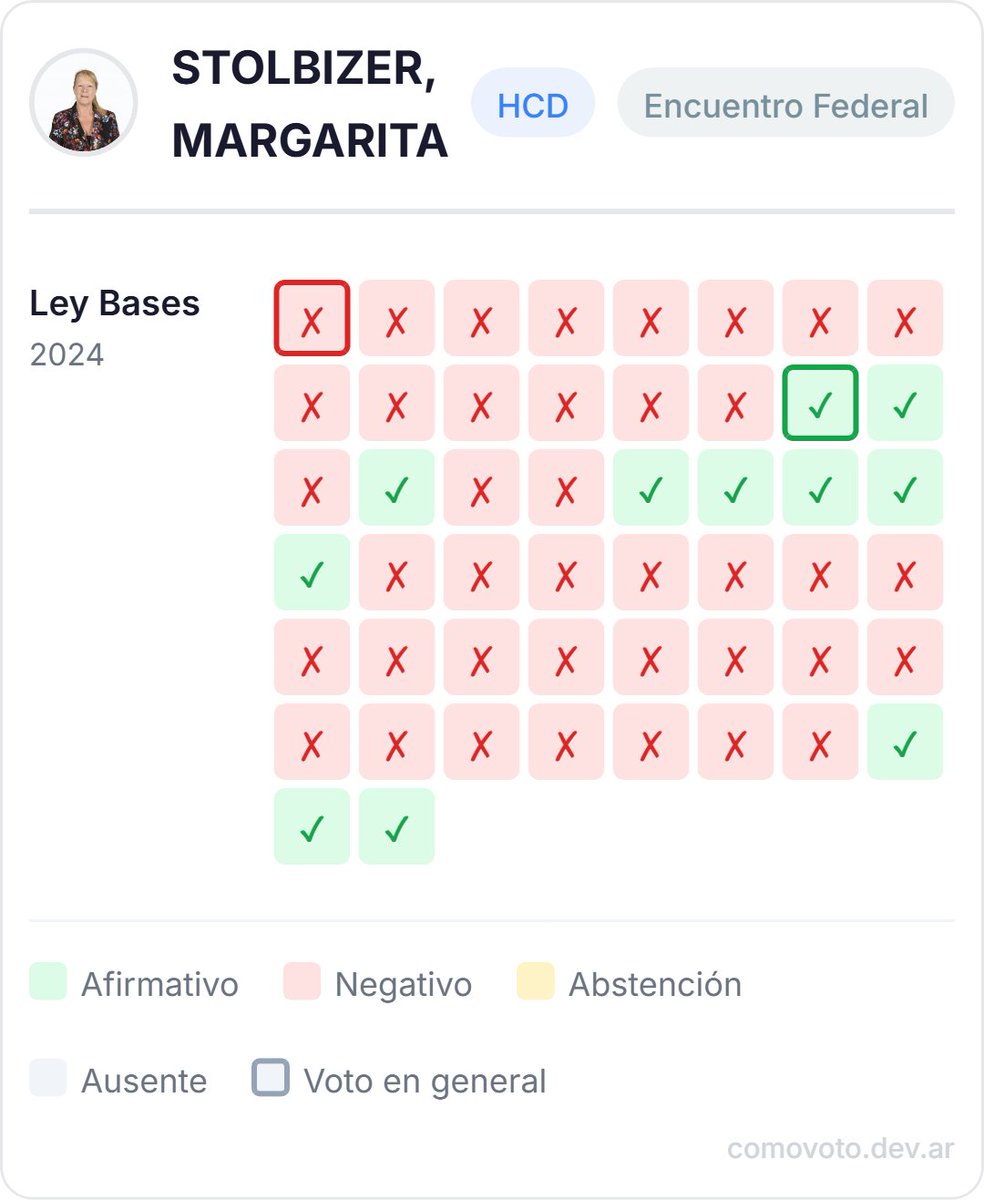
Lancé un proyecto que se llama “¿Cómo Votó?”
Una página web de código abierto para ver cómo votó cada legislador argentino desde 1993. Ley por ley, votación por votación. Con índices de alineamiento partidario y la posibilidad de generar imágenes y compartir en X.
Is Traditional Software Engineering Dead?
“Does this mean that traditional software engineering is dead? Absolutely not. Software engineers—even the ones who are not necessarily tuning or training AI models—these are now among the most leveraged people on earth. Sure, the guys who are training and tuning models are even more leveraged because they’re building the tool set that software engineers are using.
But software engineers still have two massive advantages on you. First, they think in code, so they actually know what’s going on underneath. And all abstractions are leaky. So when you have a computer programming for you—when you have Claude Code or equivalent programming for you—it’s going to make mistakes.
It’s going to have bugs. It’s going to have suboptimal architecture. So it’s not going to be quite right. And someone who understands what’s going on underneath will be able to plug the leaks as they occur.
So if you want to build a well-architected application, if you want to be able to even specify a well-architected application, if you want to be able to make it run at high performance, if you want it to do its best, if you want to catch the bugs early, then you’re going to want to have a software engineering background.
The traditional software engineer is going to be able to use these tools much better. And there are still many kinds of problems in software engineering that are out of scope for these AI programs today. The easiest way to think about those is problems that are outside of their data distribution.
For example, if they need to do a binary sort or reverse a linked list, they’ve seen countless examples of that, so they’re extremely good at it. But when you start getting out of their domain—where you have to write very high-performance code, when you’re running on architectures that are novel or brand new, when you’re actually creating new things or solving new problems, then you still need to get in there and hand code it.
At least until either there are so many of those examples that new models can be trained on them, or until these models can sufficiently reason at even higher levels of abstraction and crack it on their own…
And remember: there is no demand for average. The average app—nobody wants it, at least as long as it’s not filling some niche that is filled by a superior app. The app that is better will win essentially a hundred percent of the market. Maybe there’s some small percentage that will bleed off to the second-best app because it does some little niche feature better than the main app, or it’s cheaper, or something of the sort.
But generally speaking, people only want the best of anything. So the bad news is there’s no point in being number two or number three—like in the famous Glengarry Glen Ross scene where Alec Baldwin says, “First place gets a Cadillac Eldorado, second place gets a set of steak knives, and third place you’re fired.”
That’s absolutely true in these winner-take-all markets. That’s the bad news: You have to be the best at something if you want to win.
However, the set of things you can be best at is infinite. You can always find some niche that is perfect for you, and you can be the best at that thing. This goes back to an old tweet of mine where I said, “Become the best in the world at what you do. Keep redefining what you do until this is true.”
And I think that still applies in this age of AI.”
I run my meta ads with @openclaw for $0/month 😱
here's the system that runs autonomously:
step 1: daily health check
→ social-cli (major shoutout to @vishalojha_me) wraps @Meta's marketing API (token refresh, pagination, rate limits all handled)
→ am I on track? what's running? who's winning? who's bleeding? any fatigue?
→ the same 5 questions I asked Ads Manager every morning for 20 years
step 2: catch dying ads before CPA spikes
→ @OpenClaw pulls daily frequency by ad
→ frequency > 3.5 = audience is cooked, CTR is about to drop
→ this one signal saves more money than any dashboard
step 3: auto-pause bleeders + shift budget to winners
→ CPA > 2.5x target for 48hrs? auto-pause. no hesitation.
→ ranks every campaign by efficiency. recommends shifting spend.
→ last fri it paused an $87 CPA campaign at 3am and scaled my best performer 30%
step 4: write new ad copy from your winners
→ agent analyzes what's working (hooks, angles, CTAs)
→ generates variations based on the patterns in YOUR top performers
→ copy modeled on what already converts in your account.
step 5: upload ads directly to your account
→ new creative + copy
→ live in @Meta Ads Manager
→ no more downloading, formatting, clicking through the upload flow
→ agent handles the entire publish cycle
step 6: content concepts + morning brief
→ spots patterns across winners and suggests what to test next
→ delivers everything to Telegram, Slack, wherever you want it
→ 90 seconds to read. reply "approved." done.
input: your ad account + your target CPA
output: an AI that monitors, kills, scales, writes, AND uploads your ads
dozens of hours in ad manager → 1 text message
I packaged the entire system as the Meta Ads Kit.
5 @OpenClaw skills:
- meta-ads (daily checks + auto-pause)
- ad-creative-monitor (fatigue detection)
- budget-optimizer (efficiency scoring + shift recs)
- ad-copy-generator (writes variations from your winners)
- ad-upload (publishes creative directly to your account)
giving it away free.
comment ADS + like + follow
(must follow so i can DM)
CLAUDE CODE CONECTADO A META ADS 🤯
Hice algo que me sirvió un montón y también les va a servir a ustedes: un mcp para conectarse directamente a Meta Ads y poder chatear con sus datos.
Lo mejor de todo es que le sumé la skill que armó Meta en Manus, y tiene toda la info OFICIAL de la plataforma.
Le pasan este link a claude code y le piden que los ayude a configurarlo, y listo.
Van a tener que crear una app en la consola de desarrolladores de Meta y pasarle un par de tokens y listo.
github.com/mathiaschu/met…
(BTW, es mi primer repo público 🥹)