

John Hooper
7K posts
John Hooper
@john_hooper
Italy & Vatican correspondent, The Economist. Author of The Italians & The New Spaniards. I also write on trans-national organized crime. Views my own.
Rome & Florence Katılım Haziran 2009
919 Takip Edilen10.5K Takipçiler

@catholicourtney I feel like this is partially for @elonmusk and some of the love forever crowd.
English

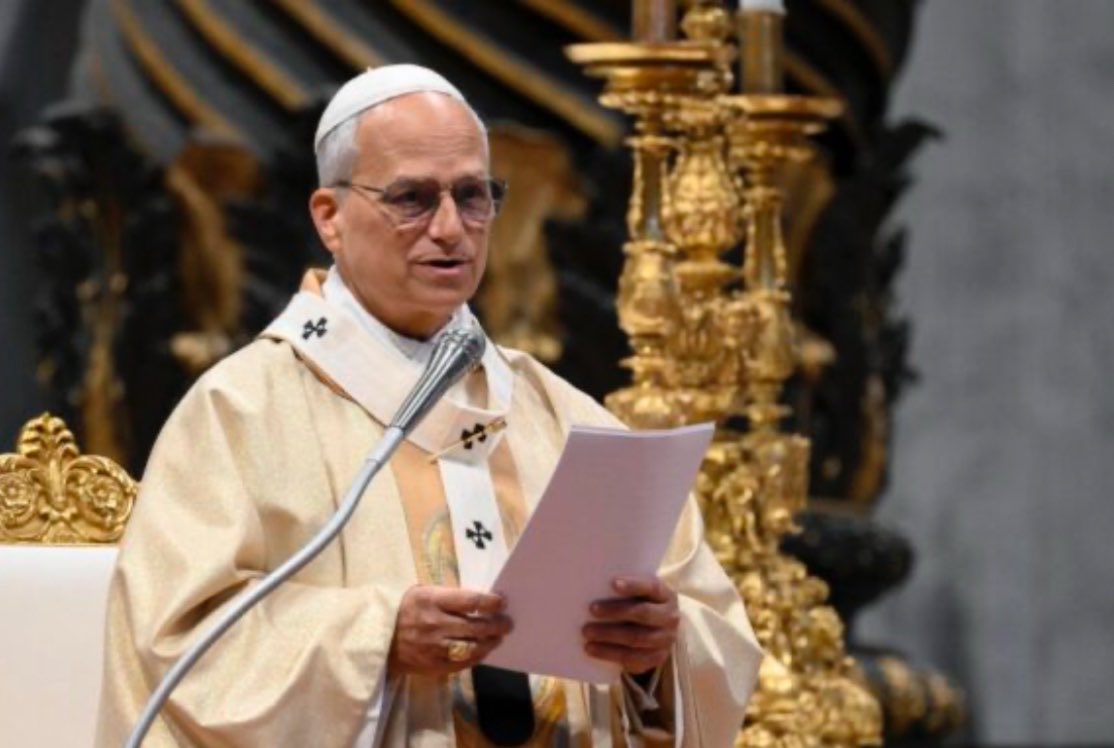
In his first encyclical, Pope Leo XIV quotes J.R.R. Tolkien's "Lord of the Rings: The Return of the King.”
“It is not our part to master all the tides of the world, but to do what is in us for the succour of those years wherein we are set, uprooting the evil in the fields that we know, so that those who live after may have clean earth to till.”
(Photo: Vatican Media)
English
@talhasezgin6107 @catholicourtney A great deal, I suspect. He was a Catholic and would have no doubt preferred to be quoted by a pope than by some of the others who have embraced his writings.
English

@catholicourtney I wonder what would this mean for Tolkien if he knew
English
@NathanielParish @catholicourtney Indeed he does, starting with Giorgia Meloni.
English
@catholicourtney Tolkien also has a devout fan base among Italian conservatives 🇮🇹
English
@elbravozamazing @catholicourtney What does that have to do with Tolkien?
English

@john_hooper @catholicourtney Liberal feggots arent welcome Iin the church John
English
@dmcp65 @catholicourtney Lots. Poor old Tolkien was first of all adopted by the Hippies. But then by many on the far right (the Italian MSI youth movement attended Hobbit Camps). And now LotR is the bible of the tech bros, many of whom subscribe to MAGA ideals.
English

@john_hooper @catholicourtney What does right or left have to do with it?
English
Makes eminent sense...
Big Brain Business@BigBrainBizness
Brené Brown, researcher and author, on the contradiction she keeps hearing in rooms full of tech billionaires: Her work puts her in rooms where the founders and CEOs of major tech platforms talk openly about how they think. What @BreneBrown hears there unsettles her: "So I hear someone say, 'Hey, you know, tech billionaire, what should my kids study? I'm worried for my kids… they should study coding, physics,' and then five minutes later, as if that answer didn't happen, someone will say, 'What do you attribute your success to?' I mean deeply when you think about it, and the same person will say, 'My deep reading of philosophy and the stoics.'" The contradiction is what stops her: the same people crediting philosophy and the liberal arts for their own success are telling other parents their kids should focus on coding and physics. That gap leads her to a bigger, more uncomfortable question: "I start to extrapolate from there and wonder if there is a thinking class that's emerging where they're like, 'We're going to read philosophy and we're going to read the liberal arts and we're going to study history, and the rest of you just keep scrolling. Don't worry about the big words. We'll handle all the big words for you.'" She points to Steve Jobs as an early signal of the same pattern: "It's like when they asked Steve Jobs, 'Boy, your kids must love the iPad.' Steve Jobs said, 'My kids don't have an iPad.' And then his biographer who spent time with his family said he wasn't kidding. There's no technology. At dinner, they're talking about art and history." The takeaway is simple but uncomfortable. The people building these platforms are protecting their own kids from them, and giving them books, ideas, and real conversation instead. So why are the rest of us being sold something different?
English
John Hooper retweetledi

In 1990s, a Baruch College study showed that US media, covering rise of Religious Right influence in GOP, entirely missed concurrent rise of Secular Left in the Democrats. Authors theorized that it's bec media, being liberal, couldn't see it. They thought this was normal.
Ryan Burge 📊@ryanburge
Here's the religious composition of Democrats in 1972: Protestant: 59% Catholic: 31% Non-Religious: 4% Something Else: 6.5% In 2024: Protestant: 36% (-23 pts) Catholic: 20% (-11 pts) Non-Religious: 32% (+28 pts) Something Else: 12% (+6 pts)
English
You need to read the encyclical (or at least the start) to understand the allusion. #pope
Alberto Melloni@albertomelloni
Le mura di Neemia #MagnificaHumanitas
English
I sense a lot of commentators are shrinking from an obvious interpretation of Pope Leo’s encyclical: it’s an onslaught on (almost) everything Trump and MAGA stand for. My take for The Economist Espresso app. You can try Espresso free for 7 days. economist.com/the-world-in-b…
English
@john_hooper thanks so much John. Hope all's good with you xx
English
I'm so chuffed to win this award. And so glad the piece cited was about Joe Black who was let down horrifically by the hostel he lived in, and whose mum Jude has campaigned heroically in his memory♥️
The Press Awards@PressAwardsuk
Congratulations to Simon Hattenstone for being awarded winner of Broadsheet Feature Writer of the Year at the Press Awards 2026 @guardian
English
John Hooper retweetledi
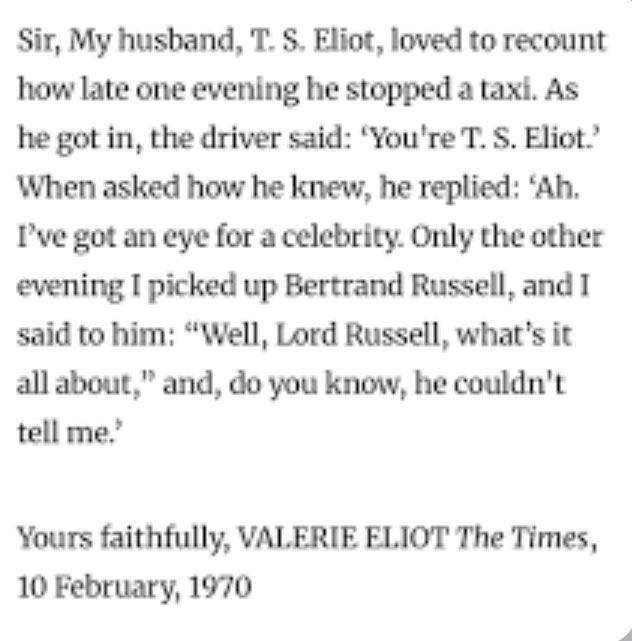
I'm preparing a talk on the basics of philosophy entitled "What's it all about?" and will start by quoting this wonderful letter by Valerie Eliot about Bertrand Russell and the cabbie.
English
John Hooper retweetledi

A Norwegian neuroscientist spent 20 years proving that the act of writing by hand changes the human brain in ways typing physically cannot, and almost nobody outside her field has read the paper.
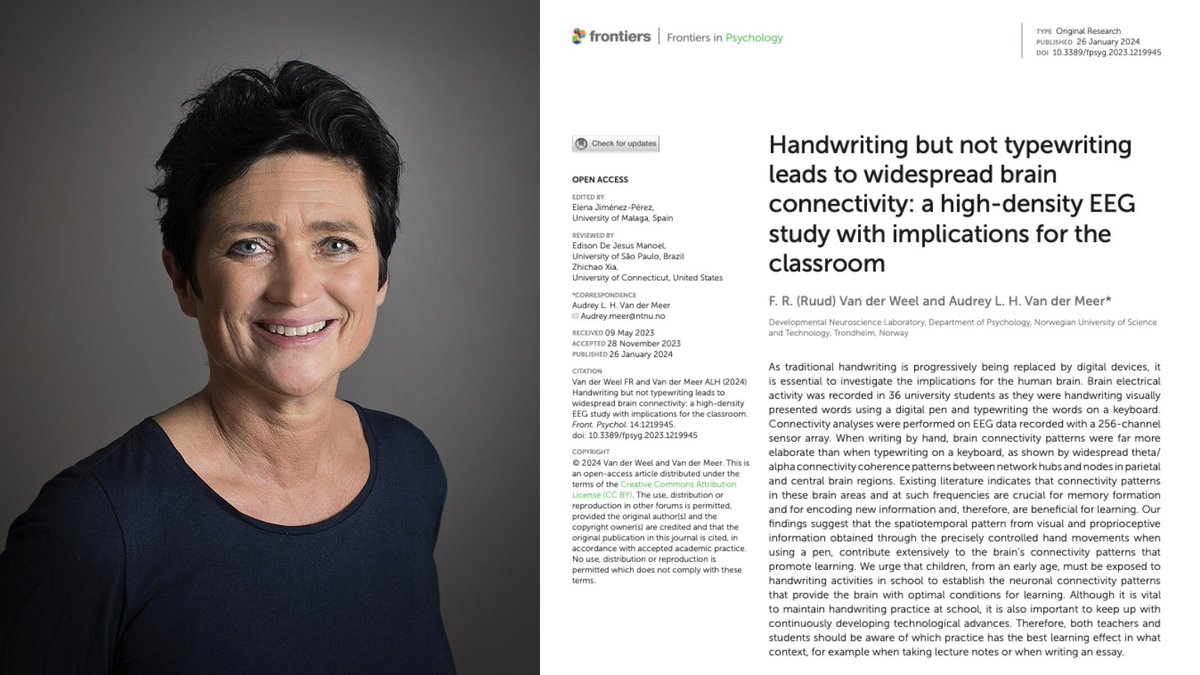
Her name is Audrey van der Meer.
She runs a brain research lab in Trondheim, and the paper that closed the argument was published in 2024 in a journal called Frontiers in Psychology. The finding is brutal enough that it should have changed every classroom on Earth.
The experiment was simple. She recruited 36 university students and put each one in a cap with 256 sensors pressed against their scalp to record brain activity. Words flashed on a screen one at a time.
Sometimes the students wrote the word by hand on a touchscreen using a digital pen, and sometimes they typed the same word on a keyboard. Every neural response was recorded for the full five seconds the word stayed on screen.
Then her team looked at the part of the data most researchers had ignored for years, which is how different parts of the brain were communicating with each other during the task.
When the students wrote by hand, the brain lit up everywhere at once.
The regions responsible for memory, sensory integration, and the encoding of new information were all firing together in a coordinated pattern that spread across the entire cortex. The whole network was awake and connected.
When the same students typed the same word, that pattern collapsed almost completely.
Most of the brain went quiet, and the connections between regions that had been alive seconds earlier were nowhere to be found on the EEG.
Same word, same brain, same person, and two completely different neurological events.
The reason turned out to be something nobody had really paid attention to before her work. Writing by hand is not one motion but a sequence of thousands of tiny micro-movements coordinated with your eyes in real time, where each letter is a different shape that requires the brain to solve a slightly different spatial problem.
Your fingers, wrist, vision, and the parts of your brain that track position in space are all working together to produce one letter, then the next, then the next.
Typing throws all of that away. Every key on a keyboard requires the exact same finger motion regardless of which letter you are pressing, which means the brain has almost nothing to integrate and almost no problem to solve.
Van der Meer said it plainly in her interviews.
Pressing the same key with the same finger over and over does not stimulate the brain in any meaningful way, and she pointed out something that should scare every parent who handed their kid an iPad.
Children who learn to read and write on tablets often cannot tell letters like b and d apart, because they have never physically felt with their bodies what it takes to actually produce those letters on a page.
A decade before her, two researchers at Princeton ran the same fight using a completely different method and ended up at the same answer. Pam Mueller and Daniel Oppenheimer tested 327 students across three experiments, where half took notes on laptops with the internet disabled and half took notes by hand, before testing everyone on what they actually understood from the lectures they had watched.
The handwriting group won by a wide margin on every question that required real understanding rather than surface recall.
The reason was hiding in the transcripts of what the two groups had actually written down.
The laptop students typed almost word for word, capturing more total content but processing almost none of it as they went, while the handwriting students physically could not write fast enough to transcribe a lecture in real time, which forced them to listen carefully, decide what actually mattered, and put it in their own words on the page.
That single act of choosing what to keep was the learning itself, and the keyboard had quietly skipped the choosing and skipped the learning along with it.
Two studies. Two countries. Same answer.
Handwriting makes the brain work. Typing lets it coast.
Every note you have ever typed instead of written went into your brain through a thinner pipe. Every meeting, every book highlight, every idea you captured on your phone instead of on paper was processed at half depth.
You did not forget those things because your memory is bad. You forgot them because typing never woke the part of the brain that would have made them stick.
The fix is the thing your grandmother already knew.
Pick up a pen. Write the thing down. The slower road is the faster one.
English
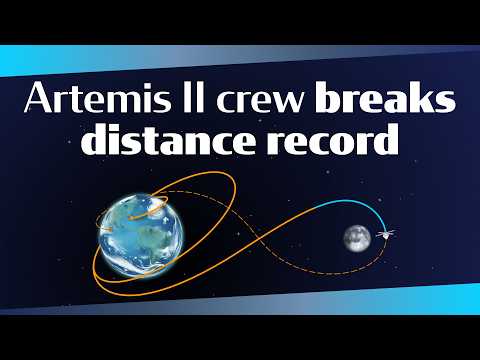
Dr Jenni Gibbons, who like me is an honorary fellow of St Catharine's College, Cambridge, plays a vital role in the @NASAArtemis mission as the voice link to the astronauts. Here she is as they break the record for distance from earth: youtube.com/watch?v=7IZzjt… @Catz_Cambridge. .
YouTube
English
@CatherineBelton @PeterFinnWP I couldn't agree more. I knew Peter in Berlin. As good a journalist as you could get. What a waste! And far from the only one.
English
The captain of the best foreign desk out there & the reason why so many of the incredible international staff of The Post turned down buyouts -- because they all wanted to work with @PeterFinnWP. It was a privilege & we are all devastated by the senseless wrecking of this team
Ben Mullin@BenMullin
NEWS: The cuts were so severe that at least one department head asked to leave The Post rather than be included in the planning. Peter Finn, The Post's international editor, requested that he be laid off once he learned about the scope of the cuts to his section. nytimes.com/2026/02/04/bus…
English
John Hooper retweetledi

I was just laid off by The Washington Post in the middle of a warzone. I have no words. I'm devastated.
Lizzie Johnson@lizziejohnsonnn
Waking up without power, heat, or running water. (Again.) But the work here in Kyiv continues. Warming up in the car, writing in pencil — pen ink freezes — by headlamp. Despite how difficult this job can be, I am proud to be a foreign correspondent at The Washington Post.
English
@annemcelvoy @BenMullin A characteristically honourable gesture from a terrific journalist. Peter and I were correspondents at the same time in Berlin and worked together on the aftermath of 9/11. We were in contact just a few weeks ago.
English
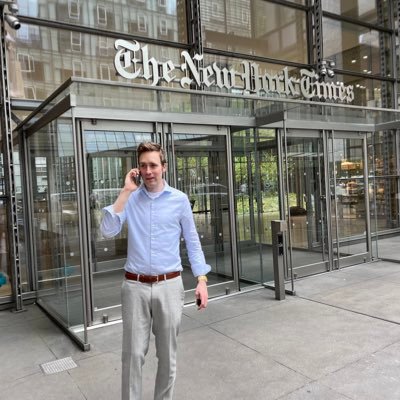
NEWS: The cuts were so severe that at least one department head asked to leave The Post rather than be included in the planning.
Peter Finn, The Post's international editor, requested that he be laid off once he learned about the scope of the cuts to his section.
nytimes.com/2026/02/04/bus…
English
Very interesting. Suggests that Prevost and Bergoglio did not get on at first, but that Bergoglio as Francis came to value him.
Catholics for Catholics 🇺🇲@CforCatholics
Pope Leo XIV, then Bishop Robert Prevost back in 2023, in Peru, right before he was made Cardinal: “Yesterday marked ten years since Pope Francis' election. I knew Jorge Mario Bergoglio when he was Archbishop of Buenos Aires. As the Augustinian General, I'd met him several times. When he was elected, I told some brothers, 'Great, thank God I'll never be bishop.' I won't say why, but not all meetings with Cardinal Bergoglio were mutually agreeable.”
English
John Hooper retweetledi

This is where it really does feel like Kremlinology
Francis X. Rocca@FrancisXRocca
Balcony instead of window
English