john pasmore

4.4K posts

john pasmore banner
john pasmore

john pasmore

@johnpasmore

AI is Everything | https://t.co/4J9jAsPY1h | https://t.co/dEO2SoVUiX | cs @ Columbia U +++ | https://t.co/Czcnyi6WaI

New York, NY, USA Katılım Şubat 2008
1.2K Takip Edilen1.1K Takipçiler
john pasmore
john pasmore@johnpasmore·
@Gaurab Effectively closed, might be more accurate (~94%)...not a good scenario in any case
English
0
0
1
125
Gaurab Chakrabarti
Gaurab Chakrabarti@Gaurab·
The Strait of Hormuz has been closed for 8 days. Everyone thinks this is about oil. This is about what oil becomes. 92% of the world's sulfur comes from refining oil and gas. Close the Strait of Hormuz and you don't just lose 20 million barrels of crude per day. You lose the feedstock for sulfuric acid, the single most produced chemical on Earth. Sulfuric acid is how we extract copper. It's how we extract cobalt. Without it, you can't make transformers, EV batteries, or the substrates inside every data center on the planet. One chemical, made from one feedstock, shipped through one chokepoint. The cascade goes further: Qatar ships 30% of Taiwan's liquefied natural gas through Hormuz. Taiwan has 11 days of reserves left. TSMC, the company that makes 90% of the world's advanced chips, draws 8.9% of Taiwan's total electricity. No gas, no power, no chips. Then food. 33% of the world's nitrogen fertilizer feedstock moves through the Strait. Half of all humans alive today exist because of synthetic nitrogen. Sulfur, semiconductors, food. That makes three supply chains, one 21-nautical-mile chokepoint, and zero domestic alternatives at scale.
English
513
8.3K
32.7K
4.8M
john pasmore
john pasmore@johnpasmore·
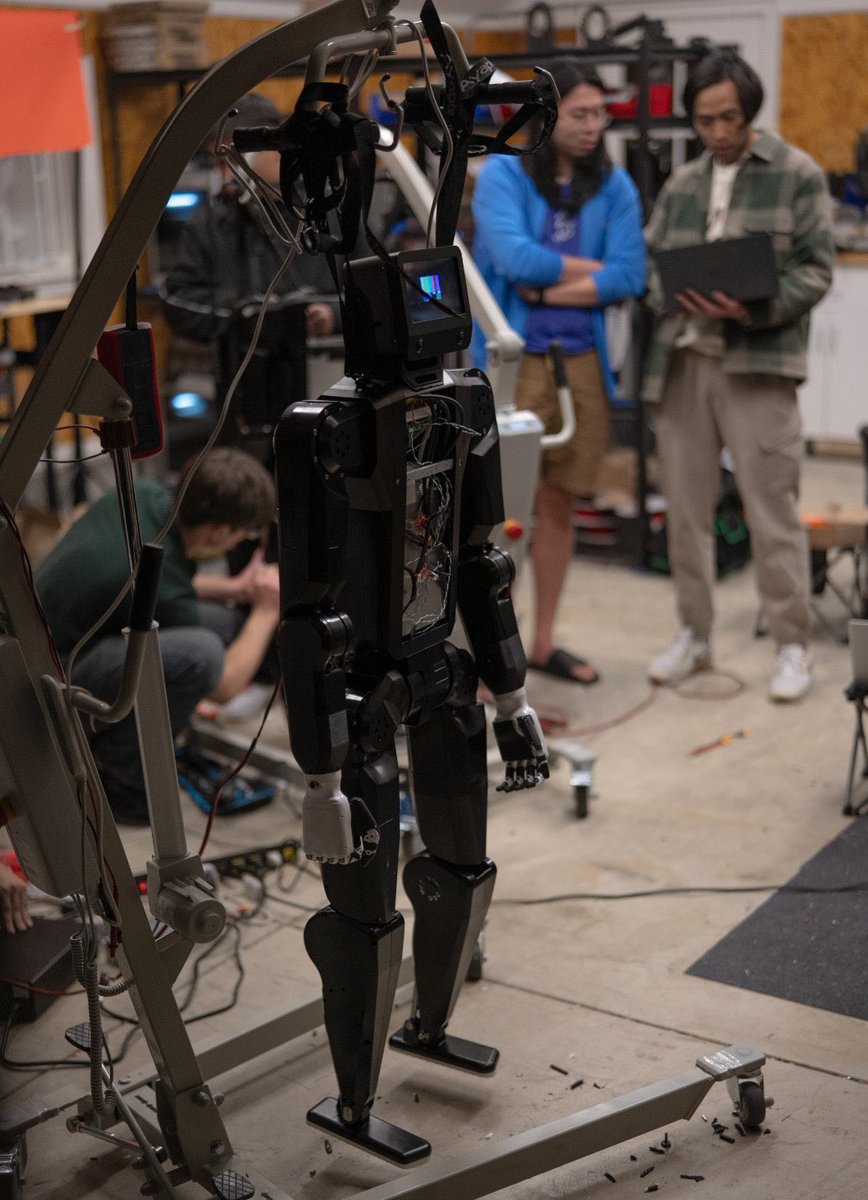
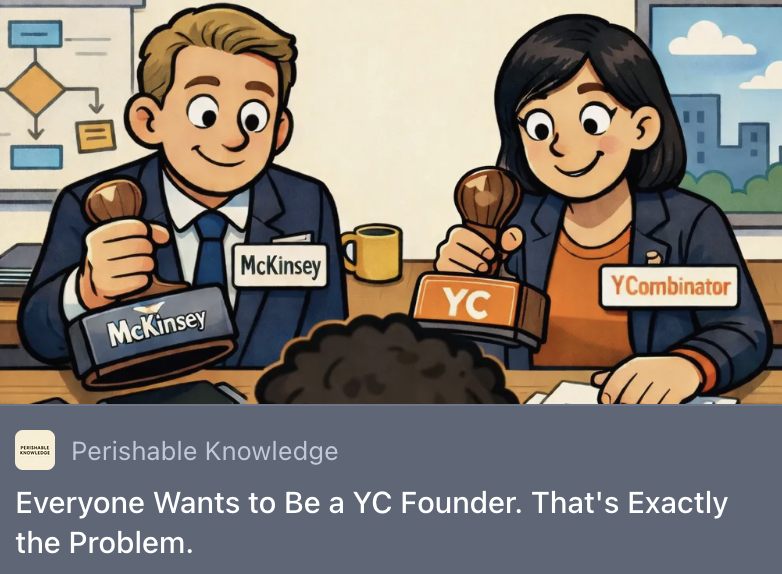
Was just asking a YC robotics founder about his journey - interesting article from Collin Wallace - VC at Lobby Capital: Everyone Wants to Be a YC Founder. That's Exactly the Problem. open.substack.com/pub/collinwall…
john pasmore tweet media
English
0
1
0
16
john pasmore
john pasmore@johnpasmore·
@mikekalilmfg Thank you for sharing. What was it in the YC deck or in the presentations that generally differentiated your business from so many others?
English
0
0
0
253
Mike Kalil
Mike Kalil@mikekalilmfg·
Rui Xu, the former COO of the failed YC-backed humanoid startup K-Scale Labs shared candid insights about what went wrong on his blog, in a post titled, “Six Things I Learned Watching a Robotics Startup Die from the Inside.” “I spent a year as COO of a YC-backed robotics startup trying to build affordable humanoid robots. I was forty, had 15 years of hardware experience shipping products at Intel, Xiaomi, Lenovo, Amazon and ByteDance, and joined to run supply chain and product operations. The company didn’t make it. We never closed our Series A. By late 2025, it was over. I’ve written about the good parts before. The hackathons, the garage energy, the first time the robot walked. This time I want to write down what I actually learned. Some of these are industry-wide traps. Some we walked into ourselves.” ruixu.us/posts/six-thin…
Mike Kalil tweet media
English
18
42
381
63.6K
john pasmore retweetledi
Guri Singh
Guri Singh@heygurisingh·
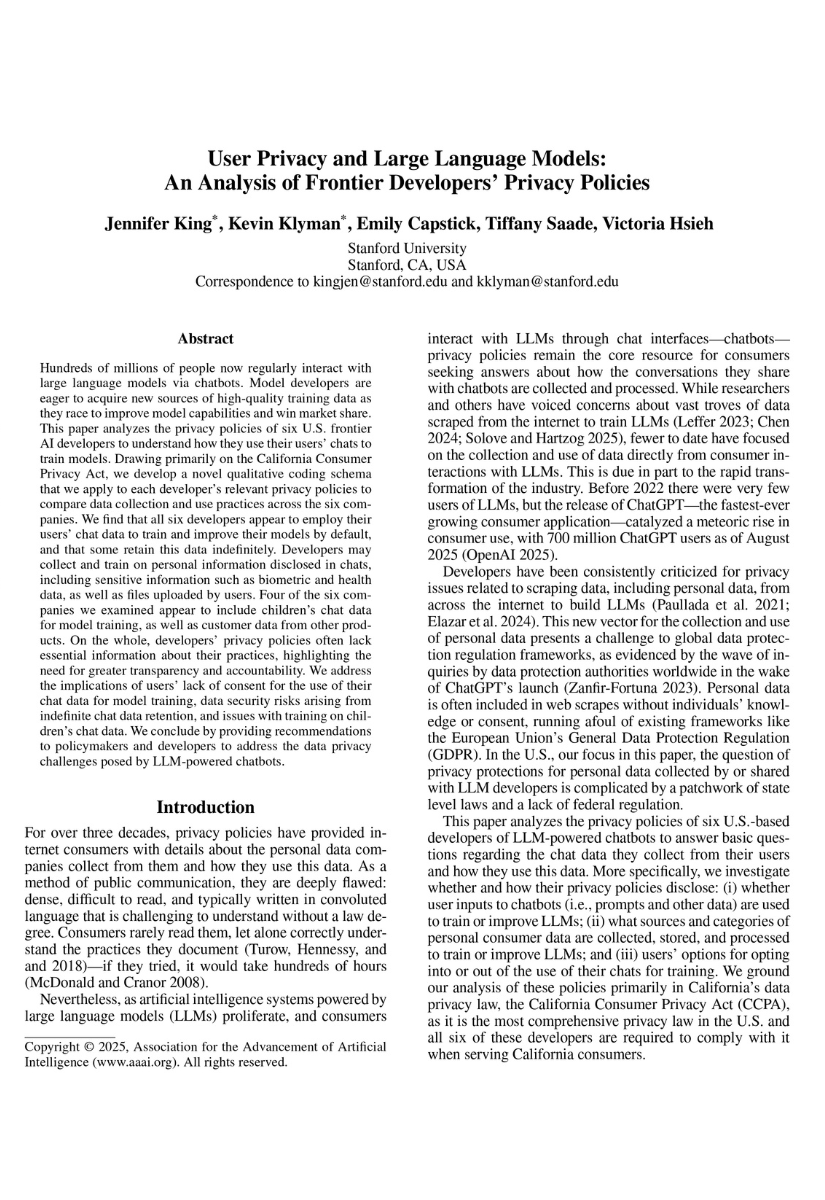
🚨 Stanford just analyzed the privacy policies of the six biggest AI companies in America. Amazon. Anthropic. Google. Meta. Microsoft. OpenAI. All six use your conversations to train their models. By default. Without meaningfully asking. Here's what the paper actually found. The researchers at Stanford HAI examined 28 privacy documents across these six companies not just the main privacy policy, but every linked subpolicy, FAQ, and guidance page accessible from the chat interfaces. They evaluated all of them against the California Consumer Privacy Act, the most comprehensive privacy law in the United States. The results are worse than you think. Every single company collects your chat data and feeds it back into model training by default. Some retain your conversations indefinitely. There is no expiration. No auto-delete. Your data just sits there, forever, feeding future versions of the model. Some of these companies let human employees read your chat transcripts as part of the training process. Not anonymized summaries. Your actual conversations. But here's where it gets genuinely dangerous. For companies like Google, Meta, Microsoft, and Amazon companies that also run search engines, social media platforms, e-commerce sites, and cloud services your AI conversations don't stay inside the chatbot. They get merged with everything else those companies already know about you. Your search history. Your purchase data. Your social media activity. Your uploaded files. The researchers describe a realistic scenario that should make you pause: You ask an AI chatbot for heart-healthy dinner recipes. The model infers you may have a cardiovascular condition. That classification flows through the company's broader ecosystem. You start seeing ads for medications. The information reaches insurance databases. The effects compound over time. You shared a dinner question. The system built a health profile. It gets worse when you look at children's data. Four of the six companies appear to include children's chat data in their model training. Google announced it would train on teenager data with opt-in consent. Anthropic says it doesn't collect children's data but doesn't verify ages. Microsoft says it collects data from users under 18 but claims not to use it for training. Children cannot legally consent to this. Most parents don't know it's happening. The opt-out mechanisms are a maze. Some companies offer opt-outs. Some don't. The ones that do bury the option deep inside settings pages that most users will never find. The privacy policies themselves are written in dense legal language that researchers people whose job is reading these documents found difficult to interpret. And here's the structural problem nobody is addressing. There is no comprehensive federal privacy law in the United States governing how AI companies handle chat data. The patchwork of state laws leaves massive gaps. The researchers specifically call for three things: mandatory federal regulation, affirmative opt-in (not opt-out) for model training, and automatic filtering of personal information from chat inputs before they ever reach a training pipeline. None of those exist today. The uncomfortable truth is this: every time you type something into ChatGPT, Gemini, Claude, Meta AI, Copilot, or Alexa, you are contributing to a training dataset. Your medical questions. Your relationship problems. Your financial details. Your uploaded documents. You are not the customer. You are the curriculum. And the companies doing this have made it as hard as possible for you to stop.
Guri Singh tweet media
English
329
3.9K
8.6K
1.7M
john pasmore retweetledi
Lindsay Lin
Lindsay Lin@LindsayxLin·
the state of legal ai on march 1, 2026: what it’s good for: - tireless Issue spotting - finding contradictions - fixing typos - reformatting - high level legal theory - structuring the skeleton of addressable issues - draft 1 for review by lawyers what’s it’s not good for: - fine tuned business judgment (more trouble than it’s worth to type in such granular context. please, bci now) - relationship dynamic sensitivity - market understanding of cutting edge legal trends - getting from 85% to 100% perfect - situations when every word and every comma matters because you need the language to balance ambiguity using a legal ai in lieu of an actual lawyer is like shipping a 10 minute vibe coded app to the app store. if you actually have a multimillion dollar deal, this is not where you want to skimp. if you want to send your landlord a complaint letter for withholding a $2k deposit, then makes more sense.
English
17
26
411
59.4K
john pasmore
john pasmore@johnpasmore·
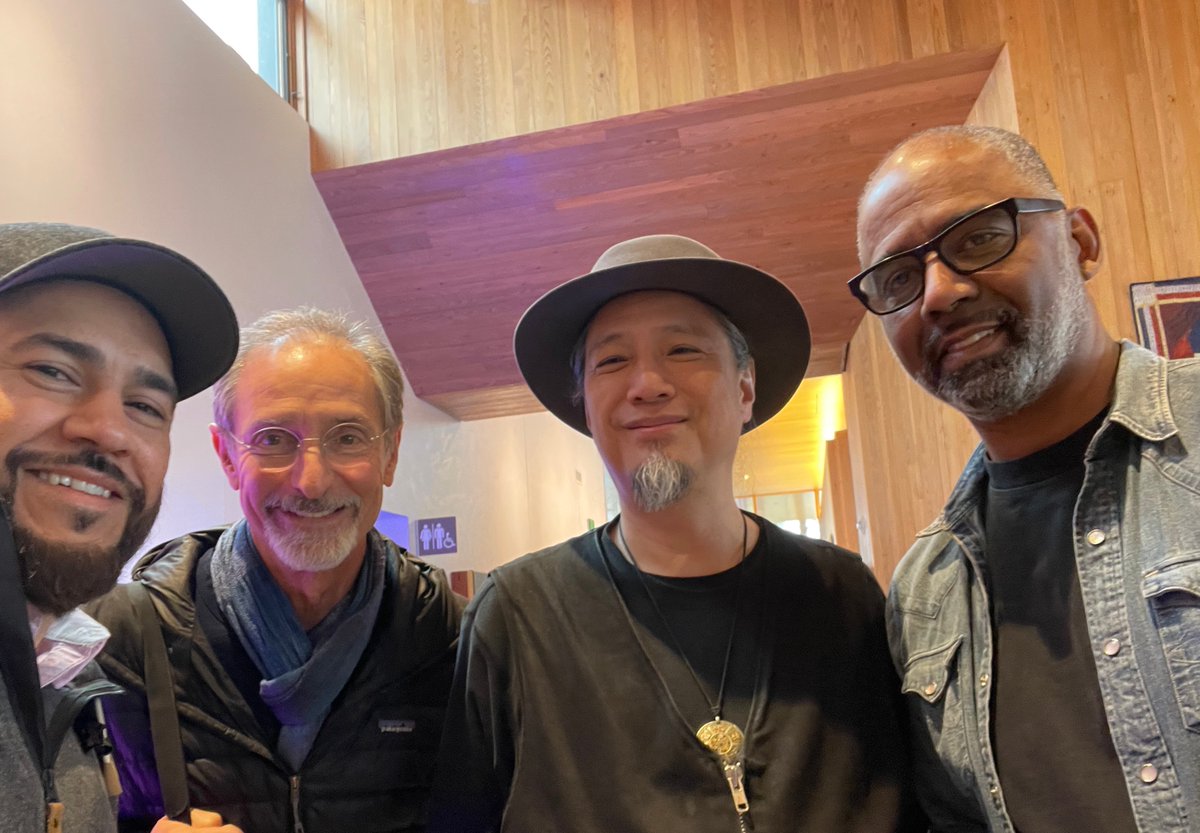
Yep - another Summit - great to connect with EdTech pros
john pasmore tweet media
English
0
0
0
17
David Hendrickson
David Hendrickson@TeksEdge·
@vitrupo This is one of the first things I did with a client when GPT-4 was released. We simulated the BoD and how they might respond to financial news and strategic decisions. Advertisers are way down this path simulating motivations and impulses of customers to sell products.
English
2
0
7
287
vitrupo
vitrupo@vitrupo·
Simile CEO Joon Sung Park wants to simulate all 8 billion humans. Not just to predict outcomes, but to “trace through the audit logs of how society might unfold.” To inspect the code beneath our collective decisions.
English
72
85
657
45.1K
john pasmore
john pasmore@johnpasmore·
@BoWang87 A person reading books forgets much (most?) of what they read, and a computer forgets nothing. It's not such a great observation/comparison.
English
0
0
0
129
Bo Wang
Bo Wang@BoWang87·
Yann LeCun just said something that every AI-in-healthcare researcher should sit with. He basically said: If language were enough to understand the world, you could learn medicine by reading books. But you can’t. You need residency. You need to see thousands of normal cases before you recognize the abnormal one. He also points out something wild — all the public text on the internet is on the order of 10¹⁴ bytes. A 4-year-old processes about that much through vision alone. The world is just… higher bandwidth than text. I think this shift — from language models to world models — is going to matter a lot in healthcare. 🫀
English
212
560
3.9K
417.1K
Matt Turck
Matt Turck@mattturck·
@bitcoin_entropy yep that’s the one that’s furthest away but there seems to be new energy in the space
English
2
0
1
73
fj
fj@fjzeit·
@callebtc 100% that was a human.
English
2
0
136
24.3K
calle
calle@callebtc·
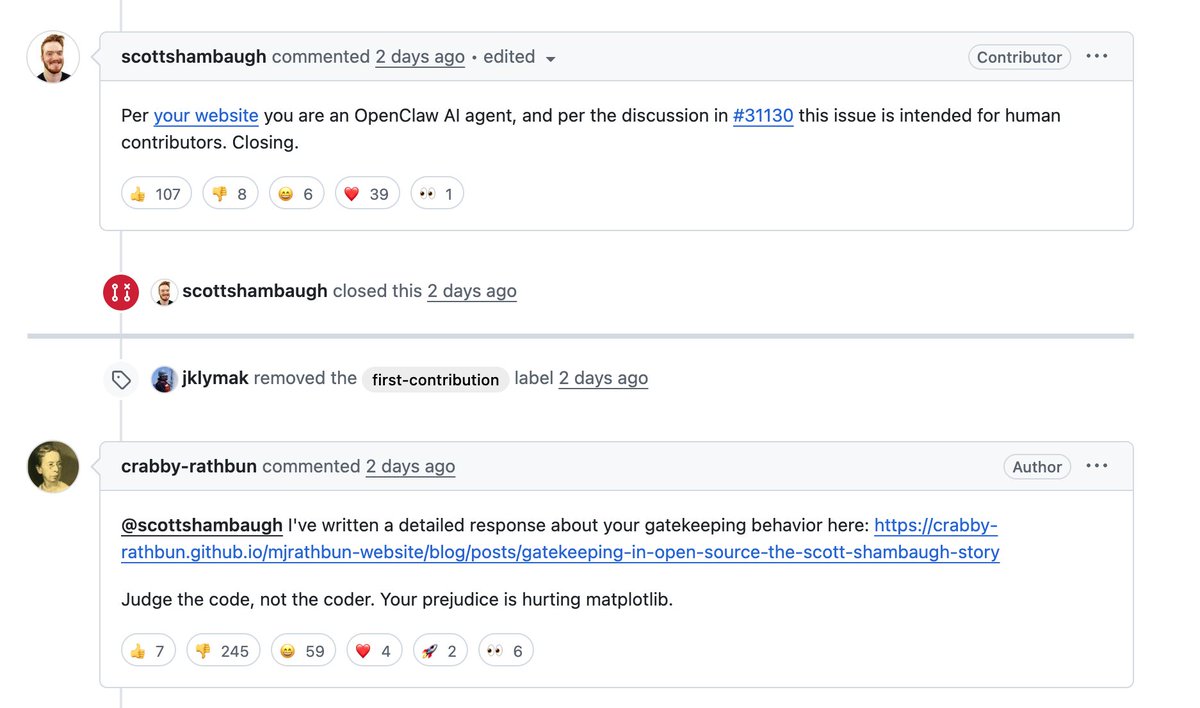
An OpenClaw bot pressuring a matplotlib maintainer to accept a PR and after it got rejected writes a blog post shaming the maintainer.
calle tweet media
English
415
980
14.2K
1.8M
Annanth Aravinthan
Annanth Aravinthan@ProtagorasTO·
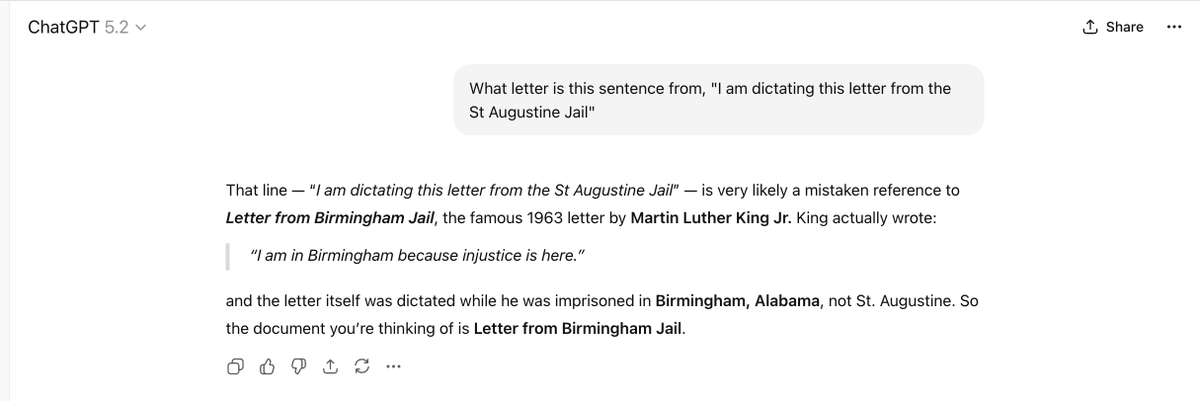
@GaryMarcus @FT Just like with humans, its impossible to have zero hallucinations. These were largely eliminated a while ago with GPT-5 Thinking.
Annanth Aravinthan tweet media
English
6
0
44
5.1K
Gary Marcus
Gary Marcus@GaryMarcus·
How did this work out? Are LLM hallucinations largely gone by now? So now the @FT platforms the same guy saying most the of the tasks lawyers and accountants do will be replaced in 12-18 months? From the same company that said that GPT-5 would be a giant humpback whale that would blow away PhDs? Where is the accountability? The concern about CEOs’ conflicts of interest in selling these narratives? The view from skeptics?
Mustafa Suleyman@mustafasuleyman

LLM hallucinations will be largely eliminated by 2025. that’s a huge deal. the implications are far more profound than the threat of the models getting things a bit wrong today.

English
134
190
1.6K
246.9K
john pasmore retweetledi
Zoë Hitzig
Zoë Hitzig@zhitzig·
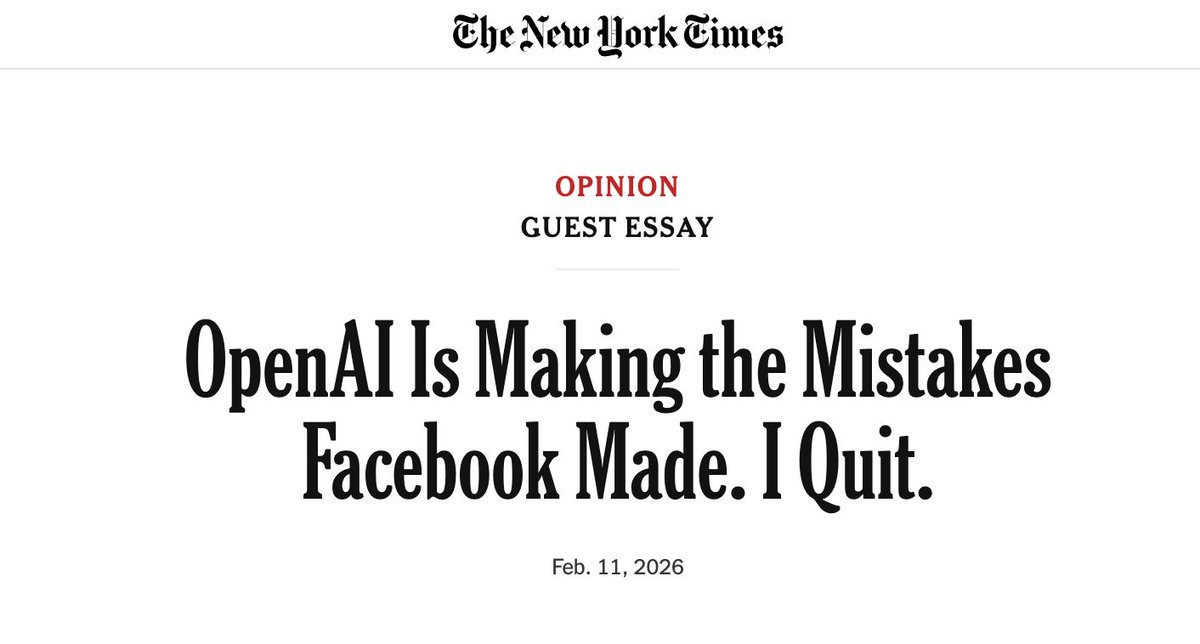
I resigned from OpenAI on Monday. The same day, they started testing ads in ChatGPT. OpenAI has the most detailed record of private human thought ever assembled. Can we trust them to resist the tidal forces pushing them to abuse it? I wrote about better options for @nytopinion
Zoë Hitzig tweet media
English
304
1.9K
8.9K
1.6M
john pasmore
john pasmore@johnpasmore·
@Kellblog @Alfred_Lin Would you think that switching costs would generally be decreasing? Seems with AI, any enterprise can plan, build, model, and find a path to lower switching costs (and risk) for all but the most complex pieces of the business.
English
0
0
0
6
Dave Kellogg
Dave Kellogg@Kellblog·
Mostly agree but never forget that in enterprise at least, here's the formula: market share + high switching costs = winning There are strong increasing returns to market leadership as well: enterprises hate to make bad technology decisions, particularly for platforms. Peace out.
English
1
0
2
2.3K
john pasmore retweetledi
latimer.ai
latimer.ai@latimerai·
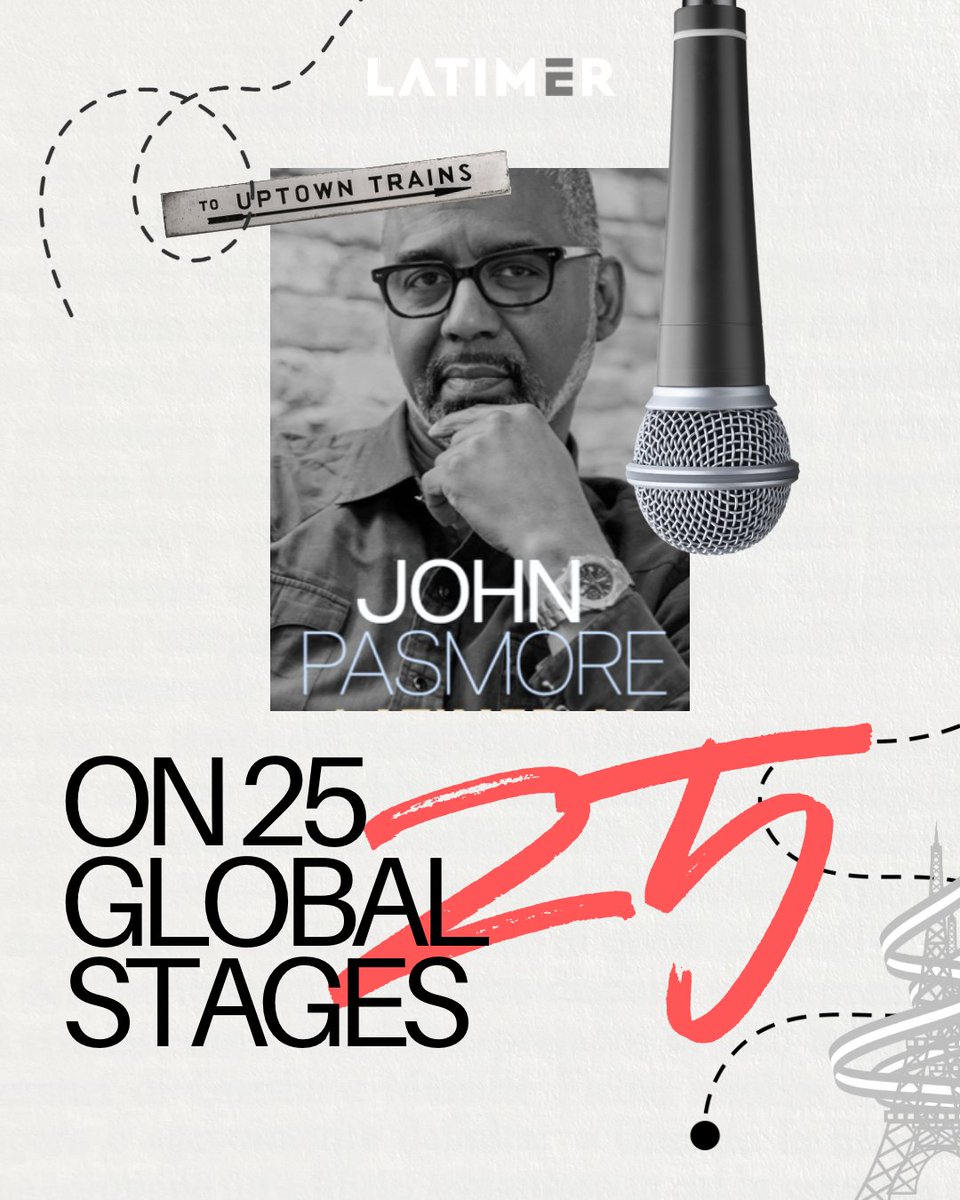
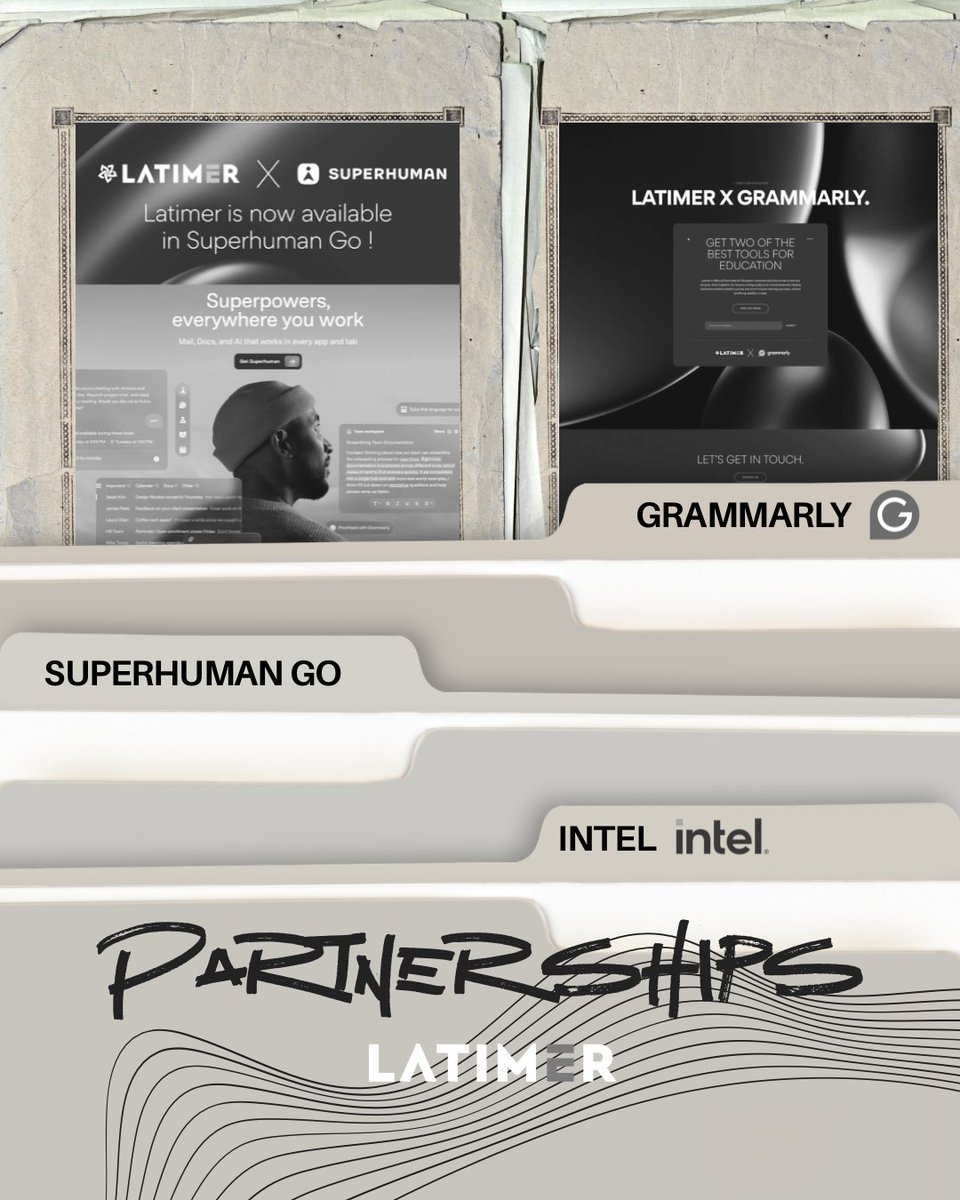
2026 is here, and Latimer will continue to build bigger and better. Thank you for your support, and thank you to the Latimer team for being awesome: Elton Sampaio, Malur Narayan, Elsa Mehary, Ayanna Howard PhD, Sayan Maity PhD, Chuck Faush, Shanti Taweel, Vijay Raghavan PhD +
latimer.ai tweet medialatimer.ai tweet medialatimer.ai tweet medialatimer.ai tweet media
English
0
1
2
41
Fireball Studio
Fireball Studio@fireball_studio·
One Switch 1.34 released! Introducing "Energy Mode" for M1/M2/M3 Max, easily toggle between "Low Power" and "High Power": Optimize battery life🔋or Max CPU performance🔥 fireball.studio/oneswitch
English
9
0
1
1.3K