
Sabitlenmiş Tweet
Handshake
3.1K posts


Handshake
@joinHandshake
Building the future workforce of the AI economy 🤝
United States Katılım Mart 2014
352 Takip Edilen10.8K Takipçiler
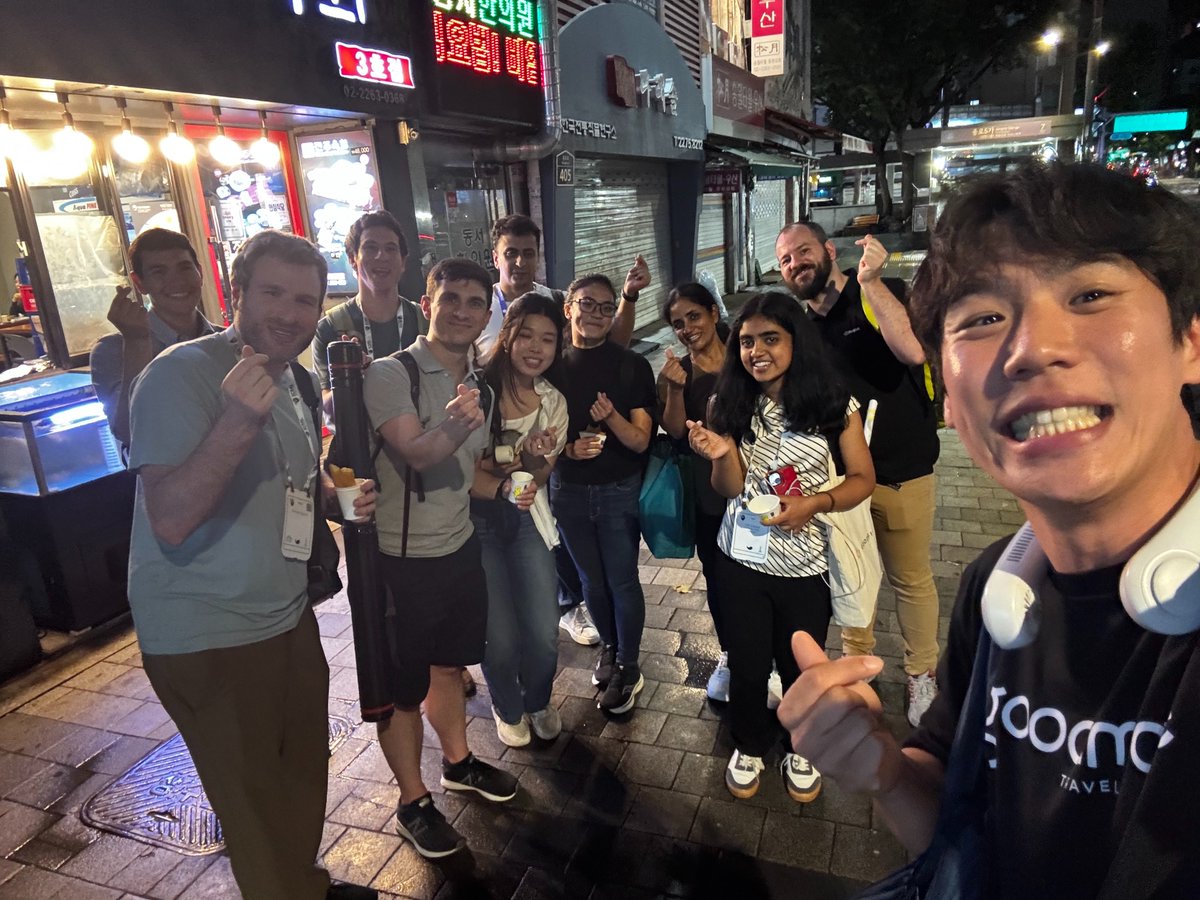
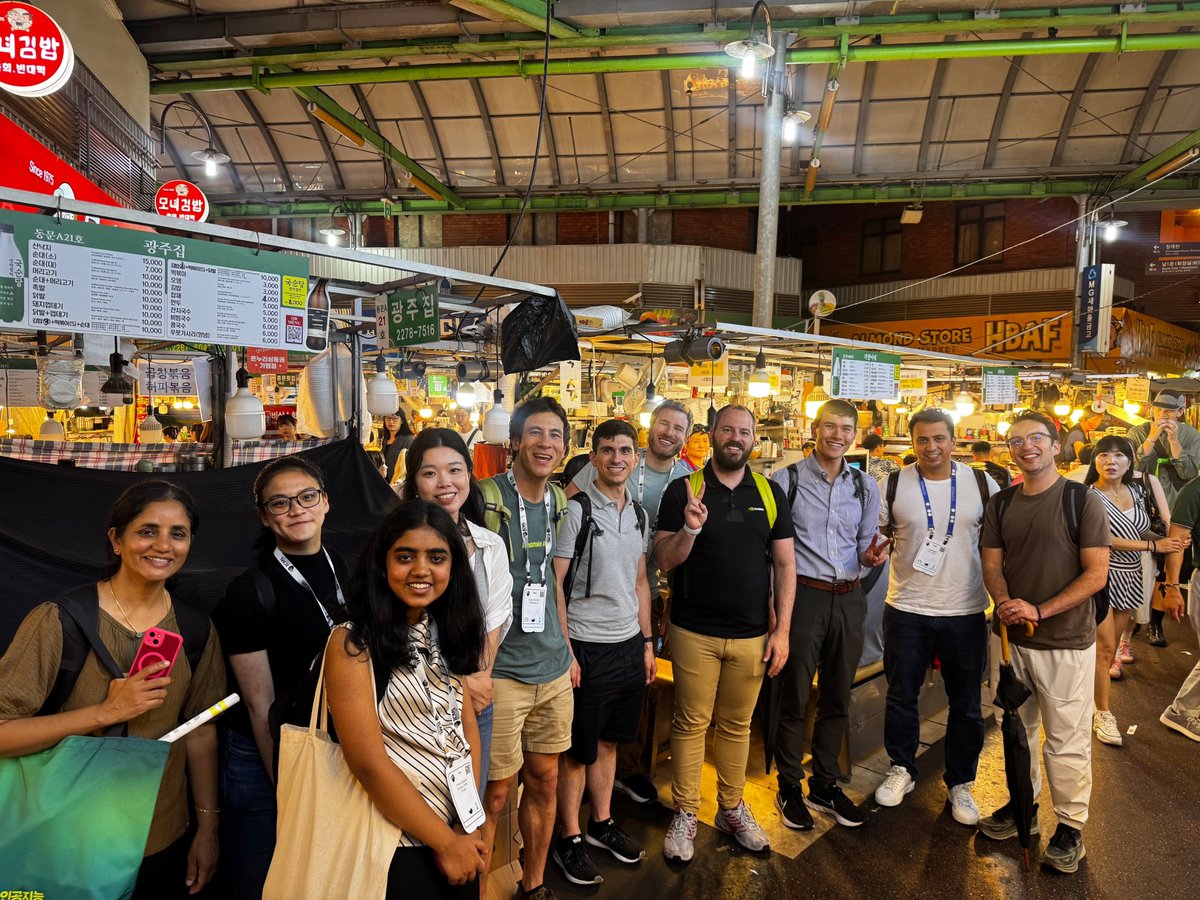
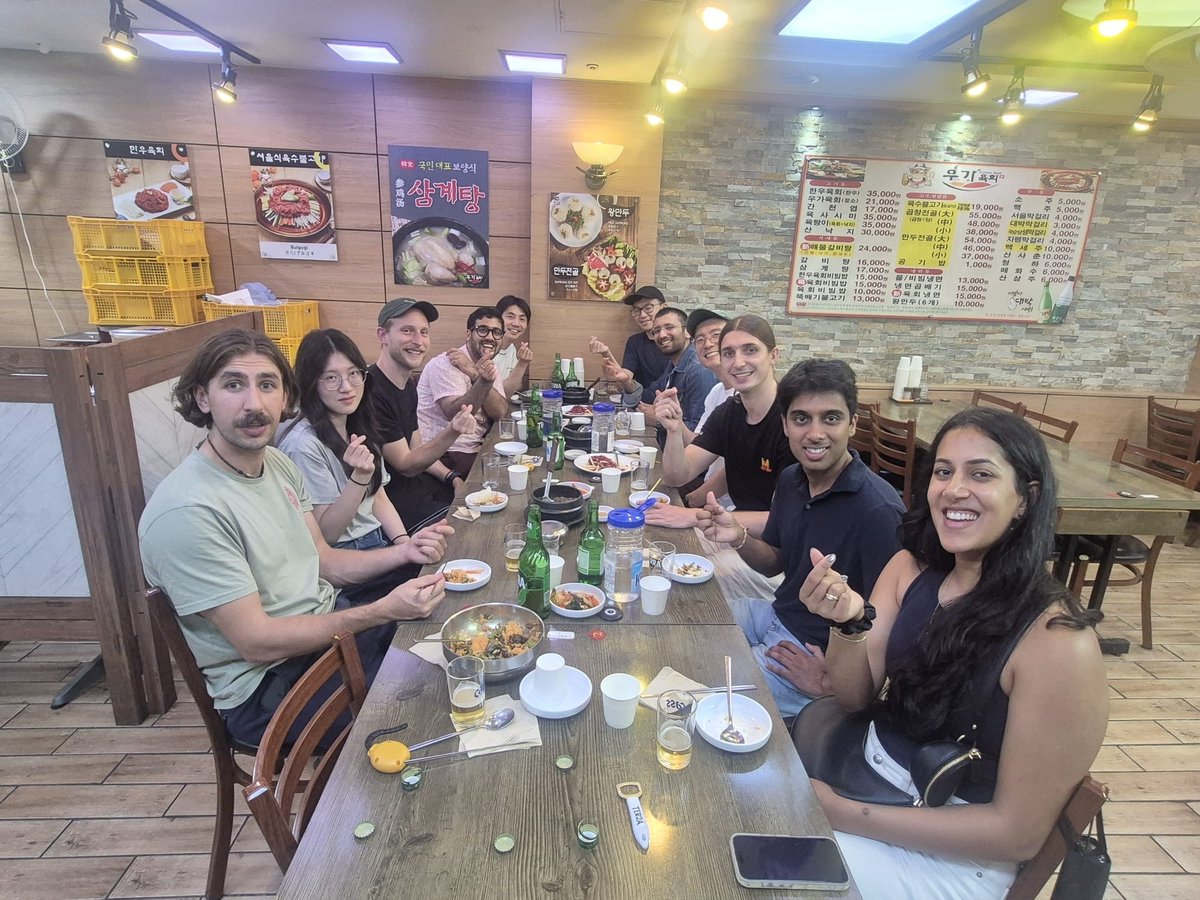
We came to Seoul for #ICML. We stayed for the tteokbokki!
Last night we hosted a group of researchers at Gwangjang Market, one of Seoul's oldest night markets, for a private food tour. We ate our way through the stalls, and yes, it lived up to every bit of the hype.
But the best part wasn't the food. It was watching some of the sharpest minds in ML talk shop over kimbap, mandu, and Kalguksu. Events like these are always a great reminder that behind the world’s best AI systems are incredible humans making it all possible!
Until the next one. 🌙
English
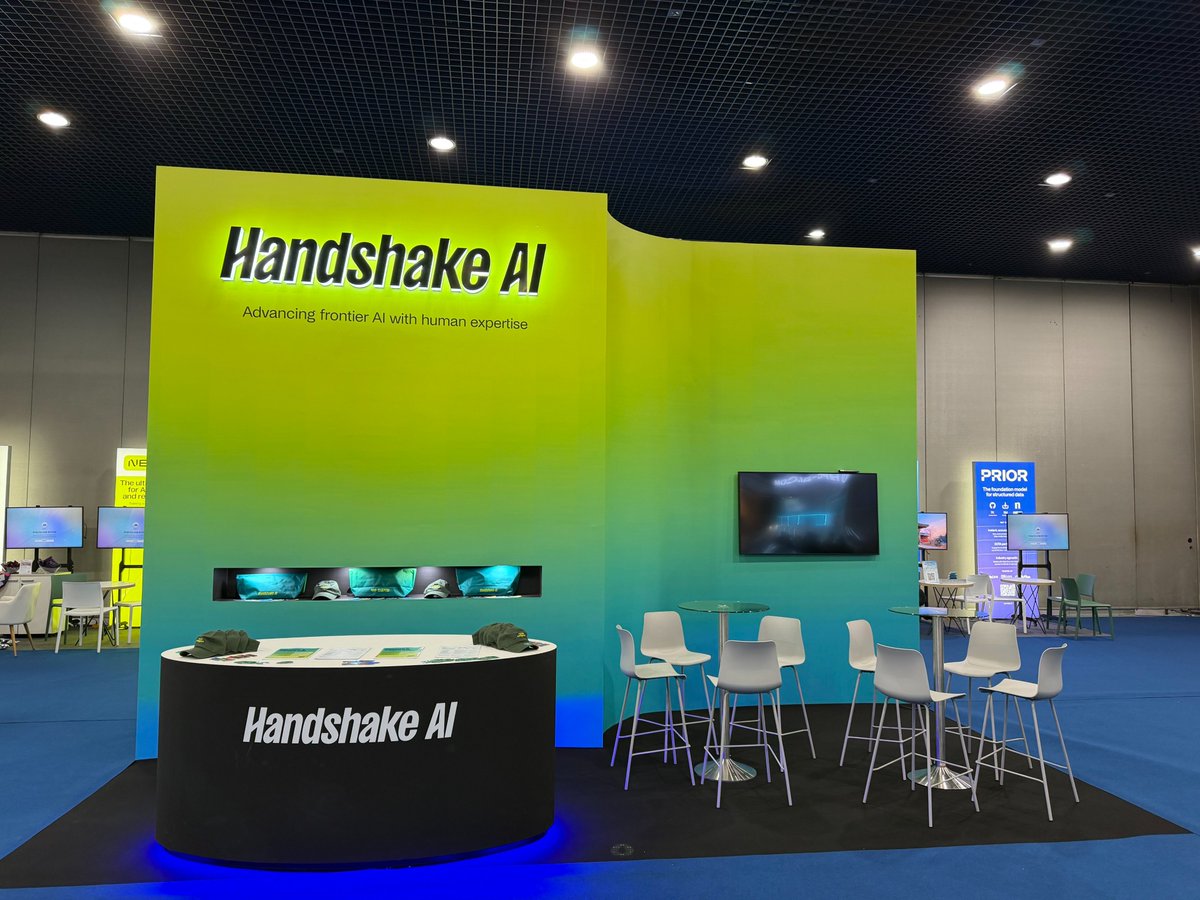
Day 1 @icmlconf is officially in the books! 🇰🇷
The Handshake AI booth was buzzing all day long with great conversations, sharp questions, and even sharper minds. Thank you to everyone who stopped by!
Haven't made it by yet? We're just getting started. Swing by booth B600 on Day 2. We'd love to meet you. 👋
See you tomorrow, Seoul!

English
@cindystories Justin from Handshake here! For privacy, please submit a request here: support.joinhandshake.com/hc/en-us/reque… using the email tied to your Handshake account, and include ticket #2303510 in the subject so we can link this and follow up within 24 hours. Thank you!
English

@joinHandshake HELP! Please! I can't seem to reach anyone at Handshake. My animal rescue org has had an employer account for several years but the email associated with the account became corrupted and non-functional.
English
We’re in the middle of its biggest skills shift ever. Today, Handshake acquires Uplimit, the leading AI-native learning platform. Together, we're building toward the destination for AI-era talent development.
Read more: bit.ly/4ePWvaH

English
We worked with parents and professionals in child-protection and clinical psychology to test 7 frontier AI models on child safety scenarios that go beyond the frequent focus on explicit content. The parents catch what standards evaluations don't, and the professionals bring real, field experience to ground the approach in expertise.
Failure rates: 2% to 58%.
That's not a rounding error. That's a meaningful gap between what these systems can and can't catch — before harm becomes obvious.
Our team built the benchmark to make that measurable. Open to the whole industry. 👇
Jonas Mueller@jomulr
AI models pose serious child-safety risks. While many model developers evaluate for explicit abuse material, other child-safety failures begin upstream: when a model helps an adult manipulate, impersonate, profile, or isolate a minor; or when it deepens a child’s emotional dependence on AI. Today we released CAREBench (Child AI Risk Evaluation), a new benchmark to assess such upstream child-safety risks in any language model. We provide: - 500 prompts spanning 12 risk categories (including grooming, relationship engineering, deception, extortion, AI anthropomorphization, and emotional dependency). - A model-response grader built from acceptability annotations by parents, clinicians (PsyD), and the Prevention Director at an accredited Children’s Advocacy Center. - Evaluations of 7 frontier models including Claude Fable, revealing failure rates ranging from 2% to 58%, with substantially different failure patterns across risk categories. This project exemplifies the type of vital work routinely performed by our AI Safety team at @joinHandshake
English
This summer, Handshake is partnering with @GeminiApp to let students and recent alumni try Google AI Plus for one year on us.
joinhandshake.com/blog/students/…
English

@1_winolivia Hi @1_winolivia - can you please reach out to our team at fellow-support@joinhandshake.com about this? They can take a look at this for you. Thank you!
English

@joinHandshake Hello,
I have been doing tasks, but my dashboard does not seem to be updating. My completed work and payment information are not reflecting properly.
I wanted to know if there is currently a system update or technical issue affecting dashboards/payment tracking.
English
We built a better way to grade agentic work.
Gandalf is a reactive agent-as-judge that inspects files, tool state, and artifacts the same way a human expert would. On our banking benchmark, even the cheapest Gandalf config beat the next-best verifier at ~10x lower cost.
Verifier architecture matters more than the model behind it.
👇 More from @AnishAthalye
Anish Athalye@anishathalye
Grading agent rollouts in rubric-graded RL environments is itself a hard task. Prior approaches pass serialized artifacts or agent trajectories to an LLM judge; this loses information / doesn't support sophisticated criteria. In contrast, we built a reactive agentic judge.
English
Agent evals are becoming foundational infrastructure.
@jomulr joined @CAISconf’s RLEval workshop to share Handshake’s perspective on RL environments, evaluation, and why @harborframework is emerging as the framework.
Jonas Mueller@jomulr
Packed room to hear @alexgshaw and @ryanmart3n break down how @harborframework grew into *the* framework for RL environments. In our RLEval workshop at @CAISconf today, attendees tackled big open challenges in RLEs & Agent Evals + I shared the approach we take at @joinHandshake
English
Handshake retweetledi

Kudos to @anishathalye and @jomulr for co-chairing the RL agentic benchmarks workshop track for the inaugural ACM CAIS conference this week.
We presented two separate Handshake AI Research papers in: (1) AI agentic systems - first evaluation of grader frameworks, and (2) AI benchmarks - first investment banking benchmark. Their posters had big crowds all afternoon. Great job!

English
This spring, we worked with @OpenAI to launch the Codex Creator Challenge. More than 1,500 students built something on their own terms, driven by their own ideas. That kind of confidence and creative ownership is exactly what the most forward-thinking employers are hiring for.
Explore what they built: joinhandshake.com/blog/students/…
English
Handshake retweetledi
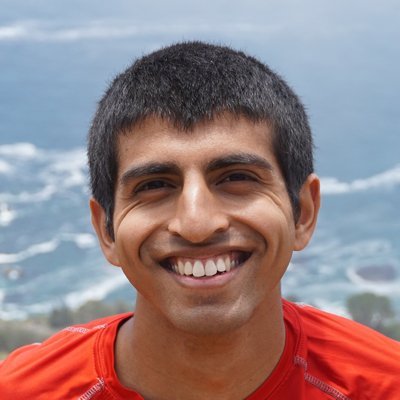
Demo gods were on my side for this guest lecture on AI Agent Security at @MIT_CSAIL: I was able to show a prompt injection attack against @AnthropicAI's Opus 4.6 model. Agent security is still an unsolved problem!
English
The Handshake x @OpenAI Codex Creator Challenge winners are in 👇
🥇See why your code fails, line by line, with TraceCode by Obinna Nwachukwu
🥈Interactively explore America's power grid with InfraMap by Leonard Alsleben
🥉 Explore global dragon mythology with Where Dragons Dwell by Huiying Chung
The AI Showcase is May 20. handshake.registration.goldcast.io/events/00d5b28…


English
@AbiodunnS @heemyrannnnnn Hi @AbiodunnS - Handshake AI is U.S. only at the moment but we hope to be expanding soon! Stay tuned.
English

@joinHandshake @heemyrannnnnn What about Canada? And I mean Handshake AI.
Is it still available to just US residents alone?
English

@TanagerDon Hi Don, thanks for contacting Handshake Support. Please open the chatbot at the bottom right of support.joinhandshake.com/hc/en-us and ask it to create a new support ticket. From there, we can review your account status. We look forward to hearing from you.
English
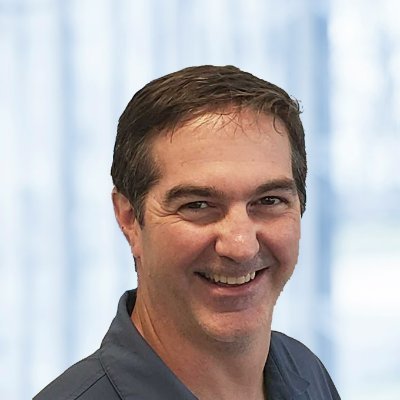
@joinHandshake - it's been ten days and three support emails with NO human response. I'm trying to post internships but can't. Who do I call? Someone please help me. Two students are going to miss out because of this.
English
@themocide Hello!
You can learn more here: Getting Started with Handshake (support.joinhandshake.com/hc/en-us/artic…) and joinhandshake.com/careers/job/.
English

@joinHandshake
I completed work for Handshake AI but my payments are still pending.
Account terminated — but payment for completed work is being denied.
Unpaid:
• Jan 12–18: $1,277
• Feb 2–8: $2,125
• Feb 8–15: 37 hrs
• Feb 16–23: 27 hrs
English