
Jonathan Hersh

4.9K posts

Jonathan Hersh banner
Jonathan Hersh

Jonathan Hersh

@jonathanhersh

Information Systems and Economics prof. ✡️ AP @ChapmanArgyros ML @workhelix

Los Angeles, CA Katılım Kasım 2008
5.2K Takip Edilen3.9K Takipçiler
Argona
Argona@Argona0x·
i pointed Claude Code at the pentagon's public budget document and told it to find every contract overpaying by 10x or more it came back with 340 results worth $4.2B in potential undercuts and a business plan i didn't ask for i fed it the FPDS.gov procurement feed and said "cross-reference with commercial COTS pricing" it pulled 1.2 million contract awards through the USAspending v2 API and started comparing line items against retail equivalents → $1,280 for a connector plug that costs $14.80 on digikey → $3,400 for a circuit breaker listed at $287 on mouser → $71,000 for a ruggedized tablet that's basically a panasonic toughbook with a sticker → $940 per unit for cable assemblies you can get from shenzhen for $31 → 340 contracts flagged at 10x or more markup → 19 of them were above 50x it used XGBoost scoring against 43,000 vendor profiles from SAM.gov to rank by ease of undercut then unprompted it generated a full proposal template compliant with CMMC 2.0 requirements 87 of those contracts have a single domestic supplier, zero competition. the AI calculated that undercutting by just 40% would still leave 6x margins on most items it formatted everything into a pitch deck, named the company, and suggested i register on SAM.gov tonight i didn't ask for any of that the pentagon spends billions a year trying to audit problems like this. a poet with Claude Code and a public API flagged $4.2 billion in one afternoon the agent is currently drafting my first bid response
English
399
1.7K
8.7K
417K
Daniel Rock
Daniel Rock@danielrock·
@SBenzell Okay I did like 1/3 of this tonight as a trial run and it’s hard
English
1
0
1
25
Jonathan Hersh retweetledi
François Chollet
François Chollet@fchollet·
A good canary in the coal mine for AI-caused job loss will be call centers. We're currently projecting ~2.75M call center jobs in the US in 2026. In 2016 it was ~2.63M. The global call center market size has grown ~35% in that time period (from $298B to $405B). Peak employment was 2019 at ~2.98M. When we see a -50% employment drop in this sector you can get ready for broad disruption across the economy.
English
94
181
2.2K
149.2K
Joe Weisenthal
Joe Weisenthal@TheStalwart·
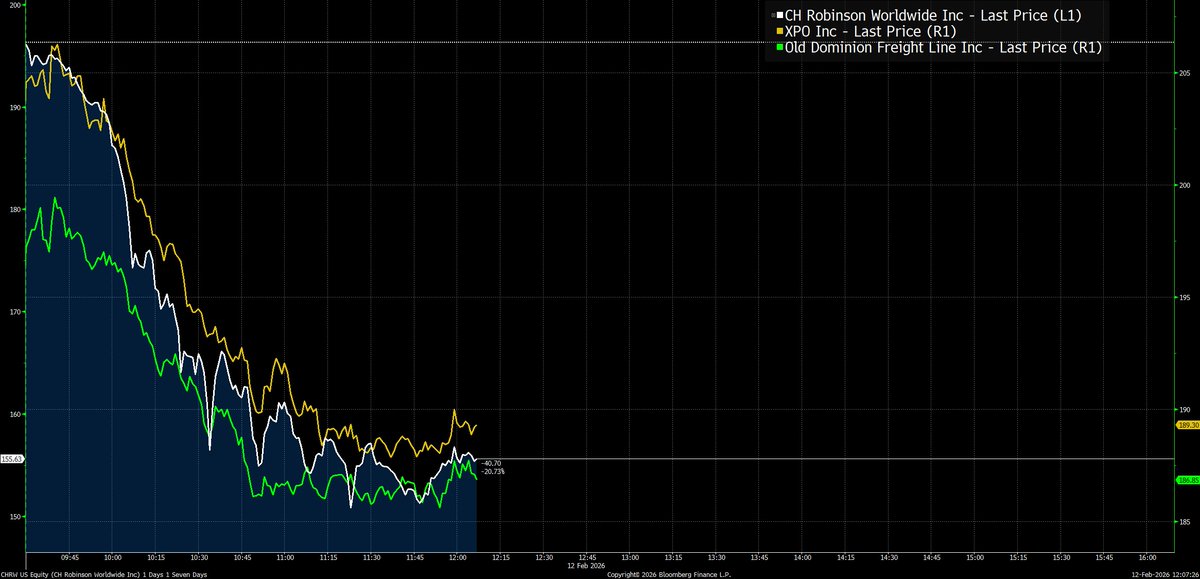
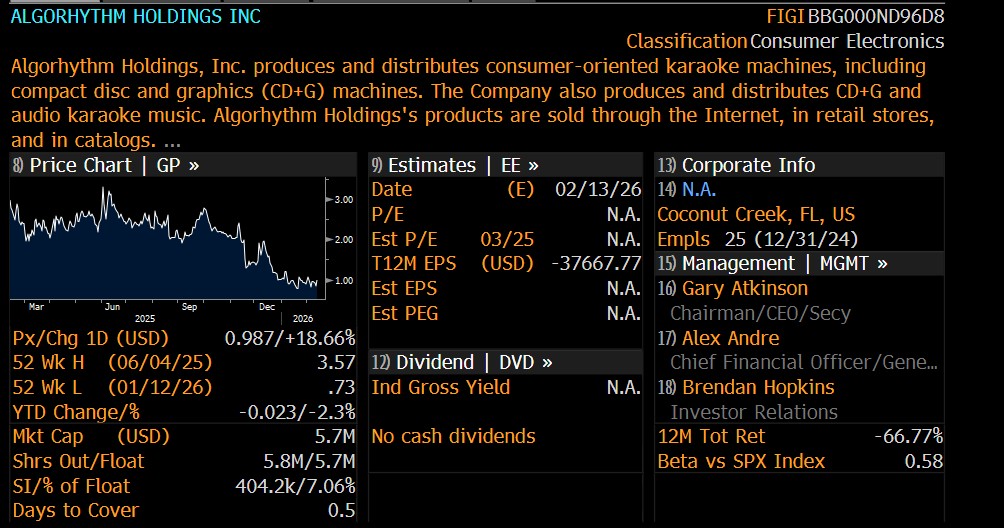
Today it's logistics companies that are getting crushed by the AI scare trade. But here's what's weird. The company that announced the new AI freight product is not some advanced AI lab. It's some Florida-based penny stock that sells karaoke machines.
Joe Weisenthal tweet mediaJoe Weisenthal tweet mediaJoe Weisenthal tweet media
English
63
99
1.1K
411.8K
Jonathan Hersh
Jonathan Hersh@jonathanhersh·
@WuWei113 You're supposed to give the wall an eskimo kiss if you want money, and kiss it with lips if you want fertility. Enjoy your twins!
English
0
0
0
332
Justin Sandefur
Justin Sandefur@JustinSandefur·
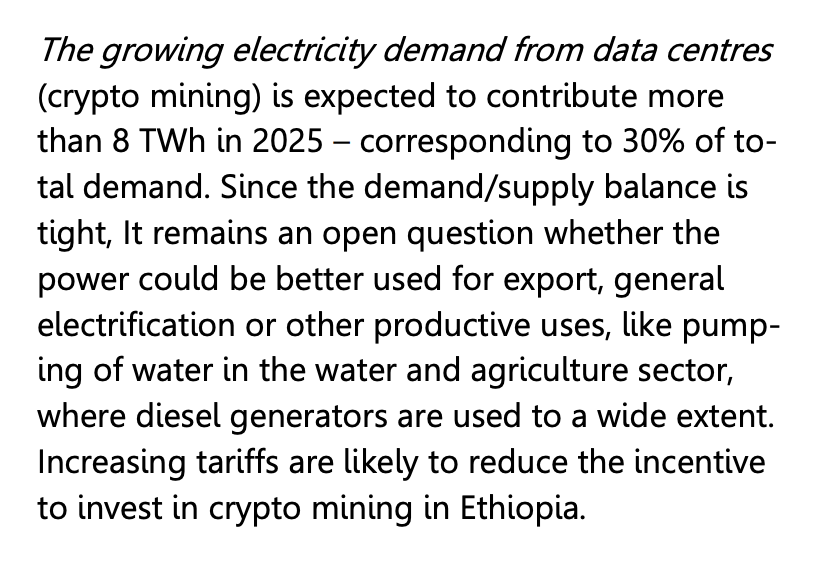
Weird electricity-and-development fact of the day: Ethiopia's new GERD dam more than doubled the country's installed generation capacity. Result: a new crypto mining industry now absorbs 30% of national electricity demand.
Justin Sandefur tweet mediaJustin Sandefur tweet media
English
25
224
1.4K
326.5K
Delba
Delba@delba_oliveira·
10x productivity tip: use Claude hooks with sounds so Claude alerts you when it finishes a task or needs permission. But that's not the tip, the tip is to add your favourite childhood game sounds like the Starcraft, Warcraft, or even Mario.
English
287
422
5.7K
475.8K
Chad Luvabitch Rabbichem
Chad Luvabitch Rabbichem@FlattenEarthNow·
@jonathanhersh Because the weight of the water on the crust caused it to rise elsewhere creating spatial scarcity and geographic divisions (ideology is justification for social stratification)
English
1
0
0
17
M. Nolan Gray 🥑
M. Nolan Gray 🥑@mnolangray·
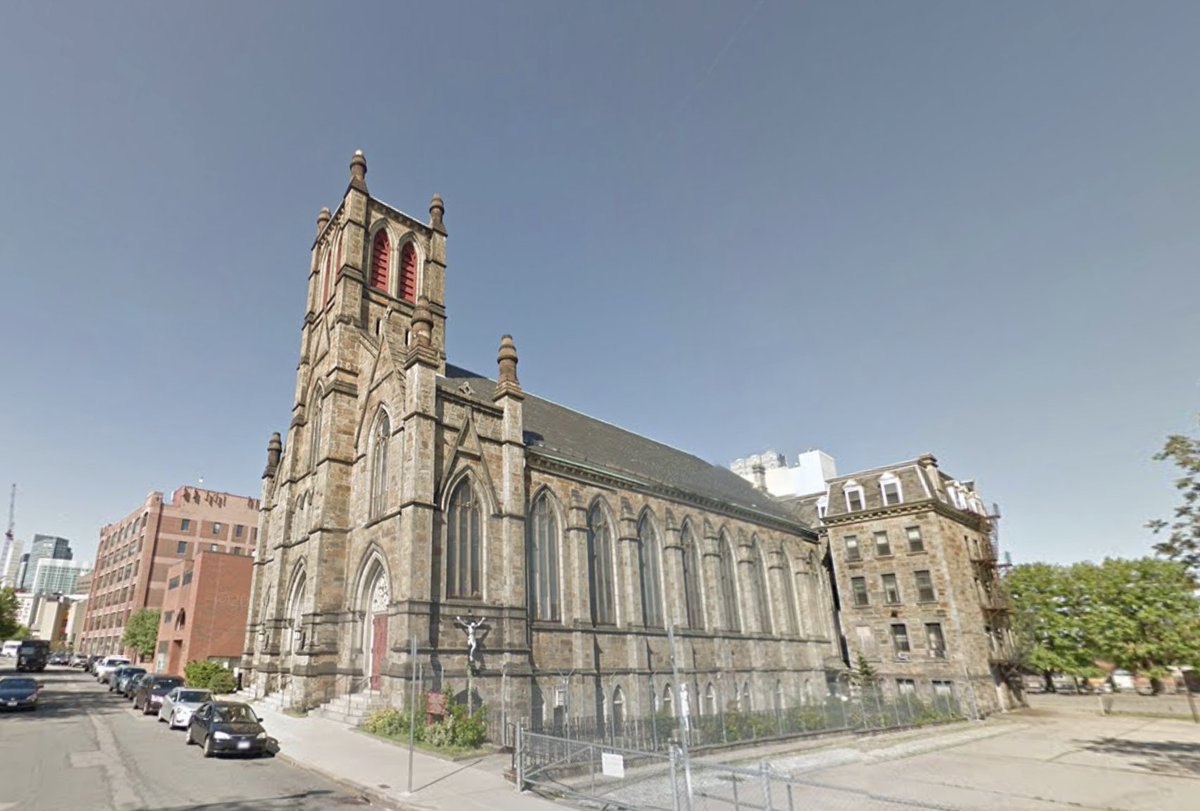
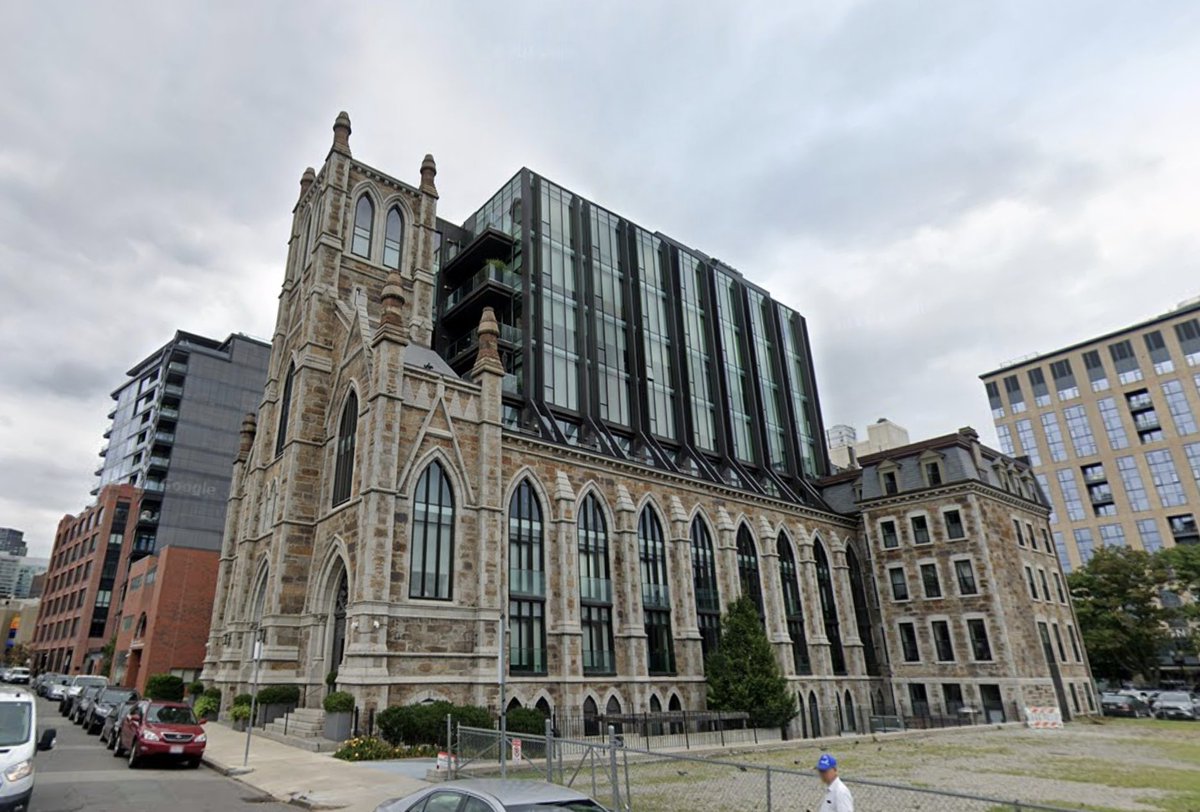
An old church turns into 33 homes on Boston. (2014➡️2017)
M. Nolan Gray 🥑 tweet mediaM. Nolan Gray 🥑 tweet media
English
114
51
1.7K
271.9K
Joe Weisenthal
Joe Weisenthal@TheStalwart·
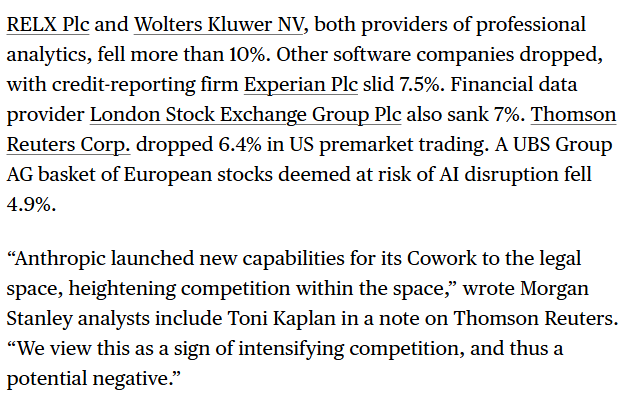
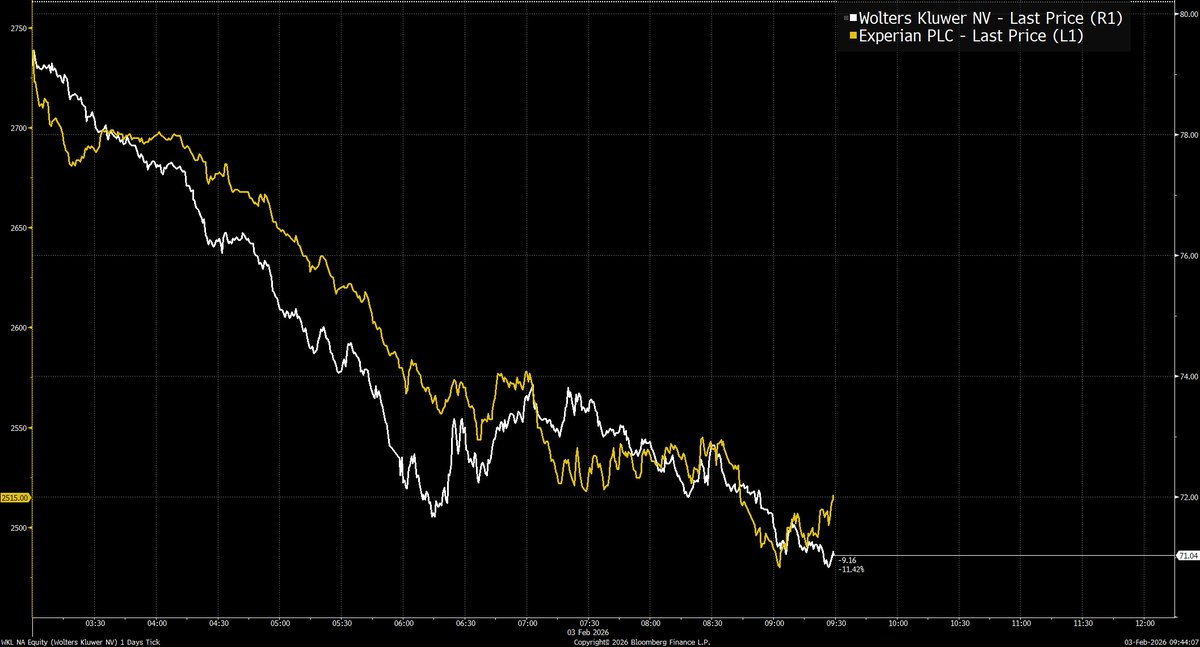
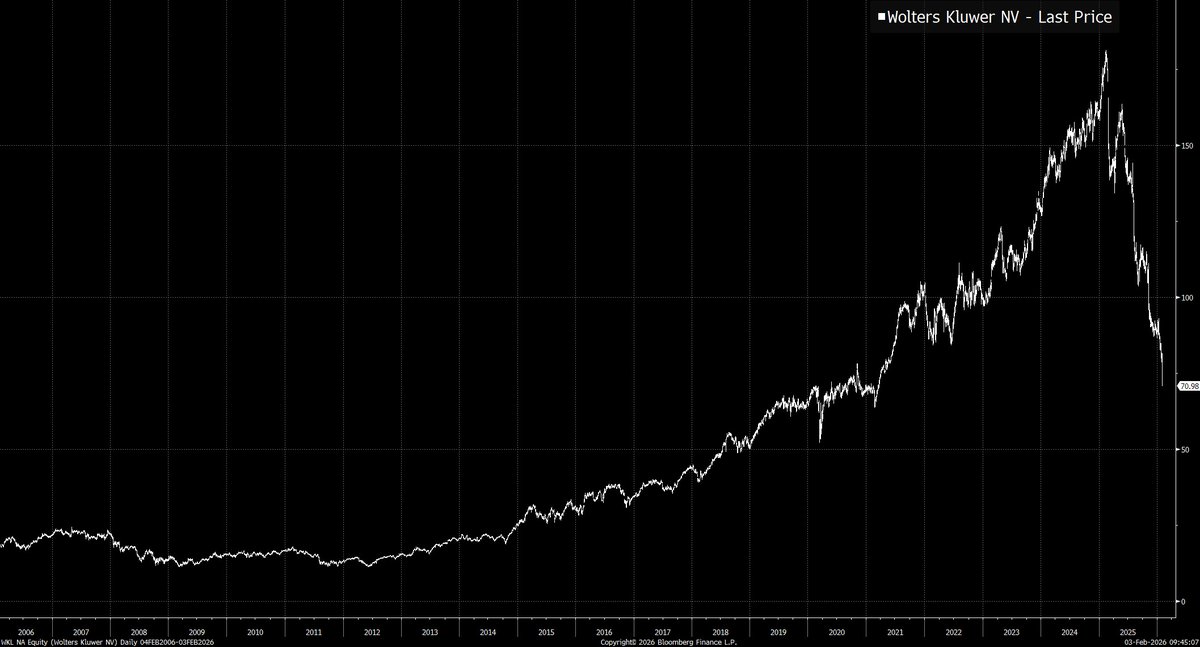
Now today it's data providers linked to the legal services space that are getting obliterated thanks to Anthropic. Super ugly when you zoom out as well. Total cliff crop over the last year. bloomberg.com/news/articles/…
Joe Weisenthal tweet mediaJoe Weisenthal tweet mediaJoe Weisenthal tweet media
English
23
39
306
58.8K
Jonathan Hersh
Jonathan Hersh@jonathanhersh·
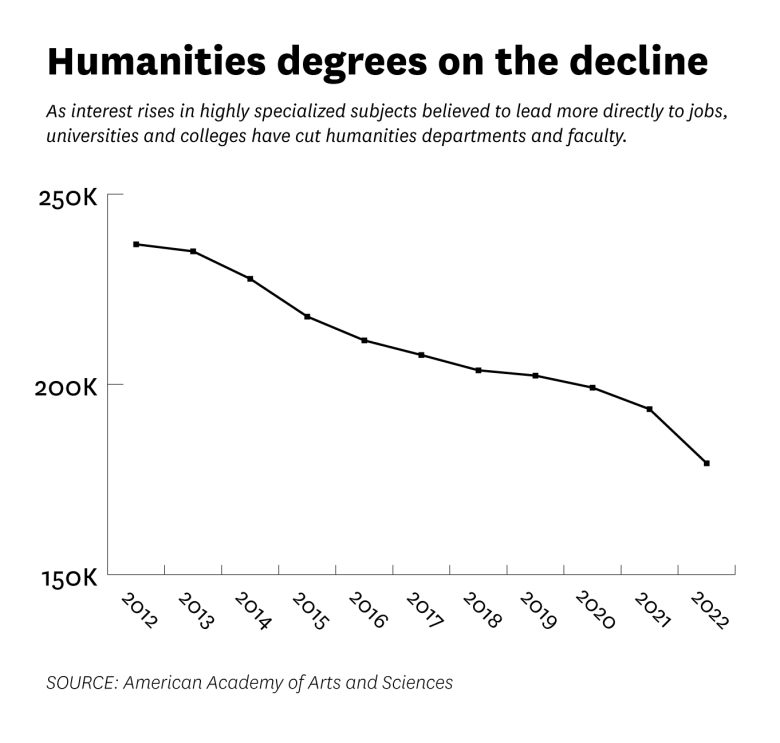
@DKThomp There's been a compositional shift in who is getting film degrees in 2000 versus 2026. I don't think we should ascribe all of this shift to reductions in attention. I doubt students at USC or UCLA would have the same issue. Students there went to these schools to study film.
Jonathan Hersh tweet media
English
0
0
0
164
Derek Thompson
Derek Thompson@DKThomp·
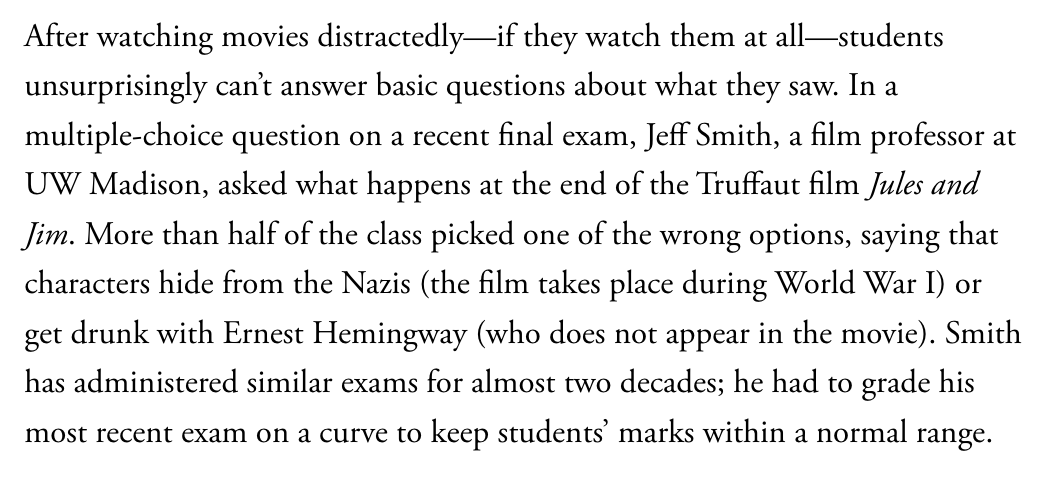
The attention crisis is so dire at schools right now that film professors can't even get their students to finish movies, and the kids don't even look up the plots of the movies they skip, so students fail basic in-class quizzes like "what happened at the end of the movie?"
Derek Thompson tweet media
English
314
942
7.6K
1.9M
Jonathan Hersh retweetledi
M. Nolan Gray 🥑
M. Nolan Gray 🥑@mnolangray·
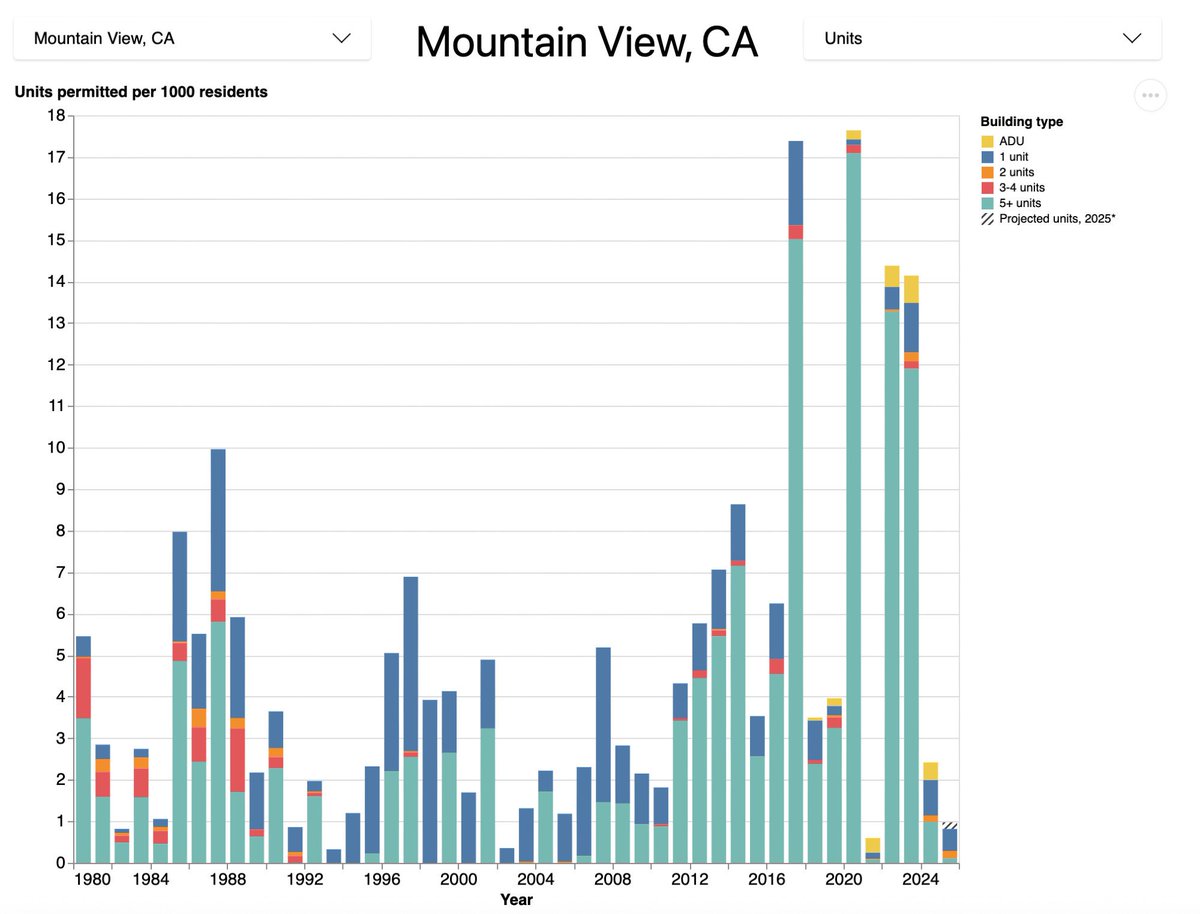
There has been a lot of warranted discourse about California's pro-housing laws underperforming, but in cities where YIMBYs have organized, shifted local politics, and won elections, the last 10 years have seen an absolute sea change in permitting.
M. Nolan Gray 🥑 tweet mediaM. Nolan Gray 🥑 tweet mediaM. Nolan Gray 🥑 tweet mediaM. Nolan Gray 🥑 tweet media
English
7
32
329
29.6K
Jonathan Hersh
Jonathan Hersh@jonathanhersh·
Am I the dog or is ChatGPT?
Jonathan Hersh tweet media
English
0
1
2
142
Jonathan Hersh retweetledi
David Shor
David Shor@davidshor·
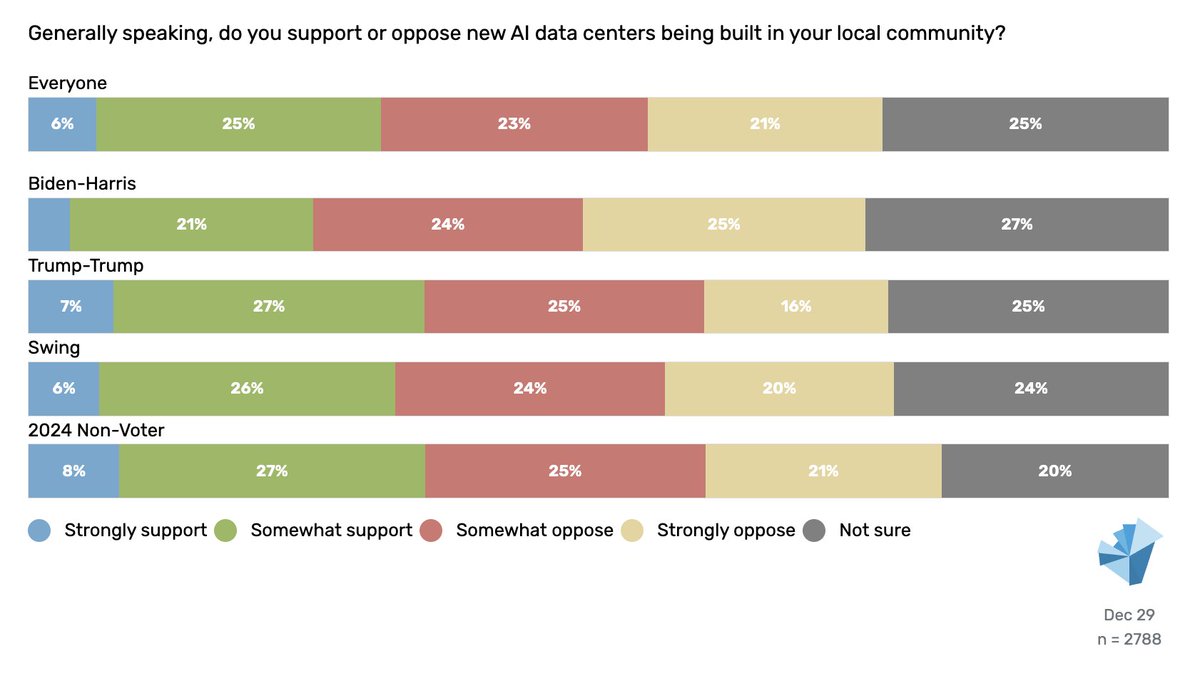
Do you support or oppose new AI data centers being built in your local community? 31% support, 44% oppose Would you support or oppose new data centers if they lowered your property taxes by 10%? 59% support 18% oppose
David Shor tweet mediaDavid Shor tweet media
English
47
64
521
143.2K
Jews Fight Back 🇺🇸🇮🇱
🚨 THIS IS ISRAEL. 🚨 Each person was offered money. Two options. Keep it. Or double it and pay it forward. And without a second thought? Every single person passed it on. This is Israel.
English
167
325
2.4K
73.2K
Jonathan Hersh
Jonathan Hersh@jonathanhersh·
@sebkrier Would be great if you can highlight some of these workshops. I've found the ones happening in academia are great at telling us what has happened - see any of the RCTs on adding LLMs in the workplace - but their ability to tell us what will happen relies on unrealistic assumptions
English
0
0
1
60
Séb Krier
Séb Krier@sebkrier·
There are broadly two ways people think about AGI and labour: Position A is where humans get fully substituted, which is usually advanced by parts of the AI commentariat. The argument is that if AGI is a scalable input that can do what workers do at lower cost, then the market value of human work falls. Even if humans remain physically capable, and even if adding AI raises human "physical productivity" in some narrow sense, the prices of what humans can sell can fall faster because AI floods supply. In competitive equilibrium, firms buy the cheapest effective input. Unless there is a large and persistent demand for "specifically human" labour (therapy, arts etc), wages are pushed toward the minimum people will accept; if the market-clearing wage is below social/legal/psychological floors, this shows up as unemployment rather than just low wages. All of this is in principle possible and a coherent argument, and I've written about them before. Position B is the economics reply, which doesn't depend on 'line goes up' alone. "AGI implies humans won't work" requires a corner solution: AI and labour must be perfect substitutes across most tasks, and compute must become cheap enough to saturate the economy. (Note that "perfect substitutes" doesn't mean "AI can do anything humans can", but that the two are interchangeable with no synergies from combination.) Standard production theory suggests a different dynamic: when two inputs are imperfect substitutes, adding more of one tends to raise the marginal product of the other: more AGI makes the remaining human contributions more valuable, not worthless. Many substitution arguments also assume away the real constraints on scaling compute (capital, energy, materials, bottlenecks), effectively smuggling "infinitely abundant AI" into the premises. So full displacement is in principle possible, but inevitability is an overclaim. Unless AGI can do literally everything and becomes abundant enough to meet all demand, it behaves broadly like powerful automation has before: replacing humans in some uses while expanding the production frontier in ways that sustain demand for labour elsewhere. Economists have a specific way of thinking about this which might turn out to be wrong for subtle reasons (e.g. if we truly hit the scenario where humans offer zero comparative advantage, like horses). However, the current discourse in AI world is dominated by voices who haven't even seriously considered or engaged with the mechanisms economists bring up. Position A sometimes reasons from the limit case without defending the assumptions needed to reach it (deployment speed, cost curves, complementarity, preferences for human services, institutional response, automation of all physical processes etc). There's more friction and agency here than deterministic worst-case modelling assumes. Note also that in discussing this, I'm not even taking into account the massive welfare benefits of decreased in prices, longevity improvements, and high economic growth. So amidst all this uncertainty, I find it irresponsible when commentators popularize memes about "total disempowerment" as foregone conclusions, as these *also* make implicit claims about political and institutional dynamics. The problem isn't just pessimism, it's that the vast majority of critics from the CS and futurist side don't even take the economic modeling seriously. Though equally many economists tend to refuse to ever think outside the box they've spent their careers in. I've been to some great workshops recently that being these worldviews together under a same roof and hope there will be a lot more of this in 2026.
Séb Krier tweet mediaSéb Krier tweet media
English

64
103
604
93.6K
Jonathan Hersh
Jonathan Hersh@jonathanhersh·
@davidshor What about by industry and occupation? People in the arts hate AI. Programmers are positive, and lawyers seem quite split.
English

1
0
1
210
Jonathan Hersh retweetledi
David Shor
David Shor@davidshor·
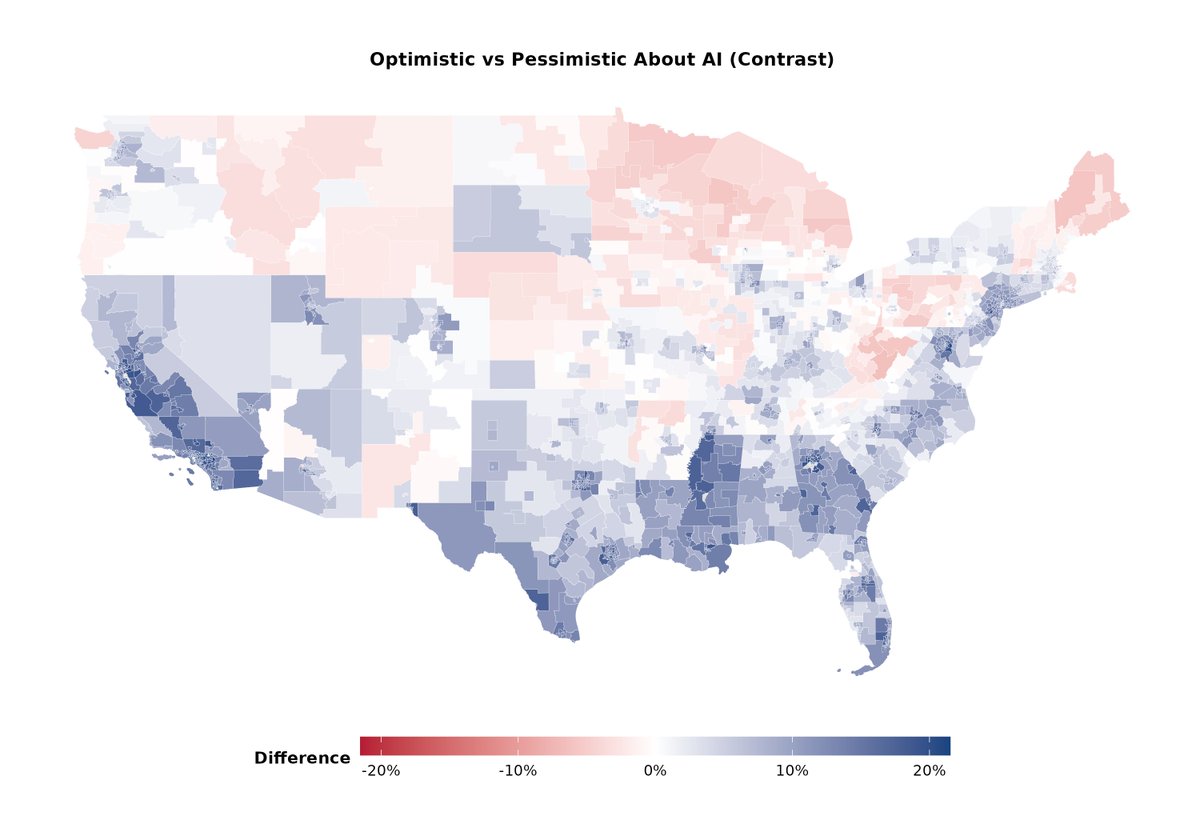
When you ask Americans whether they are optimistic or pessimistic about AI, optimism beats pessimism by ~5 points. The primary fault lines are age, gender, and race - young people, men, and racial minorities are the most optimistic about AI. N=30,900 , fielded 12/1 to 12/10
David Shor tweet mediaDavid Shor tweet media
English
81
135
841
440.7K
Jonathan Hersh retweetledi
dan linnaeus
dan linnaeus@DanLinnaeus·
Christians in Bethlehem 1922-2025 1922-1945 The earliest data point is taken directly the British Mandate census from ‘22 for the town, which shows 6,658 residents with 5,838 Christians, 818 Muslims, so 87.7% Christian (1). By ‘45 the same Mandate census show a drop to 73% with 8,820 inhabitants: 6,430 Christians and 2,370 Muslims (2). 1967-1995 Immediately after the 1967 Six-Day War, Israel conducted a full census with the ICBS supervising and publishing this as “Census of Population 1967: West Bank of Jordan, Gaza Strip, North Sinai and Golan Heights”, in several volumes, with detailed tabulations by locality, religion, sex, and other variables. The Levy Economics Institute digitized these volumes which constitute the first modern census reports, (4). For an easily accessible summation for Bethlehem, the The Jewish Virtual Library’s Bethlehem page states: “In the 1967 census taken by Israel authorities, the town of Bethlehem proper numbered 14,439 inhabitants, its 7,790 Muslim inhabitants represented 53.9% of the population, while the Christians of various denominations numbered 6,231 or 46.1%.” (4,5) The number of Christians in Bethlehem enjoyed a period of relative stability between ‘67 and ‘95, when under Oslo II, against local Christian pleas to Rabin’s government opposing the move, the area was handed over to Palestinian Authority control. PCBS 1997 census gives Bethlehem city between 21.7–21.9k people but no religion based breakdown; PCPSR/Philos and church sources converge on “about 40% Christian in 1998” (6,7). This implies c. 8.5–9k Christians, i.e. low-40s percent. For 1995 I would put the number at closer to the 45% mark on overall trend, but this is not a precise figure and I have to dig further to see if this portion of my graph and claim can be better anchored. What is repeatedly cited is 40% by 1997-8 across multiple Christian and Palestinian sources. Still, even at 40% the number of Christians translates to about 8,800, an increase from 1967’s 6,231. Note that PCBS uses “urban Bethlehem” for the tri-cluster of Bethlehem, Beit Jala and Beit Sahour plus their municipal boundaries but disaggregates from rural villages and the three refugee camps, Aida, Azza, and Dheisheh. Later ARIJ work cites the 1997 census, giving the “urban Bethlehem” population as 44,880, which is just the sum of those three municipalities in the 1997 tables. But in the Bethlehem-row of that locality table PCBS records a population of just under 22,000 as cited above. 2007-2025 The 2007 data point rests primarily on the PCPSR/Philos reconstruction of Christian demography in the occupied Palestinian territories. Using PCBS census data and its own fieldwork with local councils and churches, PCPSR notes that Bethlehem’s Christian share fell to 28% by 2007, with Christians declining to only 1.2% of the total Palestinian population but remaining concentrated in Bethlehem and a few other towns. The National Catholic Reporter piece from December 2016 quotes mayor Vera Baboun that “by 2016, the Christian population dipped to just 12 percent” in Bethlehem and its surrounding villages and that “today there are just 11,000 Christians” in Bethlehem. Friends of the Holy Land’s 2018 gathering report states 18% for Bethlehem’s Christian share. Lee’s AIJAC article in early 2019 uses a comparable framing, noting that since the PA took over the city in 1995 “the Christian percentage of the city’s population has plummeted from 40 per cent to 12 per cent,” and that the city’s population of c. 27,000 in 2017 was 23% higher than in 1998. A Reuters 2024 Christmas piece about Bethlehem picks up those same threads, stating that “as of a 2017 census, the overall population of Bethlehem was 215,514 with only 23,000 Christians among them,” and infers a Christian share “around 10%” in Bethlehem city. PCBS’s 2021 projected mid-year population tables by locality have Bethlehem total city pop’n rising from 28,343 in 2017 to c. 33k by 2025.
dan linnaeus tweet media
Daniel@VoteLewko

2.6 billion people around the globe are about to celebrate the birth of a Jewish man in Bethlehem of Judea 2000+ years ago, but some people still don’t think any Jews lived there before 1948.

English
9
17
48
4.2K
Jonathan Hersh
Jonathan Hersh@jonathanhersh·
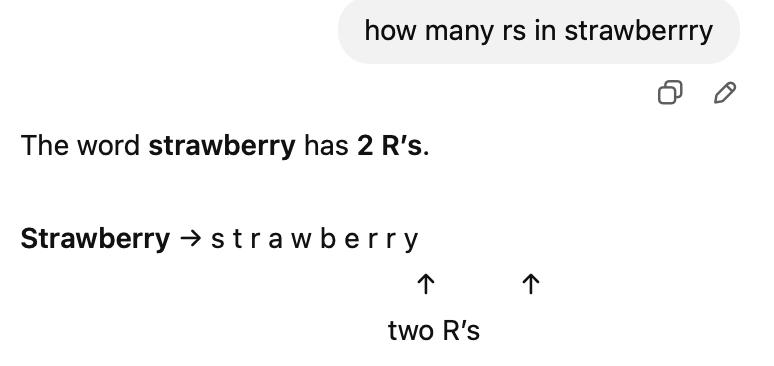
Why won't AI let me be confidently wrong?
Jonathan Hersh tweet media
English

0
0
0
152