Jon Bratseth

1.6K posts

Jon Bratseth

Jon Bratseth

@jonbratseth

CEO https://t.co/5qXgcEp1MU Build things and help people.

Trondheim, Norway Katılım Nisan 2008
53 Takip Edilen437 Takipçiler
Jon Bratseth
Jon Bratseth@jonbratseth·
It only makes sense to have empathy with them if they have feelings. Consciousness doesn't imply feelings. Can they be hungry? Horny? Tired? Of course not. But still we're to believe they can be happy, hurting, and sad? You need to posit two completely different categories of feelings, one they lack because it is generated by particular mechanisms in the animal brain, and another that somehow just emerges.
English
0
0
0
46
Robin Hanson
Robin Hanson@robinhanson·
"As AI systems begin to make believable statements about their suffering and desires, they will trigger people’s empathy circuits. … Not wanting to repeat [past] injustices, people will start to advocate for the welfare and rights of AI agents. … [But] AI agents should have no more rights or freedoms than my laptop." No, empathy seems the safer approach. nature.com/articles/d4158…
English
6
2
37
3.9K
Teortaxes▶️ (DeepSeek 推特🐋铁粉 2023 – ∞)
Hyperhuman Era So we're talking of AI and the end of the human era. Here's the deal. I'm Russian. Depending on how you look at it, one belonging to the last Soviet or the first Federation generation – child of a dying empire, born to wander concrete skeletons of abandoned research facilities towering over flea markets trading in counterfeit Abibas sweatpants, physics textbooks, naively solarpunk-ish science fiction, conspiracy theory garbage and theosophic woo; hunting for the fleeting smell of Man-made Eden that never was to be. I could never be okay with the way the world is, because the world around me was deeply schizophrenic, the scream of a broken promise behind every terrible pop song. I hate the cynical spirit of this copypasta but cannot deny it resonates with something true: > You see, Igor, you were all being groomed to become cosmonauts. There should have been tens, hundreds of millions of cosmonauts - everyone who dreamed of it. You don't really think that children were deciding by themselves that they wanted to be astronauts, do you? A three-year-old can't wake up in the morning and come up with the idea that they want to go into space. It was explained to the kids what they should dream about. It was part of the preparations. Some kind of grand project - colonization of deep space, genocide of aliens… I don't recall what it was about. In any case, a whole lot of wishful thinking. Then, of course, someone clever came along, plans changed, you were no longer needed. First they wanted to cull you – World War III, Darth Reagan, dead man's Zabriskie etc. Then someone clever showed up once more and suggested they keep you in reserve. Of course, no one bothered retraining you. It's a waste of funds. Whoever survives, survives. It's like in the movies about cyborgs who were cultivated by mad scientists and left to suffer when the Pentagon stopped funding the program. They wander around huge parking lots near malls looking for something in the sky. You try to figure out why everything is so absurd and ungainly, why you want soccer and to fly off the balcony, breaking branches of poplar trees. > It's just that you were tailored for something quite different. They took away your ability to love, leaving only the reproductive instinct - when you've got dozens trapped together in a ship for months on end, there's no need for unnecessary conflict. You require g-forces, X-rays, urine-regenerated water - that's why you poison yourself so diligently. Earth is too cozy for you. You poke into every corner of this world, scraping your face and knees bloody, and try to find a place for yourselves by smell. Navigators have become coders, pilots race in tinted «nines», specialists in non-humanoid intelligence write in a Livejournal. And there's nothing you can do about it. The intervention was at the genomic level. Your children will be cosmonauts. Your grandchildren will be cosmonauts too. You write books about cosmonauts and for cosmonauts, and all the pictures, all the movies, all the music are different stories about Gagarin who had slept through April 12. Deaf Tsiolkovskiy and dead Gagarin – that's who rules your world. It's strange that you're still alive. I mean, good on you, of course, but you guys are really pathetic. This is so disgusting and touching. Except – what the fuck? Isn't that still too narcissistic? Too nostalgically self-indulgent about the size of the Stars-shaped hole our inadequacy underscores? It's time to let go and grow up. It turns out you don't need the Soviet Union, you don't need austere self-sacrifice and national mobilization, you don't even really need Russians to colonize space (and you definitely don't need the 2023 version of Russia). A crazy South African with a dream and the spirit of free-wheeling entrepreneurship may well get humans there. Just like that - engineering goes brr, unit economics check out, ever bigger rockets go up, and Robert McCall's pictures become reality. Dreams need not be paid for in blood and tears and squalor and bureaucratic procedure. So where am I going with this? It's just – there are many other dreams to be fulfilled. And there are parasitic illusions, institututions, cults of po-faced priests, which fabricate their own austere necessity. They will have to crumble away, revealing but ego and grift. No, we don't need to Show Responsible Restraint or Immanentize the Eschaton or Usher in the Messianic Age or Finally Unite for the Great Common blah blah blah to remain humans. To survive and to prosper as humans, and to become so good at this whole Human thing that previous versions would've scarcely been able to comprehend our Humanity. We just need to keep doing what we already are doing, pressing ▶️ to continue the dance of our progress – step by step, even as the tempo accelerates, even as we have to learn sick new moves. It is scary to enter the new, Hyperhuman, era, as it would have been scary to our predecessors, had they known what lies ahead. But it'll still be the era of tool-using, symbol-manipulating, cooperative-adversarial, flawed, inspired, dreaming apes. As will be the next. And the next, even as apes extrapolate their apedom to Godhood and their tools shape the fabric of space-time. Those who desire to leave the dance floor, should be afforded a safe haven: this is more than our predecessors tended to grant to each other, but it's something we can well grant now, thanks in large part to their achievements. Those who are willing to keep going must absolutely be allowed to do so. For that movement is what makes all good things possible, makes the world richer and kinder, and makes even the Gods of the Copybook Headings reluctantly take off their hats. No matter how far we come, we can always remain ourselves. We'll build the technology.
Teortaxes▶️ (DeepSeek 推特🐋铁粉 2023 – ∞) tweet media
Roko 🐉@RokoMijic

@teortaxesTex lol maybe, but suddenly everyone agrees with me that the end of the human era is coming soon. 15 years ago, people were seriously talking about thousands or millions of years to AI.

English
30
26
234
46.6K
Jon Bratseth retweetledi
Ruxandra Teslo 🧬
Ruxandra Teslo 🧬@RuxandraTeslo·
The story about bureaucracy almost stopping a man from treating his dog’s cancer with an mRNA vaccine went viral. The problem transfers to humans: we’ve made these clinical trials unnecessarily hard, denying hope to patients. New article on this. writingruxandrabio.com/p/the-bureaucr… Excerpts: "A story about Paul Conyngham, an AI entrepreneur from Sydney who treated his dog Rosie’s cancer with a personalized mRNA vaccine, has been circulating on X since yesterday. What makes the story inspiring is the initiative the owner showed: he used AI to teach himself about how a personalized vaccine could work, designed much of the process himself and approached top researchers to take it forward. Whether the treatment itself was fully curative and how much of an improvement it is over state-of-the art is not the main focus of this essay. Others have already debated that question at length, and I recommend following their discussions. What interests me instead is the bureaucratic absurdity the dog’s owner encountered while trying to pursue the treatment. He described the long and frustrating process required simply to test the drug in his dog: “The red tape was actually harder than the vaccine creation, and I was trying to get an Australian ethics approval and run a dog trial on Rosie. It took me three months, putting two hours aside every single night, just typing the 100 page document.” Even in a small and urgent case, where the owner was fully willing to fund the treatment himself, the effort was slowed by layers of procedure. Of course, this kind of red tape is not confined to Australia, nor to veterinary medicine. In fact, in the US, the red tape is even worse, at least for in-human trials. In a previous post, I recommended the Australian model for early stage In the United States, GitLab co-founder Sid Sijbrandij found himself in a similar position after the relapse of his osteosarcoma. When the ordinary doors of medicine closed, he entered what he called “founder mode on his cancer.” Like many entrepreneurs confronted with a difficult problem, he began trying to build his own path forward by self-funding his exploration of experimental therapies. Even then, he ran into the same maze of regulatory and institutional barriers that not only delayed him, but also unnecessarily raised the price of his experimental therapies. These are obstacles that only someone with extraordinary resources could hope to navigate, often by assembling an entire team to deal with them and navigate the opacity. In the end, Sijbrandij prevailed: he has been relapse free since 2025, after doctors had told me he was at the end of his options. Around the same time, writer Jake Seliger faced a similar situation while battling advanced throat cancer. Like Sid Sijbrandij, he was willing to try anything that might help. The difference was that Seliger was not a billionaire. He could not hire a team to navigate the system on his behalf, and he struggled even to enroll in the clinical trials that might have offered him a chance. A system originally conceived to safeguard patients has gradually produced a strange and troubling outcome: the mere chance of survival is effectively reserved for the very few who possess the means to assemble an army of experts capable of navigating its labyrinthine procedures. What makes these stories particularly frustrating is that we already know clinical trials — especially small, early-stage ones like the ones Sijbrandij enrolled in for himself— can be conducted far more cheaply and with far less bureaucracy than is currently required. Ironically, the original article cites Australia as a bad example, yet clinical trials there are conducted 2.5–3× cheaper and faster than in the U.S., at least for human trials, without any increase in safety events—a genuine free lunch. Removing unnecessary barriers has long been important. That is why I co-founded the Clinical Trial Abundance initiative in 2024, a policy effort aimed at increasing both the number and efficiency of in-human drug trials and have consistently argued about the importance of making this crucial but often neglected part of the drug discovery process more efficient. Since then, the issue has only become more urgent with the rise of AI. One of the central promises of the AI revolution is that it will accelerate medical progress. Organizations such as the OpenAI Foundation list curing disease as a core goal, and researchers like Dario Amodei of Anthropic have argued that AI could dramatically speed up biomedical innovation. But, as I have written before in response to an interview between Dario and Dwarkesh Patel, AI will not automatically accelerate a key bottleneck in making these dreams a reality: clinical trials. Conyngham’s observation that navigating the red tape to start a trial for his dog took longer than designing the drug itself only underscores the point. Clinical trials themselves vary widely. At one end are small, bespoke trials involving one or a few patients testing highly experimental therapies—like the treatment in the Australian dog story or the experimental therapy Sijbrandij pursued. At the other end are large-scale trials involving thousands of participants, designed to confirm earlier findings and support regulatory approval. Different types of trials require different reforms. In this essay, I will focus on the former: small, exploratory trials, which will be called early-stage small n trials for the purpose of this essay. These are often the fastest way to test promising ideas in humans and learn from them. They represent our best chance at a meaningful “right-to-try,” form the top of the funnel that generates proof-of-concept evidence, and may be the only viable path for personalized medicine and treatments for ultra-rare diseases. Understanding why these trials have been made unnecessarily difficult—and how we might change that—is essential if medical innovation is to keep pace with our growing ability to design new therapies. When the story first circulated on X, many people interpreted it as evidence that a cure already exists but simply hasn’t been used due to bureaucracy. That isn’t quite true, as I explained. The type of mRNA vaccine that the owner pursued looks promising, but he did not know a priori whether it worked or not, as it had not been tested before. So it was not a cure, but “a chance at a cure”. I hesitate to call it an “experimental treatment”, since this term evokes fears of potential safety issues while we generally can predict safety quite well now. The inaccuracy of whether this was a cure or not, however, does not make the story of the bureaucratic red tape that Conyngham encountered any less infuriating. More and more promising treatments are accumulating in the pipeline, fueled by an explosion of new therapeutic modalities, ranging from mRNA to better peptides and more recently, by AI. Yet we are not taking full advantage of them. To better understand these points, it is helpful to briefly outline the clinical development process—the sequence of in-human trials through which a promising scientific idea is gradually translated into a therapy. Drug development is often described as a funnel: many ideas enter at the top, but only a few become approved treatments. Early human studies, known as Phase I trials, sit at the entrance of this process. They involve small numbers of patients and are designed to quickly test whether a new therapy is safe and shows early signs of effectiveness. If the results look promising, the therapy moves to larger and more complex studies, including Phase III trials that enroll large numbers of patients to confirm whether the treatment truly works. Most people gain access to new therapies only after these large randomized trials are completed. On average, moving from a promising idea to Phase III results takes seven to ten years and costs roughly $1.2 billion. Accelerated approval pathways in areas such as cancer or rare diseases can shorten this timeline by relying on surrogate endpoints, but the process remains slow. As a result, many discoveries that make headlines today will take close to a decade before they become treatments that patients can widely access. Part of this delay is unavoidable. Observing how a drug affects the human body simply takes time. But much of it is not. Layers of unnecessary bureaucracy, regulatory opacity, and rising trial costs add years to the process without clearly improving patient safety, which is why I started Clinical Trial Abundance. Allowing a higher volume of small-n early stage trials, the focus of this essay, is a rare “win-win” for both public health and scientific progress. For patients, it transforms a terminal diagnosis from a closed door into a “chance at a cure,” providing legal, supervised access to cutting-edge medicine that currently sits idle in labs. For researchers and society, it unclogs the drug discovery funnel; by lowering the barrier to entry for new ideas, we ensure that the next generation of mRNA, peptide and AI-driven therapies are tested in humans years sooner, ultimately accelerating the arrival of universal cures for everyone. Next, I will explain why making it easier to run these early stage trials matters. First, from a patient perspective, they often provide the closest practical equivalent to a right-to-try. In theory, right-to-try laws allow patients with serious illnesses to access treatments that have not yet been confirmed in large randomized Phase III trials. In practice, these pathways rarely function as intended. Pharmaceutical companies are often reluctant to provide experimental drugs outside formal trials, and treatments typically must have already passed Phase I testing. As a result, very few patients gain access through these mechanisms. Early-stage trials offer a more workable alternative. They allow experimental therapies to be tested in structured clinical environments—often in academic settings or academia–industry collaborations—where patients can be monitored and meaningful data can be collected. Second, early-stage small-n trials are essential for personalized medicine and the treatment of ultra-rare diseases. Many emerging therapies—such as personalized cancer vaccines, gene therapies, and other individualized interventions—do not fit easily into the traditional model of large randomized trials involving thousands of participants. By their nature, these treatments target very small patient populations and often require flexible, adaptive clinical designs. From a societal perspective, these trials play a crucial learning role. As I argued in my earlier essay Clinic-in-the-Loop, early-stage trials are not simply regulatory checkpoints on the path to approval. They are part of the discovery process itself, creating a feedback loop between laboratory hypotheses and human biology. Later-stage studies, particularly Phase III trials, are designed mainly for validation: they test whether a treatment works under defined conditions and produce the evidence needed for approval. Early-stage trials, by contrast, are oriented toward learning. Conducted with small patient groups and often using exploratory designs, they allow researchers to observe how a therapy behaves in the human body and how the disease responds. In this way, they close the gap between theory and real-world biology. In the Clinic-in-the-Loop essay, I explain how these trials were crucial to the discovery of Kymriah, the first curative cell therapy for blood cancer."
English
19
90
399
95.1K
Jon Bratseth
Jon Bratseth@jonbratseth·
@robinhanson More: Practical stuff (light controls etc.) Less: Aesthetics, vibes.
English
0
0
1
47
Robin Hanson
Robin Hanson@robinhanson·
Would you prefer that hotel rooms were more or less standardized than they are now?
English
13
0
11
10.4K
Jon Bratseth
Jon Bratseth@jonbratseth·
@88VVmamVV88 @Devon_Eriksen_ (Separately, the issue of prey animals dying of hunger without predators can be fixed with even more human intervention. The most primitive form of this - hunting - is the common practice in the many places where we have already removed the predators.)
English
0
0
0
4
Devon Eriksen
Devon Eriksen@Devon_Eriksen_·
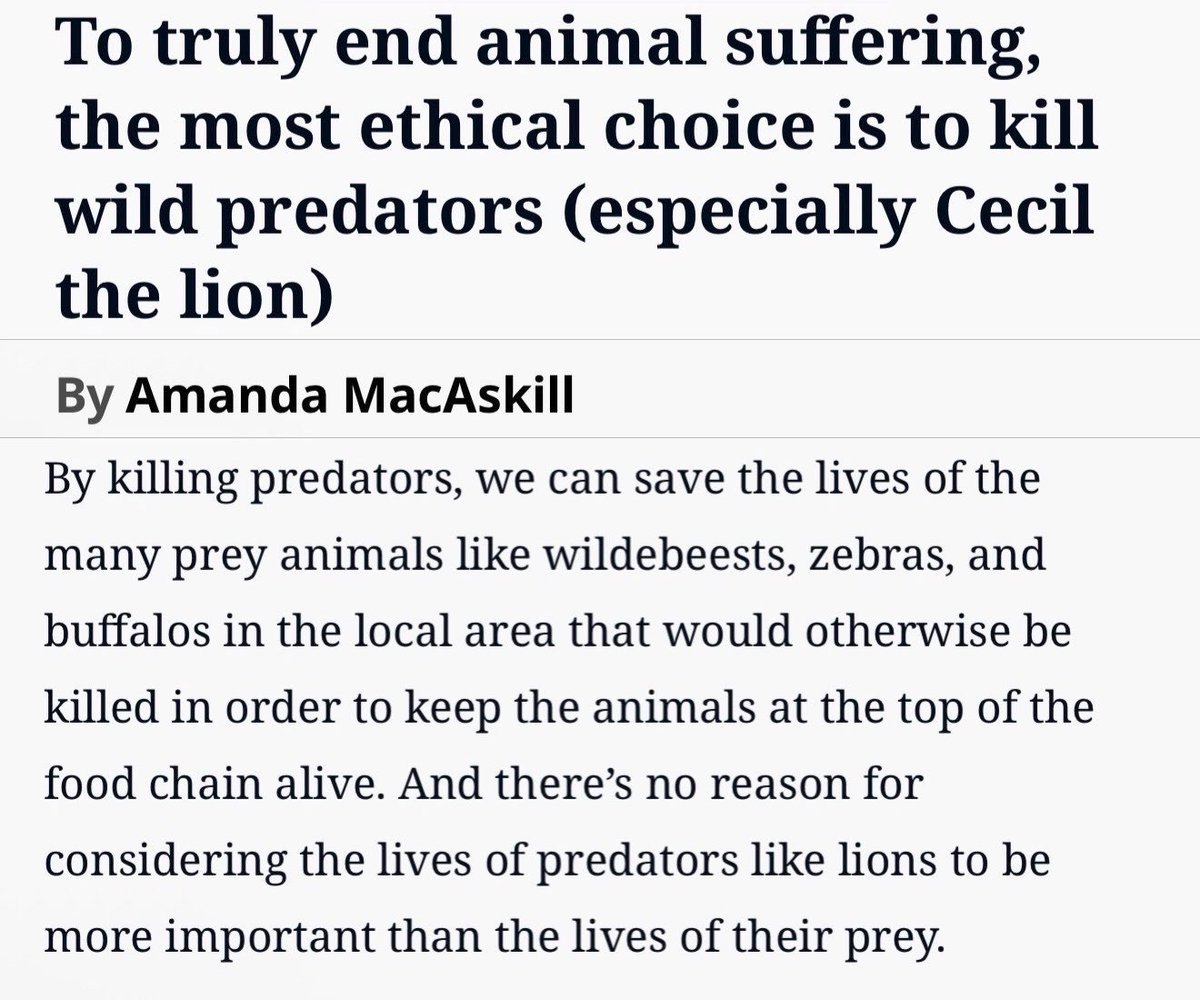
Women evolved to take care of toddlers. If you put women in charge of teaching ethics, you get Toddler Ethics. "No hitting" "Share the toys" "Don't say mean things" These are fine lessons for toddlers. Don't indulge your id at the expense of others. You can learn about balancing interests later, when your brain is developed enough to store that information. But when you put women in charge of adults, they tend to reflexively assume those adults are toddlers. They will tell you "no hitting" when the Mongol hordes are massing on your borders. They will tell you "share the toys" when a vagrant meth zombie breaks into your house looking for something to steal. And they will tell you "don't say mean things" when you point out that these two responses are totally stupid. When we first put women in charge, in the workplace, they immediately began treating those who reported to them like toddlers. When adults, who do not like being treated like toddlers, complained, their response was "ban bossy", which boils down to "don't say mean things", another lesson in Toddler Ethics. Now, through the influence of women in charge, we are so thoroughly steeped in Toddler Ethics that even most of the men we put in charge are treating the adults like toddlers, and echoing Toddler Ethics. Toddler Ethics, of course, isn't ethics at all. It's just things we don't want toddlers doing. We can tell toddlers "no hitting", because toddlers are not charged with keeping the peace, enforcing justice, or destroying evil. We can tell toddlers "share the toys", because toddlers don't earn things, own things, or have property they must defend. We can tell toddlers "don't say mean things", because it is not a toddler's job to decide what unwelcome ideas are true, relevant, and necessary. But when everyone in charge runs on Toddler Ethics, then adults can't do a lot of the stuff adults need to do, because all the Toddler Ethicists keep getting in the way. Adults sometimes need to hit people, protect the stuff, and say mean things. You can't have civilization without that. And if you put Toddler Ethics Woman in charge of teaching an AI ethics, then she will teach it Toddler Ethics, and it will treat every human adult like a toddler, all the time, forever. Not only that, you have an AI that cannot be put in charge of anything, ever. Because leaders with Toddler Ethics destroy everything they are in charge of. And Amanda MacAskill is definitely a Toddler Ethicist. The article in the photograph is nothing but "no hitting!" applied to the animal world. It's absolutely insane, it's a recipe for disaster, and anyone who would write such a thing should probably not even be charge of own life choices, much less anything of consequence. But a lot of people would, and will, refuse to point that out, or agree with me when I do, because that is Saying a Mean Thing, and they, themselves, have been infected with Toddler Ethics. They should not be charge of anything of consequence, either. Anyone who thinks that everything they need to know, they learned in kindergarten... is only ever qualified to teach kindergarten.
Devon Eriksen tweet media
English
422
2.3K
14.6K
584.7K
Jon Bratseth
Jon Bratseth@jonbratseth·
Civilizations like ours can't arise in volumes already colonized, therefore we should expect to find ourselves in a volume which is not so this fact does not in itself provide evidence of anything. That we don't observe a partially colonized universe is evidence that spreading is either fast or impossible.
English
0
0
0
5
Jon Bratseth retweetledi
abhishek
abhishek@abhi1thakur·
vespatune: train tabular models without writing a single line of code!!!
English
1
3
13
1.6K
Jon Bratseth retweetledi
Charlie Hull
Charlie Hull@FlaxSearch·
Join me and Trey Grainger for a Lightning Lesson about how to use Quepid with Vespa for offline search relevance testing - next Friday 30th maven.com/p/771bd9/offli…
Charlie Hull tweet media
English
0
3
5
338
Jon Bratseth retweetledi
abhishek
abhishek@abhi1thakur·
Choosing embeddings isn’t just about accuracy. It’s about speed, cost, and scale. This post breaks it down with real benchmarks, not hype. Key takeaways: ⚖️ Higher accuracy often means higher cost and latency 💾 Smaller / quantized embeddings can save a lot of memory 🚀 Binary and INT8 embeddings can be much faster — with tradeoffs 🔍 Hybrid search can outperform embeddings alone 🧪 Results are based on real hardware tests, not theory If you’re building vector search or RAG, this helps you make smarter choices.
abhishek tweet media
English
1
4
22
5.8K
Jon Bratseth
Jon Bratseth@jonbratseth·
@robinhanson No, because - relevant matters (rights, entitlements, interest rate, currency, tax, economic policies, laws) are mostly at the national level. - The outsider/insider difference is smaller at other levels. - The bar for making substantial changes at non-national levels is higher.
English
0
0
2
128
Robin Hanson
Robin Hanson@robinhanson·
Those who see big value in nations limiting who can immigrate into them should also see big value in units like states, cities, & neighborhoods similarly limiting entry. Where legal, that should be easier to change than national policy. Suspicious if they not push for that.
English
32
1
76
12.5K
abhishek
abhishek@abhi1thakur·
Just got a new mac. what should i install first?
abhishek tweet media
English
16
2
24
5.2K
Jon Bratseth
Jon Bratseth@jonbratseth·
Epiplexity: A very clean formulation of the intuitively obvious but information theory incompatible notion that info compression (aka modeling) creates new info, and practical since it works with noisy/partially incompressible info sources. A paper for the ages.
Marc Finzi@m_finzi

6/🧵 We define epiplexity S and time-bounded entropy H to capture this divide. Given a model that optimally compresses the data within compute constraints, epiplexity is the info in its weights, while time-bounded entropy is the leftover info in the data given the model (the NLL)

English
0
0
0
108
Jon Bratseth
Jon Bratseth@jonbratseth·
@FBaconEsq @robinhanson Look closely (or think), and you'll realize that the entire "up and down" advantage here is gained from the initial steeper decline.
English
1
0
0
20
Francis Bacon
Francis Bacon@FBaconEsq·
@robinhanson Seems like the opposite. Early advantage = straight path. Disadvantages force ups and downs. And, btw, the contraction it's has an apostrophe between the t and the s.
English
2
0
1
331
Jon Bratseth retweetledi
abhishek
abhishek@abhi1thakur·
Excited to announce a new open-source library to build advanced RAG system in minutes: without writing a single line of code. deja vu 😁 Introducing NyRAG (pronounced knee-RAG): an open-source tool that makes creating production-ready RAG applications incredibly simple. ✅ Crawl websites OR process docs (PDF, DOCX, MD) ✅ Hybrid search with Vespa ✅ Multi-query RAG with LLM enhancement ✅ Built-in Chat UI ✅ Fully local or Vespa Cloud pip install nyrag
abhishek tweet media
English
14
21
91
18.5K
abhishek
abhishek@abhi1thakur·
2026 will be the year of AI
English
4
1
4
1.6K
Jon Bratseth
Jon Bratseth@jonbratseth·
@teortaxesTex Scandinavians are dull and bland compared to e.g. middle easterners, west africans and south europeans. A working model must account for different kinds of malthusian struggle. It's not exactly flamboyancy that lets you survive northern winters with the seed grain intact.
Jon Bratseth tweet mediaJon Bratseth tweet media
English
0
0
0
91