Jon Chu

3.5K posts

Jon Chu

Jon Chu

@jonchu

Partner @ KV, 2x founder, OG @ PLTR, OPEN, Docker, ML @ Meta // Investor in Sakana, Databricks, Anthropic, Bun, Runlayer, Iceguard, Coframe++

San Francisco, CA Katılım Haziran 2009
551 Takip Edilen10.9K Takipçiler
Jon Chu
Jon Chu@jonchu·
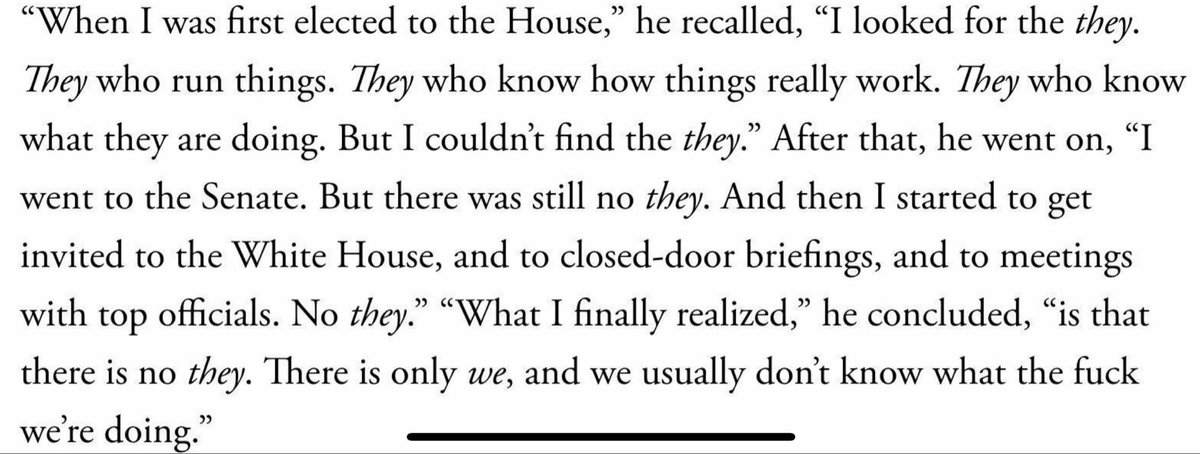
"There is no they. There is only we, and we usually don't know what the fuck we're doing." - Lindsay Graham Something clicks in high slope founders when they realize this. And it usually unlocks an inflection point
Jon Chu tweet media
English
2
1
50
1.7K
Jon Chu
Jon Chu@jonchu·
@saammotamedi Congrats @saammotamedi and the rest of the Greylock team! You all have been a staple in the valley and continue to do great work
English
0
0
1
272
Saam Motamedi
Saam Motamedi@saammotamedi·
Today, we are announcing Greylock 18, a new $1.5 billion early-stage venture fund. A company begins when a founder sees a future others cannot yet see. There is no team, product, or revenue. Only a deep insight and the courage to start. Being early is lonely work. For years, being right can look exactly like being wrong. Greylock has spent more than six decades partnering with founders through those earliest moments to build enduring companies. Airbnb, Facebook, and Palo Alto Networks all began as improbable ideas driven by founders determined to make them inevitable. AI has made the map blank again. Every part of the economy is now open to reinvention. We believe many of the defining AI companies do not yet exist. We invest selectively and partner deeply with the founders we back. Each Greylock partner makes only one or two new investments a year because the work demands depth. We bring the full attention, network, and resources of Greylock to every partnership. We are builders backing outliers. Founders have their choice of investor. When a founder chooses to partner with Greylock, we understand the weight of that choice and the profound responsibility that comes with it. We seek to be a founder’s first believer and long-term partner. Greylock 18 is our commitment to what does not exist yet.
English
64
36
365
86.5K
Jon Chu
Jon Chu@jonchu·
@writer_of_rohan The coffeehouses are also leaving Seattle. Starbucks just moved their HQ 🙁
English
0
0
1
438
Rohan Kshirsagar
Rohan Kshirsagar@writer_of_rohan·
sf tech culture has diverged so far from the rest of the country that seattle now feels quaint. spent the weekend there and didn’t hear a single conversation about agents, agi, or tokenmaxxing. barely an open laptop in sight. coffee was decent tho.
English
27
7
406
36.4K
Jon Chu
Jon Chu@jonchu·
@BarrAlexandra This is a stupid question. Because people with trauma try really hard not to show it.
English
1
0
9
514
Alexandra Barr
Alexandra Barr@BarrAlexandra·
someone at a party last night said VCs will ask you what childhood trauma you’re recovering from, and if you say you don’t have any, they won’t fund you
English
44
6
347
43.4K
Jon Chu
Jon Chu@jonchu·
@Mascobot Is that an electronics market for ants? (Sorry couldn't resist)
English
0
0
0
822
Marco Mascorro @ ICML
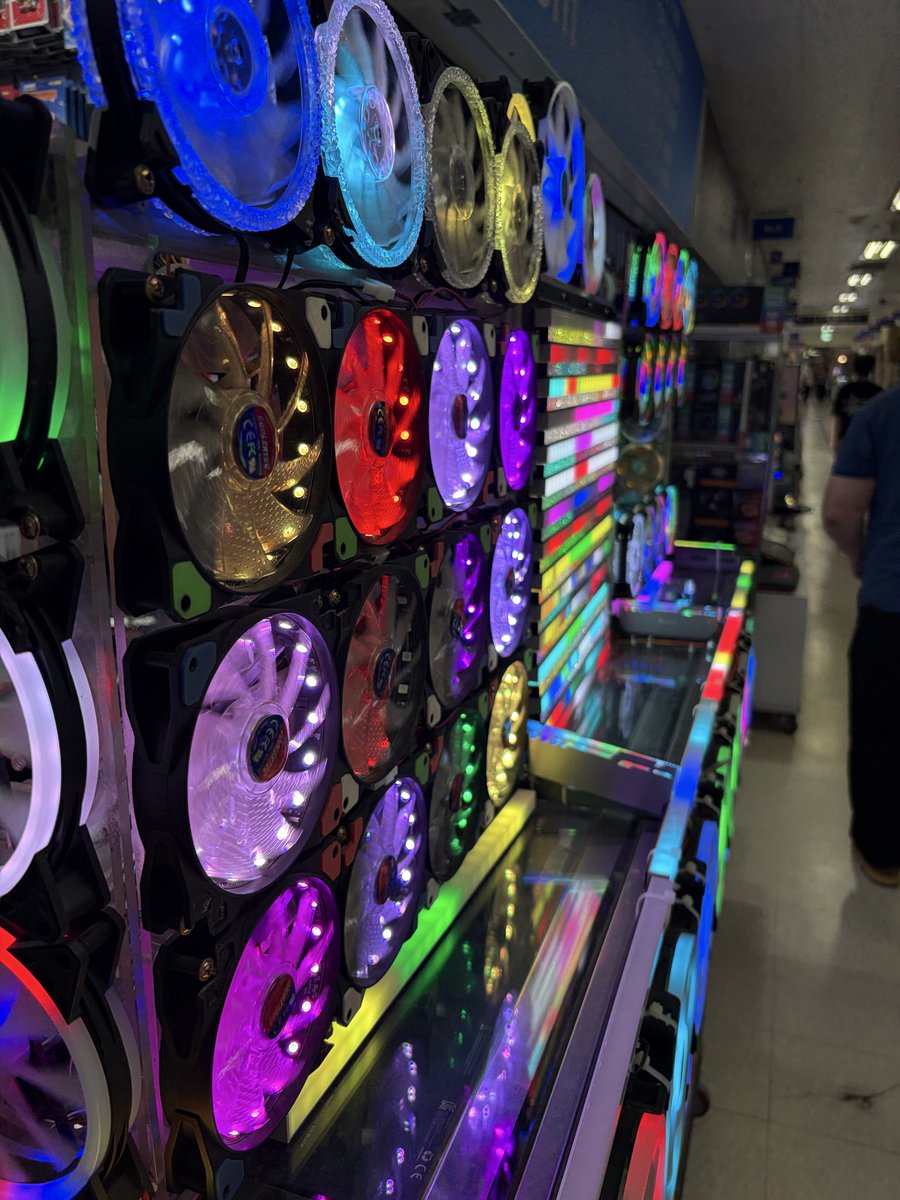
Of course I had to stop at Seoul’s (Yongsan) Electronics Market during ICML. Jensen Huang famously tried to sell his Nvidia GPUs here in the late 90s. Not quite Shenzhen Electronics Market or Akihabara in Japan, but I LOVE visiting Asian electronics markets:
Marco Mascorro @ ICML tweet mediaMarco Mascorro @ ICML tweet mediaMarco Mascorro @ ICML tweet mediaMarco Mascorro @ ICML tweet media
English
3
0
62
5.7K
Jon Chu
Jon Chu@jonchu·
2019-2021 was covid so job listings are kind of meaningless as everything was remote. But that data you're stating also agrees with me. Growth rate was higher sure. Feels right as tech in SF was on the decline due to remote work and everyone wanted to go to nyc. But overall number of people hadn't crossed over and was far from it. Paris I guess I can see how the feeling might hold if you're saying ML practitioners as a percentage of technical talent. That wouldn't surprise me. But as a % of sqft, given sf is 8x8, that still feels off. London is a good call out as that obviously is a city that birthed deepmind and should clearly be in the discussion
English
1
0
2
55
Dan Gray
Dan Gray@credistick·
From 2019–2021, NYC had more AI job listings than any other US city. Lower total AI employment than SF, but growing much faster. If you look at the academic base, there's a good argument that NYC had access to more East Coast AI talent which was fueling that growth. cset.georgetown.edu/wp-content/upl… The argument for Paris was purely density because the tech ecosystem was relatively much smaller, and more AI focused. That seems like a fair assessment, but also London > Paris.
Dan Gray tweet media
English
1
0
4
127
Jon Chu
Jon Chu@jonchu·
You said frontier model which means you're discussing current day. The thread above refers to years ago. Also, I agree that talent exists in France and you have enough talent density to build great companies. I disagree that anyone ever thought talent density in Paris was greater than that of SF. And I'd be surprised if you disagreed that SF has a higher density of AI researchers today than Paris.
English
0
0
0
40
Julie Fredrickson
Julie Fredrickson@AlmostMedia·
@jonchu @arian_ghashghai Then why do I think it as well? I happen to be friends with the ceo of a French domiciled frontier model (not the one you think) and French talent was certainly part of their logic
English
1
0
0
43
Jon Chu
Jon Chu@jonchu·
@arian_ghashghai Yes. I think you're representing Meta thinking, some of which is hopeful and strategic office planning.
English
1
0
2
96
Jing Yu Koh
Jing Yu Koh@kohjingyu·
Can't believe this batch of PhD students gets to go to Seoul, Vienna, Singapore, Kyoto, San Diego, Hawaii while the previous batch visited Gather Town, and the one before that apparently just went to New Orleans multiple times
English
24
10
449
59K
Lillian Ma
Lillian Ma@lillian_ma_·
Petition for more AI conferences in Seoul. The networking hits different when Chef Heewon Lim is cooking dinner and Zest is making your cocktails.
Lillian Ma tweet mediaLillian Ma tweet mediaLillian Ma tweet mediaLillian Ma tweet media
English
5
0
33
3.7K
Jon Chu
Jon Chu@jonchu·
@Trace_Cohen You just described a combo of sales eng and solutions architect 🙂.
English
0
0
2
236
Trace Cohen
Trace Cohen@Trace_Cohen·
You’re not a Forward Deployed Engineer unless you hail from Minas Tirith, ride at dawn to the customer’s on-prem data center, battle the Orcs of Enterprise Procurement, cross the Mines of COBOL, survive the Balrog of Compliance, wield the Elven API of Integration, and cast the One Legacy Mainframe into the fires of Mount Doom. Otherwise you’re just a solutions engineer with a Patagonia vest.
Jon Chu@jonchu

You know none of these AI companies actually do FDE right? It's just solutions eng in the old traditional enterprise sense. Nobody knows what Palantir does and nobody knows what FDE is. Shocking
English
3
1
15
2.4K
Jon Chu
Jon Chu@jonchu·
You know none of these AI companies actually do FDE right? It's just solutions eng in the old traditional enterprise sense. Nobody knows what Palantir does and nobody knows what FDE is. Shocking
English
30
7
314
45.5K
Jon Chu
Jon Chu@jonchu·
@nikunj Little obvious referring to that company
English
1
0
2
1K
Nikunj Kothari
Nikunj Kothari@nikunj·
I have been screaming this for the past year, but kind reminder to everyone: GMV is NOT ARR. Let's get our definitions right for once and for all.. or at least be honest what it is🤦‍♂️
Nikunj Kothari@nikunj

I can’t believe I need to spell this out but people KEEP getting confused so here it is. There’s a few types of “ARR” floating around.. First, most* ARR is reported based on the last months revenue - multiplied by 12. This is called annualized run rate. That’s been standard for a while - even though it has its problems. Types of ARR: 1) Traditional ARR: Annual “recurring” revenue. There’s an actual subscription and you typically pay per seat. Your subscription can be monthly or annual. Annual is typically better since it traditionally has lower churn even though the “per month” cost is lower. Most of modern SaaS historically is sold this way (think Figma, Notion, Workday, Salesforce etc). Gross margins are typically high. Companies trade at 6-20x revenue multiples in the public markets and 20-100x in the private markets. The fact that it’s recurring makes it “sticky” - this is important since it’s different from the bottom two. 2) AI ARR: In the AI world, there has started to be a lot of usage based revenue in addition to seat based pricing. For usage, token usage with the large models or inference costs if you’re hosting your own. Now these fluctuate based on usage and usage one week may not be usage next week. But now the total spend per month is seat based + usage. Now this is where it gets interesting. You can now technically calculate your ARR as seat + highest usage for a given month (or dare I say day) and now annualized run rate is very inflated. Moreover margins on these businesses are very different since gross margins on usage are typically very low since most of that revenue is made by the model or inference companies. Proof is in the pudding here - but most investors are buying the hype and not digging in. Founders are running a tight process to avoid this diligence as well. I have been called a boomer more than once when I have asked 😅 3) GMV or non recurring revenue disguised as “ARR”: This is a new trend where companies who are making non-recurring revenue with very low gross margins are calling themselves ARR. They are being cheeky by calling it annualized revenue run rate by taking the last months revenue and multiplying by 12. But, the main difference is the gross margin profile is very different for these companies since for GMV most of your revenue is passed through in a marketplace. And those businesses should be valued VERY differently compared to traditional SaaS businesses. And it’s non recurring even though the customer is buying today - there’s typically no guarantee they buy tomorrow. Now, in a gold rush everyone is buying more and more so all looks gravy. I have nothing against these businesses - but let’s call a spade a spade is my only ask. Long post, but people really need to understand. Hope this helps clear up any questions! * I say most because I have seen companies repot annual recurring revenue based on a single days revenue multiplied by 365. Not the norm, but definitely happens in case 2.

English
15
1
86
28.6K
Armon Dadgar
Armon Dadgar@armon·
First day at @PrattInstitute campus as a student! Taking a month long intensive course in (physical) architecture. Just like software, I’ve always loved the blend of creativity and constraints.
Armon Dadgar tweet media
Manhattan, NY 🇺🇸 English
6
0
73
5.8K
Jon Chu
Jon Chu@jonchu·
Silent winners get louder.
Coframe@coframe

We drove 410% conversion lift on @Replit's enterprise funnel, 2x-ing the number of demo requests. All in a matter of months. "Coframe makes you feel like you have a team of 100 people. There's nothing on the market like it." ⧉ x ⠕

English
2
0
21
6K
Sarah Catanzaro
Sarah Catanzaro@sarahcat21·
I know the gender ratio at ICML is still skewed when my feed is filled with saltbread recs and not a single mention of skincare. Can we please discuss what we are buying from Olive Young?
English
17
1
100
16.1K
Jon Chu
Jon Chu@jonchu·
@ivory_tang @michellearning I can name a couple companies that are 50b+ where I saw the beginning and certainly are existence proof it can be done
English
0
0
2
50
Ivory Tang
Ivory Tang@ivory_tang·
@michellearning Grinding is not a guarantee, never seen anyone get there without grinding
English
3
1
8
1.5K
Ivory Tang
Ivory Tang@ivory_tang·
pre-pmf founders leaving sf for the 4th of july is the most ngmi thing i've ever seen
English
26
3
161
87.4K