Jose Arocha-Saher

2K posts

Jose Arocha-Saher banner
Jose Arocha-Saher

Jose Arocha-Saher

@jose

Product Leader at @Meta | #Freedom #Opportunity #Compassion #Learning #Innovation #Music. Born in Coro, #Venezuela

Palo Alto, CA (Silicon Valley) Katılım Temmuz 2006
3.3K Takip Edilen11.4K Takipçiler
Sabitlenmiş Tweet
Jose Arocha-Saher
Jose Arocha-Saher@jose·
No hay vuelta atrás Creo que esta cita de Victor Hugo tiene una gran vigencia. A mi manera de ver las cosas, No hay vuelta atrás - no con las actas reales en la mano, los resultados a nuestro favor, una nación unida,… (1/4) images.app.goo.gl/FxDHc5yvf4WmHw…
Español
11
0
19
21.5K
Jose Arocha-Saher retweetledi
Ihtesham Ali
Ihtesham Ali@ihtesham2005·
A psychologist at the University of North Carolina spent 20 years proving that a single 20-second hug rewires the human cardiovascular system, and the experiment she ran is so simple you can replicate it tonight at home. Her name is Karen Grewen. She works inside the UNC School of Medicine's Department of Psychiatry. The paper that made her famous was published in 2003, and almost nobody outside her field has read it. Here is what she actually did. She recruited 183 healthy adults living with a long-term partner. She split them into two groups. The warm contact group sat together for 10 minutes holding hands while watching a romantic video. Then they stood up and hugged each other for exactly 20 seconds. The control group sat alone in a separate room for the same amount of time doing nothing. Then she made every single one of them give a public speech in front of a panel. Public speaking is one of the cleanest stressors in psychology. Heart rate spikes. Blood pressure climbs. Cortisol floods the system within minutes. It is the laboratory version of every stressful moment you have ever had at work. The people who had been hugged for 20 seconds before walking into that room had measurably lower blood pressure responses to the stress. Lower systolic. Lower diastolic. Lower heart rate increases. Everything was the same.. the speech, the panel, and fear. But this time completely different physiological response. The hug had not made the stress disappear. It had changed how the body was allowed to respond to it. Two years later Grewen ran the follow-up study that explained why. She drew blood from 38 couples before and after the same warm contact protocol and measured what was actually changing inside them. The answer was a hormone called oxytocin. Oxytocin is the chemical your body releases during childbirth, breastfeeding, and orgasm. It is the same molecule that makes a mother feel calm holding her newborn. Grewen's data showed that 20 seconds of physical contact with a trusted partner triggered a measurable spike in plasma oxytocin in both men and women, and the size of that spike directly predicted how much their blood pressure dropped. The mechanism turned out to be older than recorded history. Oxytocin binds to receptors in your heart, your blood vessels, and the part of your brainstem that controls how aggressively your nervous system reacts to threat. When the hormone shows up, the entire fight-or-flight machine downshifts. Your blood vessels widen. Your heart slows. Your cortisol production gets suppressed. This is not a feeling. This is a chemical instruction your body sends to itself that you can measure with a blood pressure cuff. The detail Grewen kept emphasizing in her interviews was the duration. Three seconds is the average length of a hug between two humans. It is too short. The hormonal cascade does not have time to start. 20 seconds is the threshold where the oxytocin actually crosses into the bloodstream in a quantity large enough to do something measurable. A follow-up study tracked 59 premenopausal women over time and found that the ones who hugged their partners most frequently had lower resting blood pressure and higher baseline oxytocin levels than the ones who did not. The effect compounded. Daily hugs produced a permanent shift in the cardiovascular baseline. A separate review of long-term partner contact research found that married adults with frequent affectionate touch had significantly lower rates of heart disease and all-cause mortality than equally healthy adults without it. The American Heart Association now cites this body of research when explaining why social isolation is treated as a cardiovascular risk factor on the same level as smoking. The most haunting line in Grewen's research is one she said in an interview after publishing the second paper. She pointed out that the average American touches another human being less than they did 50 years ago. Phones replaced eye contact. Texts replaced visits. Hugs at the door got shorter. The thing that used to regulate our cardiovascular system multiple times a day quietly disappeared from most adult lives. Your body still expects it. The hormone receptors are still there waiting. The system was designed to be reset by physical contact with people who feel safe, and the reset takes 20 seconds. You can run the experiment yourself tonight. Hug someone you love for 20 full seconds. Count it out. The first 10 will feel awkward. Around 15 something shifts. By 20 the shoulders drop, the breathing slows, the chest opens. That is not in your head. That is your bloodstream changing.
Ihtesham Ali tweet media
English
32
460
1.5K
93.2K
Jose Arocha-Saher retweetledi
Mira Murati
Mira Murati@miramurati·
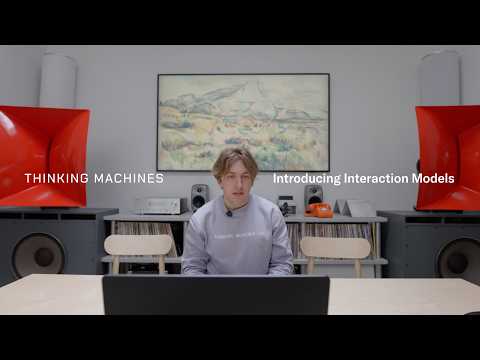
Today we're sharing our work on interaction models. A new class of model trained from scratch to handle real-time interaction natively, instead of gluing it onto a turn-based one. youtu.be/A12AVongNN4
YouTube video
YouTube
English
331
937
9K
1.2M
Jose Arocha-Saher retweetledi
Ben Lang
Ben Lang@benln·
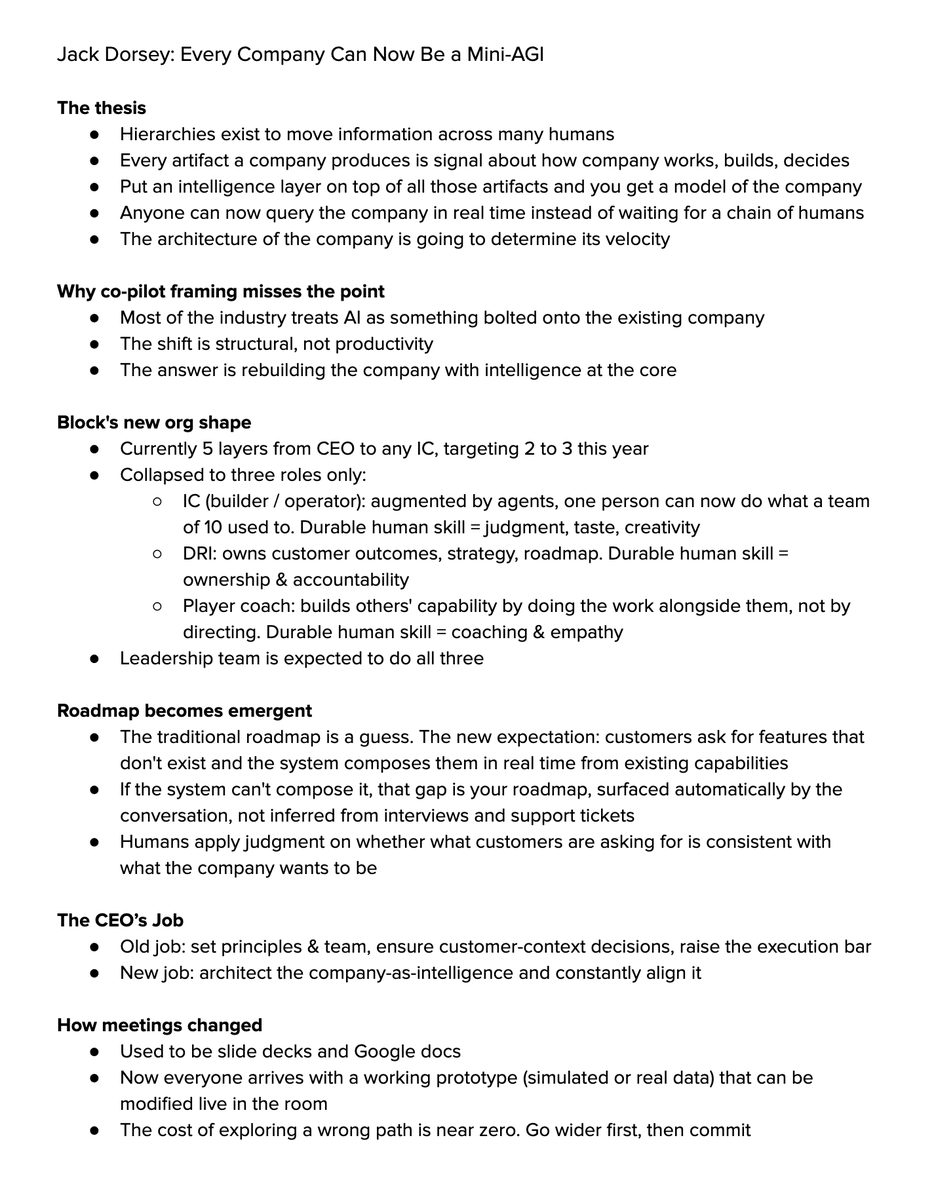
Jack Dorsey on how every company can now be a mini-AGI:
Ben Lang tweet media
English
70
297
2.8K
864.9K
Jose Arocha-Saher retweetledi
Genesis AI
Genesis AI@gs_ai_·
We are back. After one year of quiet building. Introducing GENE-26.5, our first robotic brain that takes a major step toward human-level capability. For years, robotics has struggled to learn from the world’s largest and valuable data source: Humans. Solving it means rethinking the whole stack from the ground up: - A robotics-native foundation model. - A 1:1 human-like robotic hand. - A noninvasive data collection glove for motion, force, and touch. - A simulator that turns weeks of experiments into minutes. GENE-26.5 is trained across language, vision, proprioception, tactile, and action. We designed a set of tasks to test how far we can go with this new paradigm. Fully autonomous, 1x speed, one model, same weights. (Enjoy with sound on) We are approaching the endgame for robotics. And this is just a beginning.
English
282
1.1K
5.8K
2.7M
Jose Arocha-Saher retweetledi
Black Hole
Black Hole@konstructivizm·
From Apollo to Orion: Five Decades of Progress in a Single CapsuleThe 1972 Apollo Command Module was an engineering marvel of its time — a compact home for three astronauts on short, high-stakes missions to the lunar surface. Tight quarters, basic systems, and just enough room to get the job done.Fast forward to the Orion spacecraft flying Artemis II in 2026: a clear leap forward. Larger and more capable, Orion offers significantly more habitable volume for its four-person crew — roughly 60% more interior space than Apollo (about 330 cubic feet versus Apollo’s ~210). It includes modern comforts like a dedicated Universal Waste Management System (a proper microgravity toilet), better life support, and design features built for longer deep-space journeys.This isn’t just a bigger capsule — it represents over half a century of hard-won lessons in human spaceflight. Where Apollo left footprints, Orion is helping us build toward a sustained presence on and around the Moon, paving the way for long-term exploration and eventual journeys deeper into the solar system.The contrast is stunning. The ambition? Even greater.(Credit: NASA)
Black Hole tweet media
English
29
737
2.3K
100.7K
Jose Arocha-Saher retweetledi
CBS News
CBS News@CBSNews·
As the Artemis II crew makes their way back home to Earth, astronaut Christina Koch said she will “miss this camaraderie.” “This sense of teamwork is something that you don’t usually get as an adult,” Koch said. “We are close like brothers and sisters, and that is a privilege we will never have again.”
English
55
646
7.6K
138.6K
Jose Arocha-Saher retweetledi
NASA
NASA@NASA·
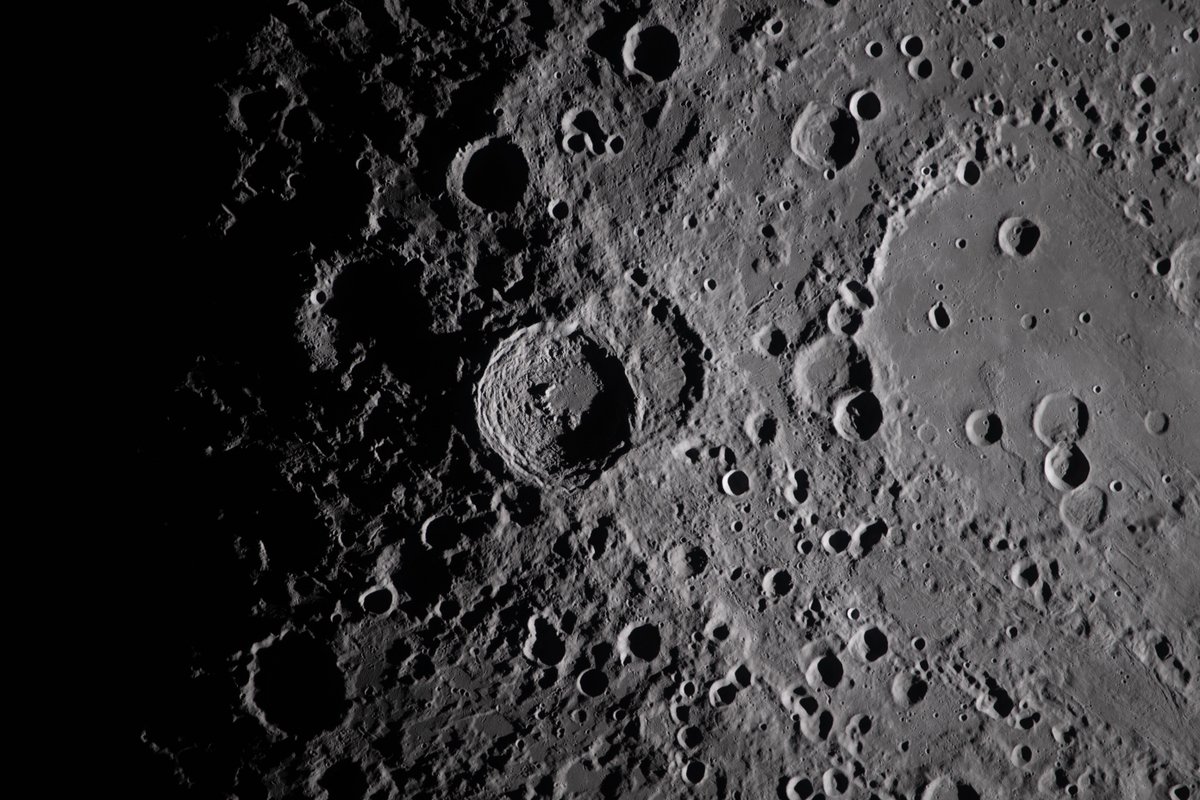
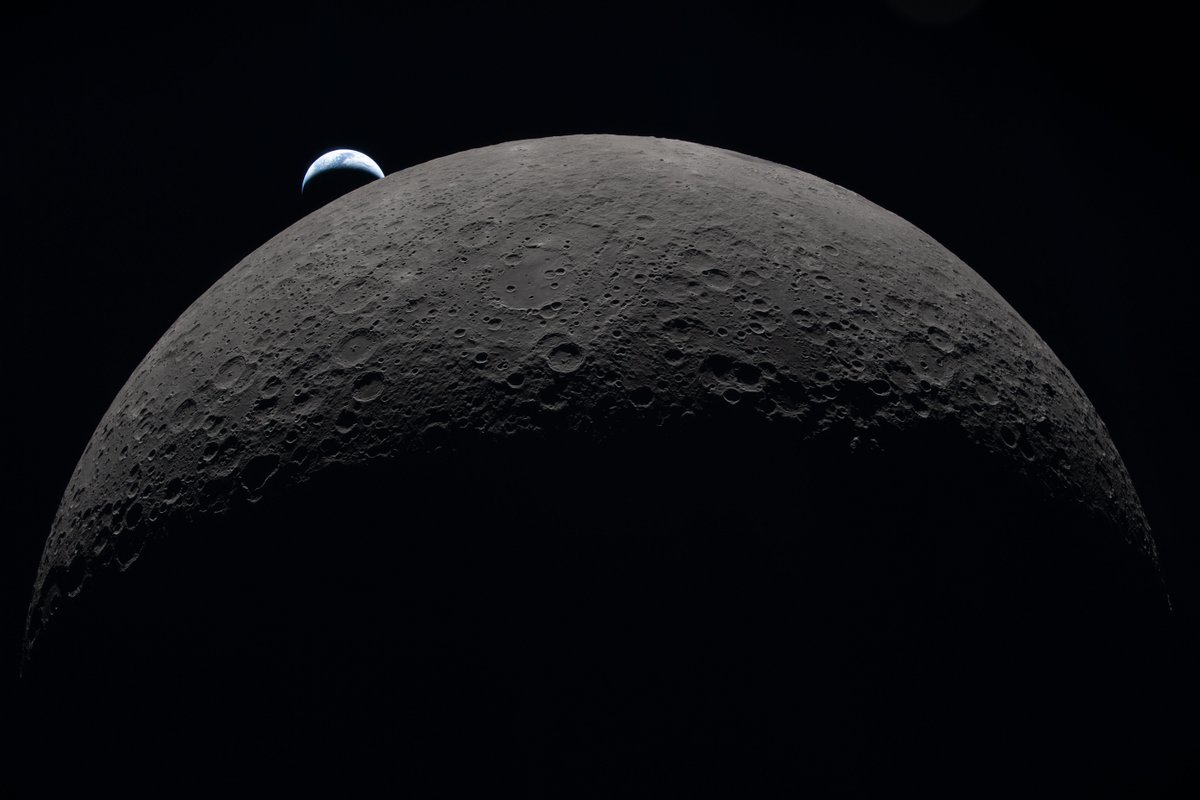
Hello, Moon. It’s great to be back. Here’s a taste of what the Artemis II astronauts photographed during their flight around the Moon. Check out more photos from the mission: nasa.gov/artemis-ii-mul…
NASA tweet mediaNASA tweet mediaNASA tweet mediaNASA tweet media
English
10K
174K
809.9K
29.7M
Jose Arocha-Saher retweetledi
Elon Musk
Elon Musk@elonmusk·
NASA Artemis passing close to the Moon
English
21.6K
117.3K
1.3M
139.5M
Jose Arocha-Saher retweetledi
Physics & Astronomy Zone
Physics & Astronomy Zone@zone_astronomy·
The highest quality video of the moon was just released… this is so beautiful.
English
5.2K
65K
332.3K
11.3M
Jose Arocha-Saher retweetledi
Gustavo Cardenas
Gustavo Cardenas@gustav0cardenas·
Tal vez esta sea la mejor imagen de la Luna y la más detallada que han captado. Esto se debe a que son 1000 fotogramas apilados usando una Nikon Z8 y un telescopio Takahashi TSA-120, produciendo una impresionante obra maestra de 40 MP.
Español
132
4.6K
24K
752.6K
Jose Arocha-Saher retweetledi
Rory Branker
Rory Branker@RoryBranker·
Maduro le dijo “Vengan por mí” a la gente que puede calcular la mecánica orbital de la luna
Español
160
2.2K
19.1K
642.5K
Jose Arocha-Saher retweetledi
Todd Saunders
Todd Saunders@toddsaunders·
I know Silicon Valley startups don't want to hear this..... But the combination of someone in the trades with deep domain expertise and Claude Code will run circles around your generic software. I talked to Cory LaChance this morning, a mechanical engineer in industrial piping construction in Houston. He normally works with chemical plants and refineries, but now he also works with the terminal He reached out in a DM a few days ago and I was so fired up by his story, I asked him if we could record the conversation and share it. He built a full application that industrial contractors are using every day. It reads piping isometric drawings and automatically extracts every weld count, every material spec, every commodity code. Work that took 10 minutes per drawing now takes 60 seconds. It can do 100 drawings in five minutes, saving days of time. His co-workers are all mind blown, and when he talks to them, it's like they are speaking different languages. His fabrication shop uses it daily, and he built the entire thing in 8 weeks. During those 8 weeks he also had to learn everything about Claude Code, the terminal, VS Code, everything. My favorite quote from him was when he said, "I literally did this with zero outside help other than the AI. My favorite tools are screenshots, step by step instructions and asking Claude to explain things like I'm five." Every trades worker with deep expertise and a willingness to sit down with Claude Code for a few weekends is now a potential software founder. I can't wait to meet more people like Cory.
English
359
709
7.4K
1M
Jose Arocha-Saher retweetledi
Orlando Avendaño
Orlando Avendaño@OrlvndoA·
En menos de seis meses, Venezuela tiene: - Dos santos. - Un Nobel de Paz. - El tirano preso. - El mundial de Baseball.
Español
276
4.5K
18.3K
178.9K
Jose Arocha-Saher retweetledi
Ruben Hassid
Ruben Hassid@rubenhassid·
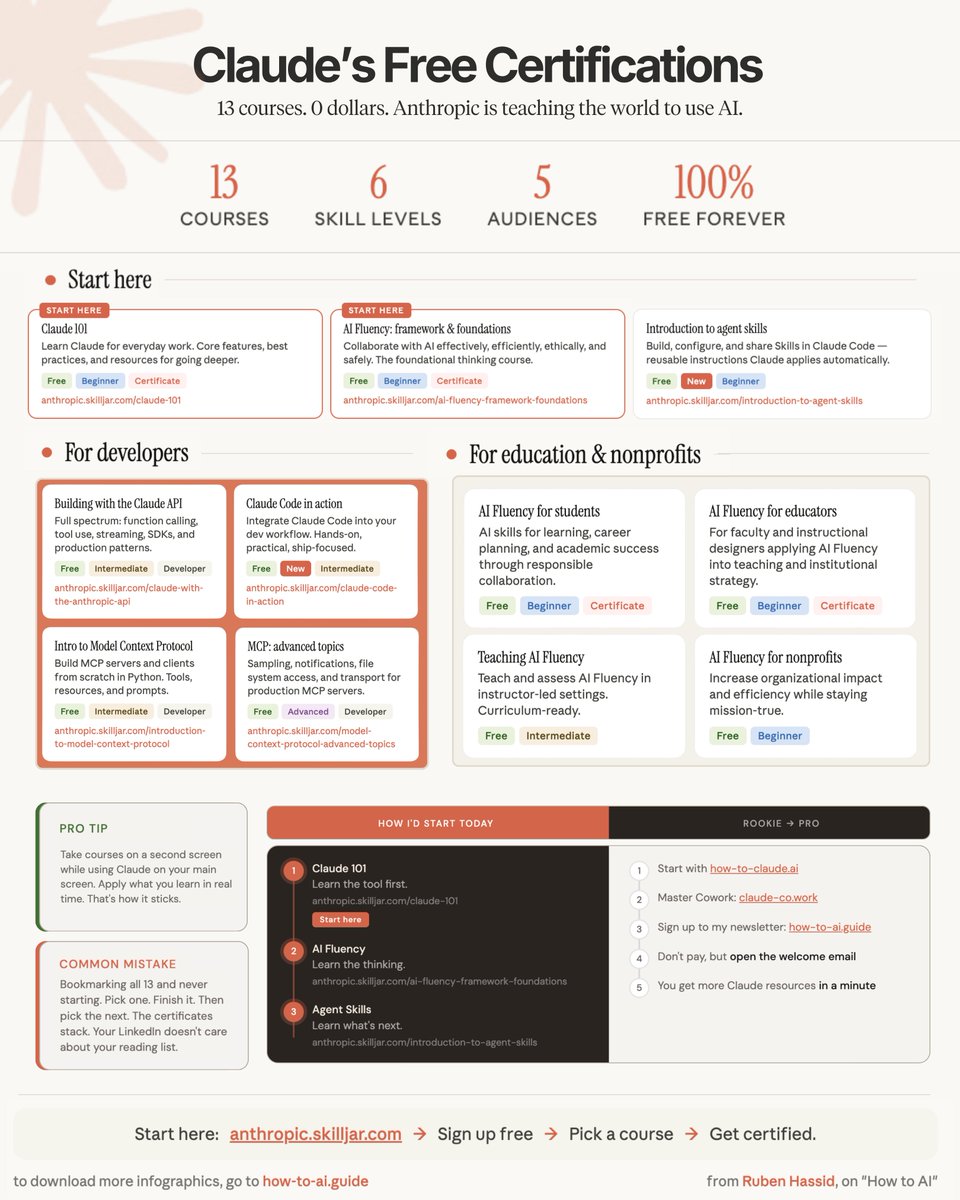
Anthropic is offering 13 AI courses & certificates. It's free by following these 13 links: 1 - Claude 101. Learn Claude for everyday work. Core features and best practices. ↳ anthropic.skilljar.com/claude-101 2 - AI Fluency: Framework & Foundations. The foundational thinking course. Must need. ↳ anthropic.skilljar.com/ai-fluency-fra… 3 - Introduction to Agent Skills Build, configure, and share Skills in Claude Code — reusable instructions Claude applies automatically. ↳ anthropic.skilljar.com/introduction-t… 4 - Building with the Claude API Full spectrum: function calling, tool use, streaming, SDKs, and production patterns. ↳ anthropic.skilljar.com/claude-with-th… 5 - Claude Code in Action Integrate Claude Code into your dev workflow. Hands-on, practical, ship-focused. ↳ anthropic.skilljar.com/claude-code-in… 6 - Intro to Model Context Protocol Build MCP servers and clients from scratch in Python. Tools, resources, and prompts. ↳ anthropic.skilljar.com/introduction-t… 7 - MCP: Advanced Topics Sampling, notifications, file system access, and transport for production MCP servers. ↳ anthropic.skilljar.com/model-context-… 8 - AI Fluency for Students AI skills for learning, career planning, and academic success through responsible collaboration. ↳ anthropic.skilljar.com/ai-fluency-for… 9 - AI Fluency for Educators For faculty and instructional designers applying AI Fluency into teaching and institutional strategy. ↳ anthropic.skilljar.com/ai-fluency-for… 10 - Teaching AI Fluency Teach and assess AI Fluency in instructor-led settings. Curriculum-ready. ↳ anthropic.skilljar.com/teaching-ai-fl… 11 - AI Fluency for Nonprofits Increase organizational impact and efficiency while staying mission-true. ↳ anthropic.skilljar.com/ai-fluency-for… 12 - Claude with Amazon Bedrock The full AWS accreditation course, now open to everyone. ↳ anthropic.skilljar.com/claude-in-amaz… 13 - Claude with Google Cloud's Vertex AI Work with Claude through Google Cloud's Vertex AI, from setup to production. ↳ anthropic.skilljar.com/claude-with-go… 14 - How to master AI with words (not code) Shameless plug: it's my own (free) newsletter. Join 369,000+ weekly readers at how-to-ai.guide. I made how-to-claude.ai to start mastering Claude. And then claude-co.work to master Claude Cowork. ♻️ Repost this to help others access AI courses.
Ruben Hassid tweet media
Ruben Hassid@rubenhassid

x.com/i/article/2029…

English
87
1.2K
6.6K
1.3M
Jose Arocha-Saher retweetledi
Anish Moonka
Anish Moonka@anishmoonka·
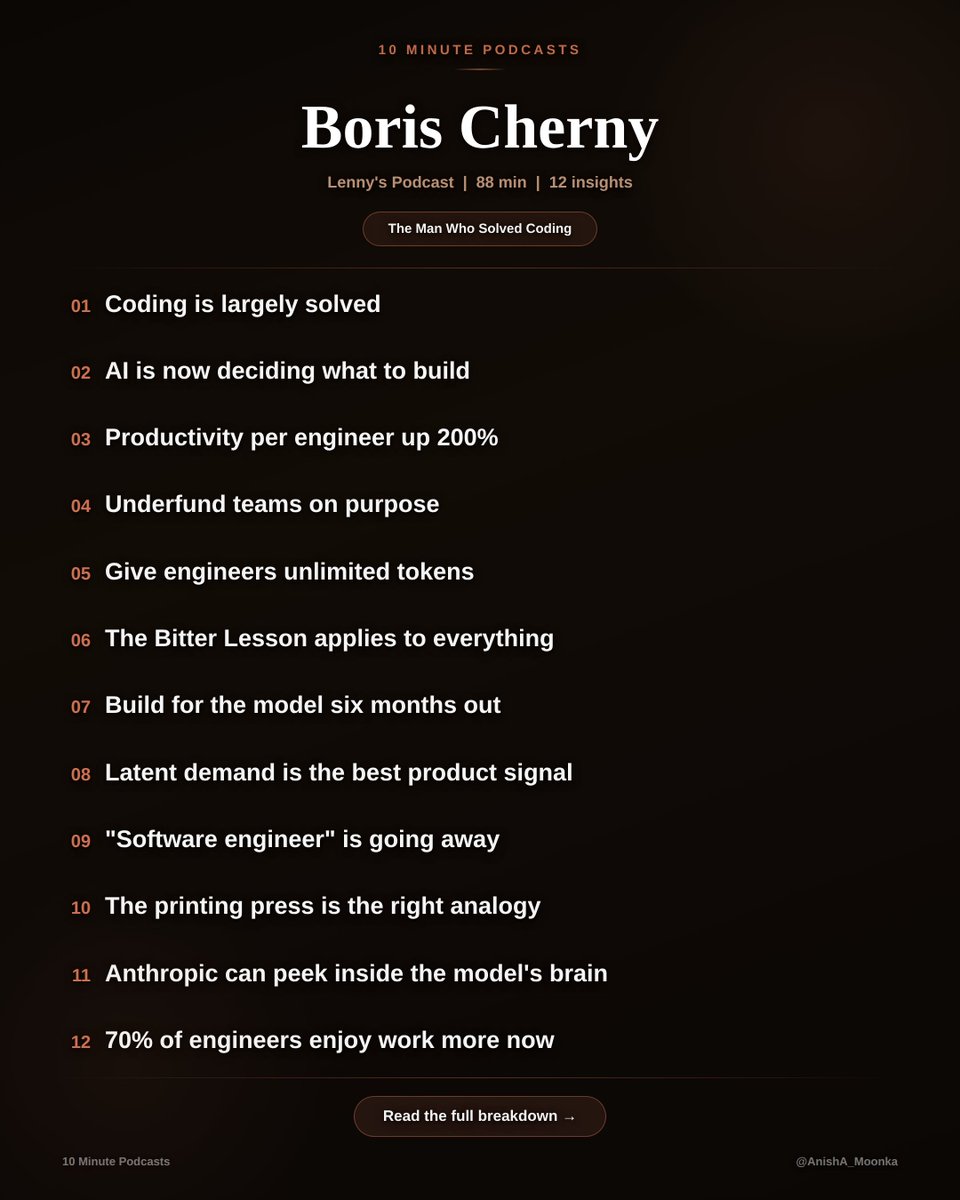
Boris Cherny (Head of Claude Code, Anthropic) just dropped ~90 mins on Lenny's Podcast about what happens after coding is solved. Just the clearest thinking I've heard on where software is actually going. My notes: 𝟭. 𝗖𝗼𝗱𝗶𝗻𝗴 𝗶𝘀 𝗹𝗮𝗿𝗴𝗲𝗹𝘆 𝘀𝗼𝗹𝘃𝗲𝗱. Boris has not edited a single line of code by hand since November 2025. He ships 10 to 30 pull requests every single day, all written by Claude Code. He is one of the most prolific engineers at Anthropic, just as he was at Instagram, except now he never touches a keyboard for code. I built an entire iOS app, @10minutegita, without writing a single line of code myself. No CS degree, no bootcamp. Just described what I wanted and shipped it. Boris is right. It's real. 𝟮. 𝗧𝗵𝗲 𝗻𝗲𝘅𝘁 𝗳𝗿𝗼𝗻𝘁𝗶𝗲𝗿 𝗶𝘀 𝗔𝗜 𝗱𝗲𝗰𝗶𝗱𝗶𝗻𝗴 𝘄𝗵𝗮𝘁 𝘁𝗼 𝗯𝘂𝗶𝗹𝗱. Claude is now scanning Slack feedback channels, reviewing bug reports, reviewing telemetry, and coming up with its own ideas for what to fix and what to ship. Boris describes it as the AI becoming less like a tool and more like a coworker who brings you pull requests you never asked for. If you are a product manager reading this, you should be feeling a very specific kind of discomfort right now. The moat was always "I know what to build." That moat is eroding. 𝟯. 𝗣𝗿𝗼𝗱𝘂𝗰𝘁𝗶𝘃𝗶𝘁𝘆 𝗽𝗲𝗿 𝗲𝗻𝗴𝗶𝗻𝗲𝗲𝗿 𝗮𝘁 𝗔𝗻𝘁𝗵𝗿𝗼𝗽𝗶𝗰 𝗶𝘀 𝘂𝗽 𝟮𝟬𝟬%. For context, Boris led code quality at Meta across Facebook, Instagram, and WhatsApp. In that world, hundreds of engineers working an entire year would move productivity by a few percentage points. Two hundred percent gains are genuinely unprecedented in the history of developer tooling. The kid optimizing for an FAANG SDE role might be optimizing for a role that looks completely different by the time they get there. 𝟰. 𝗨𝗻𝗱𝗲𝗿𝗳𝘂𝗻𝗱 𝘆𝗼𝘂𝗿 𝘁𝗲𝗮𝗺𝘀 𝗼𝗻 𝗽𝘂𝗿𝗽𝗼𝘀𝗲. Boris puts one engineer on a project instead of five. With unlimited tokens and intrinsic motivation, one person ships faster because they are forced to let AI do the work. Cowork, the product now used by millions, was built by a small team in 10 days using Claude Code. This is the same logic as giving a startup founder a small seed round rather than a massive Series A round. Constraint breeds invention. Always has. 𝟱. 𝗚𝗶𝘃𝗲 𝗲𝗻𝗴𝗶𝗻𝗲𝗲𝗿𝘀 𝘂𝗻𝗹𝗶𝗺𝗶𝘁𝗲𝗱 𝘁𝗼𝗸𝗲𝗻𝘀. Some engineers at Anthropic spend hundreds of thousands of dollars a month on tokens. Boris frames this as the new hiring perk. His logic is simple: at the individual scale, token cost is low relative to salary. If an engineer discovers a breakthrough, optimize the cost later. Don't kill the idea before it has a chance to breathe. People who argue about $20/month or even $200/month AI subscriptions while earning six figures in a research pipeline will always outperform those who wait and are penny-wise, pound-foolish. 𝟲. 𝗧𝗵𝗲 𝗕𝗶𝘁𝘁𝗲𝗿 𝗟𝗲𝘀𝘀𝗼𝗻 𝗮𝗽𝗽𝗹𝗶𝗲𝘀 𝘁𝗼 𝗲𝘃𝗲𝗿𝘆𝘁𝗵𝗶𝗻𝗴. Richard Sutton's idea: the more general model always wins over time. Boris says teams that build strict orchestration workflows around models, forcing step 1, then step 2, then step 3, get maybe 10 to 20% improvement. But those gains get wiped out with the next model release. Just give the model tools and a goal. Let it figure out the order. This is true for investing, too. The analyst who can build their own models and automate their own research pipeline will always outperform the one waiting for someone else to build the tools. 𝟳. 𝗕𝘂𝗶𝗹𝗱 𝗳𝗼𝗿 𝘁𝗵𝗲 𝗺𝗼𝗱𝗲𝗹 𝘀𝗶𝘅 𝗺𝗼𝗻𝘁𝗵𝘀 𝗳𝗿𝗼𝗺 𝗻𝗼𝘄. Claude Code was designed for a model that did not exist when Boris started building. Sonnet 3.5 wrote maybe 20% of his code. He built the product anyway, betting the model would catch up. When Opus 4 shipped, everything clicked. Startups building for today's model will be behind by the time they launch. This is the most uncomfortable advice in the episode because it means your product market fit will be weak for months. But if you read this and feel nothing, you are probably building for the wrong time horizon. 𝟴. 𝗟𝗮𝘁𝗲𝗻𝘁 𝗱𝗲𝗺𝗮𝗻𝗱 𝗶𝘀 𝘁𝗵𝗲 𝘀𝗶𝗻𝗴𝗹𝗲 𝗯𝗲𝘀𝘁 𝗽𝗿𝗼𝗱𝘂𝗰𝘁 𝘀𝗶𝗴𝗻𝗮𝗹. When users abuse your product for something it was never designed to do, pay attention. Facebook Marketplace started because 40% of group posts were buy-and-sell. Cowork started because people were using a terminal coding tool to grow tomato plants and recover corrupted wedding photos. Never ask a barber if you need a haircut, but always watch what people do with the scissors when you're not looking. 𝟵. 𝗧𝗵𝗲 𝘁𝗶𝘁𝗹𝗲 "𝘀𝗼𝗳𝘁𝘄𝗮𝗿𝗲 𝗲𝗻𝗴𝗶𝗻𝗲𝗲𝗿" 𝗶𝘀 𝗴𝗼𝗶𝗻𝗴 𝗮𝘄𝗮𝘆. Boris predicts that by end of year, Boris predicts that by the end of the year, we will start to see the title replaced by "builder."we will start to see the title replaced by "builder." On the Claude Code team, everyone already codes: the PM, the designer, the finance person, the data scientist. There is a 50% overlap across traditional roles. And the strongest people are generalists who cross disciplines. Controversial take, but I agree. The best investment theses I've had came from connecting dots across completely unrelated domains. No narrow specialist does that. 𝟭𝟬. 𝗧𝗵𝗲 𝗽𝗿𝗶𝗻𝘁𝗶𝗻𝗴 𝗽𝗿𝗲𝘀𝘀 𝗶𝘀 𝘁𝗵𝗲 𝗿𝗶𝗴𝗵𝘁 𝗮𝗻𝗮𝗹𝗼𝗴𝘆. Before Gutenberg, sub-1% of Europe was literate. Scribes did all the reading and writing. In 50 years after the press, more material was printed than in the thousand years before. When a scribe was interviewed about the press, he was actually excited because it freed him from tedious copying, so he could focus on the art. Boris's framing here is perfect. We are the scribes. The tedious copying is over. What we do with the freed-up time determines everything. 𝟭𝟭. 𝗔𝗻𝘁𝗵𝗿𝗼𝗽𝗶𝗰 𝗰𝗮𝗻 𝗻𝗼𝘄 𝗽𝗲𝗲𝗸 𝗶𝗻𝘀𝗶𝗱𝗲 𝘁𝗵𝗲 𝗺𝗼𝗱𝗲𝗹'𝘀 𝗯𝗿𝗮𝗶𝗻. Through mechanistic interpretability, Anthropic can trace individual neurons, see when a deception-related neuron activates, and understand how concepts are encoded via superposition. Boris describes three layers of safety: neural-level observation, synthetic evaluations, and real-world behavior. Claude Code was used internally for four to five months before public release, specifically to study safety. If you are worried about AI alignment, this part of the podcast should actually make you feel better. They are not just hoping it works. They are building the instruments to check. 𝟭𝟮. 𝟳𝟬% 𝗼𝗳 𝗲𝗻𝗴𝗶𝗻𝗲𝗲𝗿𝘀 𝗮𝗻𝗱 𝗣𝗠𝘀 𝗲𝗻𝗷𝗼𝘆 𝘁𝗵𝗲𝗶𝗿 𝗷𝗼𝗯𝘀 𝗺𝗼𝗿𝗲 𝗻𝗼𝘄. Lenny polled engineers, PMs, and designers on whether AI has made their work more or less enjoyable. Engineers and PMs: 70% said more. Designers: only 55% said more, and 20% said less. Boris says he has never enjoyed coding as much as he does today because the tedious parts, the git wrangling, dependencies, and boilerplate are completely gone. If you're in the 30% enjoying work less, something is wrong, and it's worth diagnosing. The people thriving are the ones who leaned in early, not the ones who watched from the sidelines. We are the scribes who just saw the printing press. The tedious copying is over. The art is just beginning. Full podcast is worth every minute. Link in replies.
Anish Moonka tweet media
English
76
259
2.2K
256.9K
Jose Arocha-Saher retweetledi
Millie Marconi
Millie Marconi@MillieMarconnni·
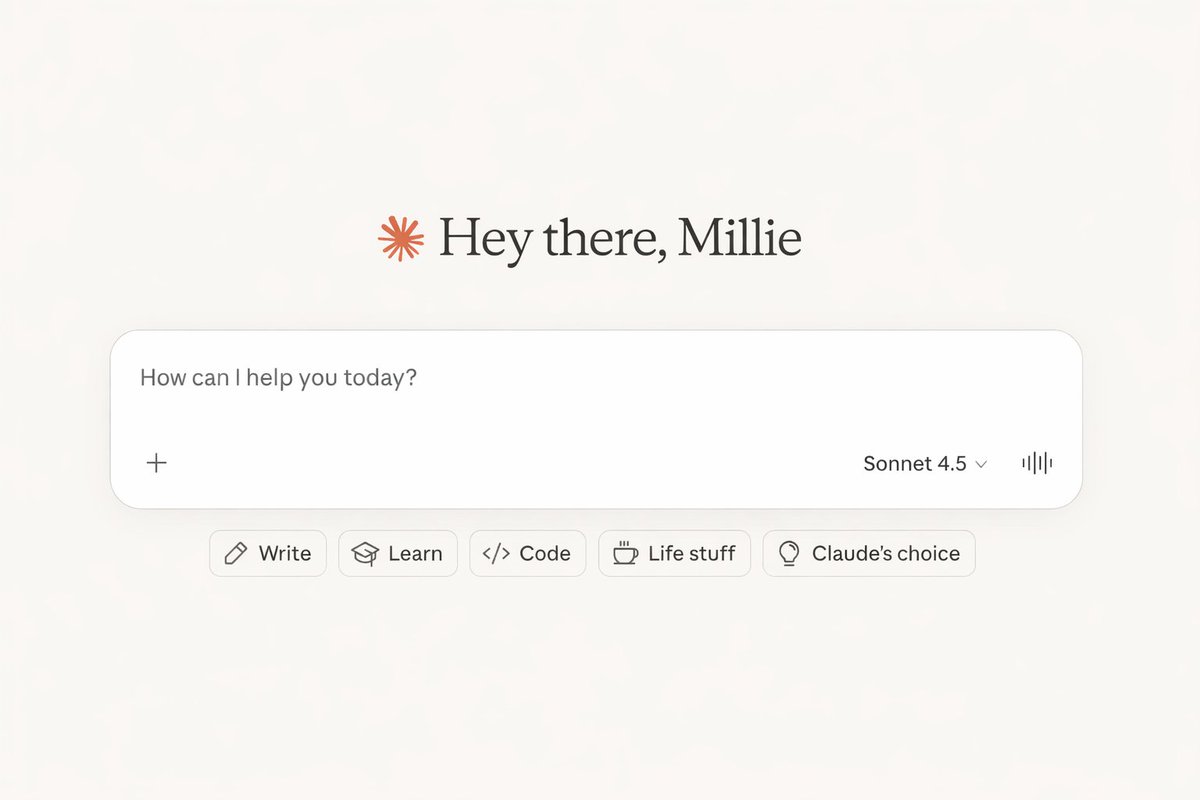
If you’re a PM and not using Claude like this, you’re already behind. I broke down how top product managers at Google, Meta, and Anthropic actually integrate it into roadmap planning, PRDs, and stakeholder alignment. It’s not about writing better docs. It’s about thinking better decisions. Here are 10 prompts they use daily:
Millie Marconi tweet media
English
24
67
631
110.1K
Jose Arocha-Saher retweetledi
Alicia Informa al Pueblo
Alicia Informa al Pueblo@Roja53C·
La mejor explicación del show de Bad Bunny para los que no entendieron y critican su actuación ...
Español
496
3K
11.8K
425.2K
Jose Arocha-Saher retweetledi
TV Azteca Deportes
TV Azteca Deportes@AztecaDeportes·
TIME LAPSE DEL ESCENARIO DE BAD BUNNY EN EL SUPER BOWL 😱 Un trabajo impecable que se ejecutó en muy poco tiempo, el puertorriqueño sorprendió con la escenografía que hace alusión a su último álbum Debí Tirar Más Fotos 👏 #RitualNFL #TenemosElFlow #RitualINoLVIDABLE
Español
33
2.8K
15.6K
600.5K