Joshua Peck

3.2K posts

Joshua Peck banner
Joshua Peck

Joshua Peck

@joshpeck

Independent researcher. Quantitative finance + AI. Helping institutions measure systemic fragility & navigate uncertainty when models diverge.

Colorado Katılım Nisan 2009
724 Takip Edilen789 Takipçiler
Joshua Peck
Joshua Peck@joshpeck·
The environment surrounding the signal matters. Extreme conditions don’t always immediately resolve downward. Some of the strongest market environments historically also looked: • overextended • uncomfortable • euphoric • unsustainable That’s what makes regime analysis so important. $SPY $QQQ
English
0
0
0
7
Joshua Peck retweetledi
Joshua Peck
Joshua Peck@joshpeck·
“Trading is very competitive and you have to be able to handle getting your butt kicked.” - Paul Tudor Jones
English
2
1
3
928
Joshua Peck
Joshua Peck@joshpeck·
One thing I think investors consistently underestimate: Today’s index composition is radically different from the dot-com era. People compare valuation metrics across time as if the underlying market structure stayed constant. But today’s dominant businesses are: • more scalable • more global • more asset-light • higher margin • structurally different That doesn’t mean risk disappears. But it does mean old valuation frameworks may not translate as cleanly across regimes as many assume. $SPY $QQQ
English
0
0
0
7
Joshua Peck
Joshua Peck@joshpeck·
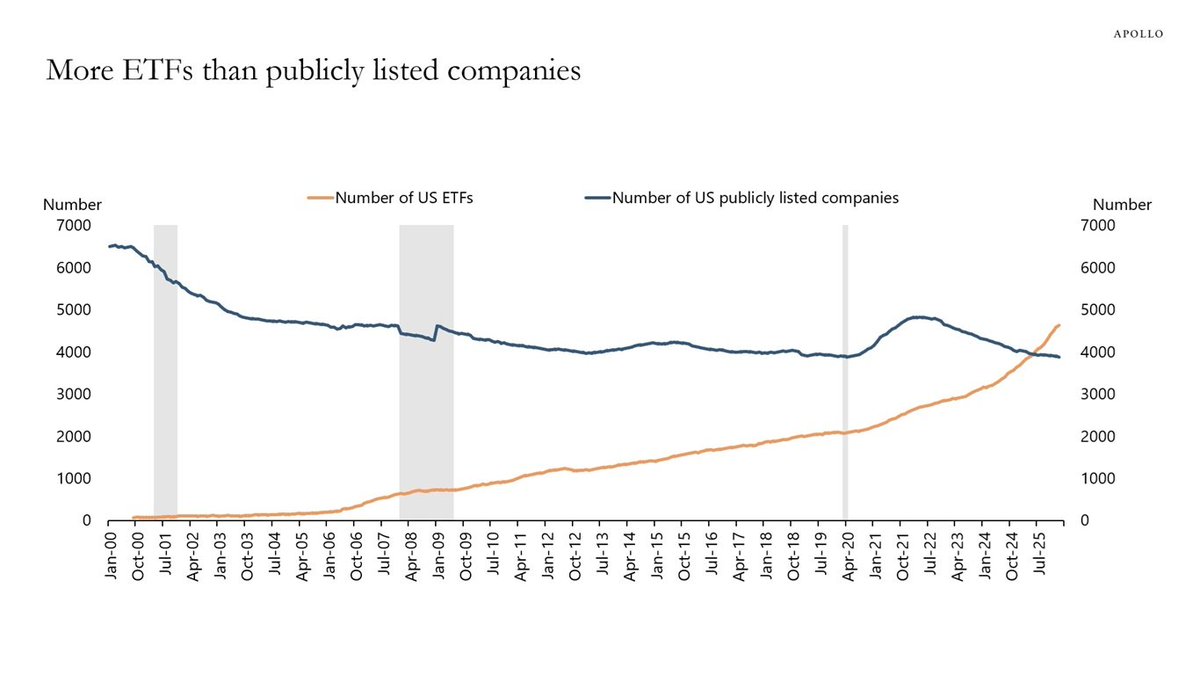
@Hedgeye This is one of the most important structural shifts happening underneath markets right now. And it means that many investors may be using mental models built for a very different market structure.
English
0
0
0
81
Hedgeye
Hedgeye@Hedgeye·
ETFs now outnumber US-listed stocks.
Hedgeye tweet media
English
38
118
455
103.5K
Joshua Peck
Joshua Peck@joshpeck·
When long-standing monetary regimes begin to shift, markets don’t always break immediately. Instead, something more subtle happens first: Old frameworks stop explaining market behaviour properly. That’s why I think so many investors feel confused right now. Markets are behaving differently because the underlying conditions may be changing underneath them. This is one of the reasons I spend so much time researching market regimes and adaptive systems. Because the biggest market shifts often begin quietly, long before most people realise the environment itself has changed.
English
0
0
0
12
Joshua Peck
Joshua Peck@joshpeck·
@BullTheoryio Pre-SARBOX and post-SARBOX returns are totally different for some reason...
English
0
0
1
68
Bull Theory
Bull Theory@BullTheoryio·
$10,000 invested in Berkshire Hathaway in 1965 would be worth roughly $383 million today. The same $10,000 in the S&P 500 with dividends reinvested would be worth around $4.1 million. Berkshire outperformed the market by nearly 93x.
Bull Theory tweet mediaBull Theory tweet media
English
120
227
2.1K
126.1K
Joshua Peck
Joshua Peck@joshpeck·
@AdamB1438 Somehow being right is less persuasive than being wrong dramatically.
English
0
0
1
128
Adam Block
Adam Block@AdamB1438·
In 2021 - I bought nothing In 2022 - I bought nothing In 2023 - I bought a piece of the GP in someone else's deal, and raised money from LPs In 2024 - I went under contract on a vacant industrial property that's taking longer to lease up than I wanted, but has great basis In 2025 - I bought two great little deals with LPs But I'm not an influencer, so I guess I don't get credit for... working hard and NOT losing money for investors? (Not arguing with @robbiehendricks - just commenting on how weird this whole "attention economy" is.)
Robbie Hendricks@robbiehendricks

I’d like to give Brandon Turner sincere credit for this post on IG. He fully owned up to the loss of LP capital publicly. Explained his responsibility, which is the most important, along with the market factors the affected the downfall of this deal. This is exactly how a sponsor should transparently communicate when something like this happens. It doesn’t make the loss of capital easier, but I have true respect for people that take ownership. The guru class has butchered the handling of their errors over the past 5 years. Brandon is the first one I’ve seen to step forward and address it. Credit where credit is due. Bravo.

English
15
2
86
32.8K
Joshua Peck
Joshua Peck@joshpeck·
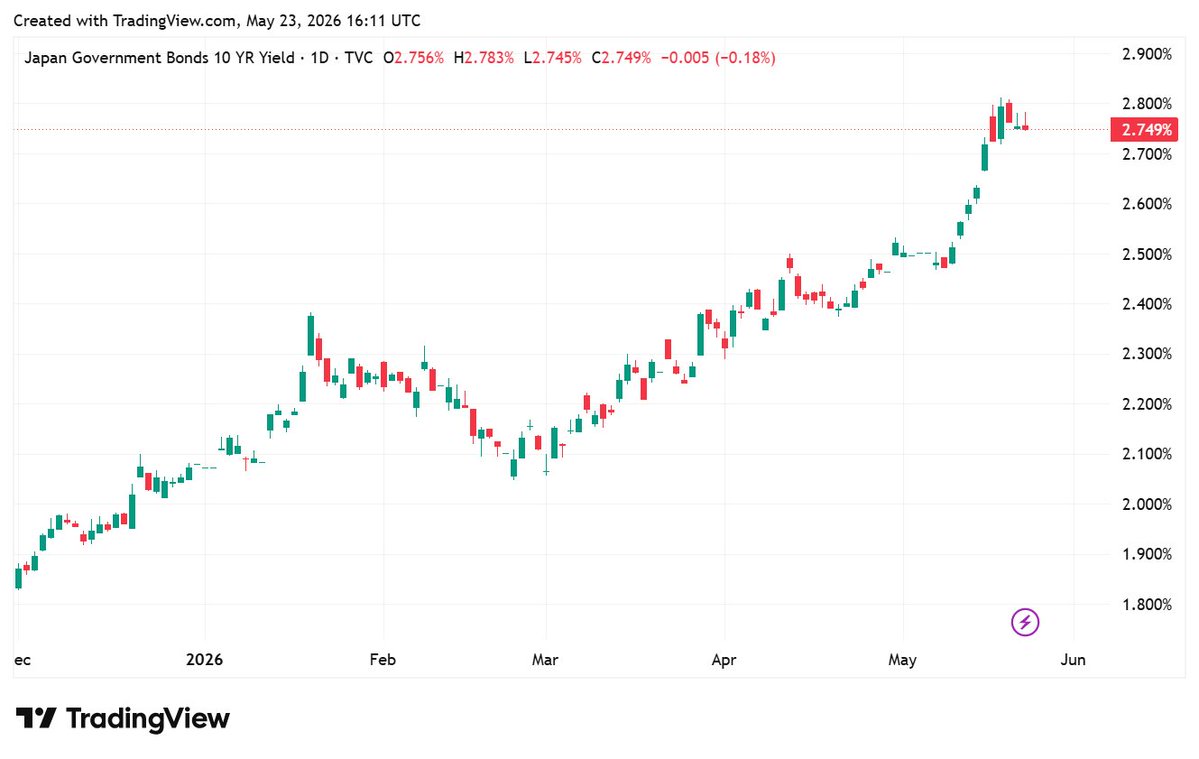
Japanese bond yields hitting multi-decade highs is NOT just a Japan story. It’s potentially a: • liquidity story • carry trade story • capital flow story • regime transition story For years, Japan helped anchor the global low-rate environment. If that foundation changes, a lot of old market assumptions may need repricing. That’s why regime awareness matters.
Joshua Peck tweet media
English
0
0
0
26
Joshua Peck
Joshua Peck@joshpeck·
Markets price expectations, not fundamentals.
English
0
0
0
15
Joshua Peck
Joshua Peck@joshpeck·
The global liquidity regime may be changing. For more than a decade, markets operated in an environment defined by: • suppressed yields • abundant liquidity • central bank support • cheap leverage • structurally low rates Investors became conditioned to believe that was “normal.” But when you zoom out and look across global bond markets right now, something stands out: Long-duration government bond yields are rising almost everywhere at the same time. - US Treasuries - Japanese bonds - UK gilts - German bunds This matters because bond markets sit underneath nearly every major asset pricing model in the world. And when the foundation changes, mental models built during the previous regime can start breaking surprisingly fast. I don’t think the important question is: “Will this cause a crash?” I think the more important question is: What assumptions are markets now repricing that investors stopped questioning years ago?
Joshua Peck tweet media
English
0
0
1
32
Joshua Peck
Joshua Peck@joshpeck·
@GlobalMktObserv My regime-aware risk-weighted positioning suggests around 60% long, so it's not surprising that funds who have similar tools are getting the similar answers
English
0
0
1
277
Global Markets Investor
Global Markets Investor@GlobalMktObserv·
⚠️Hedge fund short positions in US equities have ALMOST NEVER been this high: Hedge fund short exposure in US equity macro products, including index futures and ETFs, has surged to ~13% of total US gross exposure, the highest in at least 10 YEARS. The percentage has nearly DOUBLED since 2024. This is even higher than at the peak of the 2021 meme stock frenzy. Hedge fund positioning is extremely BEARISH.
Global Markets Investor tweet media
English
9
76
269
21.4K
The Kobeissi Letter
The Kobeissi Letter@KobeissiLetter·
BREAKING: Nvidia stock, $NVDA, falls over -3% after posting record quarterly revenue of $81.6 billion and higher than expected EPS.
The Kobeissi Letter tweet media
English
883
1.2K
8.7K
2.1M
Joshua Peck
Joshua Peck@joshpeck·
The biggest investing mistakes rarely come from intelligence. They usually come from using the wrong mental model. A value investor using manufacturing-era frameworks to analyse AI infrastructure companies like $NVDA , $MSFT or $PLTR . A macro investor expecting $SPY to collapse because headlines feel bearish, while liquidity and capital flows remain supportive. A trader assuming volatility in $QQQ automatically means weakness. The problem usually isn’t lack of information. It’s lack of context. Markets behave very differently under different conditions.
English
0
0
1
90
Joshua Peck
Joshua Peck@joshpeck·
Everyone is calling this a bond crisis. What if this is actually a regime transition? For 15+ years, markets were conditioned by: • zero rates • QE • cheap leverage • suppressed yields • abundant liquidity Investors started treating that environment as permanent. Now global bond yields are repricing higher simultaneously: 🇺🇸 US Treasuries 🇯🇵 Japanese bonds 🇬🇧 Gilts 🇩🇪 Bunds That matters because markets are built on assumptions. And when the underlying monetary regime changes, old mental models start breaking. The important point is that higher yields do not automatically mean imminent collapse. Different regimes produce different market behaviour. That’s why understanding conditions matters more than prediction.
Global Markets Investor@GlobalMktObserv

⚠️The global bond CRISIS is ACCELERATING: The 30-year UK gilt yield has surged to ~6.2%, the highest since 1998, while the US 30-year Treasury yield stands at ~5.1%, near the highest since 2023. Germany's 30-year yield has risen to ~3.2%, the highest since 2011, and Japan's 30-year yield has surged to ~4.1%, the highest since its debut in 1999. In effect, the average 10+ year yield across G7 nations is now at its highest level since 2004. This selloff is driven by a combination of rising energy and commodity prices fueling inflation fears, surging government debt issuance from Tokyo to Washington, and the end of central bank bond-buying programs. Traders now see a Fed rate hike by March 2027, a complete reversal from late February when 2 rate cuts were expected this year. Higher bond yields are already pushing up borrowing costs on mortgages, business loans, and credit cards, while equity markets are starting to wobble after previously setting records. The era of cheap government borrowing is over.

English
0
0
0
46
Joshua Peck
Joshua Peck@joshpeck·
@BitcoinNewsCom The real danger is investors still thinking the world operates like it did during the zero-rate era.
English
0
0
4
826
Bitcoin News
Bitcoin News@BitcoinNewsCom·
This is the yield on 10Y Japanese bonds over the past 20 years. It's gone vertical. One could say the Bank of Japan is rapidly losing control of its bond market.
Bitcoin News tweet media
English
14
37
242
103.3K
Joshua Peck
Joshua Peck@joshpeck·
When investors say: “this shouldn’t be happening”… What they often mean is: “my framework can’t explain this.”
English
0
0
0
15
Joshua Peck
Joshua Peck@joshpeck·
A lot of market pain comes from applying yesterday’s logic to today’s environment.
English
0
0
1
24
Joshua Peck
Joshua Peck@joshpeck·
Markets don’t repeat. But investor behaviour does.
English
0
0
0
19
Joshua Peck
Joshua Peck@joshpeck·
People keep calling AI a bubble. Meanwhile: • $MSFT is increasing AI infrastructure spend • $AMZN is increasing AI infrastructure spend • $META is increasing AI infrastructure spend • $GOOGL is increasing AI infrastructure spend Combined AI capex is projected to exceed hundreds of billions. That’s what makes this market so difficult for many investors to interpret. They’re applying industrial-era valuation frameworks to a technological infrastructure buildout.
English
0
0
0
63
Joshua Peck
Joshua Peck@joshpeck·
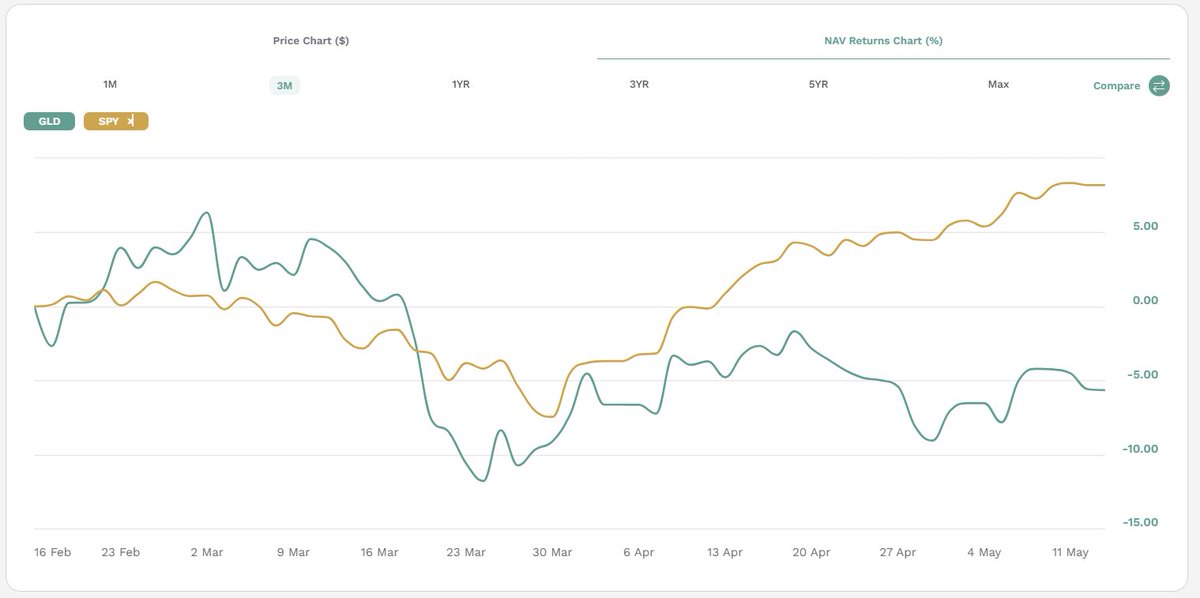
Interesting shift happening beneath the surface right now. $GLD softening. $SPY remaining strong. That’s not just “stocks going up.” It's capital rotating out of protection and back into participation. And these cross-asset relationships often matter more than headlines. Because markets don’t just tell you what investors think. They tell you what investors are choosing. This is active rotation.
Joshua Peck tweet media
English
0
0
0
65