
Man on Bitcoin

1.5K posts

Man on Bitcoin banner
Man on Bitcoin

Man on Bitcoin

@jphtandom

James P. Hamilton Bitcoin Node - Umbrel on Raspberry Pi Bitaxe Gamma 601 SOLO Miner Certified Bitcoin Professional Author - They're Stealing Your Time

Chesapeake, VA Katılım Ocak 2016
553 Takip Edilen469 Takipçiler
Sabitlenmiş Tweet
Man on Bitcoin
Man on Bitcoin@jphtandom·
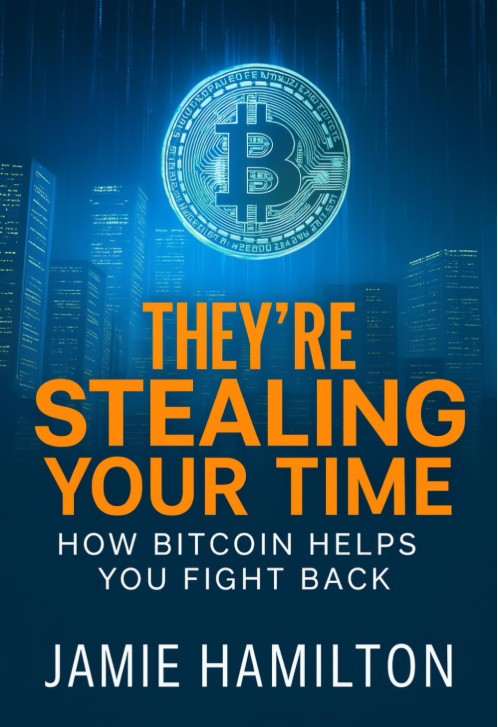
They're Stealing Your Time: How Bitcoin Helps You Fight Back Paperback – August 2, 2025 by Jamie Hamilton (Author) They’re Stealing Your Time: How Bitcoin Helps You Fight Back By Jamie Hamilton You work harder than ever. But your money buys less, your savings shrink, and the goalposts keep moving. It’s not your fault. The system is rigged—and your time is being stolen. In this raw and uncompromising manifesto, construction worker turned Certified Bitcoin Professional Jamie Hamilton exposes the truth behind inflation, debt, and government money printing—and shows how Bitcoin offers a way out. Written for everyday people, not financial elites, this book delivers: ✅ A clear explanation of what money really is—and how it got hijacked ✅ The dirty history of fiat currency and engineered inflation ✅ How Bitcoin restores fairness, transparency, and self-sovereignty ✅ Why the working class suffers the most under a broken system ✅ How to start protecting your time and wealth—today Whether you're new to Bitcoin or still skeptical, They’re Stealing Your Time will flip the lights on. You’ll never look at a paycheck, a mortgage, or your retirement the same way again. If you suspect something is deeply wrong with the system—but couldn’t quite put it into words—this is the book you've been waiting for. amazon.com/dp/B0FKZN5DP1/…
Man on Bitcoin tweet media
English
2
0
2
116
Man on Bitcoin
Man on Bitcoin@jphtandom·
The Expanding Fiat Flood: Global M2 Growth and Bitcoin's Bullish Horizon By Jamie Hamilton March 14, 2026 Fellow HODLers, as someone who's been stacking sats since 2020 and penned "They're Stealing Your Time: How Bitcoin Helps You Fight Back," I can't help but get fired up about the relentless debasement of fiat currencies. In my book, I laid out how the USD has hemorrhaged 97% of its purchasing power since 1913, thanks to unchecked money printing. Now, in mid-2026, we're staring down the barrel of a global money supply explosion that's set to supercharge Bitcoin's value. Let's break it down: what M2 is, where it's been, where it's heading, and why this spells massive upside for our favorite hard asset. Buckle up—this is about fundamentals, not hype. What Is M2, and Why Does It Matter? M2 is the broad measure of money supply in an economy, including cash, checking deposits, savings accounts, and other near-money assets like money market funds. It's the fuel that powers spending, lending, and inflation. Globally, M2 represents the total liquidity sloshing around in major economies like the US, Eurozone, China, and Japan, which together account for the lion's share of world money. As of early March 2026 (latest aggregate data through January), this global M2 stands at approximately $99.86 trillion—a staggering sum that's grown exponentially over decades. Why care? Because when central banks crank up the printing presses to fund deficits, bail out banks, or stimulate growth, M2 balloons. This dilutes every unit of currency, acting as that "hidden tax" I rant about in my book. Remember the Triffin Dilemma? The US, as the reserve currency issuer, must pump out dollars to grease global trade, but that very act erodes trust and value. Extend that to the world, and you've got a recipe for fiat fatigue. Savers get crushed, while scarce assets like Bitcoin thrive. Historical Context: From Steady Drip to Tsunami. Let's rewind. In 2020, just before the COVID madness, global M2 (for major economies) hovered around $80 trillion. Then came the stimulus orgy: trillions in handouts, QE infinity, and zero rates. By early 2022, US M2 alone had surged 40% to $21.7 trillion. Globally, the flood added tens of trillions, peaking growth rates above 10% in some years. Post-2022, things "normalized"—or so they say. M2 growth slowed amid rate hikes, with the US even seeing a rare contraction in 2023. But by 2025, the taps reopened. US M2 hit a record $22.44 trillion in January 2026 (up ~4.3% year-over-year from prior levels). China kept expanding steadily, while the Eurozone and Japan chugged along modestly. The net? Global M2 has ballooned from under $1 trillion in 1970 to nearly $100 trillion today, following a power-law trajectory of endless expansion. This isn't random—it's the debt spiral in action. With debt-to-GDP ratios over 100% in many nations and interest rates often exceeding growth (r > g), governments have no choice but to print. As I explained in my book, this is fiat's fatal flaw: unlimited supply meets insatiable demand for more debt. Where Is Global M2 Heading? Buckle Up for More. Looking ahead, the trajectory is clear: up and to the right. Projections from economic models show global M2 growing at 3-7% compound annual rates through 2030. In a base case (5% CAGR), it hits ~$134 trillion by 2030; in an inflationary scenario (7%), it balloons to $150 trillion (some broader aggregates peg even higher, toward $206-260 trillion, but the trend holds). Why the relentless rise? Persistent deficits, aging populations demanding entitlements, and geopolitical tensions fueling spending. China's stimulus keeps its M2 climbing, while the US hovers around $22.44T+ with upside if liquidity ramps. Europe and Japan, battling stagnation, will keep pumping to avoid deflation. In short, we're in a debt-fueled supercycle. Central banks target 2% inflation, but history shows they overshoot when push comes to shove. This M2 growth isn't stopping—it's accelerating as fiat systems strain under their own weight. How This Turbocharges Bitcoin. Here's where it gets exciting for us HODLers. Bitcoin isn't just digital gold—it's gold on steroids, fixing all the yellow metal's flaws: portable, divisible, verifiable, and capped at 21 million coins. As global M2 swells, fiat devalues, driving capital into scarce assets. Data backs this: Bitcoin's price has historically correlated with M2 growth, often leading liquidity peaks by months. When M2 expanded post-2020, BTC rocketed from $10k to $69k. Today, with M2 rebounding amid volatility, Bitcoin's hovering around $70,500–$71,000 (as of mid-March 2026), but models predict much more. In WisdomTree-style base cases with 5% M2 growth, BTC could hit $275k by 2030—a 20%+ CAGR from here. In the inflationary 7% scenario? Even higher gains. Why? Supply and demand. Bitcoin's issuance halves every four years (next in 2028), while fiat floods in. As hard assets' share of global money rises (from ~8-10% today toward 12-15% in projections), Bitcoin's slice grows. It's math: more money chasing fixed supply equals higher prices. This isn't speculation—it's self-preservation. As fiat erodes your time (your labor's value), Bitcoin fights back. Nations like the US, trapped in debt spirals, will keep printing, making BTC the ultimate hedge. Tying It All Together: HODL Through the Storm. Global M2 is a tidal wave, heading toward $130-150 trillion by 2030 in conservative estimates, driven by the same forces that doomed Bretton Woods and fuel today's inflation. For Bitcoin, this is rocket fuel. We're not talking get-rich-quick; we're talking generational wealth preservation in a world of debased fiat. If you're new to this, start small, but start. Stack sats, ignore the noise, and remember: they're stealing your time with every printed dollar. Bitcoin lets you fight back. As I say in my book, it's not anti-government—it's pro-you. HODL strong, friends. The fundamentals have never been better. Web resources: wisdomtree, newhedge, forbes, tradingeconomics, babypips, & streetstats finance
English
0
0
0
30
Saqib Banbhan
Saqib Banbhan@SaqibBanbh90290·
How many squares....!!! 99.9% will fail..?
Saqib Banbhan tweet media
English
2.1K
70
233
52.3K
Man on Bitcoin
Man on Bitcoin@jphtandom·
The US Economy's Ticking Time Bomb: Debt Spirals, Zombie Status, and Bitcoin as Your Escape Hatch By Jamie Hamilton 21 Feb 2026 Fellow HODLers, as someone who's been stacking sats since 2020 and penned "They're Stealing Your Time: How Bitcoin Helps You Fight Back," the state of our economy in early 2026 is flashing warning signs everywhere. Building on the fiat flaws, debt dynamics, and hard-asset flight we've explored lately, we're deep in a debt spiral that's turning America into something like a zombie company—barely servicing obligations while hollowing out the middle class and eroding our manufacturing base. Add skyrocketing wealth inequality, persistent inflation, geopolitical vulnerabilities, and yesterday's disappointing Supreme Court ruling striking down President Trump's bold tariff strategy, and the picture is one of systemic strain from endless fiat printing and unchecked deficits. This isn't hype; it's the math catching up. But Bitcoin stands apart as a long-term life raft—scarce, decentralized, and immune to the debasement fueling this mess. President Trump is the one leader actually fighting to fix it—bringing jobs home, slashing regs, and even floating a strategic Bitcoin reserve. He's got my full support, and Bitcoin fits right into that vision. What Is a Debt Spiral, and Why Is the US Trapped? A debt spiral hits when you borrow more just to cover interest on existing debt, without enough growth to break free. It compounds viciously: Debt rises, interest costs climb, growth stalls, more borrowing ensues, and confidence erodes—potentially ending in default, brutal austerity, or inflationary money-printing. The US is squarely in this trap. As of mid-February 2026, gross national debt is around $38.7 trillion (Treasury Fiscal Data), with debt held by the public near $31 trillion. Debt-to-GDP is 101-124% (CBO sees public debt at 101% in 2026, climbing to 120% by 2036). Deficits lock in at ~$1.9 trillion for FY2026, interest payments exceed $1 trillion this year—topping defense spending—and head toward $2.1 trillion by 2036. Root cause? r > g: Treasury rates (~3.3-3.4%) outpace GDP growth (2-3% projected). Past admins loaded up on spending—wars, bailouts, entitlements—without reforms. President Trump is pushing energy dominance and deregulation to juice growth, but the global M2 flood dilutes the dollar as a hidden tax, stealing your purchasing power and time. America as a Zombie Company: Propped Up, Draining Vitality Zombies pay interest but can't grow, invest, or repay—they're dead weight. America mirrors this: Interest devours ~17% of the budget, starving infrastructure, R&D, and education. CBO projects deficits averaging >6% of GDP through 2036, debt toward $56-64 trillion. Post-2008 QE, zero rates, and stimulus kept it shambling, but Trump's policies—like the One Big Beautiful Bill Act—aim to rebuild productively. Resources flow to debt service, not innovation. Echoing Davos 2026, Wall Street heavyweights like Citadel's Ken Griffin labeled global spending "reckless," while JPMorgan's Jamie Dimon decried the "fraud in Washington," slamming how lobbyists, pork-barrel bills, and special interests load up legislation (e.g., the CHIPS Act bloated with unions, mandates, child care, and unrelated extras). Dimon asked point-blank: "What the hell are we doing?" and noted no one believes sending another trillion to DC improves anything. As Dante Cook summarized on Simply Bitcoin, those closest to the money printer cheat and bend rules to their favor. Trump's battling that DC swamp and fraud head-on, but holdovers and weak leaders keep the zombie alive. If foreign buyers (e.g., China) pull back or rates spike, the cracks widen fast. The Hollowing Out of the Middle Class: From Engine to Erosion The middle class powered America, but it's shrinking—Pew data shows middle-income households dropping from 61% in 1971 to ~51% now. Real median incomes stagnate while housing, education, and healthcare costs surge 200-500%. Globalization offshored jobs, automation displaced workers, fiat inflation eroded savings. Trump's tax cuts put money back in pockets, and his tariffs targeted bringing manufacturing home to rebuild opportunity. Fiat's the real thief—borrowing from future generations. A weakened middle means softer consumption, rising inequality, and family struggles—exactly what Trump fights against. The Loss of Our Manufacturing Base: Powerhouse to Vulnerability We dominated manufacturing—19 million jobs in the '70s, now ~12-13 million, GDP share ~11%. Offshoring gutted it; goods deficits hit records. Trump's tariffs and CHIPS Act sparked construction booms and aimed to reverse the hollowing, protecting blue-collar jobs and national security (e.g., chips from Taiwan). This decline fuels vulnerabilities to trade wars and disruptions—Trump's the one leader pushing to bring it back. SCOTUS Tariffs Ruling: A Disappointing Setback That Widens the Deficit Chasm Yesterday's 6-3 Supreme Court decision in Learning Resources v. Trump (Feb. 20, 2026) struck down Trump's sweeping tariffs imposed under IEEPA, ruling they exceed presidential authority—tariffs are congressional taxes. Those levies collected $130-160 billion+ in 2025, projected at trillions over a decade, to fund rebuilding, cut deficits, and protect American workers. Now, potential refunds could drain billions from the Treasury, forcing more borrowing or printing—money printer go brrr, accelerating dollar dilution. Trump responded fiercely, calling it a disgrace and signing a new 10% global tariff under other authority to keep fighting for fair trade. Short-term, it risks higher costs, retaliation, and manufacturing strain; geopolitically, it signals weakness. This is obstruction—Trump's strategy was protecting jobs and reversing decades of bad deals. The court tied his hands at a critical moment. Piling On: Inequality, Inflation, and Geopolitical Exposure Wealth gaps explode—top 1% doubled their share since 1979, bottom 50% hold scraps. Persistent inflation (3-5%+) erodes wages and savings. Geopolitical risks—sanctions, energy shocks, supply chains—threaten USD dominance. Add crumbling infrastructure, gridlock, and $17+ trillion household debt—all from fiat's unlimited supply funding waste. Trump pushes back hard, but needs tools like tariffs. Bitcoin: The Long-Term Life Raft Bitcoin thrives in fiat failure—capped at 21 million, it's the ultimate scarce hedge. As debt spirals and M2 swells, capital flees to hard assets (gold's $21 trillion surge proves the escape). Bitcoin fixes gold's flaws: Portable (seed phrases), divisible (sats), verifiable (blockchain), borderless, low-friction. In a zombie economy, it preserves value amid inflation; for hollowed middle-class families, DCA makes it accessible (start with any amount). Against manufacturing/geopolitical risks, it's neutral and global. Models project $275k-$475k by 2030 on 5-7% M2 growth (20-34% CAGR from current ~$68,000 levels, recent trades ~$67,800-$68,200). In crisis, upside explodes—like post-2020. Trump's Bitcoin reserve idea is brilliant—ethical, math-based freedom. Nations adopting accelerate it. Tying It All Together: HODL Through the Wreckage, Support the Fight America's doom loop—debt spirals, zombie stagnation, middle-class erosion, manufacturing decay, inequality, inflation, risks—stems from fiat's flaws since 1971, amplified by the fraud and recklessness Dimon and others called out at Davos. President Trump is the one man truly fighting to fix it—tariffs for jobs, cuts for growth, Bitcoin for the future. The SCOTUS setback is disappointing, but it won't stop him. As my book argues, Bitcoin's pro-you, pro-freedom—preserving your time and labor. Start small, DCA steadily, ignore the noise. HODL strong—the fundamentals scream upside, and with leaders like Trump, the generational win is coming. web resources: wisdomtree, newhedge, forbes, tradingeconomics, babypips, streetstatsfinance, weforumorg, cnbccom, reuterscom, cbogov, pgpforg, crfborg, fiscaldata.treasurygov, aeiorg, fredstlouisfedorg, scotusblogcom, supremecourtgov, nytimescom, cnncom, apnewscom, singjupostcom
English
0
0
0
21
Patrick Lawson
Patrick Lawson@patricklawsonai·
Tell me the number greater than this 0.0001% will win
Patrick Lawson tweet media
English
1.4K
74
186
40.6K
Man on Bitcoin
Man on Bitcoin@jphtandom·
When Bitcoin Drops: Why Panic is Backwards and Volatility Fuels the Revolution By Jamie Hamilton 31 Jan 2026 Fellow HODLers, as someone who's been stacking sats since 2020 and penned "They're Stealing Your Time: How Bitcoin Helps You Fight Back," watching Bitcoin's price dip this week—down to around $78,000-$79,000 from the $89,000 we discussed last time, and well off the $126,025 October peak—might trigger that gut-wrenching urge to panic. But if you've been following my series, from Week 1's dive into the exploding global M2 money supply (still pushing higher toward $100 trillion+ territory), Week 2's unpack of Jack Mallers' exposé on fiat's moral wreckage since 1971, to Week 3's breakdown of Davos 2026 where elites admitted their system's collapse, you'll know this reaction is normal... but entirely backwards. Bitcoin isn't failing; it's behaving exactly as a scarce, revolutionary asset should in a fiat-fueled world. Drawing from timeless HODLer wisdom and real-time market insights, let's flip the script: Volatility isn't the enemy—it's the feature that weeds out the weak and rewards the convicted. This drop isn't danger; it's discount season, signaling even bigger upside ahead. Volatility: The Feature That Builds Strong Hands Bitcoin isn't a sleepy savings account or a government bond promising steady returns—it's a hard, scarce monetary asset still in the throes of global price discovery, trading against endlessly inflating fiat currencies. Violent drawdowns, like the 30%+ plunge we've seen recently, are how Bitcoin shakes coins from weak conviction to strong hands. Every long-term HODLer who's stacked generational wealth has endured multiple 30-80% crashes. Think back: In 2011, it was "dead" after a 90% plunge; 2013 brought "China bans"; 2017-18 the ICO bust; 2020's COVID lockdown; 2022's FTX contagion. Today's headlines scream "macro fears," "rate worries," or "liquidity tightening," but the pattern holds—these are transfers of wealth to the patient. As I emphasize in my book, fiat's theft relies on short-term thinking; Bitcoin rewards the long view. This volatility is baked in, turning paper hands into diamond ones. Fundamentals Unchanged: A Discount, Not a Disaster Price dipped? Sure. But nothing about Bitcoin itself shifted. Ask the key questions: Did the 21 million supply cap vanish? No. Did the network halt, becoming censorable or confiscatable? Absolutely not. Have governments suddenly embraced fiscal responsibility, halting the M2 flood we charted in Week 1? Laughable—no, with global liquidity still swelling and debt spirals intact. If the asset's core—decentralized, fixed-supply, unseizable—remains rock-solid, a lower price isn't risk; it's opportunity. As Mallers hammered in his BTC Prague keynote, fiat debases everything over time; Bitcoin preserves value. This drop, amid tightening liquidity, echoes Davos' admissions: Elites like Dimon and Griffin decry reckless spending, but their system keeps printing. Bitcoin's unchanged fundamentals make this a fire sale for those who get it. Liquidity Tightens: Bitcoin as the Canary in the Fiat Mine Bitcoin, the most liquid, 24/7 global asset, always moves first and hardest when monetary stress hits—interest rates climb, leverage flushes, risk assets de-risk. That's not a flaw; it's Bitcoin leading the pack, signaling broader cracks in the fiat edifice. Historically, it crashes deepest during squeezes but rebounds first and fiercest when liquidity eases. Link this to Week 3's Davos circus: Bankers like Armstrong exposed fractional reserves and "time theft," while Bessent floated a U.S. Bitcoin reserve. Amid r > g debt spirals (interest outpacing growth), Bitcoin's sensitivity to liquidity isn't breakage—it's proof of its role as the ultimate hedge. When fiat floods resume—as projections show M2 climbing toward $130-150 trillion by 2030—Bitcoin will surge, just like post-2020 when it rocketed from $10k to $69k. This drop? The canary warning of stress, but also the setup for explosive recovery. Every Crash "Obvious" in the Moment, Gift in Hindsight Hindsight is 20/20, but every major Bitcoin drawdown felt "obviously bad" at the time—with narratives shifting but outcomes identical for HODLers. 2011's "death," 2013's bans, 2017's scams, 2020's shutdowns, 2022's collapses—today's "macro/rates/liquidity" story is just the latest. Yet patient accumulators always win. Tie this to our series: Fiat's post-1971 failings, as Mallers detailed, drive these cycles—endless printing creates booms and busts, but Bitcoin's fixed supply absorbs the chaos. The real insight? Worst buys happen in euphoria (certainty, comfort); best in fear (boredom, disbelief). If you believed at $89k or $126k peaks, this lower entry sharpens your edge, clarifying conviction: Do you chase "number go up," or grasp the monetary thesis? Volatility tests, but rewards the latter. Lower Prices: Math That Boosts Future Gains This isn't blind optimism—it's arithmetic. Falling prices mean more sats per dollar, a stronger cost basis, and asymmetric upside as adoption grows. WisdomTree's models from our earlier weeks hold: At 5% M2 growth, Bitcoin hits $275k by 2030 (20% CAGR from here); 7% inflationary scenario? $475k (34% gains). With halvings tightening supply (next 2028) and fiat M2 swelling, lower entries amplify returns. Contrast with fiat's trap: Holding depreciating dollars risks erosion, forced sales at lows, or leverage traps. But with a long horizon, no debt, and unneeded funds? Volatility becomes noise. As Armstrong said at Davos, Bitcoin checks deficit spending—countries with "bad behavior" drive flight to sound money. This drop improves the math, fueling the path to $1M by 2030 or sooner. True Risks: Fiat, Not Bitcoin's Swings Short-term price action isn't the danger—it's holding fiat amid debasement, over-leveraging, or liquidity crunches that kill. Bitcoin drops signal market emotion and stress, punishing traders but rewarding disciplined stackers. History proves it: Conviction, patience, humility trump certainty. If you internalized Week 1's M2 tsunami, Week 2's ethical call, and Week 3's elite reckonings, this moment excites, not scares. Bitcoin hasn't failed; it's filtering for the committed, just as it always does. Tying It All Together: Embrace the Dip, Stack the Future Bitcoin drops aren't failures—they're the disciplined path through fiat's storm, building on our series' themes: M2's flood, fiat's moral rot since 1971, and Davos' cracks. Volatility transfers wealth, fundamentals endure, and math favors the bold. As I detail in my book, they're stealing your time with debased fiat, but Bitcoin lets you fight back. If you're new, start small: Stack sats, run a node, ignore the FUD. HODL strong, friends. The revolution isn't pausing—it's accelerating. web resources: wisdomtree, newhedge, forbes, tradingeconomics, babypips, streetstats.finance, weforum.org, cnbc.com, reuters.com, openexo.com, simplybitcoin, & btcprague
English
0
0
1
29
Man on Bitcoin
Man on Bitcoin@jphtandom·
This was weather-driven and temporary, not a structural collapse or mass capitulation from low prices alone. The hashrate rebounded quickly afterward, climbing back to around 873 EH/s within 24 hours in some reports as power restored and operations resumed. Broader 2026 trends show ongoing miner stress from earlier periods (e.g., post-2025 peaks), with gradual declines earlier in January (e.g., 7-day averages dropping to ~1,024 EH/s mid-month), but nothing as abrupt as this storm-induced dip.
English
1
0
1
958
Jacob King
Jacob King@JacobKinge·
We’re watching the Bitcoin network unravel in real time. Nearly every metric is contracting. Bitcoin’s hashrate has crashed from 1.13 ZH/s to 690 EH/s in just two days, the largest drop ever recorded. Large numbers of miners have powered down their machines. With prices falling and operating costs fixed, many will be forced to sell BTC to stay solvent, accelerating the downward spiral.
Jacob King tweet media
English
135
122
775
114.6K
Man on Bitcoin
Man on Bitcoin@jphtandom·
Active physical resistance plus an officer perceiving and announcing the gun ("gun!") during that resistance bridges the gap from passive possession to the required nexus. It shows the weapon was contextually tied to the criminal act of resisting, not just coincidentally present. This setup frequently supports both justified deadly force by officers and felony-level enhancements against the suspect if they survive and are charged.
English
1
0
0
17
Ben Torode
Ben Torode@BenTorode·
@rock4par @jphtandom @HodlMagoo A nexus is required between the possession of the weapon and the resistance, such as reaching for it, otherwise it is treated as a passive possession. There is no felony enhancement just because a weapon exists on the person.
English
2
0
0
16
Magoo PhD
Magoo PhD@HodlMagoo·
1) Agent (a) calls “Gun”. 2) Agent (b) unholsters his weapon. 3) Agent (a) disarms suspects weapon, which was in its holster. 4) Agent (a) accidentally discharges confiscated handgun. 5) Agent (b) shoots suspect in back
English
3.1K
5.7K
45.5K
6.6M
Man on Bitcoin
Man on Bitcoin@jphtandom·
In the Coen Brothers' film No Country for Old Men, Anton Chigurh wields a captive bolt pistol—a tool designed for humane slaughter in slaughterhouses, where a precise pneumatic charge drives a metal rod into an animal's brain to stun or kill it instantly and efficiently. The device is meant for control: the cow is restrained, the operator positions it carefully, and the outcome is supposed to be predictable, almost mechanical. Yet even in this controlled setting, the film subtly underscores the unpredictability of violence. Life doesn't always submit neatly to intent. A miscalculation, a twitch, or sheer chance can turn the expected into chaos. This is the analogy I'm drawing when people accuse me of "defending ICE." I'm not defending or condemning the agents' actions in any moral sense—whether their use of force was justified, excessive, or tragic is a separate debate for investigations, body cam footage, and courts. What I'm pointing out is a stark reality about high-stakes encounters with armed law enforcement in volatile situations. These operations—raids, arrests amid protests, physical confrontations—are not tidy. Agents enter on edge, facing crowds, resistance, potential weapons, and split-second threats. Like the slaughterhouse worker with the bolt gun, they aim to impose order and neutralize danger. But chaos intervenes: adrenaline floods, communication breaks down, movements blur, and a holstered firearm or ambiguous reach can escalate everything in an instant. The outcome becomes uncertain. What starts as restraint or de-escalation can spiral into deadly force before anyone fully grasps the full picture. Engaging physically in that environment is like stepping into the chute with the animal—dangerous, unpredictable, and often irreversible. Not every resistor gets shot, but when shootings happen, resistance or perceived imminent threat is almost always present. That's not a defense of the agents; it's an observation of cause and effect in a system where hesitation can cost lives on either side. The point isn't to cheer or excuse—it's to recognize the raw mechanics. In a world of uncertainty, where even a "controlled" act carries risk, the wisest choice is often avoidance. Pretending otherwise invites tragedy.
English
0
0
0
189
Mario Nawfal
Mario Nawfal@MarioNawfal·
🇺🇸 If Alex Pretti did not reach for his gun, he should not have been shot. I think we can all agree on that. We can also agree that if one law enforcement officer makes a mistake, or does something wrong, it does not mean all law enforcement is suddenly bad, and it does not justify any violent response by anyone. The law is there for a reason, and say what you wan, the U.S. has one of the best legal systems in the world
Mario Nawfal@MarioNawfal

🚨🇺🇸 NEW FOOTAGE OF ICE AGENTS SHOOTING ALEX PRETTI IN MINNEAPOLIS Agents pepper-spray Pretti as he films and steps in to help a woman who was pushed. Then 7 swarm him, pin him down on his knees, and end up shooting him. Source: @sentdefender, NYT, KSAT

English
560
52
425
104.5K
Man on Bitcoin
Man on Bitcoin@jphtandom·
All the more reason to stay clear of them. If you do not want to get eaten by the tiger, stay out of the tiger cage. If you do not want to fall off a mountain, don't go mountain climbing. If you do not want to get bit by a snake, do not hold snakes. If you do not want to get shot by law enforcement, do not obstruct. Not every person who who resist and/or obstructs law enforcment gets shot, but every person who was shot by law enforecement was resisting and/or obstructing.
English
0
0
0
51
Man on Bitcoin
Man on Bitcoin@jphtandom·
@marklevinshow He issue was not that he brought a gun. The issues was his actions while armed. If you are figing with law enforcement and their is a gun within your grasp, don't be surprised if you get shot.
English
0
0
0
62
Mark R. Levin
Mark R. Levin@marklevinshow·
First things first. Why did Pretti bring a gun and ammo where he knew he would likely be part of a group physically confronting ICE during a lawful execution of a detention and removal order?   Why was he even carrying his weapon? And rather than these scenes playing out again and again, organized for the specific purpose of obstructing and confronting federal law enforcement from carrying out its lawful duties, why do local and state Democrat officials refuse to allow local law enforcement to help identify the location of dangerous illegal aliens and turn them over to federal officials or assist in crowd control? None of this would be going on but for the intentional acts of sabotage by local and state Democrat officials who are not only obstructing federal law enforcement but urging on the mobs and inciting violence with the most toxic demagoguery and propaganda. And the media gaslight it all.
English
2.8K
1.7K
8.7K
4.4M
Isaiah Martin
Isaiah Martin@isaiahrmartin·
Reminder that Kyle Rittenhouse showed up to a protest like this and Republicans called him a hero
Isaiah Martin tweet media
English
14.2K
31.7K
197.3K
9.1M
Man on Bitcoin
Man on Bitcoin@jphtandom·
Officers are permitted to use lethal force to stop the threat without waiting for the weapon to be drawn, aimed, or fired. And even if one cop manages to grab or secure the gun, it doesn't change things for the others—if another officer yells 'GUN!' in the chaos, that warning can create an objectively reasonable belief of imminent deadly threat for everyone involved. The shooting officer isn't required to have perfect knowledge of what the first cop sees or does in a split-second, high-stress struggle; the law judges it from the perspective of a reasonable officer on the scene (per Graham v. Connor). So yes, that could still justify lethal force, even if the gun was taken but the danger wasn't fully neutralized or communicated instantly to all.
English
0
0
1
259
Man on Bitcoin
Man on Bitcoin@jphtandom·
These idiots better learn the law if they're going to continue this nonsense. The moment a firearm is reasonably believed to be accessible during a struggle, the threshold is crossed and the encounter legally escalates to a deadly-force situation. Officers are permitted to use lethal force to stop the threat without waiting for the weapon to be drawn, aimed, or fired. And even if one cop manages to grab or secure the gun, it doesn't change things for the others—if another officer yells 'GUN!' in the chaos, that warning can create an objectively reasonable belief of imminent deadly threat for everyone involved. The shooting officer isn't required to have perfect knowledge of what the first cop sees or does in a split-second, high-stress struggle; the law judges it from the perspective of a reasonable officer on the scene (per Graham v. Connor). So yes, that could still justify lethal force, even if the gun was taken but the danger wasn't fully neutralized or communicated instantly to all.
English
1
0
0
324
KIRA
KIRA@iceboundpluto49·
@jphtandom @HodlMagoo One u can see he had it holstered on his six or back if u don’t know what that means photo one shows the agent who removed the fire arm running away 2 u can see in photo to that they had his arms restrained and they shot after they disarmed him
KIRA tweet mediaKIRA tweet media
English
1
0
0
649
Man on Bitcoin
Man on Bitcoin@jphtandom·
Someone yelled gun and, unfortunatley for the idiot inserting himself in this situation, the moment a firearm is reasonably believed to be accessible during a struggle, the threshold is crossed and the encounter legally escalates to a deadly-force situation, permitting officers to use lethal force to stop the threat without waiting for the weapon to be drawn, aimed, or fired.
English
0
0
0
196
Magoo PhD
Magoo PhD@HodlMagoo·
@AltcoinAssasin I agree. I want all illegals deported yesterday but this shit right here is what makes that not happen.
English
48
9
1.1K
138.2K
Riya_Cute 🇺🇸
Riya_Cute 🇺🇸@Riya333S·
Tell me the biggest number by moving 2 stick Only 1 percent will succeed
Riya_Cute 🇺🇸 tweet media
English
684
133
226
14.9K
Man on Bitcoin
Man on Bitcoin@jphtandom·
Trust, Loyalty, and Leadership: Why Some Americans Stand Firm Behind Donald J. Trump by Jamie Hamilton One of the most common accusations leveled at supporters of Donald Trump is that their support resembles a “cult.” The implication is not merely disagreement, but irrationality—blind obedience, emotional dependency, or a suspension of critical thinking. For many Trump supporters, that charge is not just wrong; it fundamentally misunderstands how trust, loyalty, and leadership work in real human systems. This essay is not an attempt to convert anyone politically. Rather, it is an effort to explain—calmly and directly—why some people place full trust in a leader and why that trust does not automatically equate to mindless devotion. Loyalty Is Not a New Phenomenon Human history is saturated with examples of loyalty to individuals. Soldiers have followed battlefield commanders with unwavering confidence, even when orders carried immense personal risk. Employees have left stable jobs to follow a fired executive who said, “I’m starting my own company—come with me.” Communities have rallied behind religious, civic, or labor leaders not because they agreed with every decision, but because trust had been earned over time. In none of these cases do we automatically label loyalty as cult behavior. Instead, we recognize it as a rational response to leadership that has demonstrated competence, alignment of values, and a willingness to take responsibility. Political loyalty is not categorically different. It only feels different because politics is now framed as moral theater rather than governance. Trust Is Built Through Alignment, Not Perfection Trump supporters are often accused of ignoring flaws. In reality, many are acutely aware of them. Trust does not require believing someone is perfect; it requires believing they are acting in good faith toward shared goals. For Trump supporters, that alignment often includes: • Opposition to entrenched political elites • Skepticism toward legacy media narratives • A belief that existing institutions serve themselves before citizens • A preference for directness over polished rhetoric When someone consistently fights the same battles you believe matter—even clumsily at times—trust compounds. Over time, supporters stop asking, “Do I like how this sounds?” and start asking, “Do I believe this person is on my side?” For many, the answer has been yes. The “Cult” Label as a Conversation Ender Calling political opponents cult members is not analysis; it is dismissal. It shuts down dialogue by pathologizing belief instead of engaging it. Ironically, it often signals an inability to tolerate dissent more than it reveals anything about the accused. In most cases, the label emerges when persuasion has failed. Rather than asking why a message does not resonate, critics conclude the audience must be defective. That may feel satisfying, but it does nothing to foster understanding—or democracy. If unwavering support for a leader is cultish, then history is full of “cults” that we otherwise call movements, reforms, or revolutions. Emotional Commitment Is Not Intellectual Surrender Another misunderstanding is the assumption that emotional commitment negates rational thought. This ignores how humans actually make decisions. People commit deeply to spouses, professions, mentors, and causes while still thinking critically within those commitments. A soldier who says, “I trust my commander completely,” is not saying, “I am incapable of independent thought.” They are saying, “In moments of uncertainty, I believe this leader’s judgment aligns with survival and mission success.” Likewise, a Trump supporter saying, “He has my full support,” is often expressing a prioritization decision: when choices are constrained, trust has already been decided. Leadership You Would Actually Follow This is where comparisons matter, and where critics often avoid them. Trust in leadership is not abstract. It is situational. It answers a simple question: If things went sideways—fast—who would you follow? Not who polls well. Not who sounds polite. Who would you actually trust to make decisions under pressure. It is difficult to imagine many Americans—left or right—saying they would follow Joe Biden into battle, so to speak. Not because he is a bad person, but because leadership in moments of stress requires decisiveness, clarity, and visible command. Those traits are either present or they are not, and no amount of credentialing can manufacture them. By contrast, Trump projects—accurately or not—a willingness to step forward, absorb blows, and act. For many supporters, that alone is decisive. In high-stakes environments, people do not rally behind caretakers; they rally behind figures who appear willing to take responsibility, make hard calls, and accept consequences. That is not cult behavior. That is how humans have always responded to leadership under pressure. Why Defensiveness Eventually Fades Many supporters once felt compelled to defend their position endlessly—debating policies, correcting headlines, explaining context. Over time, that impulse fades. Not because the arguments disappeared, but because the goalposts kept moving. When evidence, outcomes, or counterexamples fail to change minds, continued defense feels less like discussion and more like performance. At that point, many supporters choose a simpler stance: “This is who I trust. Full stop.” That decision is not apathy. It is resolution. Understanding Without Agreement Liberals do not need to agree with Trump supporters to understand them. But understanding requires abandoning caricatures. It requires accepting that trust in a leader can be rational, values-based, and informed—even if you would never make the same choice. Democracy is not weakened by conviction. It is weakened when conviction is treated as pathology. If we want a functional political culture, we must distinguish between disagreement and delusion. Between loyalty and coercion. Between trust and worship. For many Americans, support for Donald Trump is not about ideology alone. It is about representation, resistance, and the belief—right or wrong—that someone is finally fighting on their behalf. You do not have to share that belief. But dismissing it as a cult ensures you will never understand it.
English
0
0
0
24