
Sabitlenmiş Tweet
John P
2K posts

John P
@jplehmann
Founded @MorphMarket (exited '23) | AI/NLP since '01 | Independent Investor
Dallas, Texas Katılım Mart 2009
154 Takip Edilen403 Takipçiler

I hope those advising the U.S. President are making the following points clear:
1. Iran sees itself as having achieved a significant strategic gain. From its perspective, if its terms are not met, there will be no meeting in Islamabad, even at the cost of renewed escalation.
2. Iran is unlikely to reopen the straits without a full ceasefire, which it believes was promised, even under pressure or threats.
3. Tehran has no intention of offering new concessions beyond what has already been discussed with the U.S. It views itself as negotiating from a position of strength, so why concede more?
4. The “Axis of Resistance” operates as an interconnected system. As long as fighting continues in Lebanon, Shiite militias in Iraq and potentially the Houthis, are likely to remain engaged.
Iran does not see itself as having been defeated. It did not seek these negotiations, and it is unrealistic to expect concessions at the table if, in its own assessment, it has not conceded on the battlefield.
Barak Ravid@BarakRavid
🚨🛢🚢Trump on Truth Social: Iran is doing a very poor job, dishonorable some would say, of allowing Oil to go through the Strait of Hormuz. That is not the agreement we have!
English


Pakistan’s PM Shehbaz Sharif:
Pakistan has changed forever. The world now looks at Pakistan with respect and honor.
English
@clashreport OMG pakisan help so much, they are hero for negotiate sham ceasefire
English

Mission Accomplished ✅
TRUMP ANNOUNCES HE IS LEAVING IRAN IN 2-3 WEEKS
English
@sidprabhu "Fairly" that's bullish! No... wait, that's bearish... Wait, what.
English
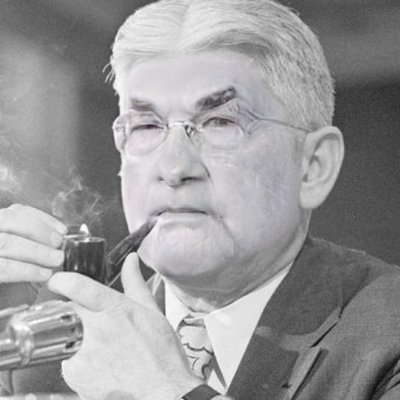
Ominous -
"In a fairly short period of time, we’ll be finished."
-Donald Trump
Faytuks Network@FaytuksNetwork
Trump: In a fairly short period of time, we’ll be finished. They won’t be able to develop a nuclear weapon for years, and when they’re ready, we’ll knock them out again.
English


I am told by White House sources that Trump is seriously considering taking Kharg Island.
English
@Microinteracti1 Impressive to see Europe actually taking some action for once.
English

“If they didn’t spend on weapons…”
😴 It would’ve been so beautiful... Then we could’ve gone in, seized all their oil fields in 48 hours -48 hours, believe me- armed the Israelis with the best weapons, and created many, many new Gazas. The real “American Dream,” folks.
NEVER!
AF Post@AFpost
State Sec. Rubio: “Imagine if instead of spending billions on weapons, Iran spent that money on its people. They’d have a much different country.” Follow: @AFpost
English
Bottom Line:
We may be looking not at regime change, but at a change within the regimen one that could produce a significantly worse strategic reality than the one that existed prior to the war.
A younger, more radical, and more vengeful leadership, potentially dominated by hardline elements within the IRGC and lacking meaningful internal constraints could emerge.
This risks pushing Iran further along a trajectory more akin to Pakistan or even North Korea in terms of nuclear posture and strategic behavior.
At the same time, if the war ends in the near term, the regime will face a severe economic crisis. However, this will likely be accompanied by a strong motivation to rebuild its capabilities and reassess its nuclear strategy, including the question of weaponization, particularly given its stockpile of roughly 440 kg enriched to 60%.
In that sense, what may appear as a highly successful operational campaign could ultimately translate into a significant strategic failure, one that creates a more dangerous long-term reality for the region.
#IranWar
Laura Rozen@lrozen
Trump claims it is regime change because he had not heard the names of the people before. “These are different people than anyone has ever heard of before, and frankly they've been more reasonable. So, we've had total regime change beyond what anyone thought possible.,” he tells CBS.
English

But what options does the USA even really have? No allies except crazy Israel. And if USA invades the Arab energy infrastructure is toast.
Preliminary name for this episode in the history books: Trump's Folly
808@prpl8
A lot of talk on Trump Taco. Most important thing to know: If USA just abandons the operation now then Iran can set the price of global oil by controlling the volumes through the Hormuz. And sanctions are meaningless. You sanction me, I close the Hormuz.
English
"Military capability is not the same as strategic advantage." – from Feb 19
Danny (Dennis) Citrinowicz ,داني سيترينوفيتش@citrinowicz
Before Striking Iran: Defining Achievable and realistic Objectives Before considering a military strike against Iran, it is essential to be realistic about what such a campaign can actually accomplish. There is little doubt that Iran is not a peer competitor to the United States militarily. The U.S. retains overwhelming conventional superiority and operational dominance across domains. However, Iran should not be underestimated. As demonstrated in previous limited confrontations, particularly in missile warfare, Tehran possesses meaningful asymmetric capabilities — especially in its ballistic missile arsenal and regional proxy network. The core question, therefore, is not whether the United States can inflict damage. It is: What strategic objective is realistically achievable? 1. Regime Change Even senior U.S. officials have acknowledged that regime change would be extraordinarily difficult to achieve. There is no unified, viable opposition inside Iran capable of stepping in and governing. Moreover, regime change would almost certainly require a prolonged campaign, potentially including ground forces — something the American public and policymakers have shown little appetite for after Iraq and Afghanistan. Absent a willingness to commit to a large-scale, long-term stabilization effort, regime change is not a credible objective. 2. Destabilizing the Regime to Trigger Internal Uprising A military campaign could weaken the regime and create internal pressure. However, Iran’s leadership — particularly the Islamic Revolutionary Guard Corps (IRGC) — has no exit option. The regime’s survival is existential for its core leadership. History suggests they would respond to internal unrest with overwhelming force. For destabilization to translate into meaningful political change, a sustained and prolonged campaign would likely be required. Even then, the most probable outcome may not be democratic transition, but internal chaos — potentially pushing Iran toward civil conflict. That scenario carries significant regional and global risks. 3. Destroying Iran’s Nuclear Program A military strike could significantly damage nuclear facilities. Precision strikes may delay progress and degrade infrastructure. But strikes cannot eliminate scientific knowledge, human capital, or political will. Nor is it certain that all highly enriched material could be located and destroyed. At best, military action may delay the program. It is unlikely to eliminate it permanently. Iran would almost certainly attempt reconstruction — potentially with greater determination and fewer constraints. 4. Eliminating Iran’s Missile Capabilities A broad campaign could substantially degrade Iran’s missile inventory and production infrastructure. However, Iran’s missile program is domestically based and central to its defense doctrine. It is viewed as a pillar of deterrence against superior conventional forces. Even after heavy losses, Tehran would likely prioritize rebuilding these capabilities. The result may be temporary degradation rather than permanent removal. 5. Forcing Iran Back to Negotiations on Better Terms There is an assumption that military pressure could coerce Tehran into accepting a more favorable agreement. Yet past confrontations suggest that the Iranian leadership may choose endurance over capitulation. The regime may calculate that time increases political pressure on Washington to de-escalate, particularly if the conflict becomes prolonged or regionally destabilizing. Rather than producing immediate concessions, military action could harden Iran’s negotiating position — or eliminate diplomatic channels entirely. 6. Targeting Supreme Leader Ali Khamenei Some might argue that removing the Supreme Leader could fundamentally alter Iran’s trajectory. However, decapitation strikes often produce unpredictable outcomes. Iran’s political system is institutionalized, not purely personalist. Removing Khamenei could trigger retaliation from Iran and its regional proxies and potentially force the United States into a much broader conflict. It is also unclear whether such a move would moderate Iranian policy. It could just as easily radicalize it. The Strategic Bottom Line There is no question about U.S. military superiority in a direct confrontation. The real issue is strategic clarity. For the first time in decades, the possibility of direct U.S.–Iran military confrontation raises the prospect of open interstate war rather than proxy conflict. That demands disciplined thinking about ends, ways, and means. No available objective appears easily attainable. All carry significant second- and third-order effects. Many outcomes could be unpredictable — and not necessarily favorable to U.S. interests. Thus, before initiating military action, policymakers must clearly define what “success” looks like — and whether the likely costs, duration, escalation risks, and regional consequences align with America’s broader strategic priorities. Military capability is not the same as strategic advantage. #IranRevolution2026 #Iran
English
Proud of how @MorphMarket has evolved since I stepped back.
Our CTO Jack has done an incredible job—and just shared 5 years of hard-earned lessons on scaling the system & improving process:
semicolonandsons.com/articles/scali…
English
@sidprabhu Not to mention you could make this claiming any society until it collapses. At the market either has come back or will come back.
English
This is a meaningless statement. You could own the US stock market, have it hit a new ATH every day for eternity and still lose money.
Eric Balchunas@EricBalchunas
You can simplify it even further: The U.S. stock market has a 100% perfect record of coming back from downturns to hit ATHs. This indisputable truth is the ultimate anxiety killer. Better than Xanax. Instantly renders all doomer columnists and economists powerless.
English
@EricBalchunas This is such a meaningless statement, you could always say this in any society that the market has or will be coming back, until the society entirely collapses.
English

You can simplify it even further: The U.S. stock market has a 100% perfect record of coming back from downturns to hit ATHs. This indisputable truth is the ultimate anxiety killer. Better than Xanax. Instantly renders all doomer columnists and economists powerless.
Adam Khoo@adamkhootrader
The stock market is a giant distraction machine designed to test your stomach, not your brain. These mid-term drawdowns are not 'crises'; they are regularly scheduled sales. History proves that the most uncomfortable time to buy is exactly when your future self will thank you most. Volatility isn't risk—it's the price of admission for superior returns.
English
I have been among those thinking, "Well now we have to finish this." But I can see your point, and I have underweighted this potential outcome.
Trump's sending troops to the region, etc, might just be a last ditch effort to get them to the table with the best possible terms. He'll rough them up some more this weekend, maybe check a few boxes (not including uranium because that will be too hard). Trump will have to swallow his pride (hard to imagine), but he may realize a prolonged conflict will be worse.
Note: I'm only talking about likelihood of what *will* happen, not what *should* happen.
English
This is going to end with the US pulling out and Iran tolling (as I said at the beginning of the conflict) and then most likely years of negotiations and threats between countries in the most affected regions and Iran. These guys broke it, know they are losing support and want others to deal with the consequences.
Furkan Gözükara@FurkanGozukara
Absolute panic in Washington. Marco Rubio whines that Iran is planning to permanently control the Strait of Hormuz and charge a toll. He admits the US is powerless to stop it alone and begs the rest of the world to step in. Iran has completely outsmarted the American empire.
English
@MelMattison1 Mel I make some jokes on here, but I appreciate your transparency and genuinely wish you the best in this.
English

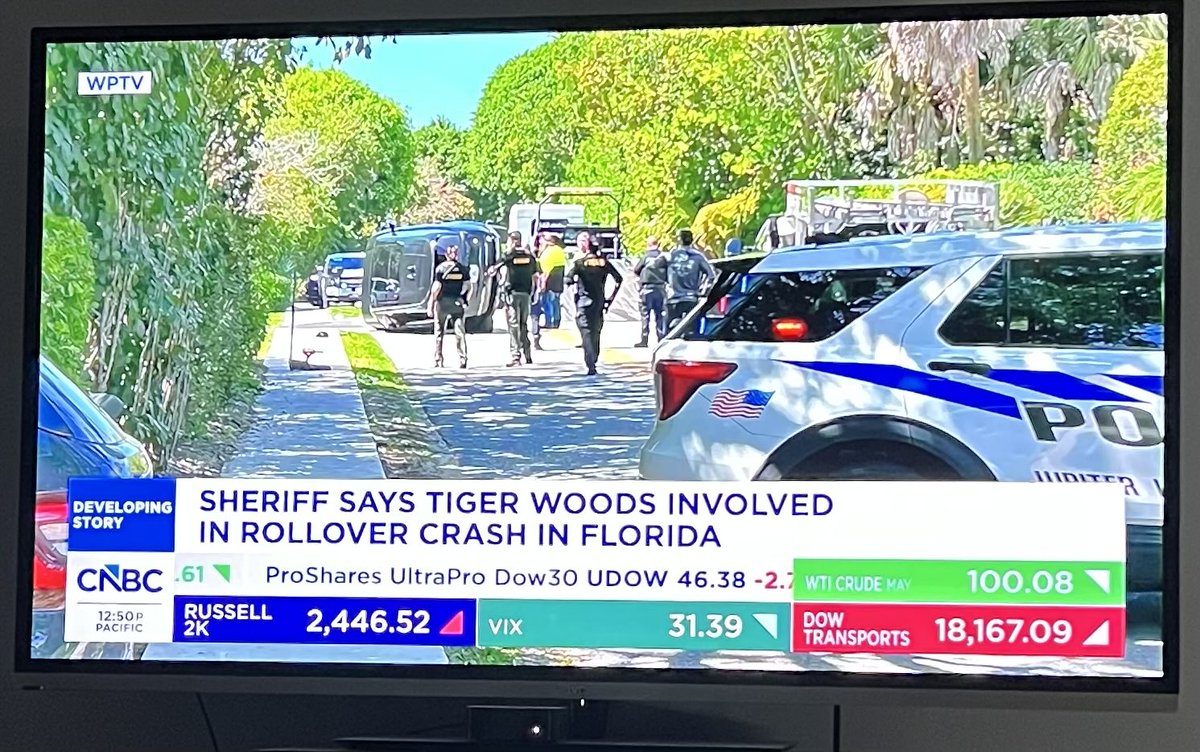
This doesn’t look good. Tiger might be an alcoholic. I have to admit that I’m a great investor, Duke MBA, start up entrepreneur, author and so on. But I am also an alcoholic. I would not wish this infliction on even my worst enemy. It is a horrible shame and struggle to deal with. I apologize for any offense I have given with past posts. I generally agree with the thrust of all my past posts, but often my rhetoric goes over the top when I am drinking. I have decided today to seek help and stop drinking. I’m sorry for being a jerk so often on this platform.
English
guys don't fool yourselves, if the situation stays like this for 2 or 3 more months SPX will be down so much more than 10%
*Walter Bloomberg@DeItaone
OIL SHOCK COULD TRIGGER 10% STOCK SELLOFF Guggenheim warns U.S. stocks could drop up to 10% if oil stays near $100 for several months. The bigger risk isn’t inflation but a hit to consumer and investor sentiment—potentially breaking the retail “buy-the-dip” habit that has supported markets. While oil may ease and stocks stabilize, elevated prices still tighten conditions and weigh on growth, leaving markets more fragile.
English

also, come on stop pretending everything he says must be true or reflect a reality. he is a politician. they lie, manipulate and distort reality, and certainly do not reveal the whole truth. thats what they do. and your general tendency is to look at his words and say "lies!". so it is a bit idiotic to suddenly be all "oh, but he said that X, how come he said X, if X is not entirely true???"
English
it is super easy to take various Trump sound bites, either in isolation or in pairs, and laugh at how idiotic, incoherent, contradicting each other, rumbling or all of these together they are. but this is just... not productive?
much more effective to either try to see behind the mess and attempt to find a non bad faith interpretation, or ignore them altogether.
English
@Merridew__ TP is a great euphemism for "closing my position", regardless.
English