juan

1.3K posts

juan banner
juan

juan

@juanmorefounder

philosopher entrepreneur | scrap & metals operator | AI, circular economy, and random insights

Toronto, Ontario Katılım Ağustos 2023
395 Takip Edilen148 Takipçiler
juan
juan@juanmorefounder·
@michlimlim Also a good one: work/break timers with the caveat of low-dopamine activities during the break or straight idle time. You start craving getting back to work and reward loops rewire
English
0
0
0
44
Creatify AI
Creatify AI@Creatify_AI·
Introducing Creatify Agent. The world’s first multi-agent orchestrator that makes viral ads without AI slop. Drop an ad idea below, and we’ll build it for you.
English
652
378
2.1K
4M
juan
juan@juanmorefounder·
@fdotinc Good for these guys. Such an elegant solution for a huge problem.
English
0
0
2
1K
Founders Inc
Founders Inc@fdotinc·
They reinvented the hearing aid by studying the human ear Normal hearing aid: $4700 Theirs: $20
English
477
3.9K
34.7K
11.2M
juan
juan@juanmorefounder·
Turns out half cash half stock was not it
juan tweet media
English
0
0
0
7
juan retweetledi
Jordy Meady
Jordy Meady@jordyymeady·
Worse than Covid this pandemic
Jordy Meady tweet media
English
926
2.2K
29.2K
10.6M
juan retweetledi
okazakitomohiro
okazakitomohiro@oo_kk_aa·
ニャッキの伊藤有壱さんにお声掛け頂き、コマ撮りの展覧会に一作家として参加しています。私はコマ撮り分野ではない場所から活動をはじめて、デザインの視点でのコマ撮りに取り組んできましたが、今回初めてコマ撮り界の本丸の方々とご一緒でき嬉しいです。今6年目のマッチ撮影素材等を展示しています
日本語
527
27.4K
124.3K
5.1M
juan
juan@juanmorefounder·
How is this not being talked about more? AI is redefining how humanity organizes itself around a shared goal. That’s a huge deal. Both government and corporation org charts are built on organizational principles developed in Ancient Rome for thousands of async soldiers. We put Slack on top of that and still wonder why we’re drowning in work comms without time to do real work. It’s incompatible with modern work. AI is finally trimming the unnecessary, information-transfer-only roles, and creating ever more productive companies. As a result, economies will inevitably get more productive. What we so with that surplus abundance and how we properly distribute it across society is the real question.
Brian Armstrong@brian_armstrong

This is an email I sent earlier today to all employees at Coinbase: Team, Today I’ve made the difficult decision to reduce the size of Coinbase by ~14%. I want to walk you through why we're doing this now, what it means for those affected, and how this positions us for the future. Why now Two forces are converging at the same time. We need to be front footed to respond to both. First, the market. Coinbase is well-capitalized, has diversified revenue streams, and is well-positioned to weather any storm. Crypto is also on the verge of the next wave of adoption, with stablecoins, prediction markets, tokenization, and more taking off. However, our business is still volatile from quarter to quarter. While we've managed through that cyclicality many times before and come out stronger on the other side, we’re currently in a down market and need to adjust our cost structure now so that we emerge from this period leaner, faster, and more efficient for our next phase of growth. Second, AI is changing how we work. Over the past year, I’ve watched engineers use AI to ship in days what used to take a team weeks. Non-technical teams are now shipping production code and many of our workflows are being automated. The pace of what's possible with a small, focused team has changed dramatically, and it's accelerating every day. All of this has led us to an inflection point, not just for Coinbase, but for every company. The biggest risk now is not taking action. We are adjusting early and deliberately to rebuild Coinbase to be lean, fast, and AI-native. We need to return to the speed and focus of our startup founding, with AI at our core. What this means To get there, we are not just reducing headcount and cutting costs, we’re fundamentally changing how we operate: rebuilding Coinbase as an intelligence, with humans around the edge aligning it. What does this mean in practice? - Fewer layers, faster decisions: We are flattening our org structure to 5 layers max below CEO/COO. Layers slow things down and create coordination tax. The future is small, high context teams that can move quickly. Leaders will own much more, with as many as 15+ direct reports. Fewer layers also means a leaner cost structure that is built to perform through all market cycles. - No pure managers: Every leader at Coinbase must also be a strong and active individual contributor. Managers should be like player-coaches, getting their hands dirty alongside their teams. - AI-native pods: We’ll be concentrating around AI-native talent who can manage fleets of agents to drive outsized impact. We’ll also be experimenting with reduced pod sizes, including “one person teams” with engineers, designers, and product managers all in one role. In short: AI is bringing a profound shift in how companies operate, and we’re reshaping Coinbase to lead in this new era. This is a new way of working, and we need to leverage AI across every facet of our jobs. To those who are affected I know there are real people behind these decisions — talented colleagues who have poured themselves into this company and our mission. To those of you who will be leaving: thank you. You’ve helped build Coinbase into what it is today, and I am sincerely grateful for everything you've done. All impacted team members will receive an email to their personal account in the next hour with more information, and an invitation to meet with an HRBP and a senior leader in your organization. Coinbase system access has been removed today. I know this feels sudden and harsh, but it is the only responsible choice given our duty to protect customer information. To those affected, we will be providing a comprehensive package to support you through this transition. US employees will receive a minimum of 16 weeks base pay (plus 2 weeks per year worked), their next equity vest, and 6 months of COBRA. Employees on a work visa will get extra transition support. Those outside of the US will receive similar support, based on local factors and subject to any consultation requirements. Coinbase prides itself on talent density. Our employees are among the most talented people in the world, and I have no doubt that your skills and experience will be highly sought after as you pursue your next chapters. How we move forward To the team that is staying, I know this is a difficult day. We’re saying goodbye to colleagues and friends you've been in the trenches with. But here’s what I want you to know as we move forward together: Over the past 13 years, we have weathered four crypto winters, gone public, and built the most trusted platform in our industry. We’ve made it this far by making hard decisions and by always staying focused on our mission. This time will be no different – nothing has changed about the long term outlook of our company or industry. And most importantly, our mission has never been more important for the world. Increasing economic freedom requires a new financial system, and we’re building it. The Coinbase that emerges from this will be more capable than ever to achieve our mission. Brian


English
0
0
0
6
juan retweetledi
litquidity
litquidity@litcapital·
I’m proposing to acquire JPMorgan for $900 billion in a 50/50 cash / stock deal. I have staple financing lined up for $50 billion and another $5K in a Chase bank account, guaranteeing a successful closing. Looking forward to making this happen 🤝
English
81
67
3.8K
165.1K
juan
juan@juanmorefounder·
@dieworkwear Modern attention span get scared when see big block of text
English
0
0
0
2
derek guy
derek guy@dieworkwear·
Why do people write tweets like this? Where every sentence gets a new line. Sometimes a line might have two sentences. Like this one. But generally speaking, every sentence has a new line, making a tweet look like a long block of text that no one reads. Worse still, such tweets are often repetitive and winding, hammering on the same point over and over again. The writing is often very bad.
English
962
227
7.4K
437.5K
juan
juan@juanmorefounder·
@robjama Great idea
English
0
0
1
63
Robleh
Robleh@robjama·
new experiment: ai labs in Toronto. you bring one real problem from your work. we match you 1:1 with an expert. 3 hours later you walk out with it solved. think genius bar meets university lab class. we picked a Saturday because the people who need ai most have the least time to learn it. this is the version that actually fits in your life. it's free, only 20 spots for May 9th. fill out your pre-lab to apply - link in the next tweet
Robleh tweet media
English
35
27
374
31.4K
juan
juan@juanmorefounder·
@brivael Value theory going from objective to subjective was more of a rebrand than a “discovery.” The biggest mistake we all make is to think of economics as a hard science.
English
0
0
1
12
Brivael Le Pogam
Brivael Le Pogam@brivael·
Hello Julia, sans aucune ironie, c'est top que tu prennes le temps de te renseigner. Mais le problème quand on lit Marx aujourd'hui, c'est qu'on prend pour acquis sa prémisse de départ, alors qu'elle a été démontée scientifiquement il y a plus de 150 ans. Toute la pensée de Marx repose sur la théorie de la valeur-travail. L'idée que la valeur d'un bien vient de la quantité de travail nécessaire pour le produire. Si tu acceptes cette prémisse, alors oui, tout son raisonnement tient. Le capitaliste "vole" la plus-value du travailleur, l'exploitation est mathématique, la révolution est inévitable. Sauf qu'en 1871, trois économistes (Menger en Autriche, Jevons en Angleterre, Walras en Suisse) découvrent indépendamment la même chose : la valeur n'est pas objective, elle est subjective et marginale. Un verre d'eau dans le désert vaut une fortune. Le même verre à côté d'une rivière ne vaut rien. Le travail incorporé est identique. Donc le travail ne détermine pas la valeur. C'est le consommateur qui valorise un bien selon son utilité marginale dans un contexte donné. Exemple concret : tu peux passer 1000 heures à tricoter un pull moche que personne ne veut. Selon Marx, ce pull a énormément de valeur (beaucoup de travail incorporé). Selon la réalité, il ne vaut rien. Parce que personne n'en veut. À l'inverse, Bernard Arnault crée des milliards de valeur non pas parce qu'il "exploite" mais parce qu'il a su anticiper et organiser des désirs humains à grande échelle. La valeur est créée par la coordination, pas extraite par le vol. Cette découverte (la révolution marginaliste) a invalidé tout l'édifice marxiste. Pas pour des raisons idéologiques, pour des raisons scientifiques. C'est pour ça que plus aucun département d'économie sérieux au monde n'enseigne Marx comme un cadre d'analyse valide. On l'enseigne en histoire de la pensée. Maintenant, le truc important. Si ton intention en lisant Marx c'est d'aider les pauvres (c'est une intention noble), alors tu vas être surprise par ce qui suit. Regarde les chiffres de la Banque mondiale. En 1820, 90% de l'humanité vivait dans l'extrême pauvreté. Aujourd'hui, moins de 9%. Cette chute historique ne s'est PAS produite dans les pays qui ont appliqué Marx. Elle s'est produite dans les pays qui ont libéralisé leur économie. Chine post-1978, Vietnam post-1986, Inde post-1991, Pologne post-1989. À chaque fois qu'un pays libéralise, des centaines de millions de gens sortent de la pauvreté en une génération. À chaque fois qu'un pays applique Marx (URSS, Cambodge, Corée du Nord, Venezuela), c'est la famine et les goulags. Ce n'est pas une opinion, c'est l'expérience la plus massive jamais menée en sciences sociales. Plusieurs milliards de cobayes humains, sur un siècle. Donc paradoxalement, si tu aimes vraiment les pauvres, la position la plus cohérente n'est pas d'être marxiste. C'est d'être pour la liberté économique. Parce que c'est empiriquement la seule chose qui a jamais sorti massivement les gens de la misère. Pour creuser, je te recommande trois lectures qui vont changer ta vision : "La Loi" de Frédéric Bastiat (court, lumineux, gratuit en ligne) "La Route de la Servitude" de Hayek "Économie en une leçon" de Henry Hazlitt Bonne lecture, et vraiment chapeau de chercher à comprendre plutôt que de rester dans tes certitudes. C'est rare.
Julia ひ@lifeimitatlife

Depuis tout à l'heure je me renseigne sur les idées de Karl Marx sincèrement je n'arrive pas à comprendre comment on peut être pour le capitalisme et même plus généralement être de droite

Français
1.5K
11.1K
48.8K
3.3M
juan retweetledi
Brandon Luu, MD
Brandon Luu, MD@BrandonLuuMD·
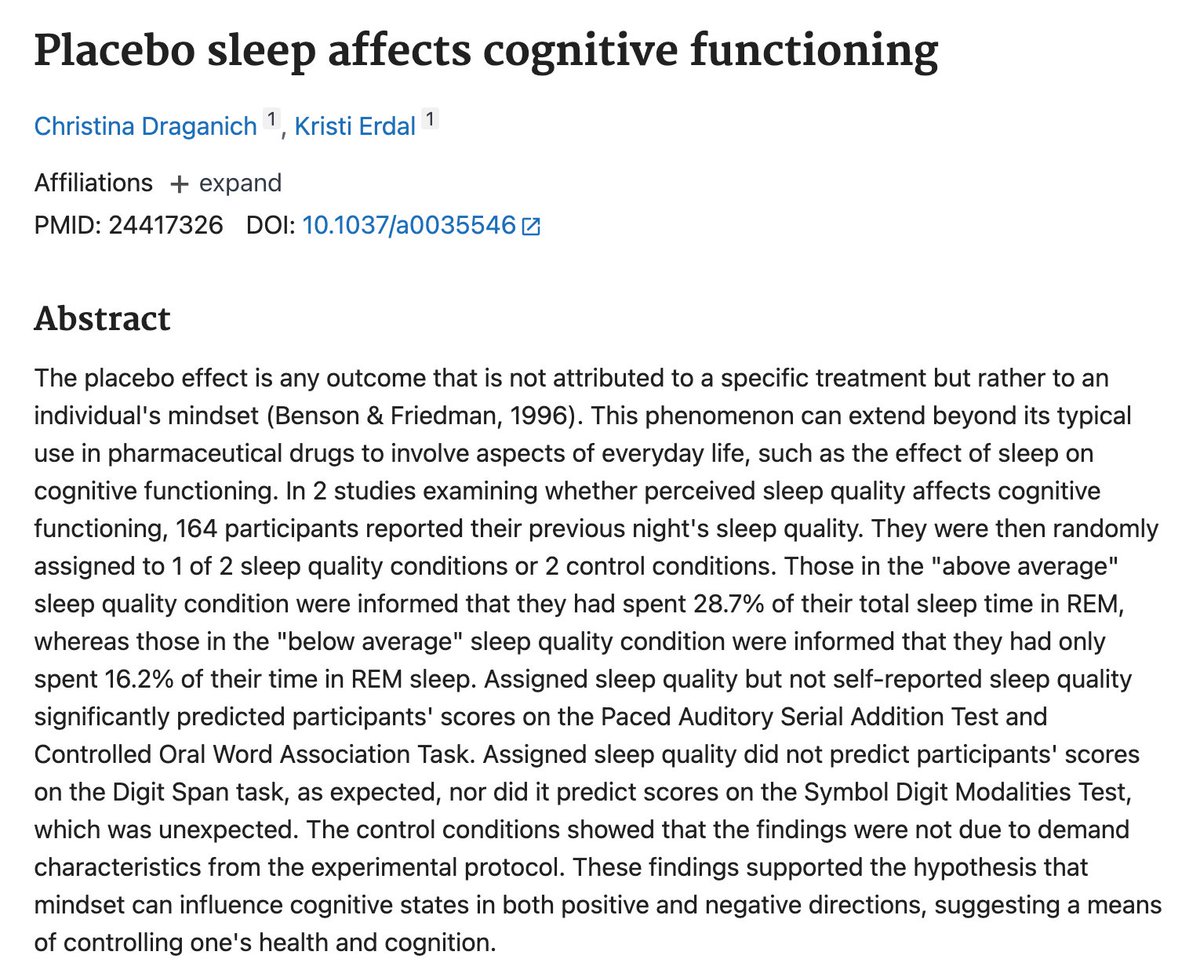
Literally just having a delusional golden retriever mindset measurably changes outcomes and physiology. Sleep badly? Convince yourself you're well rested. Stressful day? Convince yourself it's fuel. Failed? Convince yourself it's useful data.
Brandon Luu, MD tweet media
English
429
3.5K
32.5K
10M